Defining the scope of work project is an important part of doing business for many consultants, especially those that handle large-scale projects for other businesses. Your scope of work spells out specific phases and details for a project, and helps tell the story of the work you plan to do, to the client.
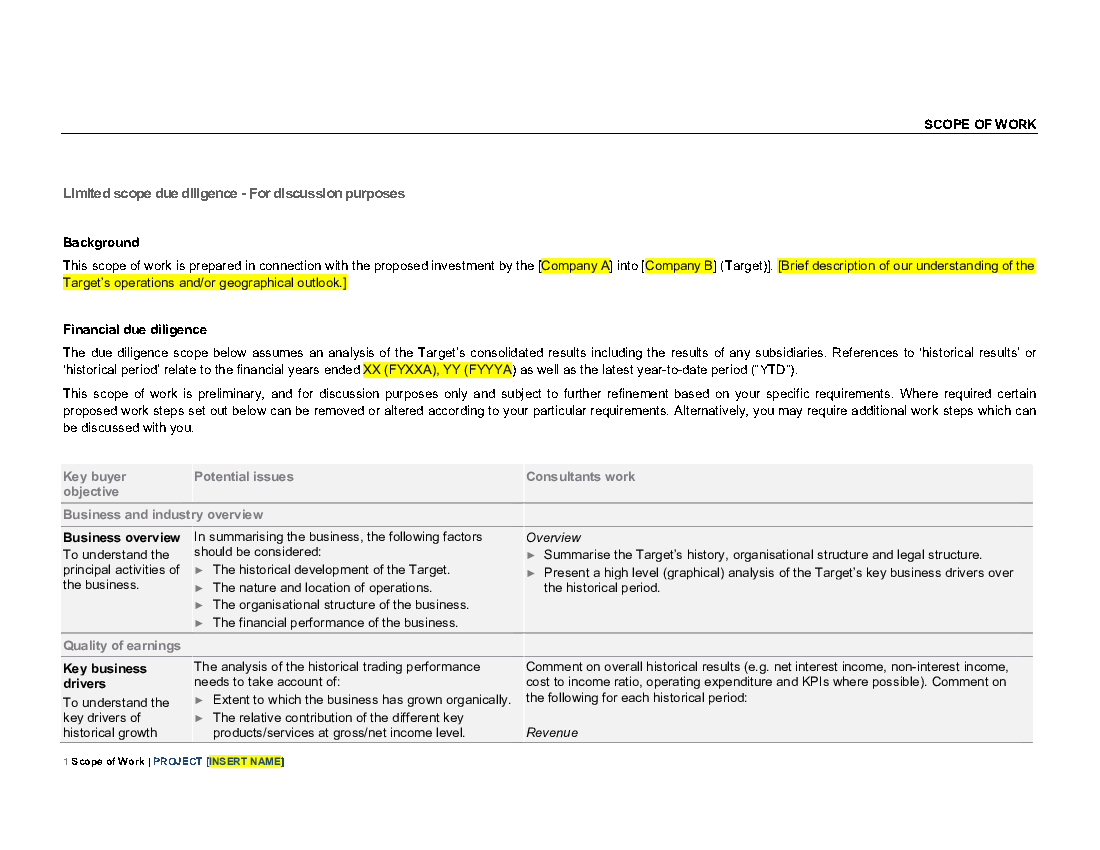
The document outlines the key areas to be analysed during the course of a limited scope Due Diligence:
1. Business Overview
2. Quality of Earnings
3. Quality of Net Assets
4. Quality of Financial Information
This document is a useful tool to assist M&A practitioners, transaction advisory consultants and private equity fund managers define the scope of work when performing a Financial Due Diligence.
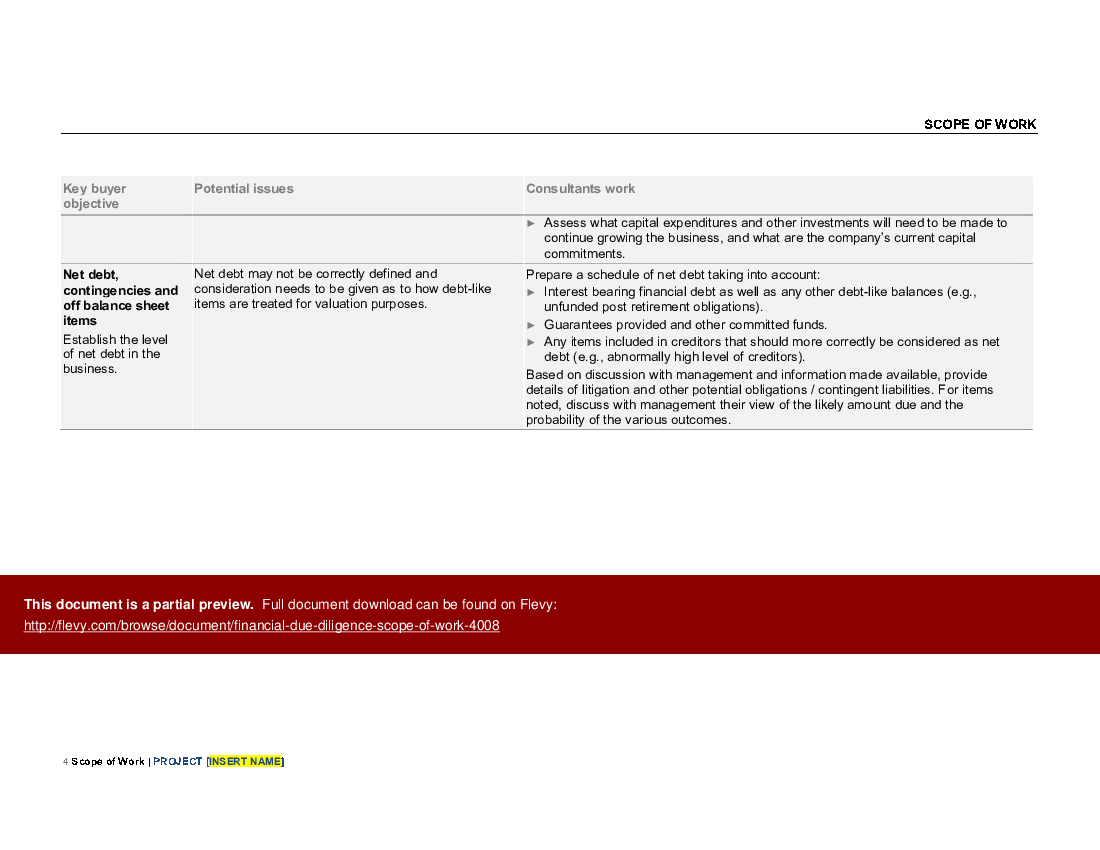
This Word document also delves into critical areas such as net debt, contingencies, and off-balance sheet items. It provides a comprehensive approach to identifying and assessing potential issues related to debt-like items and guarantees. Consultants are guided to prepare detailed schedules of net debt, ensuring all financial obligations are accurately accounted for. This rigorous analysis helps in providing a clear picture of the company's financial health, which is crucial for informed decision-making.
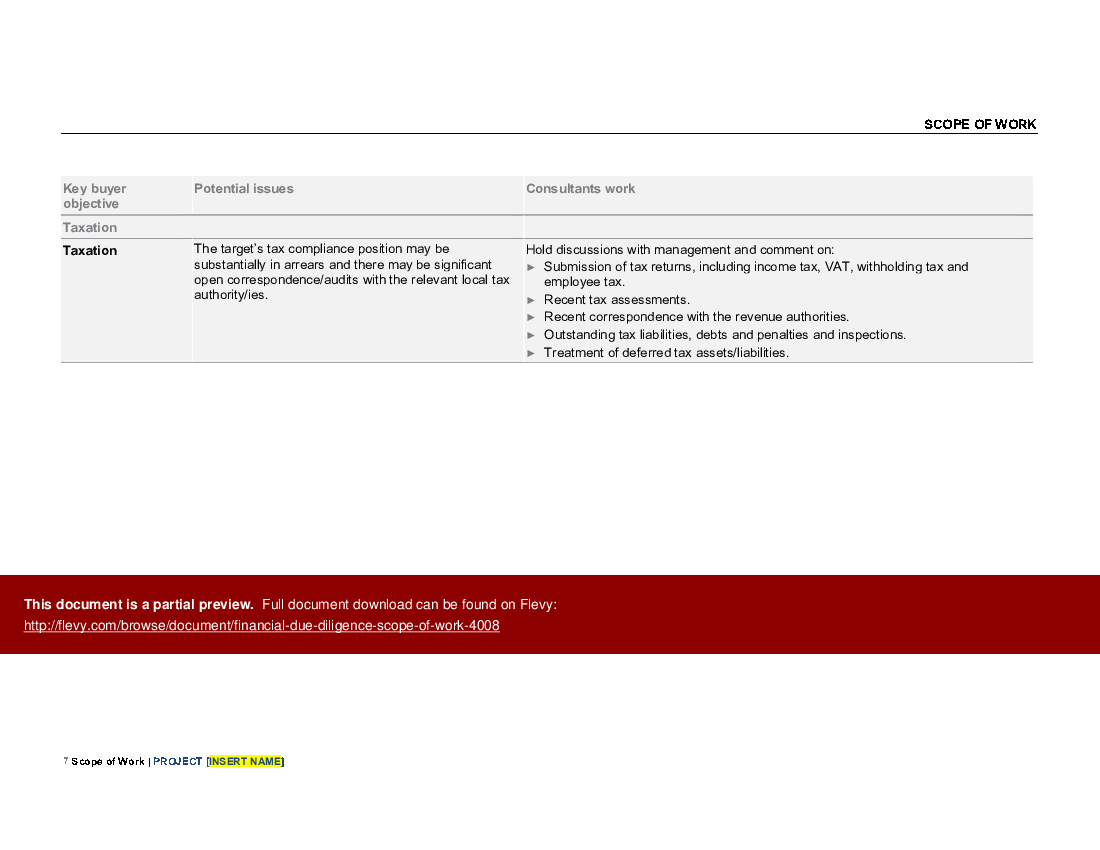
Taxation is another focal point of this document. It addresses the target's tax compliance position, highlighting potential issues like arrears and open audits with local tax authorities. The document outlines the necessary steps for consultants to hold discussions with management regarding tax returns, assessments, and correspondence with revenue authorities. This ensures that all tax-related liabilities and assets are thoroughly examined, mitigating risks associated with tax compliance.
This document is indispensable for professionals involved in mergers and acquisitions, providing a structured and detailed framework for financial due diligence. It equips consultants with the tools needed to conduct a thorough analysis, identify potential risks, and provide actionable insights. By leveraging this document, practitioners can enhance the accuracy and reliability of their due diligence processes, ultimately leading to more successful transactions.
Got a question about the product? Email us at support@flevy.com or ask the author directly by using the "Ask the Author a Question" form. If you cannot view the preview above this document description, go here to view the large preview instead.
Executive Summary
The Financial Due Diligence Scope of Work document provides a structured template designed for evaluating the financial health and operational viability of a target company during investment discussions. This document outlines essential tasks, deliverables, and timelines necessary for conducting thorough financial due diligence. Buyers will gain insights into the target's historical performance, quality of earnings, asset valuation, and compliance with financial standards, enabling informed investment decisions.
Who This Is For and When to Use
• Corporate executives involved in mergers and acquisitions
• Financial analysts conducting due diligence assessments
• Investment consultants advising on potential investments
• Integration leaders overseeing post-acquisition processes
Best-fit moments to use this deck:
• During initial investment discussions to outline due diligence requirements
• When assessing a target company’s financial health prior to acquisition
• In preparation for negotiations by understanding potential financial risks
Learning Objectives
• Define the scope of financial due diligence and its importance in investment decisions
• Analyze historical financial performance and identify key business drivers
• Assess the quality of earnings and net assets of the target company
• Evaluate the appropriateness of financial forecasts and underlying assumptions
• Understand the implications of related party transactions on financial assessments
• Review the adequacy of financial information and accounting policies
Table of Contents
• Background and Purpose (page 1)
• Financial Due Diligence Overview (page 1)
• Key Buyer Objectives (page 2)
• Quality of Earnings Assessment (page 3)
• Quality of Net Assets Evaluation (page 4)
• Financial Information Suitability (page 5)
• Business and IT Operating Model Review (page 6)
• Tax Compliance Assessment (page 7)
Primary Topics Covered
• Background and Purpose - This section outlines the context for the due diligence process, including the investment rationale and target company overview.
• Financial Due Diligence Overview - A comprehensive framework for assessing the target's financial health, including historical results and consolidated performance.
• Quality of Earnings Assessment - Analyzes historical trading performance and identifies key growth drivers, focusing on revenue and profitability metrics.
• Quality of Net Assets Evaluation - Evaluates the balance sheet to identify potential overstatements of assets or understatements of liabilities.
• Financial Information Suitability - Reviews the accuracy and reliability of financial data presented for appraisal, including reconciliations between statutory and management accounts.
• Business and IT Operating Model Review - Assesses the alignment of IT strategy with business objectives and evaluates operational efficiency.
Deliverables, Templates, and Tools
• Financial due diligence checklist template to guide the assessment process
• Quality of earnings analysis model for evaluating historical performance
• Net assets evaluation framework to assess balance sheet integrity
• Financial information reconciliation template for comparing statutory and management accounts
• IT operating model assessment tool for evaluating technology alignment with business needs
• Tax compliance review checklist to ensure adherence to local regulations
Slide Highlights
• Overview of the financial due diligence process, emphasizing key tasks and deliverables
• Graphical representation of historical financial performance and key business drivers
• Detailed analysis of quality of earnings, highlighting trends and potential risks
• Summary of net assets evaluation, focusing on balance sheet integrity
• Assessment of the IT operating model, illustrating alignment with business strategy
Potential Workshop Agenda
Financial Due Diligence Overview Session (60 minutes)
• Introduce the financial due diligence process and its significance
• Discuss key buyer objectives and expected outcomes
• Review the scope of work and deliverables
Quality of Earnings Workshop (90 minutes)
• Analyze historical financial performance and identify growth drivers
• Discuss implications of related party transactions on financial assessments
• Evaluate the quality of earnings and profitability metrics
Net Assets Evaluation Session (60 minutes)
• Assess the integrity of the balance sheet and identify potential risks
• Review the adequacy of financial information and accounting policies
• Discuss findings and implications for investment decisions
Customization Guidance
• Tailor the scope of work to reflect specific investment criteria and target company characteristics
• Adjust financial performance metrics to align with industry benchmarks and standards
• Modify templates to incorporate unique financial reporting requirements and compliance standards
Secondary Topics Covered
• Overview of potential financial risks associated with the target company
• Discussion of industry-specific financial performance indicators
• Review of regulatory compliance issues impacting financial assessments
• Analysis of market trends and their effect on the target's financial outlook
Topic FAQ
Document FAQ
These are questions addressed within this presentation.
What is the purpose of financial due diligence?
Financial due diligence aims to evaluate the financial health and operational viability of a target company, ensuring informed investment decisions.
What key areas are assessed during financial due diligence?
Key areas include historical financial performance, quality of earnings, asset valuation, compliance with financial standards, and related party transactions.
How can the quality of earnings be evaluated?
Quality of earnings is assessed by analyzing historical trading performance, identifying key growth drivers, and evaluating profitability metrics.
What is included in the quality of net assets evaluation?
This evaluation focuses on the integrity of the balance sheet, identifying potential overstatements of assets or understatements of liabilities.
How is the suitability of financial information determined?
Suitability is determined by reviewing reconciliations between statutory and management accounts and assessing the accuracy of financial data presented.
What role does the IT operating model play in financial due diligence?
The IT operating model is assessed to ensure alignment with business objectives and evaluate operational efficiency, which can impact financial performance.
Why is tax compliance important in financial due diligence?
Tax compliance is crucial as it can reveal potential liabilities and risks associated with the target company's financial position.
How can this scope of work be customized?
The scope can be tailored to reflect specific investment criteria, target company characteristics, and unique financial reporting requirements.
Glossary
• Due Diligence - The process of investigating a business or person prior to signing a contract or completing a transaction.
• Quality of Earnings - A measure of the sustainability and accuracy of a company's earnings.
• Net Assets - The total assets minus total liabilities of a company, indicating its financial health.
• Financial Information - Data related to the financial performance and position of a company.
• IT Operating Model - The framework that outlines how IT supports business operations and objectives.
• Tax Compliance - Adherence to tax laws and regulations governing a company's financial activities.
• Related Party Transactions - Transactions between 2 parties who have a pre-existing relationship, which may affect financial assessments.
• Consolidated Results - The combined financial results of a parent company and its subsidiaries.
• EBITDA - Earnings Before Interest, Taxes, Depreciation, and Amortization, a measure of a company's overall financial performance.
• Financial Forecasts - Projections of future financial performance based on historical data and assumptions.
• Balance Sheet - A financial statement that summarizes a company's assets, liabilities, and equity at a specific point in time.
• Historical Performance - The financial results of a company over a specific past period, used for analysis and comparison.
Source: Best Practices in Due Diligence Word: Financial Due Diligence Scope of Work Word (DOCX) Document, Corporate Finance 101
This document is available as part of the following discounted bundle(s):
Save %!
Complete Financial Due Diligence Toolkit
This bundle contains 5 total documents. See all the documents to the right.
|
Download our FREE Strategy & Transformation Framework Templates
Download our free compilation of 50+ Strategy & Transformation slides and templates. Frameworks include McKinsey 7-S, Balanced Scorecard, Disruptive Innovation, BCG Curve, and many more. |










