Strategic Sourcing (also known as Procurement Strategy or Sourcing Strategy) allows an organization to realize significant savings by evaluating its Procurement costs across a number of spend categories. This concept of Strategic Sourcing was popularized through work with a variety of blue chip companies by a number of consulting firms in the late 1980s and early to mid 1990s. (For a more detailed explanation, refer to the Wikipedia excerpt at the end of the description.)

If your organization is pursuing low-hanging opportunities for Cost Management, Strategic Sourcing is one of the quickest and highest impact initiatives to take on. This is why Strategic Sourcing has become the norm for Procurement departments in large, sophisticated organizations, such as Fortune 500 companies.
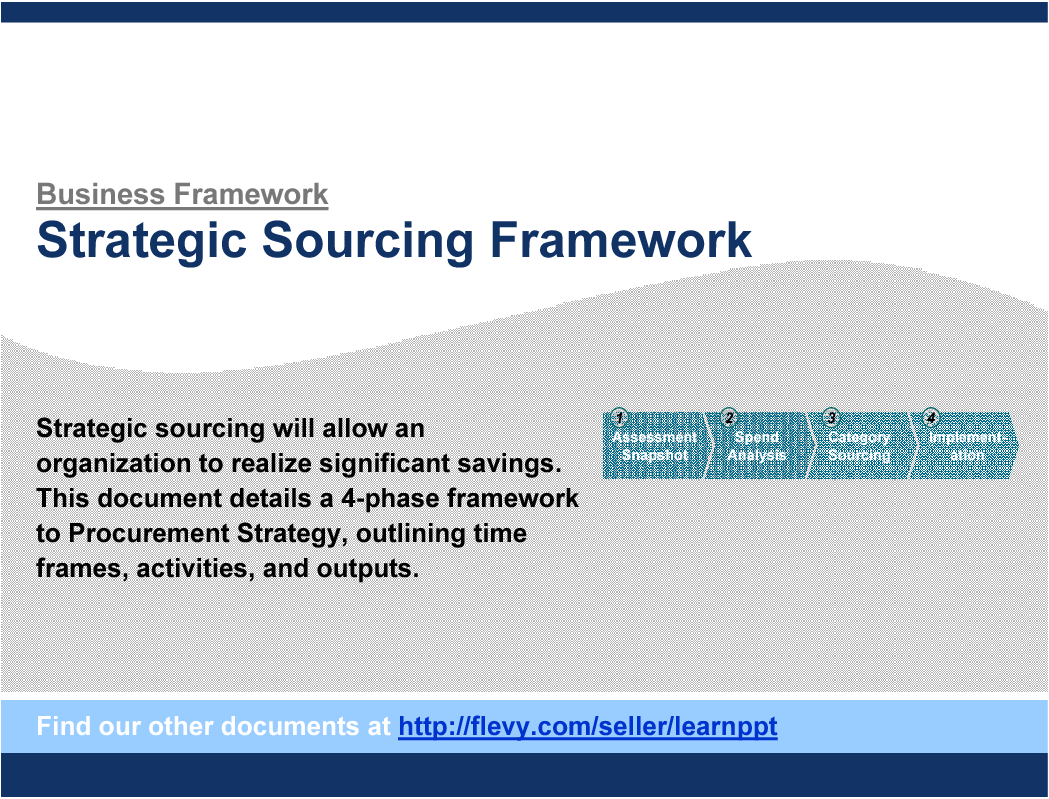
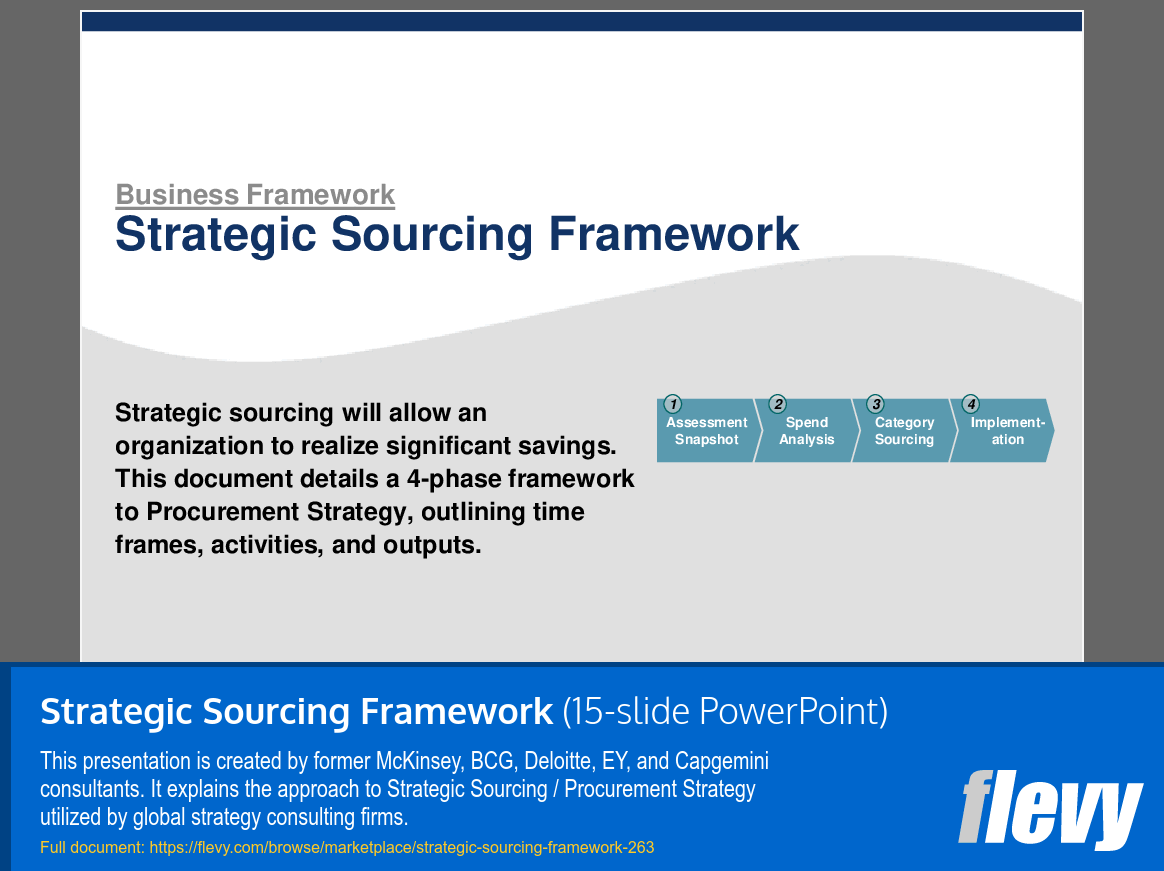
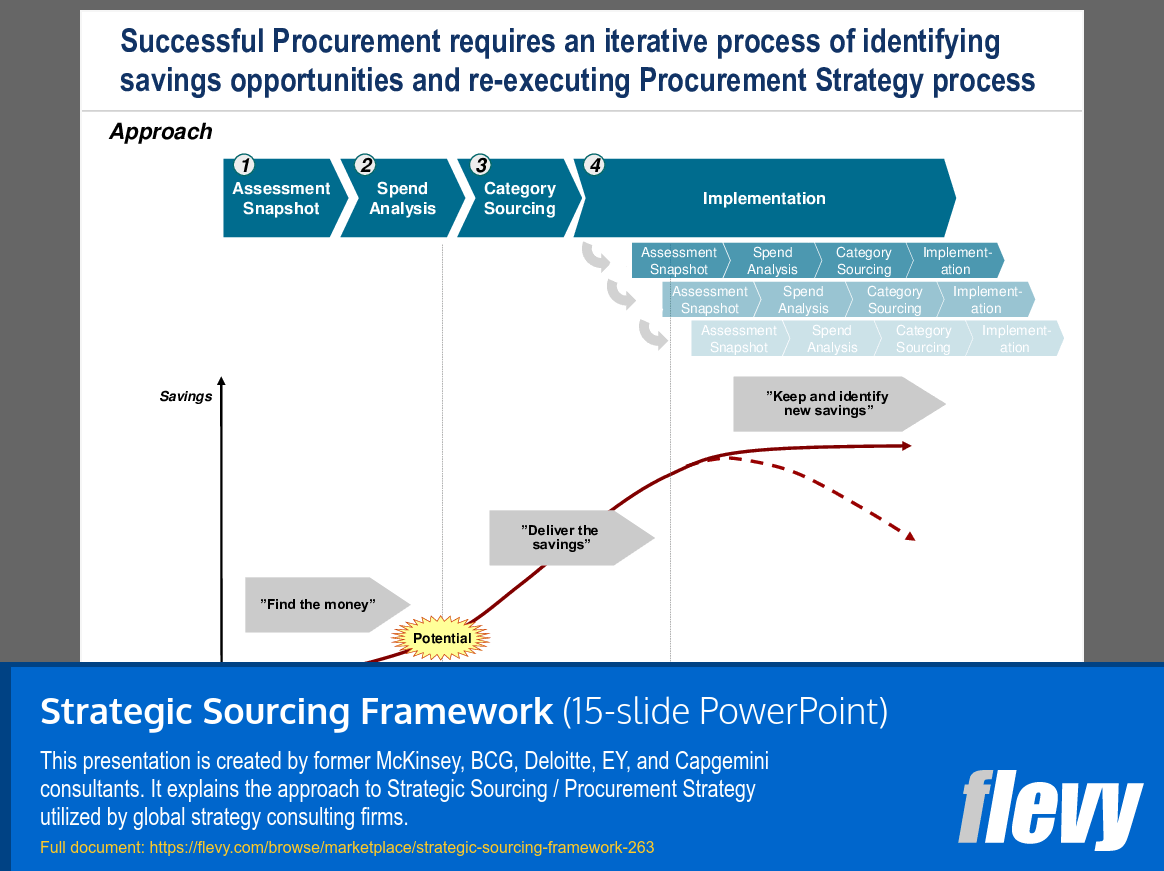
However, for Strategic Sourcing to be effective, we must follow a proven, methodical framework to go through the Strategic Sourcing process by correctly assessing the cost savings opportunities, developing a robust Sourcing Strategy, and successfully executing the Implementation Plan. This PowerPoint (PPT) presentation details a 4-phase framework to Strategic Sourcing, outlining time frames, activities, and outputs. It is the same framework developed and used by global management consulting firms.
The approach detailed in this presentation follows these 4 phases:
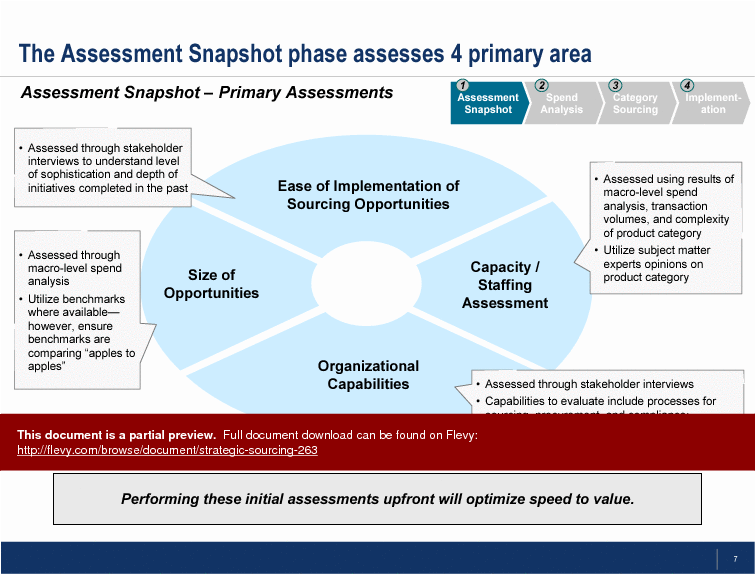
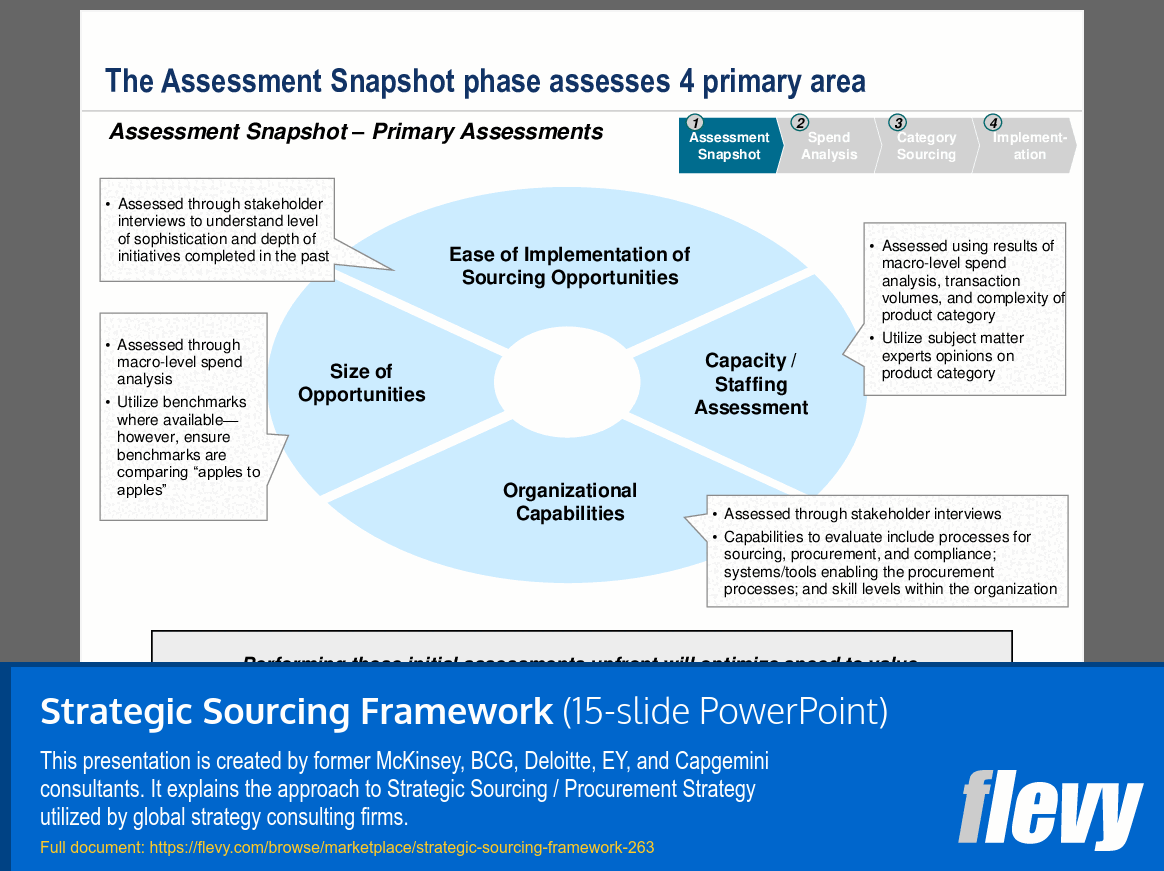
1. Assessment Snapshot – In the initial Assessment Snapshot phase, the organization's spend is assessed to determine the potential savings benefit.
2. Spend Analysis – This phase requires significant data analysis, requiring the development of a Spend Analysis Tool (typically in MS Access).
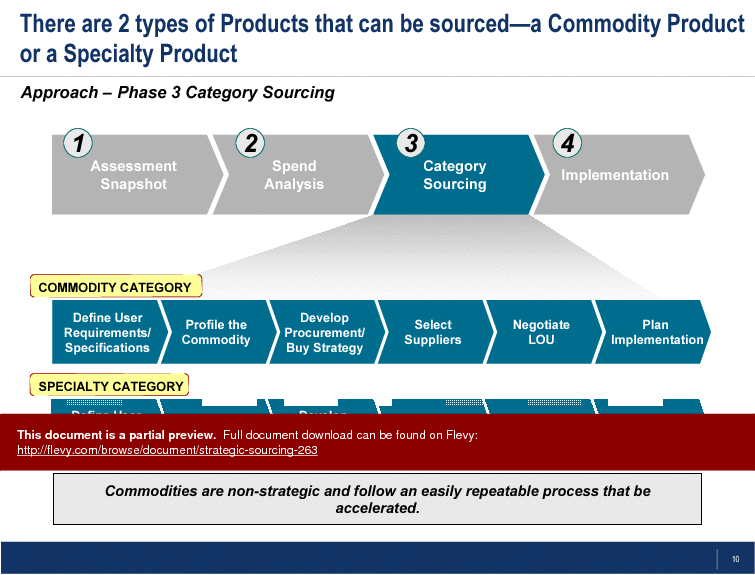
3. Category Sourcing – There are 2 types of Products that can be sourced – a Commodity Product or a Specialty Product. In this deck, we lay out the process for both types of products.
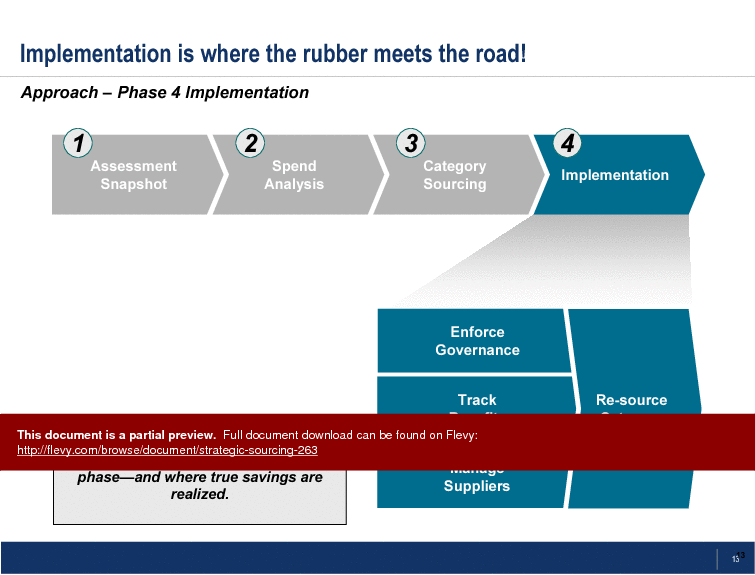
4. Implementation – Lastly, Implementation is the most important phase, where true savings are realized. There are multiple parallel streams within the Implementation phase.
Each phase is explained in detail, including a breakdown of sub-processes and activities. As alluded to, this framework can be applied to both Commodity and Specialty spend categories.
As this is a fully editable PowerPoint presentation, you can also adapt the slides as templates for your own Sourcing Strategy presentation. The 4-phase approach can used as a Sourcing Strategy template (PPT).
Wikipedia defines Strategic Sourcing as:
... the process of developing channels of supply at the lowest total cost, not just the lowest purchase price. It expands upon traditional organizational purchasing activities to embrace all activities within the Procurement cycle, from specification to receipt, payment for goods and services to sourcing production lines where the labor market would increase firms' ROI. Strategic Sourcing processes aim for continuous improvement and re-evaluation of the purchasing activities of an organization.
The document provides a comprehensive breakdown of key activities within each phase, ensuring clarity and actionable insights. Performing initial assessments upfront optimizes speed to value, while the implementation phase emphasizes governance and supplier management for sustained savings.
Got a question about the product? Email us at support@flevy.com or ask the author directly by using the "Ask the Author a Question" form. If you cannot view the preview above this document description, go here to view the large preview instead.
Executive Summary
The Strategic Sourcing Framework presentation is designed to guide organizations in realizing significant savings through a structured procurement strategy. Developed by former consultants from leading firms such as McKinsey, Bain, and BCG, this consulting-grade presentation outlines a comprehensive 4-phase approach to procurement strategy. It equips corporate executives and procurement leaders with the tools to assess needs, implement sourcing strategies, and sustain savings over time. By leveraging this framework, organizations can effectively identify savings opportunities, streamline procurement processes, and enhance supplier relationships.
Who This Is For and When to Use
• Procurement executives and managers responsible for sourcing strategies
• Financial analysts focused on cost reduction and savings realization
• Supply chain leaders aiming to optimize supplier performance
• Business unit leaders seeking to align procurement with strategic objectives
Best-fit moments to use this deck:
• During the initial assessment of procurement processes to identify savings opportunities
• When developing a comprehensive sourcing strategy for high-expenditure categories
• In workshops aimed at training teams on effective procurement practices
Learning Objectives
• Define the 4-phase Strategic Sourcing Framework and its application
• Build a detailed procurement strategy that aligns with organizational goals
• Establish a robust spend analysis process to identify savings potential
• Develop effective supplier selection and negotiation strategies
• Implement governance frameworks to ensure compliance and track savings
• Create a continuous improvement plan for procurement processes
Table of Contents
• Executive Summary (page 1)
• Who This Is For and When to Use (page 2)
• Learning Objectives (page 3)
• Assessment Snapshot (page 4)
• Spend Analysis (page 5)
• Category Sourcing (page 6)
• Implementation (page 7)
• Savings Opportunities (page 8)
• Conclusion (page 9)
Primary Topics Covered
• Assessment Snapshot - Initial phase focusing on gathering spend data and assessing organizational capabilities to identify savings opportunities.
• Spend Analysis - Detailed examination of procurement data to generate savings estimates and inform sourcing strategies.
• Category Sourcing - Development of tailored procurement strategies based on the classification of commodities and specialty products.
• Implementation - Execution phase emphasizing governance, supplier management, and tracking of realized savings.
• Savings Opportunities - Identification of 4 categories of savings opportunities based on business impact and supplier dynamics.
• Governance Framework - Establishing compliance measures to control spending and ensure adherence to procurement policies.
Deliverables, Templates, and Tools
• Spend analysis tool for data extraction and validation
• High-level sourcing plan template for strategic procurement initiatives
• Supplier selection criteria and negotiation plan framework
• Governance compliance checklist for procurement processes
• Savings tracking spreadsheet to monitor realized benefits
• Implementation timeline for sourcing strategies
Slide Highlights
• Overview of the 4-phase Strategic Sourcing Framework
• Detailed breakdown of the Assessment Snapshot phase activities
• Spend Analysis phase illustrating data sourcing and validation steps
• Category Sourcing timeline for commodity and specialty products
• Implementation phase emphasizing governance and supplier management strategies
Potential Workshop Agenda
Kick-off Session (60 minutes)
• Introduce the Strategic Sourcing Framework
• Discuss the importance of procurement strategy in achieving savings
• Identify key stakeholders and their roles
Spend Analysis Workshop (90 minutes)
• Review spend data collection methods
• Conduct a live demonstration of the spend analysis tool
• Generate initial savings estimates based on data
Category Sourcing Strategy Session (120 minutes)
• Define user requirements for various product categories
• Develop tailored procurement strategies for identified categories
• Plan supplier selection and negotiation approaches
Implementation Planning Session (90 minutes)
• Establish governance frameworks for procurement compliance
• Track benefits realization and develop continuous improvement plans
• Assign responsibilities for supplier management
Customization Guidance
• Tailor the spend analysis tool to fit specific organizational data sources
• Adjust the procurement strategy templates to reflect unique business needs
• Incorporate organizational terminology and metrics into the framework
• Modify the implementation timeline based on project-specific requirements
Secondary Topics Covered
• Supplier relationship management best practices
• Risk assessment in procurement processes
• Technology integration for procurement efficiency
• Change management strategies during procurement transformation
• Benchmarking procurement performance against industry standards
FAQ
What is the Strategic Sourcing Framework?
The Strategic Sourcing Framework is a structured approach to procurement that outlines a 4-phase process for assessing needs, analyzing spend, sourcing categories, and implementing strategies to achieve significant savings.
How can this framework help my organization?
This framework enables organizations to identify savings opportunities, streamline procurement processes, and enhance supplier relationships, ultimately leading to substantial cost reductions.
What are the key phases of the framework?
The framework consists of 4 phases: Assessment Snapshot, Spend Analysis, Category Sourcing, and Implementation.
What tools are included in the presentation?
The presentation includes templates for spend analysis, sourcing plans, supplier selection criteria, and governance compliance checklists.
How do I implement the strategies outlined in this framework?
Implementation involves following the outlined phases, utilizing the provided tools, and ensuring stakeholder engagement throughout the process.
What types of savings opportunities are identified?
Savings opportunities are categorized into 4 types: Leverage, Strategic, Routine, and Bottleneck, based on business impact and supplier situation.
How can I track savings realized from procurement strategies?
A savings tracking spreadsheet is provided to monitor realized benefits against initial projections and ensure ongoing compliance with procurement policies.
Is this framework suitable for all industries?
Yes, the Strategic Sourcing Framework is adaptable and can be applied across various industries to optimize procurement strategies.
What role does governance play in the implementation phase?
Governance ensures compliance with procurement policies, controls rogue spending, and establishes accountability for supplier management.
Glossary
• Assessment Snapshot - Initial phase assessing organizational spend and capabilities.
• Spend Analysis - Process of examining procurement data to identify savings opportunities.
• Category Sourcing - Tailored procurement strategies based on product classification.
• Implementation - Execution phase focusing on governance and supplier management.
• Savings Opportunities - Categories of potential savings based on business impact and supplier dynamics.
• Governance Framework - Compliance measures to control spending and ensure adherence to policies.
• Supplier Relationship Management - Strategies for managing supplier performance and relationships.
• Procurement Strategy - Comprehensive plan outlining sourcing objectives and methods.
• Commodity Products - Standardized products with readily available suppliers.
• Specialty Products - Complex products requiring tailored sourcing strategies.
• Savings Tracking - Monitoring realized benefits against projections.
• Rogue Spending - Non-compliant purchasing activities outside established procurement policies.
• Negotiation Plan - Framework for supplier negotiations to achieve favorable terms.
• Data Validation - Process of ensuring accuracy and reliability of procurement data.
• Continuous Improvement - Ongoing efforts to enhance procurement processes and outcomes.
• Stakeholder Engagement - Involving key individuals in the procurement process for better outcomes.
• Compliance Controls - Measures to ensure adherence to procurement policies and procedures.
• Benchmarking - Comparing procurement performance against industry standards.
• Market Analysis - Examination of market conditions and supplier capabilities.
• Procurement Processes - Established methods and practices for sourcing and purchasing.
• Supplier Selection Criteria - Standards used to evaluate and choose suppliers.
• Implementation Timeline - Schedule outlining key activities and milestones in the sourcing process.
• Spend Data - Financial information related to procurement activities and expenditures.
Source: Best Practices in Procurement Strategy PowerPoint Slides: Strategic Sourcing Framework PowerPoint (PPT) Presentation Slide Deck, LearnPPT Consulting
This document is available as part of the following discounted bundle(s):
Save %!
Strategic Sourcing Frameworks
This bundle contains 3 total documents. See all the documents to the right.
|
Receive our FREE presentation on Operational Excellence
This 50-slide presentation provides a high-level introduction to the 4 Building Blocks of Operational Excellence. Achieving OpEx requires the implementation of a Business Execution System that integrates these 4 building blocks. |