

Developing and presenting a business plan is something most of us will do at some point in our business life. If you are good at doing it you are more likely to be successful at raising finance.
This is an easy to follow guide that will give you the right attitude and approach to developing and presenting your business plan.
As the former CEO of a small venture capital company, I have read and watched hundreds of business plans being presented. The tips I give you here are the tips I wished many of the entrepreneurs presenting their plans had been given before they started preparing their plans. These tips are drawn from a presentation I gave to entrepreneurs who were on an entrepreneurship training course.
I have updated the original document so that it looks a lot better. I have also added more material to make it more complete.

As a PowerPoint presentation, these slides and notes can be used to teach writing and presenting a business plan. It is currently being used in a number of training courses around the world.
When I gave this presentation, I used the following introduction:
So what are we going to cover?
We will start with an ice breaker – a little exercise to get us in the right mood.
We will then talk about business plans to get a better feel for what they are.
We will talk about how to structure a business plan. We will look at a general structure you can apply to your own plan.
We will then look at how to write a good plan – we will go through some tips.
First some writing tips, then some design tips.
Then we move onto the second part of the session which will cover how to deliver your plan to an audience – typically a group of investors.
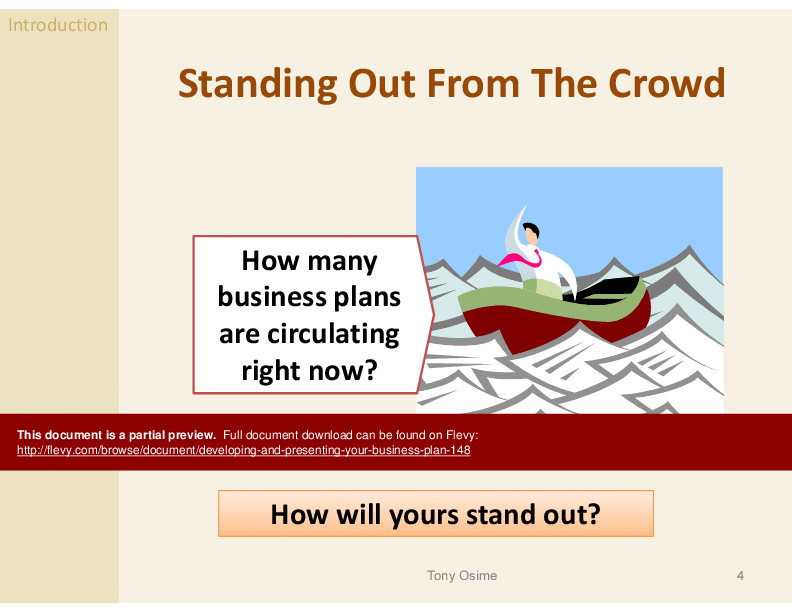
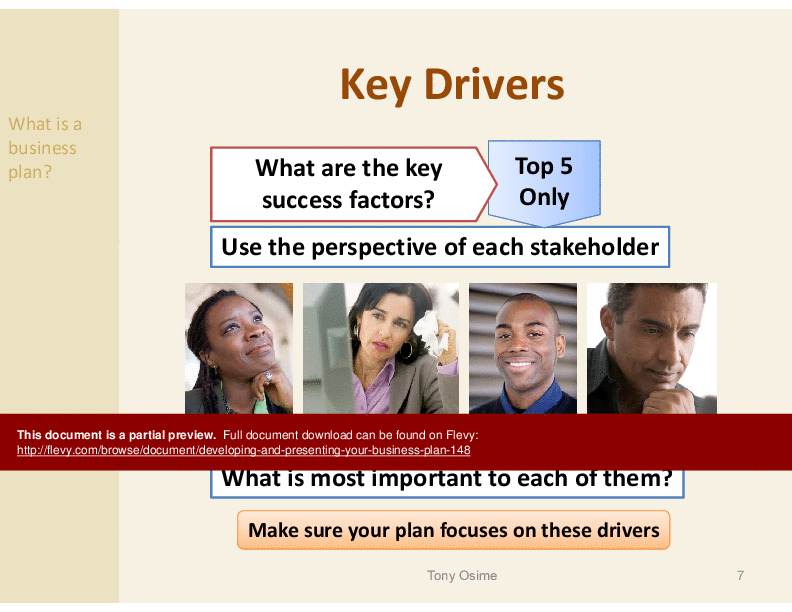
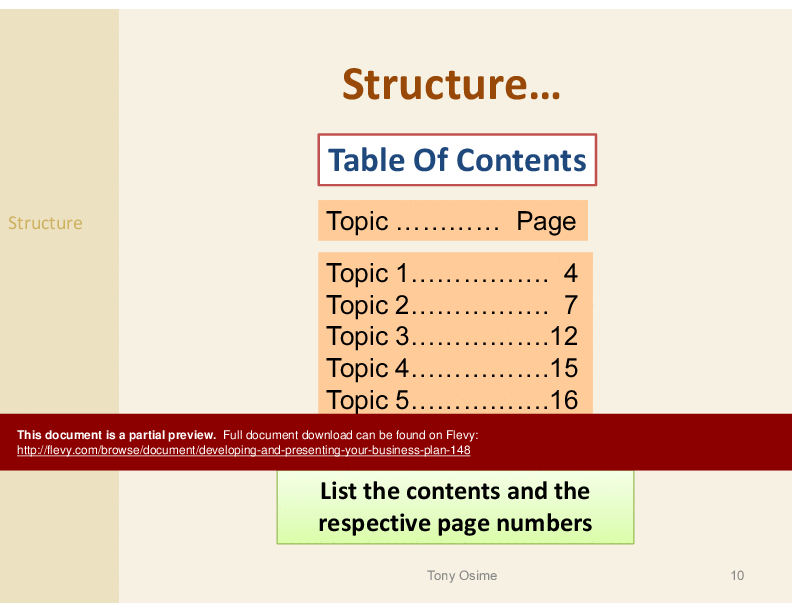
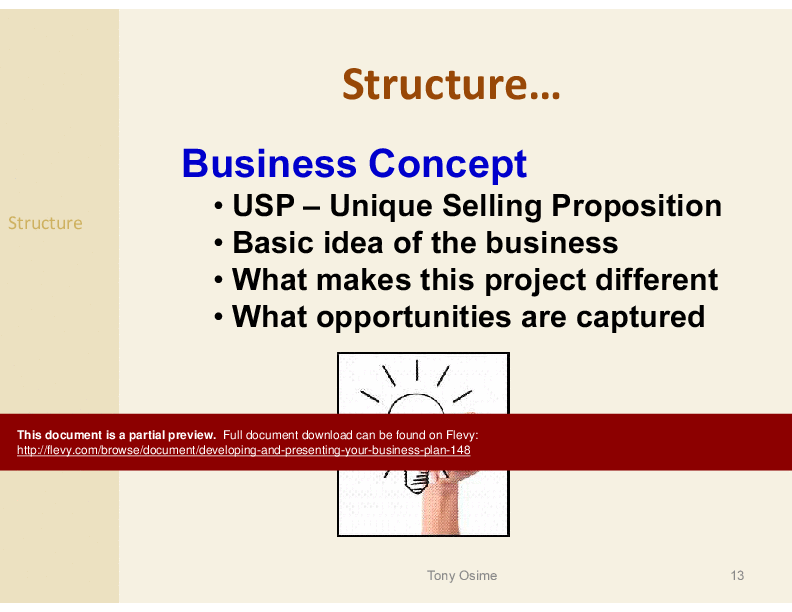
This presentation emphasizes the importance of standing out in a crowded market by focusing on key success factors and stakeholder perspectives. It also provides detailed guidance on structuring your business plan, including sections on market analysis, regulatory compliance, and effective communication strategies.
Got a question about the product? Email us at support@flevy.com or ask the author directly by using the "Ask the Author a Question" form. If you cannot view the preview above this document description, go here to view the large preview instead.
Executive Summary
The "Developing & Presenting Your Business Plan" presentation is a comprehensive guide designed for startups and entrepreneurs seeking to create effective business plans. This resource provides a structured approach to writing and presenting business plans, ensuring clarity and engagement with potential investors and stakeholders. By utilizing this presentation, users will learn how to articulate their business concepts, outline operational strategies, and effectively communicate their vision, ultimately enhancing their chances of securing financing and collaboration.
Who This Is For and When to Use
• Entrepreneurs looking to secure funding for their startups
• Small business owners preparing to present their business plans
• Consultants advising clients on business strategy development
• Corporate executives seeking to refine their business planning skills
Best-fit moments to use this deck:
• During the initial stages of business development to outline strategic goals
• In preparation for investor meetings or pitch competitions
• As a training tool for teams involved in business planning and strategy
Learning Objectives
• Define the essential components of a business plan
• Construct a clear and concise executive summary
• Identify the target audience and tailor the business plan accordingly
• Develop a compelling business concept and unique selling proposition
• Create a detailed financial projection and operational strategy
• Design an engaging presentation that effectively communicates the business plan
Table of Contents
• Introduction (page 2)
• What Is a Business Plan? (page 5)
• Structure (page 8)
• Writing Tips (page 23)
• Design Tips (page 37)
• Plan Presentation (page 41)
Primary Topics Covered
• Business Plan Definition - A business plan serves to clarify strategy, raise financing, and attract collaboration, varying in content and style based on its purpose.
• Business Plan Structure - Key sections include an introduction, executive summary, business concept, market analysis, operations, financials, and an appendix.
• Writing Tips - Emphasizes clarity, conciseness, organization, and relevance to ensure the content is easily understood and impactful.
• Design Tips - Focuses on the use of visuals, white space, and professional formatting to enhance readability and engagement.
• Plan Presentation - Offers strategies for effectively presenting the business plan, including audience engagement techniques and delivery tips.
Deliverables, Templates, and Tools
• Business plan template outlining key sections and content requirements
• Executive summary framework for summarizing the business plan
• Writing and design checklists to ensure clarity and professionalism
• Presentation slides template for pitching the business plan to stakeholders
• Audience analysis worksheet to tailor the presentation to specific groups
Slide Highlights
• Introduction slide that sets the stage for the importance of a well-crafted business plan
• Structure slide detailing the essential components of a business plan
• Writing tips slide emphasizing clarity and conciseness
• Design tips slide showcasing effective use of visuals and layout
• Plan presentation slide with key strategies for engaging the audience
Potential Workshop Agenda
Business Plan Development Session (90 minutes)
• Discuss the purpose and structure of a business plan
• Break down each section of the plan and its importance
• Work on drafting individual business concepts
Presentation Skills Workshop (60 minutes)
• Review best practices for presenting a business plan
• Practice delivery techniques and audience engagement strategies
• Provide feedback on presentation styles and content
Customization Guidance
• Modify the business plan template to fit specific industry requirements and audience expectations
• Adjust financial projections based on unique business models and market conditions
• Tailor the presentation style to align with the preferences of potential investors or stakeholders
Secondary Topics Covered
• Market analysis strategies for identifying target customers and competition
• Operational planning for efficient production and service delivery
• Financial forecasting techniques for projecting revenue and expenses
• Legal considerations and regulatory compliance relevant to the business
Topic FAQ
Document FAQ
These are questions addressed within this presentation.
What is the primary purpose of a business plan?
The primary purpose of a business plan is to clarify strategy, raise financing, and attract collaboration by outlining the business's goals and operational plans.
How should I structure my business plan?
A business plan should include an introduction, executive summary, business concept, market analysis, operations, financials, and an appendix to provide comprehensive coverage of the business.
What are some key writing tips for creating a business plan?
Focus on clarity, conciseness, organization, and relevance to ensure that the content is easily understood and impactful for the reader.
What design elements should I consider for my business plan?
Incorporate visuals, use white space effectively, and ensure professional formatting to enhance readability and engagement.
How can I effectively present my business plan?
Engage your audience by using clear visuals, practicing your delivery, and being prepared to answer questions. Tailor your presentation to the audience's interests and knowledge level.
What should I include in the financial section of my business plan?
Include historical and projected financial statements, assumptions, cash flow analysis, and key financial ratios to provide a clear picture of the business's financial health.
How can I ensure my business plan stands out?
Focus on a unique selling proposition, present clear data and analysis, and ensure that the plan is well-organized and visually appealing.
What is the importance of audience analysis in a business plan presentation?
Understanding your audience allows you to tailor your message, address their specific concerns, and engage them effectively during the presentation.
Glossary
• Business Plan - A formal document outlining a business's goals, strategies, and financial projections.
• Executive Summary - A concise overview of the business plan's key points, typically 1-2 pages long.
• Unique Selling Proposition (USP) - The distinct advantage that sets a business apart from competitors.
• Market Analysis - The assessment of market conditions, including customer demographics and competition.
• Financial Projections - Estimates of future revenue, expenses, and profitability over a specified period.
• SWOT Analysis - A framework for identifying strengths, weaknesses, opportunities, and threats related to the business.
• Appendix - Supplementary material providing additional information, such as charts, graphs, and research data.
• Audience Engagement - Techniques used to involve the audience during a presentation, enhancing interaction and interest.
• Presentation Skills - The ability to effectively communicate ideas and information to an audience.
• Clarity - The quality of being easily understood, ensuring that the message is clear and concise.
• Conciseness - The practice of expressing ideas in a brief and efficient manner.
• Visual Aids - Tools such as slides, charts, and graphs used to enhance presentations and convey information effectively.
Source: Best Practices in Business Plan Writing, Entrepreneurship PowerPoint Slides: Developing & Presenting Your Business Plan PowerPoint (PPTX) Presentation Slide Deck, tosime
|
Download our FREE Strategy & Transformation Framework Templates
Download our free compilation of 50+ Strategy & Transformation slides and templates. Frameworks include McKinsey 7-S Strategy Model, Balanced Scorecard, Disruptive Innovation, BCG Experience Curve, and many more. |