

Understanding Private Equity   27-page PDF document
$37.00

Understanding Private Equity (27-page PDF document) Preview Image
Log in to unlock full preview.
Understanding Private Equity (27-page PDF document) Preview Image
Arrow   Click main image to view in full screen.

Understanding Private Equity – PDF

PDF document 27 Pages

$37.00
M&A, corporate finance and operational value creation
Add to Cart


Immediate download
Editable with PDF editor
Free lifetime updates

BENEFITS OF THIS DOWNLOADABLE PDF DOCUMENT

  1. Provides an understanding of private equity.
  2. Provides an understanding of private equity structures and tax issues to consider.
  3. Helps you understand the characteristics of good deals.

PRIVATE EQUITY PDF DESCRIPTION

Editor Summary 27-page PDF introducing private equity fund structures, acquisition structures, and tax issues across the PE lifecycle, authored by Wambua Mutua. Read more

Private equity is an "alternative investment" asset class. It refers to investments in companies that are not traded on a stock exchange. Venture capital is a specific strategy under the private equity umbrella which generally focuses on investments in startups.
Other private equity strategies include growth equity, which involves investments in more established, growing companies, and buyouts, which refer to investments in mature, usually publicly traded companies, to take them private.

PE investments are usually organized through a fund. The fund manager, called the general partner, raises money from external investors, which are called limited partners. The general partner then also invests some money into the fund.
In this presentation. I define private equity (PE), explain the private equity fund structures, tax issues in a private equity structure, tax aspects of acquisition structures. In addition, a bonus topic on Private equity flow from set up to exit as well as how private equity works, fees and carries interest in PE's and the characteristics of good deals.

A PE house is a management company that gets paid a fee from the fund for managing the investments. It uses this fee to pay for staff salaries, office rental etc. Learn more in the document.
This presentation contains educational information, including, but not limited to, definitions, demonstrations, practical experience, insights and illustrations. Although the author, Wambua believes that the insights and opinions reflected are reasonable, educative and contribute to the body of knowledge in M&A field, no assurance can be given that such opinions will prove to be correct and may not be viewed as professional advice.

Important care should be taken when relying on the information here and may not be construed as professional advice. For any professional advice, please engage a professional. No part of the information contained herein, shall be taken to constitute a professional advice and must not be relied upon in any way in connection with any investment decision. Wambua undertakes no obligation to update any information.

Got a question about the product? Email us at support@flevy.com or ask the author directly by using the "Ask the Author a Question" form. If you cannot view the preview above this document description, go here to view the large preview instead.

DOCUMENT DEEP DIVE ANALYSIS

This deep-dive analysis was generated from the full 27-page document.


Executive Summary

This PDF is an educational private equity overview focused on fund structures, acquisition structures, and tax issues that arise across the PE lifecycle. It explains what a private equity fund is, how institutional investors make unfunded commitments, and why limited partnerships are commonly used in private equity. The deck then moves into typical PE fund structures, profit-sharing mechanics, and the relationship between investors, the general partner, advisory entities, co-investment schemes, and carry vehicles. It also covers key tax issues at fund level, portfolio company level, and management level, including residency, substance, transfer pricing, VAT, withholding tax, and interest deductibility. The acquisition section adds typical buyout and borrowing structures, debt push-down considerations, investor tax concerns, and management incentive topics such as sweat equity. Buyers can use this document to build a baseline understanding of private equity economics, fund design, acquisition structuring, carried interest, and the tax questions that affect returns and cash leakage.

Who This Is For and When to Use

•  Corporate finance teams that need a concise working overview of private equity fund mechanics
•  M&A professionals reviewing buyout structures, debt layering, and investor return considerations
•  Strategy and business development teams that want a practical introduction to how PE firms create value
•  Consultants supporting private equity clients, portfolio companies, or acquisition workstreams
•  Executives preparing for discussions with private equity investors, sponsors, or advisors
•  Management teams seeking to understand carried interest, management incentives, and sweat equity concepts

Best-fit moments to use this deck:

•  Before a meeting with a PE sponsor or fund advisor when the team needs a common vocabulary
•  During M&A training or onboarding for analysts, associates, or corporate development staff
•  When reviewing acquisition structures that include bank debt, shareholder debt, mezzanine debt, or tax grouping
•  During diligence or deal planning when tax residence, treaty access, interest deductibility, and withholding taxes matter
•  When explaining private equity economics, fees, and exit routes to management teams or internal stakeholders

Learning Objectives

•  Define what a private equity fund is and how unfunded commitments work
•  Distinguish among traditional, captive, sponsored, listed, and sovereign fund types
•  Explain the core roles of limited partners, the general partner, advisory companies, and carry partnerships
•  Understand how private equity profits are shared through management fees, initial capital return, hurdle, catch-up, and carried interest
•  Identify key tax questions around fund control, GP residence, substance, portfolio company residence, and treaty qualification
•  Assess the tax focus points in acquisition and borrowing structures, including interest deductibility and withholding taxes
•  Describe how debt push-down affects cash extraction, security, treasury management, and tax leakage
•  Evaluate investor concerns around capital gains, dividend income, interest income, and phantom income
•  Understand the tax aspects of sweat equity and management alignment arrangements
•  Summarize how PE firms move from fund setup to exit and what characteristics define attractive deals

Table of Contents

•  Introduction (page 4)
•  Typical PE Fund Structures (page 7)
•  Tax Issues in Private Equity Structures (page 12)
•  Tax Aspects of Acquisition Structures (page 16)
•  Appendix (page 23)

Primary Topics Covered

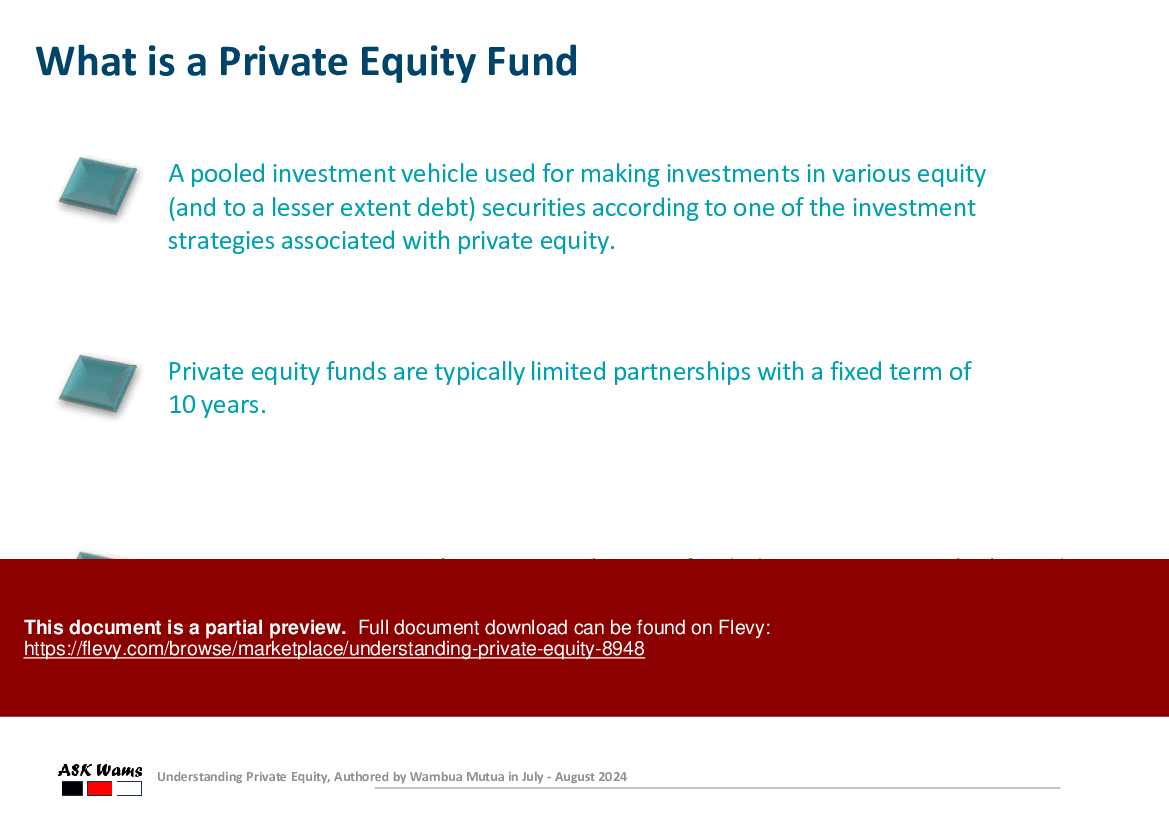
•  Private Equity Fund Basics - The deck defines a private equity fund as a pooled investment vehicle that invests mainly in equity securities and is typically organized as a limited partnership with a fixed term of 10 years. It also notes that institutional investors make unfunded commitments that are drawn over the term of the fund.
•  Fund Types and Investment Objectives - The presentation distinguishes traditional, captive, sponsored, listed, and sovereign funds, then links fund objectives to target size and strategy categories such as large, mid-cap, expansion and seed, equity, mezzanine, infrastructure, real estate, debt, regional, development, and impact.
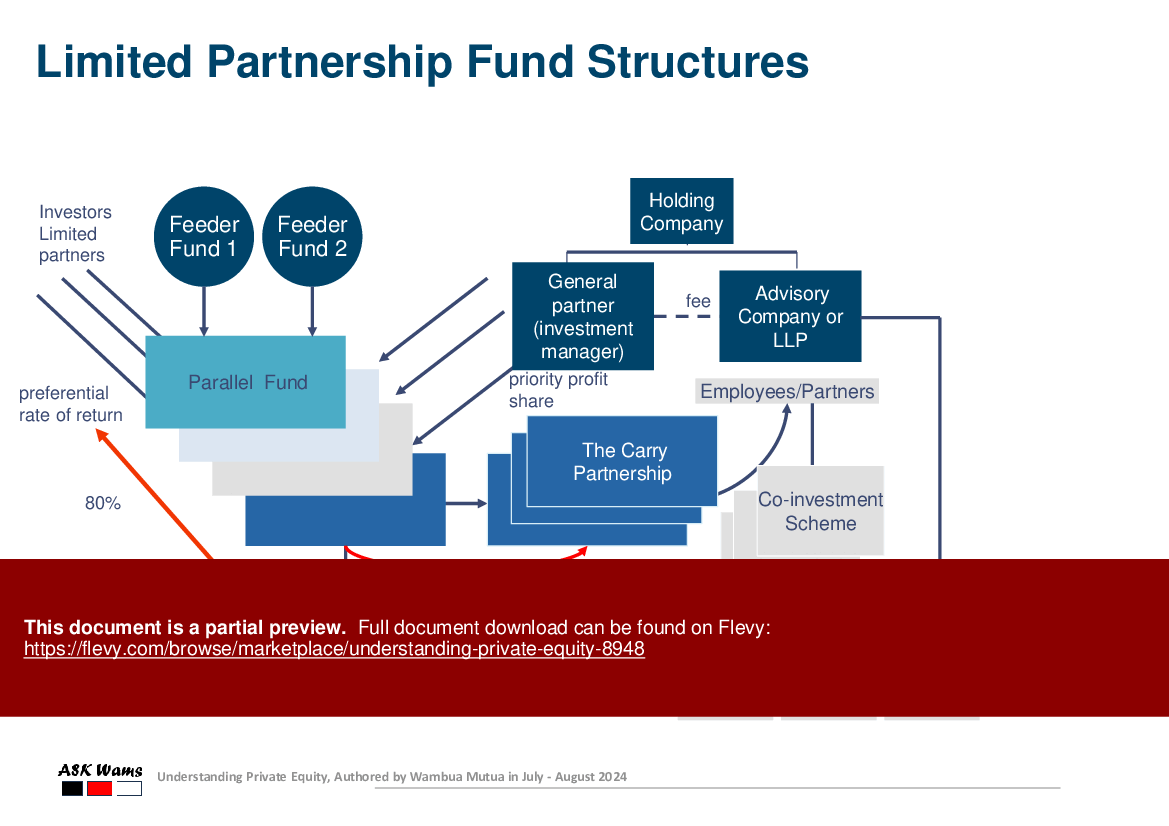
•  Limited Partnership Fund Structure - Several diagrams show the relationship among investors as limited partners, the fund partnership, the general partner as investment manager, advisory entities, carry partnerships, holding companies, feeder funds, parallel funds, and co-investment schemes.
•  Profit Sharing and Waterfall Mechanics - The deck explains that an allocation clause in the partnership agreement governs profit sharing, with investors first paying management fees, receiving initial capital back, earning a return above market, and then sharing profits with executives, illustrated with an 80:20 split after hurdle and catch-up.
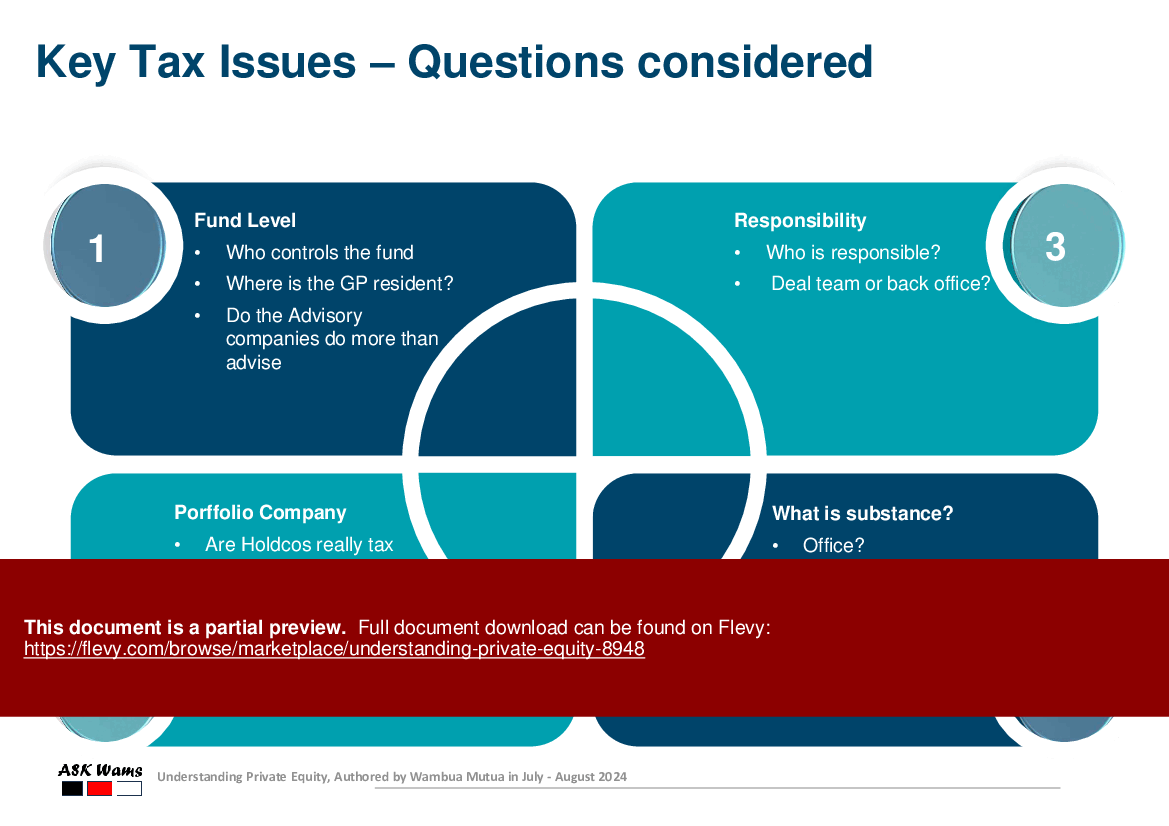
•  Tax Issues in PE Structures - A dedicated section frames the main tax questions around fund control, GP residence, advisory company activity, holdco residence, treaty qualification, responsibility between deal team and back office, and the practical meaning of substance in terms of office, people, and qualified deal managers.
•  Acquisition and Borrowing Structures - The acquisition structure pages outline a typical PE buyout with bank debt, newco, shareholder debt, target management, and tax grouping, followed by a borrowing structure that layers senior debt, mezzanine debt, shareholder debt, and equity.
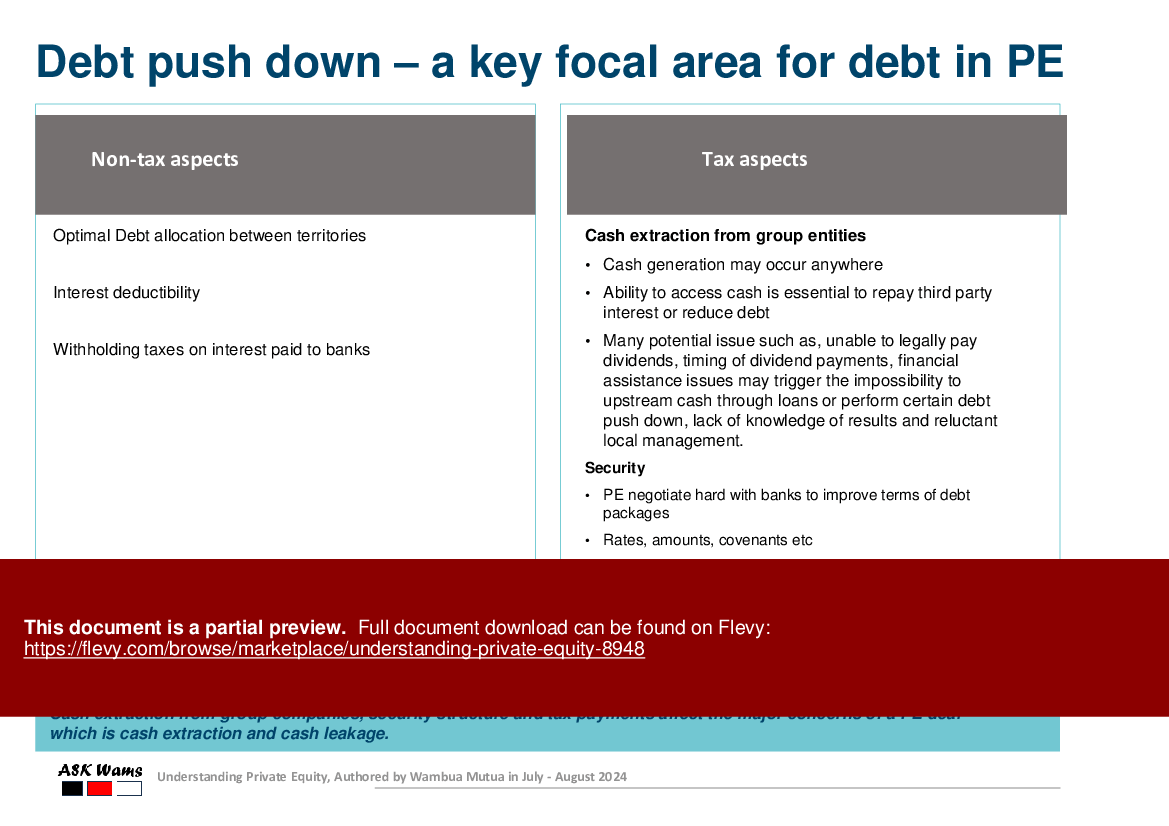
•  Debt Push-Down and Cash Leakage - The deck identifies debt push-down as a focal area because PE deals depend on cash extraction and managing cash leakage. It highlights legal limits on upstreaming cash, security positioning, optimal debt allocation between territories, interest deductibility, and withholding taxes.
•  Investor Returns, Fees, and Carried Interest - The presentation explains why investors prefer returns with less tax leakage, why many prefer capital gains over dividend or interest income, and how PE houses earn management fees and carried interest, including an example hurdle of over 8 percent with 20 percent carry above that level.

Deliverables, Templates, and Tools

•  Private equity fund structure example showing the relationships among LPs, GP, advisory company, carry partnership, and co-investment scheme
•  Expanded PE structure model with holding company, feeder funds, and parallel funds
•  Profit-sharing waterfall example covering management fee, initial capital, hurdle, catch-up, investor profit, and management profit
•  Key tax issues question set for fund, portfolio company, responsibility, and substance review
•  Onshore versus offshore GP structure example showing fund vehicle, PPS, GP, advisor, fees, and VAT grouping
•  Typical acquisition structure model with PE investor, bank, newco, shareholder debt, target, subsidiaries, and tax grouping
•  Typical borrowing structure example with senior newco, mezzanine newco, shareholder debt, senior debt, mezzanine debt, and tax group
•  Debt push-down issue map covering cash extraction, security, debt allocation, interest deductibility, and withholding taxes
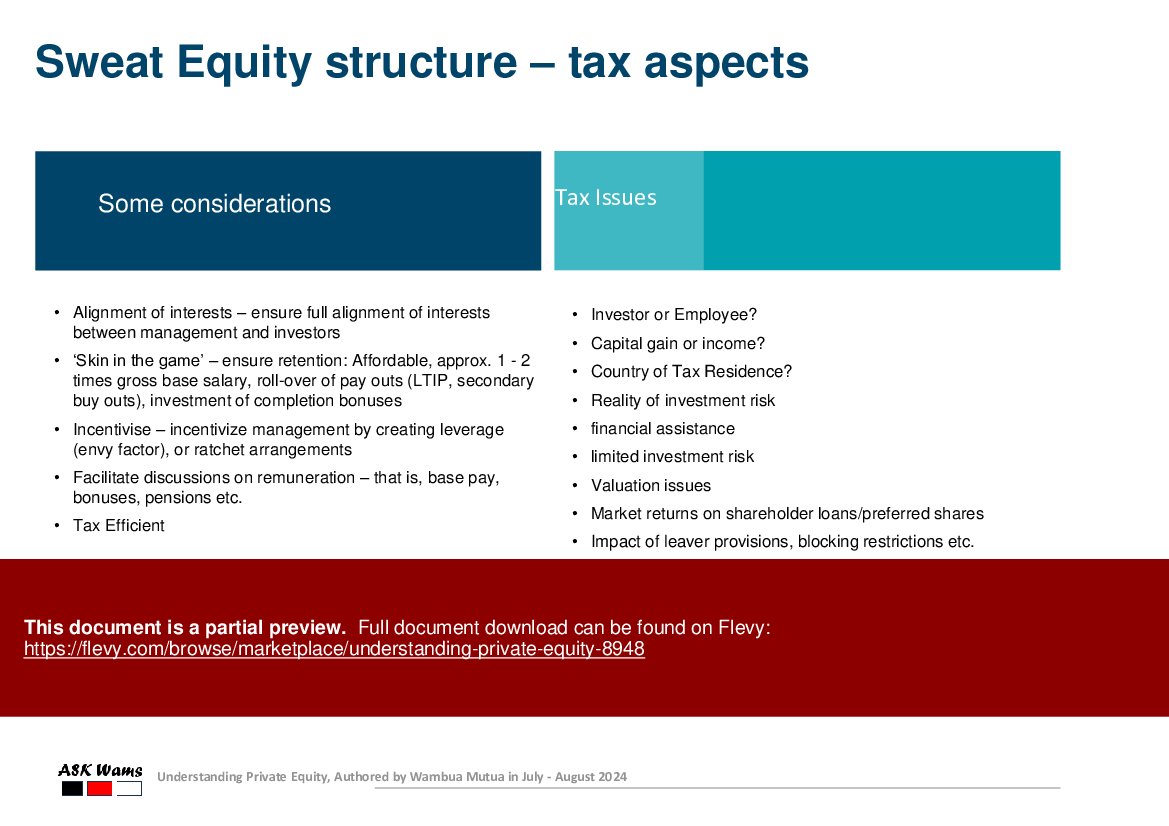
•  Sweat equity tax considerations checklist for management alignment and investment risk
•  PE flow model from setup to exit covering management company, fund, bank debt, buy business, service debt, and exit routes
•  Fees and carried interest example showing management fee income, deal fees, costs, and carry economics

Slide Highlights

•  Table of contents page that cleanly breaks the deck into fund structures, tax issues, acquisition structures, and appendix modules
•  Fund types slide that visually separates traditional, captive, sponsored, listed, and sovereign funds
•  Limited partnership structure diagrams that make the interaction among investors, GP, advisory company, carry partnership, feeder funds, and parallel funds easier to follow
•  Profit-sharing slide that converts carried interest mechanics into a simple waterfall framework
•  Key tax issues page that organizes tax questions into four quadrants: fund level, portfolio company, responsibility, and substance
•  Acquisition structure slide that combines PE capital, bank debt, shareholder debt, target management, and tax grouping in one schematic
•  Borrowing structure page that shows senior and mezzanine layers alongside shareholder debt and tax grouping
•  Debt push-down slide that pairs non-tax aspects and tax aspects to show how cash extraction and cash leakage affect a PE deal
•  PE flow from setup to exit diagram that links fund formation, financing, acquisition, servicing debt, and exit options
•  Fees and carried interest page that ties fund economics to management fees, deal fees, hurdle rates, and carry distribution

Potential Workshop Agenda

Private Equity Fundamentals Session (60-90 minutes)
•  Define what a private equity fund is and how investor commitments are drawn
•  Review fund types and target strategy categories
•  Walk through the role of LPs, GP, advisory entities, and carry arrangements

Fund Economics and Tax Structure Session (90 minutes)
•  Review profit-sharing waterfall mechanics, management fees, hurdle, catch-up, and carried interest
•  Discuss key tax issues around residence, substance, transfer pricing, VAT, and treaty access
•  Compare onshore and offshore GP considerations

Acquisition and Debt Structuring Session (90 minutes)
•  Review typical acquisition and borrowing structures using the newco, mezzanine, and shareholder debt models
•  Discuss debt push-down, security placement, interest deductibility, and withholding tax exposure
•  Consider investor return preferences and phantom income risk

Management Incentives and Exit Session (60 minutes)
•  Review sweat equity tax considerations and management alignment topics
•  Walk through PE flow from setup to exit
•  Compare exit routes including IPO, trade sale, secondary buyout, break-up, and insolvency

Customization Guidance

•  Replace the generic structure diagrams with your target deal entities, jurisdictions, and financing layers
•  Tailor the tax issue question set to the specific residence, treaty, VAT, and substance issues in your transaction
•  Adapt the profit-sharing examples to your preferred hurdle rate, carry split, and fee assumptions
•  Use the borrowing structure slides to model your actual senior debt, mezzanine debt, shareholder debt, and tax grouping design
•  Expand the sweat equity section with your management retention and incentive terms if the deal includes rollover equity or ratchet arrangements

Secondary Topics Covered

•  Institutional investors and unfunded commitments
•  Investment manager and advisory company relationships
•  Priority profit share and preferential return concepts
•  Tax-transparent vehicles
•  Transfer pricing and corporate tax questions within the PE structure
•  VAT recovery and VAT grouping issues
•  Withholding tax on interest
•  Tax grouping and mergers in acquisition structures
•  Structural subordination of debt
•  Bank covenants and refinancing
•  Management equity stakes and target IRR expectations
•  Characteristics of good deals such as strong management, strong cash flows, synergies, restructuring opportunity, and industry consolidation
•  Exit routes including IPO, trade sale, secondary buyout, break-up, and insolvency

Topic FAQ

What exactly is a private equity fund and how do investor commitments work?

A private equity fund is defined as a pooled investment vehicle investing mainly in equity and typically organised as a limited partnership. Institutional investors make unfunded commitments at inception that the fund draws over its life; the deck notes a common fixed term of 10 years, with commitments drawn over that term, a 10-year fixed term.

What common fund types exist and how do objectives differ across them?

The presentation distinguishes traditional, captive, sponsored, listed, and sovereign funds, linking fund objectives to target size and strategy categories such as large-cap, mid-cap, expansion, seed, equity, mezzanine, infrastructure, real estate, debt, regional, development, and impact—examples include traditional, captive, sponsored, listed, and sovereign funds.

How do carried interest and the profit-sharing waterfall typically operate in PE funds?

Profits are allocated by an allocation clause: the fund pays management fees, returns initial capital, pays a preferred return/hurdle, applies catch-up mechanics, then shares carry with management. The deck illustrates an investor/manager split example of 80:20 after the hurdle, specifically 20% carry above an 8% hurdle, 20% carry above an 8% hurdle.

Which tax questions are most important when assessing a PE fund structure?

Key tax focus areas include who controls the fund, GP residence, whether advisory companies perform more than advisory roles, holdco residence and treaty access, and practical substance (office, people, qualified deal managers). The deck emphasises substance criteria such as office, people, and qualified deal managers as review points.

What should I look for when choosing a learning or template deck on private equity fundamentals?

Look for clear coverage of fund structures and limited partnership mechanics, profit-sharing waterfall examples, acquisition and borrowing models, debt push-down analysis, and a tax-question checklist for fund and portfolio company review. Flevy's Understanding Private Equity includes these elements and a profit-sharing waterfall example.

What practical value do PE template decks deliver for teams new to PE topics?

Template decks establish a common vocabulary, provide schematic fund and acquisition diagrams, outline waterfall mechanics, and surface tax focus points that inform diligence and meetings. They are useful for training and prep work and typically include tools such as a PE flow model from setup to exit and a debt push-down issue map.

I have a prep meeting with a PE sponsor—what materials should I assemble to be ready?

Prepare a fund-structure diagram, a profit-sharing waterfall illustration, an acquisition financing schematic showing bank, mezzanine, and shareholder debt, and a focused tax question set on residence, treaty access, and substance. Flevy's Understanding Private Equity maps these items and provides a key tax issues question set for review.

How are buyout and borrowing structures typically layered in PE transactions?

The deck outlines acquisition structures with bank/newco financing, shareholder debt, and tax grouping, and borrowing structures that layer senior debt, mezzanine debt, shareholder debt, and equity. Practical modelling focuses on senior debt, mezzanine debt, and shareholder debt layers.

Document FAQ
These are questions addressed within this presentation.


What is a private equity fund according to this deck?
It is a pooled investment vehicle used to invest mainly in equity securities under a private equity strategy. The deck says these funds are typically limited partnerships with a 10-year fixed term and are funded through unfunded investor commitments that are drawn over time.

What kinds of private equity funds does the presentation cover?
It lists traditional, captive, sponsored, listed, and sovereign funds. The distinction is based on whether capital comes from unrelated investors, one major investor, a quoted investment vehicle, or a state-backed source.

Why is the limited partnership structure important in private equity?
The deck presents it as the standard PE fund structure and notes that partnerships are used because they offer limited liability for investors, flexibility, familiarity, local regulatory fit, and tax transparency.

How are profits typically shared in a PE fund?
The presentation describes a waterfall in the partnership agreement. Investors pay management fees, receive back their initial capital, earn a preferred return, and then share profits with executives, illustrated with an 80:20 split.

What tax questions matter most at fund level and portfolio company level?
The deck highlights who controls the fund, where the GP is resident, whether advisory companies do more than advise, whether holdcos are tax-resident where expected, and whether they qualify for tax treaties. It also raises responsibility and substance questions.

What does the deck say about onshore versus offshore GP structures?
It notes that tax transparency, VAT, offshore residence management, and advisory cost treatment are key considerations. It also shows that funds can still use a local partnership for the fund while managing VAT and advisory issues separately.

What are the main tax focus points in a typical acquisition structure?
The acquisition structure section points to tax deductibility of interest and transaction costs, withholding taxes, and the timing and rate of taxation for investors and target management.

Why is debt push-down such a focal point in PE deals?
Because PE deals rely on cash extraction to service debt and reduce leverage. The deck says legal restrictions, dividend timing, financial assistance issues, and local management reluctance can all limit the ability to move cash upstream.

What return concerns do PE investors have?
The presentation says investors want to maximize cash return without tax leakage, often prefer capital gains to dividend or interest income, and try to avoid phantom income where tax is charged on accrued returns before cash is received.

What is sweat equity in this presentation?
It is a management incentive structure designed to align interests, create retention, and give management skin in the game. The tax section asks whether the holder should be treated as an investor or employee, whether returns are capital gain or income, and how residence, risk, valuation, and anti-avoidance rules affect the structure.

How does the deck describe PE value creation and exit?
It links good deals to strong management, sales growth, synergies, cash flows, restructuring opportunity, and industry consolidation. It also shows a flow from setup to exit, with common exits including IPO, trade sale, secondary buyout, break-up, and insolvency.

Glossary

•  Private Equity Fund - A pooled investment vehicle used for investing in equity and, to a lesser extent, debt securities under a private equity strategy
•  Unfunded Commitment - The investor commitment made at inception that is drawn over the term of the fund
•  Limited Partnership - The fund structure identified in the deck as typical for private equity funds
•  Limited Partners - Investors in the fund who commit capital and receive preferential return and profit participation
•  General Partner - The investment manager of the fund
•  Advisory Company - The advisory entity or LLP that receives fees and interacts with the GP and fund structure
•  Carry Partnership - The vehicle through which carried interest is allocated to employees or partners
•  Co-investment Scheme - A structure that allows employees or partners to invest alongside the fund
•  Waterfall - The allocation clause in the partnership agreement that governs how profits are shared
•  Management Fee - The annual fee paid by the fund to the PE house for managing investments
•  Hurdle - The preferred return threshold that must be achieved before carried interest is paid
•  Catch-up - The stage in the waterfall after the hurdle where management profit participation adjusts
•  Carried Interest - The management share of returns above a hurdle, illustrated in the deck as 20 percent above an 8 percent hurdle
•  Holdco - A holding company used in the PE structure and assessed for tax residence and treaty qualification
•  Tax Transparency - A feature cited as one reason partnerships are used in private equity
•  VAT Group - A grouping arrangement between GP and advisor used to manage VAT on intercompany charges
•  Withholding Tax - Tax on interest payments highlighted as a key concern in borrowing and acquisition structures
•  Debt Push-Down - The placement of debt lower in the target structure to improve cash access and debt servicing
•  Phantom Income - A tax charge on accrued debt income before cash is actually received
•  Sweat Equity - A management incentive structure designed to align interests and create retention through investment participation

Source: Best Practices in Private Equity PDF: Understanding Private Equity PDF (PDF) Document, Wambua Mutua


$37.00
M&A, corporate finance and operational value creation
Add to Cart
  

ABOUT THE AUTHOR

Author: Wambua Mutua

Wambua is a well-known ex-PwC, ex KPMG and ex-Grant Thornton Consultant with 15+ years of experience helping companies with their Mergers, acquisitions, strategic partnerships, and operational value creation.

He is an Expert in M&A, Transactions Advisory, Project Financing, Financial Modeling, Business Valuation and Corporate Finance.

Ask the Author a Question

You must be logged in to contact the author.

Click here to log in Click here register

Did you know?
The average daily rate of a McKinsey consultant is $6,625 (not including expenses). The average price of a Flevy document is $65.


Trusted by over 10,000+ Client Organizations
Since 2012, we have provided business templates to over 10,000 businesses and organizations of all sizes, from startups and small businesses to the Fortune 100, in over 130 countries.
AT&T GE Cisco Intel IBM Coke Dell Toyota HP Nike Samsung Microsoft Astrazeneca JP Morgan KPMG Walgreens Walmart 3M Kaiser Oracle SAP Google E&Y Volvo Bosch Merck Fedex Shell Amgen Eli Lilly Roche AIG Abbott Amazon PwC T-Mobile Broadcom Bayer Pearson Titleist ConEd Pfizer NTT Data Schwab


Read Customer Testimonials

 
"FlevyPro provides business frameworks from many of the global giants in management consulting that allow you to provide best in class solutions for your clients."

– David Harris, Managing Director at Futures Strategy
 
"As a consultant requiring up to date and professional material that will be of value and use to my clients, I find Flevy a very reliable resource.

The variety and quality of material available through Flevy offers a very useful and commanding source for information. Using Flevy saves me time, enhances my expertise and ends up being a good decision."

– Dennis Gershowitz, Principal at DG Associates
 
"One of the great discoveries that I have made for my business is the Flevy library of training materials.

As a Lean Transformation Expert, I am always making presentations to clients on a variety of topics: Training, Transformation, Total Productive Maintenance, Culture, Coaching, Tools, Leadership Behavior, etc. Flevy "

– Ed Kemmerling, Senior Lean Transformation Expert at PMG
 
"As a consulting firm, we had been creating subject matter training materials for our people and found the excellent materials on Flevy, which saved us 100's of hours of re-creating what already exists on the Flevy materials we purchased."

– Michael Evans, Managing Director at Newport LLC
 
"Flevy.com has proven to be an invaluable resource library to our Independent Management Consultancy, supporting and enabling us to better serve our enterprise clients.

The value derived from our [FlevyPro] subscription in terms of the business it has helped to gain far exceeds the investment made, making a subscription a no-brainer for any growing consultancy – or in-house strategy team."

– Dean Carlton, Chief Transformation Officer, Global Village Transformations Pty Ltd.
 
"The wide selection of frameworks is very useful to me as an independent consultant. In fact, it rivals what I had at my disposal at Big 4 Consulting firms in terms of efficacy and organization."

– Julia T., Consulting Firm Owner (Former Manager at Deloitte and Capgemini)
 
"As a small business owner, the resource material available from FlevyPro has proven to be invaluable. The ability to search for material on demand based our project events and client requirements was great for me and proved very beneficial to my clients. Importantly, being able to easily edit and tailor "

– Michael Duff, Managing Director at Change Strategy (UK)
 
"I have found Flevy to be an amazing resource and library of useful presentations for lean sigma, change management and so many other topics. This has reduced the time I need to spend on preparing for my performance consultation. The library is easily accessible and updates are regularly provided. A wealth of great information."

– Cynthia Howard RN, PhD, Executive Coach at Ei Leadership


Customers Also Bought These Documents


Customers Also Like These Documents

Explore Templates on Related Management Topics


Your Recently Viewed Documents
Download our FREE Strategy & Transformation Framework Templates

Download our free compilation of 50+ Strategy & Transformation slides and templates. Frameworks include McKinsey 7-S Strategy Model, Balanced Scorecard, Disruptive Innovation, BCG Experience Curve, and many more.









