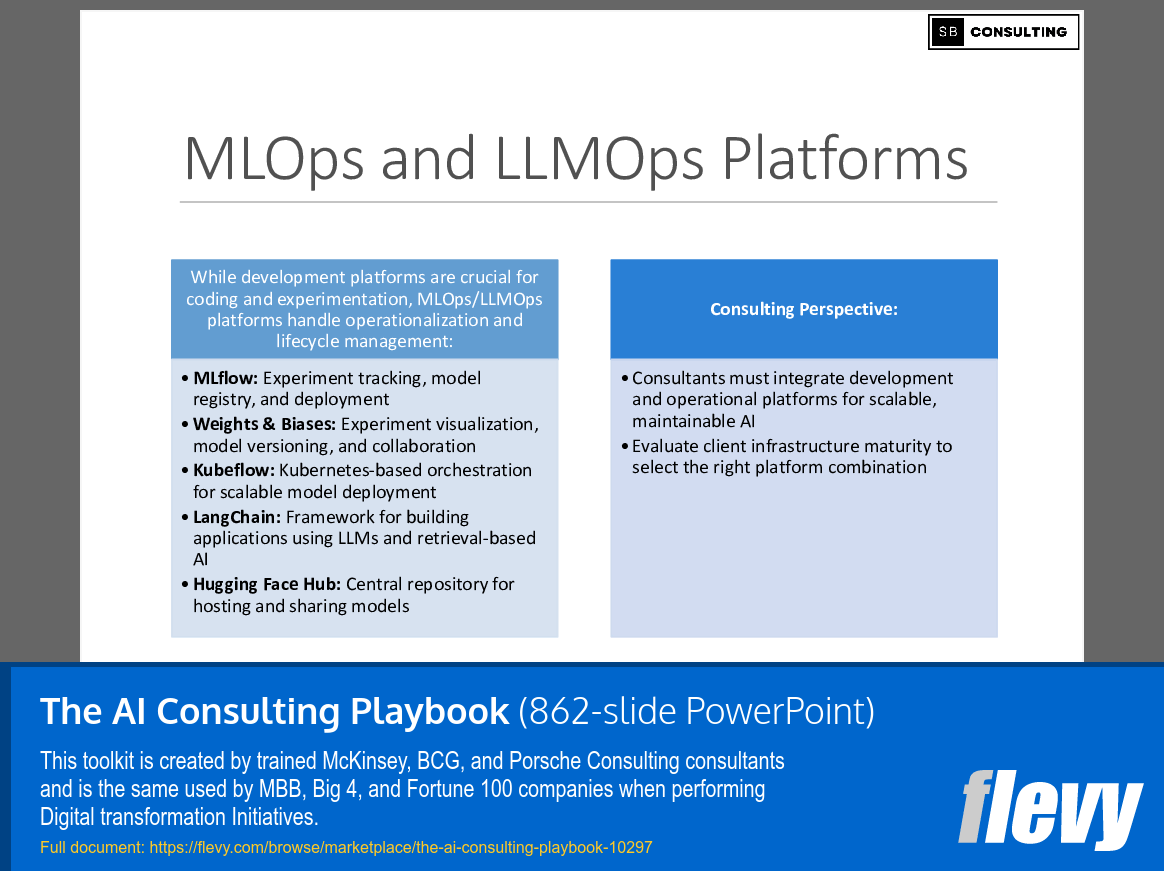

 Click main image to view in full screen.
The AI Consulting Playbook (PowerPoint PPTX Slide Deck)
PowerPoint (PPTX) 862 Slides


BENEFITS OF THIS POWERPOINT DOCUMENT
- Provides a complete blueprint for developing an AI Consulting Strategy tailored to any business environment.
- Delivers a structured approach for designing and implementing enterprise-grade AI solutions across departments.
- Equips you with a practical methodology for leading successful AI transformation initiatives from discovery to execution.
CONSULTING TRAINING PPT DESCRIPTION
Curated by McKinsey-trained Executives
The AI Consulting Playbook – The Most Comprehensive 800+ Slide PowerPoint Deck for Mastering AI Consulting, AI Strategy, AI Transformation, and Enterprise AI Implementation
If you want to become a top-performing AI consultant, build a profitable AI advisory business, or lead enterprise-level AI transformation, The AI Consulting Playbook is the most complete resource available today. This 800+ slide PowerPoint deck gives you everything you need to understand, design, sell, and deliver high-impact AI consulting engagements across any industry—using proven frameworks, enterprise methodologies, and battle-tested best practices.
The AI Consulting Playbook covers the full spectrum of modern AI consulting: foundational AI knowledge, consultant competencies, tool ecosystems, AI strategy development, enterprise AI readiness, risk management, AI solution design, AI project delivery, data foundations, automation design, transformation management, workforce enablement, ROI modeling, and the business mechanics of running a profitable AI consulting practice. It is designed to equip consultants, business leaders, and teams with a powerful end-to-end reference for the entire AI consulting lifecycle.
The Ultimate Resource for AI Consultants, Strategy Leaders, and AI-Driven Organizations
Businesses are accelerating AI adoption, and they need experts who can explain AI, design strategies, build roadmaps, manage AI projects, and guide organizational transformation. The AI Consulting Playbook helps you develop the capabilities required to lead these initiatives with clarity, structure, and authority.
Inside the deck, you'll find detailed insights into how AI impacts industries, how to build AI roadmaps, how to run AI assessments, how to design AI solutions, how to evaluate models, how to build AI governance, how to integrate AI into existing systems, and how to drive long-term AI adoption inside organizations. It is the closest thing to a complete "AI consultant starter kit" available on the market.
Master Every Stage of AI Consulting and AI Strategy Development
Whether you advise startups, mid-market companies, or global enterprises, this playbook gives you the frameworks to deliver consistent, high-value consulting work. You'll learn how to identify high-value AI opportunities, how to assess organizational and data maturity, how to build AI transformation strategies, how to develop business cases, how to evaluate AI tools, and how to design scalable AI systems.
It also walks you through advanced areas like AI risk management, governance models, security considerations, process redesign, automation architecture, and the integration of AI across ERP systems, CRM platforms, BI tools, and enterprise data pipelines.
Built for Real Consultants Delivering Real AI Projects
This is not theoretical content. The AI Consulting Playbook is based on practical consulting workflows used by successful AI teams. It gives you the clarity to structure client engagements, make informed strategic recommendations, and guide clients through the complexities of AI adoption.
If you want to run AI workshops, lead assessments, structure consulting packages, manage vendors, or advise executives, this playbook gives you the templates and thought-processes required to operate at a professional level.
For Consultants, Agencies, Fractional Leaders, and AI Transformation Teams
The AI Consulting Playbook is ideal for:
• AI consultants and advisory firms
• Management consultants shifting into AI
• Digital transformation leaders
• Fractional CTOs, CIOs, and CAIOs
• Innovation departments and enterprise strategy teams
• Data and analytics leaders building AI initiatives
• Agencies adding AI services to their portfolio
• Independent consultants and freelancers entering the AI market
The content helps you accelerate your learning curve, strengthen your client deliverables, and position yourself as a knowledgeable AI advisor in a rapidly expanding market.
A Complete Breakdown of the AI Consulting Lifecycle
From the fundamentals of AI to the complexities of enterprise deployment, this playbook is structured to guide you through the entire consulting journey. You'll find guidance on strategy frameworks, architecture design, data pipelines, governance models, operating models, automation opportunities, workforce transformation, adoption strategies, financial modeling, and offer structuring.
It also provides insights into how to build a sustainable AI consulting business, how to package high-ticket services, how to generate leads, and how to position yourself as a trusted expert in the AI ecosystem.
CONTENT OVERVIEW
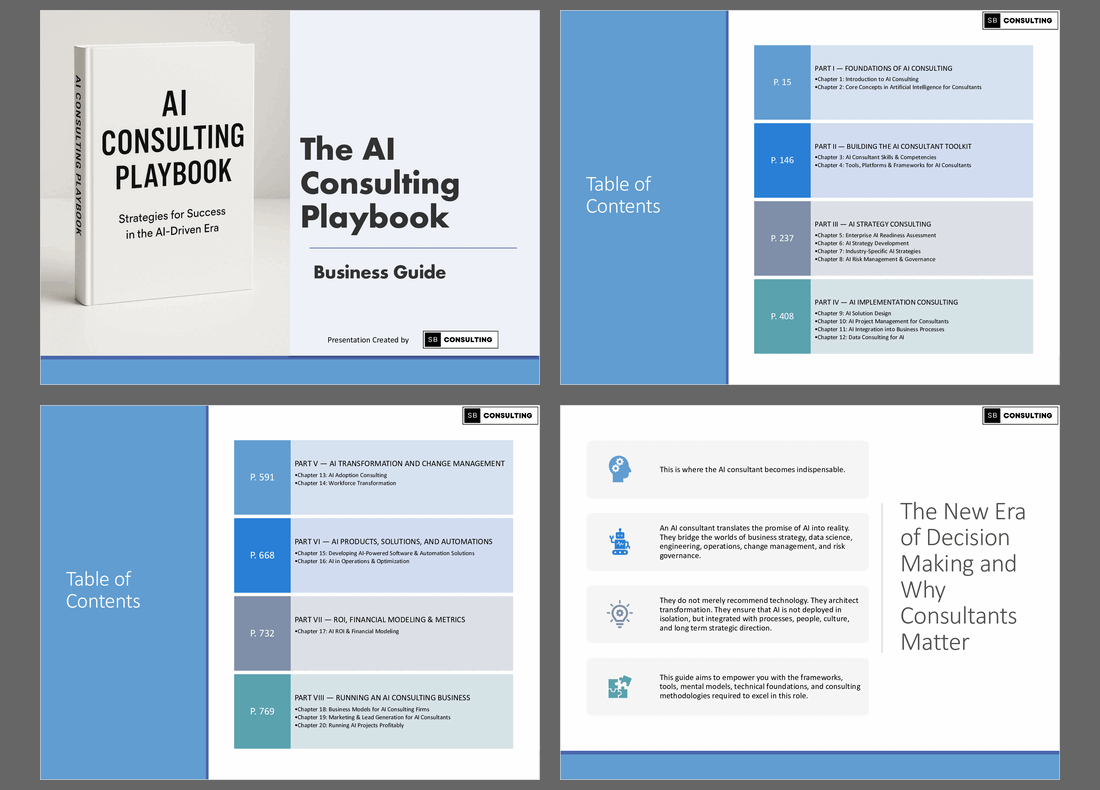
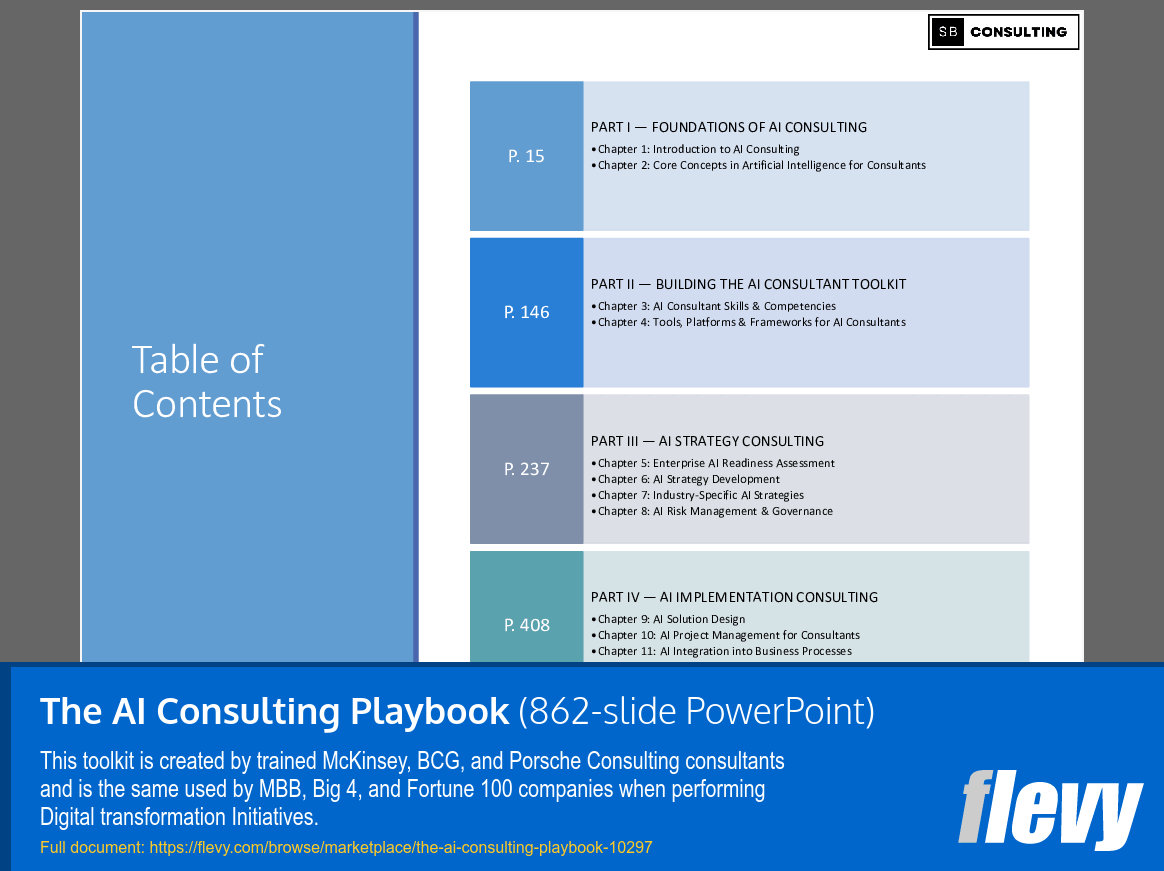
PART I – FOUNDATIONS OF AI CONSULTING
Chapter 1: Introduction to AI Consulting
1.1 Definition and Scope of AI Consulting
1.2 The Evolution of AI in Business
1.3 The AI Consulting Value Chain
1.4 The Role of the AI Consultant
1.5 Common Misconceptions About AI
1.6 Why AI Consulting Is the Fastest-Growing Consulting Niche
1.7 Types of AI Consulting Projects (Strategy, Ops, Transformation, Enablement, Risk, etc.)
Chapter 2: Core Concepts in Artificial Intelligence for Consultants
2.1 Machine Learning Basics (Supervised, Unsupervised, Reinforcement)
2.2 Deep Learning Overview
2.3 Generative AI: LLMs, Image Models, Audio Models
2.4 Knowledge Graphs and Symbolic AI
2.5 MLOps, LLMOps, and DataOps
2.6 AI Development Lifecycle
2.7 AI Infrastructure Essentials (Cloud, GPUs, Vector Databases, etc.)
2.8 Key AI Terminology Every Consultant Must Know
2.9 AI System Architecture 101
2.10 Ethical, Social, and Economic Foundations of AI
PART II – BUILDING THE AI CONSULTANT TOOLKIT
Chapter 3: AI Consultant Skills & Competencies
3.1 Technical vs. Non-Technical Skill Sets
3.2 Data Literacy for Business Consultants
3.3 Systems Thinking
3.4 Strategic Analysis and Frameworks
3.5 Advanced Prompt Engineering and AI Tool Proficiency
3.6 Communication Skills for AI Contexts
3.7 Facilitation and Workshop Leadership
3.8 Executive Coaching for AI Literacy
3.9 Building AI Domain Expertise
3.10 Continuous Learning and Staying Up-to-Date
Chapter 4: Tools, Platforms & Frameworks for AI Consultants
4.1 AI Market Landscape Mapping
4.2 OpenAI, Anthropic, Google, Meta, Open-source models overview
4.3 Common AI Development Platforms
4.4 Data Platforms & Vector Databases
4.5 No-Code and Low-Code AI Platforms
4.7 AI Safety, Governance & Compliance Tools
4.8 Competitive Intelligence Tools
4.9 Business Model and Strategy Frameworks
4.10 AI Readiness Assessments & Maturity Models
PART III – AI STRATEGY CONSULTING
Chapter 5: Enterprise AI Readiness Assessment
5.1 Designing an AI Readiness Framework
5.2 Assessing Data Maturity
5.3 Assessing Technology Infrastructure
5.4 Assessing Workforce Skills and Organizational Culture
5.5 Assessing Governance and Compliance
5.6 Evaluating Current Use Cases and Automation Levels
5.7 Stakeholder Mapping for AI Programs
5.8 Deliverables: Readiness Report, Gap Analysis, Roadmap
Chapter 6: AI Strategy Development
6.1 Strategy Discovery and Executive Alignment
6.2 The Strategic AI Opportunity Matrix
6.3 Identifying High-Value Use Cases
6.4 Prioritization Models (ICE, RICE, Impact–Feasibility, etc.)
6.5 AI Vision, Mission, and Principles
6.6 AI Operating Model Design
6.7 AI Workforce Strategy
6.8 AI Investment and Budget Modeling
6.9 Designing the AI Transformation Roadmap
6.10 Strategic KPI Frameworks for AI Programs
Chapter 7: Industry-Specific AI Strategies
7.1 AI in Finance
7.2 AI in Healthcare
7.3 AI in Manufacturing
7.4 AI in Retail & E-Commerce
7.5 AI in Marketing & Advertising
7.6 AI in Logistics & Supply Chain
7.7 AI in Government and Public Sector
7.8 AI in Professional Services
7.9 AI in Real Estate
7.10 Cross-Industry Strategy Patterns
Chapter 8: AI Risk Management & Governance
8.1 Understanding AI Risks: Technical, Business, Ethical
8.2 Regulatory Frameworks (GDPR, AI Act, etc.)
8.3 Governance Structures and Committees
8.4 AI Model Risk Management
8.5 Data Protection & Privacy Management
8.6 Algorithmic Fairness & Bias Mitigation
8.7 Responsible AI Frameworks and Standards
8.8 Documentation and Traceability Requirements
8.9 AI Audit Frameworks
PART IV – AI IMPLEMENTATION CONSULTING
Chapter 9: AI Solution Design
9.1 Defining Business Problems and Success Metrics
9.2 User Journey and Process Mapping
9.3 Data Requirements and Data Pipelines
9.4 Choosing the Right AI Model(s)
9.5 System Architecture and Integration Planning
9.6 Prototyping and MVP Development
9.7 Model Selection and Evaluation
9.8 Creating the AI Technical Specification
9.9 Security and Compliance Requirements
9.10 Documentation Best Practices
Chapter 10: AI Project Management for Consultants
10.1 Differences Between AI Projects and Traditional IT Projects
10.2 Managing AI Development Teams
10.3 Working with Vendors and Integrators
10.4 Agile, CRISP-DM, and Other AI-Focused Project Methodologies
10.5 Risk Planning and Mitigation
10.6 Communication Plans for AI Projects
10.7 Budgeting and Resourcing
10.8 Client Expectation Management
10.9 AI Project Implementation Roadmaps
10.10 Post-Implementation Evaluation
Chapter 11: AI Integration into Business Processes
11.1 Business Process Reengineering for AI
11.2 Automation vs. Augmentation Strategies
11.3 Integrating AI with ERP, CRM, BI & Data Warehouses
11.4 Workflow Automation and Intelligent Systems
11.5 Human-in-the-Loop System Design
11.6 Change Impact Assessments
11.7 Performance & Monitoring Architecture
11.8 Scalability Considerations
11.9 Documentation for IT and Ops Teams
11.10 Designing AI-Enabled KPIs & Dashboards
Chapter 12: Data Consulting for AI
12.1 Data Strategy Fundamentals
12.2 Data Governance Models
12.3 Data Quality Assessment and Improvement
12.4 Building Data Pipelines for AI
12.5 Choosing Storage, Processing, and Query Architecture
12.6 Metadata, Lineage & Cataloging
12.7 MLOps and LLMOps Data Flows
12.8 Synthetic Data Generation
12.9 Unstructured Data Processing (Text, Audio, Images)
12.10 Enterprise Data Transformation Strategy
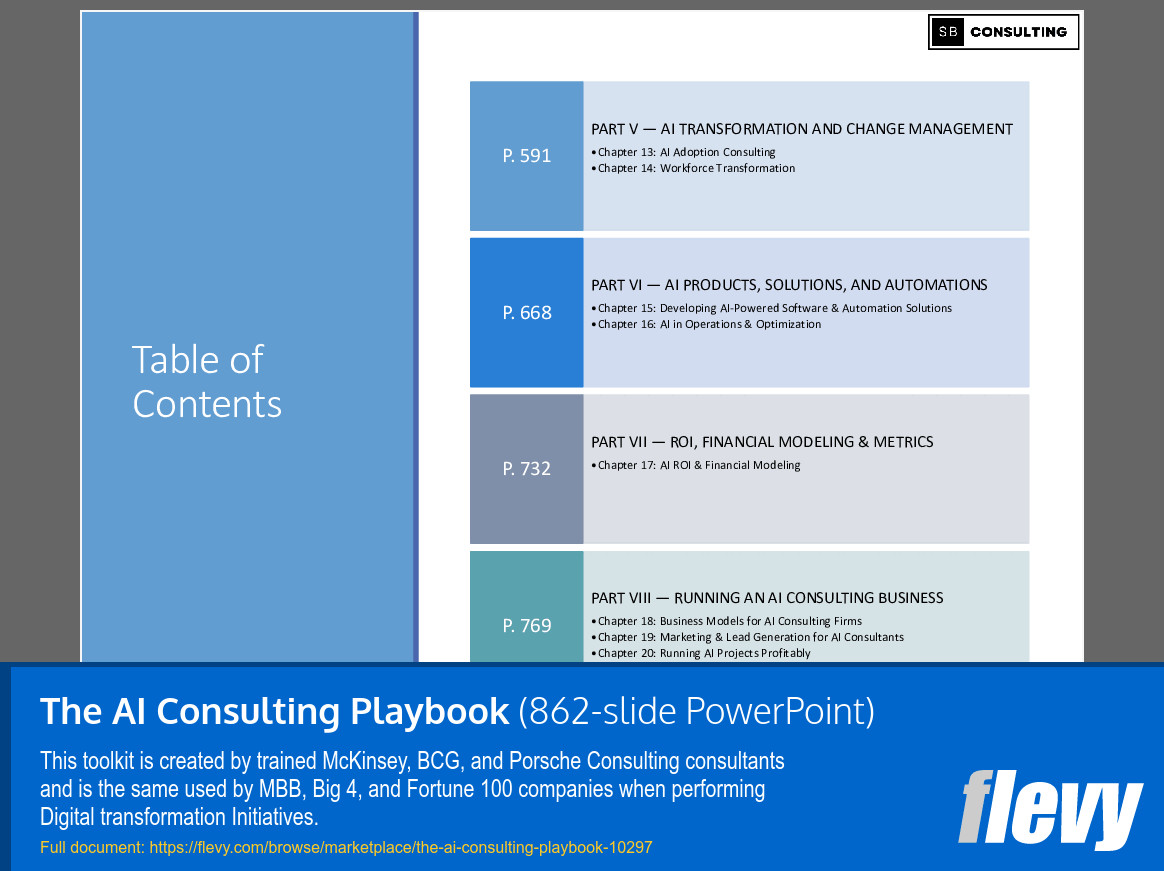
PART V – AI TRANSFORMATION AND CHANGE MANAGEMENT
Chapter 13: AI Adoption Consulting
13.1 The Psychology of AI Adoption
13.2 Organizational Change Models for AI
13.3 Overcoming Fear, Resistance & Skill Gaps
13.4 Executive Training & Enablement
13.5 AI Training Programs for Employees
13.6 Designing Centers of Excellence (CoEs)
13.7 Building AI Champions Programs
13.8 Communication Strategies for AI Adoption
13.9 Cultural Change Planning
13.10 Measuring Adoption Success
Chapter 14: Workforce Transformation
14.1 Skills Impact Analysis
14.2 Role Redesign and AI-Augmented Roles
14.3 AI Skills Taxonomy for Organizations
14.4 Talent Acquisition Strategy for AI Skills
14.5 Upskilling and Reskilling Programs
14.6 Future of Work Scenarios
14.7 Collaborative Intelligence Frameworks
14.8 Human-AI Interaction Design
14.9 Ethics of Workforce Automation
14.10 Designing Continuous Learning Systems
PART VI – AI PRODUCTS, SOLUTIONS, AND AUTOMATIONS
Chapter 15: Developing AI-Powered Software & Automation Solutions
15.1 AI Product Design
15.2 End-to-End Workflow Automation With AI
15.3 Building AI Assistants & Co-pilots
15.4 Voice Agents and Conversational AI
15.5 Predictive Analytics and Forecasting Models
15.6 Intelligent Document Processing Systems
15.7 RPA + AI Integration
15.8 Retrieval-Augmented Generation (RAG) Solutions
15.9 Multi-Agent AI Systems
15.10 Building Custom Enterprise LLMs
Chapter 16: AI in Operations & Optimization
16.1 Demand Forecasting
16.2 Quality Control Automation
16.3 Process Optimization Models
16.4 Intelligent Scheduling & Routing
16.5 Inventory Optimization
16.6 AI for Cost Reduction Initiatives
16.7 AI in Procurement
16.8 AI for Maintenance & Reliability
16.9 AI for Supply Chain Resilience
16.10 AI in Shared Services (HR, Finance, IT Ops)
PART VII – ROI, FINANCIAL MODELING & METRICS
Chapter 17: AI ROI & Financial Modeling
17.1 Calculating AI ROI
17.2 Cost-Benefit Analysis
17.3 Total Cost of Ownership (TCO) for AI
17.4 ROI for Automation vs. Insight Models
17.5 AI Business Cases & Investment Decks
17.6 Time-to-Value Modeling
17.7 Productivity Measurement Frameworks
17.8 AI KPI Systems
17.9 Risk-Adjusted Financial Modeling
17.10 Scaling Economics of AI
PART VIII – RUNNING AN AI CONSULTING BUSINESS
Chapter 18: Business Models for AI Consulting Firms
18.1 Project vs. Retainer vs. Productized Services
18.2 AI Strategy Consulting Packages
18.3 AI Implementation Offerings
18.4 Managed AI Services
18.5 AI Training & Workshops
18.6 AI Audits & Assessments
18.7 Fractional AI Leadership Roles
18.8 Licensing AI Frameworks & IP
18.9 High-Ticket Offer Structuring
18.10 Partnering with Vendors, Cloud Providers & Agencies
Chapter 19: Marketing & Lead Generation for AI Consultants
19.1 Target Market Selection
19.2 Messaging & Positioning Strategies
19.3 Authority Building (Whitepapers, Webinars, LinkedIn, Conferences)
19.4 Creating AI Thought Leadership Content
19.5 Case Studies & Portfolio Development
19.6 Website, Landing Pages & Funnels
19.7 Demand Generation Systems
19.8 AI Consulting Sales Scripts
19.9 Handling Objections in AI Sales
19.10 Scaling Lead Generation with Automation
Chapter 20: Running AI Projects Profitably
20.1 Scoping & Proposal Writing
20.2 Pricing AI Projects
20.3 Contracting & Legal Considerations
20.4 Managing Project Margins
20.5 Building Delivery Playbooks
20.6 Quality Assurance Processes
20.7 Client Relationship Management
20.8 Upsells & Cross-Sells
20.9 Performance Tracking
20.10 Scaling Your AI Consulting Practice
A Must-Have Reference for the AI Economy
AI is reshaping business operations, customer experiences, supply chains, product development, marketing, HR, finance, and every major industry. Organizations need advisors who can navigate this shift. The AI Consulting Playbook helps you become one of those advisors by giving you a deep, structured understanding of AI strategy and implementation.
Whether you're building your first AI consulting offer or scaling a mature practice, this deck becomes an indispensable guide for delivering consistent, high-quality work.
Key Words:
Strategy & Transformation, Growth Strategy, Strategic Planning, Strategy Frameworks, Innovation Management, Pricing Strategy, Core Competencies, Strategy Development, Business Transformation, Marketing Plan Development, Product Strategy, Breakout Strategy, Competitive Advantage, Mission, Vision, Values, Strategy Deployment & Execution, Innovation, Vision Statement, Core Competencies Analysis, Corporate Strategy, Product Launch Strategy, BMI, Blue Ocean Strategy, Breakthrough Strategy, Business Model Innovation, Business Strategy Example, Corporate Transformation, Critical Success Factors, Customer Segmentation, Customer Value Proposition, Distinctive Capabilities, Enterprise Performance Management, KPI, Key Performance Indicators, Market Analysis, Market Entry Example, Market Entry Plan, Market Intelligence, Market Research, Market Segmentation, Market Sizing, Marketing, Michael Porter's Value Chain, Organizational Transformation, Performance Management, Performance Measurement, Platform Strategy, Product Go-to-Market Strategy, Reorganization, Restructuring, SWOT, SWOT Analysis, Service 4.0, Service Strategy, Service Transformation, Strategic Analysis, Strategic Plan Example, Strategy Deployment, Strategy Execution, Strategy Frameworks Compilation, Strategy Methodologies, Strategy Report Example, Value Chain, Value Chain Analysis, Value Innovation, Value Proposition, Vision Statement, Corporate Strategy, Business Development, Business plan pdf, business plan, PDF, Business Plan DOC, Business Plan Template, PPT, Market strategy playbook, strategic market planning, competitive analysis tools, market segmentation frameworks, growth strategy templates, product positioning strategy, market execution toolkit, strategic alignment playbook, KPI and OKR frameworks, business growth strategy guide, cross-functional strategy templates, market risk management, market strategy PowerPoint doc, guide, ebook, e-book ,McKinsey Change Playbook, Organizational change management toolkit, Change management frameworks 2025, Influence model for change, Change leadership strategies, Behavioral change in organizations, Change management PowerPoint templates, Transformational leadership in change, supply chain KPIs, supply chain KPI toolkit, supply chain PowerPoint template, logistics KPIs, procurement KPIs, inventory management KPIs, supply chain performance metrics, manufacturing KPIs, supply chain dashboard, supply chain strategy KPIs, reverse logistics KPIs, sustainability KPIs in supply chain, financial supply chain KPIs, warehouse KPIs, digital supply chain KPIs, 1200 KPIs, supply chain scorecard, KPI examples, supply chain templates, Corporate Finance SOPs, Finance SOP Excel Template, CFO Toolkit, Finance Department Procedures, Financial Planning SOPs, Treasury SOPs, Accounts Payable SOPs, Accounts Receivable SOPs, General Ledger SOPs, Accounting Policies Template, Internal Controls SOPs, Finance Process Standardization, Finance Operating Procedures, Finance Department Excel Template, FP&A Process Documentation, Corporate Finance Template, Finance SOP Toolkit, CFO Process Templates, Accounting SOP Package, Tax Compliance SOPs, Financial Risk Management Procedures.
NOTE: Our digital products are sold on an "as is" basis, making returns and refunds unavailable post-download. Please preview and inquire before purchasing. Please contact us before purchasing if you have any questions! This policy aligns with the standard Flevy Terms of Usage.
Got a question about the product? Email us at support@flevy.com or ask the author directly by using the "Ask the Author a Question" form. If you cannot view the preview above this document description, go here to view the large preview instead.
Source: Best Practices in Consulting Training, Artificial Intelligence PowerPoint Slides: The AI Consulting Playbook PowerPoint (PPTX) Presentation Slide Deck, SB Consulting
ABOUT THE AUTHOR

SB Consulting is dedicated to empowering businesses to communicate their ideas with impact. This consulting firm specializes in teaching organizations how to create effective corporate and management presentations. With training from top-tier global consulting firms, including McKinsey, BCG, and Porsche Consulting, extensive expertise in presentation design and ... [read more]
Ask the Author a Question
You must be logged in to contact the author.