 Click main image to view in full screen.
Technology Sourcing in the Oil and Gas Sector – PowerPoint PPTX Template
PowerPoint (PPTX) 15 Slides


BENEFITS OF THIS DOWNLOADABLE POWERPOINT DOCUMENT
- Technology Sourcing
- Global Sourcing of Technology
- Oil and Gas
PROCUREMENT STRATEGY PPT TEMPLATE DESCRIPTION
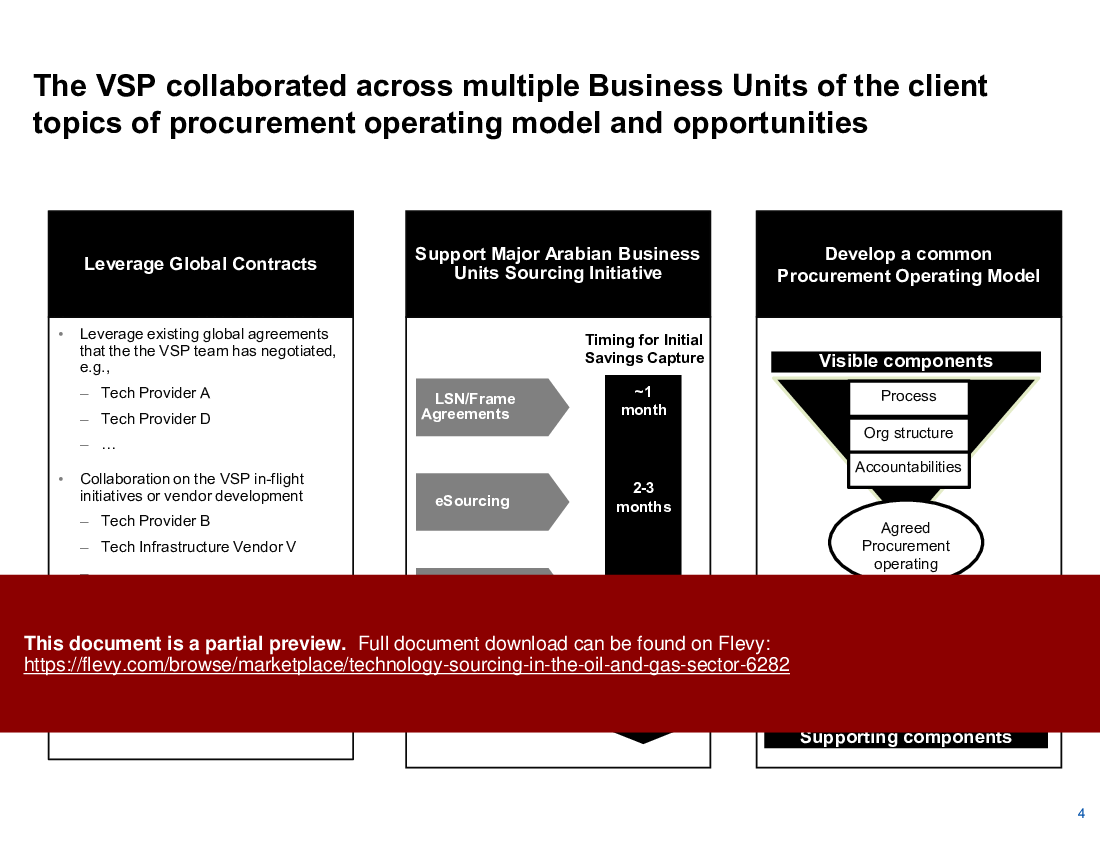
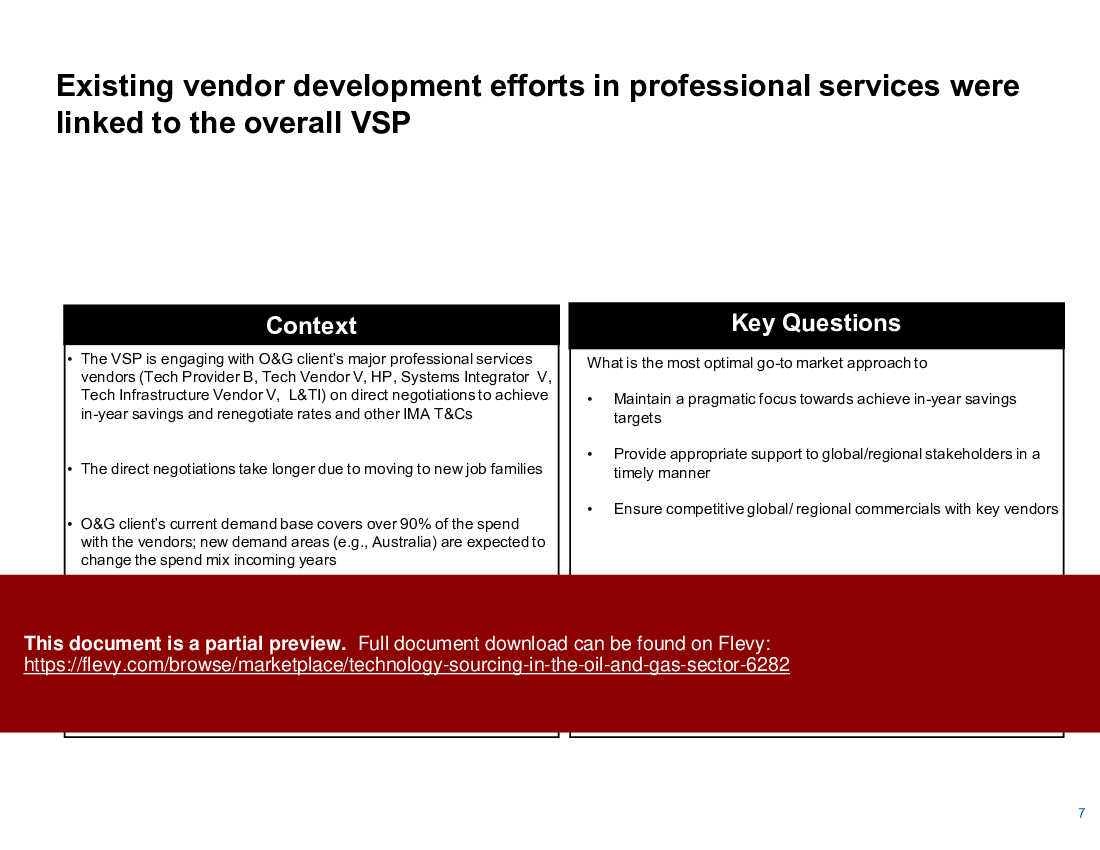
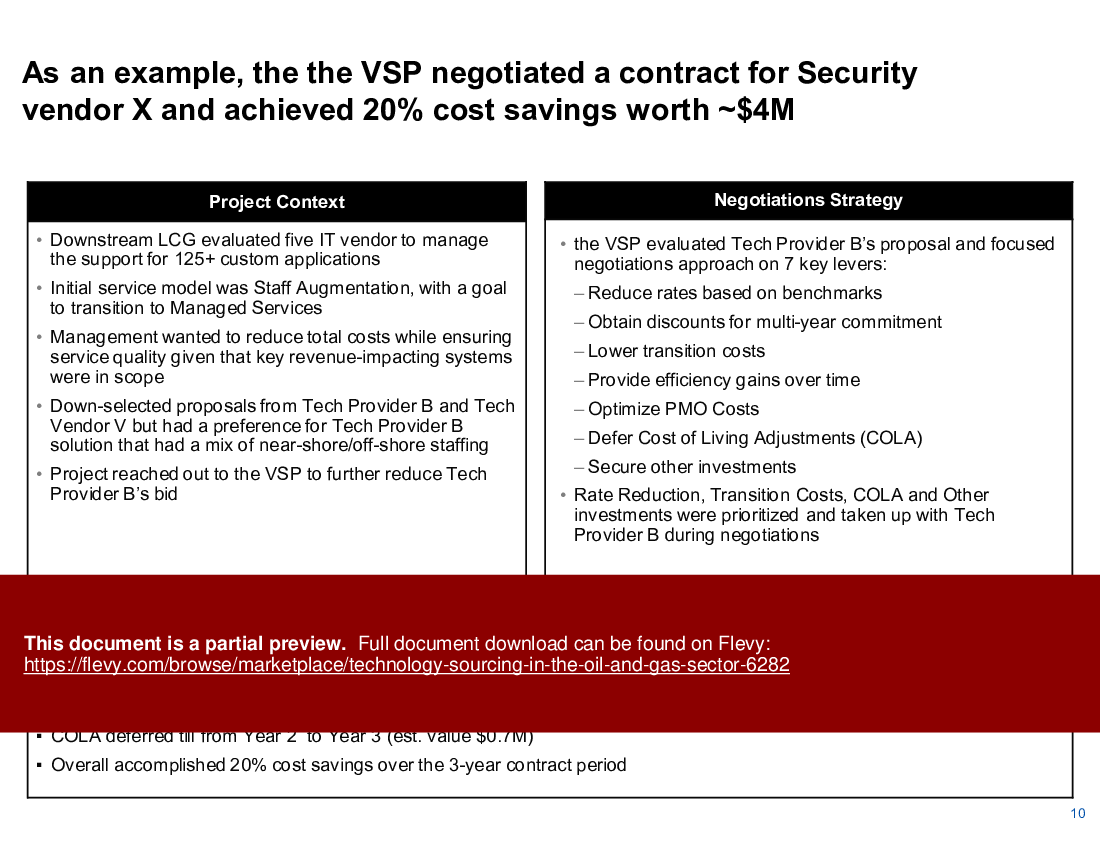
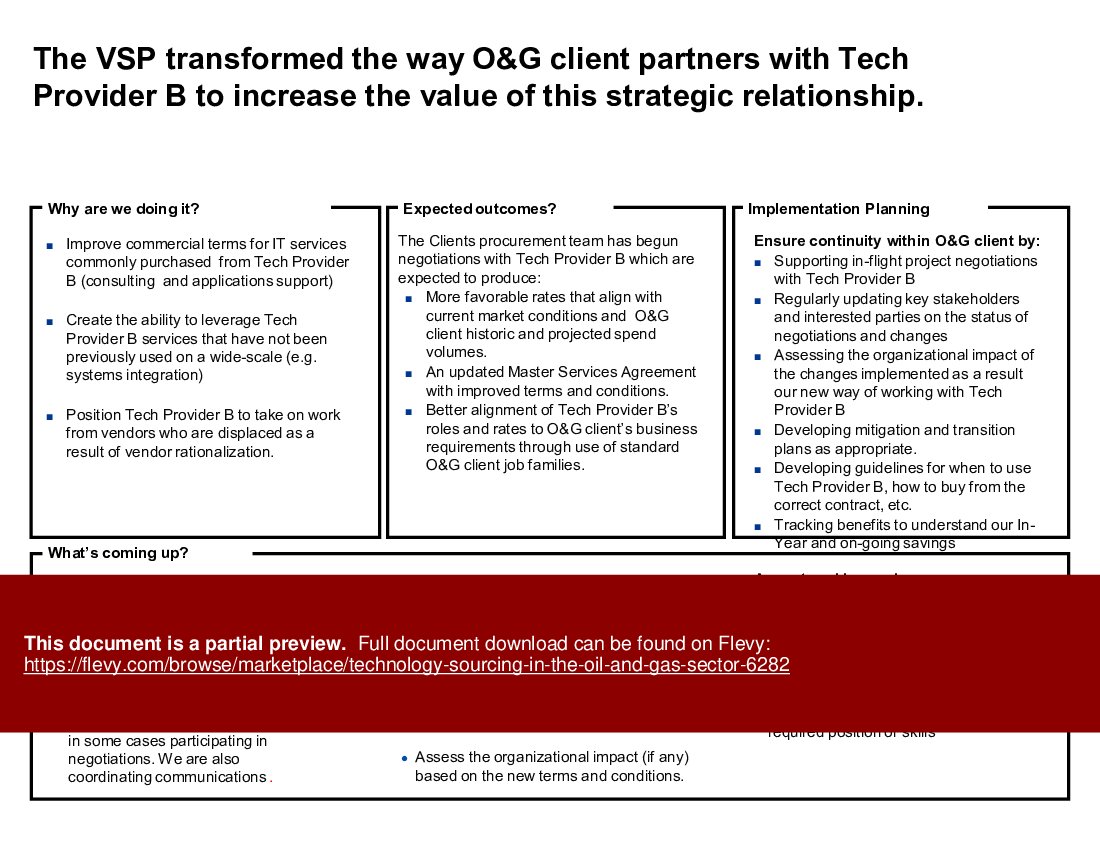
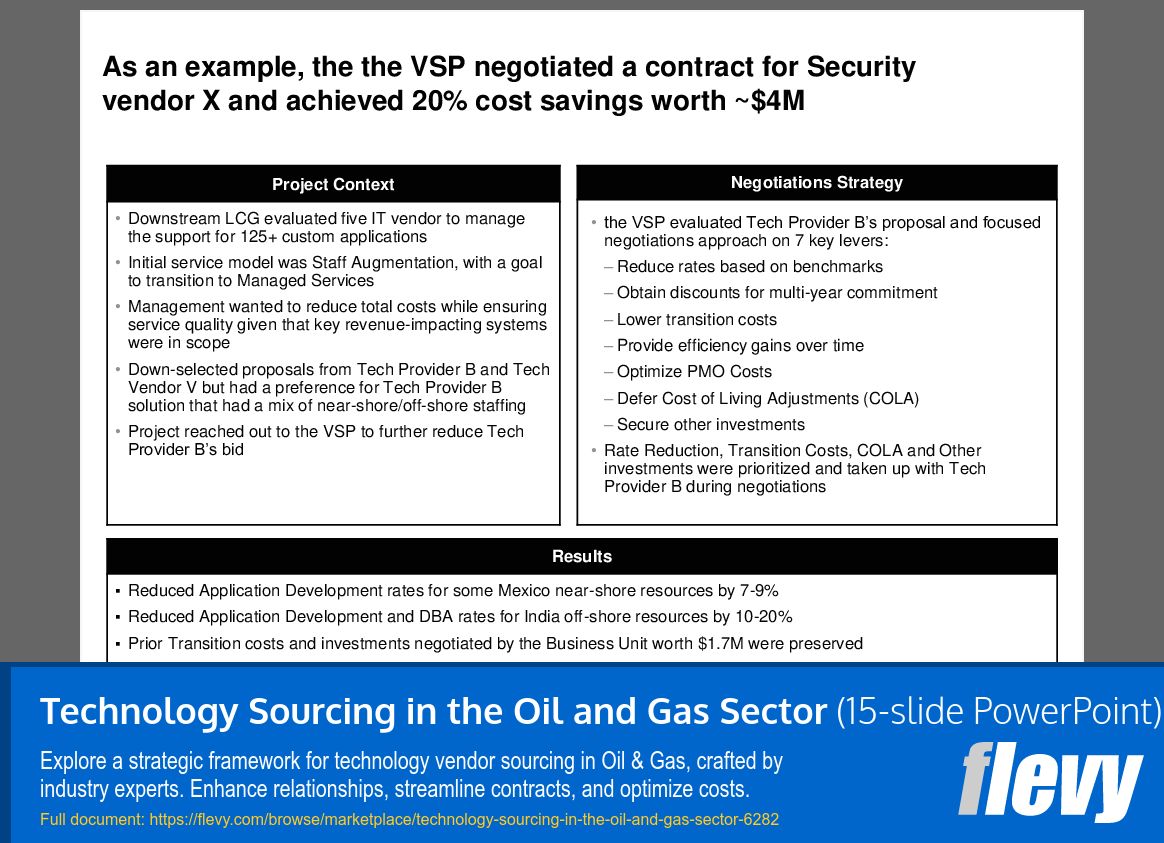
This deck summaries an approach and key topics for technology vendor sourcing in the Oil and Gas industry.
The objectives of the approach were to
1. Develop stronger relationships with vendors and greater support in executing O&G client's technology strategy
2. Provide the client with a simplified supply base with fewer vendors and fewer contracts
3. Ensure that the client enjoyed market competitive rates for products and services
4. Assist the client with setting up an established panel of vendors to serve global, regional and local requirements
5. Ensure that the client achieves better cost efficiency, service delivery and more accurate invoicing procedures with its technology vendor base
6. Ensure that the organization deveops and maintains Technology sourcing as a global capability, and in the process provide a career pathway for its staff involved in this critical function and the operations of governance in global sourcing and procurement processes more generally
Got a question about the product? Email us at support@flevy.com or ask the author directly by using the "Ask the Author a Question" form. If you cannot view the preview above this document description, go here to view the large preview instead.
PRESENTATION DEEP DIVE ANALYSIS
This deep-dive analysis was generated from the full 15-slide PowerPoint presentation.
PROCUREMENT STRATEGY PPT TEMPLATES
Source: Best Practices in Procurement Strategy, Oil & Gas PowerPoint Slides: Technology Sourcing in the Oil and Gas Sector PowerPoint (PPTX) Presentation Slide Deck, Affinity Consulting Partners