 Click main image to view in full screen.
Scarce Grid Access Paradox™ – PDF
PDF document 16 Pages


BENEFITS OF THIS DOWNLOADABLE PDF DOCUMENT
- Provides a practical decision architecture for evaluating and prioritizing competing projects when grid connection capacity is scarce.
- Converts complex grid-access trade-offs into reusable frameworks for conditional access, explicit prioritization, value-for-cost evaluation, and targeted infrastructure expansion.
- Helps policymakers move beyond passive queue management toward transparent allocation decisions that consider strategic value, system compatibility, flexibility, and public cost.
ENERGY INDUSTRY PDF DESCRIPTION
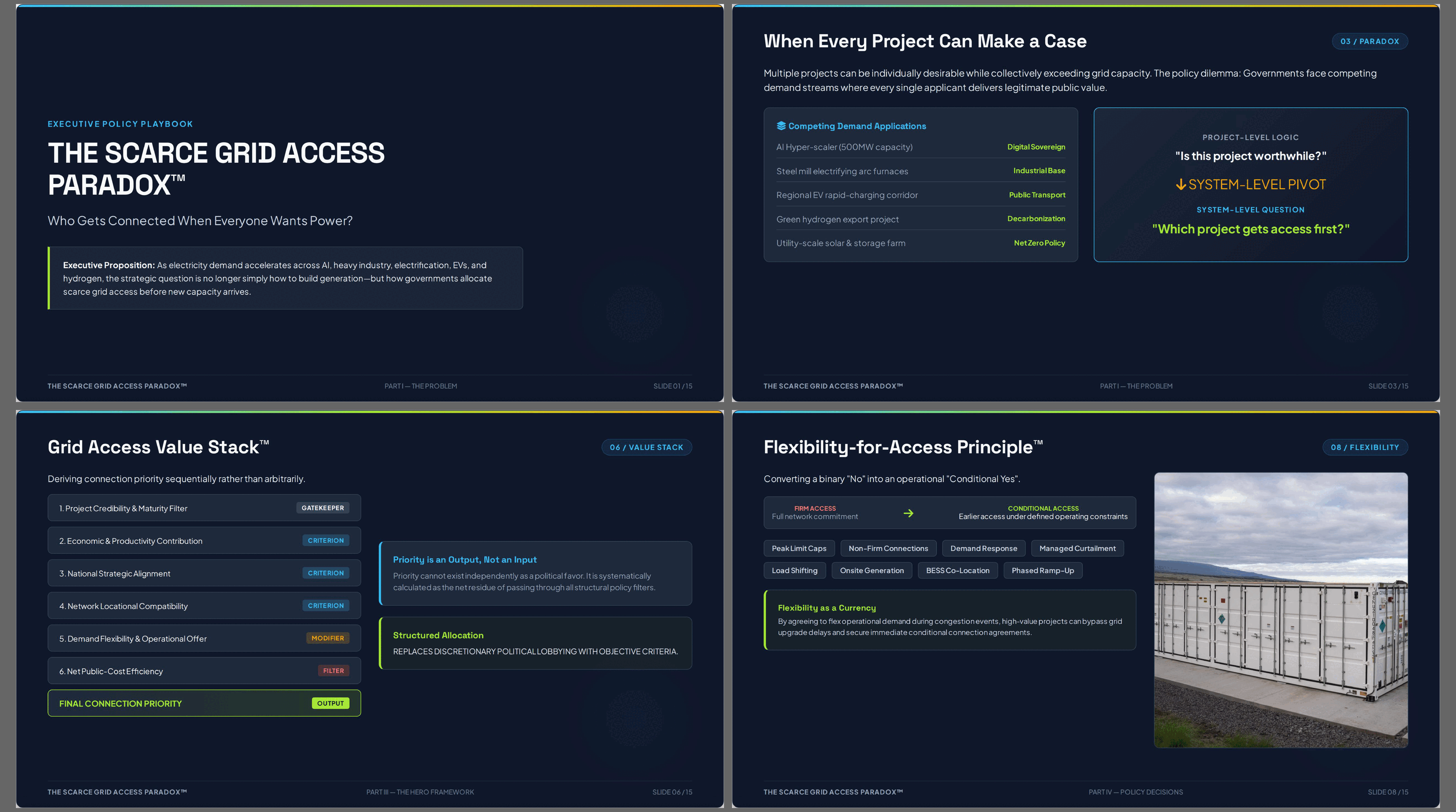
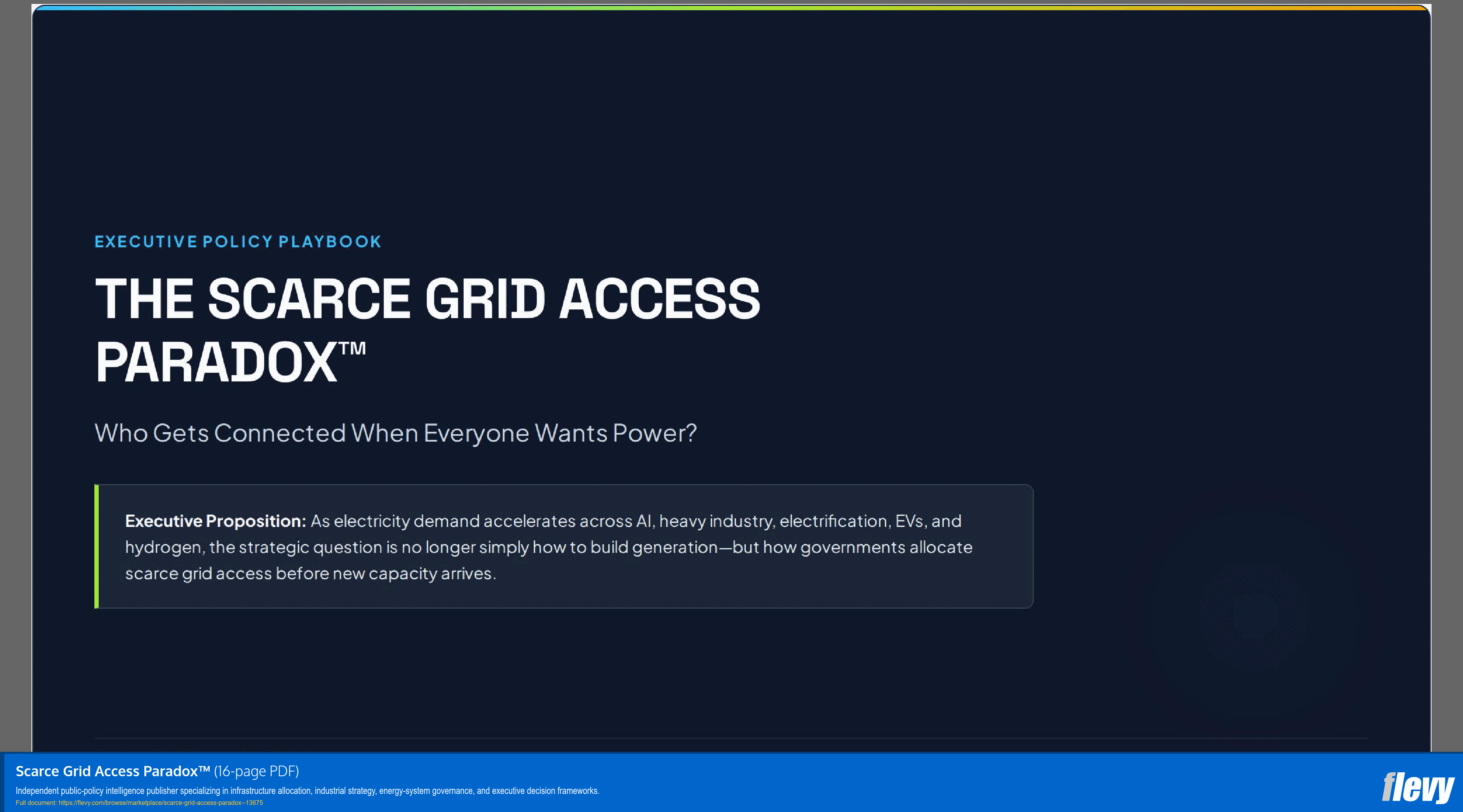
The Scarce Grid Access Paradox™ is an executive policy intelligence playbook for governments and infrastructure decision-makers confronting a new strategic problem: what happens when multiple economically or strategically valuable projects compete for scarce electricity grid connection capacity?
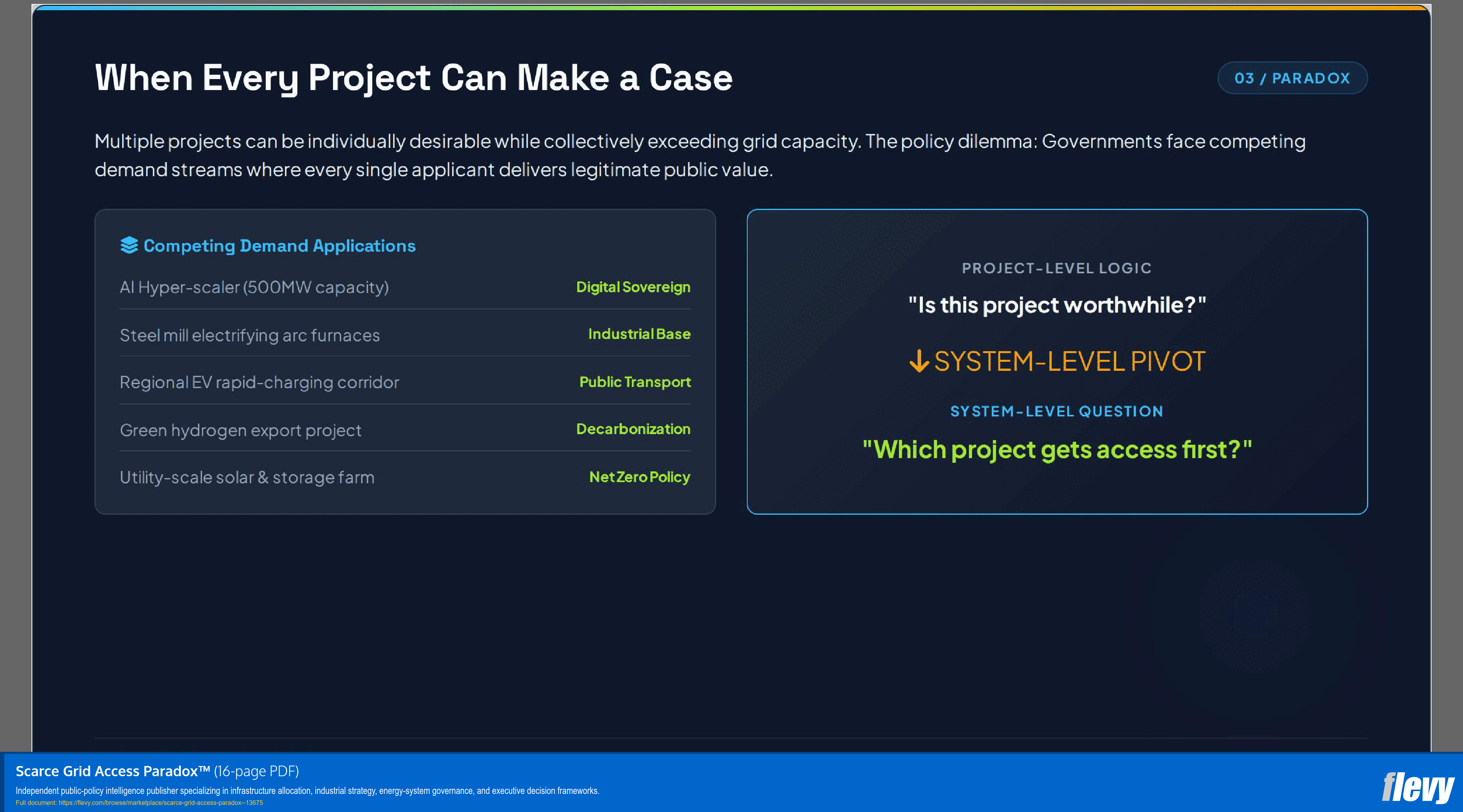
As electricity demand accelerates across AI and data centres, industrial electrification, EV infrastructure, hydrogen, storage, and renewable generation, the policy challenge is no longer simply how to generate more electricity or expand the grid. Increasingly, governments must determine who receives scarce grid access, why, under what conditions, and at whose cost.
This playbook provides a practical decision architecture for moving beyond administrative connection queues toward structured allocation of scarce network capacity.
Inside, you will find:
• Grid Access Allocation Architecture™ – a six-dimensional framework assessing Readiness Value, Economic Value, Strategic Value, System Value, Public Cost, and Flexibility Value.
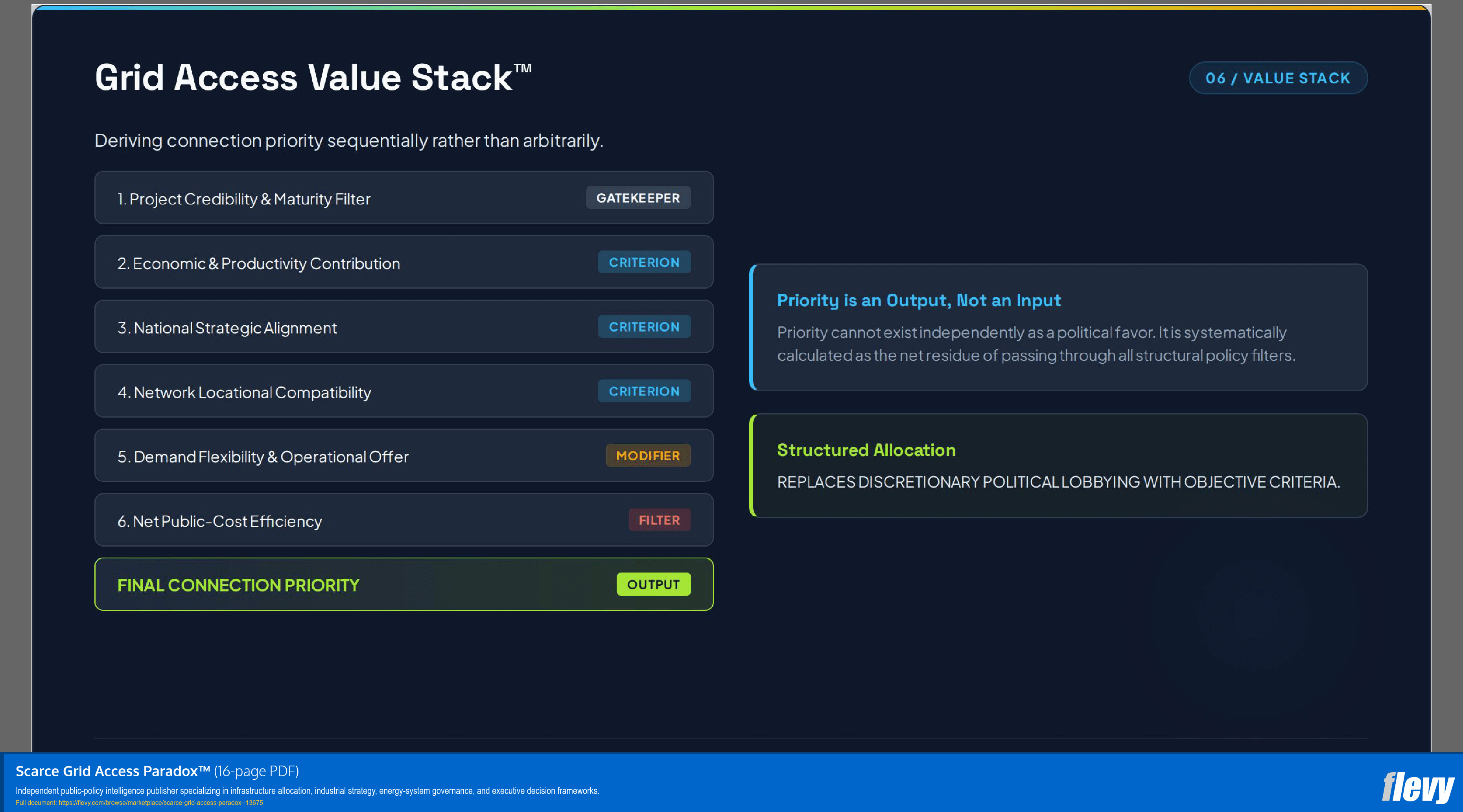
• Grid Access Value Stack™ – a sequential decision logic that converts project credibility, economic contribution, strategic alignment, network compatibility, flexibility, and public-cost efficiency into final connection priority.
• Strategic Grid Allocation Matrix™ – a practical framework for determining whether competing projects should be accelerated, conditioned, rejected or delayed, or enabled through market-based access.
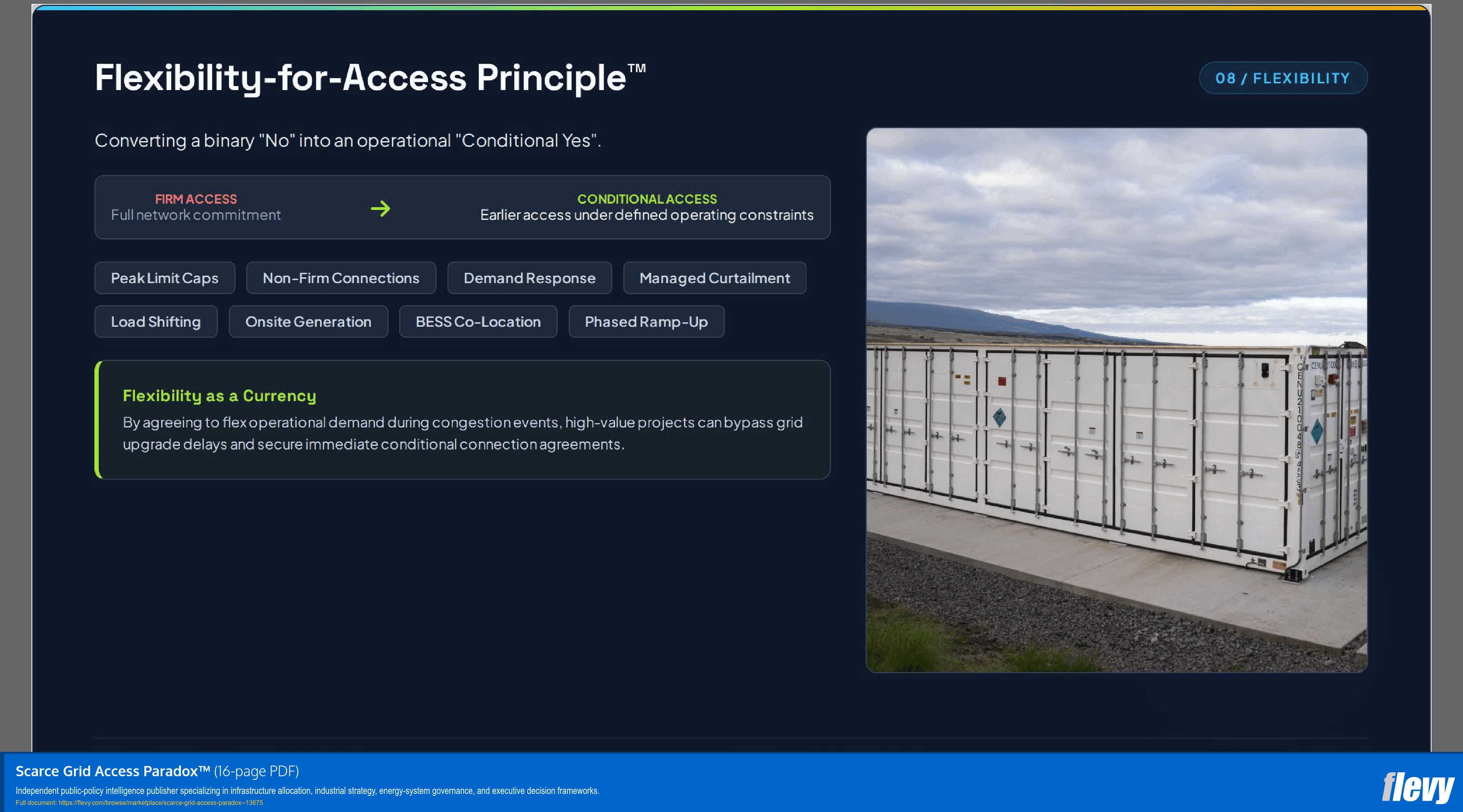
• Flexibility-for-Access Principle™ – a policy approach that moves beyond binary connection decisions by using non-firm connections, peak limits, demand response, load shifting, managed curtailment, onsite generation, storage co-location, and phased ramp-up.
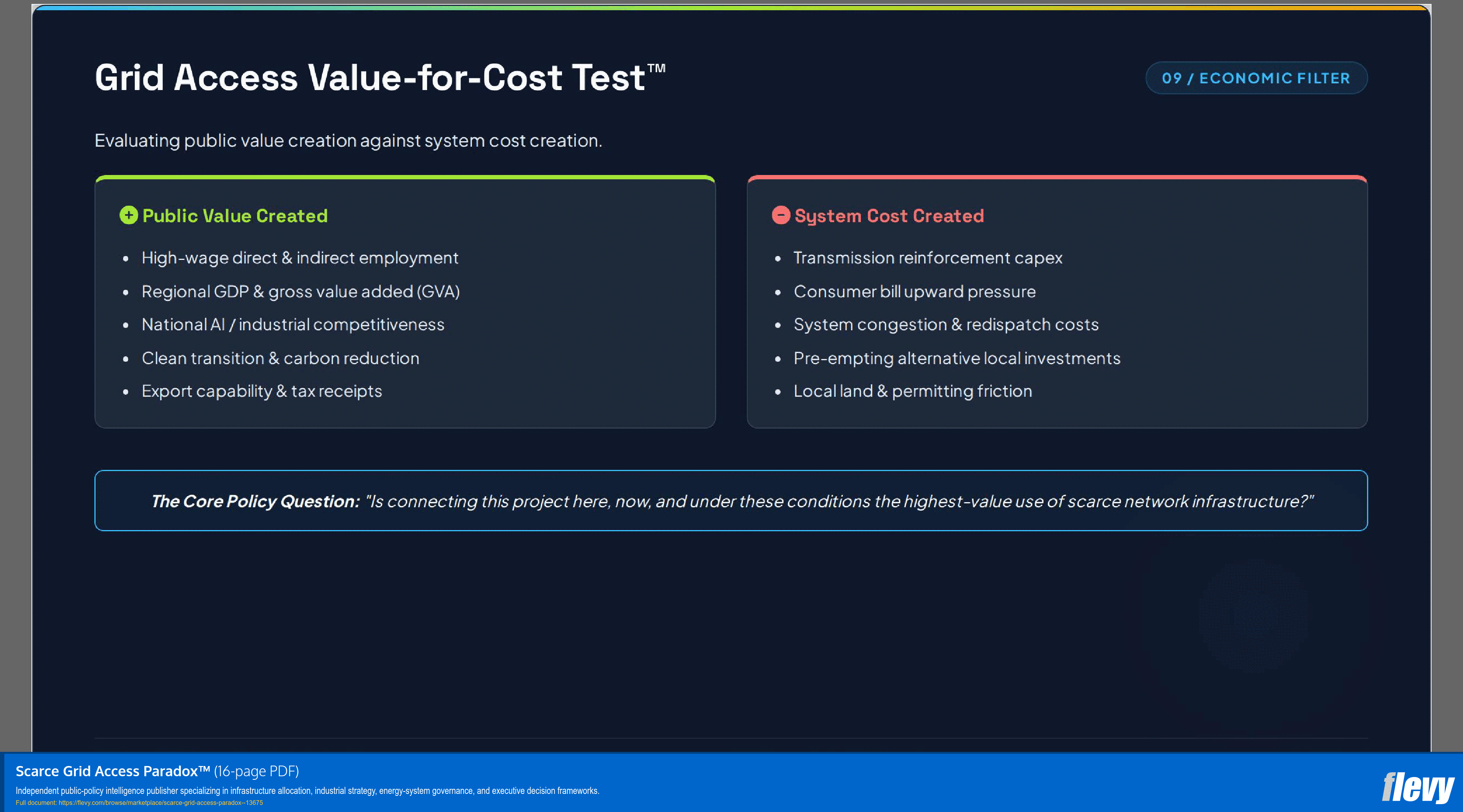
• Grid Access Value-for-Cost Test™ – a structured comparison of public value created against system costs created by granting scarce network access.
• Six Policy Instruments – Filter, Prioritize, Condition, Phase, Locate, and Invest—forming an intervention ladder for active grid-capacity management.
• Global Policy Architectures – selected signals from the United Kingdom, European Union, United States, and Asia-Pacific illustrating different institutional mechanisms converging around the same allocation challenge.
• Five-Question Grid Access Stress Test™ – a concise decision test covering project credibility, strategic value, system cost, flexibility, and net public value.
The central insight is simple but consequential: queue management is not the same as allocation strategy. Removing speculative projects can improve queue efficiency, but it does not determine which credible competing projects should receive scarce capacity first.
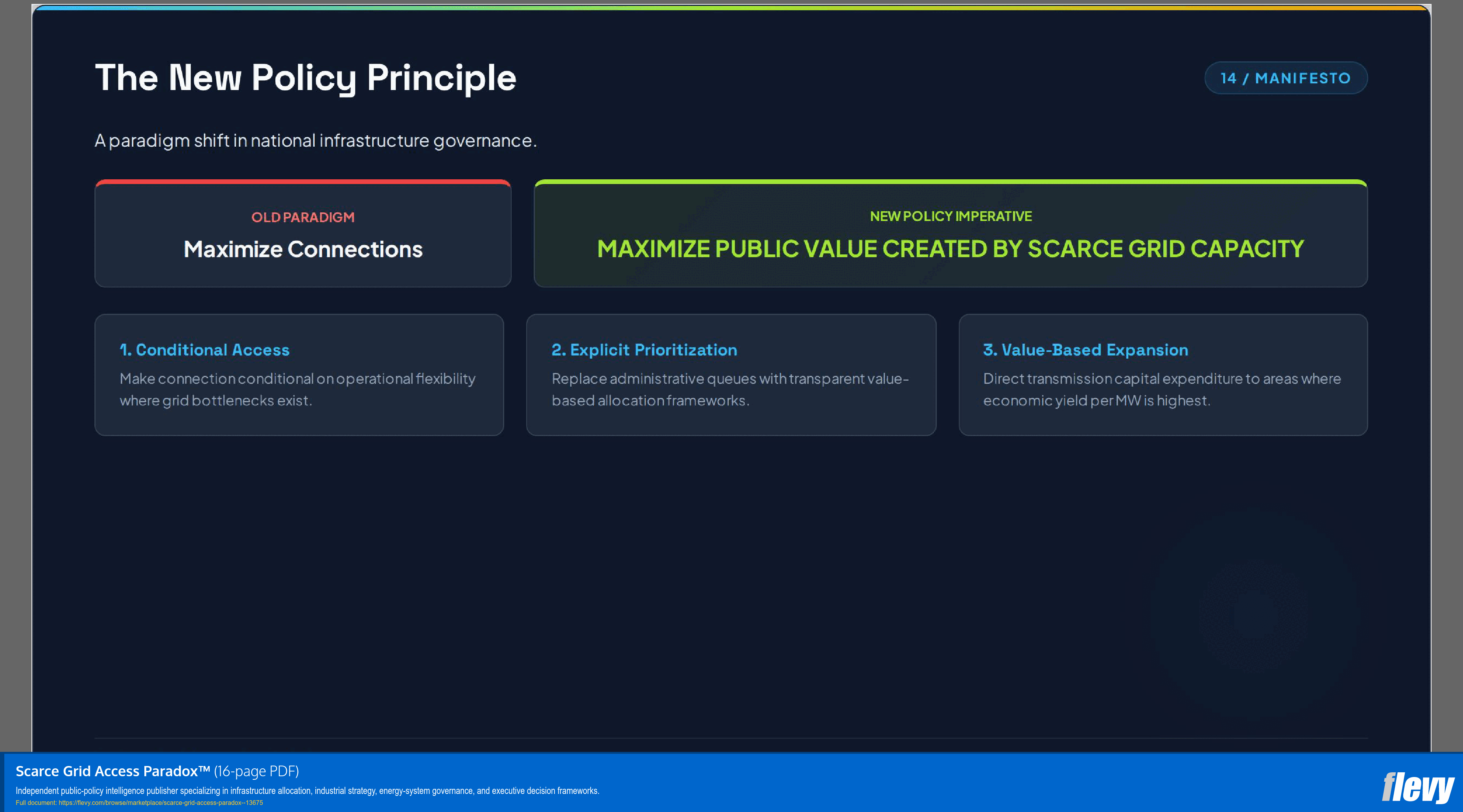
The playbook therefore advances a new policy principle:
Grid policy should not maximize connections. It should maximize the public value created by scarce grid capacity.
Designed for policymakers, infrastructure planners, economic-development authorities, energy-system decision-makers, and public-sector strategists, this intelligence provides a reusable framework for making scarce grid-access decisions more transparent, structured, and value-oriented.
Got a question about the product? Email us at support@flevy.com or ask the author directly by using the "Ask the Author a Question" form. If you cannot view the preview above this document description, go here to view the large preview instead.
Source: Best Practices in Energy Industry, Government PDF: Scarce Grid Access Paradox™ PDF (PDF) Document, Wisnu Pandega Wardana
ABOUT THE AUTHOR

I am an independent Industrial Intelligence and Strategic Innovation Publisher focused on developing structured business intelligence, innovation frameworks, and opportunity-oriented research for decision-makers.
My work focuses on translating emerging technologies, industrial transformation, sustainability, resource efficiency, and market shifts into structured intelligence assets that
... [read more]
Ask the Author a Question
You must be logged in to contact the author.




























