

This 45-slide presentation on Six Sigma concept of Design of Experiment (DoE) is a compilation of 3 workshop sessions.

Session 1: Introduction to Design of Experiments
This session introduces concepts of Design of Experiment. Workplace activities are included and participants are expected to complete a workplace project to be assessed as competent in this unit of training.
The workplace project will include the concepts introduced during this session and your coach will provide you with any required templates.
Session 2: Full Factorial Design of Experiments
This unit introduces concepts of Design of Experiment. Workplace activities are included and participants are expected to complete a workplace project to be assessed as competent in this unit of training.
The workplace project will include the concepts introduced during this session and your coach will provide you with any required templates.
Session 3: Fractional Factorial Design of Experiments
This session introduces concepts of Design of Experiment. Workplace activities are included and participants are expected to complete a workplace project to be assessed as competent in this session of training.
Got a question about the product? Email us at support@flevy.com or ask the author directly by using the "Ask the Author a Question" form. If you cannot view the preview above this document description, go here to view the large preview instead.
Executive Summary
This presentation on the Design of Experiments (DoE) is crafted to equip participants with the knowledge and skills necessary to effectively implement experimental design methodologies in process improvement initiatives. Developed by a Lean Six Sigma Master Black Belt, this training covers fundamental concepts, including full and fractional factorial designs, and practical applications through engaging simulations. Participants will learn to identify key variables, optimize processes, and enhance product quality, ultimately leading to improved operational efficiency.
Who This Is For and When to Use
• Process improvement teams focused on quality enhancement and operational efficiency
• Engineers and analysts involved in product development and testing
• Quality assurance professionals seeking to apply statistical methods
• Project managers overseeing process optimization initiatives
Best-fit moments to use this deck:
• During training sessions for new team members on experimental design
• When initiating a new process improvement project requiring structured experimentation
• For workshops aimed at enhancing product quality through data-driven decision-making
Learning Objectives
• Define the principles of experimental design and its significance in process improvement
• Build a full factorial and fractional factorial design to analyze multiple variables
• Establish methods for identifying key process input variables (KPIVs) and key process output variables (KPOVs)
• Create a structured approach for conducting experiments, including randomization and replication
• Analyze experimental data to draw actionable conclusions and recommendations
• Implement findings into workplace projects for continuous improvement
Table of Contents
• Introduction to Experimental Design (page 3)
• Simulation 1: X Pult (page 5)
• Experimentation Methods (page 10)
• Simulation 2: X Pult (page 15)
• Full Factorial Design of Experiments (page 20)
• Simulation 3: X Pult (page 25)
• Fractional Factorial Design of Experiments (page 30)
• Simulation 4: X Pult (page 35)
• Project Guidelines (page 40)
• Assessment Criteria (page 45)
Primary Topics Covered
• Experimental Design Principles - Understanding the rationale behind experimentation, including problem-solving and optimization strategies.
• Simulation Exercises - Engaging participants in hands-on simulations to apply theoretical knowledge to practical scenarios.
• Full Factorial Design - Exploring comprehensive designs that examine all possible combinations of factors for in-depth analysis.
• Fractional Factorial Design - Learning to conduct experiments efficiently by examining a subset of combinations, balancing resource use and information gain.
• Data Collection and Analysis - Utilizing templates and statistical tools to gather and interpret data effectively.
• Optimization Techniques - Identifying optimal settings for processes to achieve desired outcomes consistently.
Deliverables, Templates, and Tools
• X Pult tally checklist for data collection during simulations
• SIPOC map for visualizing process inputs and outputs
• Design of Experiment planning template for structuring experiments
• Stakeholder analysis tool for identifying key participants in the project
• X Pult Design of Experiment data collection template for systematic data gathering
• Design of Experiment Excel Statistic Pack for data analysis
Slide Highlights
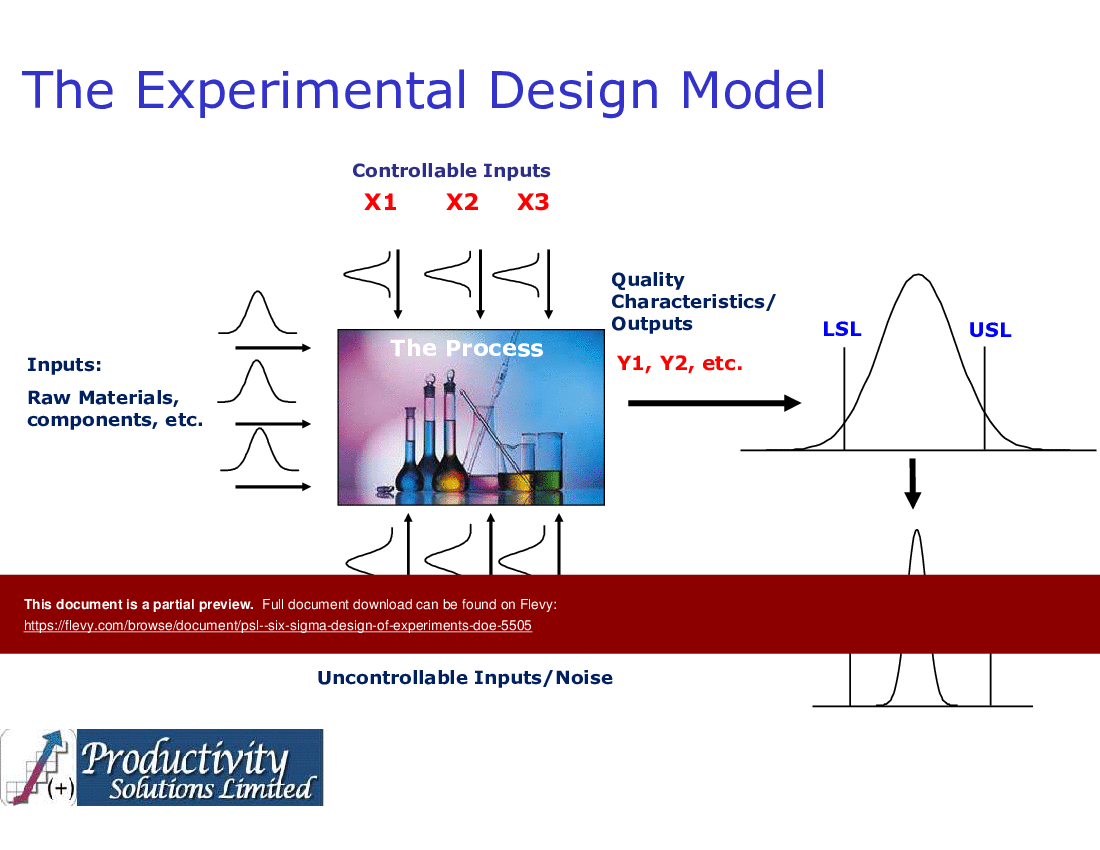
• Overview of the Experimental Design Model illustrating controllable and uncontrollable inputs
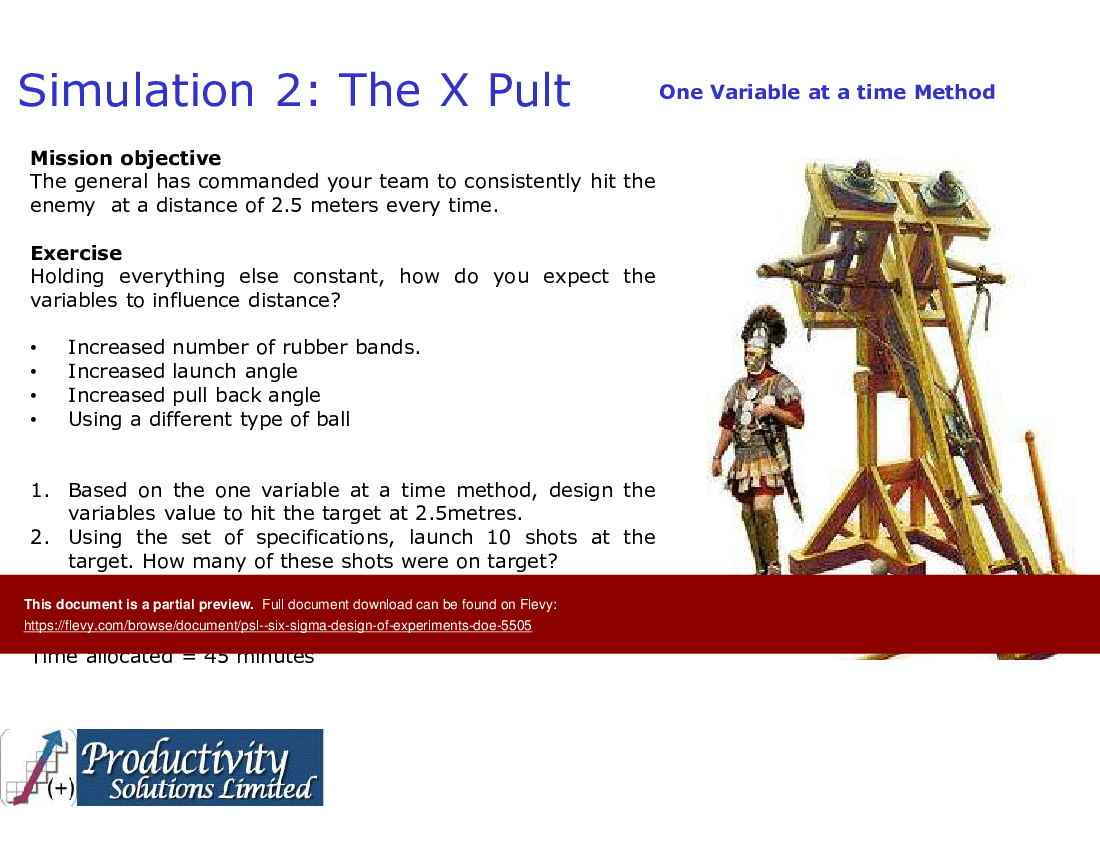
• Detailed breakdown of the X Pult simulation, showcasing performance measures and independent variables
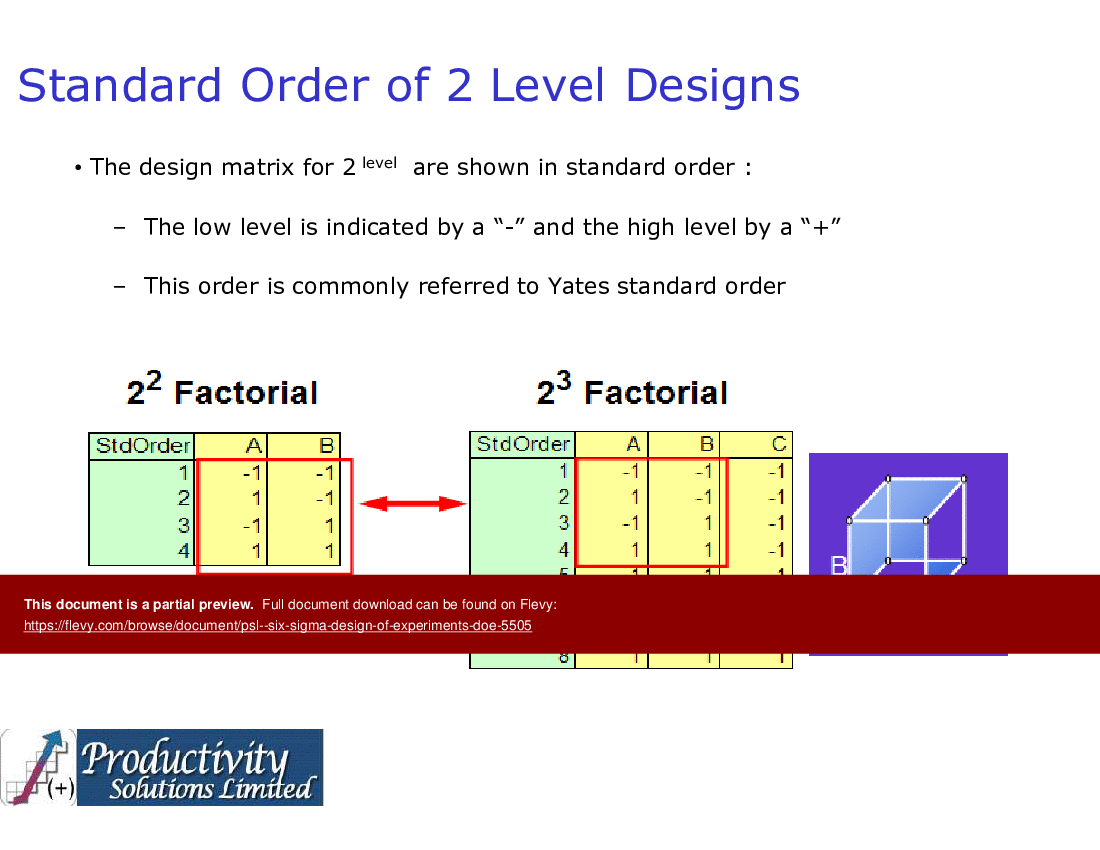
• Visual aids explaining the Yates order and its application in factorial designs
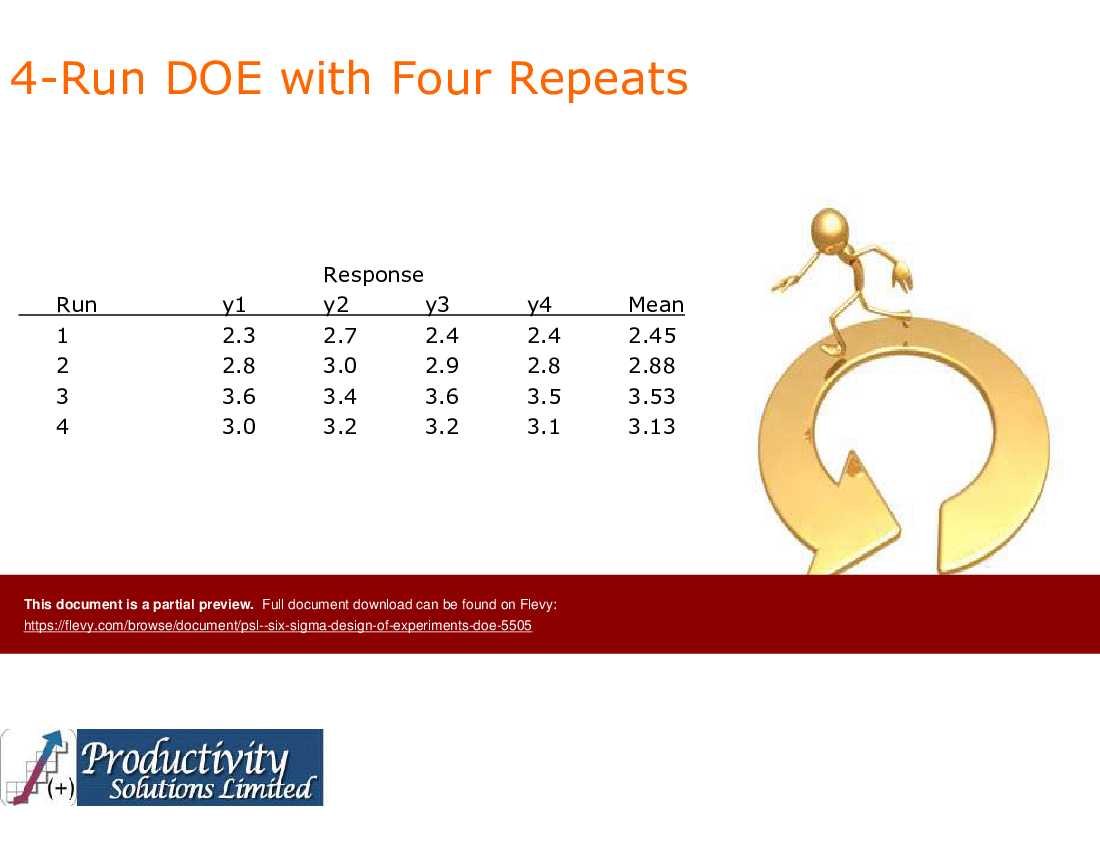
• Examples of data collection methods and their importance in experimental analysis
• Key definitions and concepts related to blocking, randomization, and replication
Potential Workshop Agenda
Introduction to Experimental Design (30 minutes)
• Overview of experimental design principles and objectives
• Discussion on the importance of KPIVs and KPOVs
Simulation 1: X Pult (60 minutes)
• Conduct the first simulation, focusing on trial and error methods
• Data collection and analysis using the tally checklist
Full Factorial Design (90 minutes)
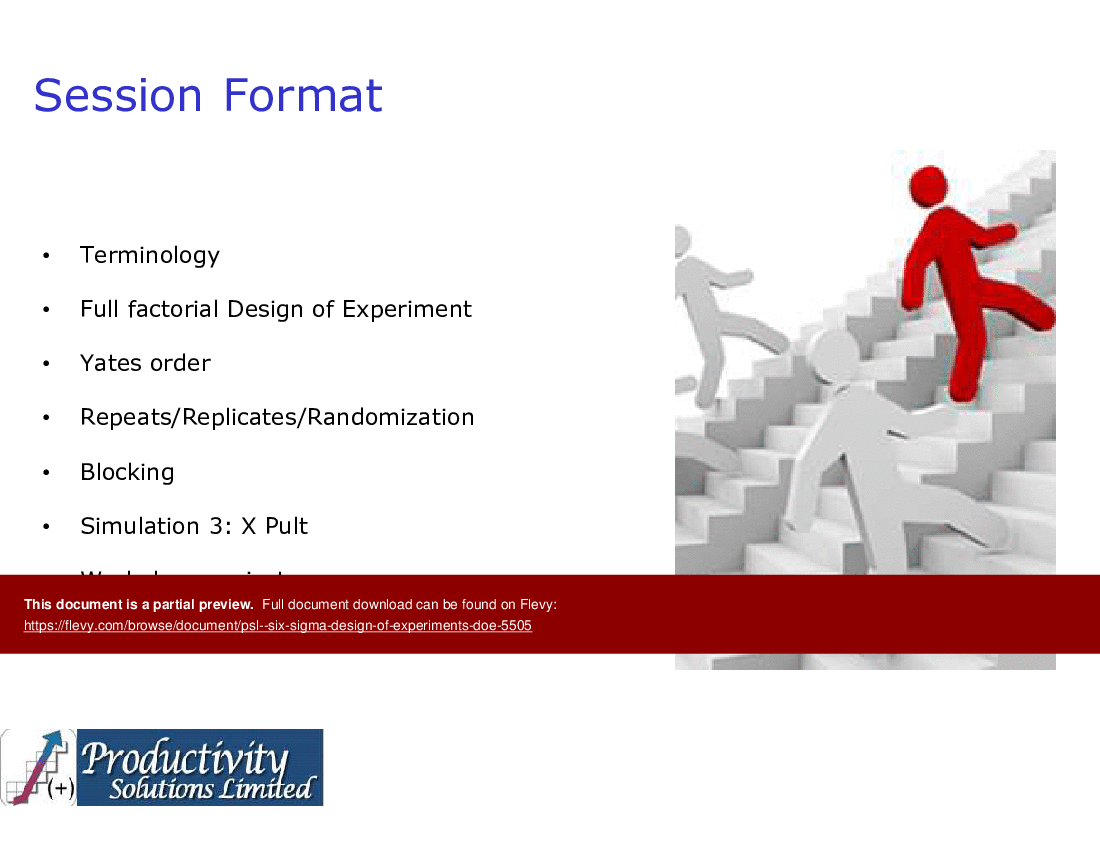
• Introduction to full factorial design concepts and Yates order
• Conduct Simulation 3 and analyze results
Fractional Factorial Design (90 minutes)
• Overview of fractional factorial designs and their applications
• Conduct Simulation 4 and identify optimum settings
Customization Guidance
• Tailor the X Pult simulations to reflect specific organizational processes and challenges
• Modify the templates to include relevant KPIVs and KPOVs pertinent to the project
• Adjust the data collection methods based on available resources and team capabilities
Secondary Topics Covered
• Trial and Error methods in experimentation
• One-Variable-At-a-Time (OVAT) approach for focused testing
• Importance of randomization in experimental design
• Blocking techniques to mitigate noise factors in experiments
• Confounding issues in fractional factorial designs
Topic FAQ
Document FAQ
These are questions addressed within this presentation.
What is the purpose of conducting a Design of Experiments?
Design of Experiments is used to systematically investigate the effects of multiple variables on a process, allowing for informed decision-making and process optimization.
How do I determine the appropriate design for my experiment?
The choice between full factorial and fractional factorial designs depends on the number of factors and interactions you wish to study, as well as resource availability.
What are KPIVs and KPOVs?
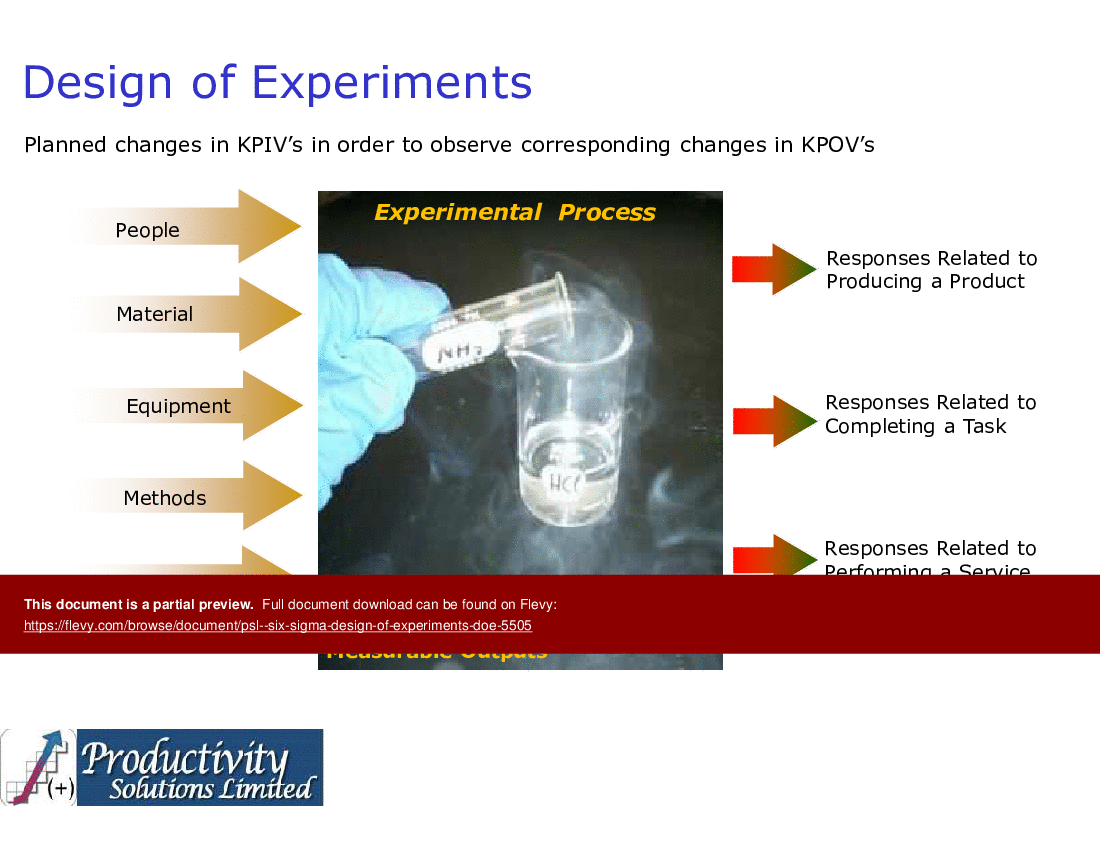
Key Process Input Variables (KPIVs) are the controllable factors in an experiment, while Key Process Output Variables (KPOVs) are the measurable outcomes that result from those inputs.
Why is randomization important in experiments?
Randomization helps eliminate bias and ensures that the results are not influenced by external factors, leading to more reliable conclusions.
What is the significance of blocking in experimental design?
Blocking allows researchers to control for the effects of certain variables that may introduce noise, ensuring that the impact of the primary factors can be accurately assessed.
How can I analyze the data collected from my experiments?
Utilize statistical tools and templates provided in the training to systematically analyze the data, identify trends, and draw conclusions.
What is the expected outcome of the simulations?
Participants should be able to identify optimal settings for the X Pult to consistently hit the target, demonstrating their understanding of experimental design principles.
How can I apply what I learned in this training to my workplace?
Implement the knowledge gained by conducting experiments on real processes, using the templates and tools provided to guide your improvement projects.
Glossary
• Design of Experiments (DoE) - A systematic method for planning, conducting, and analyzing experiments to optimize processes.
• Key Process Input Variable (KPIV) - A variable that can be controlled and manipulated in an experiment.
• Key Process Output Variable (KPOV) - The measurable outcome of a process that results from the KPIVs.
• Full Factorial Design - An experimental design that examines all possible combinations of factors.
• Fractional Factorial Design - A design that studies only a fraction of all possible combinations to save resources.
• Randomization - The process of randomly assigning treatments to eliminate bias.
• Blocking - A technique used to control for the effects of certain variables by grouping similar experimental units.
• Yates Order - A specific order used in factorial designs to systematically arrange experiments.
• Replicates - Non-consecutive repetitions of an experiment to increase reliability.
• Simulation - A practical exercise that mimics real-world processes to apply theoretical knowledge.
• SIPOC Map - A visual tool that outlines Suppliers, Inputs, Process, Outputs, and Customers in a process.
• Statistical Pack - A collection of statistical tools used for analyzing experimental data.
Source: Best Practices in DOE PowerPoint Slides: PSL - Six Sigma Design of Experiments (DoE) PowerPoint (PPTX) Presentation Slide Deck, OpEx Academy NZ
|
Receive our FREE presentation on Operational Excellence
This 50-slide presentation provides a high-level introduction to the 4 Building Blocks of Operational Excellence. Achieving OpEx requires the implementation of a Business Execution System that integrates these 4 building blocks. |