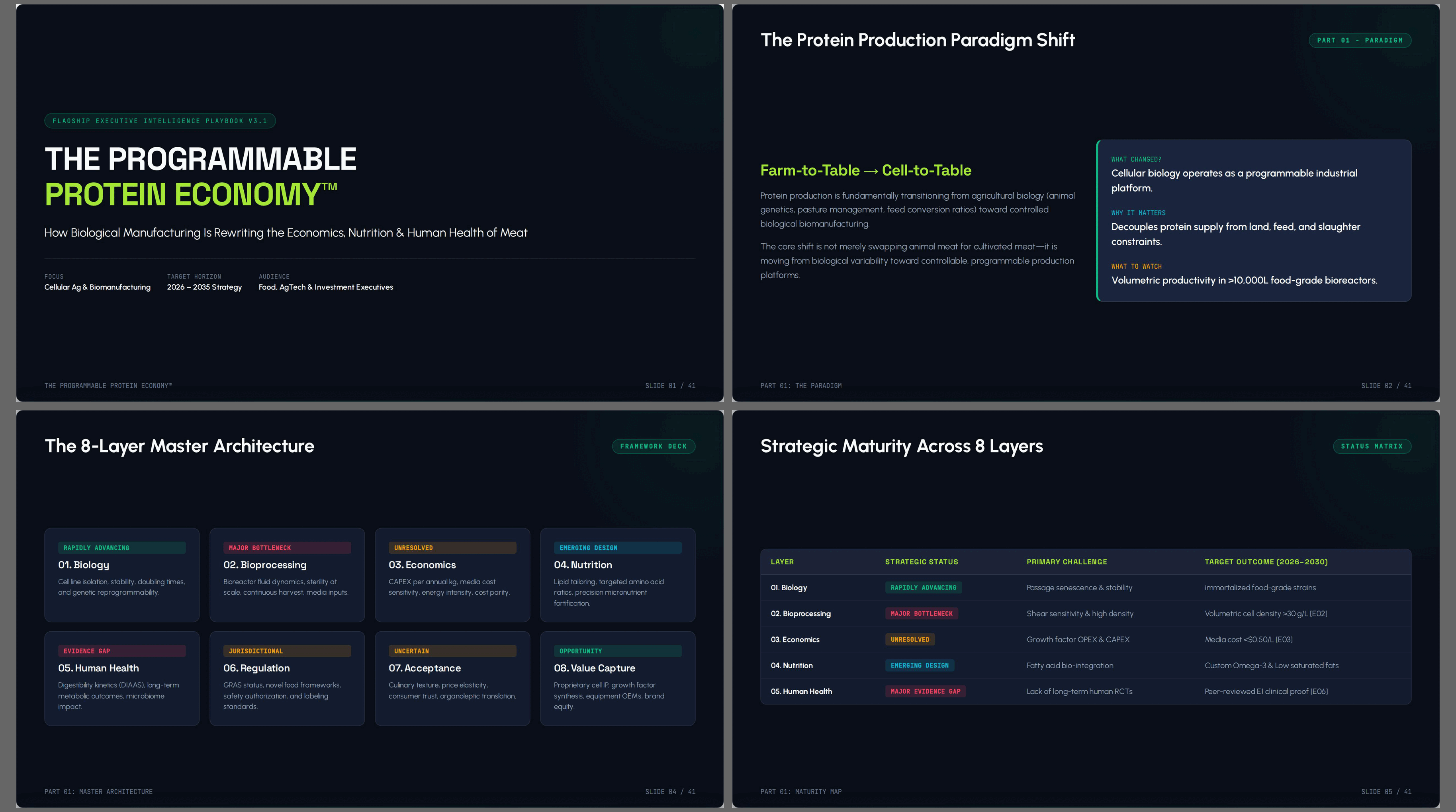

 Click main image to view in full screen. Unlock all 21 preview images:
Programmable Protein Economy™ – PDF
PDF document + PowerPoint (PPTX) 42 Pages


BENEFITS OF THIS DOWNLOADABLE PDF DOCUMENT
- Provides an end-to-end strategic architecture for evaluating the emerging programmable protein economy across technology, economics, nutrition, human-health evidence, regulation, consumer acceptance, and value capture.
- Translates complex biological manufacturing and cultivated-protein developments into practical decision frameworks for identifying bottlenecks, opportunity pools, capability gaps, and strategic exposure.
- Helps executives distinguish demonstrated evidence from emerging possibilities while identifying where scarce capabilities, infrastructure, intellectual property, and new protein value pools may develop.
RESTAURANT INDUSTRY PDF DESCRIPTION
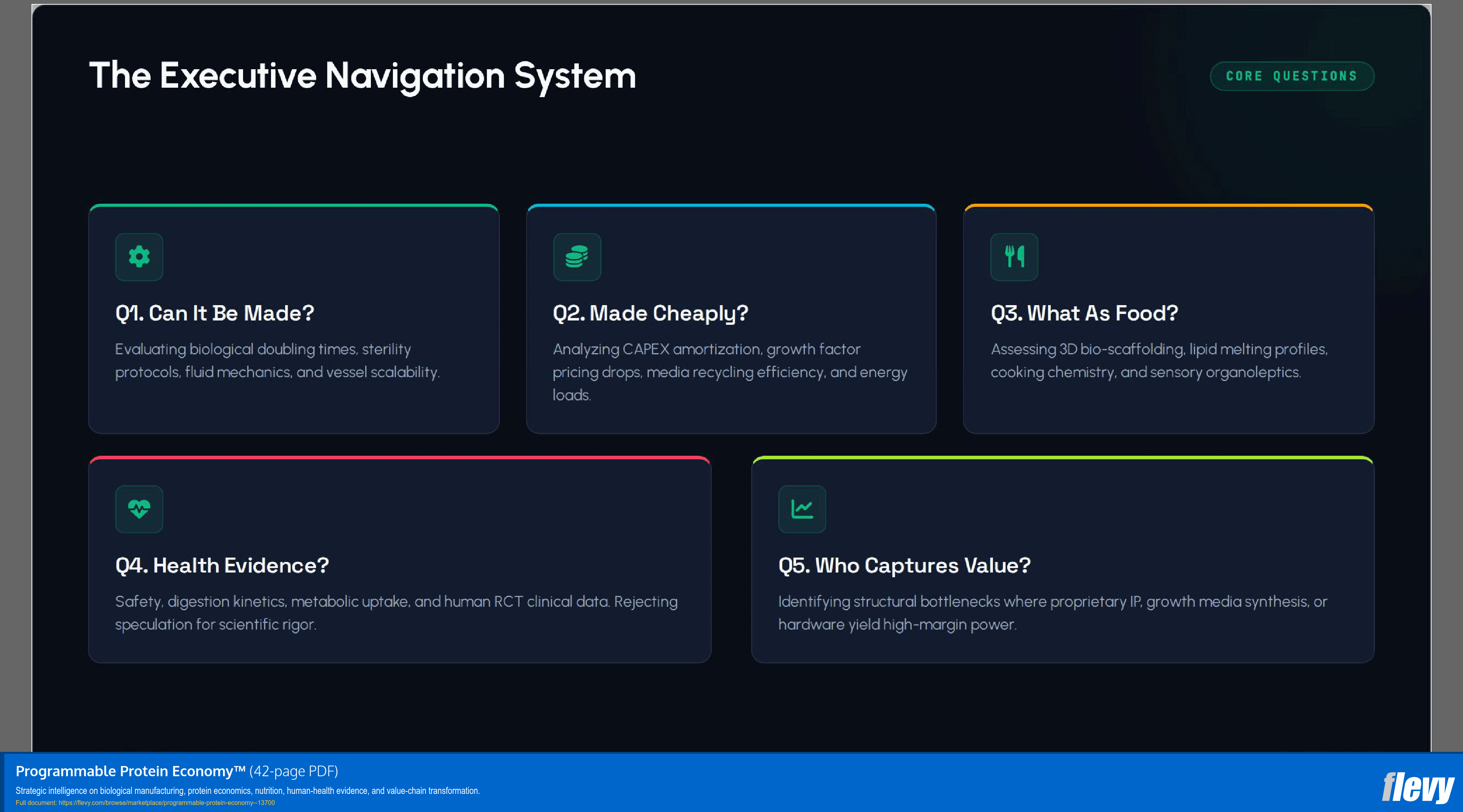
The Programmable Protein Economy™ is a 42-page flagship executive intelligence playbook examining how biological manufacturing could reshape the economics, production architecture, nutritional design space, human-health evidence, regulatory landscape, consumer acceptance, and value capture of protein.
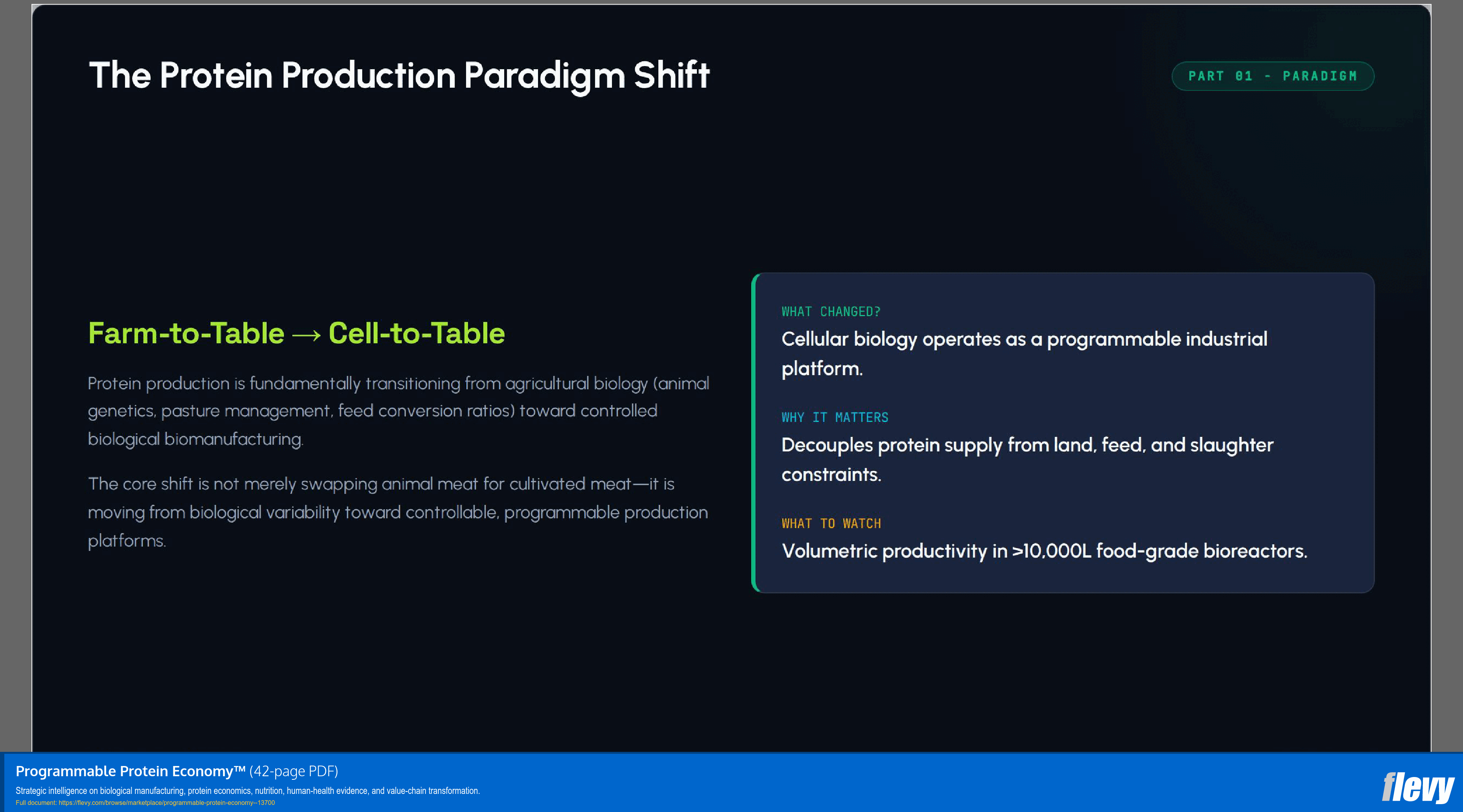
Rather than treating cultivated meat as simply another alternative-protein category, this intelligence examines a deeper structural question: what happens to the protein economy when biological production becomes increasingly programmable?
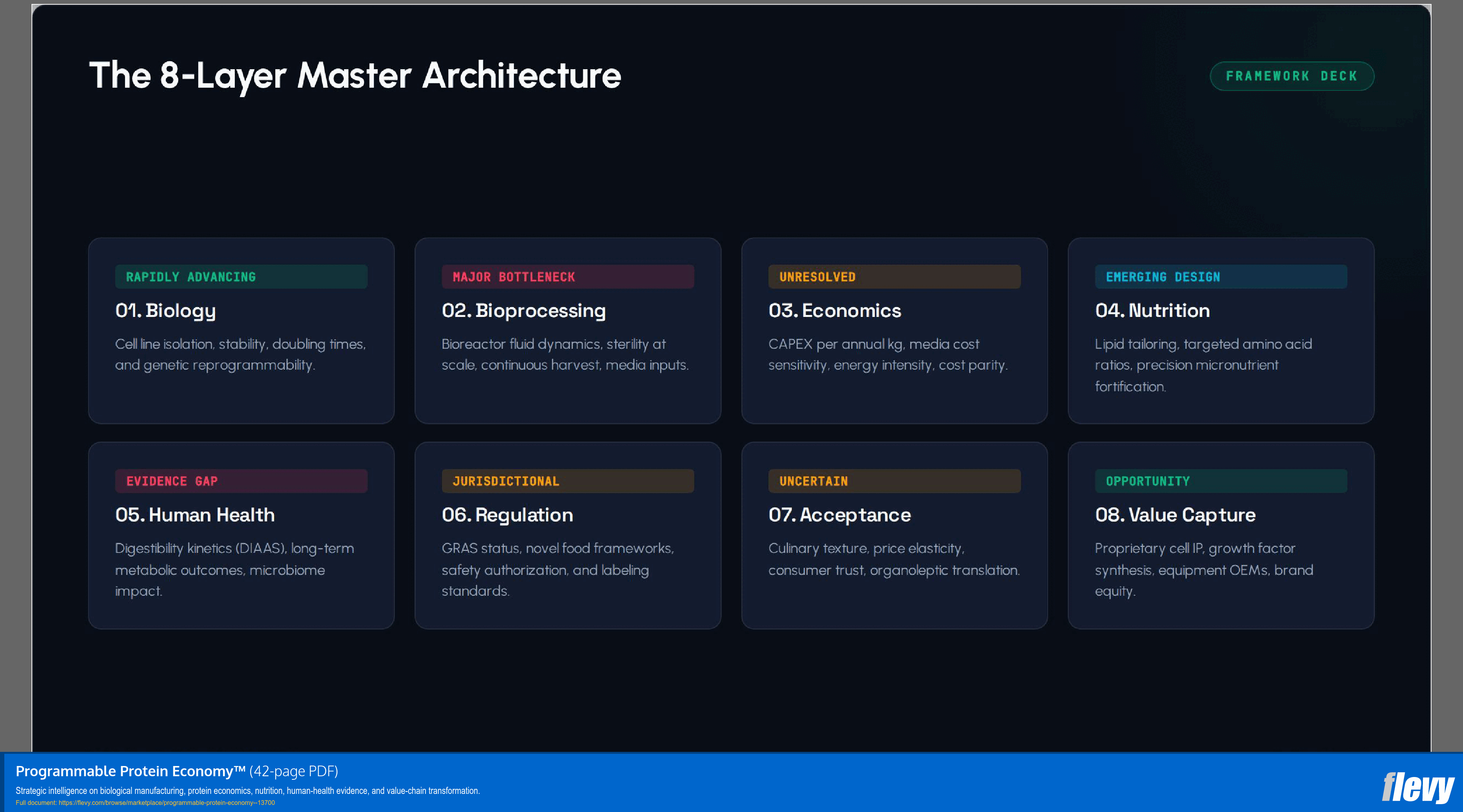
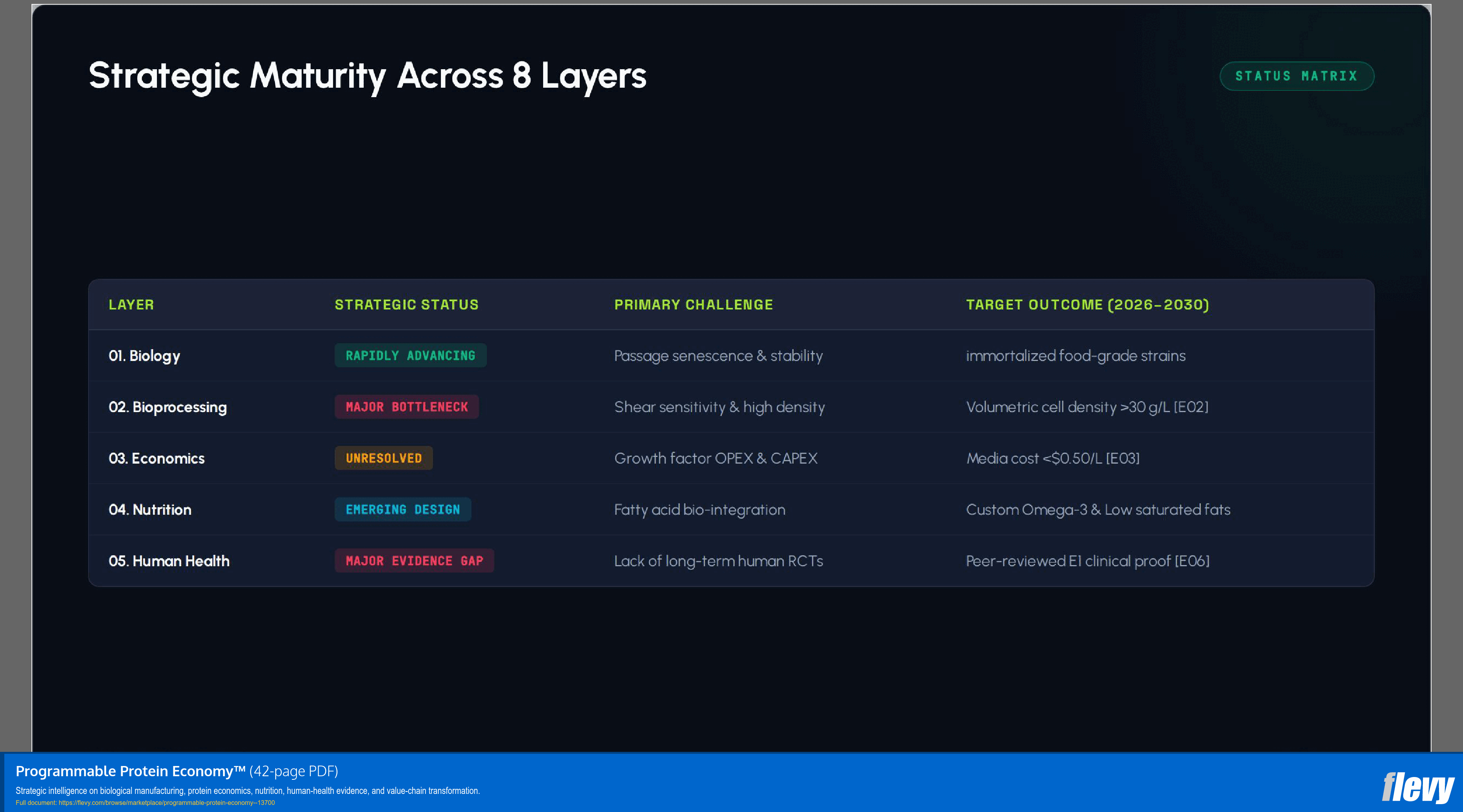
The playbook connects the transition from farm-to-table toward cell-to-table across an integrated eight-layer architecture: Biology, Bioprocessing, Economics, Nutrition, Human Health, Regulation, Acceptance, and Value Capture. It then translates these layers into practical frameworks for identifying production constraints, economic bottlenecks, evidence gaps, emerging opportunity pools, and strategically scarce capabilities.
Inside, you will find:
• The 8-Layer Programmable Protein Economy™ – a master architecture connecting biological capability to commercial value capture.
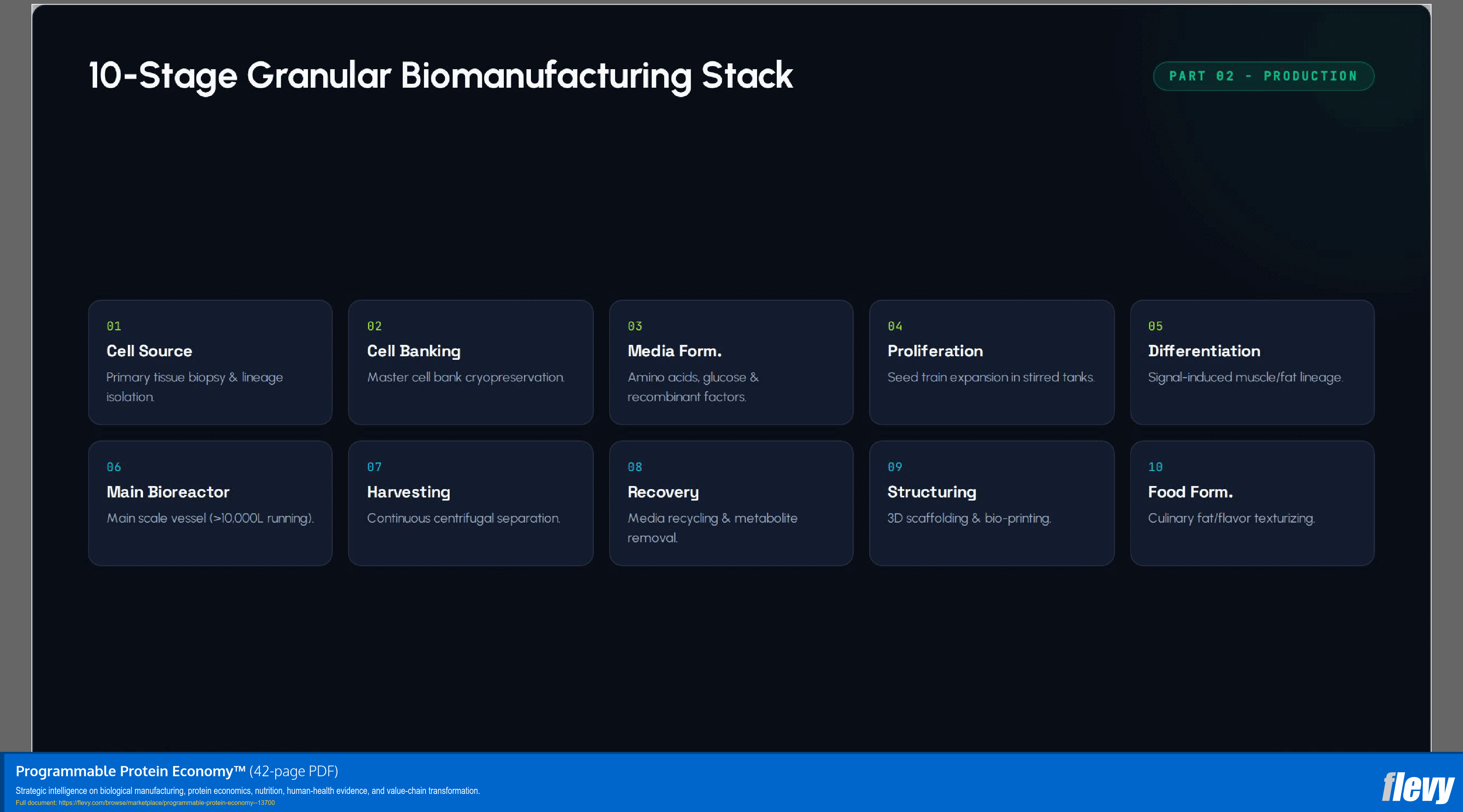
• 10-Stage Granular Biomanufacturing Stack – maps cell sourcing, cell banking, media, proliferation, differentiation, bioreactors, harvesting, recovery, structuring, and food formulation.
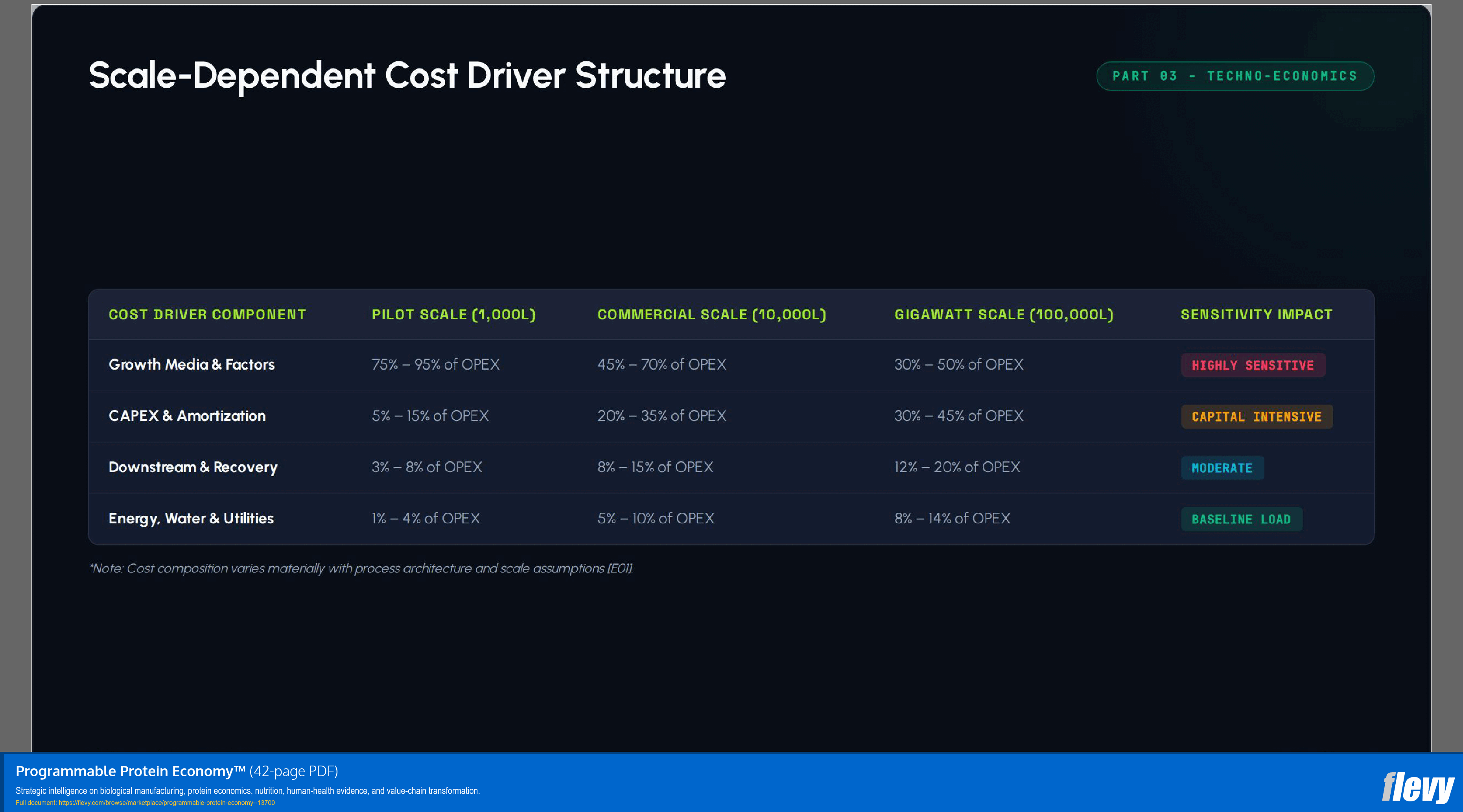
• Scale-Dependent Cost Driver Structure – examines how media, CAPEX, downstream recovery, and utilities affect production economics across different scale assumptions.
• The Cost-Parity Engine™ – connects biological productivity, media economics, yield, utilization, recycling, CAPEX, and product economics.
• The Protein Bottleneck Migration Map™ – identifies how constraints can migrate from media and scale toward downstream processing, consumer acceptance, provenance, and other layers as technical problems are addressed.
• The Nutritional Programmability Matrix™ – distinguishes what can potentially be designed from what has actually been demonstrated and clinically supported.
• The Human Health Translation Stack™ – traces the pathway from cellular composition and food matrix through digestion, uptake, and long-term human outcomes.
• The Health Evidence Engine™ – classifies claims from established evidence through well-supported, emerging, plausible, unknown, and unsupported levels.
• The Food Safety Control Stack™ and Protein Regulatory Access Map™ – examine the changing risk-control and market-access architecture.
• The Protein Acceptance Economy™ – analyzes sensory parity, price tolerance, institutional trust, labeling, provenance, and consumer adoption barriers.
• The Hybrid Protein Design Space™ – explores how cultivated cells, plant proteins, precision-fermented inputs, and food engineering could interact within future product architectures.
• The Protein Value Migration Map™ – identifies how strategic value may move from agricultural assets toward cell IP, media systems, bioprocessing, equipment, downstream capabilities, and brands.
• The Programmable Protein Opportunity Matrix™ – maps potential value pools by capital intensity, IP barriers, margin potential, and strategic role.
• The Programmable Protein Readiness Index™ (PPRI™) – an eight-dimensional diagnostic covering Biology, Manufacturing, Economics, Nutrition, Human Evidence, Regulation, Consumer Acceptance, and Value Position.
• Three Protein Futures – conditional pathways ranging from premium biological niches to hybrid industrialization and broader programmable protein platforms.
• The Programmable Protein Watch System™ – leading indicators for media technology, bioprocessing, health science, regulation, and commercialization.
• Thesis Invalidation Framework – identifies the evidence and developments that could undermine the core strategic thesis.
• 100-Day Executive Action Roadmap – translates the intelligence into a structured diagnostic, supplier-positioning, and hybrid-product exploration process.
The playbook deliberately separates technical capability, demonstrated performance, human-health evidence, and commercial assumptions. Quantitative thresholds are treated as illustrative or evidence-based according to their underlying support rather than as universal industry benchmarks.
Designed for food and beverage, agriculture, biotechnology, manufacturing, investment, corporate strategy, innovation, and executive decision-makers, this intelligence provides a repeatable framework for understanding where protein production is becoming programmable, where bottlenecks remain, and where strategic value could accumulate as the industry evolves.
Got a question about the product? Email us at support@flevy.com or ask the author directly by using the "Ask the Author a Question" form. If you cannot view the preview above this document description, go here to view the large preview instead.
Source: Best Practices in Restaurant Industry, Biotech PDF: Programmable Protein Economy™ PDF (PDF) Document, Wisnu Pandega Wardana
ABOUT THE AUTHOR

I am an independent Industrial Intelligence and Strategic Innovation Publisher focused on developing structured business intelligence, innovation frameworks, and opportunity-oriented research for decision-makers.
My work focuses on translating emerging technologies, industrial transformation, sustainability, resource efficiency, and market shifts into structured intelligence assets that
... [read more]
Ask the Author a Question
You must be logged in to contact the author.




























