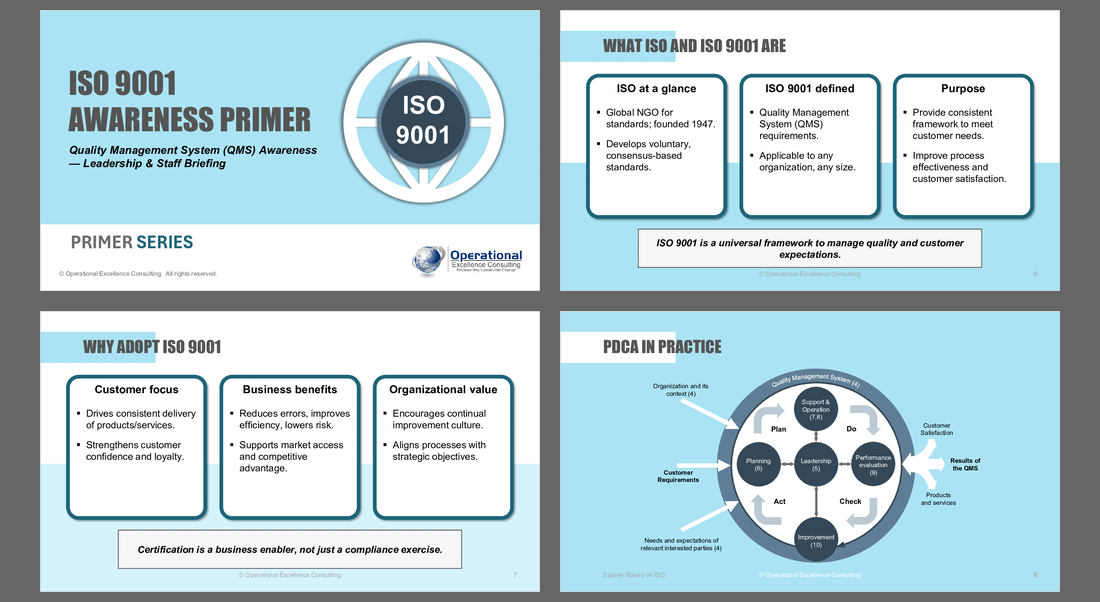

The ISO 9001 (QMS) Awareness Primer Presentation (ISO 9001 PPT) is a trainer‑ready deck designed to build foundational understanding of Quality Management Systems for leadership teams and staff. It distills ISO 9001:2015 (including the 2024 climate amendment) into a clear storyline: essentials, clause mapping, implementation and certification steps, audit readiness, and practical pitfalls and success factors. Combining high‑impact visuals with concise content and actionable takeaways, it's ideal for awareness sessions, leadership briefings, and introductory workshops where the goal is understanding and readiness.

LEARNING OBJECTIVES
1. Understand what ISO 9001 is, its purpose, and recent updates including climate considerations.
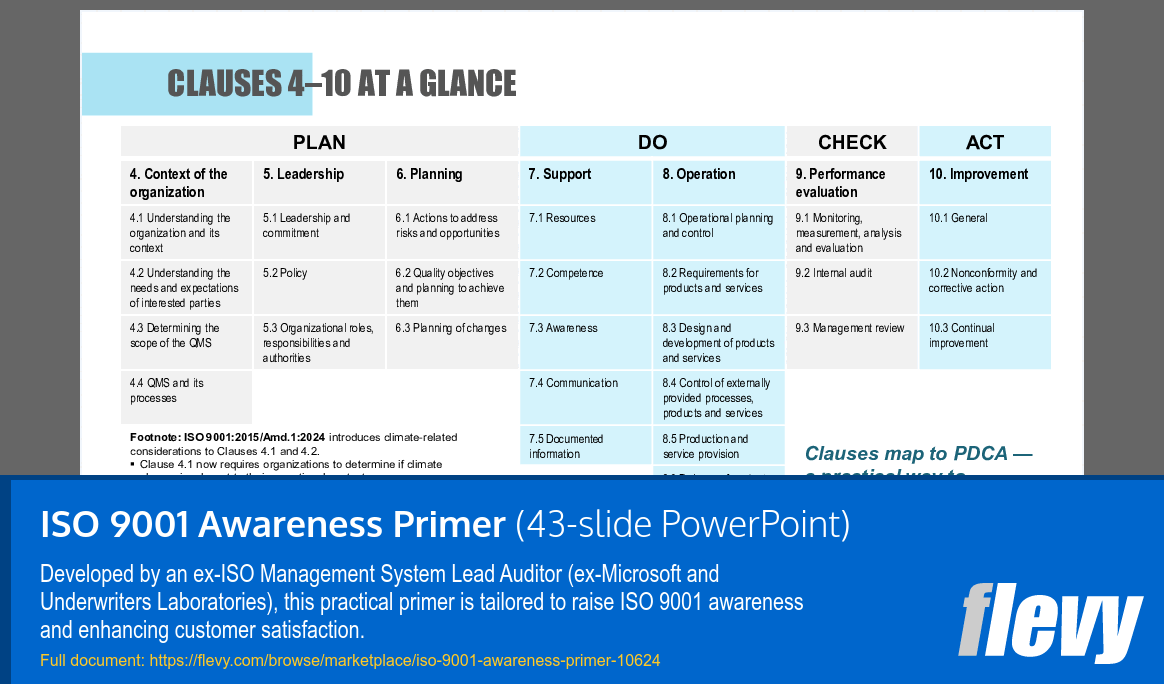
2. Recognize the high‑level clause structure (Clauses 4–10) and how it maps to PDCA.
3. Explain the practical steps for implementing a QMS and preparing for certification.
4. Prepare teams for audits with evidence, interview readiness, and corrective‑action workflows.
5. Avoid common pitfalls and apply leadership and process success factors to sustain improvement.
CONTENTS
1. ISO 9001 Essentials – Overview; value and principles; PDCA; what ISO 9001 is not; stakeholder value; recent updates.
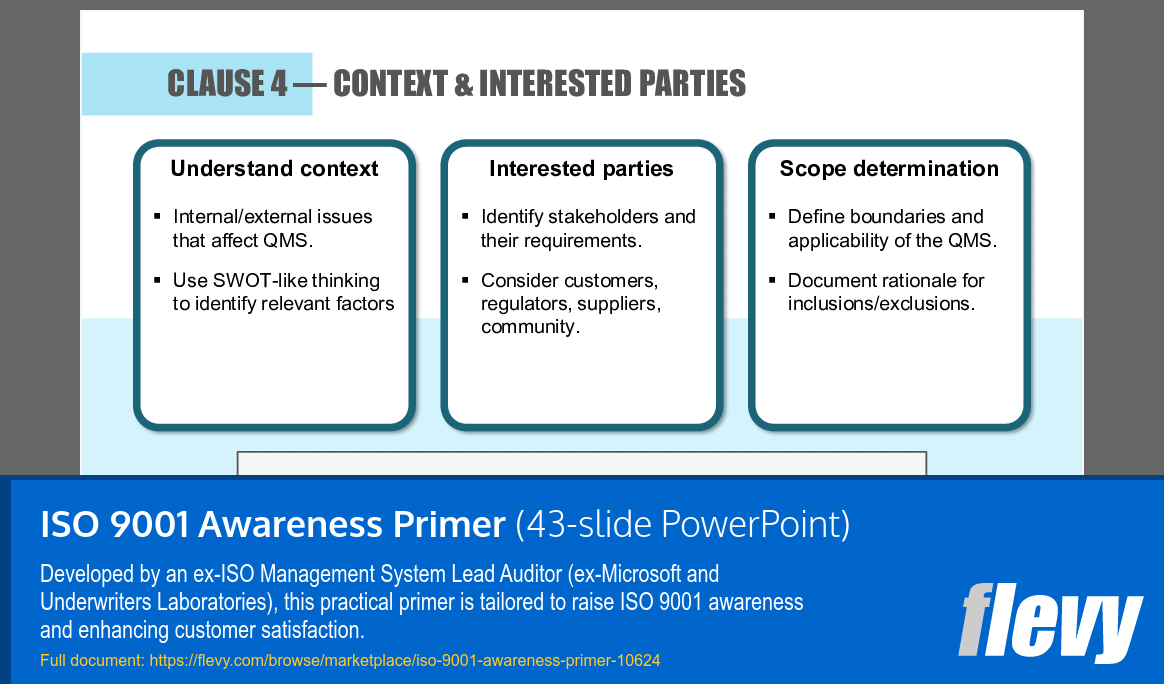
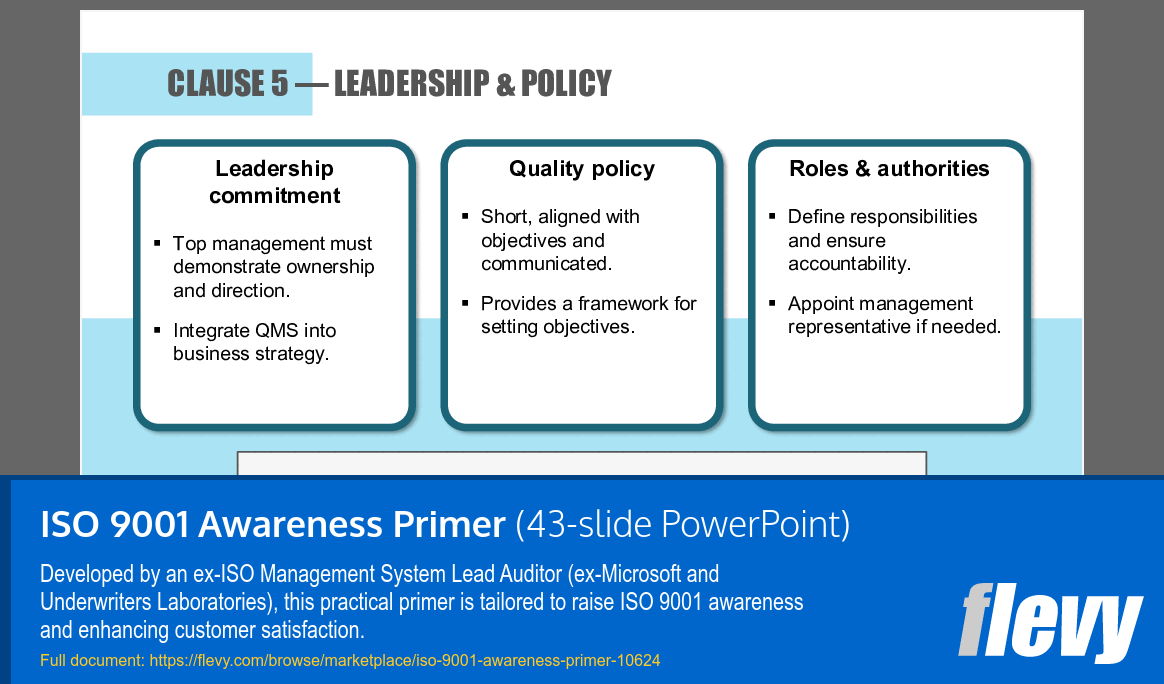
2. Clause Structure and PDCA – Clauses 4–10 at a glance; context & interested parties; leadership & policy; planning (risks & objectives); support (people, competence, info); operation, evaluation, improvement.
3. Implementing and Certifying – Implementation roadmap; practical tools; internal audit & management review; choosing a certification body and audit stages; certification lifecycle and surveillance; cost, time & resource considerations.
4. Audit Readiness and Conduct – Audit focus and evidence; types of findings; preparing people for interviews; rights & responsibilities; handling nonconformities; practical do's & don'ts.
5. Pitfalls and Success Factors – Leadership & strategy pitfalls; process & people pitfalls; leadership & culture success factors; practical QMS design; KPIs & dashboards; leadership readiness checklist.
About the OEC Primer Series
Developed by Operational Excellence Consulting, each Primer is designed to be facilitation‑ready, practical, and credible. Unlike generic training materials, our Primer Series is built by practitioners with decades of transformation experience, ensuring every deck combines clear frameworks, proven tools, and interactive activities. This consistency across topics (5S, Kaizen, Lean, Problem Solving, Design Thinking, and more) makes the series a trusted resource for consultants, trainers, and organizations seeking structured, high‑impact learning.
Got a question about the product? Email us at support@flevy.com or ask the author directly by using the "Ask the Author a Question" form. If you cannot view the preview above this document description, go here to view the large preview instead.
Executive Summary
The ISO 9001 Awareness Primer is a comprehensive training presentation designed to enhance understanding of the ISO 9001 Quality Management System (QMS). Developed by an experienced ISO Management System Lead Auditor, this primer equips organizations with the knowledge to improve process effectiveness and customer satisfaction. Participants will learn the essentials of ISO 9001, including its structure, implementation, certification processes, and audit readiness. This trainer-ready presentation is ideal for organizations aiming to foster a culture of continual improvement and align their processes with strategic objectives.
Who This Is For and When to Use
• Quality Managers and Compliance Officers responsible for QMS implementation
• Executive Leadership seeking to integrate ISO 9001 into business strategy
• Operational Teams involved in process mapping and improvement initiatives
• Internal Auditors preparing for ISO 9001 certification audits
Best-fit moments to use this deck:
• During onboarding sessions for new employees to familiarize them with ISO 9001
• As part of a leadership retreat focused on strategic alignment and quality management
• In preparation for internal audits or external certification assessments
Learning Objectives
• Understand what ISO 9001 is and why it matters for organizations.
• Recognize key clauses and the high-level structure of ISO 9001 (Clauses 4–10).
• Explain how the implementation and certification processes work.
• Prepare for interactions with auditors and effectively handle audits.
• Avoid common pitfalls and apply success factors for successful QMS implementation.
Table of Contents
• ISO 9001 Essentials (page 6)
• Clause Structure & PDCA (page 13)
• Implementing & Certifying (page 20)
• Audit Readiness & Conduct (page 28)
• Pitfalls & Success Factors (page 35)
Primary Topics Covered
• ISO 9001 Essentials - Overview of ISO 9001 as a framework for managing quality and meeting customer expectations.
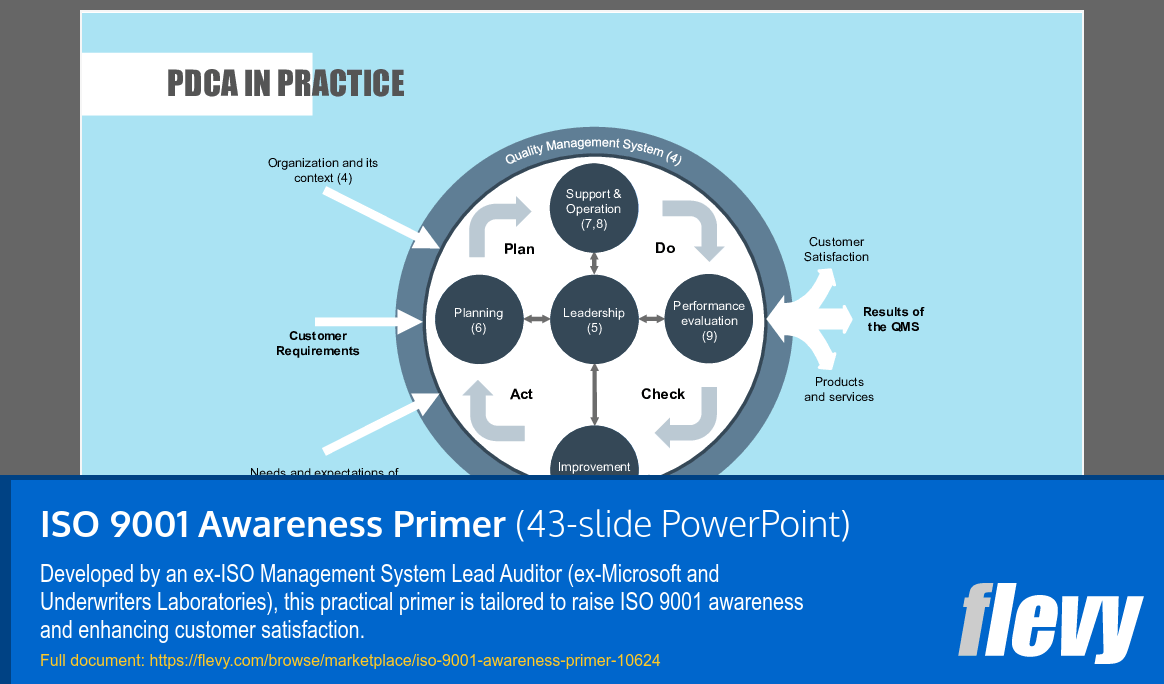
• Clause Structure & PDCA - Explanation of the Plan-Do-Check-Act (PDCA) cycle and how it relates to the clauses of ISO 9001.
• Implementation Roadmap - Structured phases for preparing, building, and verifying the QMS to ensure effective adoption.
• Audit Readiness - Key elements to prepare for ISO audits, including types of findings and effective handling of nonconformities.
• Common Pitfalls - Identification of frequent challenges organizations face during ISO 9001 implementation and strategies to overcome them.
Deliverables, Templates, and Tools
• Risk register template to capture risks, owners, and mitigation actions.
• Document control approach outlining necessary documentation and version control.
• Process mapping tools to identify inputs, outputs, and key performance indicators (KPIs).
• Internal audit program essentials for verifying conformity and effectiveness of the QMS.
• Corrective action register for tracking and managing audit findings.
Slide Highlights
• Overview of ISO 9001 and its significance in enhancing customer satisfaction.
• Visual representation of the PDCA cycle and its application in QMS activities.
• Implementation roadmap detailing the phases of QMS adoption.
• Audit readiness checklist to prepare staff for effective audit interactions.
• Common pitfalls and success factors to ensure a robust QMS.
Potential Workshop Agenda
ISO 9001 Overview Session (60 minutes)
• Introduce ISO 9001 and its importance in quality management.
• Discuss the structure and key clauses of the standard.
• Review business benefits and organizational value of ISO 9001.
Audit Readiness Preparation (90 minutes)
• Outline what auditors look for during ISO audits.
• Prepare staff for interviews and evidence presentation.
• Discuss handling nonconformities and corrective actions.
Implementation Strategies Workshop (120 minutes)
• Develop an implementation roadmap tailored to your organization.
• Identify key processes and assign ownership for QMS activities.
• Create a risk register and document control strategy.
Customization Guidance
• Tailor the presentation to reflect your organization’s specific processes and terminology.
• Adjust the implementation roadmap to align with your strategic objectives and timelines.
• Incorporate case studies or examples relevant to your industry for enhanced engagement.
Secondary Topics Covered
• The role of leadership in QMS success and employee engagement.
• Importance of continual improvement and performance evaluation.
• Integration of sustainability considerations into the QMS.
• Effective communication strategies within the organization regarding QMS.
FAQ
What is ISO 9001?
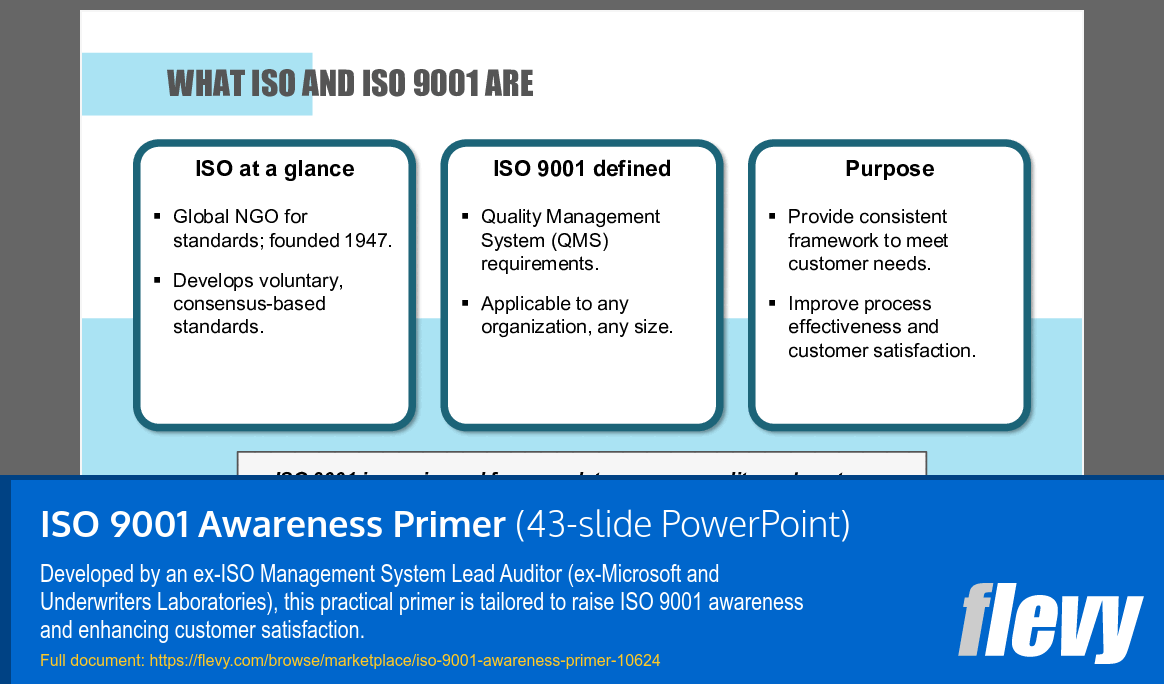
ISO 9001 is a voluntary standard that outlines the requirements for a Quality Management System (QMS) applicable to any organization, regardless of size or industry.
Why should my organization adopt ISO 9001?
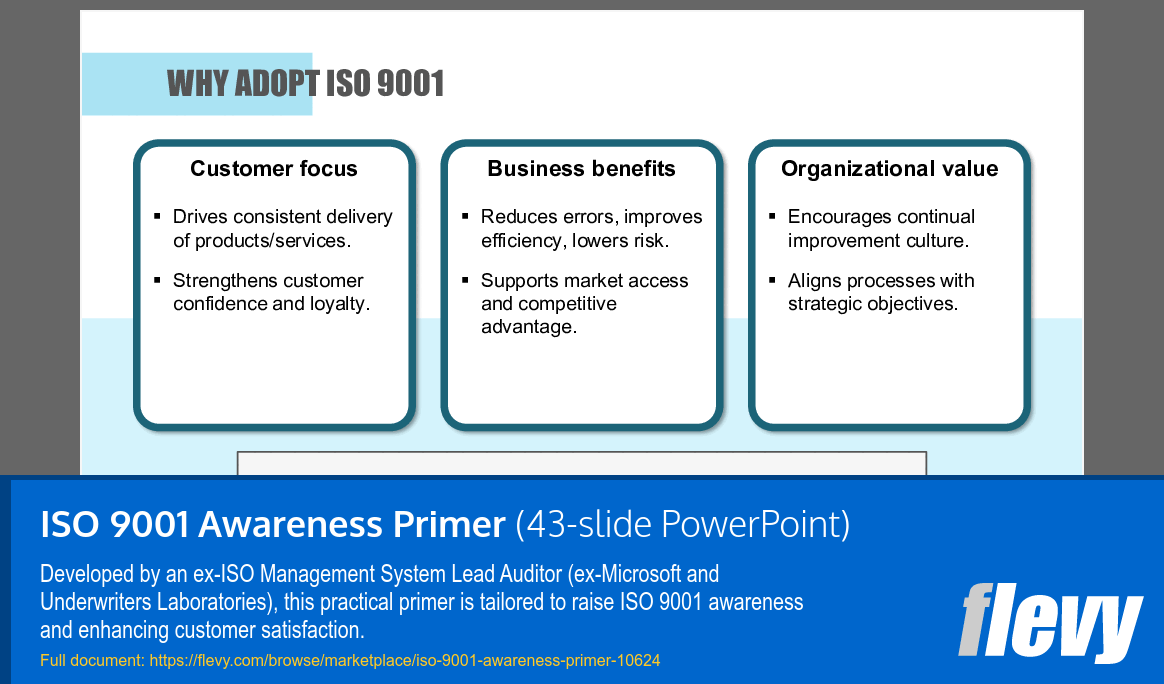
Adopting ISO 9001 can lead to improved efficiency, reduced errors, and enhanced customer satisfaction, ultimately supporting market access and competitive advantage.
What are the key clauses of ISO 9001?
The key clauses of ISO 9001 include context of the organization, leadership, planning, support, operation, performance evaluation, and improvement.
How long does it take to implement ISO 9001?
The typical timeline for preparation to certification can range from months to a year, depending on the complexity of the organization and its processes.
What should I expect during an ISO audit?
During an ISO audit, auditors will assess the effectiveness of your QMS, verify conformity to the standard, and seek evidence of consistent practices rather than perfect paperwork.
How do I prepare my team for an ISO audit?
Preparation involves ensuring staff are aware of their roles, have access to necessary documentation, and understand the audit process. Conducting mock interviews can also be beneficial.
What are common pitfalls in ISO 9001 implementation?
Common pitfalls include poor alignment with business goals, over-documentation, lack of visible leadership, and insufficient training for staff.
How can I measure the success of my QMS?
Success can be measured using KPIs linked to customer satisfaction, defect rates, and on-time delivery, along with regular reviews to assess performance and drive improvement.
Glossary
• ISO 9001 - A standard for Quality Management Systems that outlines requirements for organizations to ensure quality and customer satisfaction.
• QMS - Quality Management System, a structured system for managing and improving quality in an organization.
• PDCA - Plan-Do-Check-Act, a cyclical model for continuous improvement in processes.
• Nonconformity - A failure to meet a requirement of the ISO 9001 standard.
• Audit - A systematic examination of a QMS to determine its conformity to the standard.
• Corrective Action - Steps taken to eliminate the causes of nonconformities to prevent recurrence.
• KPI - Key Performance Indicator, a measurable value that demonstrates how effectively an organization is achieving key business objectives.
• Leadership Commitment - The active involvement of top management in supporting and promoting the QMS.
• Stakeholders - Individuals or groups that have an interest in the performance and success of the organization.
• Document Control - The process of managing documents to ensure accuracy, accessibility, and compliance with standards.
• Risk Register - A tool used to identify, assess, and manage risks associated with QMS implementation.
• Internal Audit - An evaluation of an organization’s QMS conducted by its own staff to ensure compliance and effectiveness.
• Management Review - A periodic assessment by top management of the QMS performance and opportunities for improvement.
• Continual Improvement - Ongoing efforts to enhance products, services, or processes.
• Certification Body - An organization that provides certification services for ISO standards.
• Surveillance Audit - Regular audits conducted to ensure ongoing compliance with ISO standards after initial certification.
• Recertification - The process of renewing certification after a specified period, typically every 3 years.
• Stakeholder Expectations - The needs and requirements of individuals or groups with an interest in the organization's performance.
• Process Mapping - A visual representation of the steps involved in a process to improve understanding and efficiency.
• Quality Policy - A formal statement from management outlining the organization’s commitment to quality.
• Performance Evaluation - The assessment of the QMS's effectiveness based on data and performance indicators.
Source: Best Practices in ISO 9001 PowerPoint Slides: ISO 9001 Awareness Primer PowerPoint (PPTX) Presentation Slide Deck, Operational Excellence Consulting
|
Receive our FREE presentation on Operational Excellence
This 50-slide presentation provides a high-level introduction to the 4 Building Blocks of Operational Excellence. Achieving OpEx requires the implementation of a Business Execution System that integrates these 4 building blocks. |