
Buy Your Copy & Achieve Success Now!
Greatest barriers to ISO 9001:2015 implementation and how to overcome them.
Why do 37% of ISO 9001:2015 projects fail within the 1st 6 months of 2016?
Book Your training courseware right now, and You will be joining a prestigious clientele that has benefited from our progressive approach to training and mentorship.
The globally recognized quality management system standard has undergone a major review. ISO 9001:2008 quality management systems and ISO 14001:2004 environmental management systems have been updated to incorporate a wide range of changes.
To understand and meet the new requirements and ensure a smooth transition from your current ISO 9001 certification, you need to make certain that you keep on top of the latest developments.
Learning Objectives
1. Understand the implementation of a Quality Management System in accordance with ISO 9001:2015.
2. A comprehensive understanding of the concepts, approaches, standards, methods and techniques required for the effective management of the NEW Management System.
3. The necessary expertise to support an organisation in implementing, managing and maintaining the system as specified in NEW Management system,
4. The necessary expertise to manage a team in making the organisational transition to ISO 9001:2015.
We exist to serve You & Your esteemed organisation all around the world, delivering Best in Class and Proven Results.
***
EpicCoaching International provides coaching, training, auditing services to Supply Chains where it plays a critical role in helping companies achieve growth objectives.
In today's markets, companies are increasingly challenging their supply chains on multiple dimensions, including Quality, Safety, flexibility, cost reduction, predictable risk management and customer service levels, Because You as a Customer deserve it.
Our supply chain consultants help ensure that our client supply chains are a source of competitive advantage for meeting both short- and long-term goals.
The Team of Specialists are here to serve You!
We can help You now!
Buy Your Copy & Achieve Success Now!
This MasterClass covers the critical changes in ISO 9001:2015, including the shift to risk-based thinking and the new structure aligned with Annex SL. Gain insights into the streamlined documentation requirements and practical examples of implementation to ensure your organization remains compliant and competitive.
Got a question about the product? Email us at support@flevy.com or ask the author directly by using the "Ask the Author a Question" form. If you cannot view the preview above this document description, go here to view the large preview instead.
Executive Summary
The ISO 9001:2015 Management System Transition MasterClass PPT is designed for organizations aiming to transition to the latest ISO 9001 standard. This comprehensive presentation covers the updated requirements for Quality Management Systems (QMS), emphasizing the importance of risk-based thinking and process approaches. By utilizing this deck, corporate executives, integration leaders, and consultants will gain insights into the necessary steps for effective implementation, ensuring compliance and continuous improvement in quality management practices.
Who This Is For and When to Use
• Quality Managers and Compliance Officers responsible for ISO certification
• Internal Auditors seeking to understand the updated standards
• Consultants guiding organizations through the transition process
• Training and Development Teams focused on quality management education
Best-fit moments to use this deck:
• During the planning phase of ISO 9001:2015 transition
• For training sessions aimed at enhancing understanding of the new standards
• When conducting internal audits to assess compliance with ISO 9001:2015
Learning Objectives
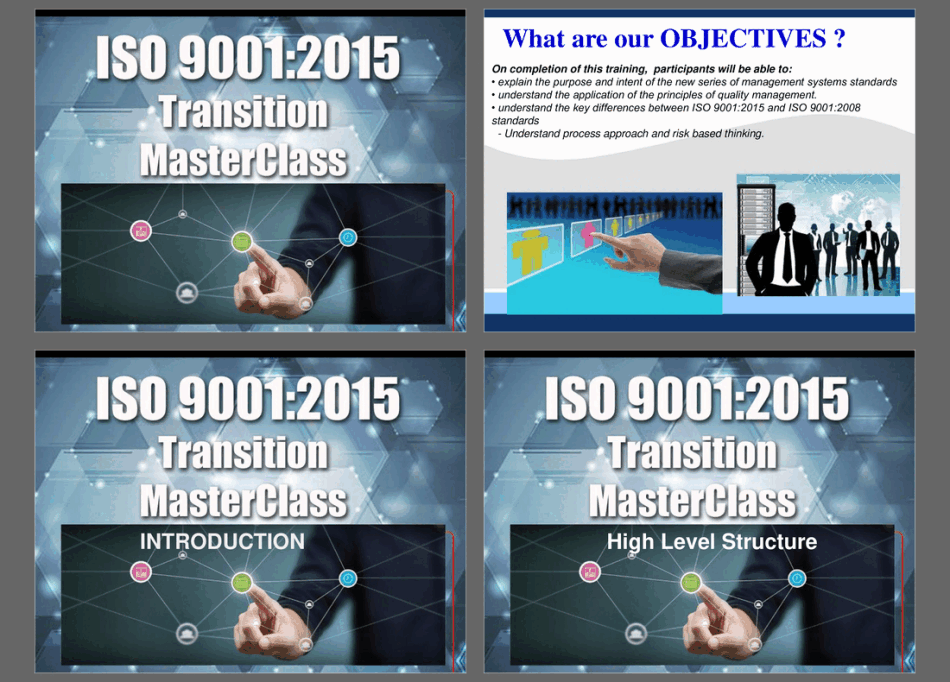
• Explain the purpose and intent of the ISO 9001:2015 standard
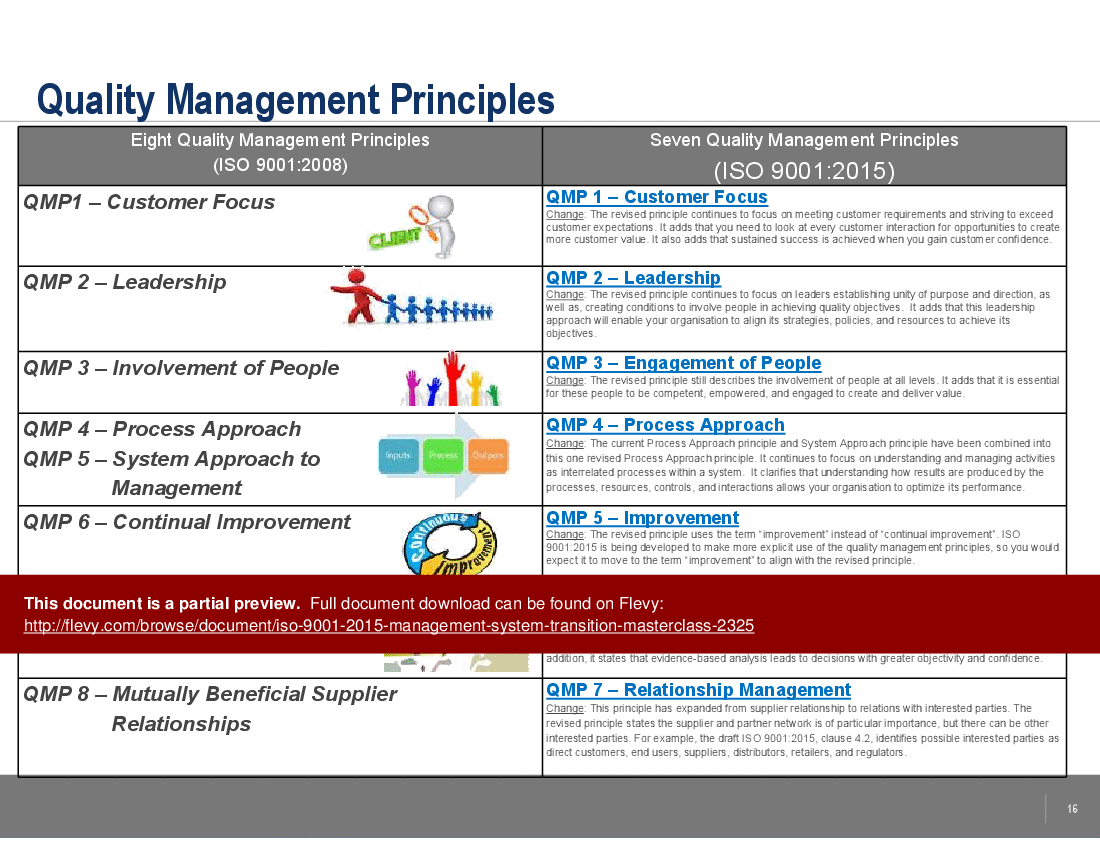
• Understand the principles of quality management and their application
• Identify key differences between ISO 9001:2015 and ISO 9001:2008
• Define the process approach and its significance in quality management
• Recognize the importance of risk-based thinking in QMS
• Develop strategies for effective implementation of the new standard
Table of Contents
• Overview of ISO 9001:2015 (page 2)
• Key Changes from ISO 9001:2008 (page 17)
• Context of the Organization (page 42)
• Leadership and Commitment (page 55)
• Planning for the QMS (page 60)
• Support and Resources (page 65)
• Operation of the QMS (page 78)
• Performance Evaluation (page 80)
• Improvement Processes (page 82)
• Conversion Process and Timeline (page 84)
• Frequently Asked Questions (page 88)
Primary Topics Covered
• ISO 9001:2015 Overview - An introduction to the revised standard and its implications for organizations.
• Key Changes - Highlights the transition from ISO 9001:2008 to ISO 9001:2015, focusing on risk-based thinking and reduced documentation requirements.
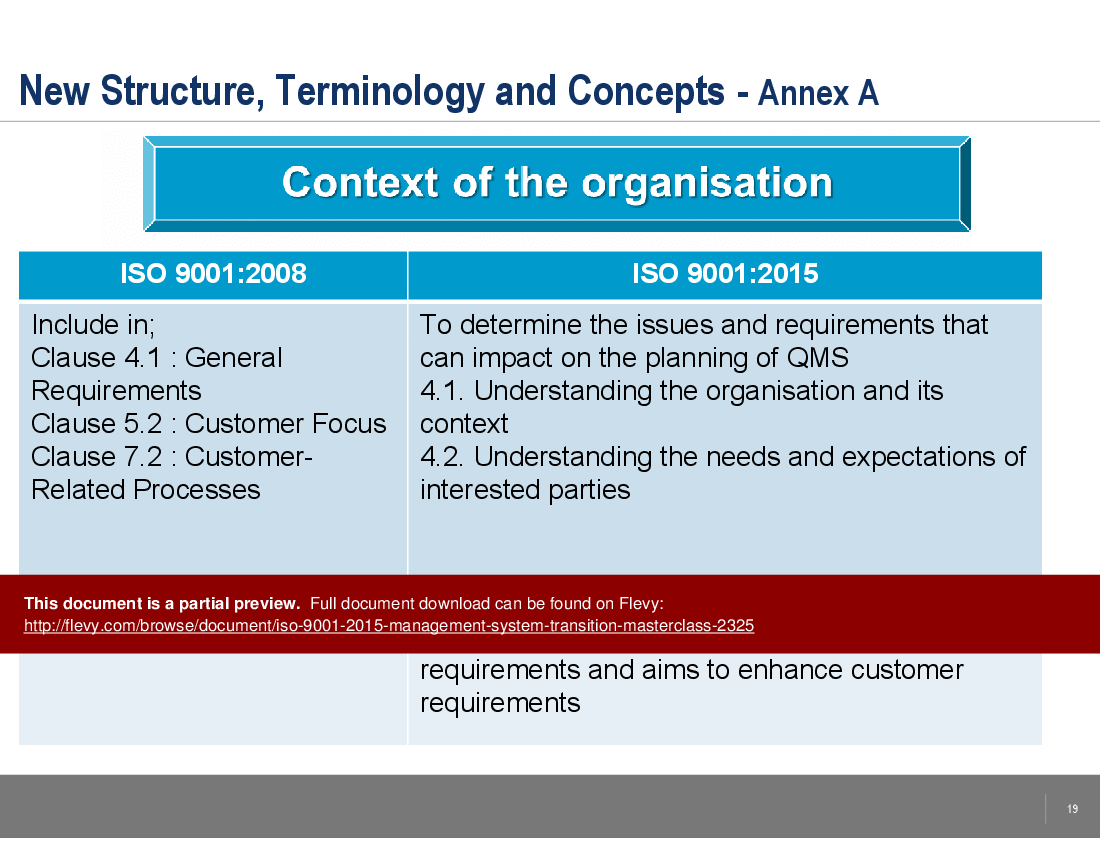
• Context of the Organization - Emphasizes the need to understand internal and external factors affecting the QMS.
• Leadership Commitment - Discusses the role of top management in ensuring effective QMS implementation.
• Planning for Risks and Opportunities - Outlines the necessity of identifying risks and opportunities within the QMS framework.
• Performance Evaluation - Details the processes for monitoring and measuring QMS effectiveness.
Deliverables, Templates, and Tools
• Gap analysis template for assessing current QMS against ISO 9001:2015 requirements
• Action plan template for addressing identified risks and opportunities
• Checklist for leadership roles and responsibilities in QMS
• Documentation framework for maintaining necessary documented information
• Training materials for internal auditors on the new standard
• Guidelines for conducting management reviews
Slide Highlights
• Overview slide outlining the transition process and timeline
• Key changes slide comparing ISO 9001:2008 and ISO 9001:2015
• Context of the organization slide detailing internal and external factors
• Leadership commitment slide emphasizing top management's role
• Risk-based thinking slide explaining the importance of proactive risk management
Potential Workshop Agenda
ISO 9001:2015 Overview Session (60 minutes)
• Introduce the new standard and its significance
• Discuss the implications for organizations
Leadership Commitment Workshop (90 minutes)
• Define the roles and responsibilities of top management
• Develop strategies for effective QMS integration
Risk Management Planning Session (120 minutes)
• Identify potential risks and opportunities
• Create action plans to address identified risks
Customization Guidance
• Tailor the action plan templates to reflect specific organizational contexts and needs
• Adjust the training materials to align with the existing QMS framework
• Incorporate relevant industry standards and regulations into the documentation framework
Secondary Topics Covered
• Documentation requirements and flexibility under ISO 9001:2015
• The importance of customer focus in quality management
• Integration of QMS with other management systems (e.g., ISO 14001, ISO 45001)
• Continuous improvement processes and methodologies
• Internal and external communication strategies related to QMS
Topic FAQ
Document FAQ
These are questions addressed within this presentation.
Why has it been decided to issue a new version of ISO 9001?
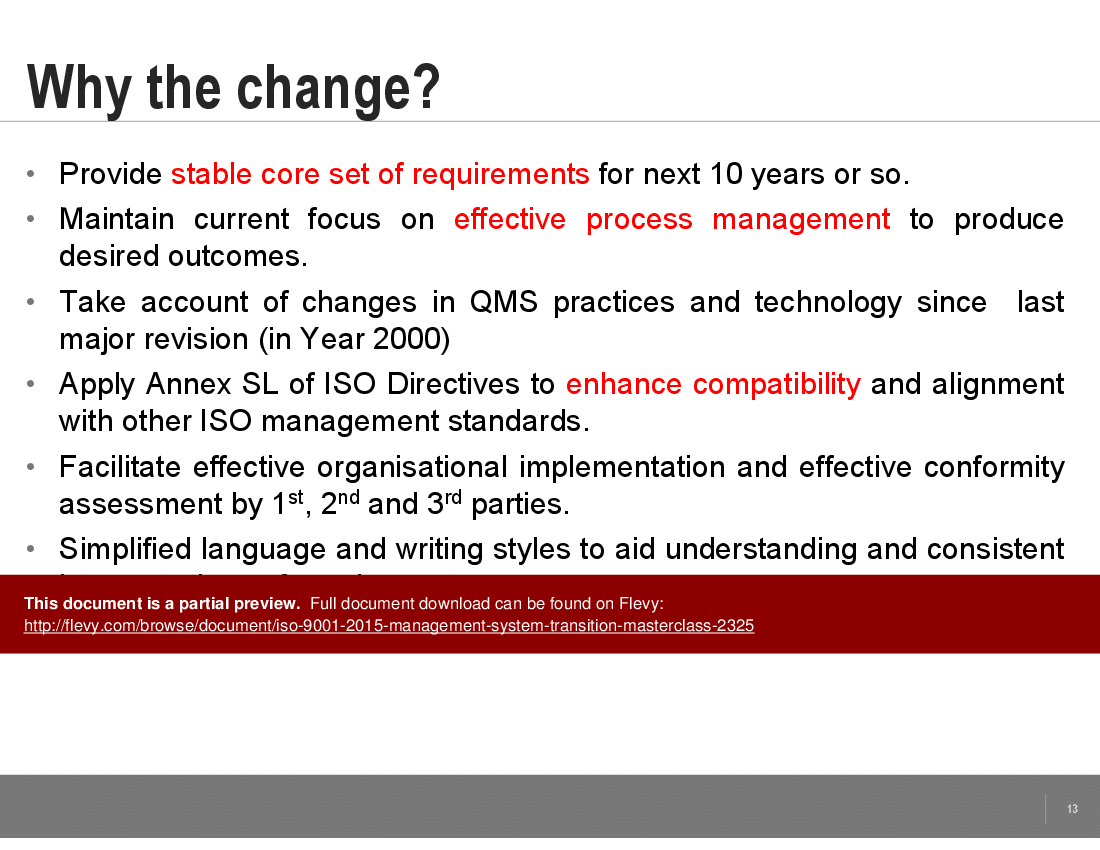
Business needs and expectations have changed significantly since the last major revision, necessitating updates to the standard.
Does ISO 9001 still apply to all organizations?
Yes, the standard is applicable to any type of organization, regardless of size or sector.
How has the structure of the standard changed?
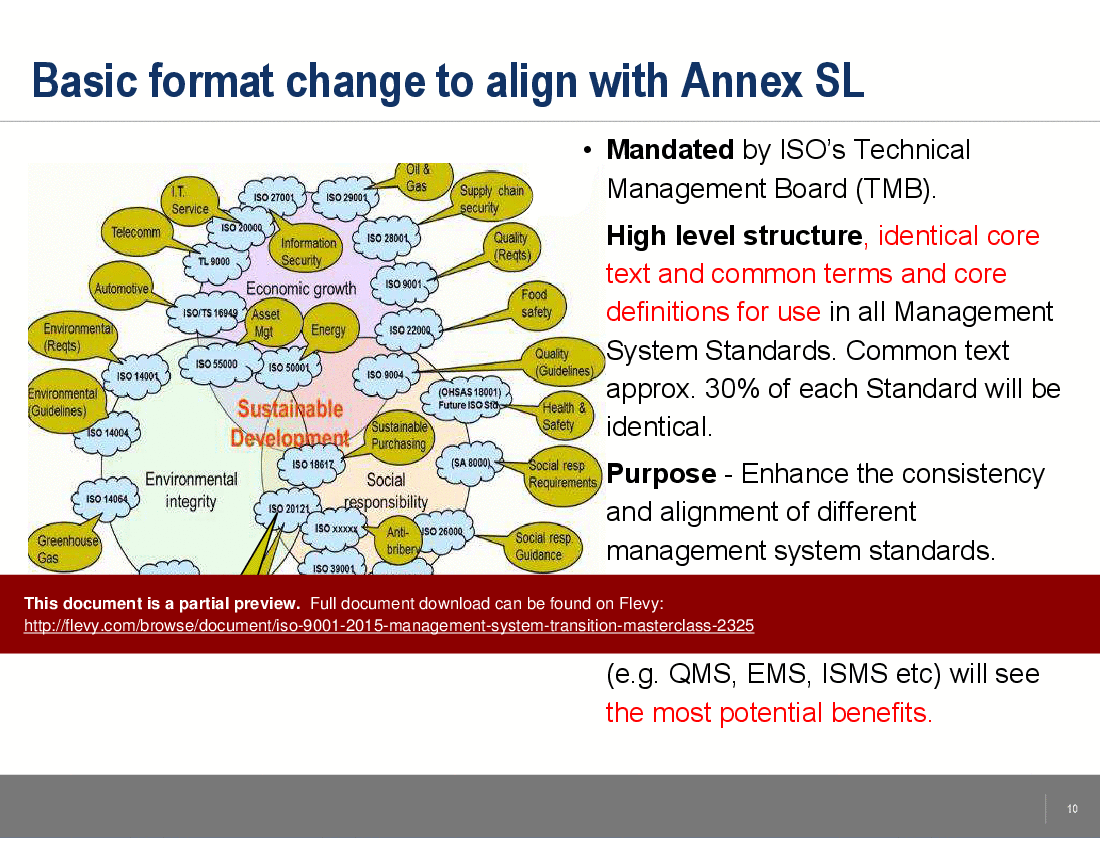
The structure now aligns with a common high-level structure developed by ISO to enhance harmonization among different management system standards.
What are the main differences in content between the old and new version?
Key differences include the introduction of risk-based thinking, fewer prescriptive requirements, and a greater emphasis on organizational context.
How has documentation requirements changed?
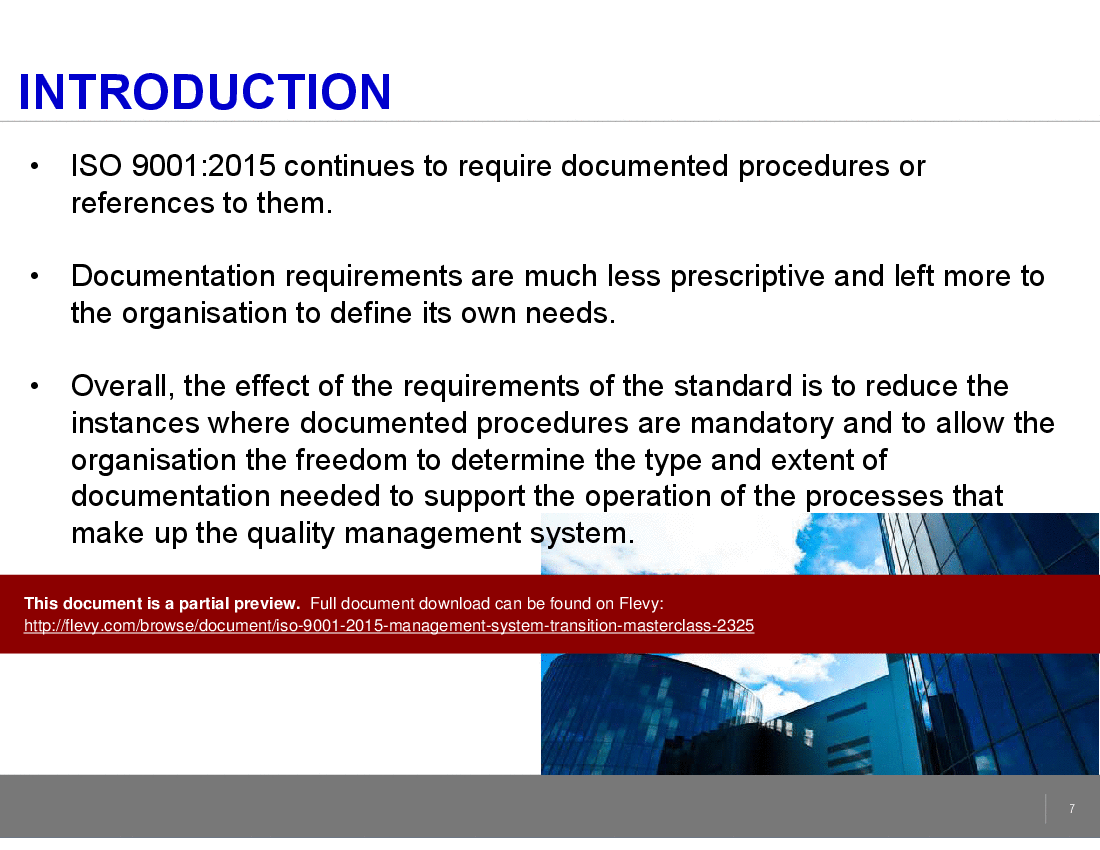
Specific documented procedures are no longer mandated; organizations must maintain documented information necessary for effective QMS operation.
Is a quality manual still required?
No, the new standard does not specifically require a quality manual,, but organizations may choose to maintain one if it is useful.
Why has management review been moved to performance evaluation?
This change aligns with the Plan-Do-Check-Act cycle, ensuring that performance measurement precedes management review.
What is risk-based thinking and why has it been introduced?
Risk-based thinking addresses the need for organizations to proactively manage risks that could impact the quality of products and services.
Glossary
• QMS - Quality Management System
• ISO - International Organization for Standardization
• Risk-Based Thinking - A proactive approach to managing risks within the QMS
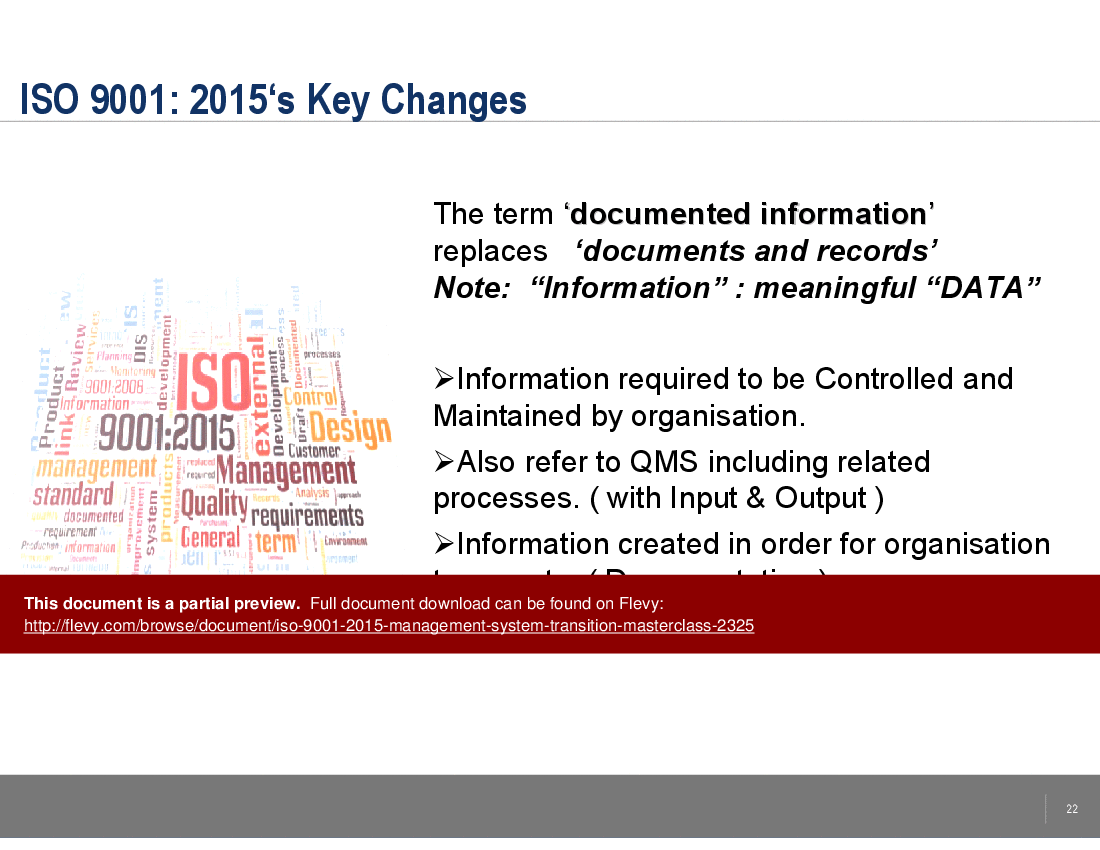
• Documented Information - Information required to be controlled and maintained by the organization
• Management Review - A formal evaluation of the QMS performance by top management
• Interested Parties - Individuals or organizations that can affect or be affected by the QMS
• Continuous Improvement - Ongoing efforts to enhance the QMS and its processes
• Leadership Commitment - The active involvement of top management in the QMS
• Context of the Organization - Understanding the internal and external factors affecting the QMS
• Performance Evaluation - Processes for assessing the effectiveness of the QMS
• Training Needs Analysis - A process to identify training requirements for QMS implementation
• Compliance - Adherence to applicable statutory and regulatory requirements
Source: Best Practices in ISO 9001 PowerPoint Slides: ISO 9001:2015 Management System Transition MasterClass PowerPoint (PPT) Presentation Slide Deck, EpicCoaching International
This document is available as part of the following discounted bundle(s):
Save %!
Best in Class ISO 9001:2015 MasterClass Toolkit
This bundle contains 2 total documents. See all the documents to the right.
|
Receive our FREE presentation on Operational Excellence
This 50-slide presentation provides a high-level introduction to the 4 Building Blocks of Operational Excellence. Achieving OpEx requires the implementation of a Business Execution System that integrates these 4 building blocks. |