
 Click main image to view in full screen. Unlock all 19 preview images:
Food Intelligence Architecture™ – PDF
PDF document + PowerPoint (PPTX) 37 Pages


BENEFITS OF THIS DOWNLOADABLE PDF DOCUMENT
- Provides an integrated architecture for connecting food condition, sensing, data, operational decisions, and economic value.
- Helps decision-makers evaluate investment readiness, strategic control points, monetization options, and deployment pathways.
- Translates food intelligence concepts into structured pilots, measurable economic hypotheses, and executive action priorities.
RESTAURANT INDUSTRY PDF DESCRIPTION
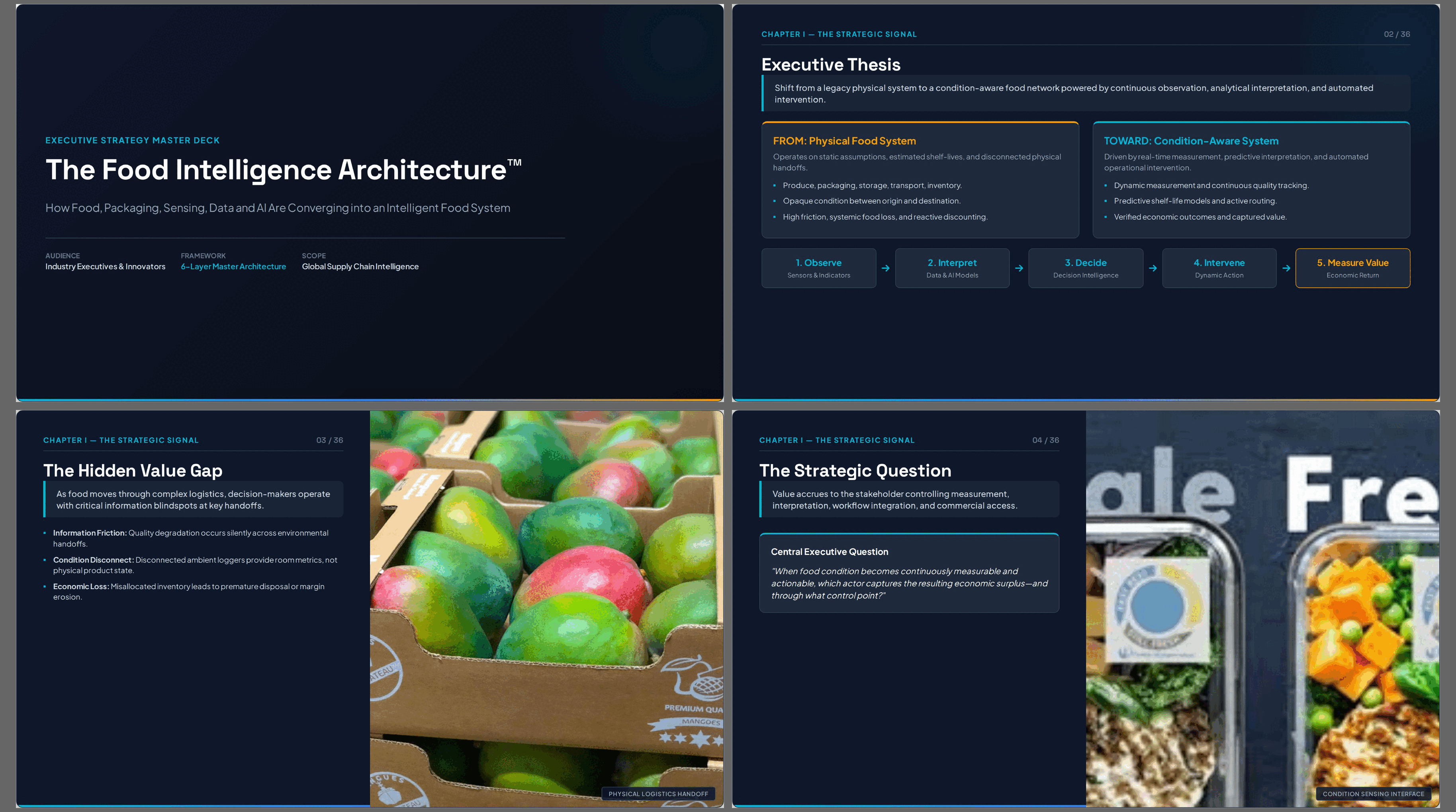
The Food Intelligence Architecture™ is a 37-slide executive strategy master deck that explores how food, packaging, sensing, data, and AI are converging into an intelligent food system.
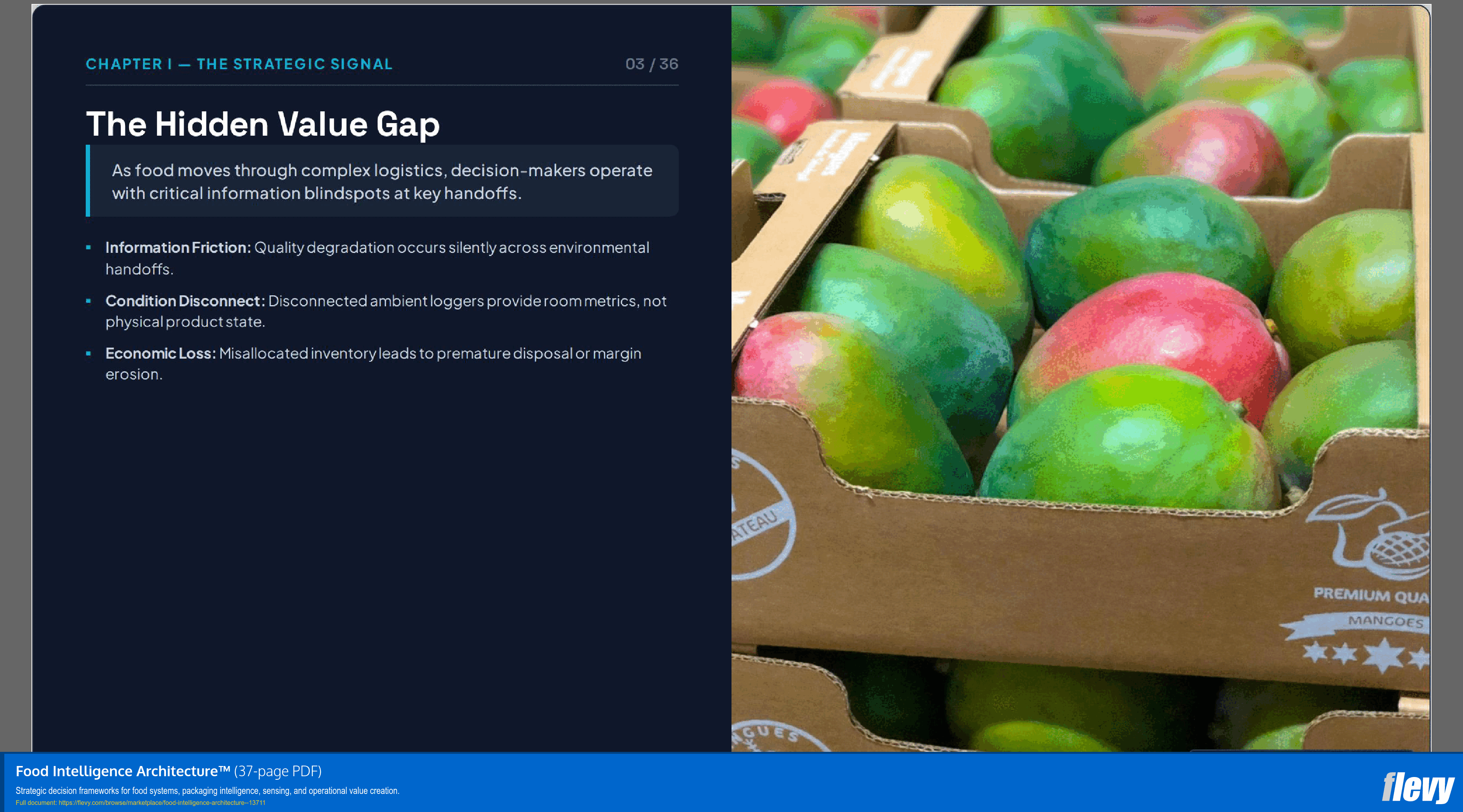
As food supply chains face increasing pressure to preserve quality, reduce avoidable losses, improve operational decisions, and demonstrate economic value, the strategic opportunity extends beyond physical products. It lies in making food condition measurable, interpretable, and actionable across the value chain.
Designed for strategy, operations, innovation, sustainability, and food industry leaders, this architecture provides a structured way to understand the system, identify strategic control points, evaluate deployment readiness, and connect intelligence capabilities to measurable business outcomes.
Inside, you will find:
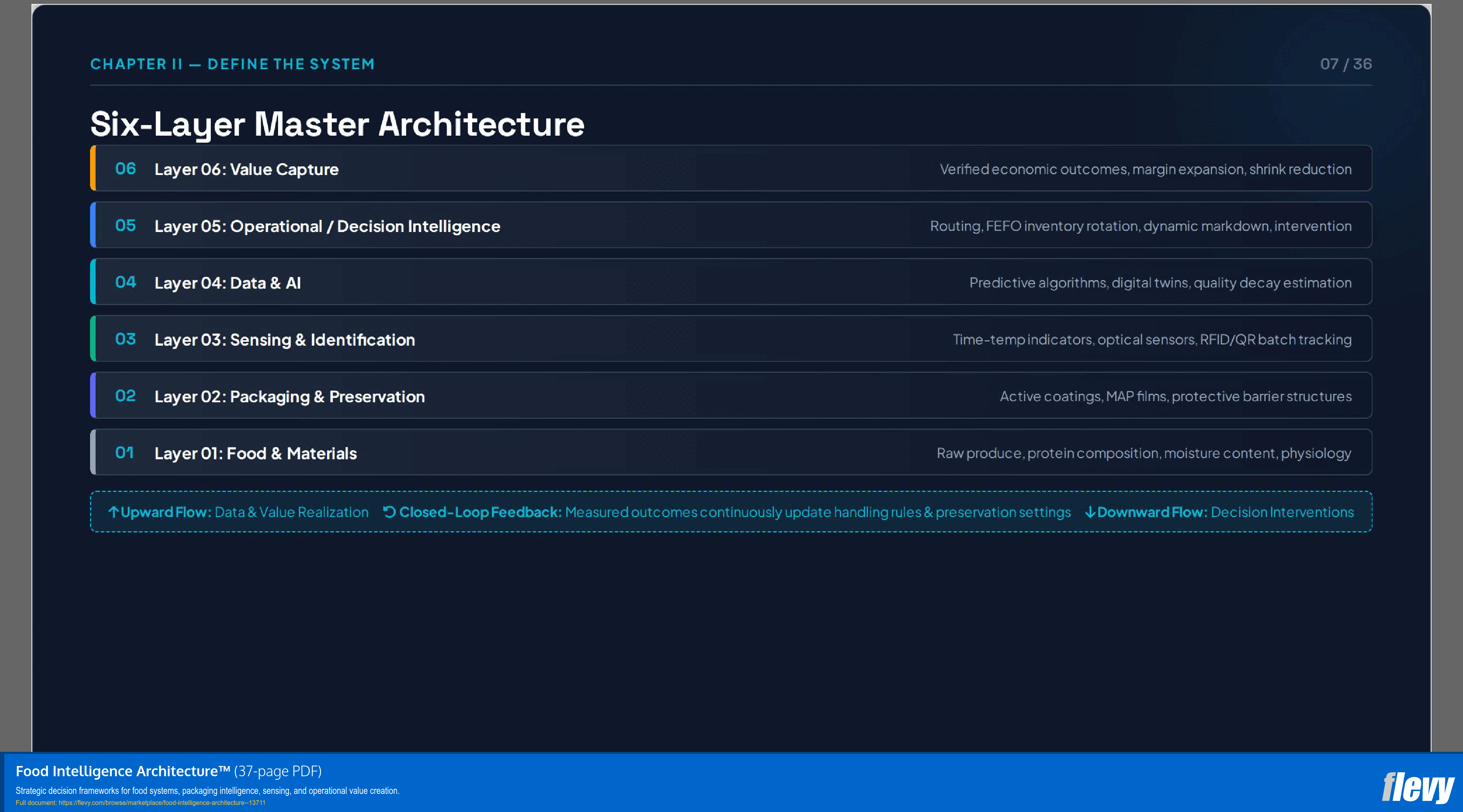
• Six-Layer Master Architecture – a system view spanning Food & Materials, Packaging & Preservation, Sensing & Identification, Data & AI, Operational / Decision Intelligence, and Value Capture.
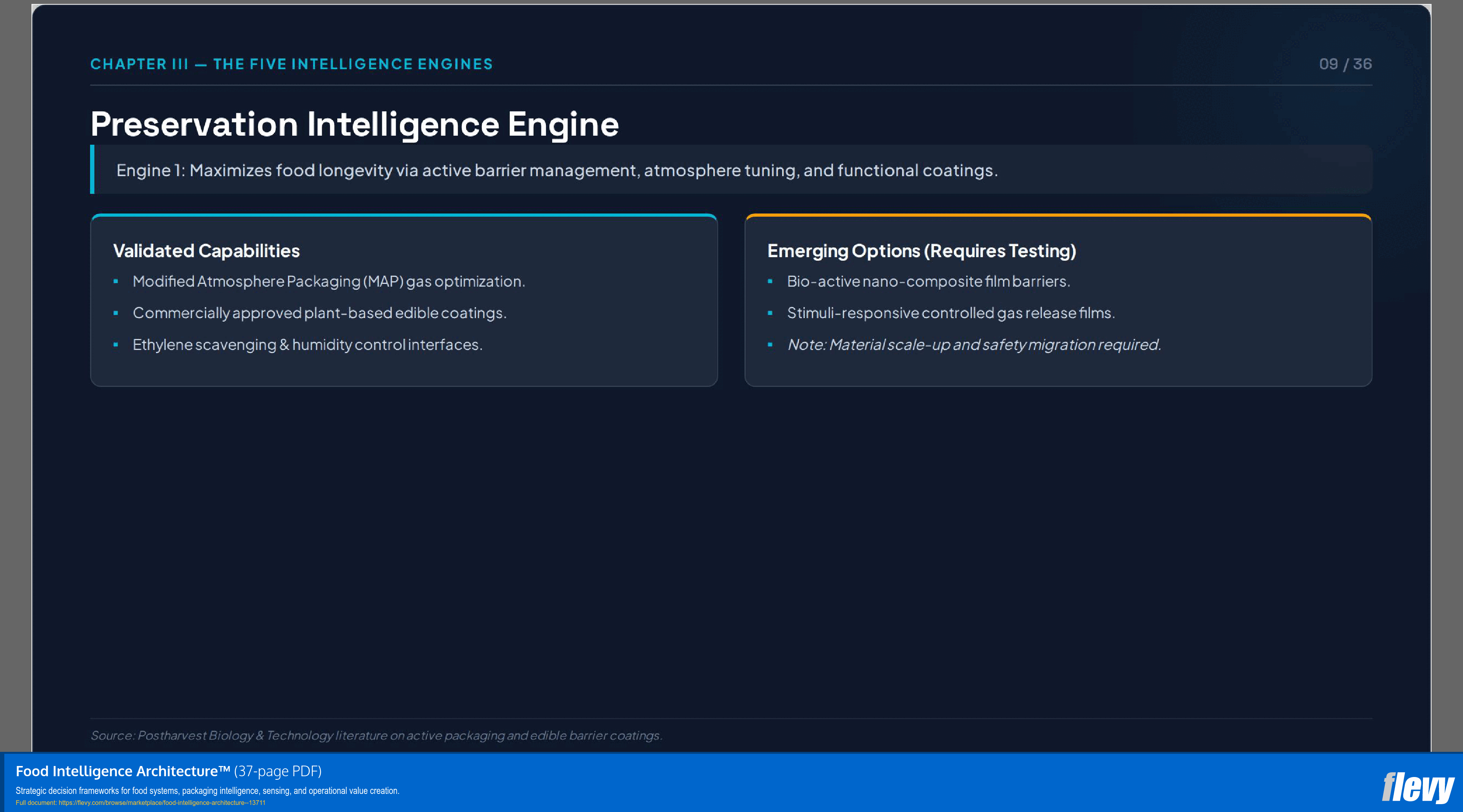
• Five Intelligence Engines – Preservation Intelligence, Condition Intelligence, Data Intelligence, Decision Intelligence, and Value-Capture Intelligence.
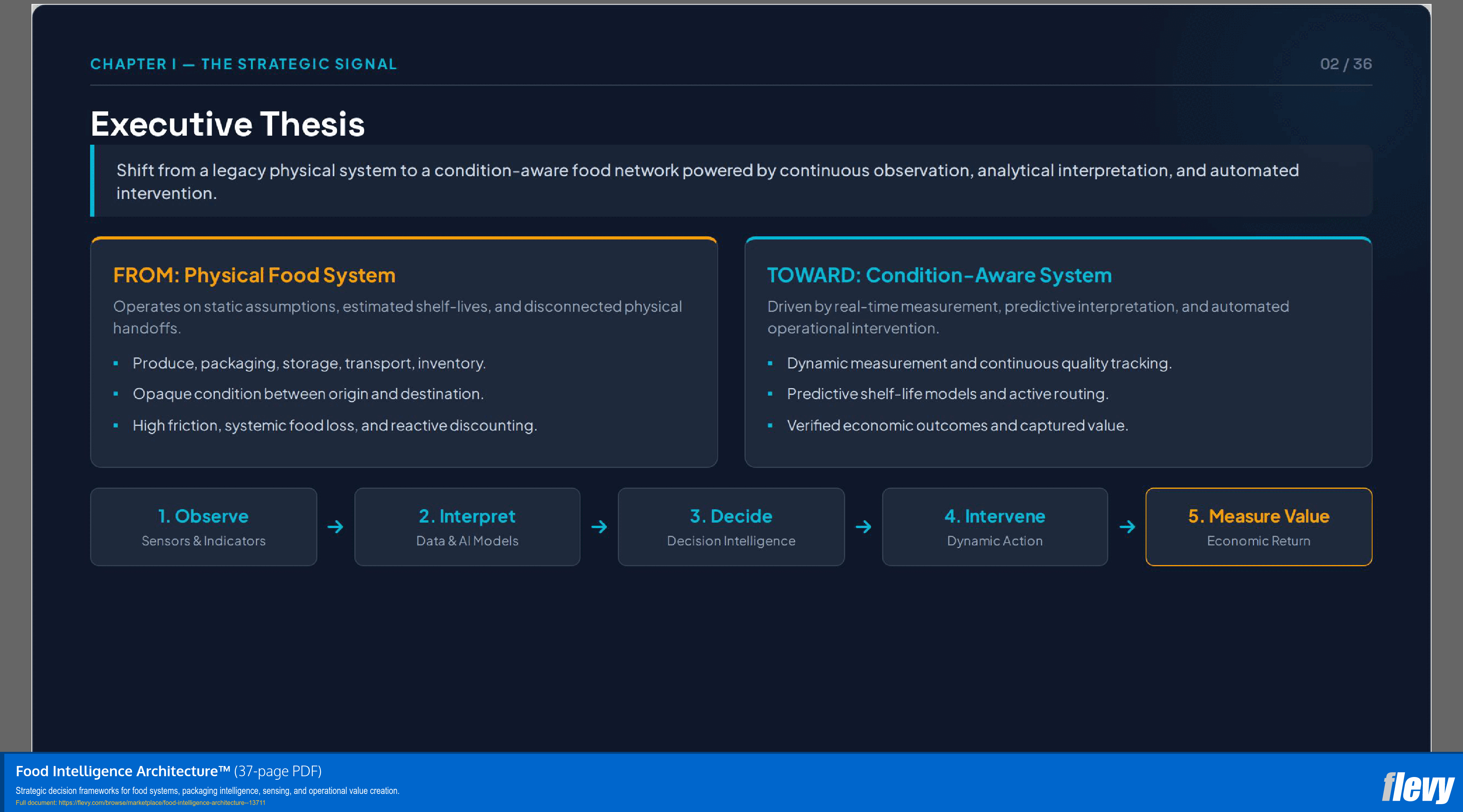
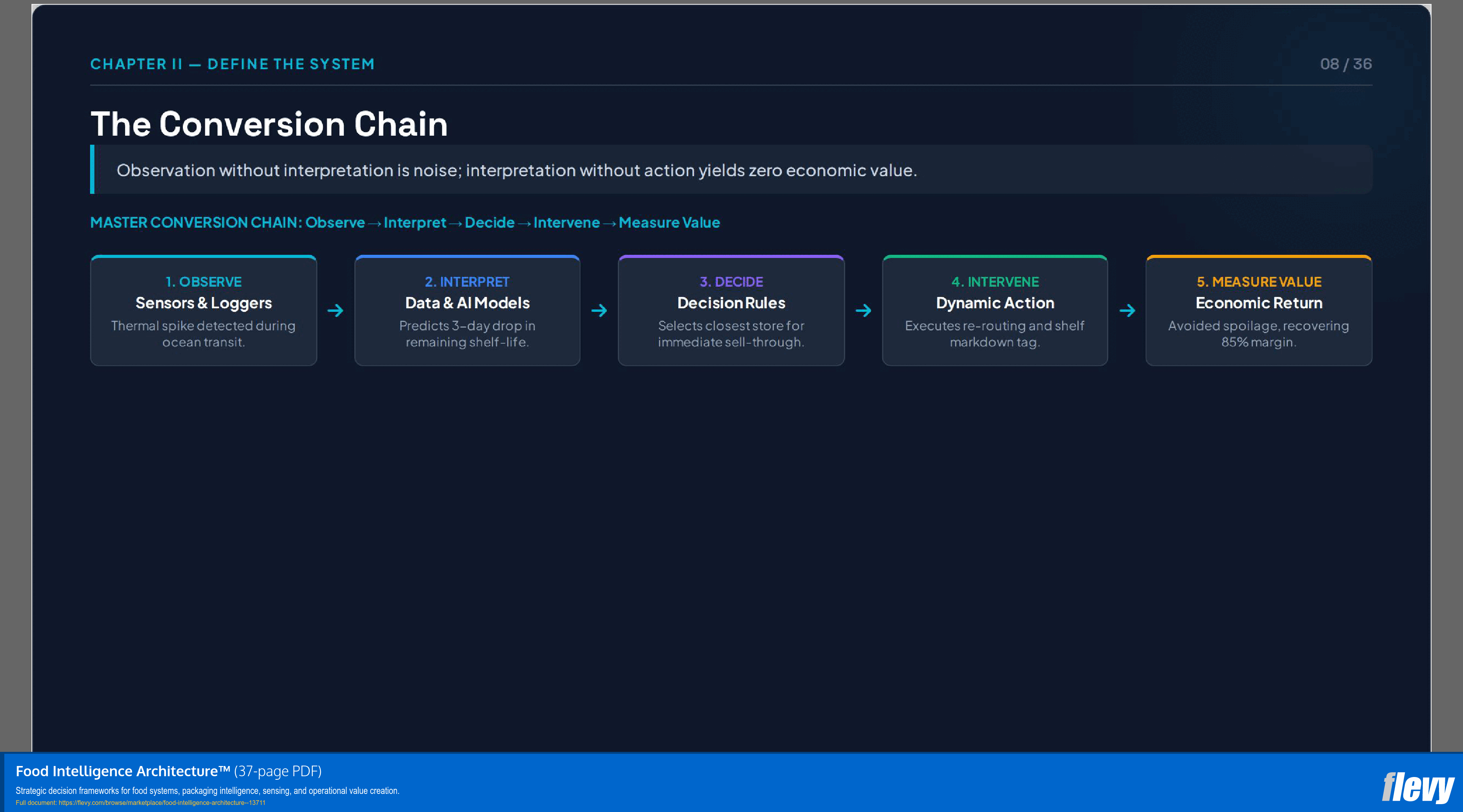
• Closed-Loop Conversion Chain – Observe → Interpret → Decide → Intervene → Measure Value, connecting physical signals to operational action and economic outcomes.
• Application Architectures – practical use-case structures for tropical produce exports, condition-aware cold chains, retail store disposition, food process manufacturing, and packaging-sensing convergence.
• Strategic Control Points – a framework for examining where value may be captured through materials and preservation IP, sensing, identity and data continuity, analytics, decision interfaces, and commercial relationships.
• Monetization Models – licensing, hardware premiums, SaaS subscriptions, monitoring services, gainshare or performance-linked models, and integrated platforms.
• Readiness Diagnostic – a structured assessment of problem definition, technical validity, data reliability, workflow integration, economic attribution, and safety and compliance.
• Value Accounting Model – formulas for net incremental benefit and simple payback, designed to support transparent economic evaluation and reduce double counting.
• Mango Export Sensitivity Economics – an explicitly illustrative scenario model for exploring how loss-reduction assumptions and system costs affect potential net benefits.
• Deployment Roadmap & Executive Action Agenda – a phased approach to defining the problem, validating signals, integrating workflows, proving value, and scaling when evidence supports it.
The deck also addresses implementation tensions, data governance, evidence maturity, commercial value sharing, and portfolio positioning across specialist capabilities.
What this enables: a repeatable executive framework for moving from technology-led discussions toward decision-led food intelligence investments—while distinguishing established capabilities, emerging options, and hypotheses that require validation.
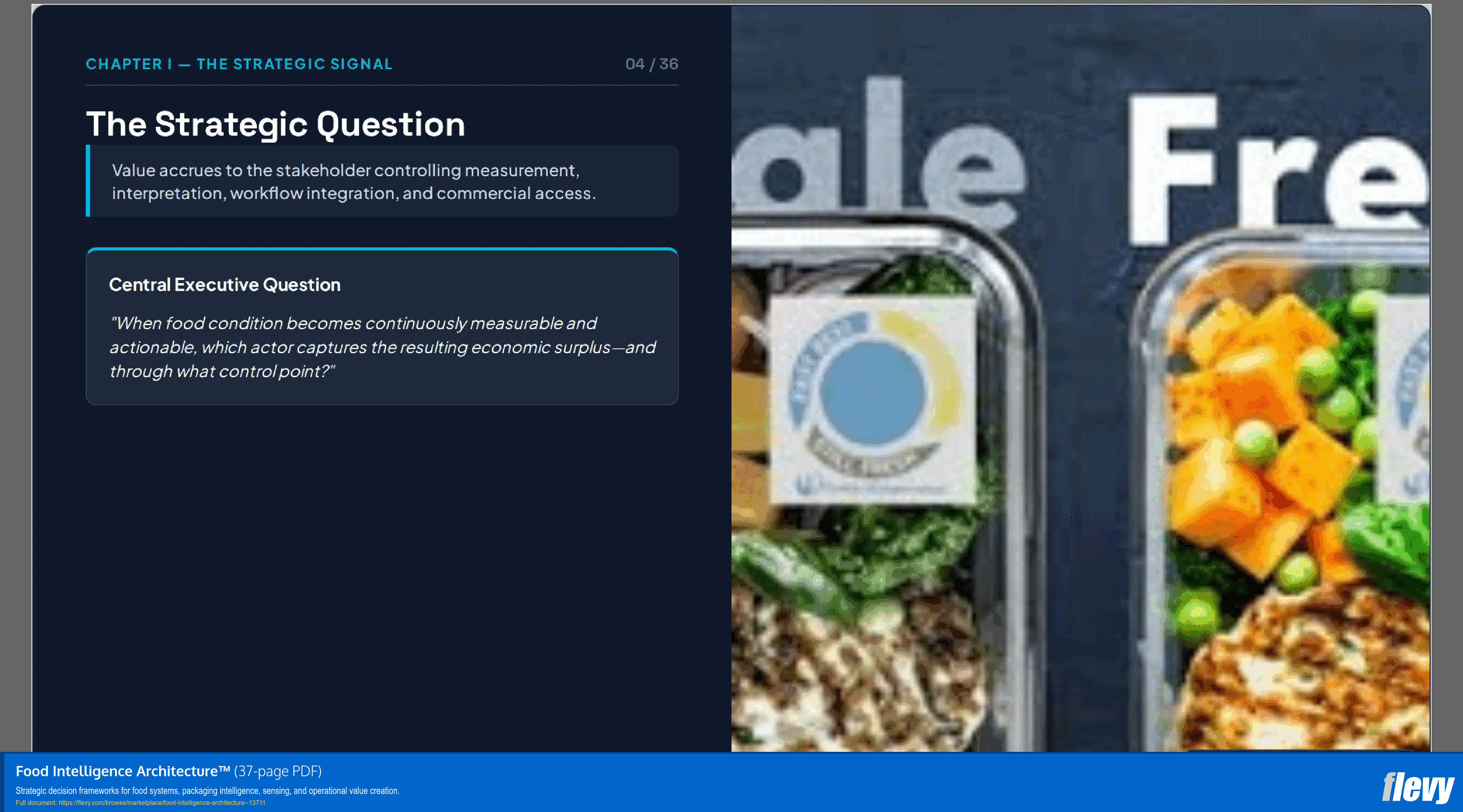
The central strategic question is:
When food condition becomes measurable and actionable, who captures the resulting economic value—and through which control points?
Got a question about the product? Email us at support@flevy.com or ask the author directly by using the "Ask the Author a Question" form. If you cannot view the preview above this document description, go here to view the large preview instead.
Source: Best Practices in Restaurant Industry PDF: Food Intelligence Architecture™ PDF (PDF) Document, Wisnu Pandega Wardana
ABOUT THE AUTHOR

I am an independent Industrial Intelligence and Strategic Innovation Publisher focused on developing structured business intelligence, innovation frameworks, and opportunity-oriented research for decision-makers.
My work focuses on translating emerging technologies, industrial transformation, sustainability, resource efficiency, and market shifts into structured intelligence assets that
... [read more]
Ask the Author a Question
You must be logged in to contact the author.




























