 Click main image to view in full screen.
Distributed Biomass Value Capture Architecture – PDF
PDF document 19 Pages


BENEFITS OF THIS DOWNLOADABLE PDF DOCUMENT
- Provides a structured framework for identifying and prioritizing distributed biomass value-capture opportunities across fragmented biological resource systems.
- Transforms complex bioeconomy dynamics into practical strategic tools covering aggregation, conversion, value stacking, logistics, and market integration.
- Enables strategic screening of biological resource opportunities through the Biomass Value Capture Index™ and multi-output value-stack analysis.
AGRICULTURE INDUSTRY PDF DESCRIPTION
The Distributed Biomass Value Capture Architecture™ is a strategic business framework for understanding how fragmented biological resources can be transformed into scalable economic assets through aggregation, modular conversion, value stacking, and market integration.
Across agriculture, aquaculture, wastewater, and the emerging bioeconomy, substantial biological resources remain economically underutilized because they are geographically dispersed, seasonal, heterogeneous, costly to transport, or disconnected from appropriate processing infrastructure. The strategic challenge is therefore not simply how to produce more biomass, but how to design systems that can capture more value from biological resources that already exist.
This PowerPoint strategy framework introduces a distributed value-capture architecture that moves beyond single-output biomass models toward networked systems capable of combining resource recovery, biological production, modular processing, multiple value streams, and regional market access.
Inside, you will find:
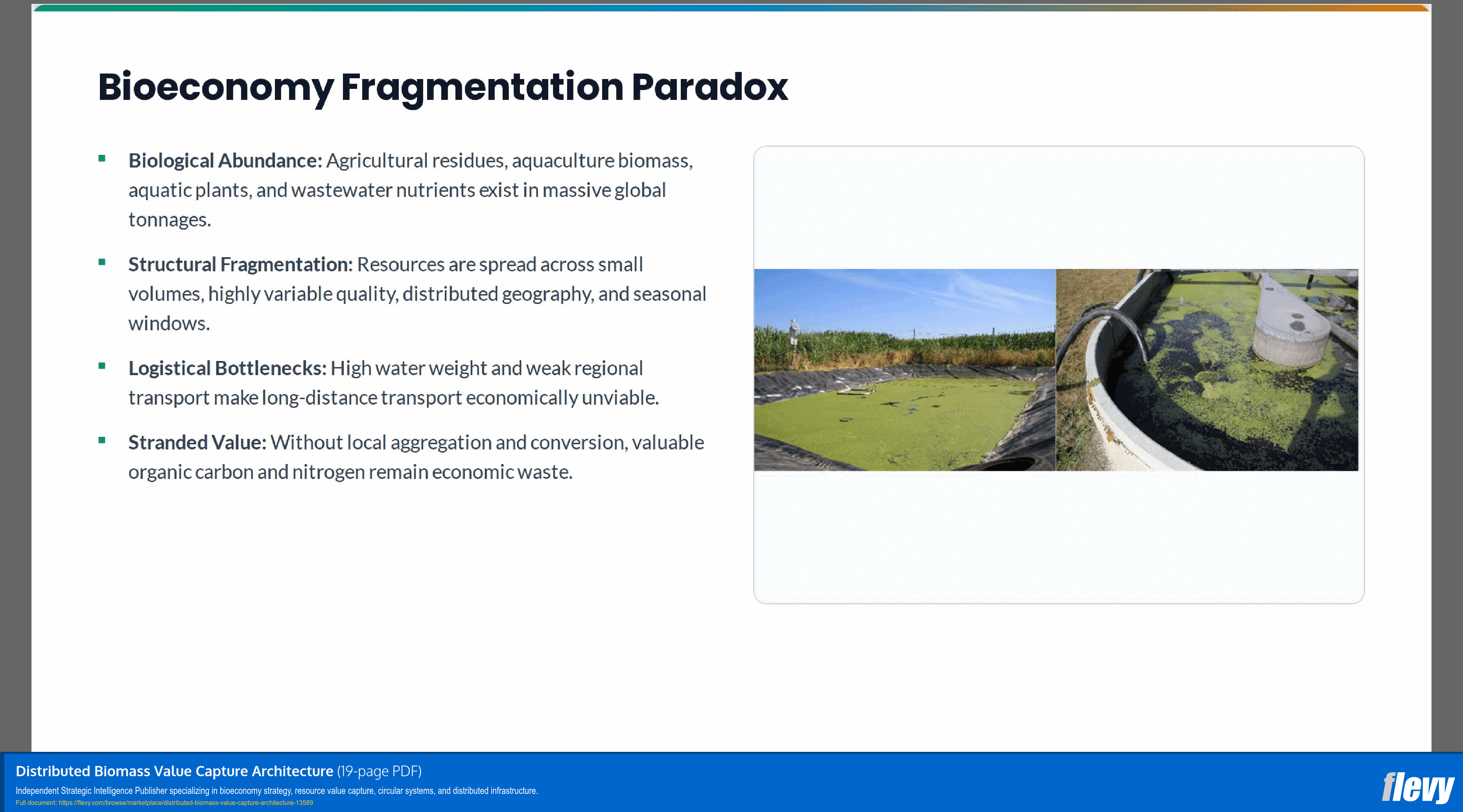
The Bioeconomy Fragmentation Paradox™ – a framework for understanding why biological abundance does not automatically translate into economic value.
The Distributed Value Capture Paradigm – a comparison between centralized feedstock models and distributed aggregation and conversion networks.
The Distributed Biomass Value Capture Architecture™ – a five-layer framework covering Resource Discovery, Resource Aggregation, Value Conversion, Value Stacking, and Market Integration.
The Biomass Value Capture Index™ (BVCI™) – a structured screening framework covering resource availability, regeneration potential, capture potential, conversion potential, value stackability, logistics feasibility, and market attractiveness.
Biomass Value Stackability™ – a framework for evaluating how multiple economically viable outputs can be generated from a biological resource system.
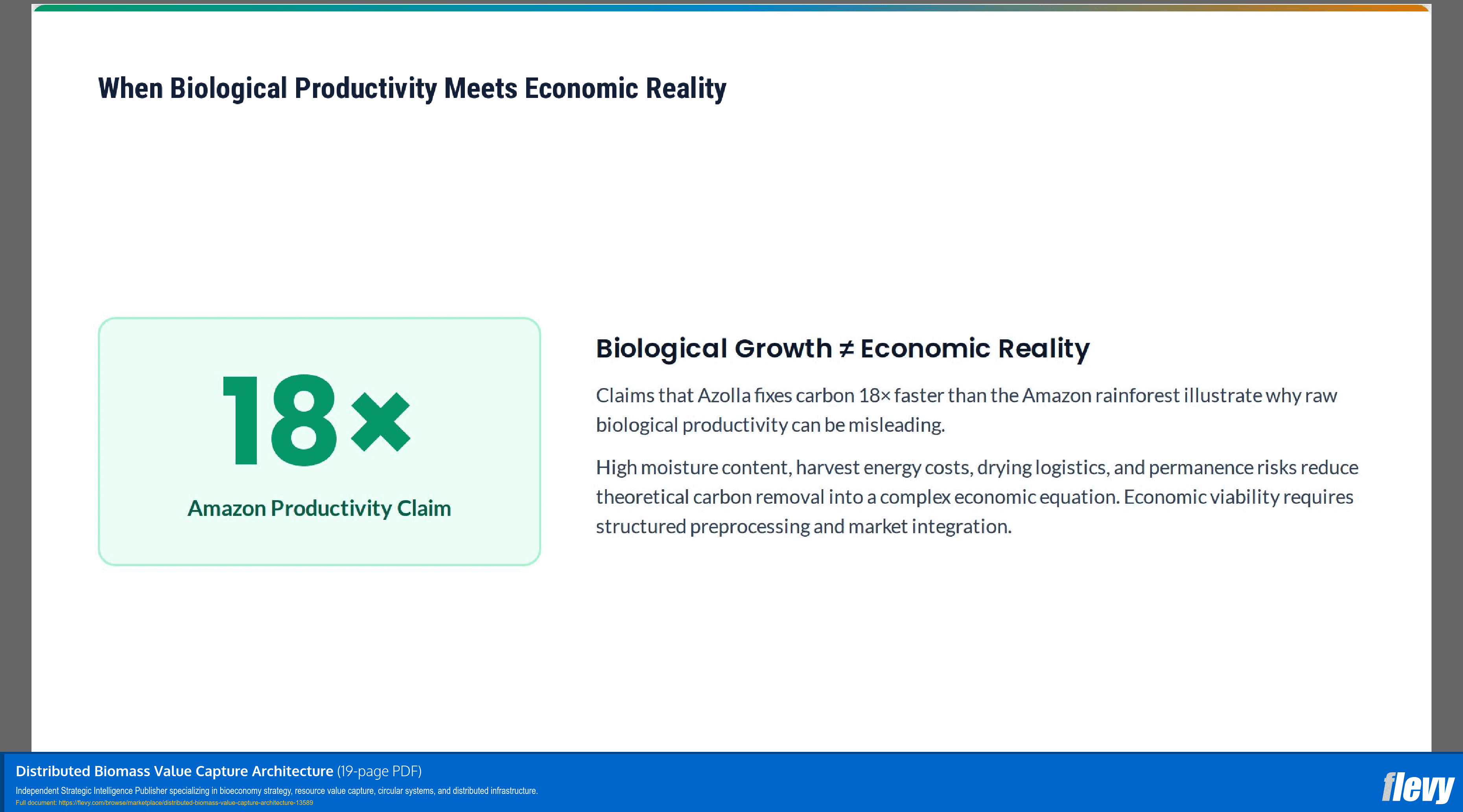
Azolla as a multi-value case study – illustrating how a biological system can be evaluated beyond a single feed, fertilizer, or carbon application.
Biological System Portfolio Matrix – a comparative screening view across Azolla, duckweed, microalgae, agricultural residues, and organic municipal waste.
Indonesia Bioeconomy Lens – strategic implications of Indonesia's distributed agricultural, aquaculture, wastewater, and biological-resource landscape.
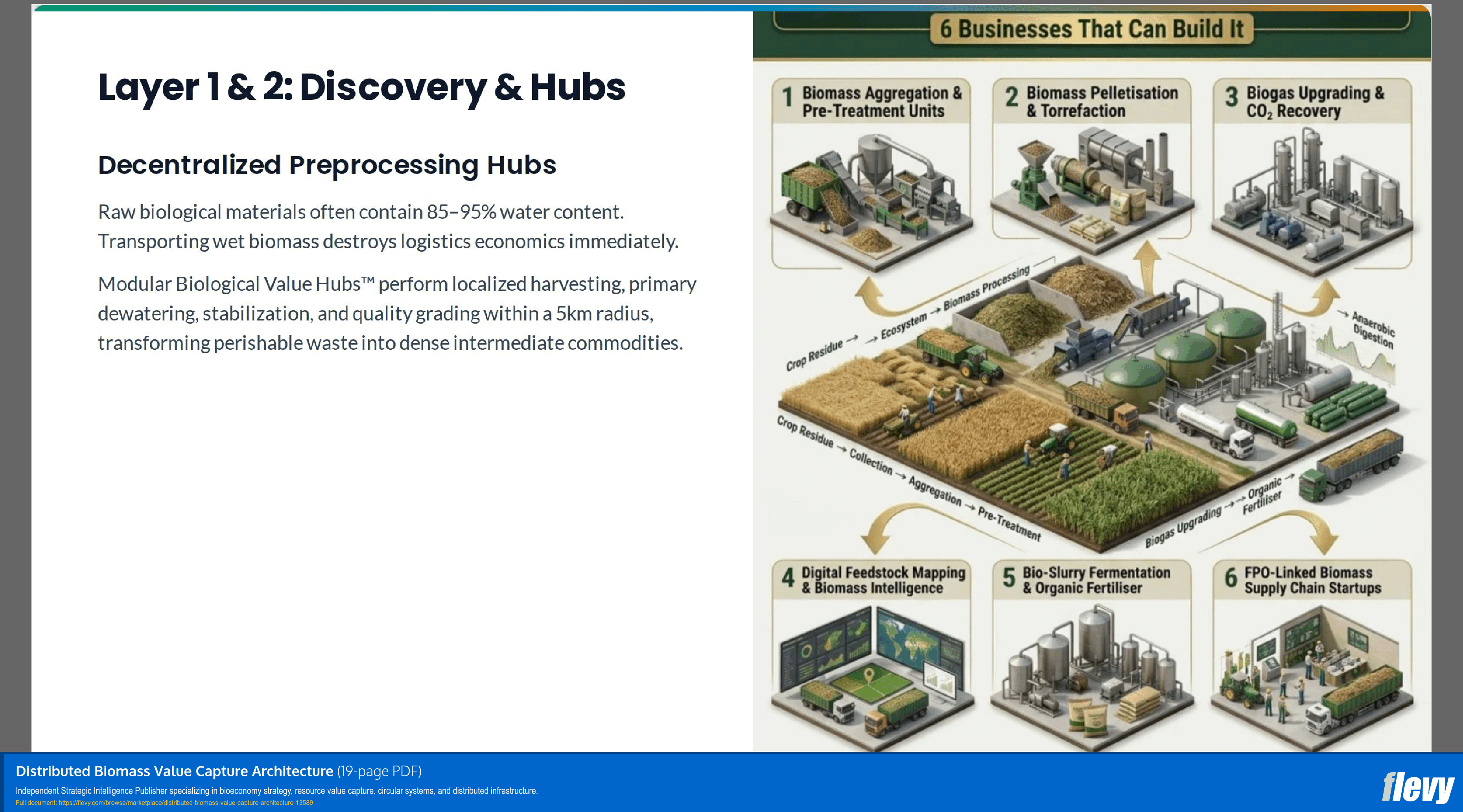
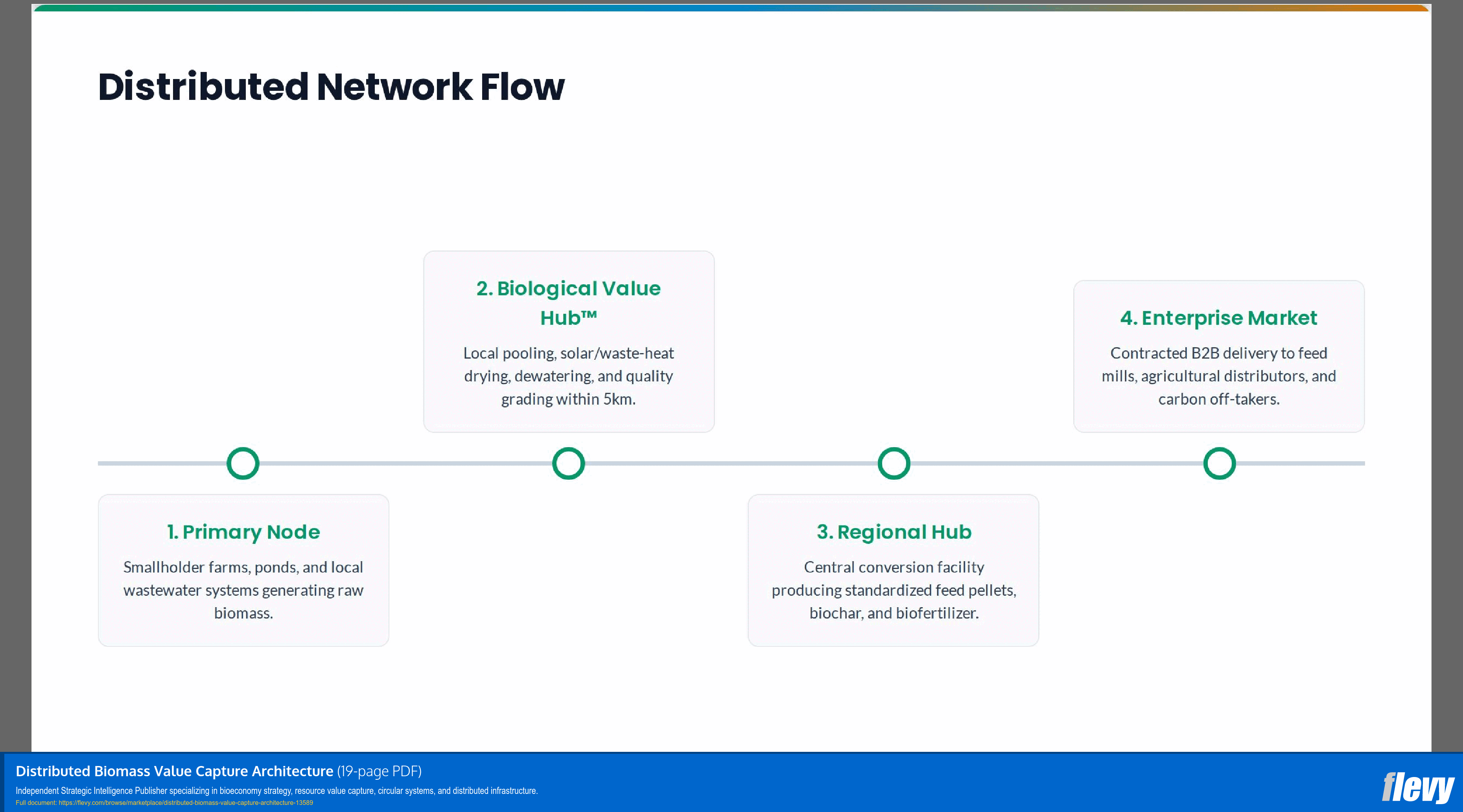
Distributed Network Flow – an operating architecture connecting primary resource nodes, Biological Value Hubs™, regional conversion hubs, and enterprise markets.
Strategic Stakeholder Actions – implications for investors, agribusinesses, feed producers, infrastructure operators, and policymakers.
Strategic Implementation Roadmap – a staged approach from resource mapping and pilot hubs through offtake development and network scaling.
The framework is designed for strategy professionals, investors, agribusiness leaders, sustainability executives, infrastructure developers, circular-economy practitioners, and policymakers evaluating emerging bioeconomy opportunities.
Rather than treating biomass solely as a commodity measured by tonnes produced, the architecture reframes the strategic question as:
How can fragmented biological resources be aggregated, converted, stacked, and connected to markets to maximize economic value capture?
This document is intended as a strategic screening and decision framework, not as a site-specific engineering, investment, carbon-credit, or financial feasibility assessment. Quantitative screening outputs should be recalculated using local resource, technical, logistics, regulatory, and market data.
Got a question about the product? Email us at support@flevy.com or ask the author directly by using the "Ask the Author a Question" form. If you cannot view the preview above this document description, go here to view the large preview instead.
Source: Best Practices in Agriculture Industry, Circular Economy PDF: Distributed Biomass Value Capture Architecture PDF (PDF) Document, Wisnu Pandega Wardana
ABOUT THE AUTHOR

I am an independent Industrial Intelligence and Strategic Innovation Publisher focused on developing structured business intelligence, innovation frameworks, and opportunity-oriented research for decision-makers.
My work focuses on translating emerging technologies, industrial transformation, sustainability, resource efficiency, and market shifts into structured intelligence assets that
... [read more]
Ask the Author a Question
You must be logged in to contact the author.




























