
 Click main image to view in full screen. Unlock all 12 preview images:
Data Protection Officer (DPO) Operational Handbook & Toolkit – PowerPoint PPTX Template
PowerPoint (PPTX) 60 Slides


DATA GOVERNANCE PPT TEMPLATE DESCRIPTION
The Data Protection Officer: Navigating the Landscape of Privacy
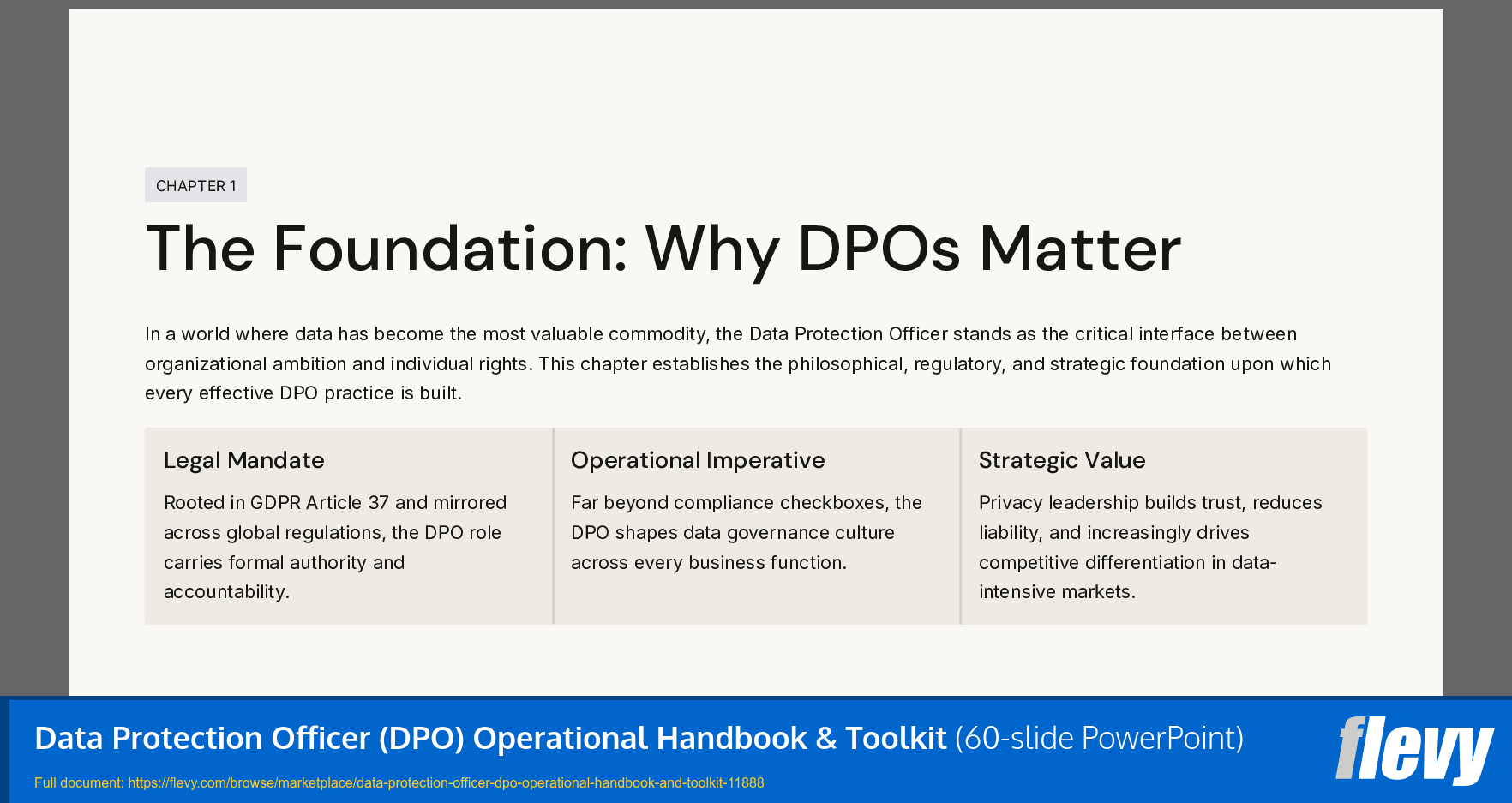
Chapter 1: The Foundation – Why DPOs Matter
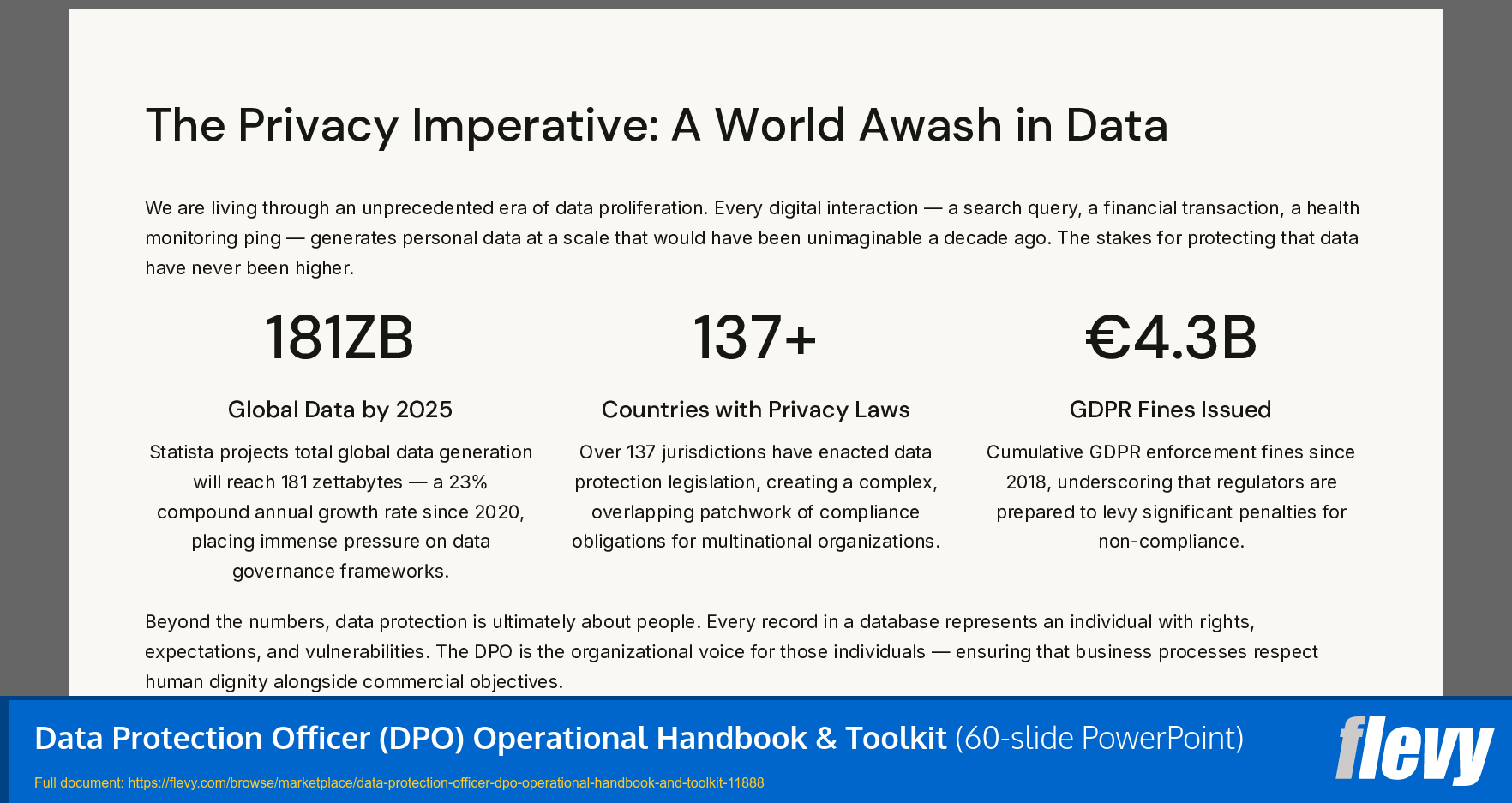
The Privacy Imperative: A World Awash in Data
• Global data generation: projected to reach 181 zettabytes by 2025 (Statista)
• Increasing regulatory scrutiny: GDPR, CCPA, and emerging global laws
• The human element: Protecting individual rights and freedoms in the digital age
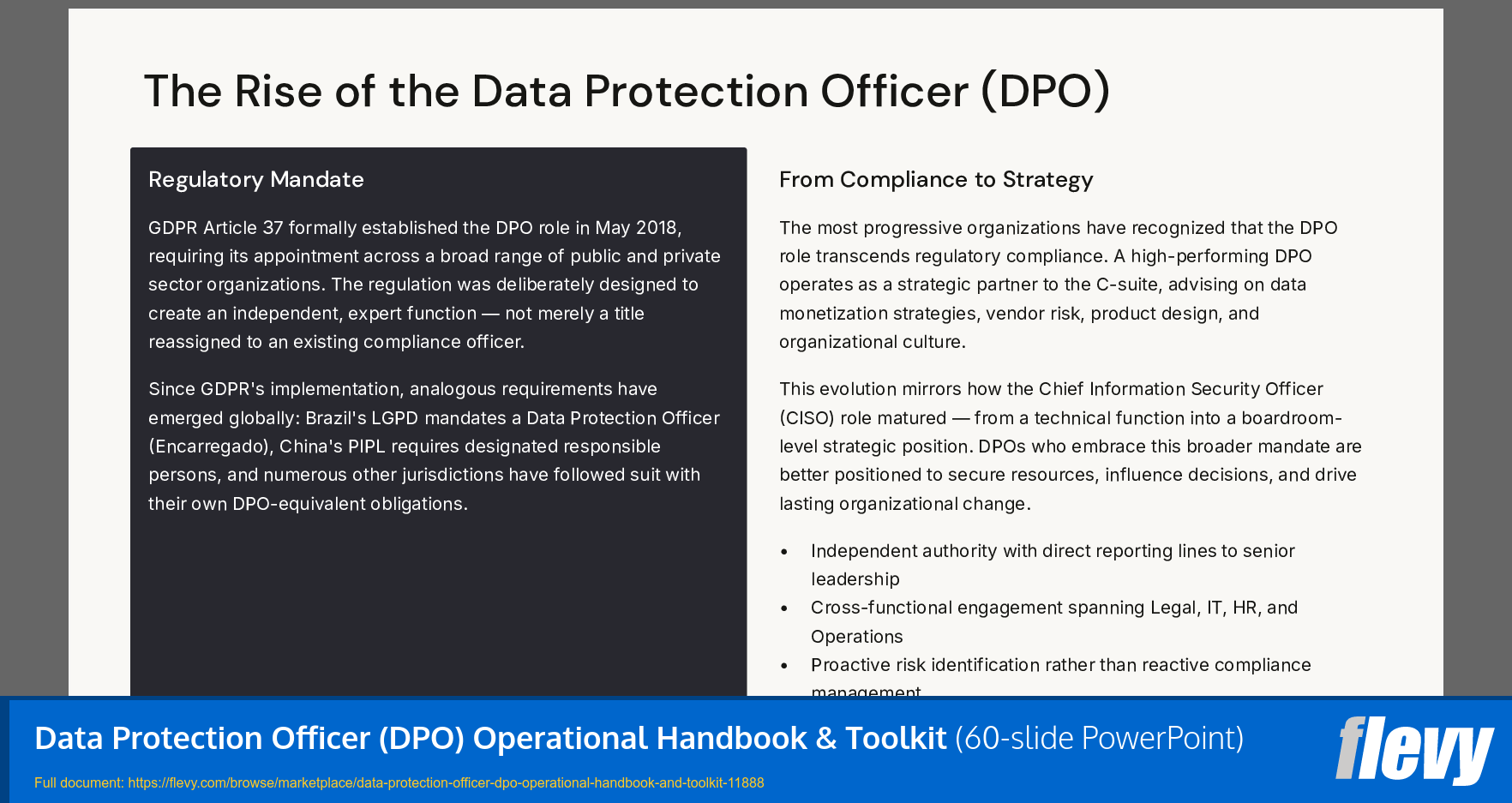
The Rise of the Data Protection Officer (DPO)
• Mandated by GDPR (Article 37) and similar regulations worldwide
• A crucial role in ensuring compliance and fostering a privacy-aware culture
• Beyond compliance: a strategic partner in data governance
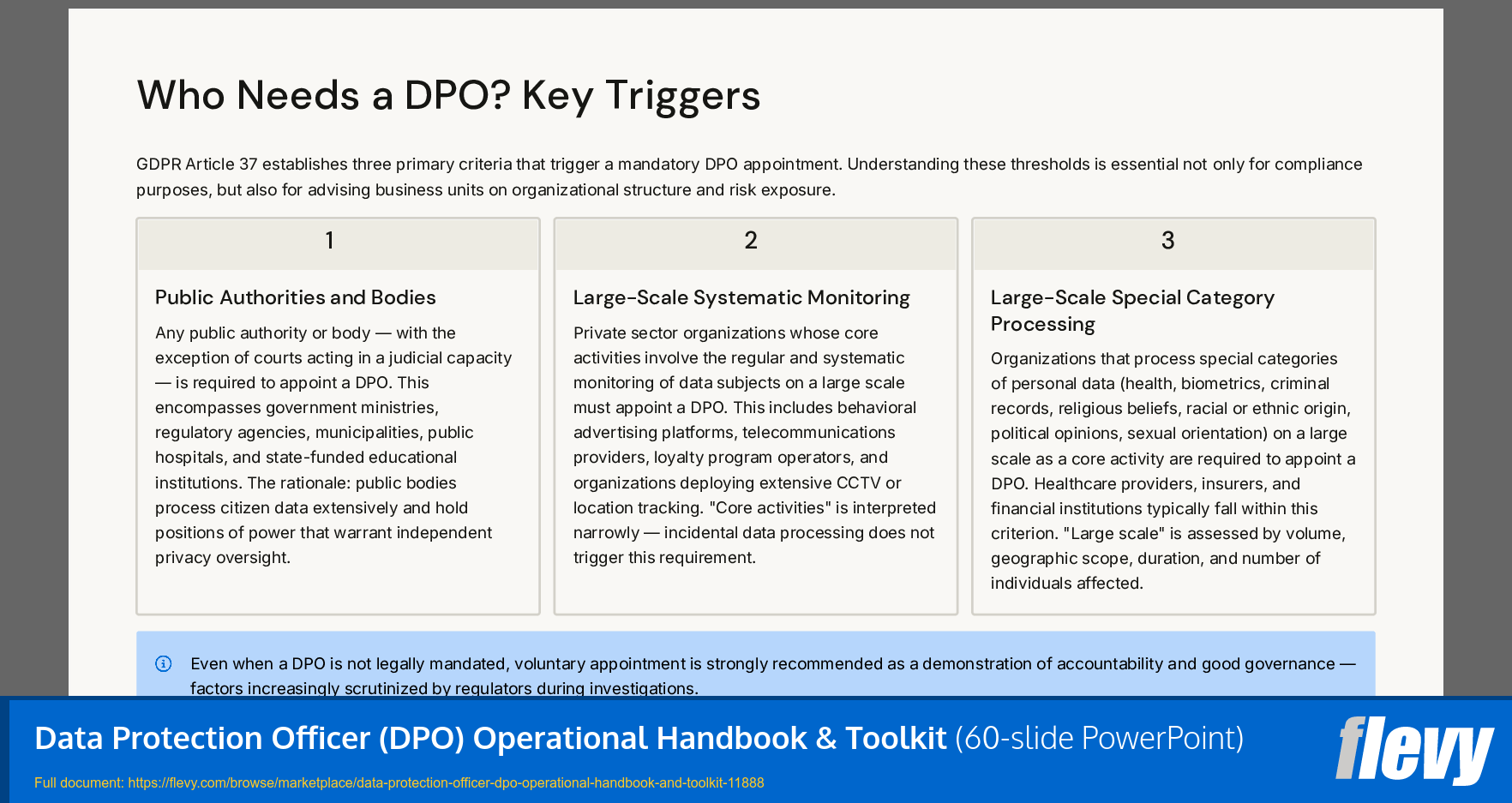
Who Needs a DPO? Key Triggers
• Public authorities or bodies (with exceptions)
• Organizations whose core activities involve regular and systematic monitoring of data subjects on a large scale
• Organizations whose core activities involve large-scale processing of special categories of data or data relating to criminal convictions
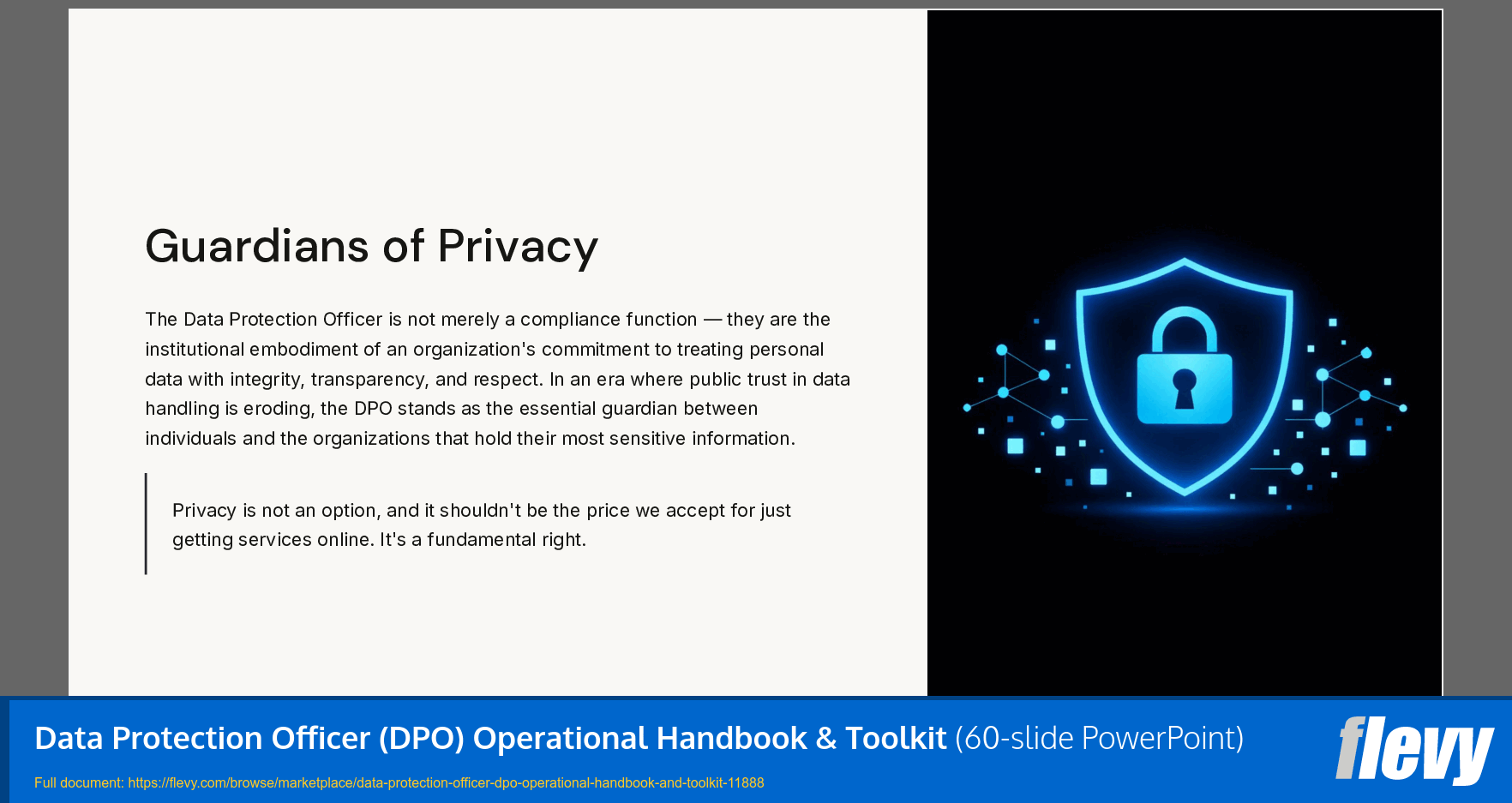
[image] A stylized graphic of a shield protecting data points, with the text "Guardians of Privacy"
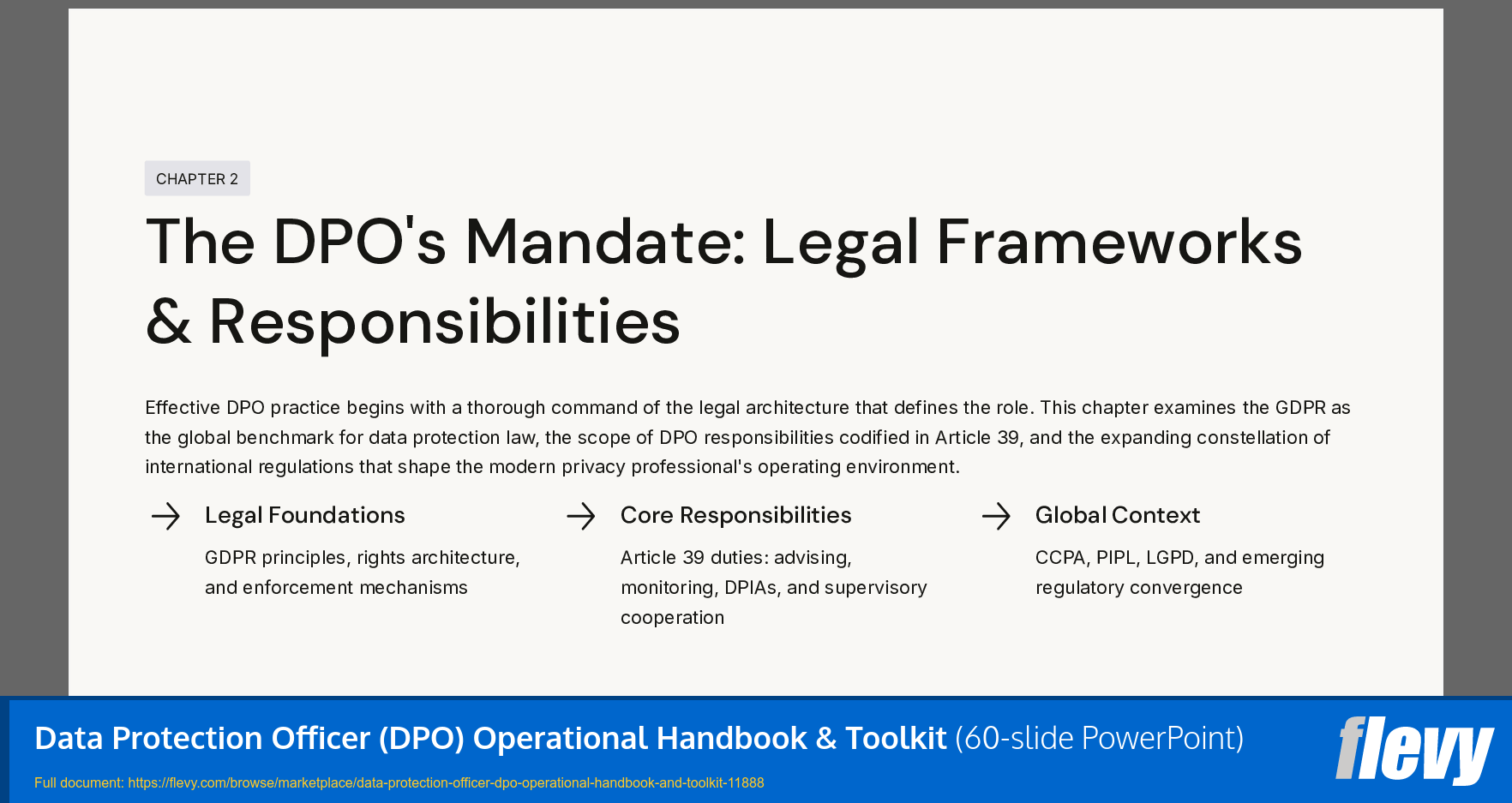
Chapter 2: The DPO's Mandate – Legal Frameworks and Responsibilities
The GDPR: A Cornerstone of Data Protection
• Regulation (EU) 2016/679: The General Data Protection Regulation
• Key Principles: Lawfulness, fairness, transparency; purpose limitation; data minimization; accuracy; storage limitation; integrity and confidentiality; accountability.
• Rights of Data Subjects: Access, rectification, erasure, restriction, portability, objection.
The DPO Handbook: A Comprehensive Guide
• Developed for training DPOs, particularly in the public sector (Korff & Georges, 2019)
• Covers history, EU data protection instruments, and practical advice
• Available under a Creative Commons license for broad accessibility
Key DPO Responsibilities (GDPR Article 39)
• Informing and advising the controller or processor and employees
• Monitoring compliance with GDPR and other data protection provisions
• Advising on Data Protection Impact Assessments (DPIAs)
• Cooperating with the supervisory authority
Beyond GDPR: A Global Perspective
• CCPA/CPRA in California: Requirements for privacy professionals
• PIPL in China: Strict data localization and consent requirements
• Emerging regulations in Canada, Brazil, India, and beyond
• The IAPP (International Association of Privacy Professionals) as a central resource for global privacy news and certifications.
[image] A world map with interconnected data lines, highlighting key regulatory regions.
Chapter 3: Operationalizing the DPO Role – Tools and Tactics
The DPO Toolkit: Practical Resources
• ICO's AI and Data Protection Risk Toolkit: Practical support for reducing risks from AI systems.
• ICO's Data Protection Audit Framework Toolkits: Covering accountability, records management, information security, training, data sharing, access requests, breach management, AI, and age-appropriate design.
• IAPP Resource Center: A hub for DPO resources, news, and professional development.
Implementing a Data Protection Program
• Accountability: Establishing clear policies, procedures, and documentation.
• Records Management: Maintaining accurate and accessible records of processing activities.
• Information & Cyber Security: Implementing robust measures to protect personal data.
Training and Awareness: Building a Privacy Culture
• Essential for all staff, not just privacy professionals.
• Tailored training programs to address specific roles and risks.
• The ICO's "Training and awareness" toolkit provides a checklist for effective programs.
[image] A graphic showing a pyramid of data protection, with "Awareness" at the base and "Compliance" at the apex.
Managing Data Subject Rights Requests
• Establishing clear procedures for receiving, verifying, and responding to requests.
• Timely and transparent communication with data subjects.
• The ICO's "Requests for access" toolkit offers guidance.
Personal Data Breach Management
• Proactive measures to detect and prevent breaches.
• A clear incident response plan.
• Reporting obligations to supervisory authorities and affected individuals.
• The ICO's "Personal data breach management" toolkit is crucial here.
Chapter 4: DPO in Action – Case Studies and Scenarios
Scenario 1: The New AI Project
• Challenge: A company wants to deploy a new AI-powered customer service chatbot.
• DPO's Role:
• Advise on data minimization and purpose limitation.
• Conduct a Data Protection Impact Assessment (DPIA).
• Ensure transparency with users about data collection and usage.
• Utilize the ICO's AI and Data Protection Risk Toolkit.
Scenario 2: A Data Subject Access Request Surge
• Challenge: A sudden increase in Subject Access Requests (SARs) following a public announcement.
• DPO's Role:
• Review and streamline the SAR process.
• Ensure timely responses within legal deadlines.
• Train staff on handling SARs effectively.
• Leverage the ICO's "Requests for access" toolkit.
Scenario 3: A Potential Data Breach
• Challenge: An employee reports a suspicious email and potential unauthorized access to a database.
• DPO's Role:
• Initiate the incident response plan immediately.
• Assess the scope and impact of the potential breach.
• Coordinate with IT security and legal teams.
• Determine notification obligations.
• Utilize the ICO's "Personal data breach management" toolkit.
[image] A split screen: one side shows a complex flowchart of data processing, the other shows a DPO calmly assessing a risk matrix.
Chapter 5: Advanced DPO Strategies and Future Trends
Data Protection Impact Assessments (DPIAs)
• A critical tool for identifying and mitigating privacy risks before processing begins.
• When is a DPIA mandatory? (e.g., large-scale processing, new technologies, profiling).
• The DPO's role in advising on and overseeing DPIAs.
Privacy by Design and by Default
• Integrating data protection principles into the design of systems, products, and services.
• Ensuring that the most privacy-friendly settings are the default.
• A proactive approach to minimizing data protection risks.
[image] A blueprint of a building with privacy icons integrated into the design.
The Evolving Role of the DPO
• From compliance officer to strategic privacy leader.
• Increased focus on ethical data use and data ethics frameworks.
• Collaboration with AI governance professionals.
AI and Data Protection: A Complex Interplay
• Challenges: Bias, transparency, accountability in AI systems.
• The ICO's AI guidance and risk toolkit are essential for navigating these complexities.
• Ensuring AI systems respect data protection principles.
Future of Data Protection Regulation
• Continued harmonization and divergence of global privacy laws.
• Increased focus on data portability and interoperability.
• The impact of emerging technologies (e.g., quantum computing, advanced biometrics).
[image] A futuristic cityscape with data streams flowing, symbolizing the future of data protection.
Chapter 6: Becoming a Certified Privacy Professional
The Value of Certification
• Demonstrates expertise and commitment to the field.
• Enhances credibility with employers, clients, and regulators.
• Provides a structured learning path and professional development.
IAPP Certifications: A Global Standard
• CIPP (Certified Information Privacy Professional): Various specializations (US, Europe, Canada, Asia).
• CIPM (Certified Privacy Manager): Focuses on building and managing privacy programs.
• CIPT (Certified Information Privacy Technologist): For IT professionals involved in privacy.
• AIGP (AI Governance Professional): For those managing AI risks.
Training and Preparation Resources
• IAPP's online and in-person training programs.
• Practice exams and study guides.
• KnowledgeNet Chapters for local networking and learning.
[image] A graphic of interconnected certification badges.
The DPO Handbook as a Study Aid
• A foundational text for understanding GDPR and DPO duties.
• Provides practical insights and historical context.
Chapter 7: Building Your DPO Toolkit – A Practical Checklist
Essential Documentation
• Data Processing Records (Article 30 GDPR)
• Privacy Policies and Notices
• Data Protection Policies
• DPIA Records
• Breach Notification Procedures
• Data Subject Request Handling Procedures
Key Policies and Procedures
• Data Retention Policy
• Data Sharing Agreements
• Incident Response Plan
• Employee Training Program
• Third-Party Risk Management Policy
[image] A visual representation of a well-organized digital filing cabinet.
Leveraging Technology
• Data discovery and mapping tools
• Consent management platforms
• Data loss prevention (DLP) software
• Privacy-enhancing technologies (PETs)
Communication and Collaboration Tools
• Secure communication channels
• Project management software for tracking tasks
• Platforms for internal awareness campaigns
Chapter 8: The DPO as a Change Agent
Fostering a Privacy-Aware Culture
• Leading by example and championing privacy principles.
• Engaging stakeholders across the organization.
• Making privacy accessible and understandable for everyone.
Navigating Organizational Challenges
• Resistance to change
• Resource constraints
• Balancing business needs with privacy requirements
• The DPO's role in advocacy and negotiation.
[image] A graphic showing a single person influencing a large group towards a common goal.
The DPO and Senior Leadership
• Building trust and demonstrating the value of privacy.
• Reporting on privacy risks and compliance status.
• Aligning privacy strategy with business objectives.
Continuous Learning and Adaptation
• Staying updated on evolving laws, technologies, and best practices.
• Participating in professional networks and training.
• The dynamic nature of data protection requires constant vigilance.
Chapter 9: Conclusion – The Future of Data Protection Leadership
The Evolving Landscape
• Data protection is no longer just a compliance exercise; it's a strategic imperative.
• The DPO is at the forefront of ethical data stewardship.
Key Takeaways for Aspiring DPOs
• Understand the legal framework thoroughly.
• Embrace practical tools and resources.
• Cultivate strong communication and leadership skills.
• Commit to continuous learning.
[image] A sunrise over a data-driven landscape, symbolizing a new era of privacy leadership.
The DPO's Enduring Importance
• Protecting individuals in an increasingly data-centric world.
• Enabling responsible innovation and trust.
• Building a more secure and ethical digital future.
Call to Action: Embrace Your Role as a Privacy Champion
• Equip yourself with knowledge and tools.
• Advocate for robust data protection practices.
• Be the guardian of trust in your organization.
Thank You & Q&A
Resources Recap
• The DPO Handbook (Korff & Georges)
• ICO Toolkits (AI, Accountability, Records Management, etc.)
• IAPP Resource Center & Certifications
• GDPR and relevant national data protection laws
[image] A collage of logos from key organizations and resources mentioned.
The Journey Continues: Stay Informed, Stay Compliant, Stay Ahead.
Got a question about the product? Email us at support@flevy.com or ask the author directly by using the "Ask the Author a Question" form. If you cannot view the preview above this document description, go here to view the large preview instead.
Source: Best Practices in Data Governance PowerPoint Slides: Data Protection Officer (DPO) Operational Handbook & Toolkit PowerPoint (PPTX) Presentation Slide Deck, Mohamed Alshamey
ABOUT THE AUTHOR

Senior Consultant in Cybersecurity GRC, Data Governance, Cybersecurity, Privacy, and Data Management, with over 20 years of experience in information technology, consulting, training, and technical capacity building. holds a PhD. In AI & Data Privacy, he has a master's degree in cybersecurity and is currently pursuing research focused on data privacy. possesses extensive expertise in ... [read more]
Ask the Author a Question
You must be logged in to contact the author.




























