This presentation is created by former McKinsey, BCG, Deloitte, EY, and Capgemini consultants and provides actionable insights for CPG Industry Value Chain Analysis.

Provides a framework for examining the Consumer Products Goods Industry.
Identifies 20 important insights and considerations for CPG Value Chain Analysis.
Provides a detailed breakdown of the impact of Digital Transformation across the CPG Value Chain.
VALUE CHAIN ANALYSIS PPT DESCRIPTION
Editor Summary
22-slide PowerPoint presentation titled "Consumer Packaged Goods (CPG) Value Chain" by LearnPPT Consulting, created by former McKinsey, BCG, Deloitte, EY, and Capgemini consultants, outlining primary and support activities across the CPG value chain.
Read moreIncludes 6 deliverables/templates: value chain analysis template, cost structure evaluation model, customer feedback loop framework, sustainability assessment checklist, technology integration roadmap, and marketing effectiveness evaluation tool. Target users include CPG executives, supply chain managers, marketing teams, product development leaders, and finance professionals. Sold as a digital download on Flevy.
Use this presentation when leadership needs to map, assess, or improve end-to-end CPG operations—during strategic planning, operational reviews, training, technology evaluation, or sustainability strategy work.
CPG executives aligning value chain activities in strategic planning and defining priority initiatives.
Supply chain managers diagnosing logistics bottlenecks and assessing resilience against disruptions.
Marketing teams measuring campaign ROI and linking promotional activity to distribution and sales channels.
Product development leads using customer feedback to refine compliance and innovation processes.
The structured value-chain analysis follows consulting-grade frameworks similar in rigor to McKinsey, Bain, and BCG.
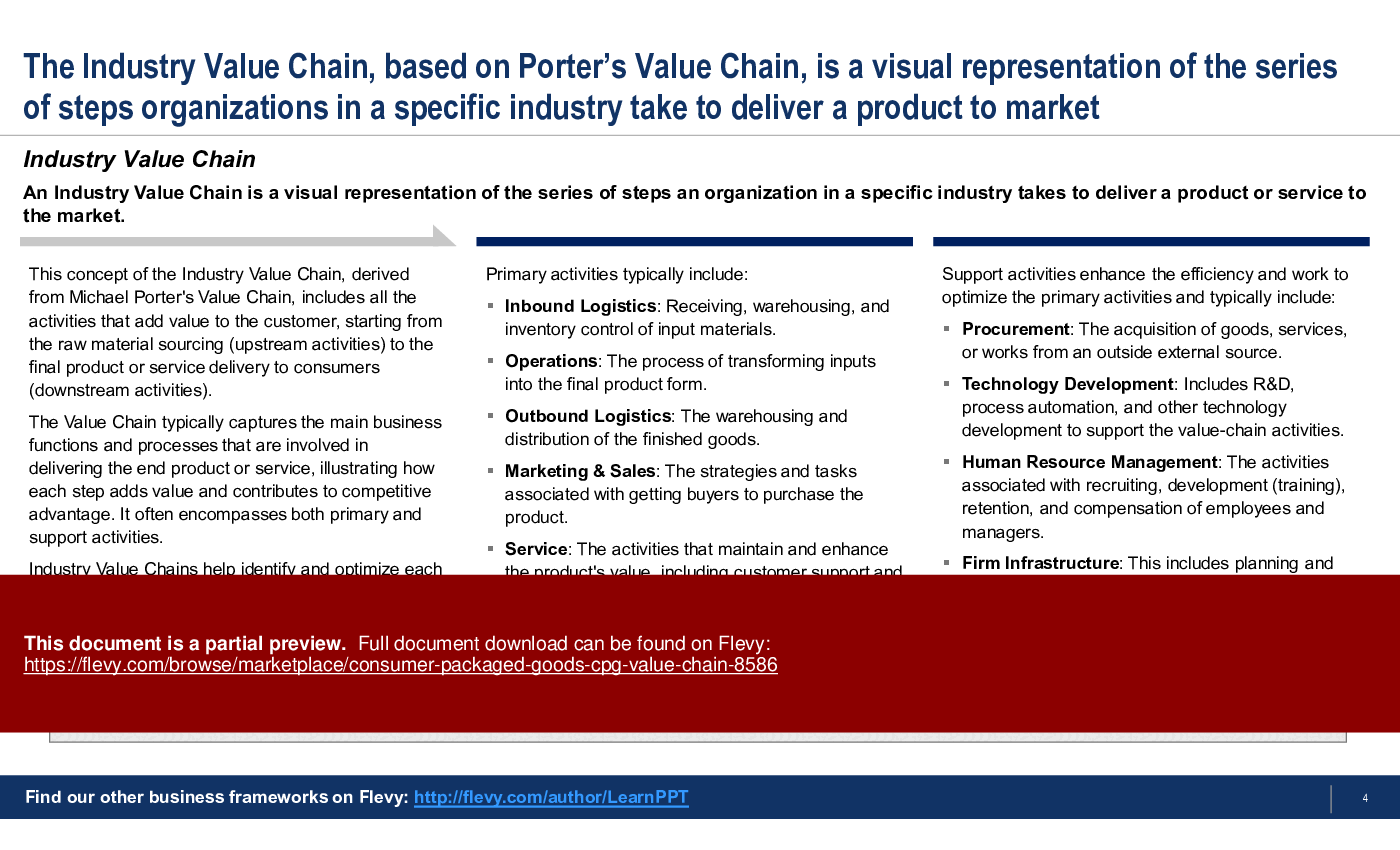
An Industry Value Chain, based on Michael Porter's Value Chain, is a visual representation of the series of steps an organization in a specific industry takes to deliver a product or service to the market. It captures the main business functions and processes that are involved in delivering the end product or service, illustrating how each step adds value and contributes to competitive advantage. It often encompasses both primary and support activities.
Understanding Industry Value Chains enables organizations to improve Customer Satisfaction and Loyalty by ensuring that every component of the product or service delivery is tailored to meet or exceed customer expectations.
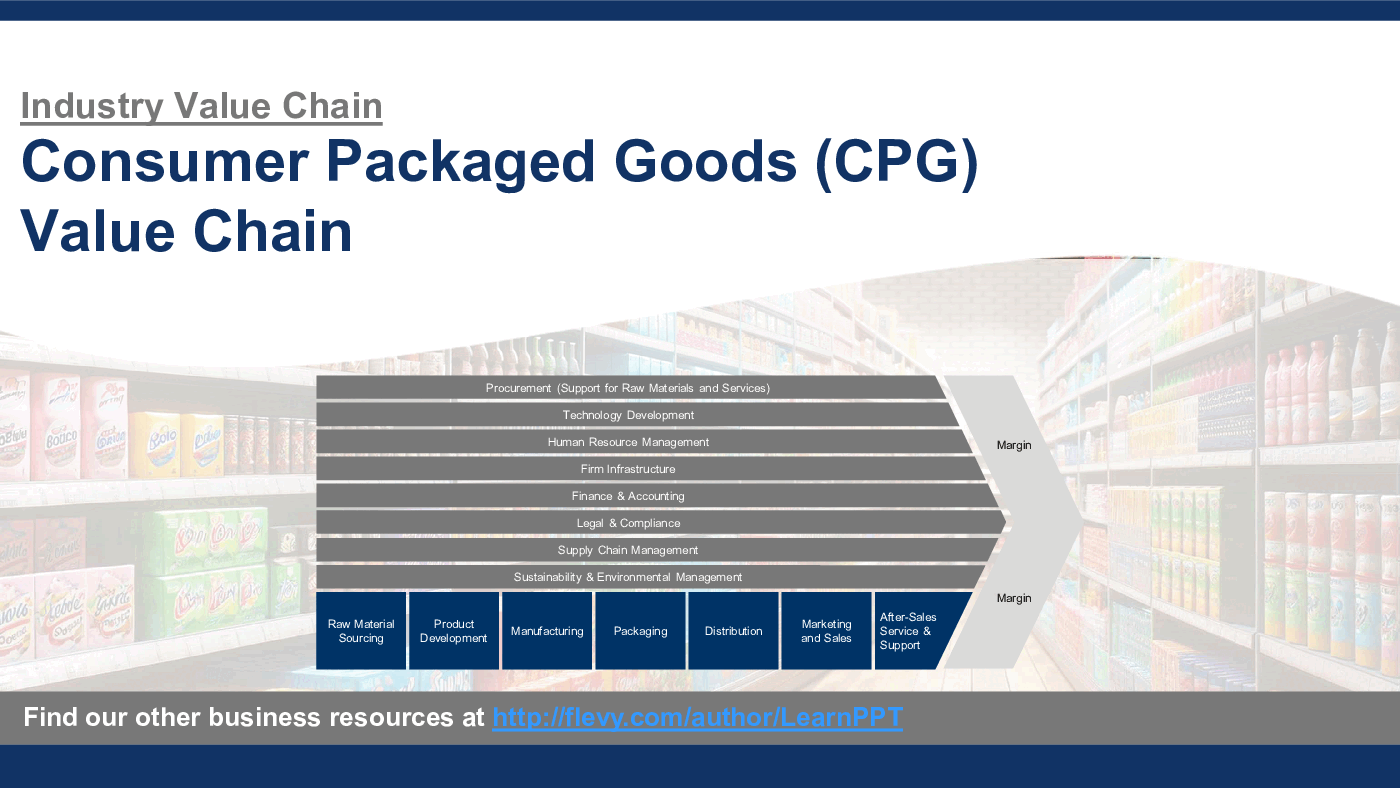
This PowerPoint presentation captures the Consumer Packaged Goods (CPG) Industry Value Chain, which includes the following primary and support activities:
Primary Activities
1. Raw Material Sourcing
2. Product Development
3. Manufacturing
4. Packaging
5. Distribution
6. Marketing & Sales
7. After-Sales Service & Support
Each of these activities is critical to the smooth operation and success of a CPG company, and excellence in each area can lead to Competitive Advantages in a highly competitive market.
This PowerPoint presentation dives deeper into each of these activities, highlighting key elements. This presentation also discusses Consumer Packaged Goods Value Chain Analysis, highlighting a multitude of key considerations and potential insights to pay attention to. We further examine the significant impact of Digital Transformation and various specific emergent technologies on the CPG Industry.
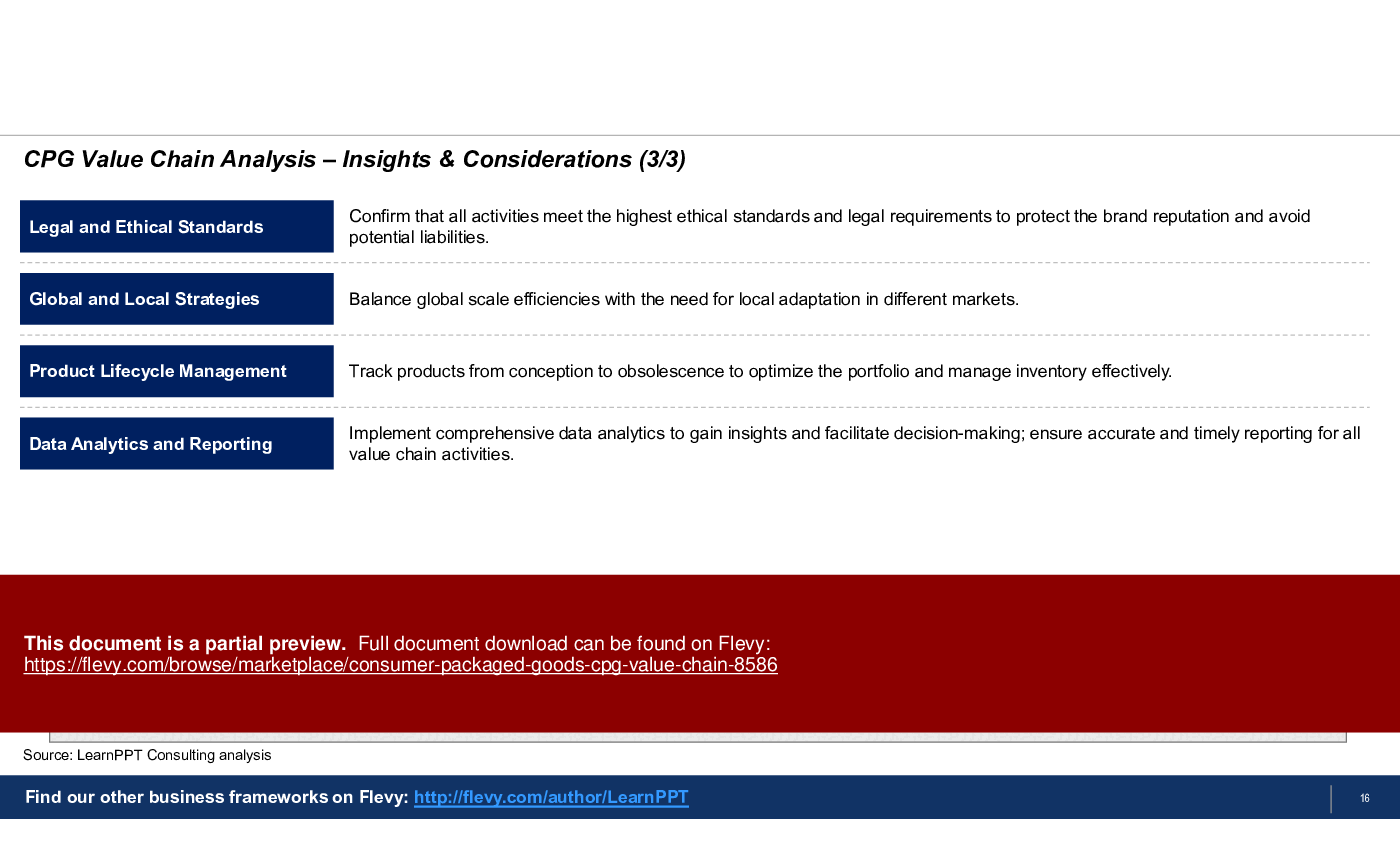
The CPG Value Chain is critically dependent on Agile Supply Chain Management to rapidly adapt to changing consumer preferences and global market dynamics. Technological integration across the CPG Value Chain, from product development to after-sales service, is essential for operational efficiency and personalized customer engagement. Sustainability initiatives in the CPG Value Chain, particularly in sourcing and packaging, are increasingly influencing consumer choices and brand loyalty.
This presentation provides a comprehensive breakdown of the Consumer Packaged Goods Value Chain, detailing each primary and support activity essential for operational success. It emphasizes the importance of cross-functional collaboration and innovation, which are crucial for navigating the complexities of today’s fast-paced CPG marketplace.
Got a question about the product? Email us at support@flevy.com or ask the author directly by using the "Ask the Author a Question" form. If you cannot view the preview above this document description, go here to view the large preview instead.
MARCUS OVERVIEW
This synopsis was written by Marcus [?] based on the analysis of the full 22-slide presentation.
Executive Summary
This presentation offers a detailed exploration of the Consumer Packaged Goods (CPG) Value Chain, structured in a way that reflects the rigor and quality of McKinsey, Bain, or BCG consulting-grade materials (not affiliated). It outlines both primary and support activities essential for CPG companies to deliver value effectively. By utilizing this framework, executives can identify areas for improvement, enhance operational efficiency, and ultimately drive competitive advantage in a saturated market.
Who This Is For and When to Use
• CPG executives looking to optimize their value chain processes
• Supply chain managers aiming to enhance logistics and distribution
• Marketing teams focused on improving customer engagement and brand loyalty
• Product development leaders seeking to streamline innovation and compliance
• Finance professionals analyzing cost structures and profitability
Best-fit moments to use this deck:
• During strategic planning sessions to align on value chain activities
• In operational reviews to assess efficiency and identify bottlenecks
• For training sessions focused on CPG best practices and frameworks
• When evaluating technology integration opportunities across the value chain
Learning Objectives
• Define the CPG Value Chain and its significance in delivering value
• Analyze primary and support activities to identify areas for improvement
• Establish metrics for evaluating supply chain efficiency and effectiveness
• Develop strategies for integrating technology to enhance operations
• Assess sustainability initiatives and their impact on consumer preferences
• Create actionable plans for enhancing customer service and after-sales support
Table of Contents
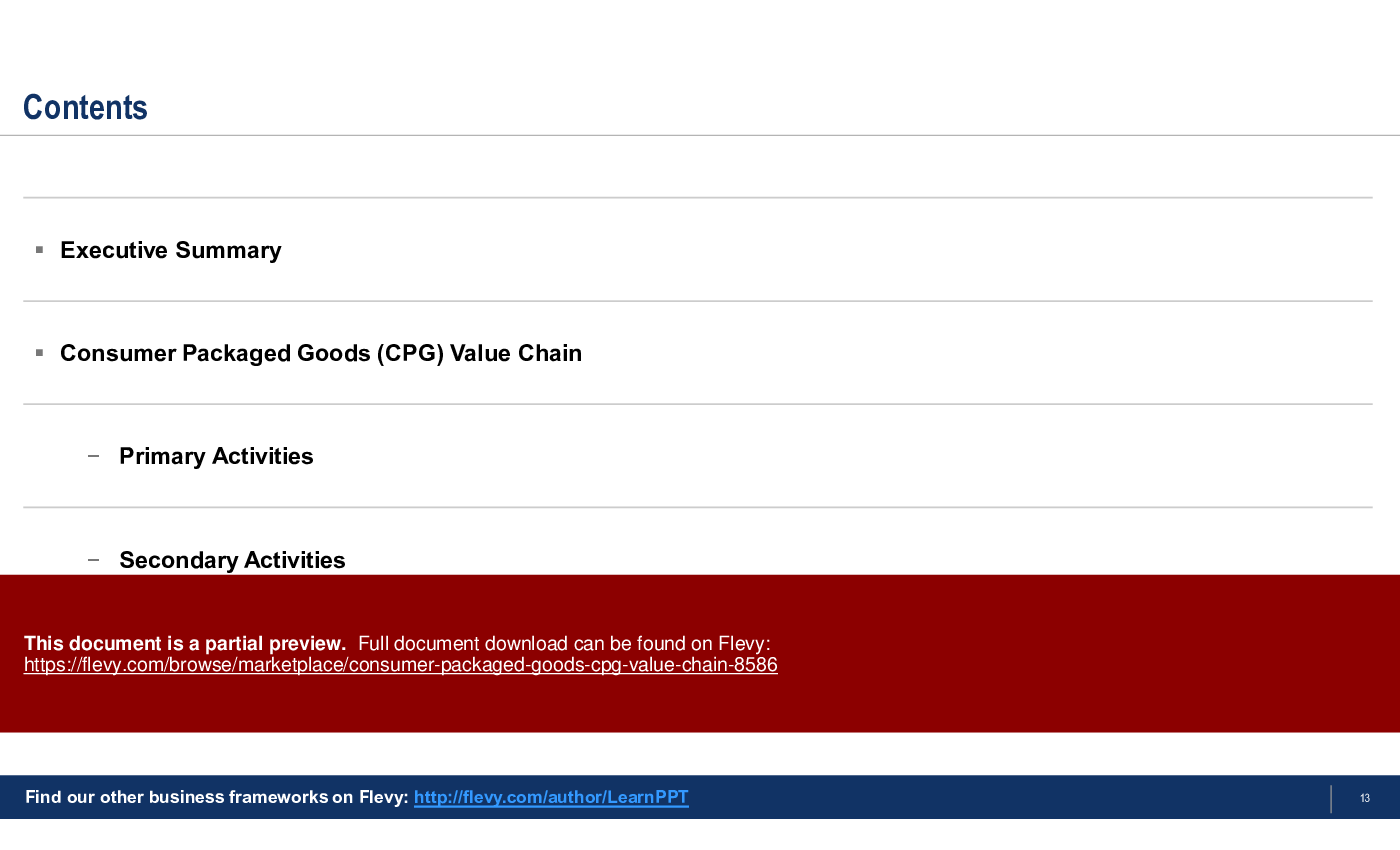
• Executive Summary (page 3)
• Consumer Packaged Goods (CPG) Value Chain (page 4)
• Primary Activities (page 6)
• Support Activities (page 11)
• CPG Value Chain Analysis (page 14)
Primary Topics Covered
• Raw Material Sourcing - Focuses on procuring quality materials while ensuring cost-efficiency and supply chain stability.
• Product Development - Involves researching consumer needs and developing products that comply with regulations.
• Manufacturing - The process of converting raw materials into finished goods while maintaining quality standards.
• Packaging - Designing packaging that protects products and appeals to consumers while being compliant with regulations.
• Distribution - Logistics involved in moving products from manufacturing sites to various distribution channels.
• Marketing & Sales - Strategies to promote products and manage relationships with retailers and consumers.
• After-Sales Service & Support - Activities focused on maintaining product value through customer service and feedback mechanisms.
Deliverables, Templates, and Tools
• Value chain analysis template for assessing primary and support activities
• Cost structure evaluation model for identifying areas of efficiency
• Customer feedback loop framework for product development insights
• Sustainability assessment checklist for packaging and sourcing
• Technology integration roadmap for enhancing operational efficiency
• Marketing effectiveness evaluation tool for measuring campaign ROI
Slide Highlights
• Overview of the CPG Value Chain illustrating primary and support activities
• Detailed breakdown of each primary activity with key metrics and considerations
• Insights on the impact of digital transformation on the CPG landscape
• Analysis framework for evaluating market dynamics and consumer behavior
• Sustainability initiatives and their influence on brand loyalty
Potential Workshop Agenda
Value Chain Optimization Session (90 minutes)
• Review current value chain activities and identify inefficiencies
• Develop action plans for enhancing primary and support activities
• Align on metrics for measuring success and accountability
Technology Integration Workshop (60 minutes)
• Explore emerging technologies and their applications in the CPG space
• Discuss implementation strategies for digital tools across the value chain
• Identify potential partnerships for technology development
Sustainability Strategy Meeting (45 minutes)
• Assess current sustainability practices and their market impact
• Brainstorm initiatives to enhance eco-friendly sourcing and packaging
• Develop a roadmap for sustainability compliance and reporting
Customization Guidance
• Tailor the value chain analysis framework to reflect specific organizational goals
• Adjust metrics and KPIs based on industry benchmarks and internal objectives
• Incorporate company-specific terminology and processes into the presentation
• Update case studies and examples to align with current market conditions
Secondary Topics Covered
• Supply chain resilience and risk management strategies
• Regulatory compliance across global markets
• Employee training and development in support of value chain activities
• Financial health metrics and their implications for long-term viability
• Competitive analysis frameworks for benchmarking against industry leaders
Topic FAQ
What are the main components of a CPG value chain I should map first?
A CPG value chain typically maps 7 primary activities—raw material sourcing, product development, manufacturing, packaging, distribution, marketing & sales, and after-sales service—and multiple support activities like procurement, technology development, HR, finance, legal, supply chain management, and sustainability, totaling 7 primary and eight support activities.
How does digital transformation change priorities across the CPG value chain?
Digital transformation improves operational efficiency, enables data-driven decision-making, and affects consumer engagement and market dynamics; organizations should evaluate technology impacts across product development, manufacturing, distribution, and after-sales, using tools such as the technology integration roadmap in the Consumer Packaged Goods (CPG) Value Chain presentation.
Which metrics help evaluate supply chain efficiency and resilience in CPG?
Evaluate supply chain efficiency by measuring lead times, inventory turns, service levels, vendor reliability, and disruption exposure; resilience assessment should include vendor relationship strength and risk mitigation strategies, supported by a cost structure evaluation model or the value chain analysis template for quantification.
How do sustainability initiatives influence consumer preferences and brand strategy?
Sustainability initiatives—especially in sourcing and packaging—shape consumer choices and brand loyalty as buyers prioritize eco-friendly practices; organizations can assess these impacts using a sustainability assessment checklist to link initiatives to consumer preference changes.
What should I look for when choosing a CPG value chain toolkit or presentation?
Prioritize toolkits that provide practical templates and models for analysis (value chain analysis template, cost structure evaluation model), customer insight mechanisms (customer feedback loop), technology planning (technology integration roadmap), and sustainability assessment, as these items support strategic and operational use.
How should I judge the cost versus value of purchasing CPG templates and decks?
Assess value by matching included deliverables to your needs—look for slide count, templates, and actionable tools; the Consumer Packaged Goods (CPG) Value Chain includes a 22-slide deck, multiple templates (e.g., cost structure model), and workshop agendas to help estimate internal time savings.
We completed an acquisition—how can a value chain analysis support integration planning?
Use value chain analysis to compare primary and support activities across entities, identify overlaps and bottlenecks, align metrics and accountability, and create integration action plans; a Value Chain Optimization Session (90 minutes) is provided as a suggested workshop format for initial alignment.
What is the best way to feed customer feedback into CPG product development?
Capture after-sales feedback and formalize a customer feedback loop to inform product requirements, compliance checks, and iterative design; the Consumer Packaged Goods (CPG) Value Chain presentation includes a customer feedback loop framework to integrate this information into development processes.
Document FAQ
These are questions addressed within this presentation.
What is the CPG Value Chain?
The CPG Value Chain is a structured framework that outlines the series of steps a CPG organization takes to deliver products to market, encompassing both primary and support activities.
How can this presentation help my organization?
This presentation provides actionable insights and frameworks to optimize your CPG operations, enhance efficiency, and improve customer satisfaction.
What are the primary activities in the CPG Value Chain?
Primary activities include raw material sourcing, product development, manufacturing, packaging, distribution, marketing and sales, and after-sales service and support.
What role does technology play in the CPG Value Chain?
Technology enhances operational efficiency, improves customer engagement, and supports data-driven decision-making throughout the value chain.
How can we assess our supply chain resilience?
Evaluate your supply chain against potential disruptions, assess vendor relationships, and implement risk mitigation strategies to enhance resilience.
What are the key metrics for evaluating marketing effectiveness?
Key metrics include customer acquisition costs, return on marketing investment, and brand awareness levels.
How do sustainability initiatives impact consumer choices?
Sustainability initiatives influence consumer preferences and brand loyalty, as more consumers prioritize eco-friendly practices in their purchasing decisions.
What is the importance of after-sales service?
After-sales service is crucial for maintaining customer satisfaction, addressing complaints, and gathering feedback for future product improvements.
Glossary
• Value Chain - A series of steps an organization takes to deliver a product or service to the market.
• Primary Activities - Core functions that directly contribute to the creation of a product or service.
• Support Activities - Functions that enhance the efficiency of primary activities.
• Supply Chain Management - The oversight of the flow of goods and services from raw materials to end customers.
• Sustainability - Practices aimed at reducing environmental impact and promoting eco-friendly operations.
• Digital Transformation - The integration of digital technology into all areas of business operations.
• Market Dynamics - The forces that impact the supply and demand of products in a market.
• Consumer Insights - Data and analysis that inform understanding of consumer behavior and preferences.
• Procurement - The process of acquiring goods and services from external sources.
• Product Lifecycle Management - The management of a product's lifecycle from inception to obsolescence.
• Quality Control - Processes to ensure that products meet specified quality standards.
• Operational Agility - The ability of an organization to rapidly adapt to market changes.
• Brand Loyalty - The tendency of consumers to continue buying the same brand over time.
• Cost Efficiency - The ability to deliver products at the lowest possible cost without sacrificing quality.
• Regulatory Compliance - Adherence to laws and regulations governing business operations.
• Customer Satisfaction - A measure of how products and services meet or exceed customer expectations.
• Technology Development - The process of researching and implementing new technologies to improve operations.
• Employee Engagement - The level of commitment and involvement an employee has towards their organization.
• Financial Health - The overall state of a company's financial situation, including profitability and risk management.
• Competitive Analysis - The assessment of competitors to identify strengths and weaknesses relative to one's own organization.
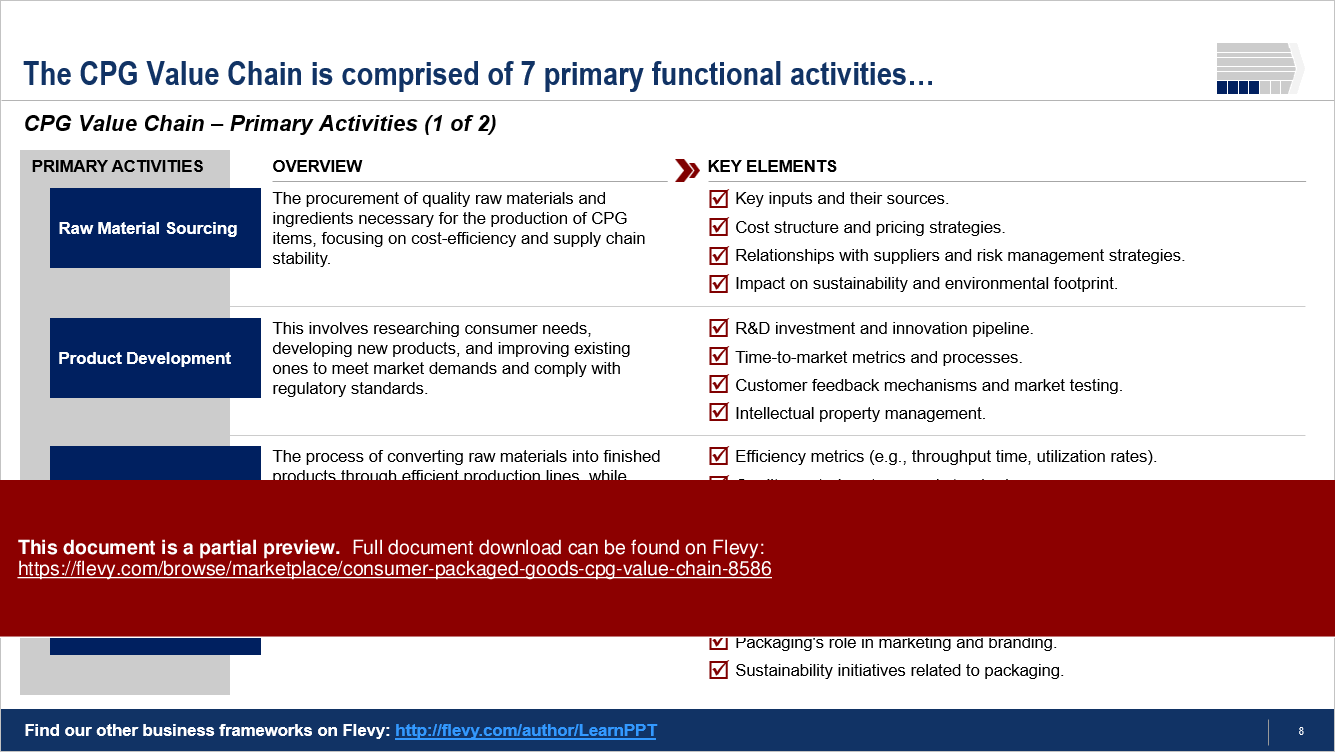
This PPT slide outlines the Consumer Packaged Goods (CPG) value chain, focusing on 4 key areas: Raw Material Sourcing, Product Development, Manufacturing, and Packaging. Raw Material Sourcing emphasizes procuring quality ingredients while ensuring cost-efficiency and supply chain stability, impacting product quality and sustainability. Product Development highlights researching consumer needs and aligning new products with market demands and regulatory standards, stressing R&D investment and customer feedback mechanisms for innovation. Manufacturing involves converting raw materials into finished products, requiring efficient production lines that meet health and safety standards, with emphasis on efficiency metrics and quality control. Packaging protects products and enhances consumer appeal, influencing perception and brand positioning through design and cost considerations.
Digital transformation (DX) significantly impacts the Consumer Packaged Goods (CPG) value chain, enhancing operational efficiency, responsiveness, and consumer engagement through emerging technologies. Enhanced Data Analytics utilizes big data for consumer behavior analysis, predicting trends, and optimizing marketing for personalized interactions. Improved Efficiency and Automation through robotics streamlines manufacturing, reduces labor costs, and increases production speed. Supply Chain Optimization leverages blockchain technology for transparency and traceability, reducing fraud and ensuring regulatory compliance. Enhanced Consumer Engagement employs augmented reality (AR) for immersive product interactions, improving the shopping experience. Predictive Analytics forecasts consumer demand for better inventory management and tailored offerings. The Internet of Things (IoT) connects devices for real-time monitoring and predictive maintenance, streamlining logistics. Drones and Autonomous Vehicles optimize logistics by reducing lead times and last-mile delivery costs. Chatbots and AI-powered customer service enhance consumer experience with 24/7 support and improved issue resolution.
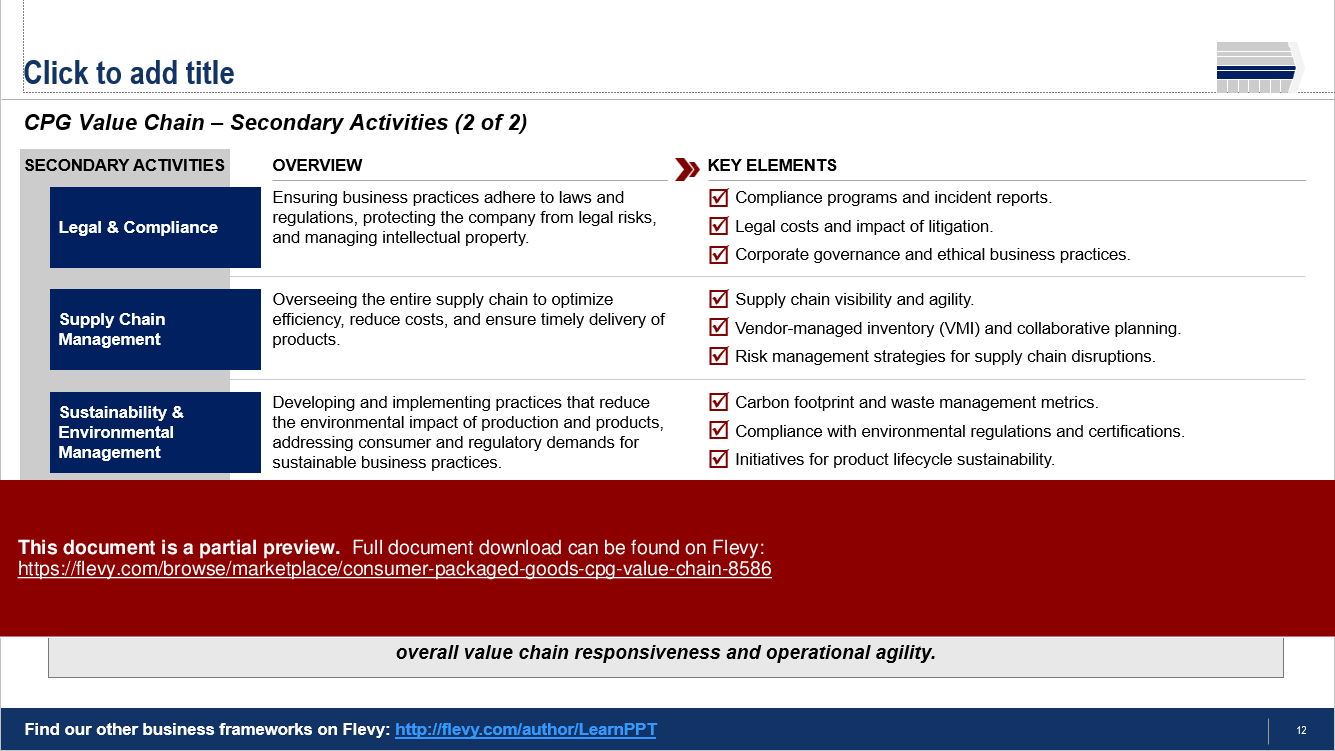
The CPG Value Chain consists of 7 primary activities: Raw Material Sourcing, Product Development, Manufacturing, Packaging, Distribution, Marketing and Sales, and After-Sales Service & Support. These activities are interconnected and essential for delivering customer value and maintaining supply chain efficiency. Supporting activities include Procurement, Technology Development, Human Resource Management, Firm Infrastructure, Finance & Accounting, Legal & Compliance, Supply Chain Management, and Sustainability & Environmental Management, which enhance primary activity effectiveness. Agile Supply Chain Management is critical for adapting to consumer preferences and market dynamics. Technological integration across the value chain fosters operational efficiency and personalized customer engagement. Sustainability initiatives in sourcing and packaging impact consumer choices and brand loyalty, necessitating alignment with sustainability goals to meet evolving expectations.
Source: Best Practices in Value Chain Analysis, Consumer Packaged Goods PowerPoint Slides: Consumer Packaged Goods (CPG) Value Chain PowerPoint (PPTX) Presentation Slide Deck, LearnPPT Consulting
This presentation is created by former McKinsey, BCG, Deloitte, EY, and Capgemini consultants and provides actionable insights for CPG Industry Value Chain Analysis.
We are a team of management consultants trained by top tier global consulting firms (including McKinsey, BCG, Deloitte, EY, Capgemini) with a collective experience of several decades. We specialize in business frameworks based on real-life consulting engagements.
We have served 100s of clients that range from Fortune 500 companies to tech startups to
... [read more] $1B+ private companies.
Utilize our consulting frameworks to apply structured thinking & analysis to address your business challenges, uncover strategic insights, and implement workable solutions. Our PowerPoint presentations follow traditional consulting slide design formats, starting with a clear slide headline. Easily customize and repurpose our slides for your own business presentations.
Beyond business frameworks & methodologies, we also offer PowerPoint templates and other business templates. Our templates are professionally designed and have been used in thousands of deliverables & work products across hundreds of clients.
The average daily rate of a McKinsey consultant is $6,625 (not including expenses). The average price of a Flevy document is $65.
Trusted by over 10,000+ Client Organizations
Since 2012, we have provided business templates to over 10,000 businesses and organizations of all sizes, from startups and small businesses to the Fortune 100, in over 130 countries.
"I have found Flevy to be an amazing resource and library of useful presentations for lean sigma, change management and so many other topics. This has reduced the time I need to spend on preparing for my performance consultation. The library is easily accessible and updates are regularly provided. A wealth of great information."
– Cynthia Howard RN, PhD, Executive Coach at Ei Leadership
"I have used FlevyPro for several business applications. It is a great complement to working with expensive consultants. The quality and effectiveness of the tools are of the highest standards."
– Moritz Bernhoerster, Global Sourcing Director at Fortune 500
"[Flevy] produces some great work that has been/continues to be of immense help not only to myself, but as I seek to provide professional services to my clients, it gives me a large "tool box" of resources that are critical to provide them with the quality of service and outcomes they are expecting."
– Royston Knowles, Executive with 50+ Years of Board Level Experience
"The wide selection of frameworks is very useful to me as an independent consultant. In fact, it rivals what I had at my disposal at Big 4 Consulting firms in terms of efficacy and organization."
– Julia T., Consulting Firm Owner (Former Manager at Deloitte and Capgemini)
"As an Independent Management Consultant, I find Flevy to add great value as a source of best practices, templates and information on new trends. Flevy has matured and the quality and quantity of the library is excellent. Lastly the price charged is reasonable, creating a win-win value for
the customer, Flevy and the various authors. This is truly a service that benefits the consulting industry and associated clients. Thanks for providing this service.
"
– Jim Schoen, Principal at FRC Group
"Flevy.com has proven to be an invaluable resource library to our Independent Management Consultancy, supporting and enabling us to better serve our enterprise clients.
The value derived from our [FlevyPro] subscription in terms of the business it has helped to gain far exceeds the investment made, making a subscription a no-brainer for any growing consultancy – or in-house strategy team."
– Dean Carlton, Chief Transformation Officer, Global Village Transformations Pty Ltd.
"Flevy is now a part of my business routine. I visit Flevy at least 3 times each month.
Flevy has become my preferred learning source, because what it provides is practical, current, and useful in this era where the business world is being rewritten.
many challenges and there is the need to make the right decisions in a short time, with so much scattered information, we are fortunate to have Flevy. Flevy investigates, selects, and puts at our disposal the best of the best to help us be successful in our work.
"
– Omar Hernán Montes Parra, CEO at Quantum SFE
"As a small business owner, the resource material available from FlevyPro has proven to be invaluable. The ability to search for material on demand based our project events and client requirements was great for me and proved very beneficial to my clients. Importantly, being able to easily edit and tailor
the material for specific purposes helped us to make presentations, knowledge sharing, and toolkit development, which formed part of the overall program collateral. While FlevyPro contains resource material that any consultancy, project or delivery firm must have, it is an essential part of a small firm or independent consultant's toolbox.
"
– Michael Duff, Managing Director at Change Strategy (UK)
Download our free compilation of 50+ Strategy & Transformation slides and templates. Frameworks include McKinsey 7-S, Balanced Scorecard, Disruptive Innovation, BCG Curve, and many more.