
 Click main image to view in full screen. Unlock all 12 preview images:
Consulting Project Risk & Issue Management SOP – Word DOCX
Word (DOCX) 17 Pages


BENEFITS OF THIS DOWNLOADABLE WORD DOCUMENT
- Provides a framework for identifying, assessing, mitigating, and escalating consulting project risks and operational issues across enterprise engagements.
- Establishes standardized governance for risk scoring, issue resolution, scope change control, escalation pathways, and contractual protection.
- Enables consulting teams to protect project margins, maintain delivery quality and schedules, control scope creep, and strengthen executive client confidence.
PROJECT MANAGEMENT WORD DESCRIPTION
Curated by McKinsey-trained Executives
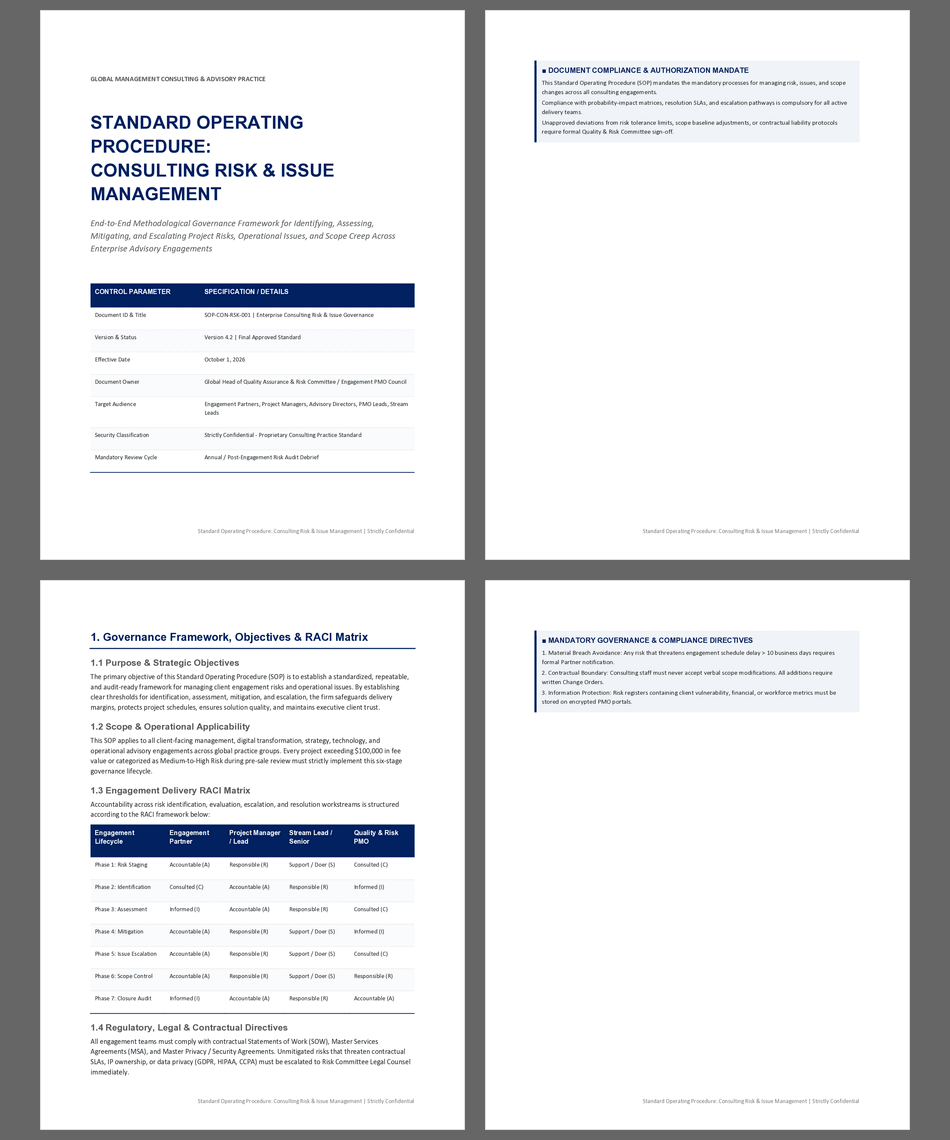
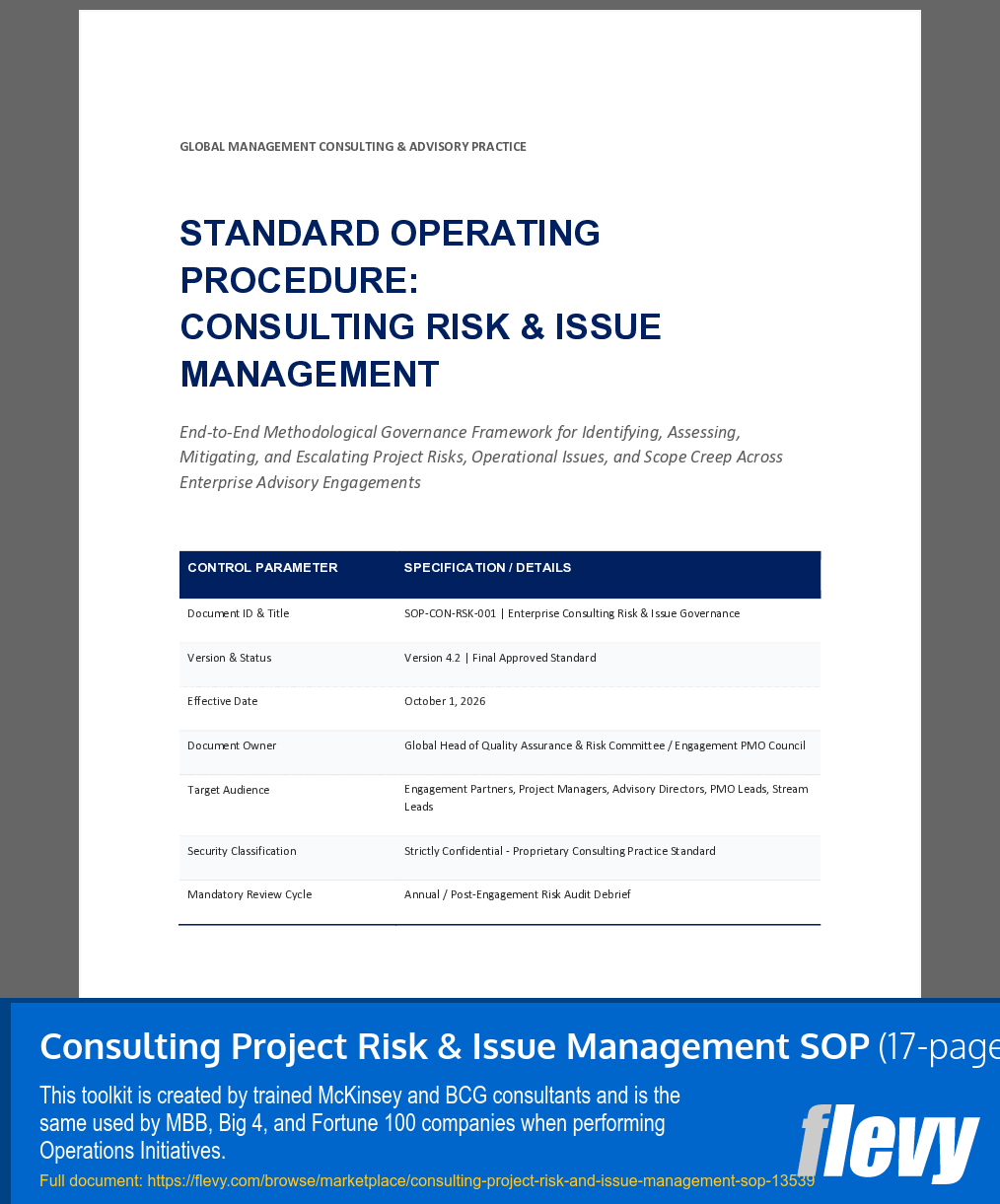
Consulting Project Risk & Issue Management Standard Operating Procedure (SOP)
This downloadable Microsoft Word document provides an institutional-grade, end-to-end governance framework for consulting project risk identification, probability-impact assessment, mitigation planning, operational issue management, escalation, scope creep control, contractual governance, continuous monitoring, and post-project risk auditing. Built specifically for Engagement Partners, Project Managers, Advisory Directors, PMO Leads, Stream Leads, Senior Consultants, and Quality & Risk leaders, it combines enterprise risk taxonomy, RACI accountability, 5x5 risk scoring, exposure-based response SLAs, 4T mitigation strategies, issue severity management, root cause analysis, corrective action planning, Change Request governance, Key Risk Indicators, RAG reporting, contingency controls, and post-engagement knowledge integration into a structured global operating standard.
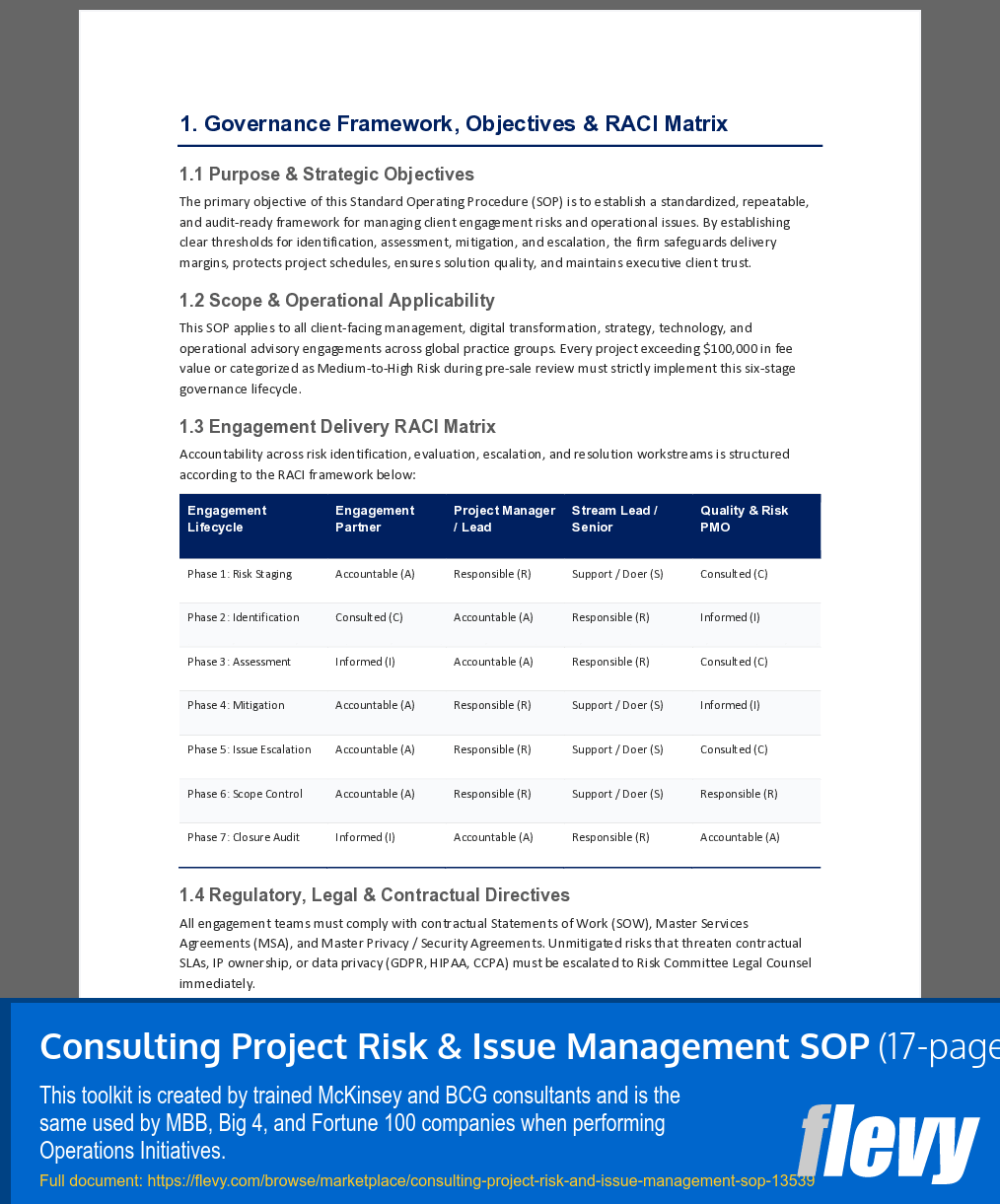
Section 1 – Governance Framework, Objectives & RACI Architecture
• Strategic Consulting Risk & Issue Governance Framework designed to establish a standardized, repeatable, and audit-ready approach to managing delivery uncertainty across global consulting engagements.
• Enterprise applicability across Management Consulting, Strategy, Operations, Digital Transformation, Technology Advisory, and other client-facing advisory engagements.
• Defined applicability threshold for projects exceeding $100,000 in fee value or classified as Medium-to-High Risk during pre-sale review.
• Seven-Phase Engagement Risk Governance RACI Matrix mapping Engagement Partner, Project Manager/Lead, Stream Lead/Senior, and Quality & Risk PMO accountability across risk staging, identification, assessment, mitigation, issue escalation, scope control, and closure audit.
• Governance requirements designed to protect delivery margins, project schedules, solution quality, contractual compliance, and executive client trust.
• Mandatory alignment with Statements of Work, Master Services Agreements, privacy/security agreements, and applicable regulatory requirements.
• Escalation controls for risks threatening contractual SLAs, intellectual property, data privacy, client relationships, or material delivery commitments.
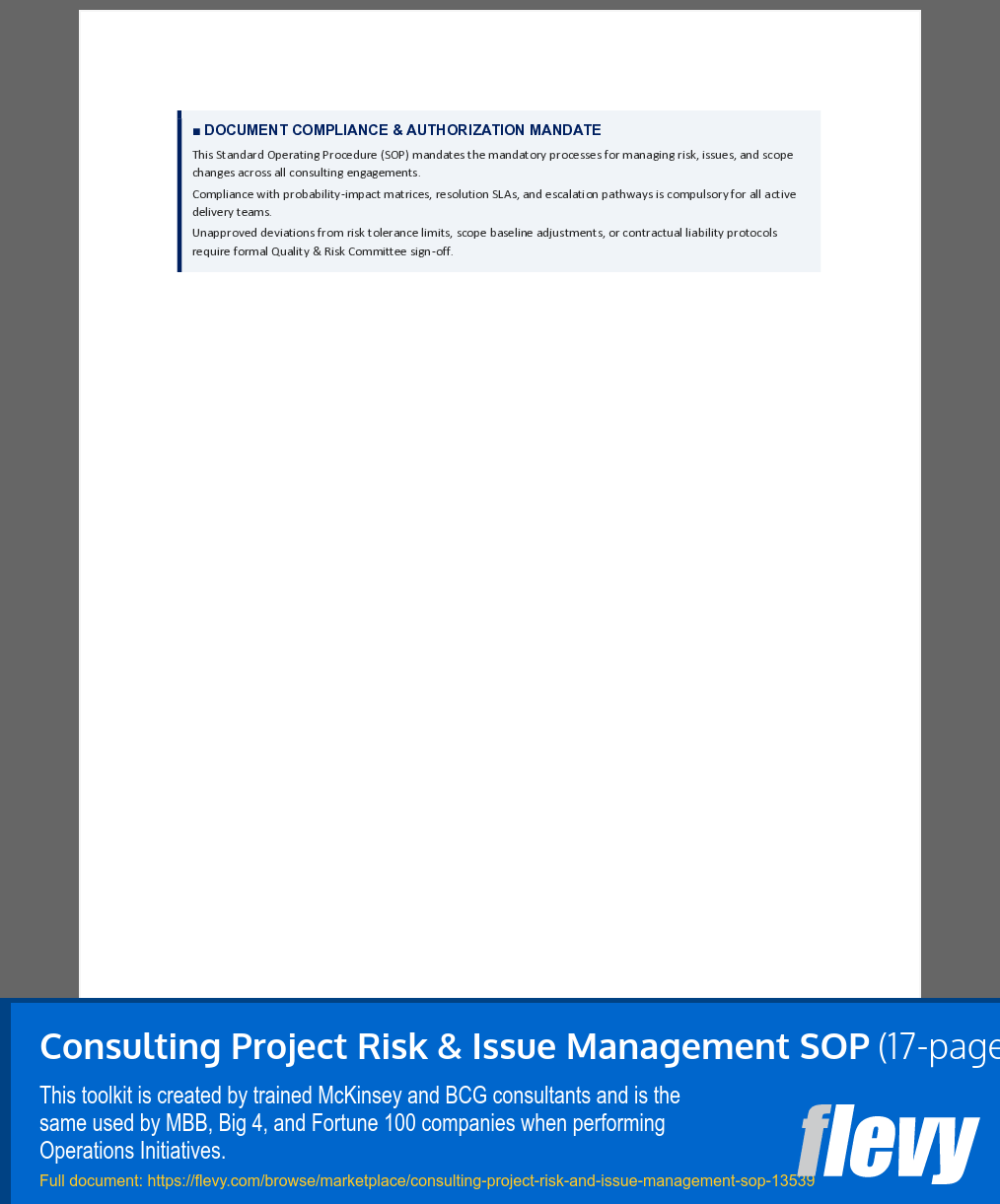
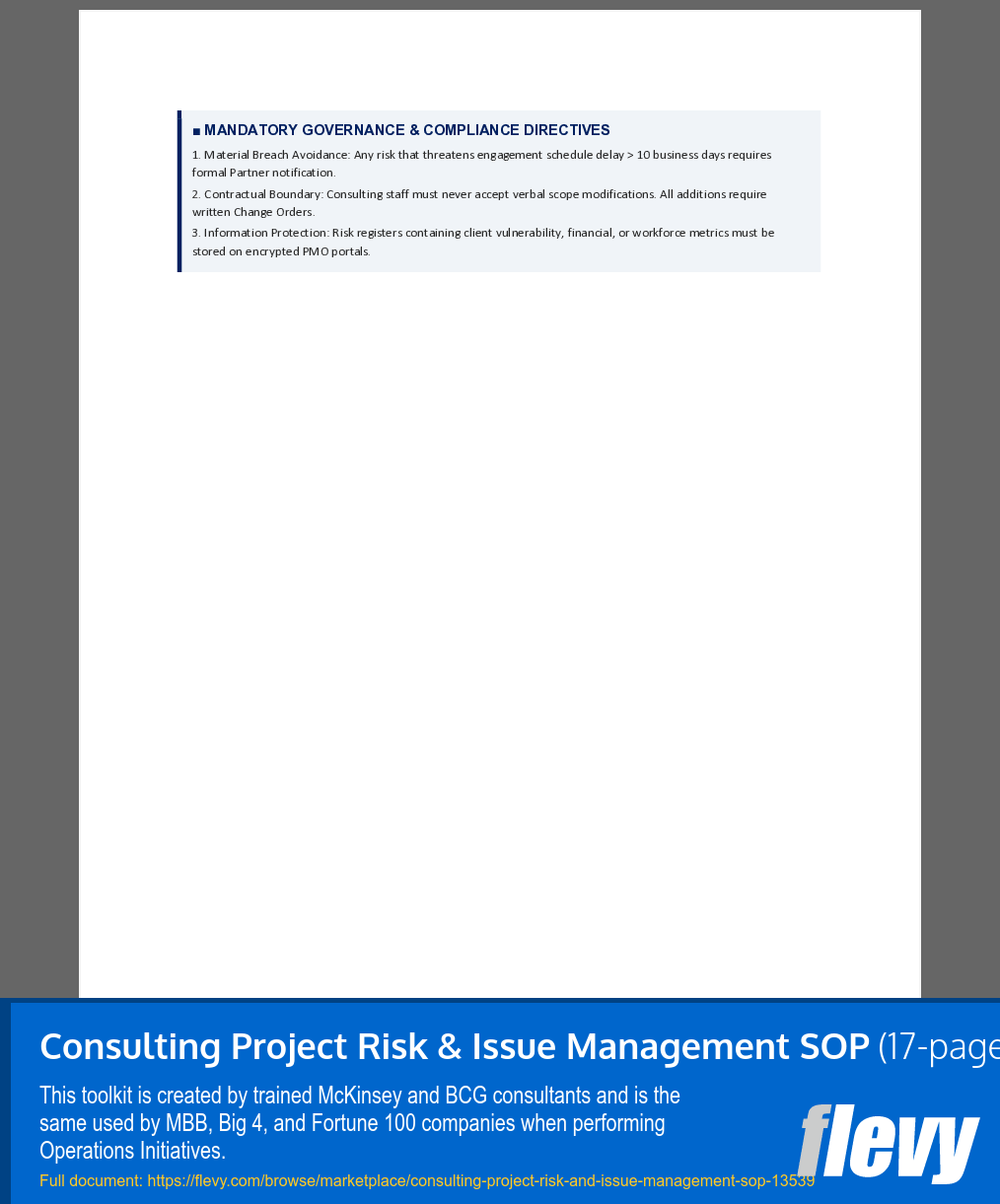
• Material Breach Avoidance Directive requiring formal Partner notification for risks capable of causing schedule delays exceeding 10 business days.
• No Verbal Scope Modification Standard requiring all additions to the contracted baseline to be documented through formal written Change Orders.
• Information-protection requirements governing secure storage of risk registers containing client vulnerability, financial, workforce, or other sensitive engagement information.
Section 2 – Risk Identification, Taxonomy & RBS Architecture
• Proactive Risk Identification Lifecycle beginning during pre-proposal activities and continuing through final project acceptance.
• Mandatory Risk Identification Workshops at the beginning of each engagement phase, supplemented by continuous risk logging during weekly delivery ceremonies.
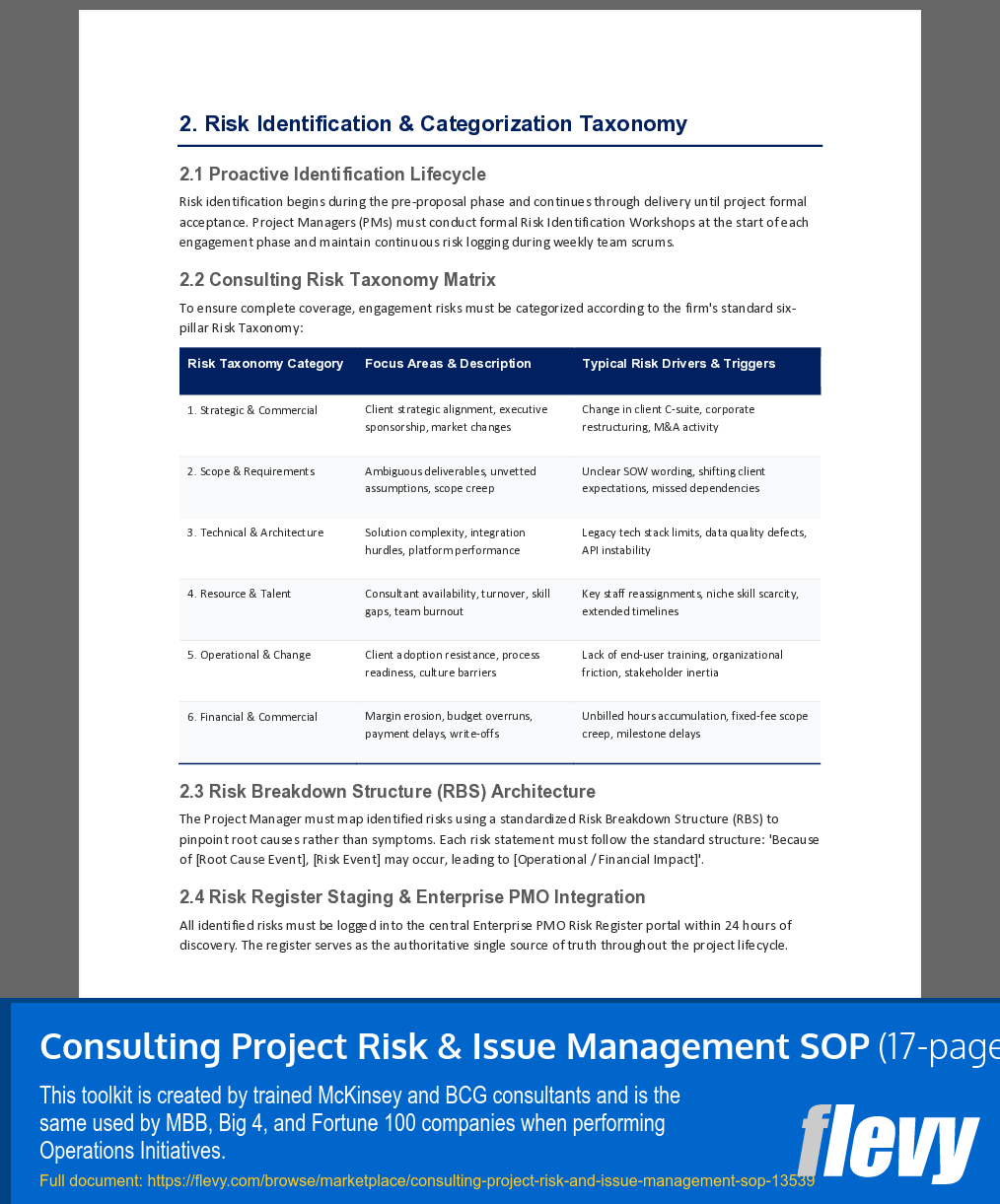
• Six-pillar Consulting Risk Taxonomy Matrix covering Strategic & Commercial, Scope & Requirements, Technical & Architecture, Resource & Talent, Operational & Change, and Financial & Commercial risks.
• Standardized identification of risk drivers including executive sponsorship changes, ambiguous SOW language, technical dependencies, talent shortages, client adoption barriers, budget overruns, and payment delays.
• Risk Breakdown Structure (RBS) architecture designed to identify root causes rather than symptoms.
• Mandatory risk-statement formulation using the structured logic: Root Cause → Risk Event → Operational / Financial Impact.
• Centralized Enterprise PMO Risk Register established as the authoritative single source of truth for project risk information.
• Mandatory requirement to log newly identified risks within 24 hours of discovery.
• Risk-register architecture supporting standardized categorization, ownership, scoring, mitigation strategy, and lifecycle tracking.
Section 3 – Probability, Impact & 5x5 Risk Exposure Governance
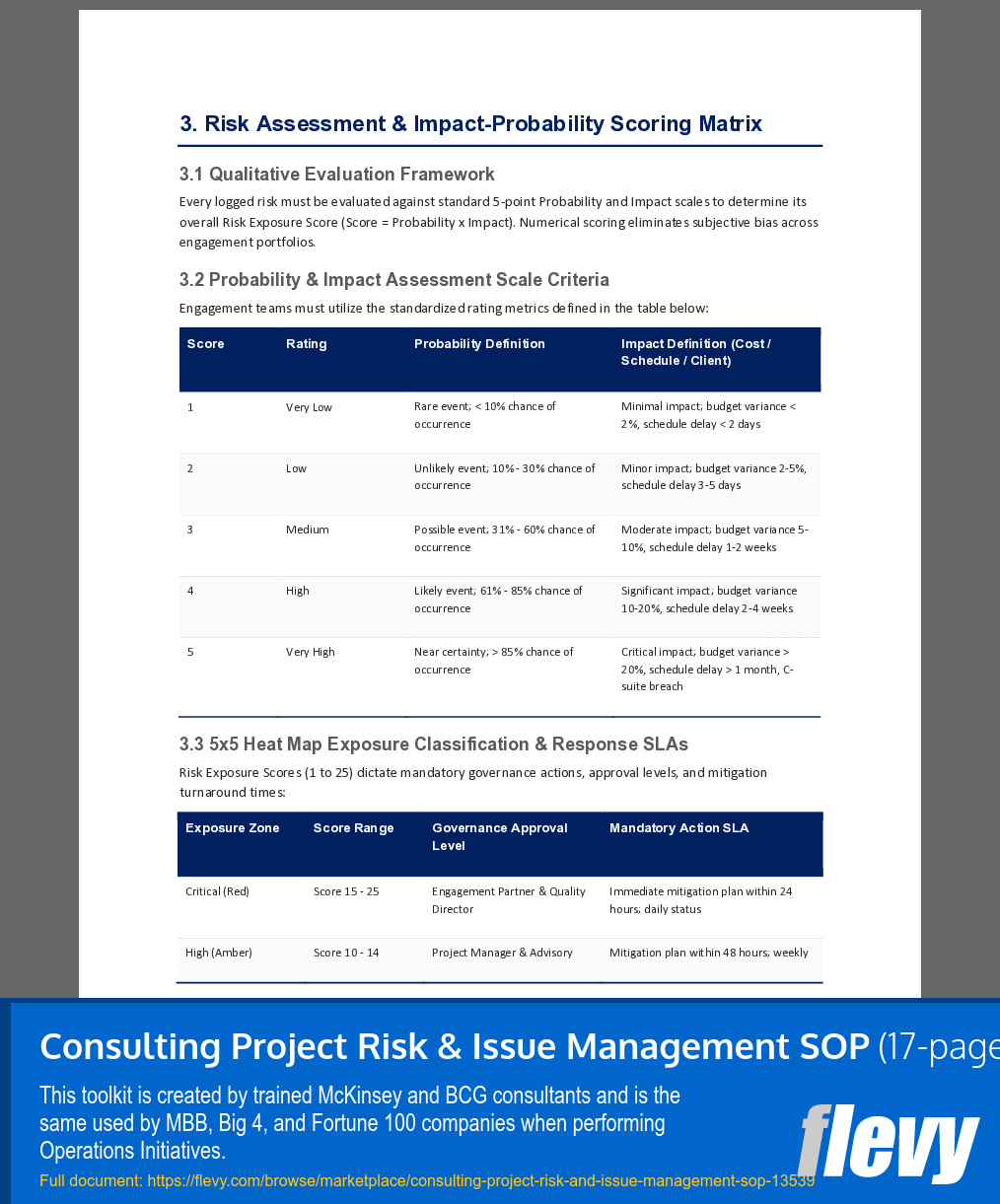
• Institutional 5x5 Probability-Impact Assessment Framework designed to reduce subjective risk evaluation and establish consistent scoring across engagement portfolios.
• Standardized Probability Scale from 1–5, ranging from Very Low/Rare events to Very High/Near-Certain events.
• Standardized Impact Scale from 1–5 incorporating budget variance, schedule delay, client impact, and potential executive-level consequences.
• Automated-style Risk Exposure Score methodology calculated as Probability × Impact, producing an exposure range from 1 to 25.
• Four-zone Risk Heat Map Governance Model categorizing exposures as Critical, High, Medium, or Low.
• Critical / Red Exposure: Score 15–25, requiring Engagement Partner and Quality Director governance, immediate mitigation planning, and daily monitoring.
• High / Amber Exposure: Score 10–14, requiring mitigation within 48 hours and weekly governance review.
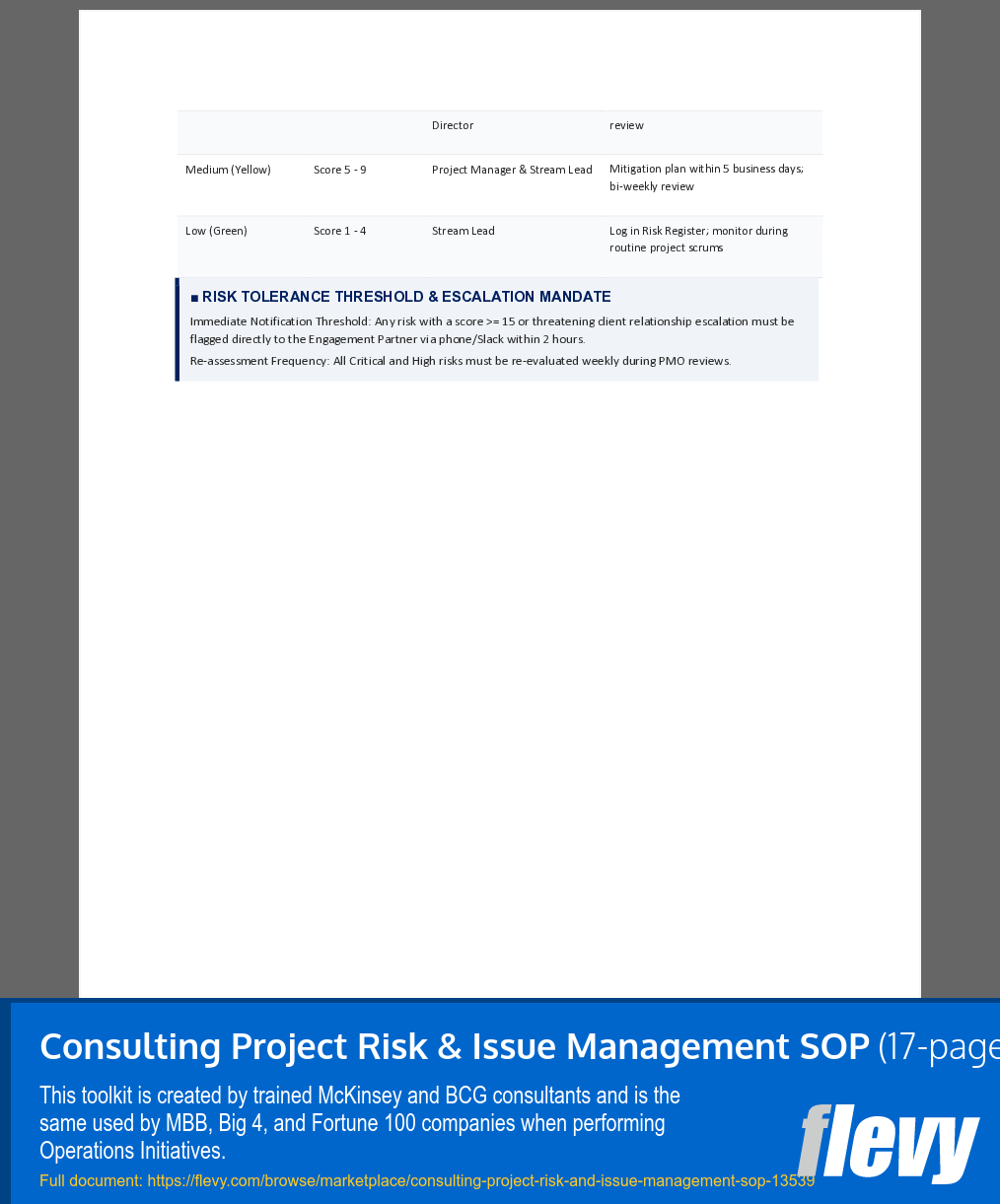
• Medium / Yellow Exposure: Score 5–9, requiring mitigation within five business days and bi-weekly monitoring.
• Low / Green Exposure: Score 1–4, requiring Risk Register logging and routine delivery monitoring.
• Immediate Notification Threshold requiring risks scoring 15 or higher, or threatening client relationships, to be escalated to the Engagement Partner within two hours.
• Mandatory weekly reassessment of all Critical and High risks through formal PMO governance reviews.
• Exposure-based governance controls linking risk severity directly to approval authority, response SLA, monitoring frequency, and escalation requirements.
Section 4 – Risk Mitigation, 4T Response Strategies & Contingency Management
• Enterprise 4T Risk Response Strategy Framework covering Treat, Transfer, Tolerate, and Terminate responses.
• Treat / Mitigate Strategy for high-exposure risks through proactive controls, specialist resourcing, process redesign, and technical architecture refinement.
• Transfer Strategy for third-party and specialized dependency risks using subcontractor SLAs, insurance coverage, performance protections, and contractual risk allocation.
• Tolerate / Accept Strategy for lower-impact risks where the cost of mitigation exceeds the expected exposure.
• Terminate / Avoid Strategy for risks involving severe legal, regulatory, safety, or unacceptable delivery exposure.
• Mandatory Risk Mitigation Plan Specification covering preventive controls, contingency actions, named action owners, and firm completion dates.
• Residual Risk Assessment Protocol requiring exposure to be recalculated after mitigation controls are established.
• Secondary mitigation requirement where residual exposure remains within the Critical or High zones.
• Project Contingency Reserve Framework providing a typical 5–10% fee contingency for approved risk responses.
• Tiered contingency drawdown controls based on financial authority thresholds.
• Formal approval requirements for contingency usage exceeding $10,000, $50,000, and higher governance thresholds.
• Integrated controls designed to connect risk exposure, mitigation ownership, financial contingency, and executive accountability.
Section 5 – Operational Issue Management, Incident Escalation & RCA
• Formal Risk-to-Issue Transition Framework distinguishing uncertain future risks from active problems and realized risks currently affecting project performance.
• Mandatory transition of materialized risks from the Risk Register to the Active Issue Log.
• Four-tier Issue Severity Classification Framework spanning Severity 1 Critical through Severity 4 Low.
• Severity 1 Critical Issue Protocol for project stoppage, major deliverable rejection, contractual breaches, or executive fallout, with immediate Partner, Client Steering Committee, and Quality Director escalation.
• Severity 2 High Issue Protocol addressing major stream delays, critical-path disruption, and significant resource loss.
• Severity 3 Medium Issue Protocol for moderate delivery disruption, workarounds, and controlled budget shifts.
• Severity 4 Low Issue Protocol for minor operational problems without critical-path or material budget impact.
• Explicit Resolution SLA Matrix establishing initial response and resolution targets for each issue severity.
• Immediate Containment Mandate requiring temporary controls to arrest ongoing impact while root-cause investigation proceeds.
• Formal 5 Whys Root Cause Analysis (RCA) for all Severity 1 and Severity 2 issues.
• Corrective Action Plan (CAP) requirement establishing documented remediation actions following material incidents.
• Client Communication Protocol requiring Engagement Partner communication to client sponsors for Severity 1 incidents within four hours.
• Mandatory Incident Post-Mortem within five business days of resolution to capture lessons learned and preventative controls.
Section 6 – Scope Change Control & Contractual Governance
• Enterprise Scope Creep Prevention & Change Control Framework designed to protect project economics, delivery timelines, contractual boundaries, and client expectations.
• Formal definition of additional analysis, user groups, deliverables, or support as potential Change Requests (CRs) requiring impact assessment and authorization.
• Five-stage Change Control Lifecycle covering Change Identification, Impact Assessment, Change Authorization, Contract Amendment, and Project Baseline Reset.
• Standardized Change Request governance linking Project Manager, Technical Lead, Engagement Partner, Client Sponsor, Legal Counsel, and PMO accountability.
• Comprehensive Change Impact Assessment across six dimensions: fee adjustment, schedule impact, FTE requirements, technology architecture, client dependencies, and delivery margin.
• No Work Without Signed Change Order Directive preventing commencement of out-of-scope work before formal contractual authorization.
• Governance controls designed to prevent unbilled effort, margin erosion, resource over-allocation, schedule slippage, and contractual disputes.
• Unauthorized out-of-scope effort controls establishing the financial consequences of performing work outside the approved SOW baseline.
• Formal Project Baseline Reset process updating plans, budgets, staffing allocations, and delivery backlogs following approved scope changes.
Section 7 – Continuous Monitoring, KRIs & Executive RAG Reporting
• Integrated Risk & Issue Monitoring Architecture embedded into daily, weekly, bi-weekly, monthly, and phase-based engagement governance ceremonies.
• Daily Scrum Controls focused on immediate blockers and Severity 3/4 issues.
• Weekly PMO Review Framework covering Risk Register updates, mitigation tracking, issue aging, and Change Request status.
• Steering Committee Governance focused on Critical/High risks, Severity 1/2 issues, major scope changes, and executive decisions.
• Monthly Quality Audit Framework providing independent assessment of risk governance, SOP compliance, and engagement health.
• Quantitative Key Risk Indicator (KRI) Framework providing early-warning signals for project distress.
• Schedule Variance Trigger requiring recovery planning when milestone delay exceeds five business days.
• Cost / SPI Trigger requiring intervention when EAC cost overrun exceeds 7% or SPI falls below 0.90.
• Issue Aging Trigger requiring Partner escalation when open Severity 2 issues remain unresolved beyond five business days.
• Client Sentiment Trigger requiring Partner-to-Sponsor alignment when weekly pulse scores fall below 3.5/5.
• Scope Change Index Trigger requiring comprehensive SOW and margin review when cumulative Change Request fees exceed 15% of the original SOW.
• Executive Red-Amber-Green (RAG) Dashboard Standard determining overall project health according to the highest-severity component across Schedule, Budget, Scope, Quality, and Client Satisfaction.
• Governance architecture designed to turn risk information into actionable executive decision support rather than passive reporting.
Section 8 – Post-Project Risk Audit, Lessons Learned & Knowledge Integration
• Structured Post-Project Risk Audit Framework initiated within 10 business days of final client sign-off and milestone acceptance.
• Formal reconciliation of initial risk forecasts, materialized issues, mitigation effectiveness, scope changes, and actual project outcomes.
• Risk Forecast Accuracy Review designed to identify gaps between anticipated and realized delivery exposure.
• Centralized Lessons Learned Repository capturing resolved critical issues, effective mitigation strategies, recurring root causes, and preventative controls.
• Standardized knowledge-integration structure covering Technical Stack, Client Resourcing, Data Quality, Commercial, and other recurring risk domains.
• Reusable risk-asset methodology enabling lessons learned to inform future proposal risk models, SOW contingency language, delivery checklists, and domain-specific risk assessments.
• Quarterly PMO Council Review for updating enterprise risk models and standard preventative controls.
• Knowledge governance designed to transform project-specific incidents into institutional consulting delivery intelligence.
• Formal closeout controls requiring archival of final Risk Registers, Issue Logs, Change Orders, and RCA documentation.
• Practice knowledge-sharing requirements supporting quarterly case-study presentations and continuous organizational learning.
• Risk-management effectiveness metrics incorporating forecast accuracy, mitigation performance, and margin retention into professional performance evaluation.
Section 9 – Master Risk Register, Escalation Directory & Governance Sign-Off
• Appendix A: Master Risk Register Field Specification defining the standardized enterprise schema for Risk ID, Category, Probability, Impact, Exposure Score, Mitigation Strategy, and Risk Owner.
• Structured Risk Register fields supporting consistent categorization, scoring, accountability, mitigation tracking, and RAG exposure visualization.
• Appendix B: Emergency Risk Escalation Contact Directory providing defined escalation channels for Global Quality & Risk leadership, Practice Directors, Legal & Compliance, and the Global PMO Council.
• Emergency escalation framework designed for Severity 1 incidents and Critical exposure risks requiring rapid executive intervention.
• Appendix C: Quality & Risk Governance Sign-Off Block providing formal engagement-kickoff certification by the Engagement Partner, Project Manager/Lead, and Quality & Risk PMO Lead.
• Formal governance certification establishing accountability for risk tolerance, issue escalation, scope control, and SOP compliance.
• Complete operating model designed to provide early risk visibility, disciplined mitigation, rapid issue resolution, contractual protection, margin preservation, executive transparency, and continuous delivery improvement across enterprise consulting engagements.
• Institutional framework positioned as a global consulting risk and issue management standard for professional services organizations seeking consistent, scalable, and audit-ready engagement governance.
Keywords: Process Audit SOPs, Internal Audit Standard Operating Procedures, Process Audit Framework, Control Testing Procedures, Risk Assessment Methodologies, Audit Governance, Process Audit Strategy, Audit Evidence Collection, Compliance Audit SOPs, Continuous Auditing, Process Mapping, Audit Documentation Standards, Audit Quality Assurance, Process Risk Management, Operational Risk Audit, Enterprise Audit Management, Audit Committee Reporting, Audit Analytics, Process Mining, AI-Assisted Auditing, Audit Technology SOPs, Global Process Audit, Audit Playbooks, Audit Templates, Audit Training Programs, Audit Remediation Management, Audit Excellence, Process Audit Toolkit, McKinsey Audit Framework, Audit Best Practices, Enterprise Governance, Internal Control Assessment, Audit Procedures Manual, Audit Program Design, Audit Resource Planning, Audit Scheduling, Audit Efficiency, Audit Effectiveness, Audit Performance Metrics, Audit KPIs, Audit ROI, Audit Value Creation, Process Optimization, Operational Excellence, Business Process Audit, Functional Audit, Departmental Audit, Transactional Audit, Service Audit, Administrative Process Audit, Supply Chain Process Audit, Finance Process Audit, IT Process Audit, HR Process Audit, Procurement Process Audit, Sales Process Audit, Customer Service Audit, Production Audit, Quality Audit, Compliance Testing, Regulatory Audit, Policy Compliance, Procedure Audit, Documentation Audit, Audit Trail Review, Exception Management, Control Design, Control Effectiveness, Control Testing, Preventive Controls, Detective Controls, Corrective Actions, Root Cause Analysis, Finding Classification, Audit Report Writing, Executive Summaries, Audit Communication, Stakeholder Engagement, Process Owner Engagement, Management Accountability, Audit Committee Governance, Audit Charter, Audit Independence, Auditor Ethics, Professional Skepticism, Audit Competency, Audit Training, Audit Certification, Audit Standards (IIA, IAASB), Audit Best Practices, Audit Methodology, Audit Framework, Audit Operating Model, Process Audit Excellence, Audit Mastery, Fortune 500 Audit, Enterprise Audit Operations, Corporate Audit Function, Strategic Audit Planning, Transformation Audit, Digital Audit, Innovation Audit, Benchmarking Audit, Maturity Assessment, Audit Scaling, Audit Outsourcing, Co-Sourcing Models, Vendor Management, Audit Technology Stack, Audit Tools, Audit Software, Continuous Monitoring, Predictive Analytics, Anomaly Detection, Data Quality, Process Intelligence, Workflow Analytics, Business Process Management, Process Automation, RPA Audit, AI Governance, Responsible AI Audit, Cybersecurity Audit, Data Governance Audit, Privacy Audit, Information Security, Audit Evidence Standards, Working Papers, Audit Documentation, Audit File Management, Audit Records Retention, Audit Trail Integrity, Audit Report Confidentiality, Multi-Site Audit Coordination, Global Audit Strategy, International Audit Standards, Regional Audit Compliance, Cultural Considerations in Audit, Localization of Audit Procedures, Process Transformation Audit, Business Reengineering Audit, Change Audit, Operational Change, Audit Change Management, Audit Communication Plan, Audit Stakeholder Communication, Audit Performance Review, Audit Function Review, Strategic Review Process, Audit Leadership Development, Audit Team Development, Audit Coaching, Audit Supervision, Audit Career Progression, Audit Knowledge Management, Audit Playbook Development, Audit Template Library, Audit Standards Documentation, Audit Policy Manual, Lessons Learned Capture, Best Practice Sharing, Audit Continuous Improvement, Audit Methodology Enhancement, Audit Process Optimization, Audit Efficiency Improvement, Audit Effectiveness Enhancement, Audit Quality Improvement, Audit Risk Management, Audit Risk Register, Audit Issue Management, Audit Action Tracking, Audit Metrics Dashboard, Audit Performance Dashboard, Audit Scorecard, Audit Balanced Scorecard, KPI Framework for Audit, Audit Success Factors, Critical Success Factors in Audit, Audit Strategic Objectives, Audit Vision Statement, Audit Mission Statement, Audit Values and Ethics, Audit Culture, Audit Maturity Model, Audit Capability Model, Audit Competency Framework, Professional Development in Audit, Audit Certification Programs, Internal Audit Standards, Audit Best Practices Guide, Audit Reference Manual, Audit Operating Manual, Audit Procedures Manual, Audit Program Manual, McKinsey Audit Excellence, Deloitte Audit Framework, EY Audit Approach, KPMG Audit Methodology, Big 4 Audit Standards, Audit Industry Benchmarks, Audit Industry Standards, Audit Thought Leadership, Audit Innovation, Audit Transformation Program, Audit Digital Transformation, Audit Process Transformation, Audit Service Transformation, Audit Operating Model Transformation, Audit Function Evolution, Audit Future-Proofing, Emerging Trends in Audit, Audit 2025 Roadmap, Audit Strategic Priorities, Audit Strategic Planning, Audit Strategic Execution, Audit Implementation Plan, Audit Deployment Strategy, Audit Rollout Plan, Audit Quick-Start Guide, Audit Implementation Guide, Audit User Guide, Audit Handbook, Audit Manual, Audit Documentation Standard, Audit Work Standards, Audit Quality Standards, Audit Performance Standards, Audit Excellence Standards, Enterprise Audit Excellence, Audit Mastery Program, Audit Excellence Initiative, Audit Excellence Framework, Audit Excellence Culture, Audit Excellence Mindset, Strategic Audit Excellence, Operational Audit Excellence, Financial Audit Excellence, Compliance Audit Excellence, Quality Audit Excellence, Process Audit Excellence, Audit Excellence ROI, Audit Excellence Value Creation, Audit Excellence Competitive Advantage, Audit Excellence Strategic Advantage, Audit Excellence Performance Advantage, Audit Excellence Organizational Advantage, Inventory Management, Demand Planning, Inventory Optimization, Inventory Control, Supply Chain Management, Warehouse Operations, Replenishment Strategy, Inventory Analytics, WIP Reduction, Inventory Accuracy, Distribution Network, Inventory Forecasting, Supply Chain Excellence, Working Capital, Inventory KPIs, Procurement Strategy, Inventory Governance, Inventory SOPs, Continuous Improvement, Supply Chain Transformation, GenAI deployment SOPs, generative AI operating model, enterprise AI governance framework, AI Center of Excellence, responsible AI, AI risk management, AI use case prioritization, GenAI implementation roadmap, AI vendor selection, prompt engineering standards, AI compliance, AI adoption strategy, generative AI across value chain, AI strategy, enterprise transformation, AI implementation, AI scaling framework
Strategy & Transformation, Growth Strategy, Strategic Planning, Strategy Frameworks, Innovation Management, Pricing Strategy, Core Competencies, Strategy Development, Business Transformation, Marketing Plan Development, Product Strategy, Breakout Strategy, Competitive Advantage, Mission, Vision, Values, Strategy Deployment & Execution, Innovation, Vision Statement, Core Competencies Analysis, Corporate Strategy, Product Launch Strategy, BMI, Blue Ocean Strategy, Breakthrough Strategy, Business Model Innovation, Business Strategy Example, Corporate Transformation, Critical Success Factors, Customer Segmentation, Customer Value Proposition, Distinctive Capabilities, Enterprise Performance Management, KPI, Key Performance Indicators, Market Analysis, Market Entry Example, Market Entry Plan, Market Intelligence, Market Research, Market Segmentation, Market Sizing, Marketing, Michael Porter's Value Chain, Organizational Transformation, Performance Management, Performance Measurement, Platform Strategy, Product Go-to-Market Strategy, Reorganization, Restructuring, SWOT, SWOT Analysis, Service 4.0, Service Strategy, Service Transformation, Strategic Analysis, Strategic Plan Example, Strategy Deployment, Strategy Execution, Strategy Frameworks Compilation, Strategy Methodologies, Strategy Report Example, Value Chain, Value Chain Analysis, Value Innovation, Value Proposition, Vision Statement, Corporate Strategy, Business Development, Business plan pdf, business plan, PDF, Business Plan DOC, Business Plan Template, PPT, Market strategy playbook, strategic market planning, competitive analysis tools, market segmentation frameworks, growth strategy templates, product positioning strategy, market execution toolkit, strategic alignment playbook, KPI and OKR frameworks, business growth strategy guide, cross-functional strategy templates, market risk management, market strategy PowerPoint doc, guide, ebook, e-book ,McKinsey Change Playbook, Organizational change management toolkit, Change management frameworks 2025, Influence model for change, Change leadership strategies, Behavioral change in organizations, Change management PowerPoint templates, Transformational leadership in change, supply chain KPIs, supply chain KPI toolkit, supply chain PowerPoint template, logistics KPIs, procurement KPIs, inventory management KPIs, supply chain performance metrics, manufacturing KPIs, supply chain dashboard, supply chain strategy KPIs, reverse logistics KPIs, sustainability KPIs in supply chain, financial supply chain KPIs, warehouse KPIs, digital supply chain KPIs, 1200 KPIs, supply chain scorecard, KPI examples, supply chain templates, Corporate Finance SOPs, Finance SOP Excel Template, CFO Toolkit, Finance Department Procedures, Financial Planning SOPs, Treasury SOPs, Accounts Payable SOPs, Accounts Receivable SOPs, General Ledger SOPs, Accounting Policies Template, Internal Controls SOPs, Finance Process Standardization, Finance Operating Procedures, Finance Department Excel Template, FP&A Process Documentation, Corporate Finance Template, Finance SOP Toolkit, CFO Process Templates, Accounting SOP Package, Tax Compliance SOPs, Financial Risk Management Procedures.
NOTE: Our digital products are sold on an "as is" basis, making returns and refunds unavailable post-download. Please preview and inquire before purchasing. Please contact us before purchasing if you have any questions! This policy aligns with the standard Flevy Terms of Usage.
Got a question about the product? Email us at support@flevy.com or ask the author directly by using the "Ask the Author a Question" form. If you cannot view the preview above this document description, go here to view the large preview instead.
Source: Best Practices in Project Management, Risk Management Word: Consulting Project Risk & Issue Management SOP Word (DOCX) Document, SB Consulting
ABOUT THE AUTHOR
SB Consulting is dedicated to empowering businesses to communicate their ideas with impact. This consulting firm specializes in teaching organizations how to create effective corporate and management presentations. With training from top-tier global consulting firms, including McKinsey, BCG, and Porsche Consulting, extensive expertise in presentation design and ... [read more]
Ask the Author a Question
You must be logged in to contact the author.




























