 Click main image to view in full screen.
Cap Table with Derivative Instruments, Returns and Charts – Excel XLSX
Excel (XLSX)


BENEFITS OF THIS DOWNLOADABLE EXCEL DOCUMENT
- A professional template to model investor contributions into a JV startup with a complex structure
- Incorporates granular inputs
- Produces detailed reports, calculations and charts
PRIVATE EQUITY EXCEL DESCRIPTION
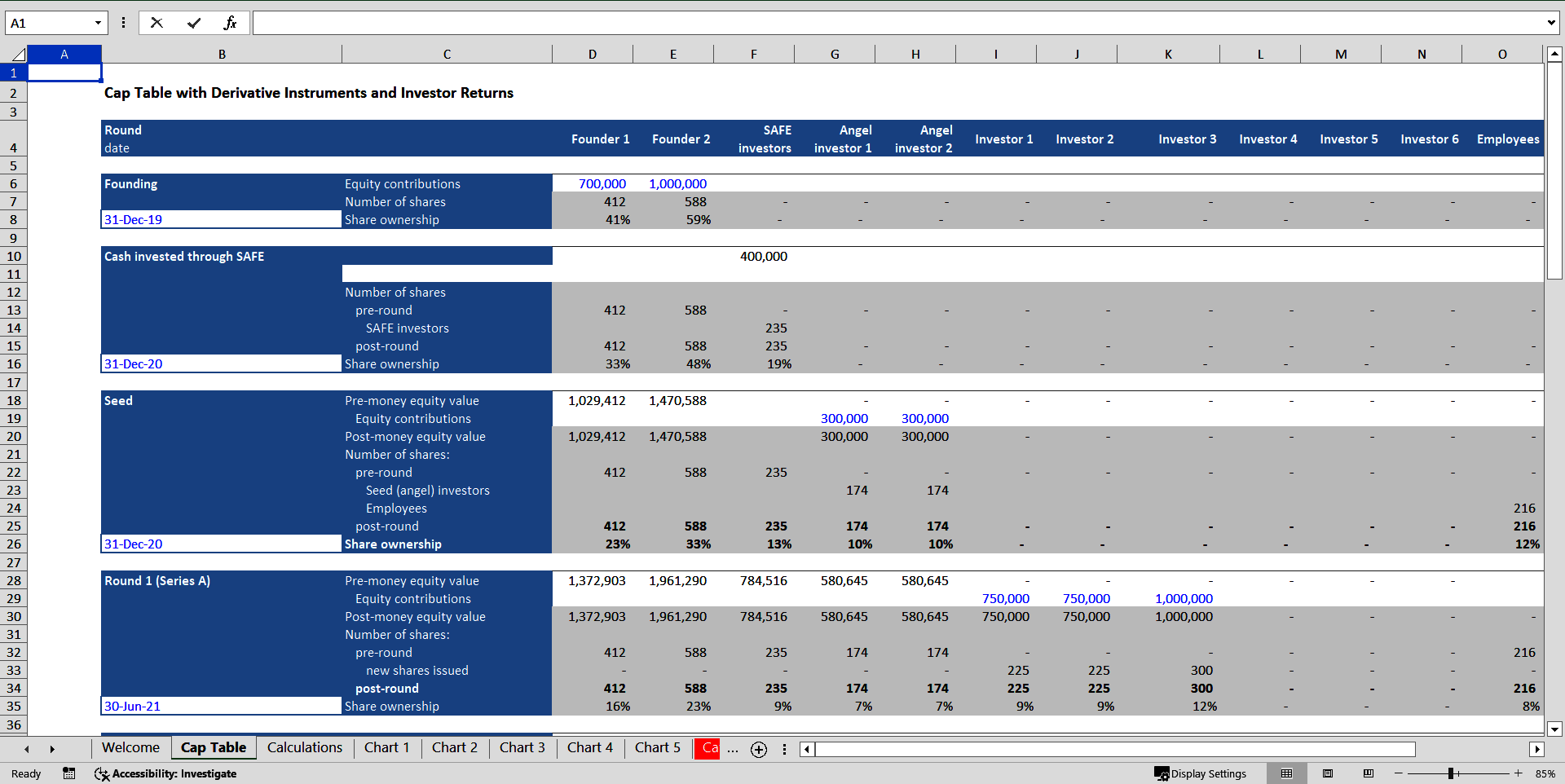
Most startups are initially financed by their founders. They contribute relatively small amounts of money for the company to make its first steps. If the business idea proves feasible, there will be the first real funding round ("seed" funding) when the company receives financing from external parties (often referred to as "angel investors").
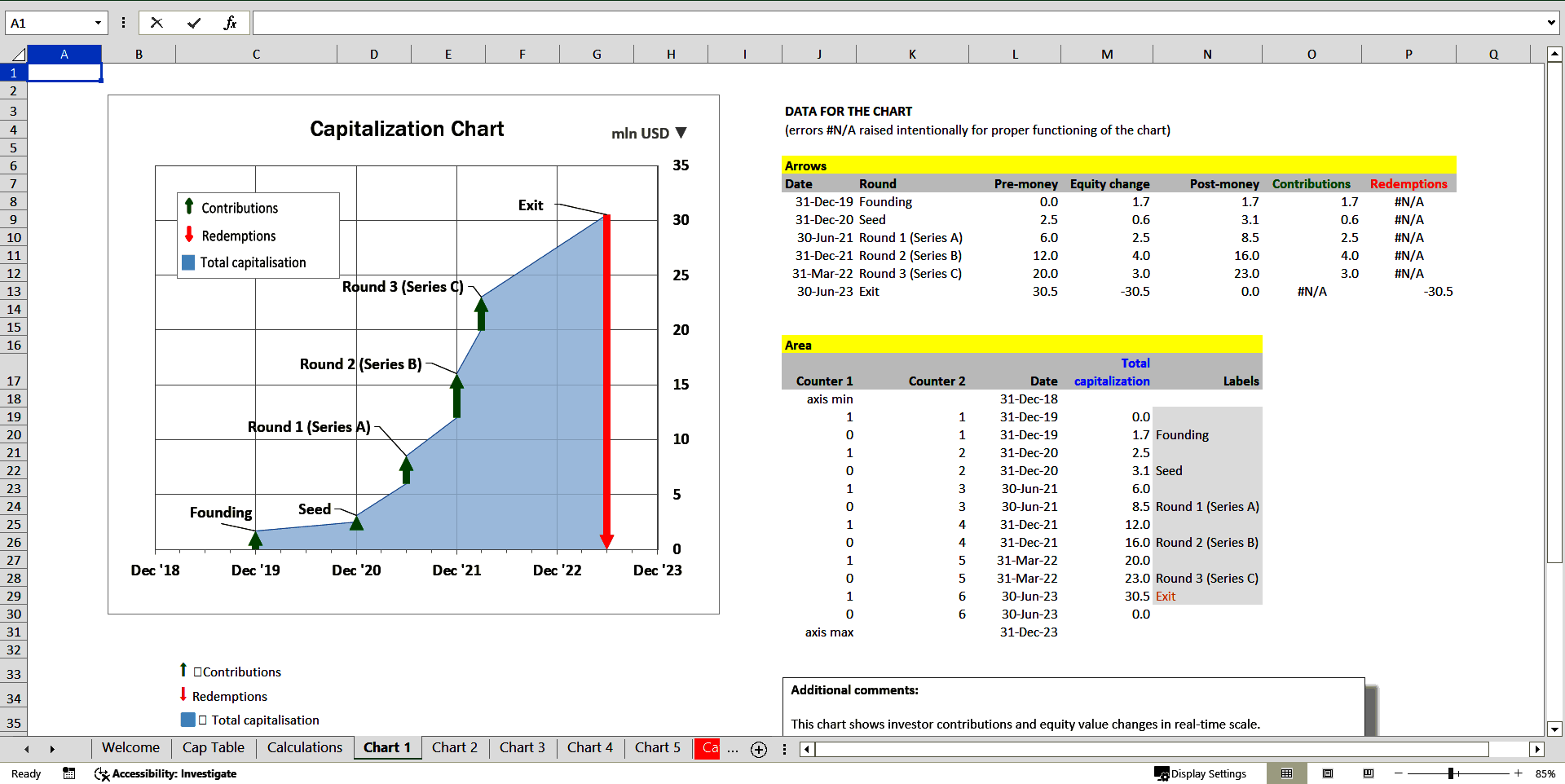
If, following this round, the company performs well, there can be further drawdowns of external financing to keep the business growing. In most real-life examples there will be up to three rounds (Series A, Series B and Series C), after which the company can go public or be sold to a strategic investor. At each funding round there will be changes in equity shares held by current shareholders based on the amounts contributed by the new investors and the market value of the company.
This template allows to model up to six investment rounds and full exit for up to 12 common-stock investors. It includes key profitability metrics for each investor (IRR, equity multiple and gross return).
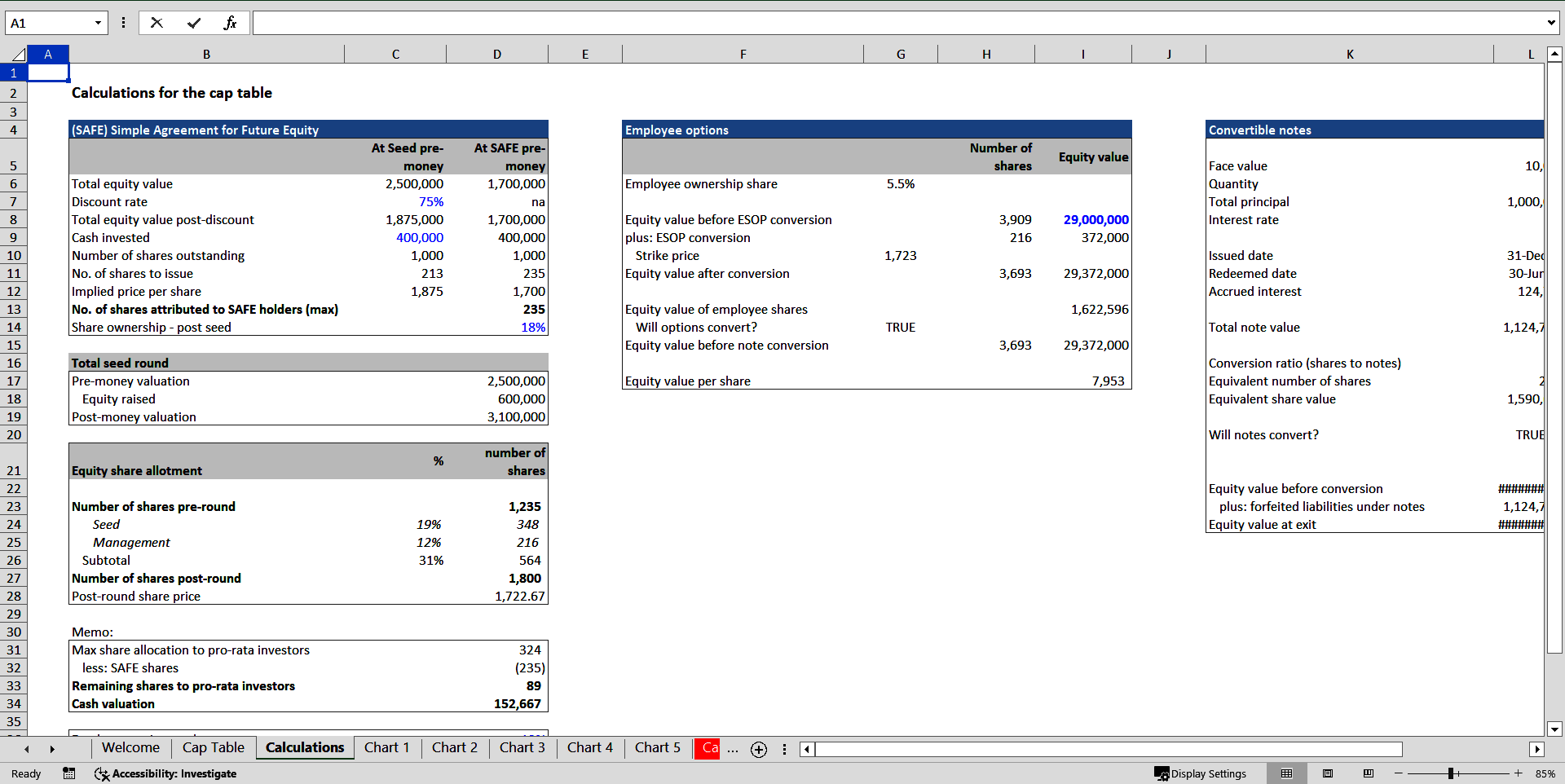
The model also includes calculations for a SAFE (simple agreement for future equity), employee stock options and convertible notes.
You can use this cap table to keep track of your investors or to build it into your financial models and analyze financing alternatives.
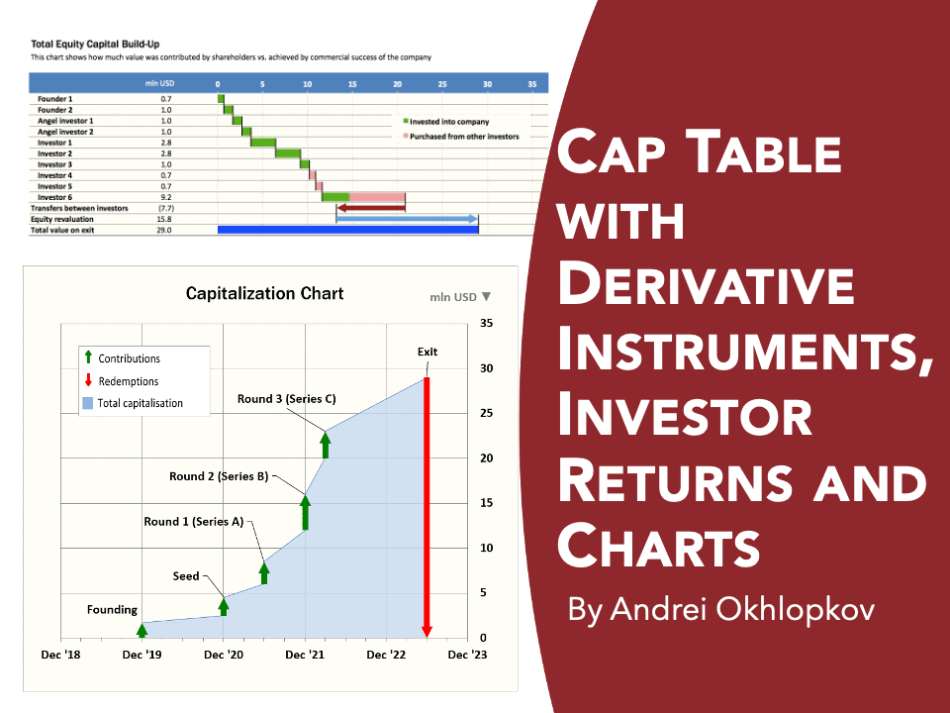
The table is accompanied by five professionally designed magazine-quality charts showing:
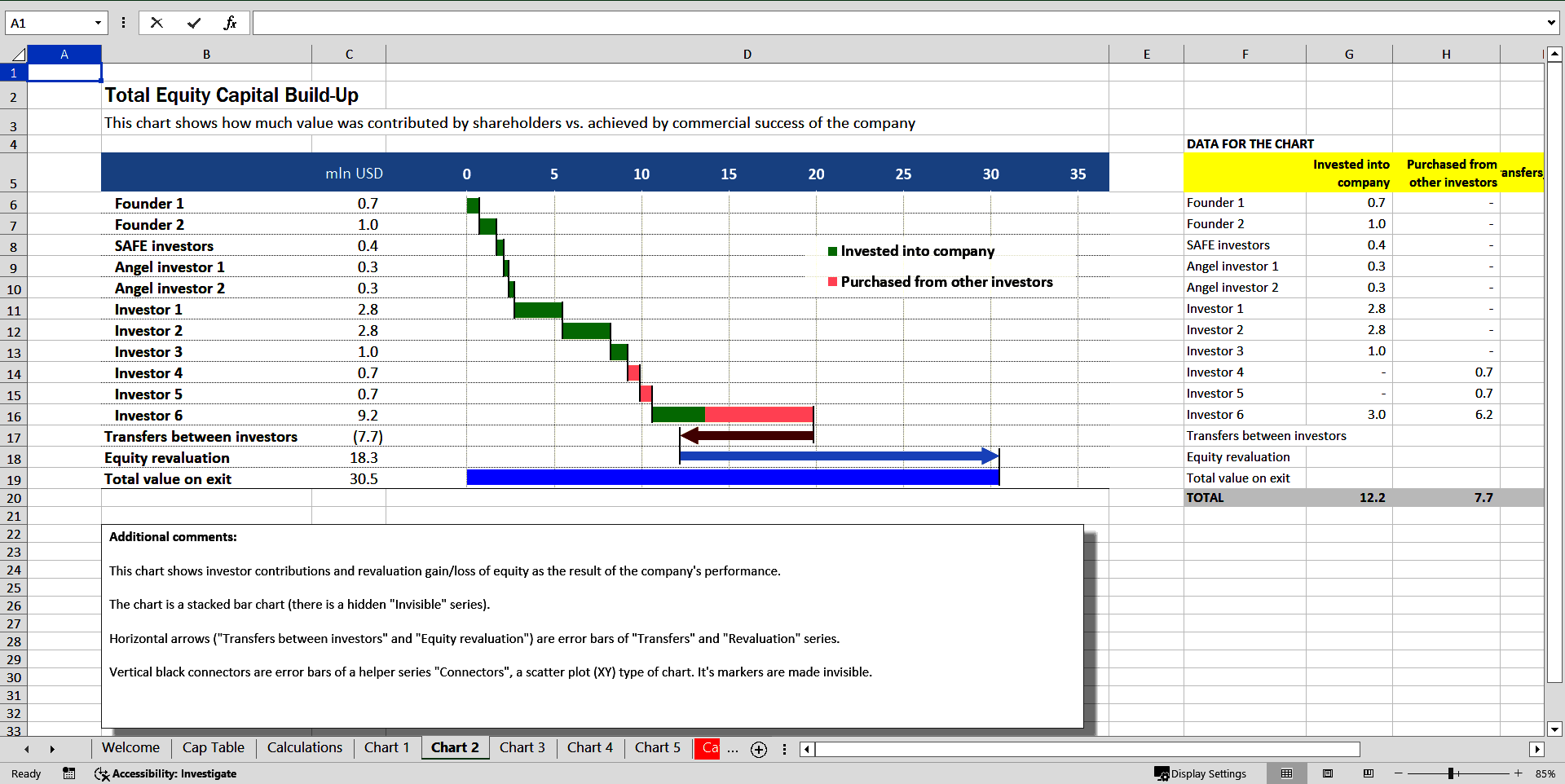
• changes in company valuation resulting from investor contributions and market value uplifts
• composition of final equity value by investor and overall equity value increase
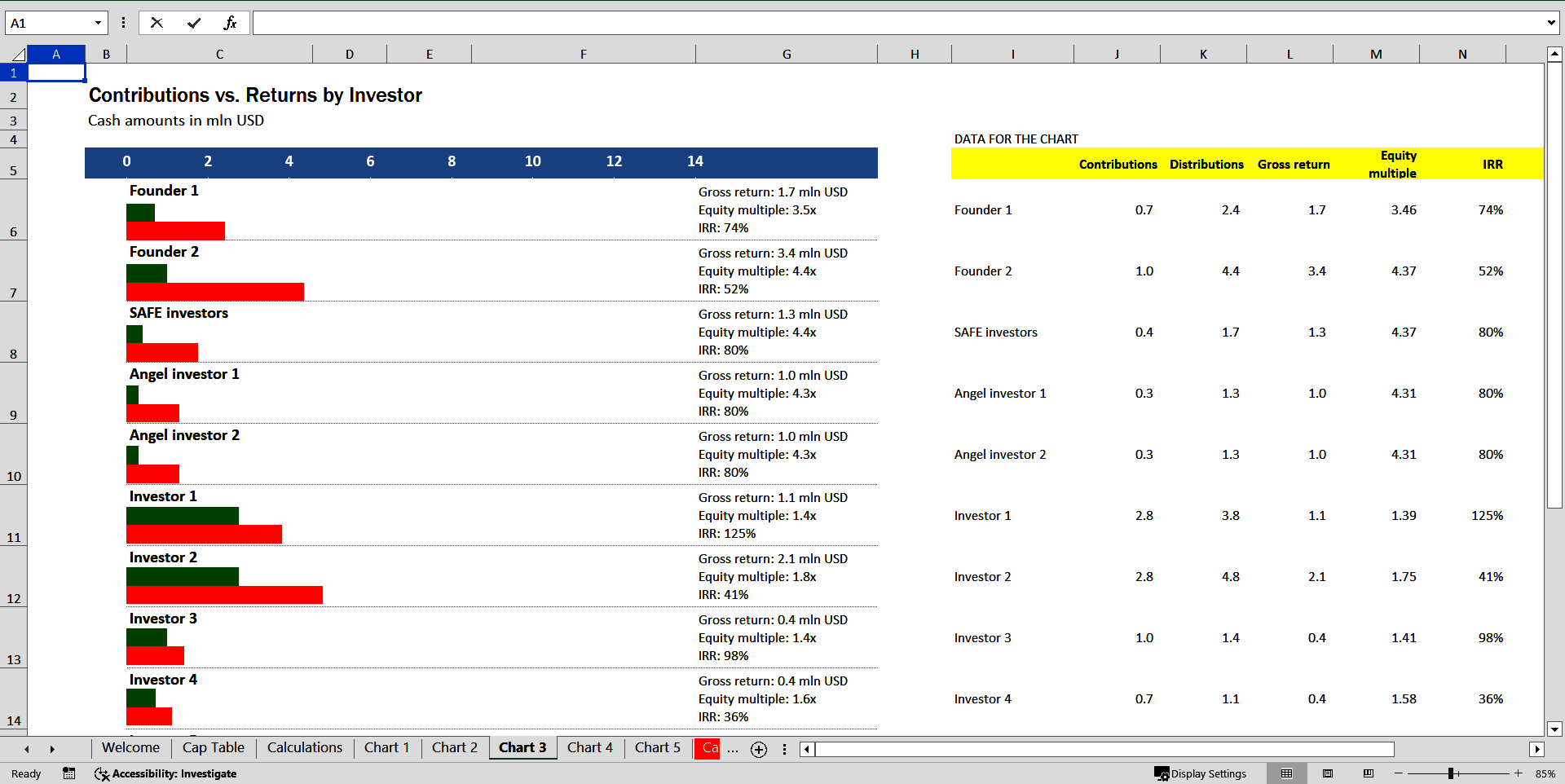
• a snapshot of each investors contributions, distributions and profitability
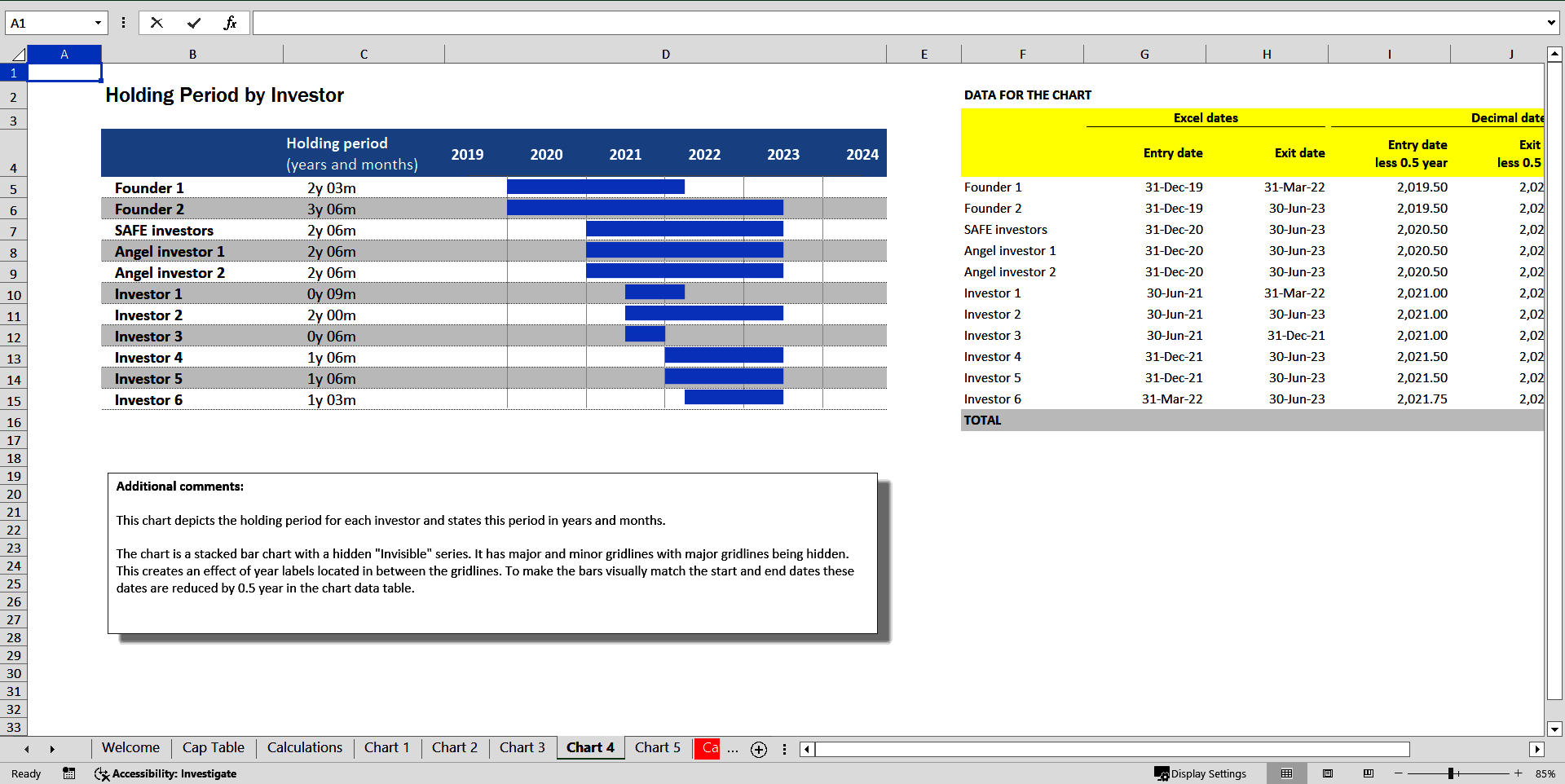
• holding period for each investor
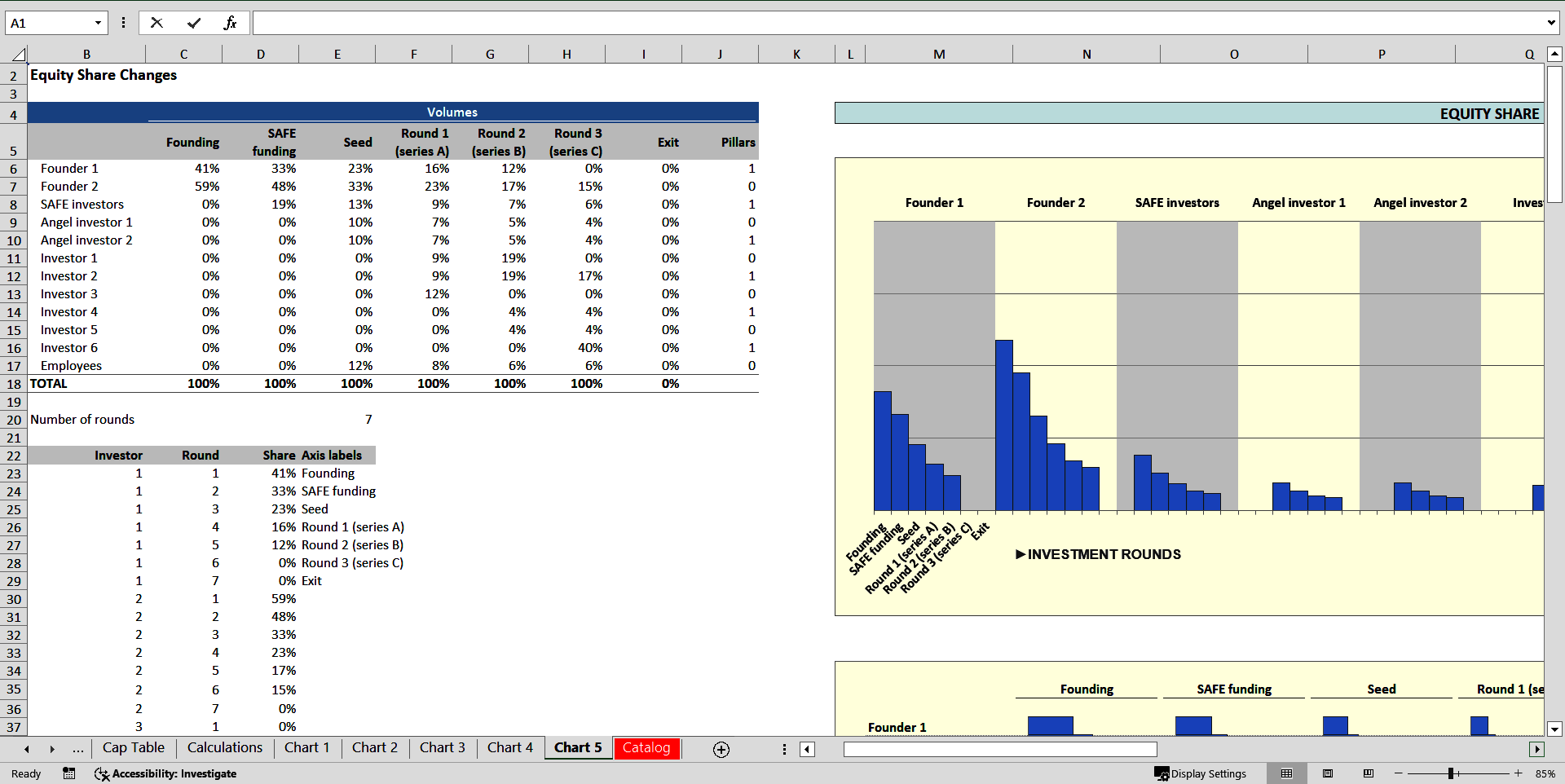
• equity share by shareholder and by investing round
Got a question about the product? Email us at support@flevy.com or ask the author directly by using the "Ask the Author a Question" form. If you cannot view the preview above this document description, go here to view the large preview instead.
TOPIC FAQ
What is a startup cap table and what information does it typically show?
A cap table records equity ownership, investor contributions, and how shareholdings change when new financing occurs. It tracks dilution caused by new investment and market-value uplifts, showing equity shares by shareholder and by investing round, commonly across Series A, B, and C.How many funding rounds should I model for a startup cap table?
Many real-world startups experience up to 3 main rounds (Series A, B, C),, but scenarios can extend further for planning. A template that supports more rounds lets you test later-stage dilution; the referenced model supports up to 6 investment rounds.How do SAFEs, convertible notes, and employee stock options affect cap tables?
SAFEs and convertible notes typically convert into equity at financing events, and employee stock options dilute ownership when exercised, altering post-money share distribution and investor returns. Cap Table with Derivative Instruments, Returns and Charts includes calculations for SAFE, employee stock options, and convertible notes.What investor profitability metrics should I calculate in a cap table?
Useful investor-level metrics quantify returns and include internal rate of return (IRR), equity multiple, and gross return, which together show time-adjusted and absolute performance for each investor; these 3 metrics are included in the discussed model.Which charts help communicate cap table outcomes to stakeholders?
Visuals that show valuation changes over rounds, composition of final equity value, investor contributions versus distributions, holding periods, and equity share by shareholder and round aid communication. The product provides 5 professionally designed charts covering these views.What should I look for when choosing a cap table spreadsheet template?
Prioritize templates that model multiple funding rounds, support common derivative instruments (SAFE, convertibles, options), compute investor-return metrics, and include investor-level reporting and charts; for example, templates that handle up to 6 rounds and calculate IRR, equity multiple, and gross return.How can I use a cap table template to evaluate exit scenarios?
Model how exit valuation and investor contributions convert into distributions, then compute investor IRR and equity multiples to compare outcomes across scenarios. A template that supports full exit modeling and investor-level returns—such as Cap Table with Derivative Instruments, Returns and Charts—facilitates that analysis.How should I assess the cost versus value of purchasing a cap table template?
Evaluate whether the template saves model-building time and provides the specific outputs you need—multiple rounds, instrument support, investor-return metrics, and charts—because those features deliver quantifiable outputs like IRR and equity multiple calculations rather than a generic spreadsheet.Source: Best Practices in Private Equity, Financing Excel: Cap Table with Derivative Instruments, Returns and Charts Excel (XLSX) Spreadsheet, Andrei Okhlopkov
ABOUT THE AUTHOR

- Financial Modeling
• Business Analysis
• Excel Fundamentals
• Visual Basic for Applications
Ask the Author a Question
You must be logged in to contact the author.




























