 Click main image to view in full screen.
Beyond Gas: Firming Technologies & Flexibility Architecture – PDF
PDF document 12 Pages


BENEFITS OF THIS DOWNLOADABLE PDF DOCUMENT
- Provides a structured framework for identifying which functions of natural gas must be replaced before dispatchable thermal capacity can be retired.
- Enables executives to compare firming technologies using response time, duration, physical constraints, maturity, infrastructure complexity, and strategic fit.
- Introduces the FIRMING STACK™ and Functional Substitution Model for sequencing flexibility resources from fast balancing to deep firming.
ENERGY INDUSTRY PDF DESCRIPTION
Beyond Gas: Firming Technologies & Flexibility Architecture is a SurEniQ Mini Intelligence asset examining one of the most important challenges in power-system decarbonization: how to replace the operational functions of natural gas as variable renewable energy penetration increases.
Using Singapore as a high-constraint case study, this intelligence examines the difference between replacing energy and replacing firming capacity. Solar photovoltaic generation can provide additional low-carbon megawatt-hours, but renewable generation alone does not automatically replace the fast response, balancing, reserve capacity, and reliability functions traditionally provided by dispatchable thermal generation.
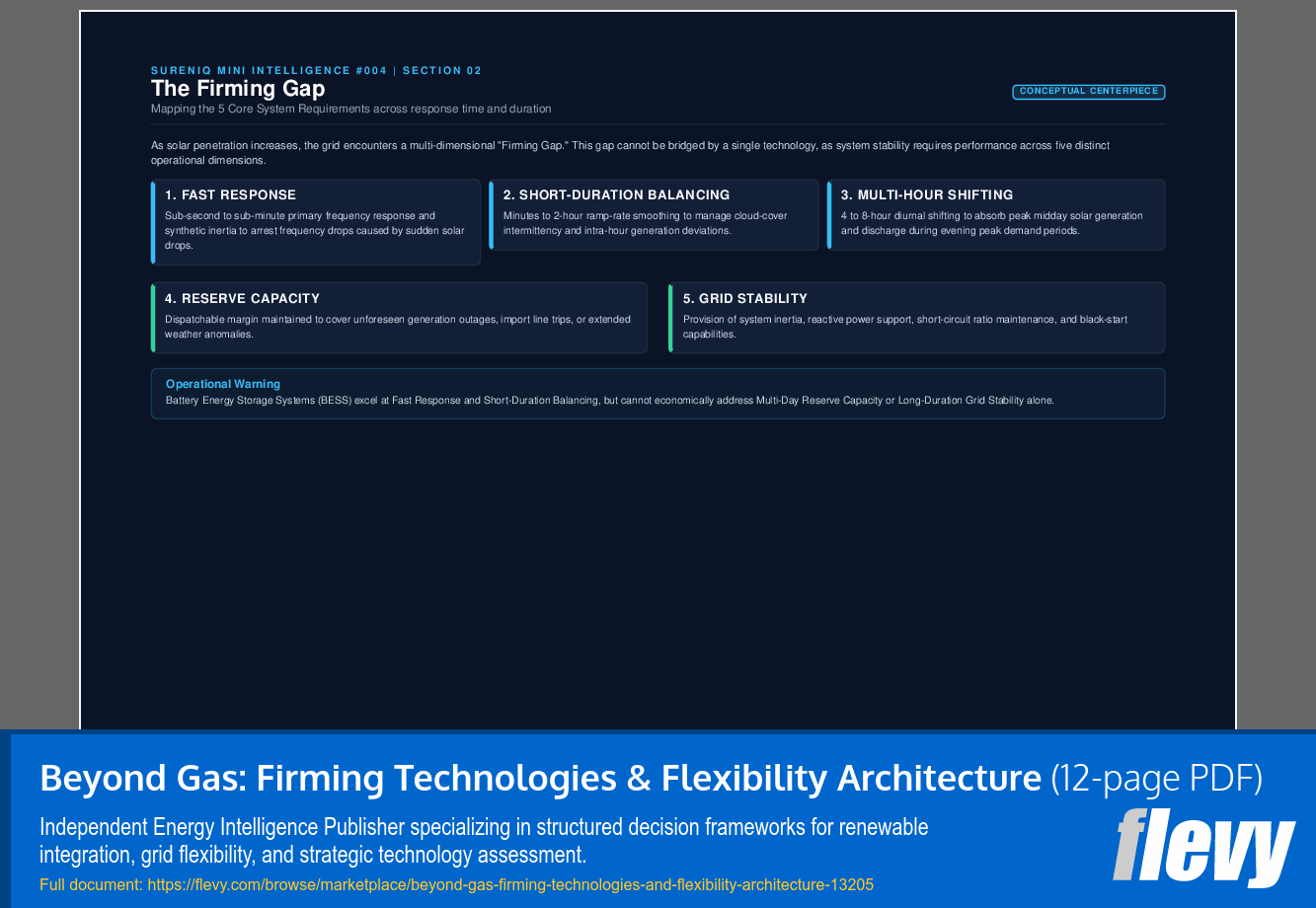
The analysis identifies five core firming requirements: fast response, short-duration balancing, multi-hour shifting, reserve capacity, and grid stability. It then evaluates a range of potential firming technologies and system resources, including grid-scale battery energy storage systems (BESS), demand response, regional electricity interconnection, thermal and long-duration energy storage, hydrogen/ammonia-enabled generation, and small modular reactors.
Rather than treating these technologies as interchangeable alternatives, the intelligence introduces the FIRMING STACK™, a portfolio hierarchy that organizes firming capabilities into four progressive layers: Demand Flexibility, Fast Balancing, Regional Firming, and Deep Firming. This framework is designed to show how different resources can progressively substitute individual functions currently provided by natural gas.
The intelligence also applies a Singapore-specific strategic filter based on extreme land scarcity, a highly reliable urban grid, and substantial energy-import dependence. These constraints demonstrate why technology selection cannot be based solely on global technology trends or theoretical technical potential.
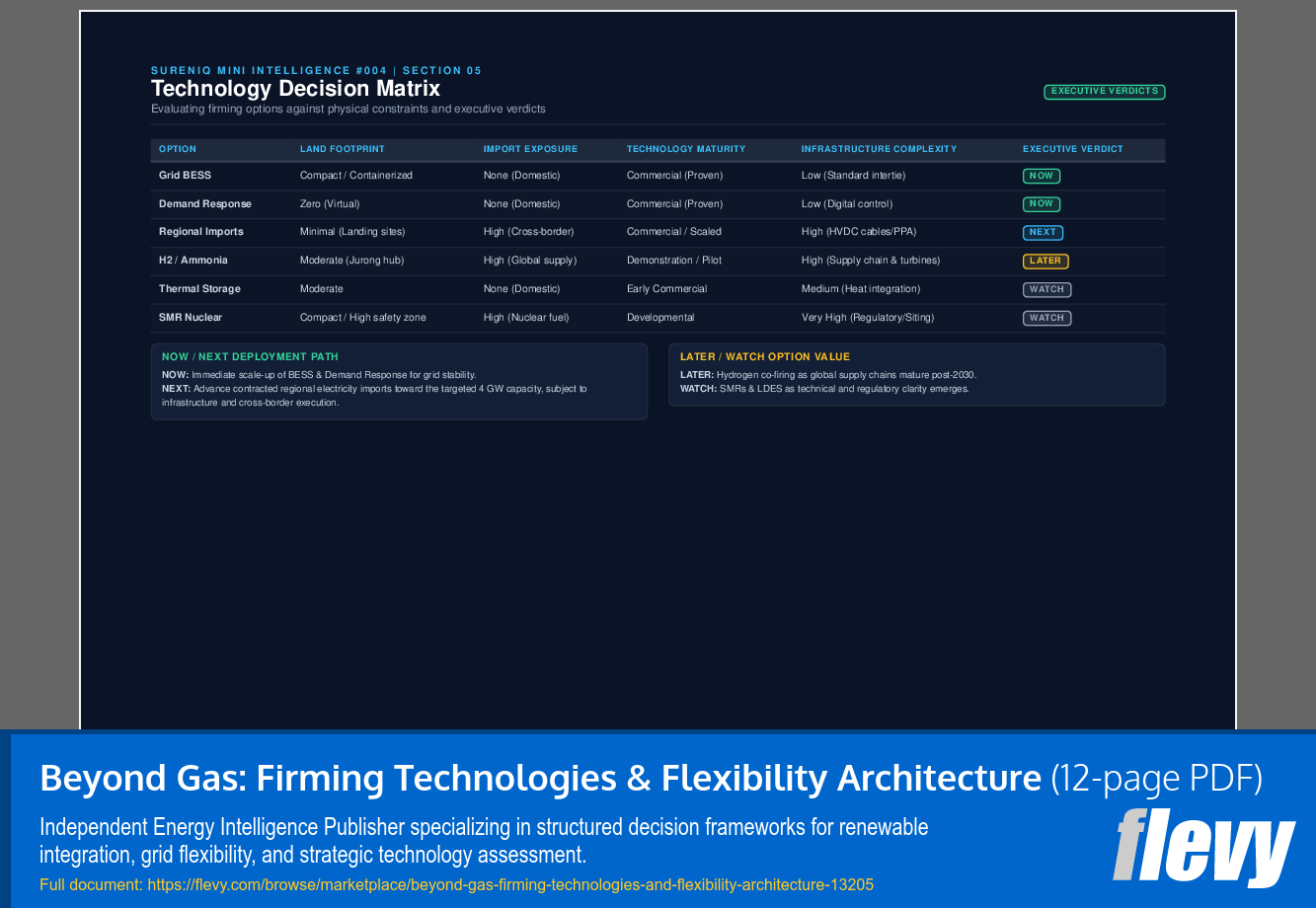
A Technology Decision Matrix evaluates firming options against land footprint, import exposure, technology maturity, infrastructure complexity, and an executive deployment verdict of NOW, NEXT, LATER, or WATCH. Three transition scenarios are then compared: a gas-heavy transition, a regional grid plus BESS architecture, and a deeper low-carbon firming pathway.
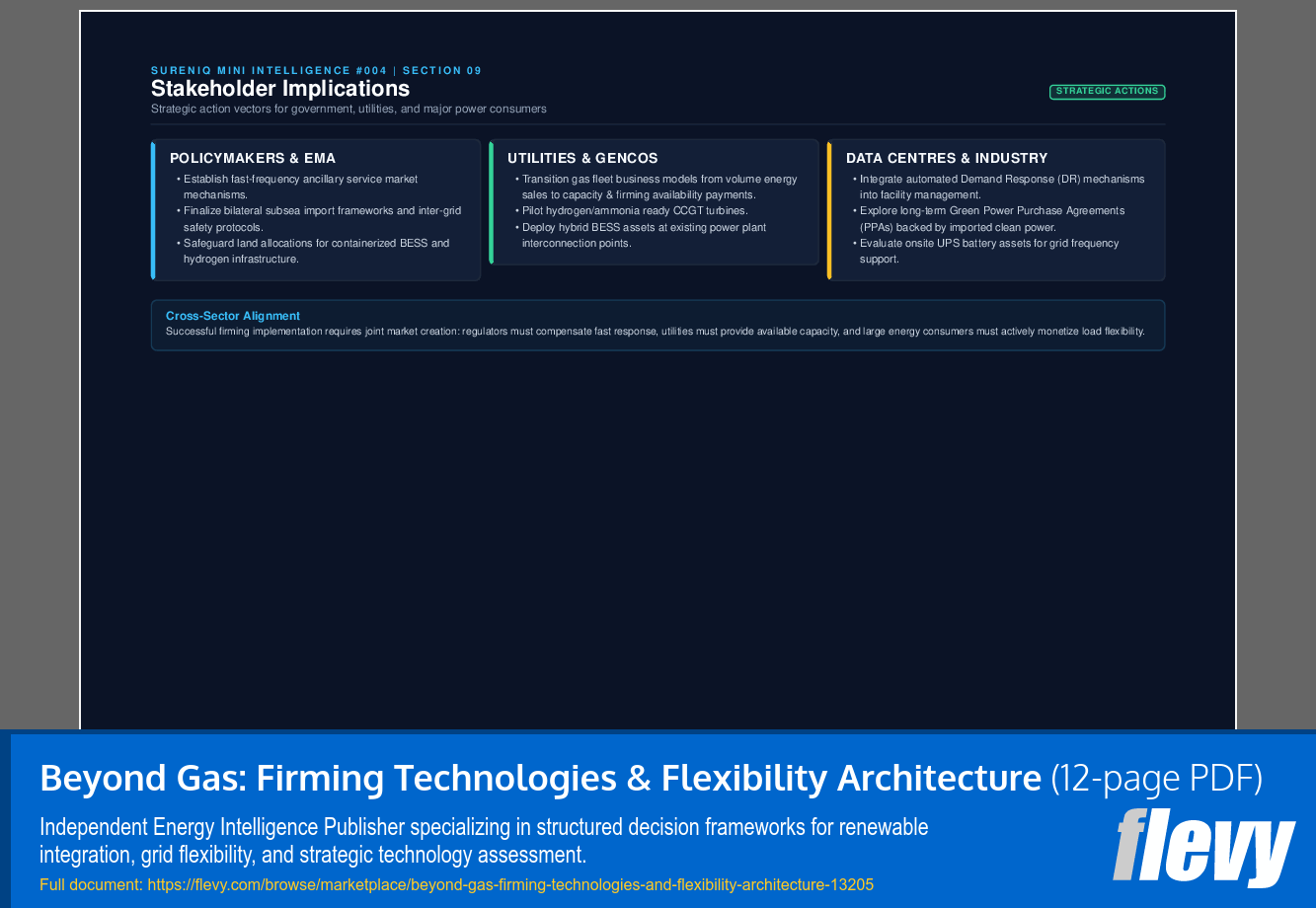
The document concludes with an Executive Decision Framework and stakeholder implications for policymakers, utilities and generators, data centres, and major industrial power consumers.
At the center of the intelligence is the Gas Replacement Principle:
"Do not replace the fuel before replacing the function."
The resulting analytical discipline is functional substitution, not fuel substitution. This provides decision-makers with a structured way to evaluate firming technologies, transition sequencing, infrastructure dependencies, and reliability risks as power systems move toward higher renewable penetration.
This intelligence is particularly relevant for energy-sector executives, utilities and generators, policymakers, infrastructure investors, major electricity consumers, data-centre operators, and technology providers evaluating the next generation of grid flexibility and firming infrastructure.
Got a question about the product? Email us at support@flevy.com or ask the author directly by using the "Ask the Author a Question" form. If you cannot view the preview above this document description, go here to view the large preview instead.
Source: Best Practices in Energy Industry, Renewable Energy PDF: Beyond Gas: Firming Technologies & Flexibility Architecture PDF (PDF) Document, Wisnu Pandega Wardana
ABOUT THE AUTHOR

I am an independent Industrial Intelligence and Strategic Innovation Publisher focused on developing structured business intelligence, innovation frameworks, and opportunity-oriented research for decision-makers.
My work focuses on translating emerging technologies, industrial transformation, sustainability, resource efficiency, and market shifts into structured intelligence assets that
... [read more]
Ask the Author a Question
You must be logged in to contact the author.




























