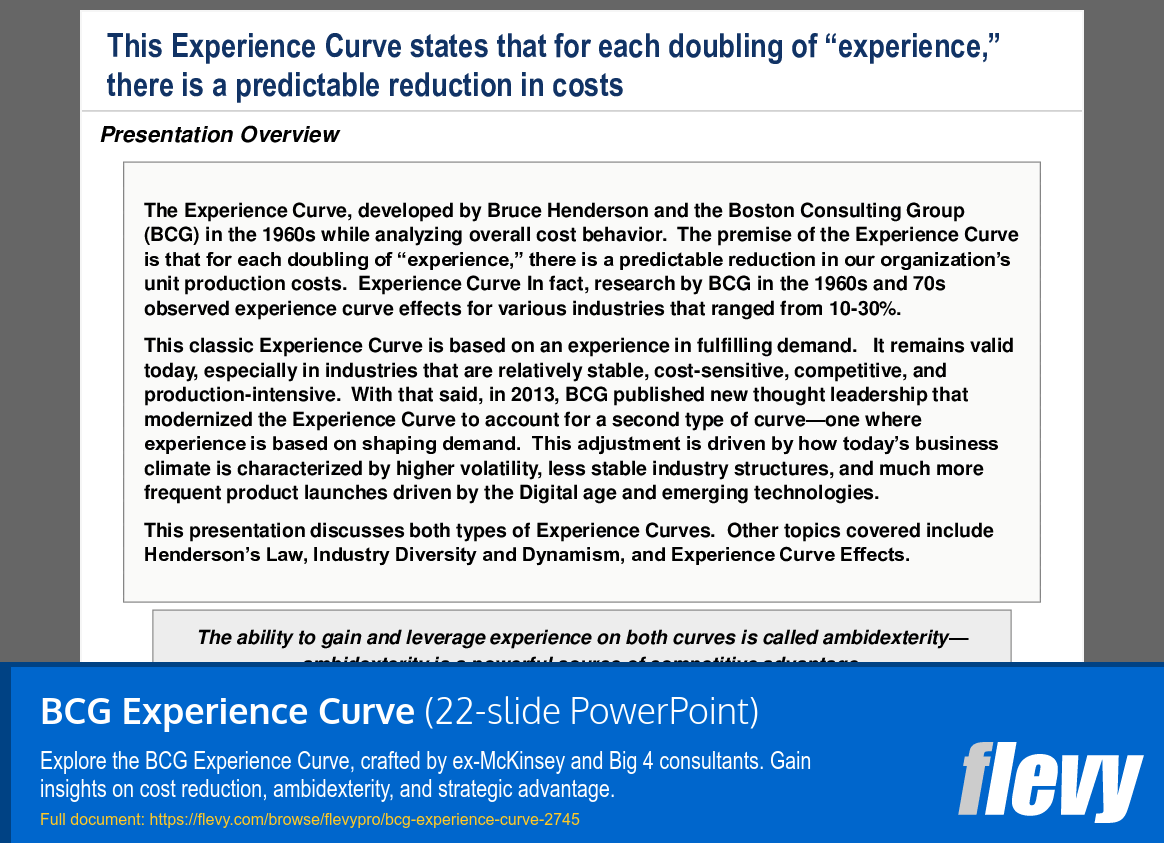
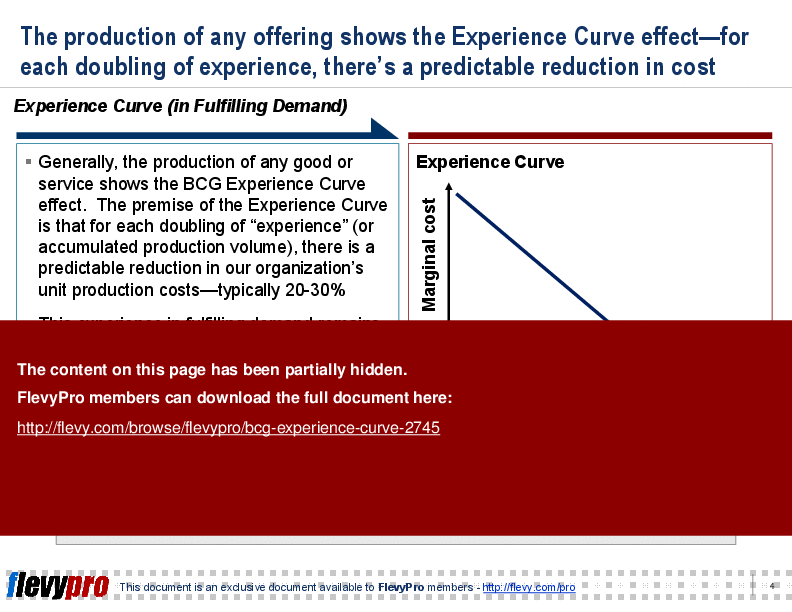

The Experience Curve, developed by Bruce Henderson and the Boston Consulting Group (BCG) in the 1960s while analyzing overall cost behavior. The premise of the Experience Curve is that for each doubling of "experience," there is a predictable reduction in our organization's unit production costs. Experience Curve In fact, research by BCG in the 1960s and 70s observed experience curve effects for various industries that ranged from 10-30%.
This classic Experience Curve is based on an experience in fulfilling demand. It remains valid today, especially in industries that are relatively stable, cost-sensitive, competitive, and production-intensive. With that said, in 2013, BCG published new thought leadership that modernized the Experience Curve to account for a second type of curve—one where experience is based on shaping demand. This adjustment is driven by how today's business climate is characterized by higher volatility, less stable industry structures, and much more frequent product launches driven by the Digital age and emerging technologies. The ability to gain and leverage experience on both curves is called ambidexterity. Ambidexterity is a powerful source of competitive advantage.
This presentation discusses both types of Experience Curves. Other topics covered include Henderson’s Law, Industry Diversity and Dynamism, and Experience Curve Effects.
This PPT provides a comprehensive analysis of the BCG Experience Curve, detailing its impact on cost reduction and competitive advantage. It includes a deep dive into Henderson’s Law and the mathematical underpinnings of the curve. The presentation also explores the eight primary drivers behind Experience Curve effects, such as technology-driven learning and product redesign. Key questions are posed to help executives evaluate the balance between fulfilling and shaping demand in their industries. Real-world examples, like Facebook's strategy to outpace Myspace, illustrate the practical application of these concepts. This resource is essential for leaders aiming to leverage experience for strategic gains.
Got a question about this document? Email us at flevypro@flevy.com.
Executive Summary
The BCG Experience Curve presentation provides a comprehensive exploration of the Experience Curve, a concept developed by Bruce Henderson and the Boston Consulting Group (BCG) in the 1960s. This framework illustrates how organizations can achieve predictable reductions in unit production costs through accumulated experience, typically ranging from 20-30% for each doubling of output. The presentation discusses both traditional experience in fulfilling demand and a modern adaptation focusing on shaping demand, essential for navigating today's volatile business environments. By leveraging insights from this framework, corporate executives and consultants can enhance operational efficiency and strategic advantage.
Who This Is For and When to Use
• Corporate executives seeking to understand cost reduction strategies
• Consultants advising organizations on operational efficiency
• Business leaders in production-intensive industries
• Teams involved in product development and innovation
Best-fit moments to use this deck:
• During strategic planning sessions to evaluate cost reduction opportunities
• When launching new products to understand demand shaping
• In workshops focused on operational efficiency and competitive advantage
• For training sessions aimed at enhancing team understanding of the Experience Curve
Learning Objectives
• Define the BCG Experience Curve and its implications for cost management
• Analyze the differences between fulfilling and shaping demand
• Establish strategies for leveraging experience to reduce costs
• Identify key factors driving experience curve effects in various industries
• Develop a framework for assessing organizational ambidexterity
• Create actionable plans for implementing insights from the Experience Curve
Table of Contents
• Overview (page 3)
• Reasons for Experience Curve Effects (page 7)
• Experience at Shaping Demand (page 10)
• Key Questions (page 14)
• Templates (page 17)
Primary Topics Covered
• Overview of the Experience Curve - Introduces the concept and its historical context, emphasizing cost reduction through experience accumulation.
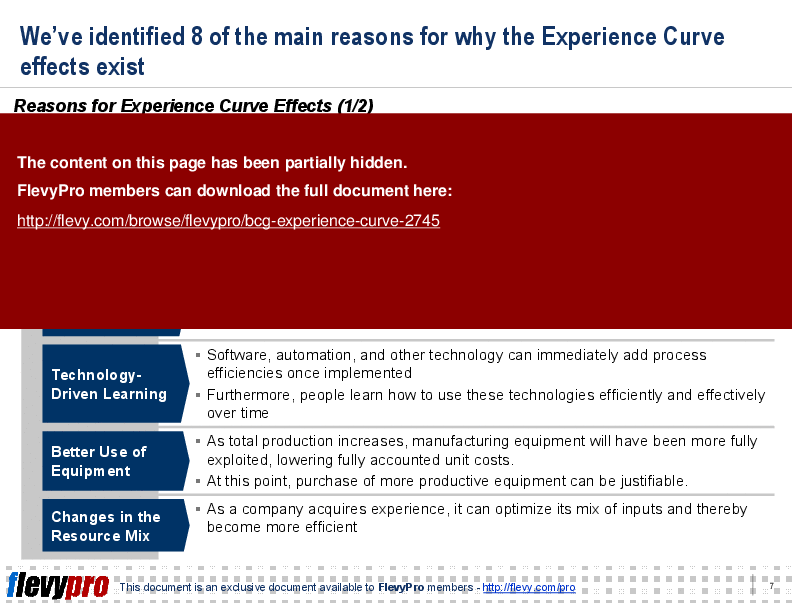
• Reasons for Experience Curve Effects - Explains the key factors contributing to the Experience Curve, including labor efficiency and technology-driven learning.
• Experience at Shaping Demand - Discusses the importance of shaping demand in modern industries and how it complements fulfilling demand.
• Key Questions for Strategic Evaluation - Provides critical questions for organizations to assess their balance between fulfilling and shaping demand.
• Ambidexterity Framework - Outlines approaches to achieving ambidexterity in organizations, enhancing their competitive positioning.
Deliverables, Templates, and Tools
• Experience Curve analysis template for assessing cost reduction opportunities
• Framework for evaluating experience in fulfilling vs. shaping demand
• Checklist for identifying key factors driving experience curve effects
• Action plan template for implementing insights from the Experience Curve
• Workshop agenda template for discussing ambidexterity strategies
Slide Highlights
• Overview slide detailing the BCG Experience Curve and its significance
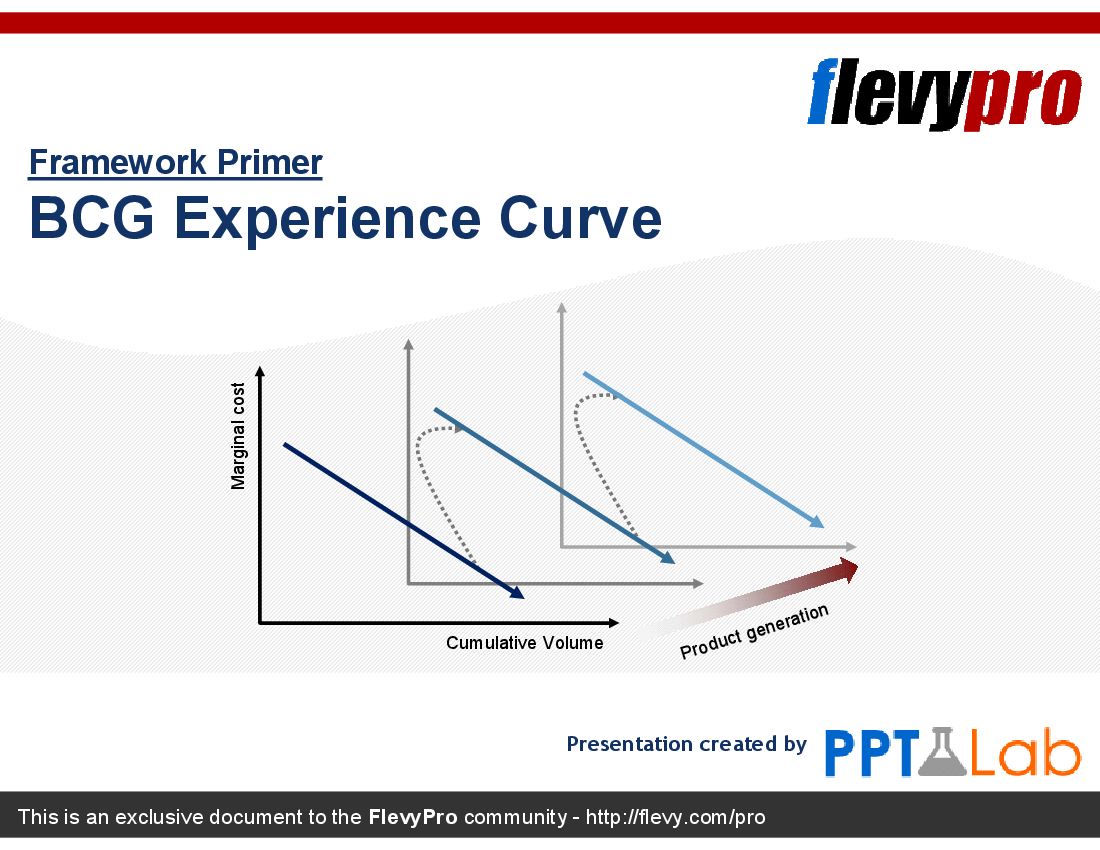
• Visual representation of the Experience Curve illustrating cost reduction with increased output
• Slide outlining reasons for experience curve effects, emphasizing labor efficiency and technology
• Comparison slide between experience at fulfilling demand and experience at shaping demand
• Case study slide featuring Facebook's success in shaping demand through rapid innovation
Potential Workshop Agenda
Understanding the Experience Curve (90 minutes)
• Introduction to the BCG Experience Curve and its relevance
• Discussion on cost reduction strategies through experience
• Interactive session on identifying industry-specific experience curve effects
Evaluating Demand Shaping (60 minutes)
• Analysis of case studies on successful demand shaping
• Group activity to brainstorm strategies for enhancing demand shaping in participants' organizations
Customization Guidance
• Tailor the Experience Curve analysis template to reflect specific industry metrics and benchmarks
• Adjust the workshop agenda to focus on particular challenges faced by the organization
• Incorporate company-specific case studies into the presentation to enhance relevance
Secondary Topics Covered
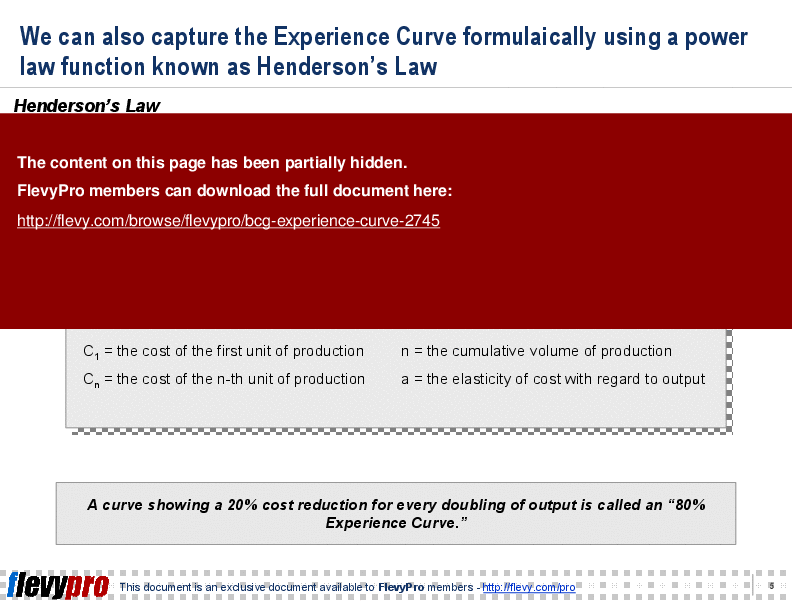
• Henderson’s Law and its mathematical representation
• The impact of technological advancements on experience curve effects
• Strategies for fostering a culture of innovation within organizations
• The role of market dynamics in shaping demand and experience
Topic FAQ
Document FAQ
These are questions addressed within this presentation.
What is the BCG Experience Curve?
The BCG Experience Curve illustrates how organizations can achieve predictable reductions in unit production costs through accumulated experience, typically resulting in a 20-30% cost reduction for each doubling of output.
How does the Experience Curve apply to modern industries?
Modern adaptations of the Experience Curve emphasize the importance of shaping demand, particularly in fast-paced industries characterized by frequent product launches and technological advancements.
What are the key factors driving experience curve effects?
Key factors include labor efficiency, standardization, technology-driven learning, and better use of equipment, all contributing to improved operational efficiency.
How can organizations leverage the Experience Curve for competitive advantage?
Organizations can leverage the Experience Curve by systematically analyzing their production processes, identifying areas for cost reduction, and fostering a culture of innovation to enhance demand shaping.
What is ambidexterity in the context of the Experience Curve?
Ambidexterity refers to an organization's ability to balance experience in fulfilling demand with experience in shaping demand, allowing for sustained competitive advantage.
How can the Experience Curve be applied in strategic planning?
The Experience Curve can inform strategic planning by identifying cost reduction opportunities, guiding product development strategies, and enhancing operational efficiency.
What tools are available for analyzing the Experience Curve?
Tools include templates for cost analysis, frameworks for evaluating demand shaping, and checklists for assessing experience curve effects in specific industries.
How can organizations assess their balance between fulfilling and shaping demand?
Organizations can use key questions and evaluation frameworks provided in the presentation to analyze their current capabilities and identify areas for improvement.
Glossary
• Experience Curve - A framework illustrating cost reductions achieved through accumulated experience.
• Henderson’s Law - A mathematical representation of the Experience Curve, defining cost reduction relative to cumulative output.
• Ambidexterity - The ability to balance experience in fulfilling and shaping demand for competitive advantage.
• Labor Efficiency - The improvement in worker productivity and skill over time, contributing to cost reductions.
• Technology-Driven Learning - The process of gaining efficiencies through the implementation and effective use of technology.
• Standardization - The process of making products and processes uniform to enhance efficiency.
• Demand Shaping - The strategic creation of demand for new products and services in response to market dynamics.
• Cost Reduction - The process of lowering operational costs through various efficiency measures.
• Cumulative Volume - The total amount of output produced over time, impacting cost structures.
• Market Dynamics - The forces that influence the behavior of buyers and sellers in a market.
• Product Generation - The cycle of developing and launching new products to meet market demand.
• Innovation - The introduction of new ideas, products, or processes to improve efficiency and effectiveness.
• Efficiency Gains - Improvements in productivity that lead to lower costs and increased output.
• Competitive Advantage - The favorable position an organization holds over its competitors in the market.
• Operational Efficiency - The ability to deliver products or services in the most cost-effective manner without compromising quality.
• Industry Diversity - The variation in characteristics and behaviors across different industries affecting experience curve effects.
• Dynamism - The degree of change and innovation within an industry impacting demand shaping strategies.
• Separation - An approach to managing different styles of experience in organizations.
• Switching - The intentional management of transitioning between different styles of experience.
• Self-Organization - Empowering individuals within an organization to choose appropriate styles for their work.
• External Ecosystem - Sourcing styles and practices from outside the organization to enhance experience management.
Source: Best Practices in Experience Curve, Ambidexterity PowerPoint Slides: BCG Experience Curve PowerPoint (PPT) Presentation Slide Deck, PPT Lab
Did you need more documents?
Consider a FlevyPro subscription from $39/month. View plans here.
For $10.00 more, you can download this document plus 2 more FlevyPro documents. That's just $13 each.
|
Receive our FREE presentation on Operational Excellence
This 50-slide presentation provides a high-level introduction to the 4 Building Blocks of Operational Excellence. Achieving OpEx requires the implementation of a Business Execution System that integrates these 4 building blocks. |