
 Click main image to view in full screen. Unlock all 13 preview images:
AI Data Center Development Conditionality Architecture™ – PDF
PDF document + PowerPoint (PPTX) 34 Pages


BENEFITS OF THIS DOWNLOADABLE PDF DOCUMENT
- Provides an end-to-end 8-Gate decision architecture for evaluating, conditioning, approving, monitoring, and reassessing AI data center development.
- Translates complex grid, water, infrastructure, regulatory, and community constraints into practical developer obligations and conditional-access decisions.
- Provides reusable executive tools for cost attribution, lifecycle governance, transition planning, implementation, and cross-jurisdiction adaptation.
GOVERNMENT PDF DESCRIPTION
The AI Data Center Development Conditionality Architecture™ is a 33-slide executive intelligence playbook for decision-makers navigating the growing infrastructure, resource, regulatory, and economic pressures created by large-scale AI data center development.
As AI infrastructure expands, data center projects increasingly compete for scarce host-system capacity—including electricity, transmission, water, land, public infrastructure, and community resources. Traditional permitting models can become strained when project demand, grid conditions, water availability, and infrastructure requirements change over the development lifecycle.
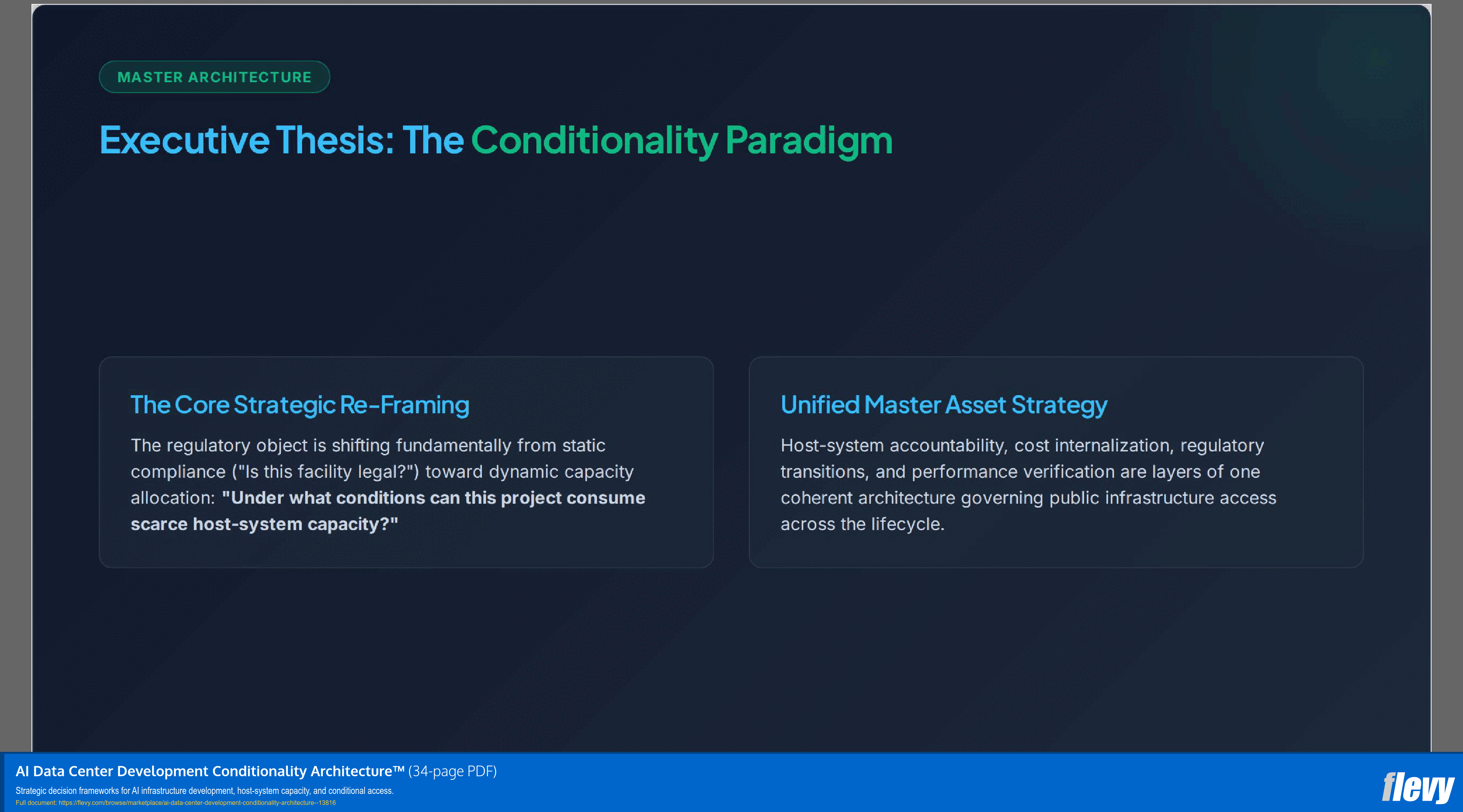
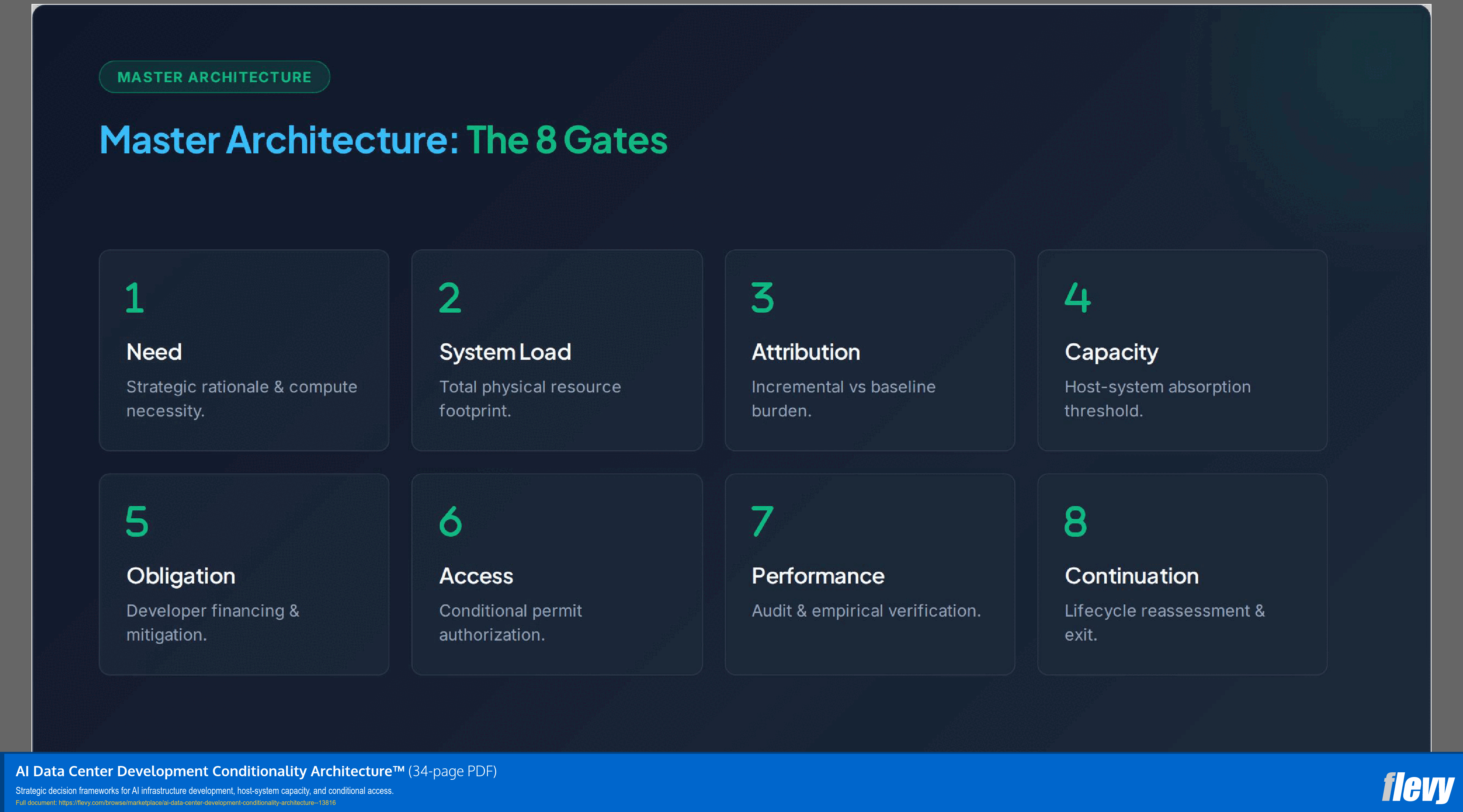
This playbook introduces a practical 8-Gate Conditionality Architecture that reframes data center development from static permitting toward conditional access and lifecycle accountability.
The architecture connects:
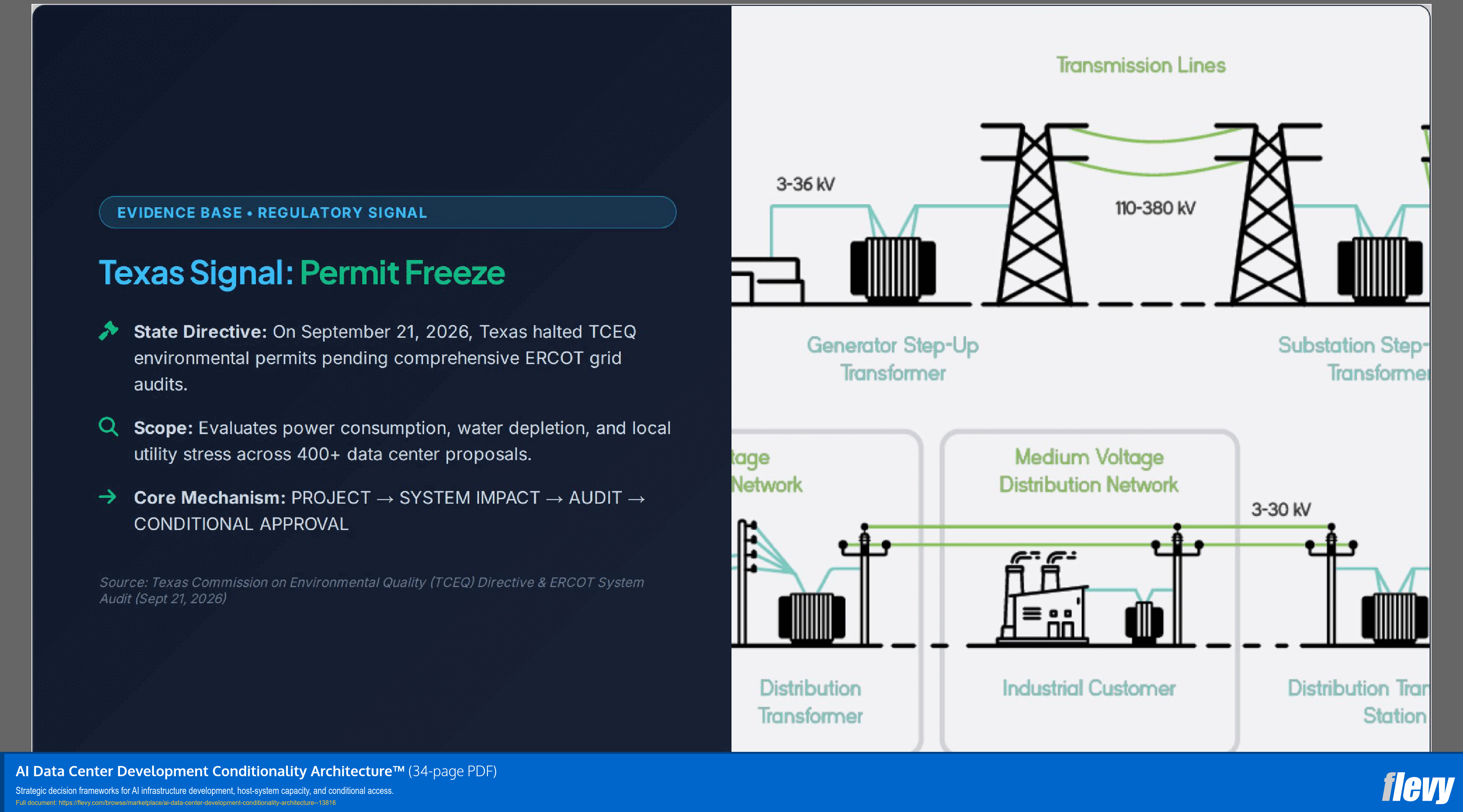
• Need Evaluation – determine strategic rationale, compute necessity, location requirements, and expansion trajectory.
• System Load Analysis – assess electricity, grid, water, wastewater, infrastructure, and land requirements.
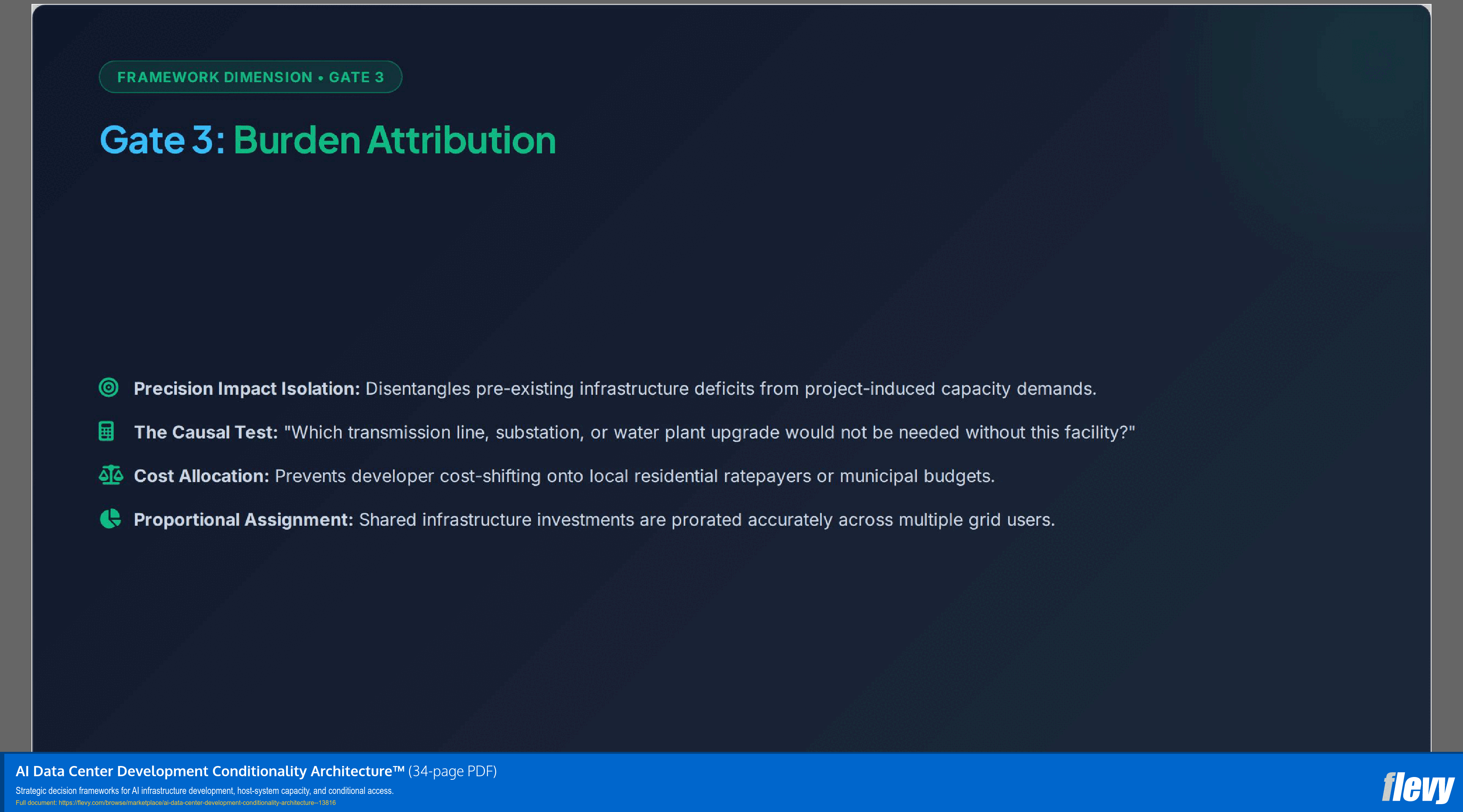
• Burden Attribution – distinguish project-induced infrastructure requirements from pre-existing system deficits and establish a basis for cost allocation.
• Capacity Thresholds – evaluate host-system absorption capacity, cumulative demand, resource constraints, and systemic risk.
• Obligation Classes – structure potential developer contributions across financing, infrastructure, flexibility, disclosure, mitigation, and restoration.
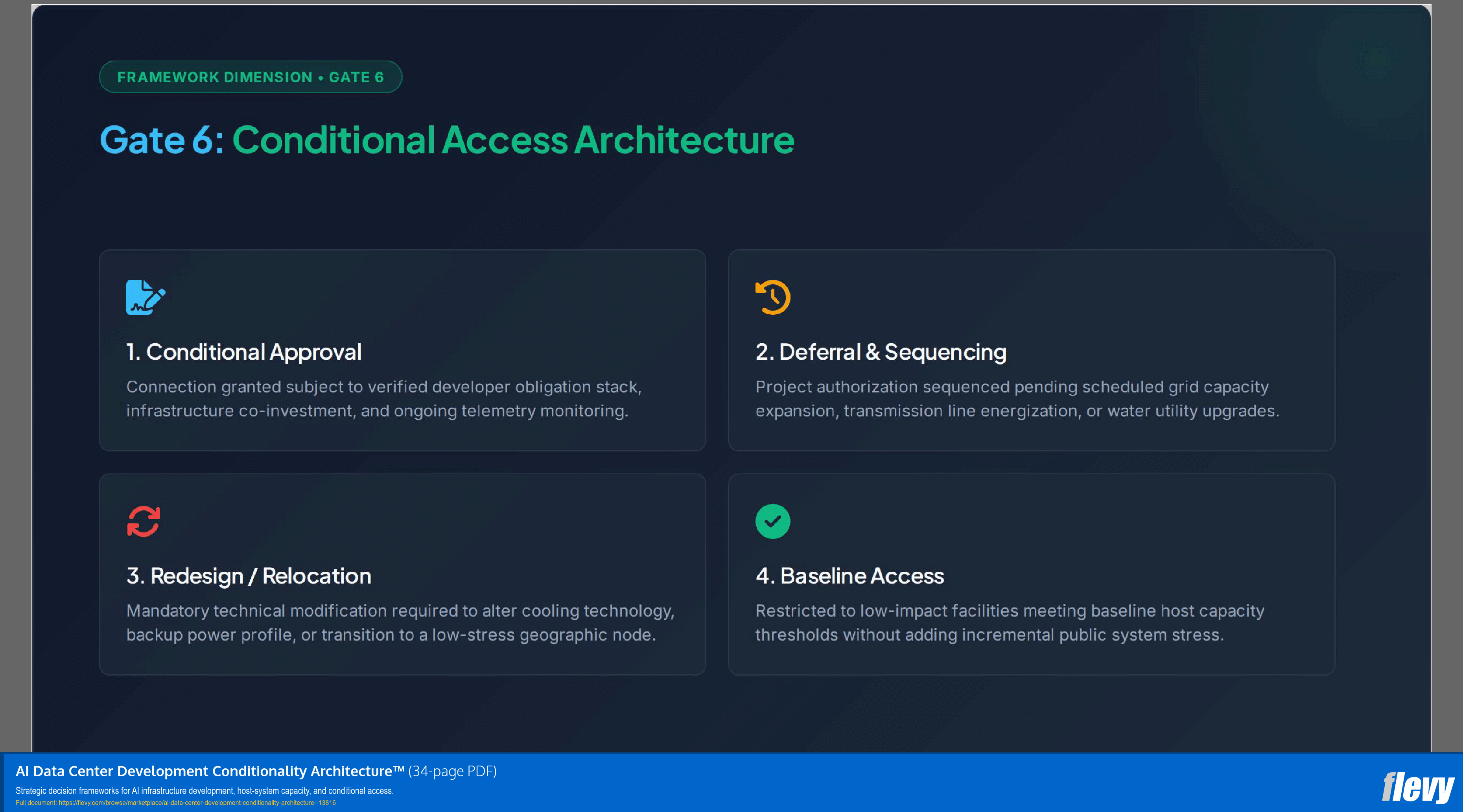
• Conditional Access – translate assessment results into conditional approval, deferral/sequencing, redesign/relocation, or baseline access pathways.
• Monitored Performance – establish ongoing verification of resource use, efficiency, curtailment readiness, and approved commitments.
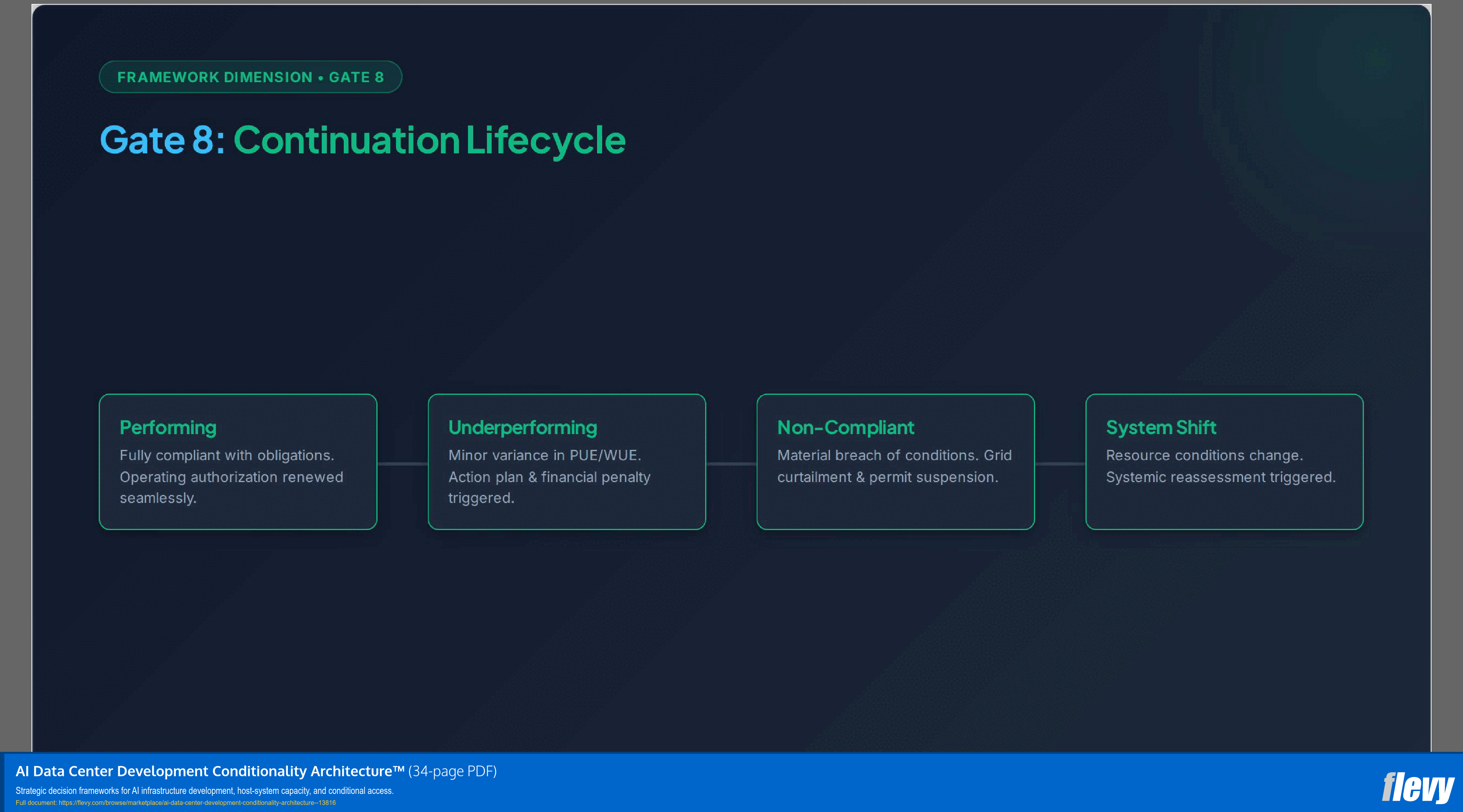
• Continuation Lifecycle – create mechanisms for continued operation, remediation, reassessment, or escalation when performance or system conditions change.
The playbook also introduces five host-system domains—Grid, Water, Land, Community, and Economy—along with a Conditionality Matrix, Project Lifecycle Overlay, Transition Framework, Conditionality Record™, 90-Day Implementation Roadmap, Global Executive Decision Checklist, and Cross-Jurisdiction Adaptation Methodology.
The framework is designed to transfer across jurisdictions without assuming that one regulatory model or threshold applies universally. It separates documented jurisdictional signals from framework synthesis and illustrative governance options, enabling executives, infrastructure planners, utilities, developers, and public-sector decision-makers to adapt the architecture to local market structures, resource conditions, infrastructure regimes, and regulatory environments.
Got a question about the product? Email us at support@flevy.com or ask the author directly by using the "Ask the Author a Question" form. If you cannot view the preview above this document description, go here to view the large preview instead.
Source: Best Practices in Government, Data Center PDF: AI Data Center Development Conditionality Architecture™ PDF (PDF) Document, Wisnu Pandega Wardana
ABOUT THE AUTHOR

I am an independent Industrial Intelligence and Strategic Innovation Publisher focused on developing structured business intelligence, innovation frameworks, and opportunity-oriented research for decision-makers.
My work focuses on translating emerging technologies, industrial transformation, sustainability, resource efficiency, and market shifts into structured intelligence assets that
... [read more]
Ask the Author a Question
You must be logged in to contact the author.




























