
This framework is created by former McKinsey, BCG, Deloitte, EY, and Capgemini consultants and provides actionable insights for Agriculture Industry Value Chain Analysis.

Provides a framework for examining the Agriculture Industry.
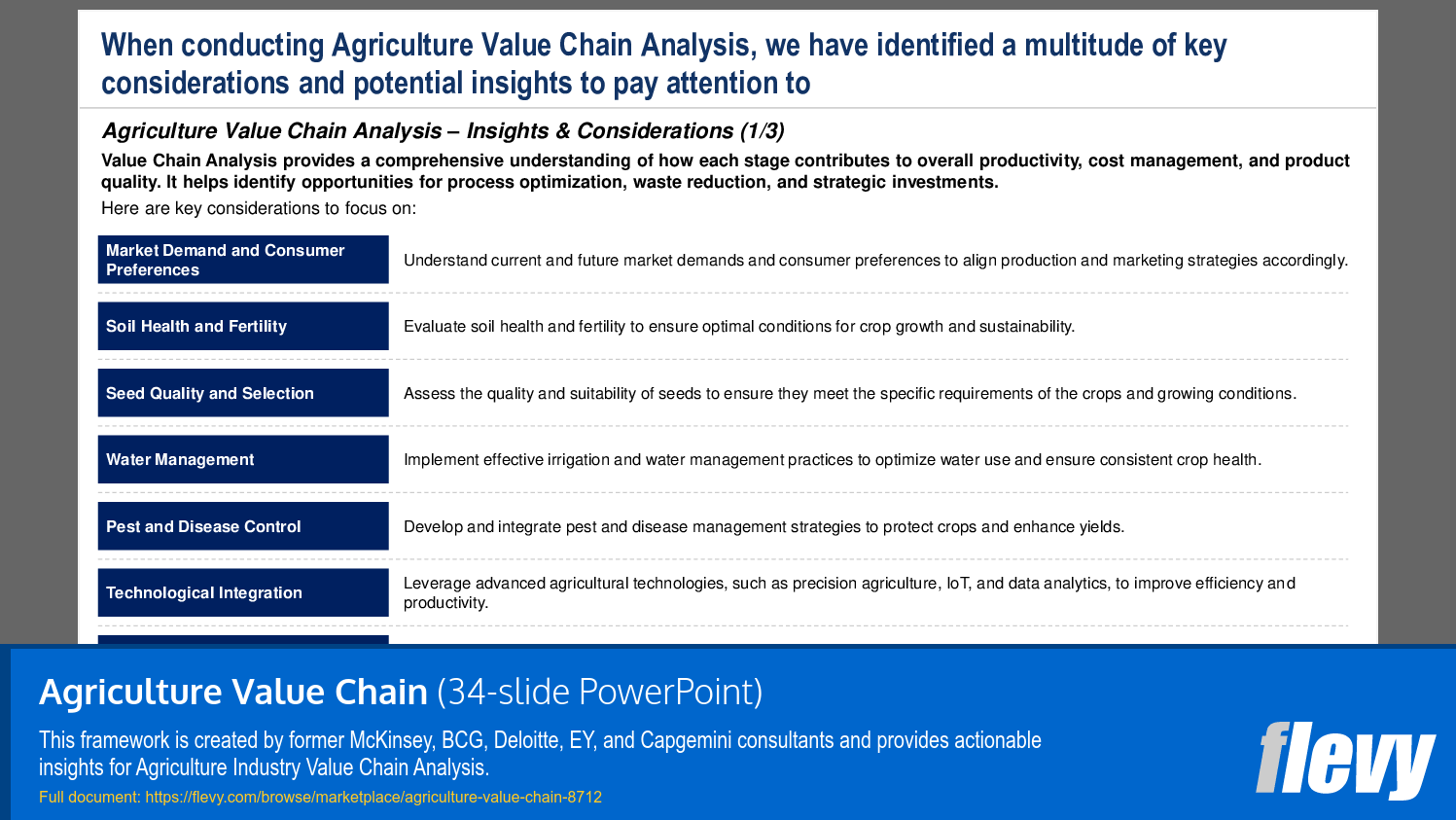
Identifies 20 important insights and considerations for Agriculture Value Chain Analysis.
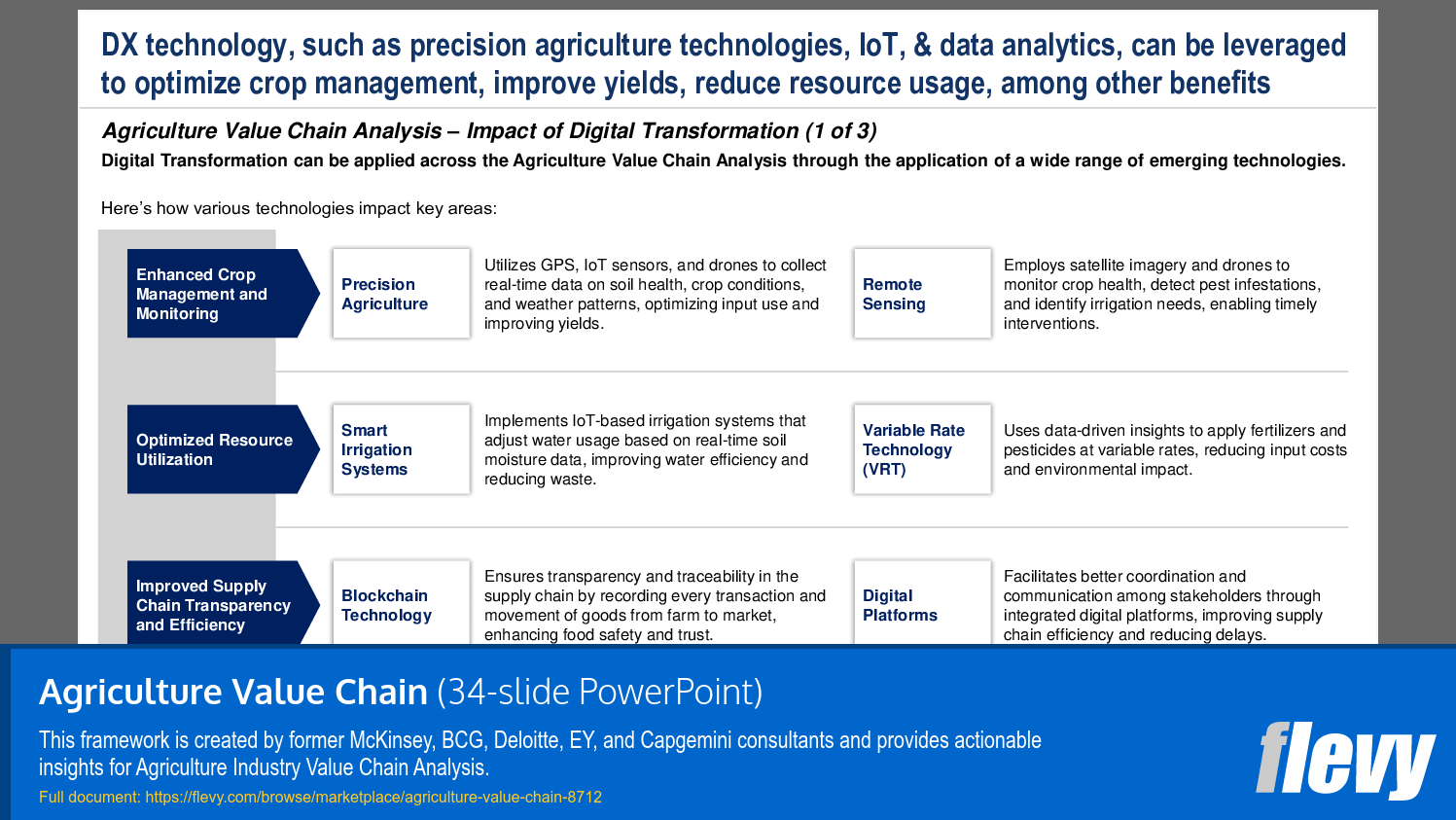
Provides a detailed breakdown of the impact of Digital Transformation across the Agriculture Value Chain.
VALUE CHAIN ANALYSIS PPT DESCRIPTION
Editor Summary
34-slide PowerPoint Agriculture Value Chain framework developed by former McKinsey, BCG, Deloitte, EY, and Capgemini consultants that outlines primary and support activities for delivering agricultural products to market.
Read moreIncludes 6 deliverables/templates: value chain mapping template, best practices guide for post-harvest handling and storage, cost management framework, marketing strategy template, R&D planning template, and a compliance checklist. Target users include agricultural executives, supply chain professionals, marketing teams, and consultants. Sold as a digital download on Flevy with immediate digital download.
This framework is designed for situations where organizations must analyze and optimize agricultural operations—during strategic planning, supply-chain workshops, post-harvest improvement initiatives, or market strategy development.
Agricultural executives setting productivity and cost targets across land preparation through distribution, using value chain mapping to prioritize investments.
Supply chain professionals redesigning logistics, cold chain, and distribution policies to reduce losses and costs with the cost management framework.
Marketing teams segmenting consumer preferences and building targeted go-to-market plans using the marketing strategy template.
Consultants conducting value chain diagnostics and workshop facilitation to generate action plans using mapping and compliance tools.
The stage-by-stage value chain mapping and focus on primary versus support activities reflect standard consulting practice used at McKinsey and BCG.
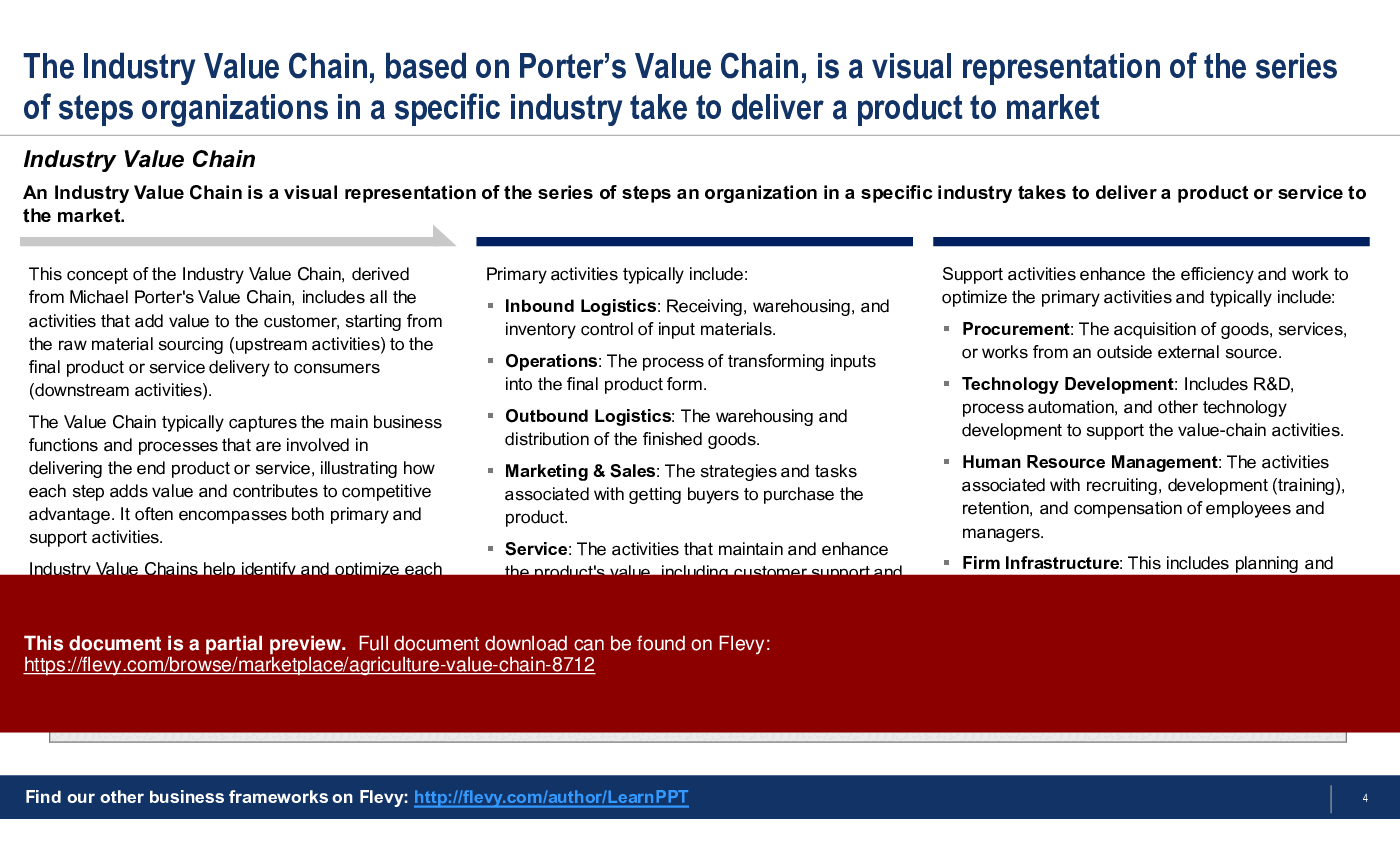
An Industry Value Chain is a visual representation of the series of steps an organization in a specific industry takes to deliver a product or service to the market. It captures the main business functions and processes that are involved in delivering the end product or service, illustrating how each step adds value and contributes to a Competitive Advantage. It often encompasses both primary and support activities.
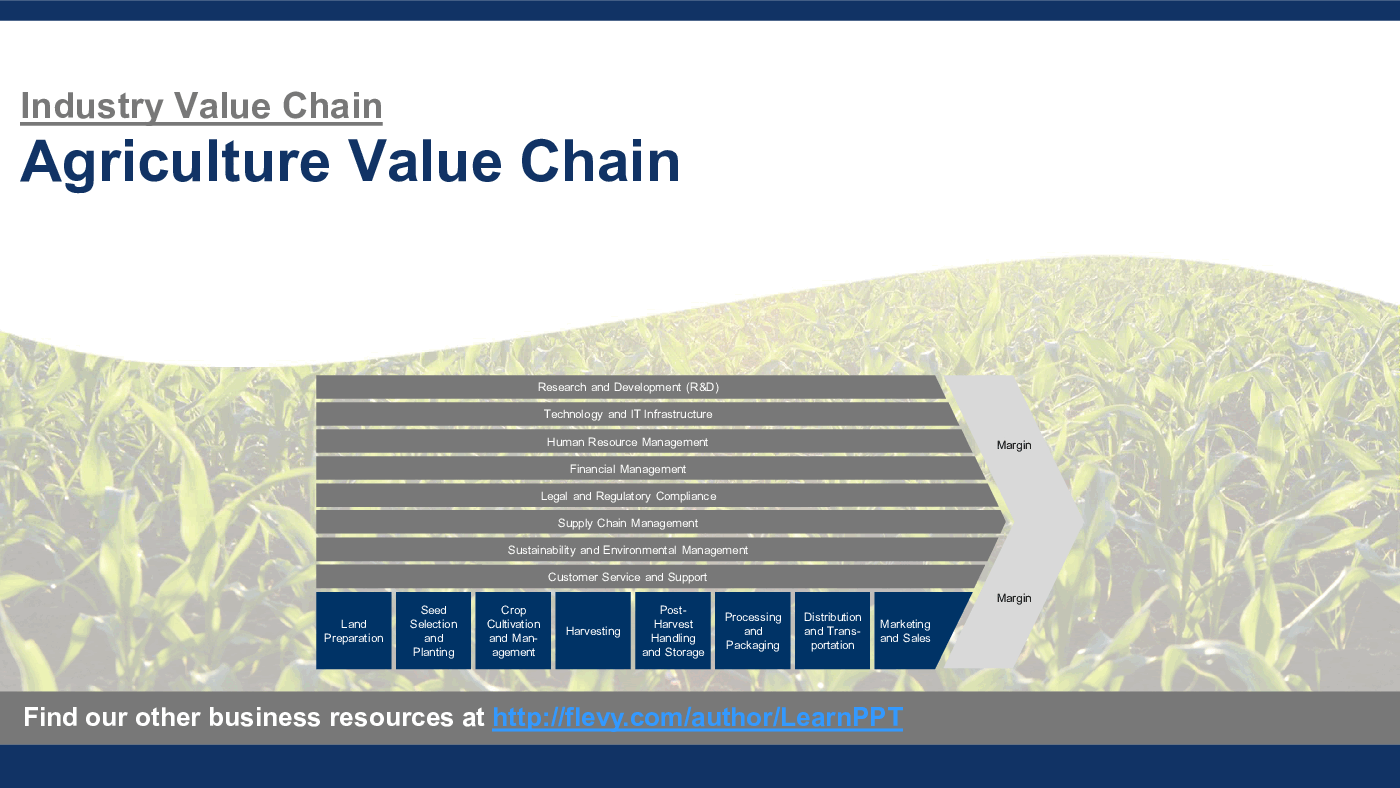
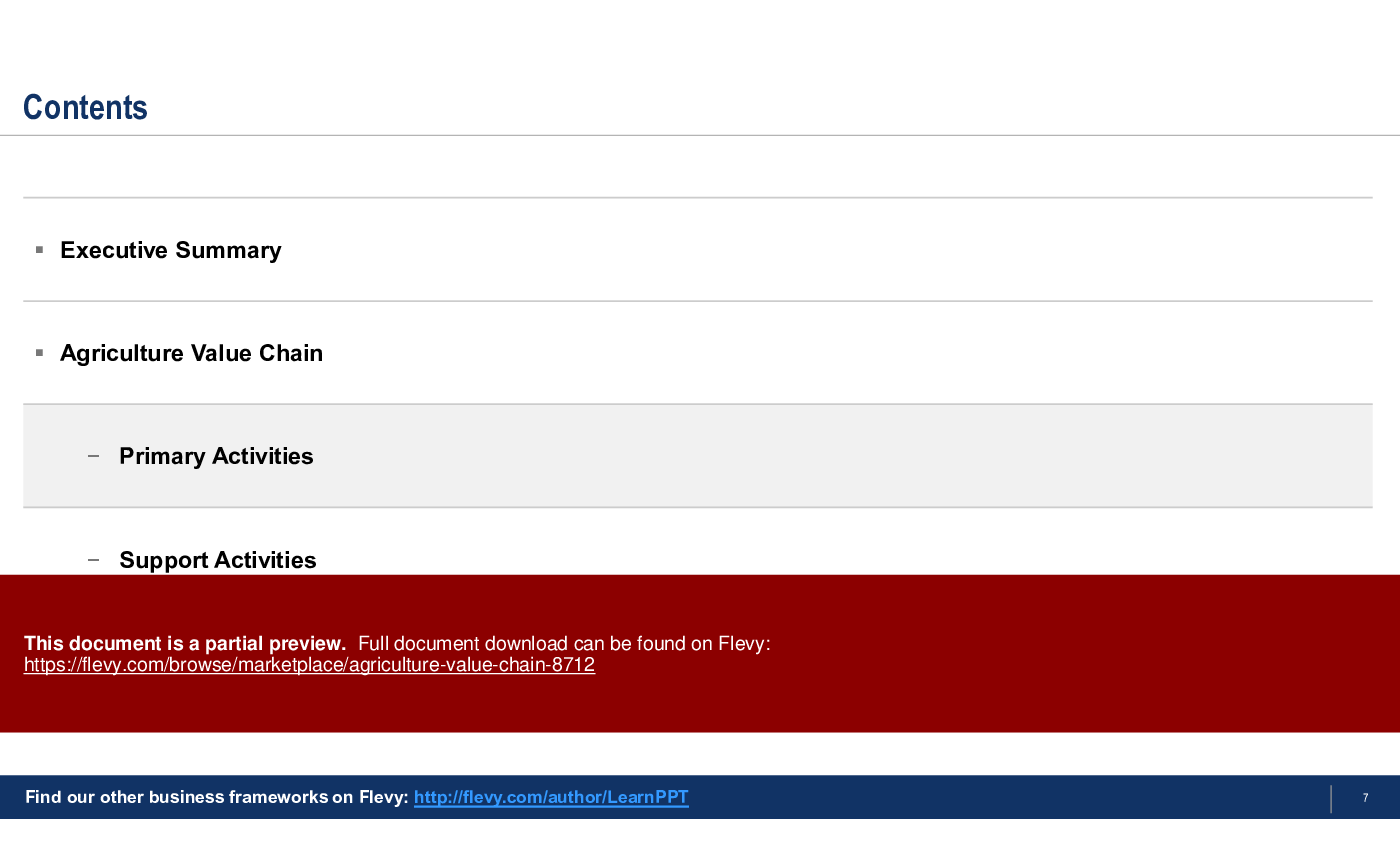
This PowerPoint presentation captures the Agriculture Industry Value Chain, which includes the following primary and support activities:
Primary Activities
1. Land Preparation
2. Seed Selection and Planting
3. Crop Cultivation and Management
4. Harvesting
5. Post-Harvest Handling and Storage
6. Processing and Packaging
7. Distribution and Transportation
8. Marketing and Sales
Support Activities
1. Research and Development (R&D)
2. Technology and IT Infrastructure
3. Human Resource Management
4. Financial Management
5. Legal and Regulatory Compliance
6. Supply Chain Management
7. Sustainability and Environmental Management
8. Customer Service and Support
This PowerPoint presentation dives deeper into each of these activities, highlighting key elements.
The Agriculture Industry Value Chain integrates land preparation, seed selection, crop management, and distribution to deliver high-quality agricultural products efficiently. Advanced processing and packaging techniques add value to raw agricultural products, enhancing marketability and consumer appeal. Sustainable practices and environmental management in agriculture promote long-term viability and meet growing consumer demand for eco-friendly products. Efficient post-harvest handling and storage are crucial for maintaining crop quality and reducing losses, significantly impacting profitability.
This PowerPoint presentation also discusses Agriculture Value Chain Analysis, highlighting a multitude of key considerations and potential insights to pay attention to. We further discuss the significant impact of Digital Transformation and various specific emergent technologies on the Agriculture Industry.
This presentation not only outlines the key activities within the Agriculture Value Chain, but also emphasizes the importance of integrating technology and sustainable practices to enhance operational efficiency. It provides actionable insights that can help organizations adapt to evolving market demands and improve overall productivity in agricultural operations.
Got a question about the product? Email us at support@flevy.com or ask the author directly by using the "Ask the Author a Question" form. If you cannot view the preview above this document description, go here to view the large preview instead.
MARCUS OVERVIEW
This synopsis was written by Marcus [?] based on the analysis of the full 34-slide presentation.
Executive Summary
The Agriculture Value Chain presentation provides a comprehensive framework for understanding the series of steps involved in delivering agricultural products to the market. Created by former consultants from top-tier firms like McKinsey, BCG, and Deloitte, this consulting-grade resource outlines both primary and support activities essential for optimizing agricultural operations. Buyers will gain actionable insights into enhancing productivity, managing costs, and improving product quality through effective value chain analysis. This framework is designed to help organizations identify opportunities for process optimization and strategic investments, ultimately leading to a competitive advantage in the agriculture industry.
Who This Is For and When to Use
• Agricultural executives and managers focused on improving operational efficiency
• Supply chain professionals seeking to optimize logistics and distribution
• Marketing teams aiming to enhance product visibility and market reach
• Consultants working with agribusiness clients on value chain strategies
Best-fit moments to use this deck:
• During strategic planning sessions to align production and marketing strategies
• In workshops aimed at improving supply chain efficiency and cost management
• When conducting value chain analysis for performance improvement initiatives
Learning Objectives
• Define the Agriculture Value Chain and its significance in the agricultural sector
• Identify primary and support activities that contribute to value creation
• Analyze current market demands and consumer preferences to inform production strategies
• Implement best practices for post-harvest handling and storage to maintain crop quality
• Leverage technology and innovation to enhance agricultural productivity
• Develop effective marketing strategies to maximize revenue and market share
Table of Contents
• Executive Summary (page 1)
• Agriculture Value Chain (page 2)
• Primary Activities (page 3)
• Support Activities (page 4)
• Agriculture Value Chain Analysis (page 5)
Primary Topics Covered
• Primary Activities - The core processes in the Agriculture Value Chain, including land preparation, seed selection, crop management, harvesting, post-harvest handling, processing, distribution, and marketing.
• Support Activities - Essential functions that enhance primary activities, such as research and development, technology management, human resource management, financial management, legal compliance, supply chain management, sustainability practices, and customer service.
• Value Chain Analysis - A method for evaluating how each stage contributes to overall productivity, cost management, and product quality.
Deliverables, Templates, and Tools
• Value chain mapping template to visualize primary and support activities
• Best practices guide for post-harvest handling and storage
• Cost management framework for optimizing supply chain processes
• Marketing strategy template tailored for agricultural products
• R&D planning template for innovation in agricultural practices
• Compliance checklist for legal and regulatory standards
Slide Highlights
• Overview of the Agriculture Value Chain, illustrating primary and support activities
• Detailed breakdown of each primary activity, including value-added elements
• Insights on market demand and consumer preferences affecting production strategies
• Analysis of the impact of digital transformation technologies on agricultural operations
• Key considerations for effective supply chain management and risk mitigation
Potential Workshop Agenda
Value Chain Optimization Session (90 minutes)
• Review the Agriculture Value Chain framework and its components
• Identify current challenges and opportunities within each activity
• Develop action plans for optimizing primary and support activities
Market Strategy Development (60 minutes)
• Analyze consumer trends and preferences in the agricultural sector
• Create targeted marketing strategies to enhance product visibility
• Discuss digital marketing tools and e-commerce platforms for market access
Customization Guidance
• Tailor the value chain mapping template to reflect specific agricultural operations
• Adjust marketing strategies based on regional consumer preferences and trends
• Incorporate local regulatory requirements into the compliance checklist
• Modify best practices for post-harvest handling to align with available resources
Secondary Topics Covered
• Digital transformation in agriculture
• Sustainable farming practices and their impact on the environment
• The role of technology in enhancing agricultural productivity
• Risk management strategies for agricultural operations
• Importance of customer feedback in product development
Topic FAQ
What are the main stages of an agriculture value chain?
The agriculture value chain consists of primary activities—land preparation; seed selection and planting; crop cultivation and management; harvesting; post-harvest handling and storage; processing and packaging; distribution and transportation; and marketing and sales—supported by functions like R&D, finance, and compliance, comprising 8 primary activities.
How does value chain analysis improve farm profitability?
Value chain analysis evaluates how each stage contributes to productivity, cost management, and product quality, enabling identification of inefficiencies and optimization opportunities. Organizations use value chain mapping to visualize stages and prioritize process changes, often starting with a value chain mapping template.
What best practices reduce post-harvest losses?
Common best practices include proper cleaning and sorting, appropriate storage techniques, and continuous monitoring of environmental conditions to maintain crop quality and extend shelf life. These practices are detailed in a best practices guide for post-harvest handling and storage.
What role does digital transformation play in agriculture value chains?
Digital transformation supports operational efficiency, data-driven decision-making, and precision agriculture practices that improve production and supply chain management. The topic includes impacts of emergent technologies on operations and is discussed with concrete implications for precision agriculture and supply chain management technologies.
How should I choose an agriculture value chain toolkit on a budget?
Prioritize toolkits that include practical templates you can customize locally—core items are a value chain mapping template, a cost management framework, and a compliance checklist—plus guidance on tailoring post-harvest and marketing templates to regional regulations and available resources.
What should I expect to get from a 30–40 slide agriculture value chain deck?
Expect an overview of the agriculture value chain, detailed breakdowns of primary and support activities, templates for mapping and cost management, best-practice guidance for post-harvest handling, discussion of digital transformation, and suggested workshop agendas; for example, a 34-slide PowerPoint often includes a value chain mapping template.
I need to redesign distribution and cold chain for my agribusiness — what framework should I follow?
Start by mapping distribution and post-harvest handling within the overall value chain, assess supply chain management and cost drivers, and develop targeted actions for cold chain and transportation. Use a cost management framework and a value chain mapping template to quantify trade-offs and interventions.
How can marketing teams tailor strategies for agricultural products?
Marketing teams should analyze consumer preferences and market trends, segment products by value-added attributes, and design targeted branding and channel strategies, including digital marketing and e-commerce options. A marketing strategy template tailored for agricultural products can structure this work.
Document FAQ
These are questions addressed within this presentation.
What is the Agriculture Value Chain?
The Agriculture Value Chain is a framework that outlines the series of steps involved in delivering agricultural products from production to market, including both primary and support activities.
How can this framework help improve agricultural operations?
By analyzing each stage of the value chain, organizations can identify inefficiencies, optimize processes, and enhance product quality, ultimately leading to increased profitability.
What are the primary activities in the Agriculture Value Chain?
Primary activities include land preparation, seed selection and planting, crop cultivation, harvesting, post-harvest handling, processing and packaging, distribution, and marketing.
What role does technology play in the Agriculture Value Chain?
Technology enhances operational efficiency, improves decision-making, and supports data-driven practices, such as precision agriculture and supply chain management.
How can organizations ensure compliance with legal and regulatory standards?
Implementing a compliance program that includes regular audits, employee training, and adherence to industry regulations is essential for mitigating legal risks.
What are some best practices for post-harvest handling?
Best practices include proper cleaning, sorting, and storage techniques to maintain crop quality and extend shelf life, as well as monitoring environmental conditions.
How can marketing strategies be tailored for agricultural products?
Marketing strategies should consider consumer preferences, market trends, and effective branding to enhance product visibility and drive sales.
What are the benefits of conducting a value chain analysis?
Value chain analysis provides insights into productivity, cost management, and quality control, enabling organizations to make informed strategic decisions.
Glossary
• Agriculture Value Chain - The series of steps involved in delivering agricultural products from production to market.
• Primary Activities - Core processes that directly contribute to the creation of agricultural products.
• Support Activities - Functions that enhance the efficiency of primary activities.
• Value Chain Analysis - A method for evaluating how each stage contributes to overall productivity and quality.
• Digital Transformation - The integration of digital technologies into agricultural practices to enhance efficiency.
• Sustainability Practices - Methods aimed at reducing environmental impact and promoting long-term viability in agriculture.
• Market Demand - The desire for agricultural products based on consumer preferences and trends.
• Post-Harvest Handling - The processes involved in maintaining crop quality after harvesting.
• Compliance - Adherence to legal and regulatory standards in agricultural operations.
• Risk Management - Strategies developed to mitigate potential risks in agricultural practices.
• Customer Feedback - Insights gathered from consumers to inform product development and improvement.
• Supply Chain Management - Coordination of the flow of goods from producers to consumers.
Digital transformation technologies enhance the agriculture value chain through several key applications. "Enhanced Crop Management and Monitoring" utilizes precision agriculture, GPS, IoT sensors, and drones for real-time data on soil health and crop conditions, optimizing input usage and improving yields. "Optimized Resource Utilization" features smart irrigation systems that adjust water usage based on real-time soil moisture data, enhancing water efficiency. "Improved Supply Chain Transparency and Efficiency" employs blockchain technology to record transactions and track goods from farm to market, ensuring transparency and food safety. Remote sensing, using satellite imagery and drones, monitors crop health and detects pest infestations for timely interventions. Variable Rate Technology (VRT) applies fertilizers and pesticides based on data-driven insights, reducing costs and environmental impact. Digital platforms facilitate better coordination among stakeholders, improving supply chain efficiency.
The Agriculture Value Chain consists of eight primary activities: Land Preparation, Seed Selection and Planting, Crop Cultivation and Management, Harvesting, Post-Harvest Handling and Storage, Processing and Packaging, Distribution and Transportation, and Marketing and Sales. Each activity is essential for enhancing the quality and marketability of agricultural products. Effective land preparation and seed selection are foundational to crop success, while post-harvest handling is critical for maintaining product quality and minimizing losses. Supporting activities include Research and Development, Technology and IT Infrastructure, Human Resource Management, Financial Management, Legal and Regulatory Compliance, Supply Chain Management, Sustainability and Environmental Management, and Customer Service and Support. Advanced processing techniques add value to raw products, aligning with consumer preferences for high-quality and eco-friendly options. The Agriculture Value Chain framework illustrates the interconnected activities driving success in the agriculture industry.
This PPT slide outlines the critical activity of seed selection and planting in the agriculture value chain. High-quality, disease-resistant seeds must be chosen based on yield potential, maturity period, and market demand to align with consumer preferences. Specific planting methods, including direct seeding and transplanting, depend on crop type and field conditions, highlighting the need for adaptability. Precision planting techniques focus on optimal seed spacing and depth to maximize crop growth and resource utilization. Monitoring germination rates and early plant growth allows for swift corrective actions. The value-added activities emphasize the benefits of high-quality seed selection, resource efficiency through precision planting, and market alignment based on consumer demand, enhancing crop performance and operational efficiency.
This PPT slide outlines critical elements for conducting an Agriculture Value Chain Analysis. Key components include market demand and consumer preferences, emphasizing alignment of production and marketing strategies with consumer trends to maximize market relevance. Soil health and fertility are vital for crop growth and sustainability, directly impacting yield and quality. Seed quality and selection are essential for optimizing growth conditions. Effective water management practices are necessary to ensure crop health amid climate variability and water scarcity. Integrated pest and disease control strategies enhance yields and reduce losses. Finally, technological integration, including precision agriculture and data analytics, drives efficiency and productivity in modern agricultural practices.
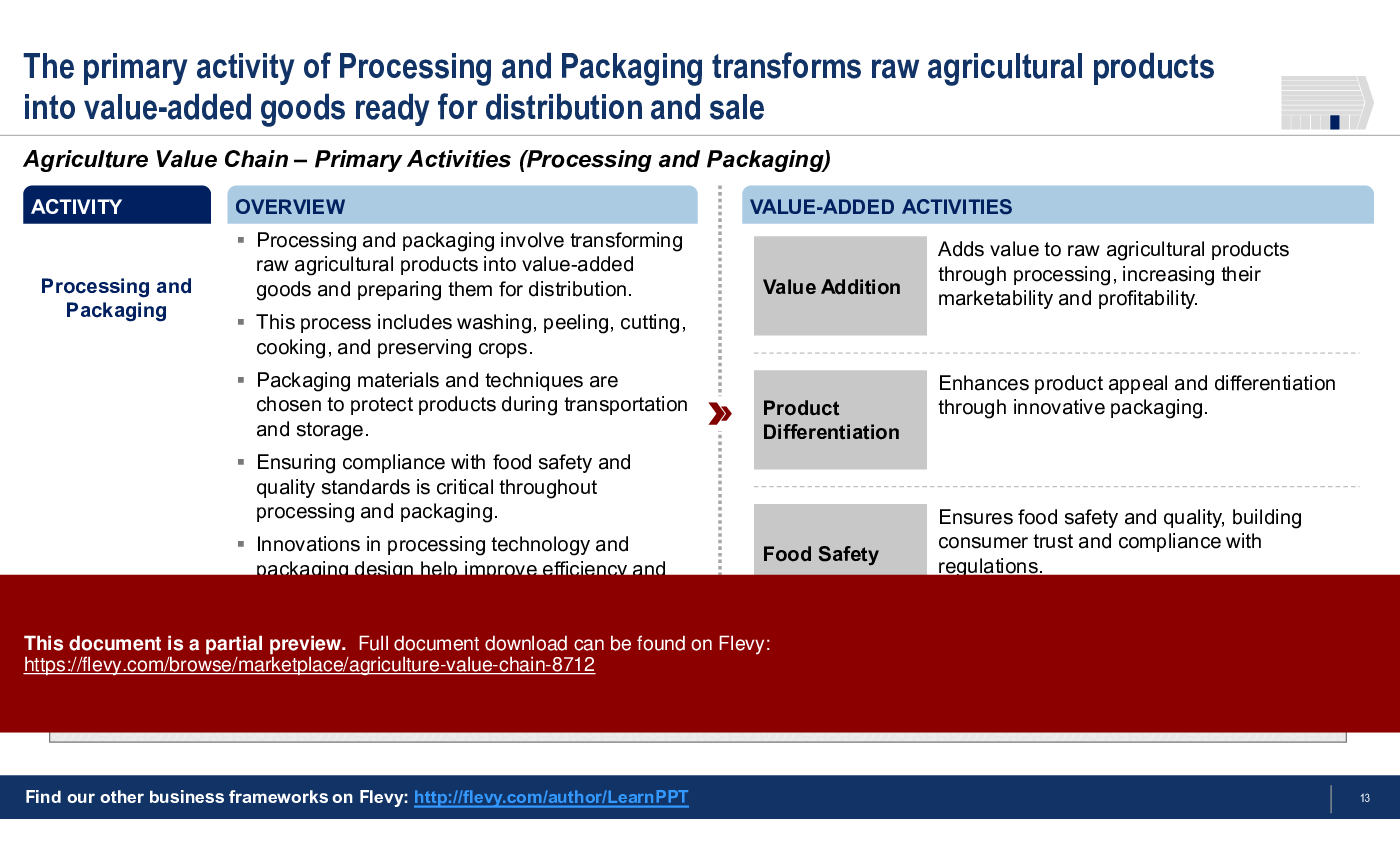
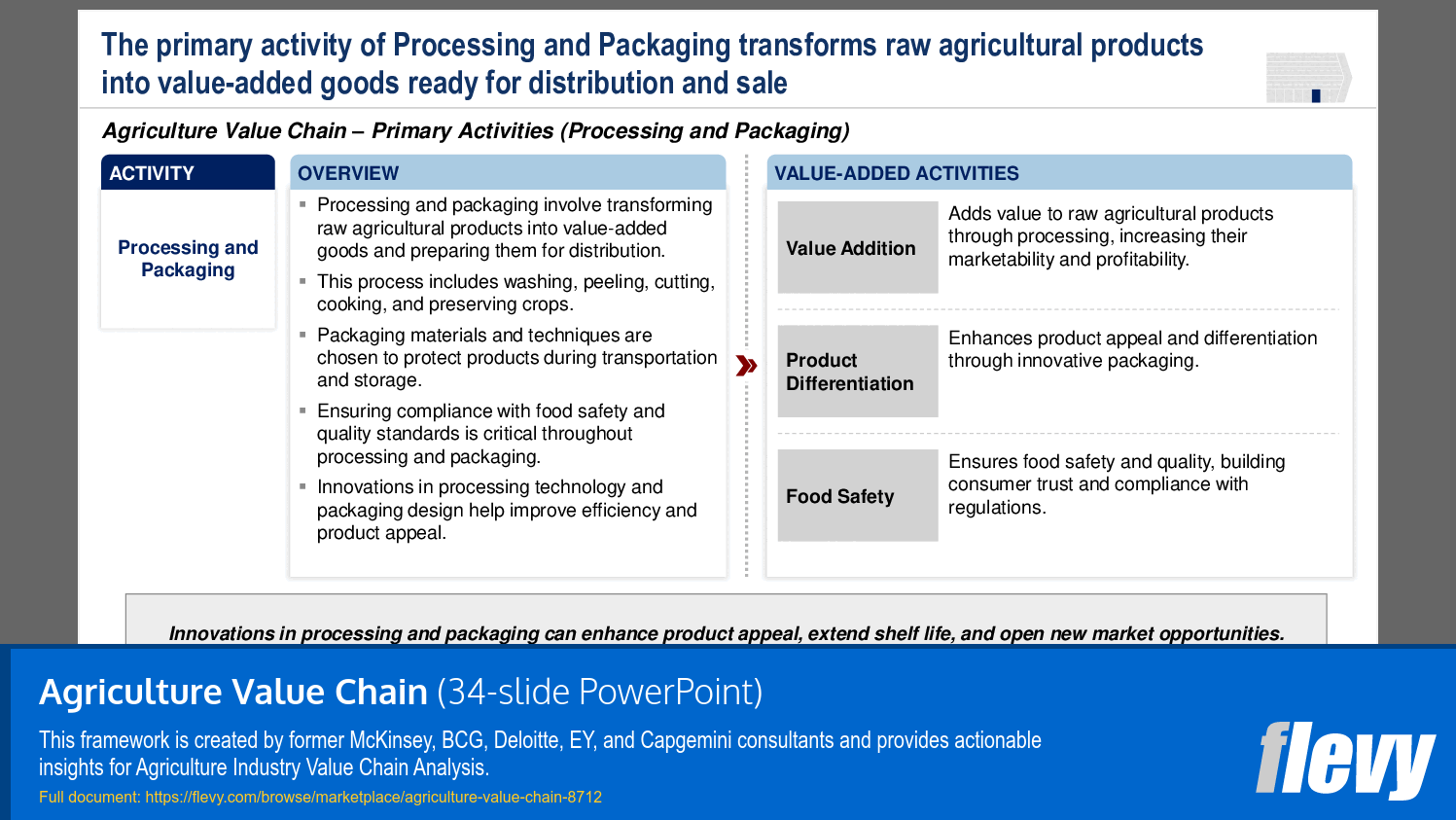
This PPT slide focuses on processing and packaging in the agricultural value chain, transforming raw products into value-added goods for distribution. Key processes include washing, peeling, cutting, cooking, and preserving crops, essential for meeting market standards. Packaging protects products during transportation and storage, maintaining integrity and quality. Compliance with food safety and quality standards is non-negotiable, safeguarding consumer trust and aligning with legal requirements. Value-added activities enhance marketability and profitability, while product differentiation through innovative packaging sets products apart. Food safety is a cornerstone of consumer trust, ensuring compliance with industry regulations. Processing and packaging are critical for optimizing operations and enhancing product offerings.
This PPT slide provides an overview of Land Preparation within the Agriculture Value Chain, detailing essential steps for optimal crop growth. Key components include clearing and leveling land to create a suitable seedbed, soil testing and amendments to enhance fertility and structure, and setting up irrigation systems for effective water management. Maintenance of equipment is crucial for operational readiness, preventing delays in planting. Value-added activities such as Soil Fertility, Weed and Pest Control, and Water Management contribute to a favorable crop environment. Enhancing soil fertility correlates with improved yields, while effective weed and pest control reduces resource competition, supporting sustainability in agriculture.
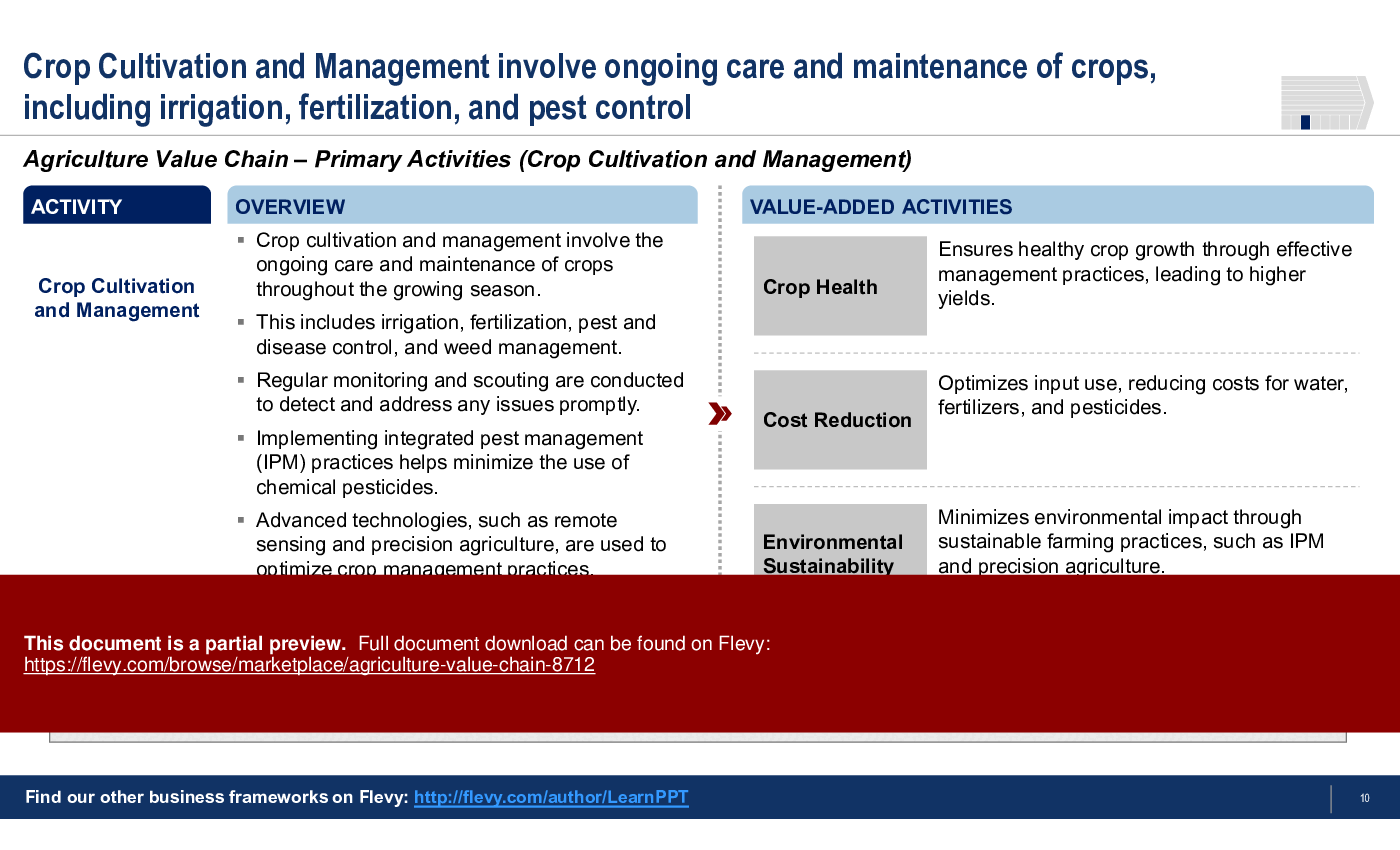
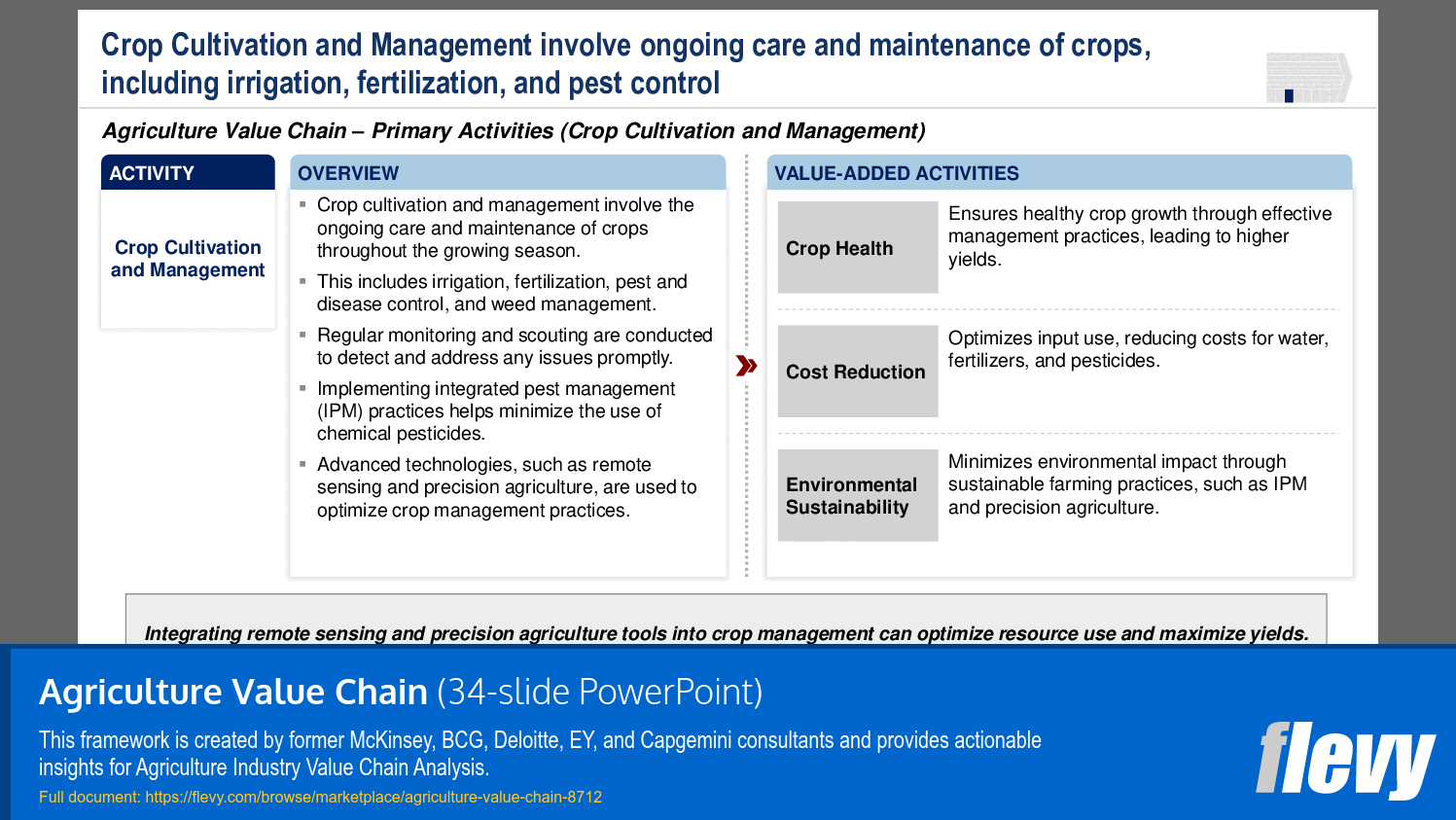
This PPT slide focuses on critical aspects of crop cultivation and management within the agricultural value chain. Key activities include irrigation, fertilization, pest control, and weed management, with regular monitoring and scouting essential for crop health and productivity. Integrated pest management (IPM) is introduced as a strategy to reduce reliance on chemical pesticides, aligning with sustainable agricultural practices. Advanced technologies such as remote sensing and precision agriculture facilitate data-driven crop management, enhancing efficiency. Value-added activities identified are crop health, cost reduction, and environmental sustainability, with effective management practices leading to higher yields and lower expenses on inputs like water, fertilizers, and pesticides. Sustainable farming practices minimize ecological impact, reinforcing the industry's commitment to responsible agriculture.
Source: Best Practices in Value Chain Analysis, Agriculture Industry PowerPoint Slides: Agriculture Value Chain PowerPoint (PPTX) Presentation Slide Deck, LearnPPT Consulting
This framework is created by former McKinsey, BCG, Deloitte, EY, and Capgemini consultants and provides actionable insights for Agriculture Industry Value Chain Analysis.
We are a team of management consultants trained by top tier global consulting firms (including McKinsey, BCG, Deloitte, EY, Capgemini) with a collective experience of several decades. We specialize in business frameworks based on real-life consulting engagements.
We have served 100s of clients that range from Fortune 500 companies to tech startups to
... [read more] $1B+ private companies.
Utilize our consulting frameworks to apply structured thinking & analysis to address your business challenges, uncover strategic insights, and implement workable solutions. Our PowerPoint presentations follow traditional consulting slide design formats, starting with a clear slide headline. Easily customize and repurpose our slides for your own business presentations.
Beyond business frameworks & methodologies, we also offer PowerPoint templates and other business templates. Our templates are professionally designed and have been used in thousands of deliverables & work products across hundreds of clients.
The average daily rate of a McKinsey consultant is $6,625 (not including expenses). The average price of a Flevy document is $65.
Trusted by over 10,000+ Client Organizations
Since 2012, we have provided business templates to over 10,000 businesses and organizations of all sizes, from startups and small businesses to the Fortune 100, in over 130 countries.
Read Customer Testimonials
"I like your product. I'm frequently designing PowerPoint presentations for my company and your product has given me so many great ideas on the use of charts, layouts, tools, and frameworks. I really think the templates are a valuable asset to the job."
– Roberto Fuentes Martinez, Senior Executive Director at Technology Transformation Advisory
"Flevy is our 'go to' resource for management material, at an affordable cost. The Flevy library is comprehensive and the content deep, and typically provides a great foundation for us to further develop and tailor our own service offer."
– Chris McCann, Founder at Resilient.World
"One of the great discoveries that I have made for my business is the Flevy library of training materials.
As a Lean Transformation Expert, I am always making presentations to clients on a variety of topics: Training, Transformation, Total Productive Maintenance, Culture, Coaching, Tools, Leadership Behavior, etc. Flevy
It is well worth the money to purchase these presentations. Sure, I have the knowledge and information to make my point. It is another thing to create a presentation that captures what I want to say. Flevy has saved me countless hours of preparation time that is much better spent with implementation that will actually save money for my clients.
"
– Ed Kemmerling, Senior Lean Transformation Expert at PMG
"I have found Flevy to be an amazing resource and library of useful presentations for lean sigma, change management and so many other topics. This has reduced the time I need to spend on preparing for my performance consultation. The library is easily accessible and updates are regularly provided. A wealth of great information."
– Cynthia Howard RN, PhD, Executive Coach at Ei Leadership
"As a consulting firm, we had been creating subject matter training materials for our people and found the excellent materials on Flevy, which saved us 100's of hours of re-creating what already exists on the Flevy materials we purchased."
– Michael Evans, Managing Director at Newport LLC
"FlevyPro provides business frameworks from many of the global giants in management consulting that allow you to provide best in class solutions for your clients."
– David Harris, Managing Director at Futures Strategy
"Last Sunday morning, I was diligently working on an important presentation for a client and found myself in need of additional content and suitable templates for various types of graphics. Flevy.com proved to be a treasure trove for both content and design at a reasonable price, considering the time I
saved. I encountered a download issue during the ordering process. However, a quick email to Flevy's support team, even on a Sunday (!!!), resulted in assistance within less than an hour, allowing me to download the content I needed. Fantastic job, Flevy! I give 5 stars for both content/price and customer service. Thank you!
"
– M. E., Chief Commercial Officer, International Logistics Service Provider
"As a consultant requiring up to date and professional material that will be of value and use to my clients, I find Flevy a very reliable resource.
The variety and quality of material available through Flevy offers a very useful and commanding source for information. Using Flevy saves me time, enhances my expertise and ends up being a good decision."
Download our free compilation of 50+ Strategy & Transformation slides and templates. Frameworks include McKinsey 7-S, Balanced Scorecard, Disruptive Innovation, BCG Curve, and many more.