




No other safety related activity could produce a status evaluation of any industrial or commercial enterprise better than a comprehensive audit. Performed professionally, audits provide management with answers based on facts, which in turn, generate appropriate solutions to problems. . As safety professionals, it is our responsibility to ensure that we help managers ensure that their actions and activities within their mandate of control are based on facts.
There are many Health and Safety Management System 'models' available, BS18001, the ILO, the ISRS and the 5 Star System to name a few. One thing is certain, that there is no 'one size fits all' Occupational Health and Safety Management System, [OH & S-MS]. An effective, quality driven OH & S-MS is really measuring and verifying "conformance to requirements or standards", without which there can be no effective measurement or evaluation of performance.
This paper will address the elements and protocols for one 'Model', which will show that safety is a process not a product, and that professionally done, a Health and Safety Management System audit can put any organization on a step-by-step program of progressive improvement.
Got a question about the product? Email us at support@flevy.com or ask the author directly by using the "Ask the Author a Question" form. If you cannot view the preview above this document description, go here to view the large preview instead.
Executive Summary
The Safety Management Systems Auditing document provides a robust framework for conducting comprehensive occupational health and safety audits. It emphasizes the necessity of utilizing established models such as BS18001, ILO, and ISRS to ensure workplace safety compliance. This template empowers safety professionals and management to evaluate their safety practices systematically, identify areas for improvement, and implement effective solutions based on factual data. By leveraging this auditing approach, organizations can enhance safety performance, reduce incidents, and ultimately protect their workforce and resources.
Who This Is For and When to Use
• Safety managers and professionals responsible for workplace health and safety compliance
• Corporate executives overseeing risk management and safety initiatives
• Compliance officers ensuring adherence to safety regulations and standards
• Consultants providing safety auditing services to various industries
Best-fit moments to use this deck:
• During the planning phase of safety audits to establish a structured approach
• When evaluating existing safety management systems for compliance and effectiveness
• In training sessions for safety personnel on best practices in auditing and compliance
• For continuous improvement initiatives aimed at enhancing workplace safety
Learning Objectives
• Define the key components of effective safety management systems
• Build a comprehensive audit plan based on established safety models
• Establish measurable performance standards for safety compliance
• Identify and analyze the root causes of safety incidents
• Develop actionable recommendations for improving safety practices
• Implement a systematic approach to monitor and evaluate safety performance
Table of Contents
• Introduction to Safety Management Systems (page 1)
• Overview of the 5 Star Health and Safety Management System (page 2)
• Key Management Principles in Safety Auditing (page 3)
• Leadership and Control Functions in Safety Management (page 4)
• Understanding the Cost of Accidents (page 9)
• Legal and Moral Responsibilities of Management (page 15)
• Continuous Improvement in Safety Management (page 14)
• Conclusion and Summary of Findings (page 17)
Primary Topics Covered
• Safety Management Systems - A structured approach to managing workplace safety, focusing on compliance with recognized standards and models.
• 5 Star Health and Safety Management System - A comprehensive framework that outlines essential elements for effective safety management, including leadership and accountability.
• Management Principles - Key principles that guide effective safety management, including the importance of leadership and control in achieving safety objectives.
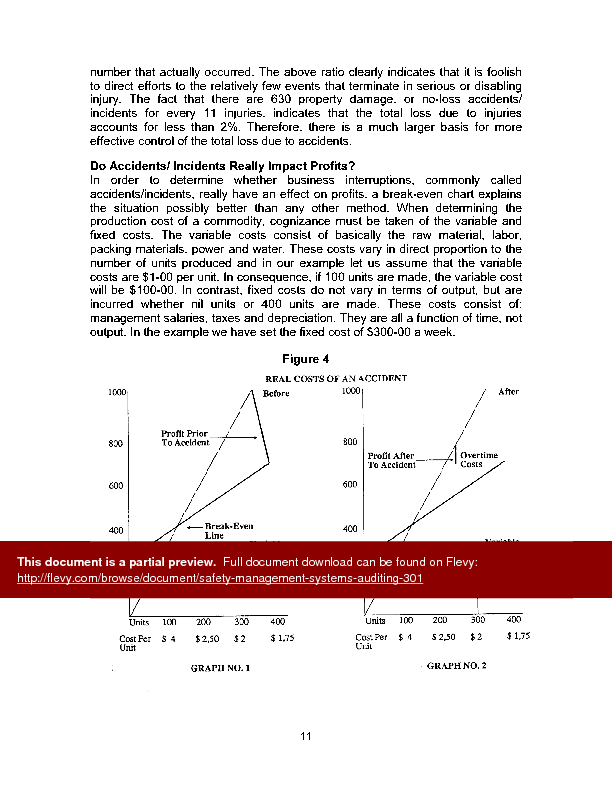
• Cost of Accidents - An analysis of the financial impact of workplace accidents, emphasizing hidden costs and their effect on profitability.
• Legal Responsibilities - Overview of the legal obligations of management regarding workplace safety and compliance with regulations.
• Continuous Improvement - Strategies for ongoing enhancement of safety practices through systematic evaluation and feedback.
Deliverables, Templates, and Tools
• Occupational health and safety audit checklist template
• 5 Star Health and Safety Management System framework document
• Incident reporting and investigation template
• Performance measurement and evaluation tools
• Recommendations report template for safety improvements
• Training materials for safety personnel on auditing practices
Slide Highlights
• Introduction slide outlining the importance of safety audits in organizational performance
• Visual representation of the 5 Star Health and Safety Management System model
• Graphs illustrating the cost implications of workplace accidents
• Flowchart detailing the audit process and key management principles
• Summary slide highlighting the legal and moral responsibilities of management
Potential Workshop Agenda
Safety Management Systems Overview (60 minutes)
• Introduction to safety management systems and their importance
• Discussion of key models and frameworks used in auditing
• Overview of the 5 Star Health and Safety Management System
Audit Planning and Execution (90 minutes)
• Step-by-step guide to planning a safety audit
• Identifying key performance indicators and standards
• Techniques for effective data collection and analysis
Continuous Improvement Strategies (60 minutes)
• Methods for evaluating safety performance and identifying areas for improvement
• Developing actionable recommendations based on audit findings
• Creating a culture of safety within the organization
Customization Guidance
• Tailor the audit checklist to reflect specific industry standards and regulations
• Adjust performance metrics based on organizational goals and safety priorities
• Incorporate company-specific terminology and processes into the training materials
Secondary Topics Covered
• Risk assessment methodologies in safety management
• Employee engagement strategies in safety initiatives
• The role of technology in enhancing safety audits
• Best practices for incident reporting and investigation
• Trends in occupational health and safety regulations
Topic FAQ
Document FAQ
These are questions addressed within this presentation.
What is the purpose of a safety management system audit?
A safety management system audit evaluates an organization's adherence to safety standards and identifies areas for improvement to enhance workplace safety.
How often should safety audits be conducted?
Safety audits should be conducted regularly, typically annually or bi-annually, depending on the organization's size and risk profile.
What models are referenced in this auditing template?
The template references established models such as BS18001, ILO, and ISRS, which provide frameworks for effective safety management.
What are the key components of the 5 Star Health and Safety Management System?
The 5 Star system includes elements like leadership commitment, hazard identification, risk assessment, and continuous improvement.
How can organizations measure the effectiveness of their safety management systems?
Organizations can measure effectiveness through performance indicators, incident rates, and employee feedback on safety practices.
What role does management play in workplace safety?
Management is responsible for establishing safety policies, ensuring compliance with regulations, and fostering a culture of safety within the organization.
What are the hidden costs of workplace accidents?
Hidden costs include lost productivity, damage to equipment, and increased insurance premiums, which can significantly impact profitability.
How can continuous improvement be achieved in safety management?
Continuous improvement can be achieved through regular evaluations, employee training, and implementing feedback from audits and incident reports.
Glossary
• Safety Management System - A structured framework for managing workplace safety and health.
• 5 Star Health and Safety Management System - A comprehensive model for evaluating and improving safety practices.
• Incident Reporting - The process of documenting accidents or near-misses in the workplace.
• Risk Assessment - The systematic evaluation of potential hazards and risks in the workplace.
• Performance Indicators - Metrics used to measure the effectiveness of safety management practices.
• Leadership Commitment - The dedication of management to prioritize and invest in workplace safety.
• Continuous Improvement - Ongoing efforts to enhance safety practices and reduce risks.
• Compliance - Adherence to safety regulations and standards set by governing bodies.
• Accident Cost Iceberg - A concept illustrating the visible and hidden costs associated with workplace accidents.
• Legal Responsibilities - Obligations imposed by law on management to ensure workplace safety.
• Employee Engagement - Involvement of employees in safety initiatives and decision-making processes.
• Audit Checklist - A tool used to guide the audit process and ensure all relevant areas are evaluated.
• Safety Culture - The shared values and beliefs regarding safety within an organization.
• Training Materials - Resources developed to educate employees on safety practices and procedures.
• Recommendations Report - A document outlining suggested improvements based on audit findings.
• Hazard Identification - The process of recognizing potential sources of harm in the workplace.
• Accident Investigation - The systematic examination of incidents to determine causes and prevent recurrence.
• Performance Measurement - The process of assessing the effectiveness of safety management systems.
• Safety Auditing - The systematic evaluation of an organization's safety practices and compliance with standards.
• Occupational Health and Safety - The field focused on the prevention of workplace injuries and illnesses.
• Management Principles - Fundamental concepts guiding effective management practices in safety.
• Cost-Benefit Analysis - A method of evaluating the financial implications of safety initiatives.
Source: Best Practices in Workplace Safety Word: Safety Management Systems Auditing Word (DOC) Document, pomfretb
|
Receive our FREE presentation on Operational Excellence
This 50-slide presentation provides a high-level introduction to the 4 Building Blocks of Operational Excellence. Achieving OpEx requires the implementation of a Business Execution System that integrates these 4 building blocks. |