
Design Principles for Robust Operating Model   30-slide PPT PowerPoint presentation slide deck (PPTX)
$29.00

Design Principles for Robust Operating Model (30-slide PPT PowerPoint presentation slide deck (PPTX)) Preview Image
Log in to unlock full preview.
Design Principles for Robust Operating Model (30-slide PPT PowerPoint presentation slide deck (PPTX)) Preview Image
Arrow   Click main image to view in full screen.

Design Principles for Robust Operating Model (PowerPoint PPTX Slide Deck)

PowerPoint (PPTX) 30 Slides FlevyPro Document

$29.00
FlevyPro price: FREE (included in subscription)
This framework is developed by a team of former McKinsey and Big 4 consultants. The presentation follows the headline-body-bumper slide format used by global consulting firms.
Add to Cart


Immediate download
Free lifetime updates

STRATEGY DEVELOPMENT PPT DESCRIPTION

Editor Summary A 30-slide PowerPoint presentation that presents a framework of 6 core design principles for Operating Model design and alignment, developed by former consultants from McKinsey and the Big Four. Read more

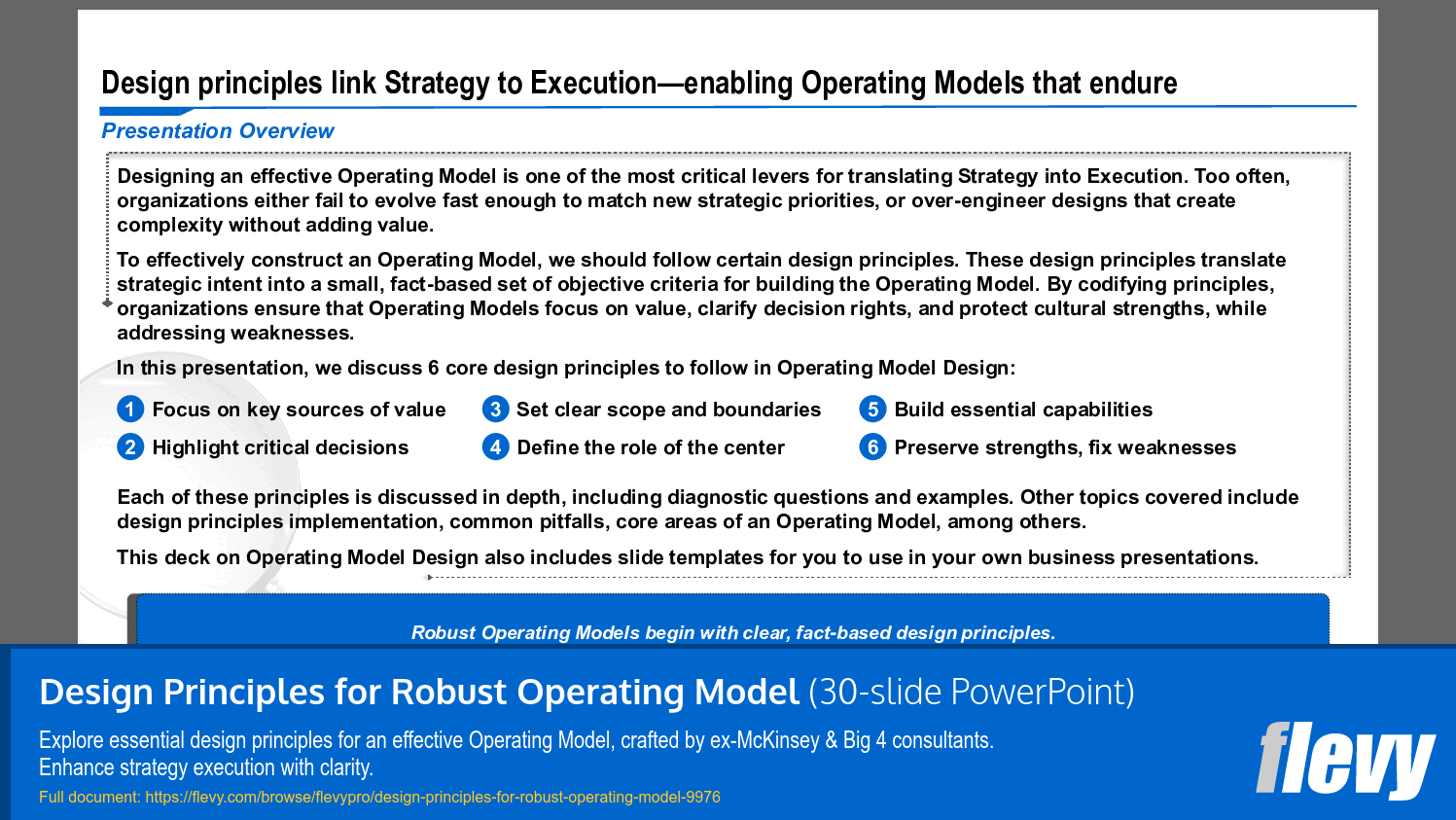
Designing an effective Operating Model is one of the most critical levers for translating Strategy into Execution. Too often, organizations either fail to evolve fast enough to match new strategic priorities, or over-engineer designs that create complexity without adding value.

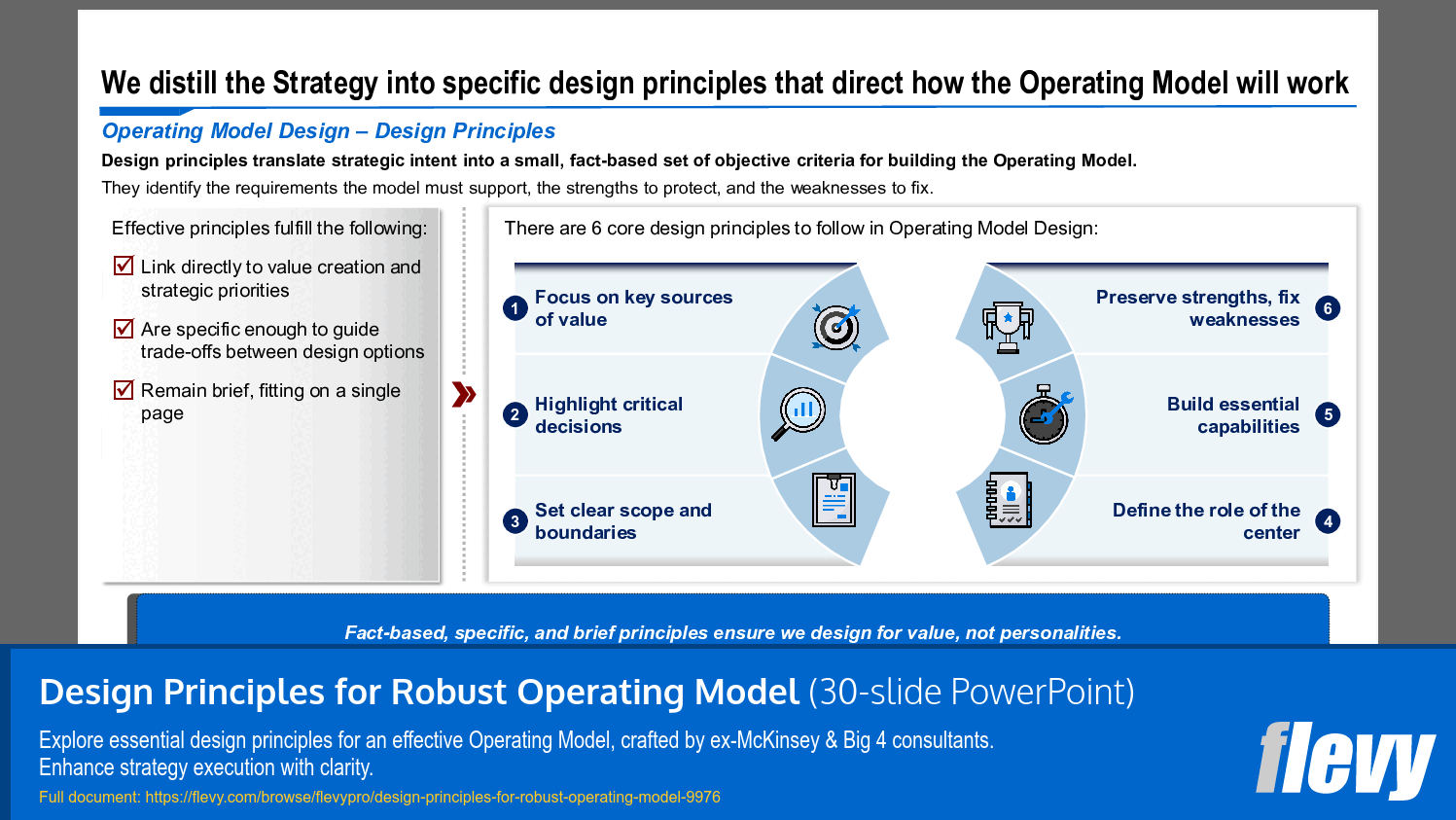
To effectively construct an Operating Model, we should follow certain design principles. These design principles translate strategic intent into a small, fact-based set of objective criteria for building the Operating Model. By codifying principles, organizations ensure that Operating Models focus on value, clarify decision rights, and protect cultural strengths, while addressing weaknesses.

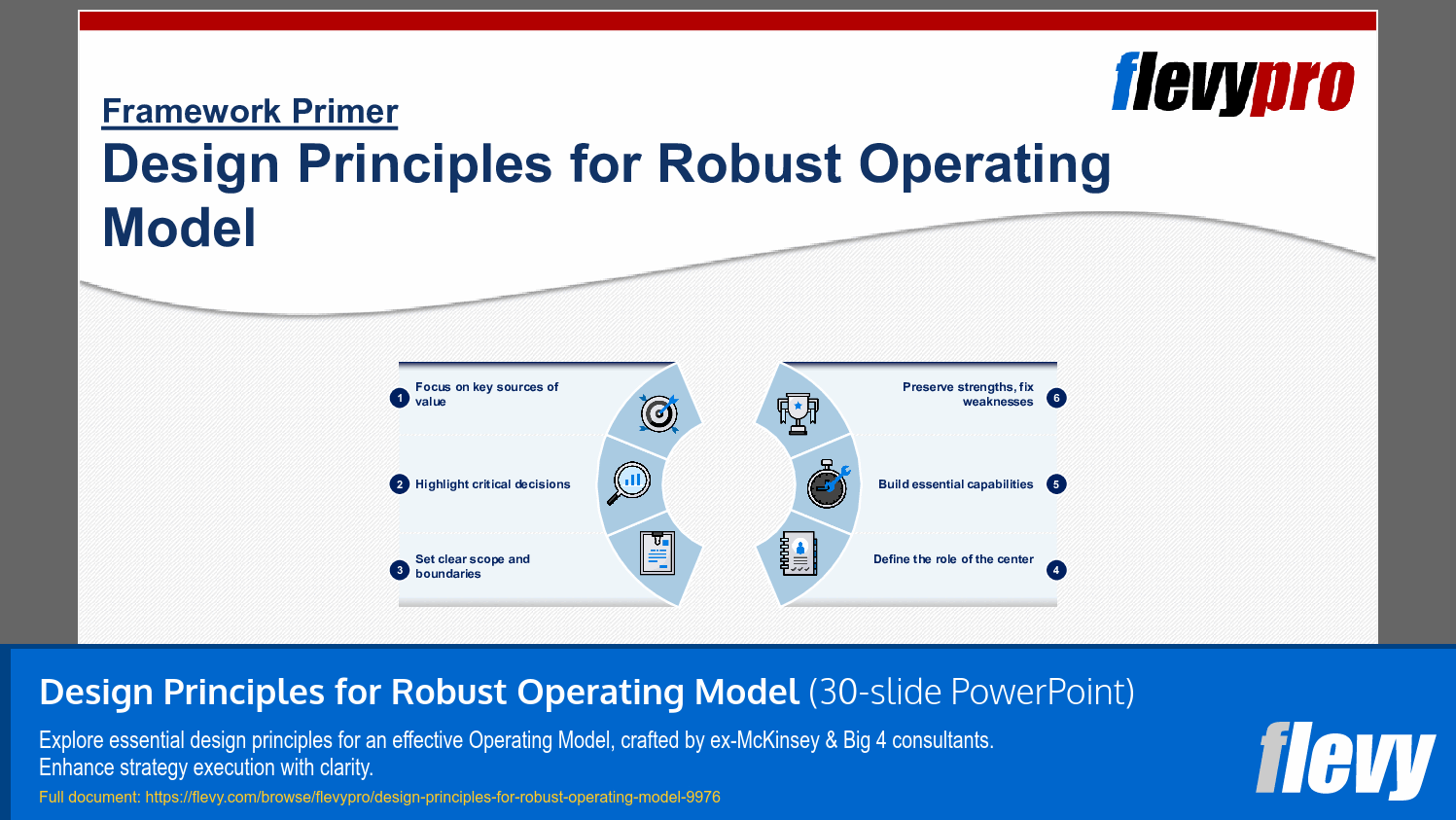
In this PPT presentation, we discuss 6 core design principles to follow in Operating Model Design:

1. Focus on key sources of value
2. Highlight critical decisions
3. Set clear scope and boundaries
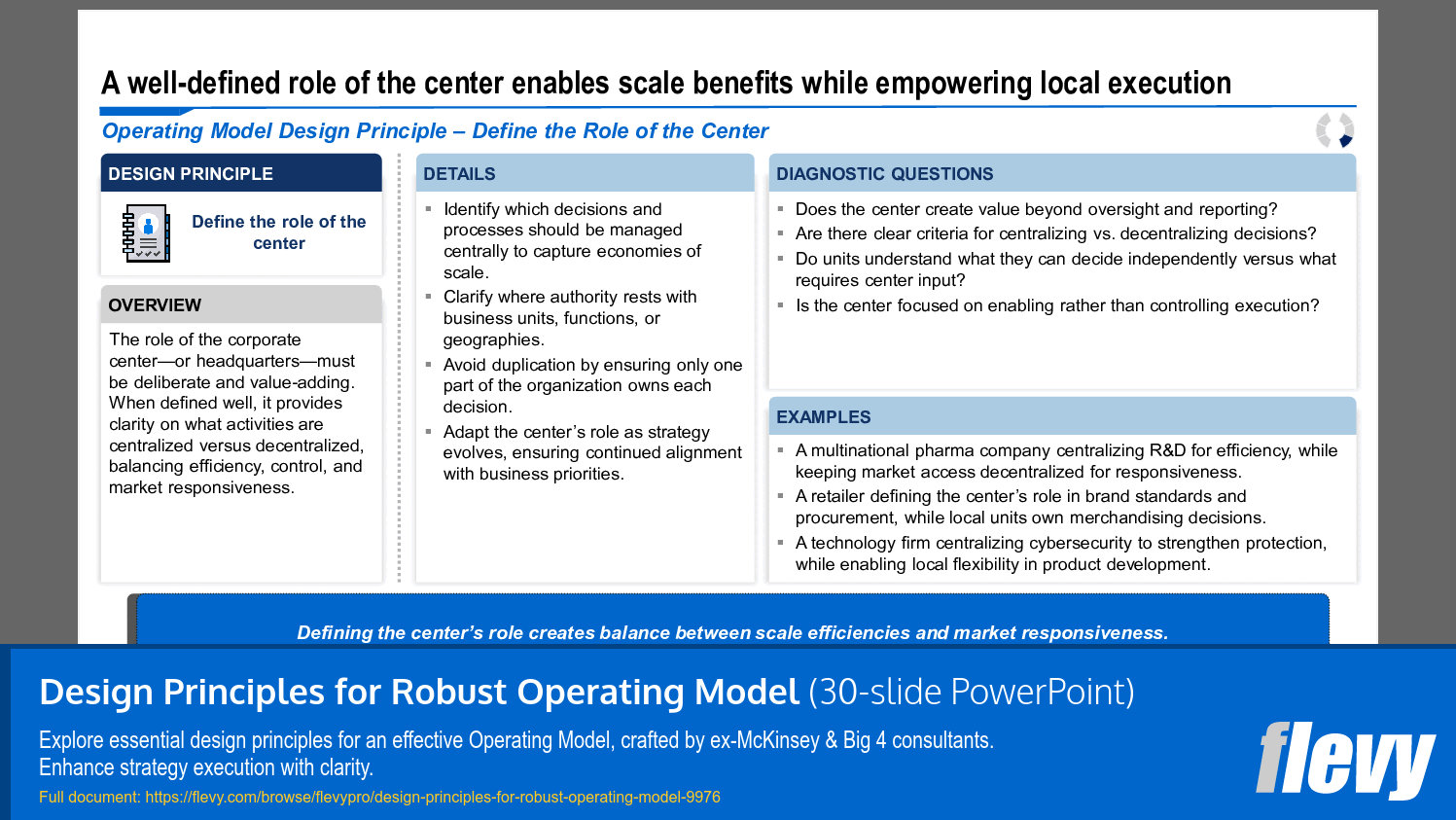
4. Define the role of the center
5. Build essential capabilities
6. Preserve strengths, fix weaknesses

Each of these principles is discussed in depth, including diagnostic questions and examples. Other topics covered include design principles implementation, common pitfalls, core areas of an Operating Model, among others.

This deck on Operating Model Design also includes slide templates for you to use in your own business presentations.

Got a question about this document? Email us at flevypro@flevy.com.

MARCUS OVERVIEW

This synopsis was written by Marcus [?] based on the analysis of the full 30-slide presentation.


Executive Summary
The "Design Principles for Robust Operating Model" presentation provides a structured framework for organizations aiming to enhance their operational effectiveness by aligning strategy with execution. Developed by former consultants from McKinsey and the Big Four, this presentation outlines 6 core design principles that serve as guiding criteria for creating an effective Operating Model. By implementing these principles, organizations can focus on key value sources, clarify decision-making processes, and build essential capabilities, ultimately driving improved performance and strategic alignment.

Who This Is For and When to Use
•  Corporate executives seeking to optimize their organization's operational framework
•  Integration leaders managing organizational change or transformation initiatives
•  Strategy teams responsible for aligning operational capabilities with business objectives
•  Consultants advising clients on operational effectiveness and strategic execution

Best-fit moments to use this deck:
•  During strategic planning sessions to align operational capabilities with business goals
•  When redesigning an Operating Model in response to market changes or internal inefficiencies
•  In workshops focused on decision-making clarity and governance structure

Learning Objectives
•  Define the 6 core design principles that underpin a robust Operating Model
•  Build a clear framework for aligning strategy with execution through effective design principles
•  Establish governance mechanisms that enhance decision-making speed and accountability
•  Identify critical capabilities necessary for delivering strategic objectives
•  Assess organizational strengths and weaknesses to inform Operating Model design
•  Implement a structured approach for translating design principles into actionable steps

Table of Contents
•  Overview (page 2)
•  Operating Model Design (page 4)
•  Operating Model Design Principles (page 5)
•  Design Principles Implementation (page 15)
•  Slide Design Structure & Templates (page 19)

Primary Topics Covered
•  Overview of Operating Model Design - An introduction to the importance of a well-structured Operating Model in linking strategy to execution.
•  Design Principles - A detailed look at the 6 core design principles that guide the construction of an effective Operating Model.
•  Implementation Strategies - Practical steps for translating design principles into operational practices.
•  Common Pitfalls - Identification of frequent challenges in implementing design principles and how to avoid them.

Deliverables, Templates, and Tools
•  Framework for assessing organizational strengths and weaknesses
•  Templates for documenting design principles and implementation strategies
•  Guidelines for establishing governance structures and decision-making processes
•  Tools for aligning capabilities with strategic objectives

Slide Highlights
•  Overview of the 6 core design principles and their significance
•  Diagnostic questions to assess alignment with strategic priorities
•  Case studies illustrating successful implementation of design principles
•  Visual templates for presenting design principles in organizational settings

Potential Workshop Agenda
Design Principles Overview Session (60 minutes)
•  Introduce the 6 core design principles
•  Discuss the importance of aligning strategy with execution

Implementation Planning Session (90 minutes)
•  Identify organizational strengths and weaknesses
•  Develop a roadmap for implementing design principles

Governance and Decision-Making Workshop (60 minutes)
•  Clarify decision-making roles and responsibilities
•  Establish governance mechanisms to support operational effectiveness

Customization Guidance
•  Tailor the design principles to reflect specific organizational goals and strategic priorities
•  Adjust diagnostic questions to address unique operational challenges
•  Incorporate relevant case studies that resonate with the organization’s context

Secondary Topics Covered
•  The relationship between strategy and operational execution
•  Techniques for assessing organizational readiness for change
•  Best practices for continuous improvement in Operating Model design

Topic FAQ

What are the key principles to follow when designing an operating model?

Effective operating model design should be guided by principles that focus on key sources of value, highlight critical decisions, set clear scope and boundaries, define the role of the center, build essential capabilities, and preserve strengths while fixing weaknesses. These are summarized as the 6 core design principles.

How do design principles help clarify decision rights and governance?

Design principles translate strategic intent into objective criteria that identify which decisions matter, who should own them, and what governance mechanisms are needed. Applying principles enables explicit assignment of decision rights and governance structures, supported by diagnostic questions and governance guidelines contained in the framework.

What common pitfalls should organizations avoid when defining operating model principles?

Common pitfalls include making principles too vague, failing to align them with strategy, and over-emphasizing organizational structure instead of value. Avoiding these errors means grounding principles in value drivers, using diagnostic questions, and sequencing implementation actions to preserve cultural strengths while addressing weaknesses.

What should I look for in an operating model design toolkit before buying one?

Seek a toolkit that codifies clear design principles, provides diagnostic questions for alignment, includes templates for documenting principles and implementation, offers governance guidance, and gives examples or case studies. The presence of diagnostic questions and an implementation roadmap is a useful indicator.

Are paid operating model templates worth the investment for a mid-sized company?

Paid templates can save time by providing ready-made frameworks, diagnostic questions, governance guidelines, and slide templates you can adapt. They require tailoring to your context, but can accelerate workshops and roadmaps; for example, this presentation includes templates for documenting design principles and implementation strategies.

We just completed a strategy refresh—how do we translate strategic priorities into an operating model?

Translate priorities by applying design principles that focus on key value sources, map critical decisions, define scope and the center’s role, and identify required capabilities. Use diagnostic questions to assess readiness and build an implementation roadmap that sequences capability building and governance changes.

How can I assess whether our current operating model supports our strategic priorities?

Conduct an organizational assessment that maps strengths and weaknesses against strategic priorities, use diagnostic questions to test alignment, and measure gaps in capabilities and decision-making. The assessment should produce an implementation roadmap and performance metrics to track progress.

What role does governance play in improving operational effectiveness?

Governance establishes decision rights, accountability, and escalation paths that reduce ambiguity and speed execution. Clear governance mechanisms link decisions to strategic priorities and support measurement of operational effectiveness, as documented via governance guidelines and decision-rights diagnostic questions.

Document FAQ
These are questions addressed within this presentation.

What are the 6 core design principles?
The principles focus on key sources of value, highlight critical decisions, set clear scope and boundaries, define the role of the center, build essential capabilities, and preserve strengths while fixing weaknesses.

How can these principles improve decision-making?
By clarifying decision rights and establishing governance mechanisms, organizations can minimize ambiguity and accelerate execution.

What is the significance of aligning strategy with execution?
Alignment ensures that operational capabilities directly support strategic objectives, leading to improved performance and value creation.

How can organizations assess their current Operating Model?
Conducting a comprehensive organizational assessment can identify strengths, weaknesses, and areas for improvement in the existing Operating Model.

What common pitfalls should organizations avoid?
Organizations should avoid creating principles that are too vague, not aligned with strategy, or overly focused on structure rather than value.

How can the design principles be implemented effectively?
Implementation requires translating principles into clear actions, sequencing decisions logically, and ensuring stakeholder alignment.

What role does governance play in the Operating Model?
Effective governance structures support accountability, speed up decision-making, and ensure alignment with strategic priorities.

How can organizations measure the success of their Operating Model?
Success can be measured through performance metrics that track progress against strategic objectives and operational effectiveness.

Glossary
•  Operating Model - The framework that defines how an organization operates to deliver value.
•  Design Principles - Core guidelines that inform the construction of an effective Operating Model.
•  Governance Mechanisms - Structures that define decision-making processes and accountability within the organization.
•  Value Creation - The process of generating benefits that enhance organizational performance and stakeholder satisfaction.
•  Organizational Assessment - An evaluation of an organization's strengths, weaknesses, and operational effectiveness.
•  Implementation Roadmap - A structured plan outlining the steps necessary to translate design principles into practice.
•  Stakeholder Alignment - The process of ensuring that all relevant parties are on board with the operational changes being implemented.
•  Capability Building - The development of skills and resources necessary to support strategic objectives.
•  Continuous Improvement - Ongoing efforts to enhance processes, products, or services to increase efficiency and effectiveness.
•  Strategic Alignment - The degree to which operational activities support and advance the overall strategic goals of the organization.
•  Decision Rights - The authority assigned to individuals or groups to make specific decisions within the organization.
•  Performance Metrics - Quantitative measures used to assess the effectiveness of an organization's operations.
•  Change Management - The approach to transitioning individuals, teams, and organizations to a desired future state.
•  Organizational Design - The process of structuring an organization to align with its strategy and goals.
•  Value Drivers - Key factors that contribute to the creation of value within an organization.
•  Cultural Strengths - Aspects of an organization's culture that contribute positively to its performance and effectiveness.
•  Weaknesses - Areas within an organization that hinder performance and require improvement.
•  Operational Clarity - The degree to which roles, responsibilities, and processes are clearly defined and understood.
•  Strategic Priorities - The key objectives that an organization focuses on to achieve its mission and vision.
•  Resource Allocation - The process of distributing available resources among various projects or business units.

STRATEGY DEVELOPMENT PPT SLIDES

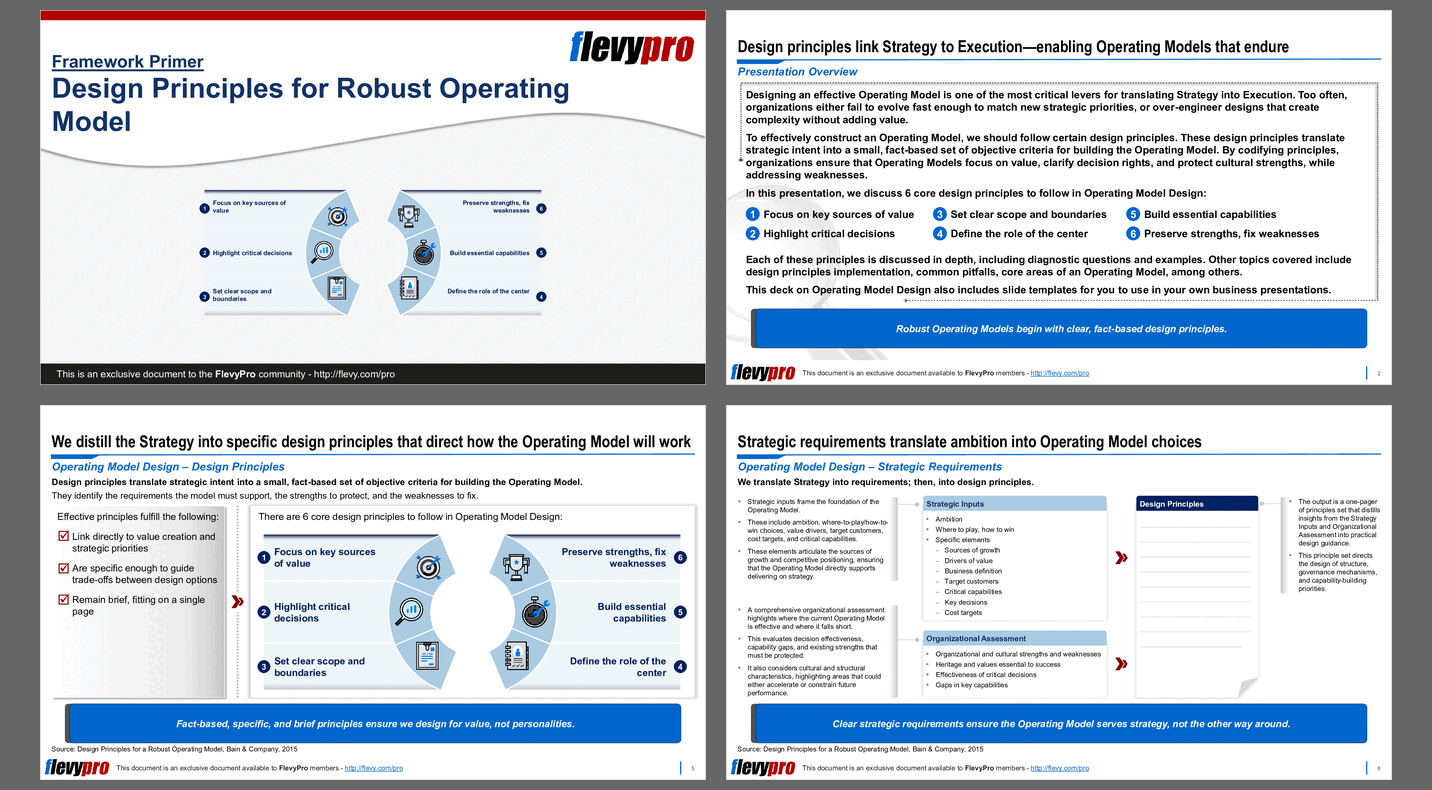
Core Design Principles for Effective Operating Model Development

Design Principles for Effective Centralized Operating Models

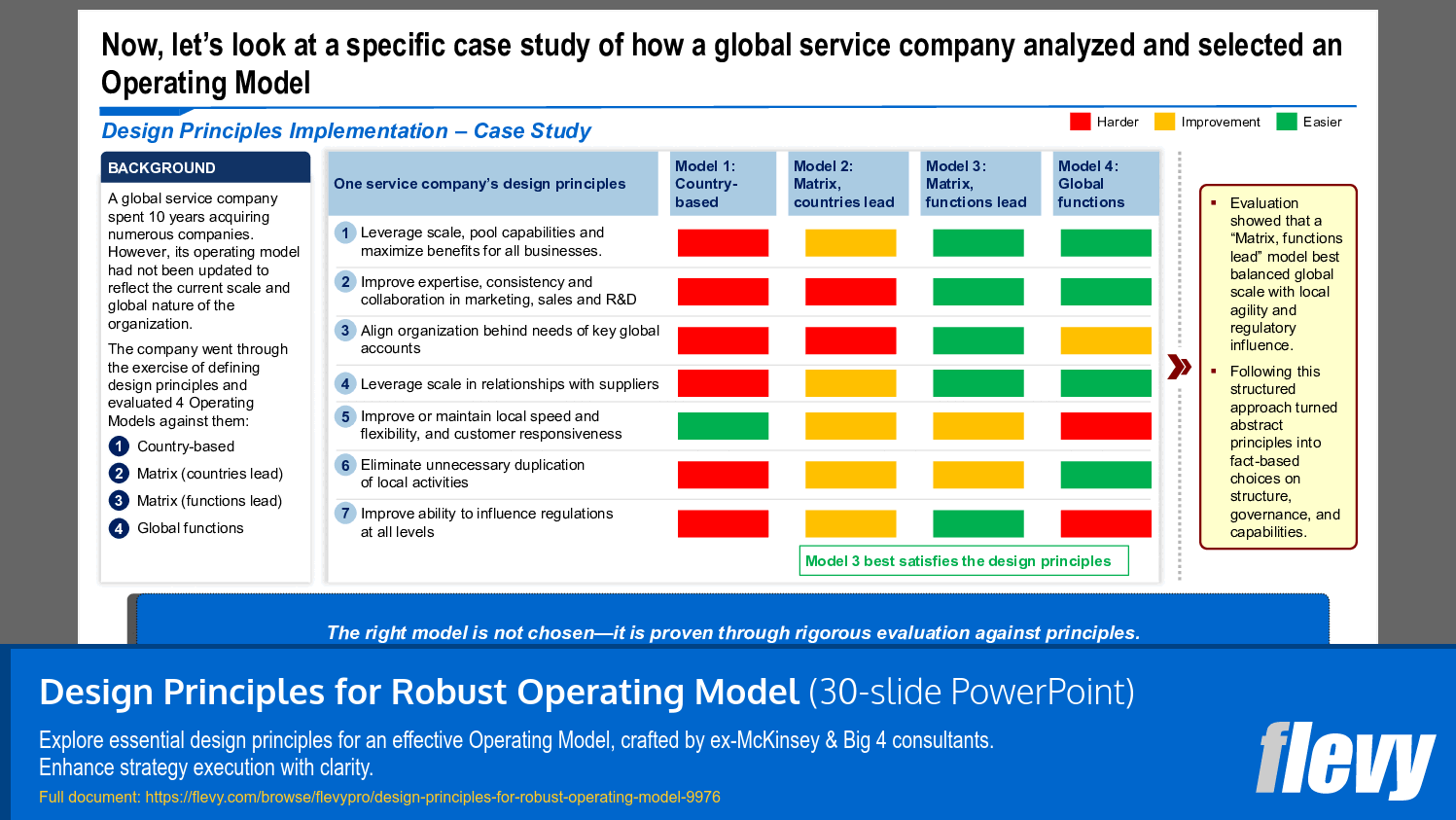
Structured Evaluation of Operating Models Based on Design Principles

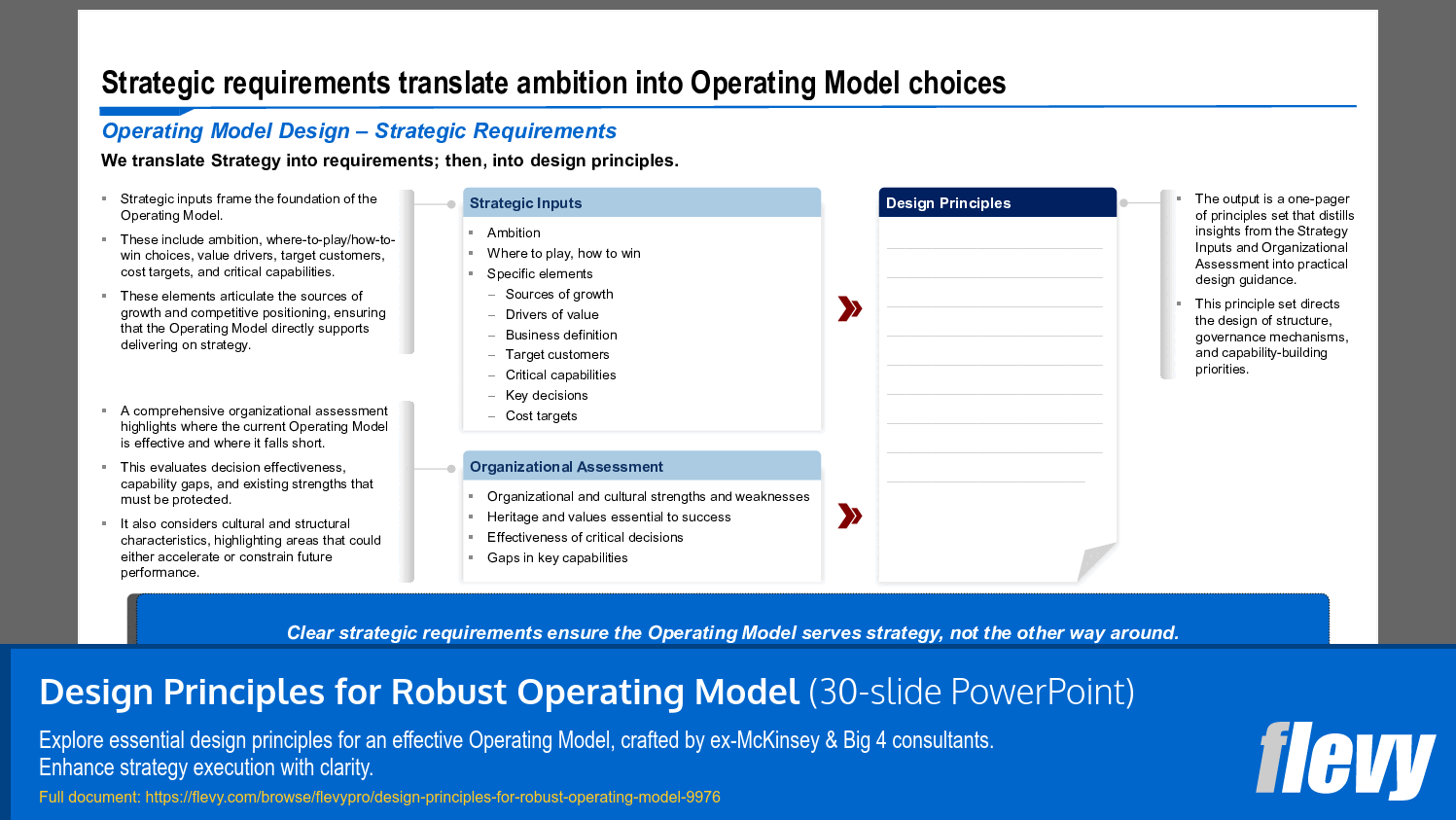
Translating Strategic Ambitions into Operating Model Design Principles

Source: Best Practices in Strategy Development, Operating Model PowerPoint Slides: Design Principles for Robust Operating Model PowerPoint (PPTX) Presentation Slide Deck, LearnPPT Consulting


$29.00
FlevyPro price: FREE (included in subscription)
This framework is developed by a team of former McKinsey and Big 4 consultants. The presentation follows the headline-body-bumper slide format used by global consulting firms.
Add to Cart
  

Did you need more documents?

Consider a FlevyPro subscription from $39/month. View plans here.

For $10.00 more, you can download this document plus 2 more FlevyPro documents. That's just $13 each.

ABOUT FLEVYPRO

This document is part of the FlevyPro Library, a curated knowledge base of documents for our FlevyPro subscribers.

FlevyPro is a subscription service for on-demand business frameworks and analysis tools. FlevyPro subscribers receive access to an exclusive library of curated business documents—business framework primers, presentation templates, Lean Six Sigma tools, and more—among other exclusive benefits.

Click here to learn more about FlevyPro and its benefits.

Did you know?
The average daily rate of a McKinsey consultant is $6,625 (not including expenses). The average price of a Flevy document is $65.


Trusted by over 10,000+ Client Organizations
Since 2012, we have provided business templates to over 10,000 businesses and organizations of all sizes, from startups and small businesses to the Fortune 100, in over 130 countries.
AT&T GE Cisco Intel IBM Coke Dell Toyota HP Nike Samsung Microsoft Astrazeneca JP Morgan KPMG Walgreens Walmart 3M Kaiser Oracle SAP Google E&Y Volvo Bosch Merck Fedex Shell Amgen Eli Lilly Roche AIG Abbott Amazon PwC T-Mobile Broadcom Bayer Pearson Titleist ConEd Pfizer NTT Data Schwab


Read Customer Testimonials

 
"As a consultant requiring up to date and professional material that will be of value and use to my clients, I find Flevy a very reliable resource.

The variety and quality of material available through Flevy offers a very useful and commanding source for information. Using Flevy saves me time, enhances my expertise and ends up being a good decision."

– Dennis Gershowitz, Principal at DG Associates
 
"One of the great discoveries that I have made for my business is the Flevy library of training materials.

As a Lean Transformation Expert, I am always making presentations to clients on a variety of topics: Training, Transformation, Total Productive Maintenance, Culture, Coaching, Tools, Leadership Behavior, etc. Flevy "

– Ed Kemmerling, Senior Lean Transformation Expert at PMG
 
"FlevyPro has been a brilliant resource for me, as an independent growth consultant, to access a vast knowledge bank of presentations to support my work with clients. In terms of RoI, the value I received from the very first presentation I downloaded paid for my subscription many times over! The "

– Roderick Cameron, Founding Partner at SGFE Ltd
 
"I have used Flevy services for a number of years and have never, ever been disappointed. As a matter of fact, David and his team continue, time after time, to impress me with their willingness to assist and in the real sense of the word. I have concluded in fact "

– Roberto Pelliccia, Senior Executive in International Hospitality
 
"Flevy is our 'go to' resource for management material, at an affordable cost. The Flevy library is comprehensive and the content deep, and typically provides a great foundation for us to further develop and tailor our own service offer."

– Chris McCann, Founder at Resilient.World
 
"I like your product. I'm frequently designing PowerPoint presentations for my company and your product has given me so many great ideas on the use of charts, layouts, tools, and frameworks. I really think the templates are a valuable asset to the job."

– Roberto Fuentes Martinez, Senior Executive Director at Technology Transformation Advisory
 
"Flevy is now a part of my business routine. I visit Flevy at least 3 times each month.

Flevy has become my preferred learning source, because what it provides is practical, current, and useful in this era where the business world is being rewritten.

In today's environment where there are so "

– Omar Hernán Montes Parra, CEO at Quantum SFE
 
"As a niche strategic consulting firm, Flevy and FlevyPro frameworks and documents are an on-going reference to help us structure our findings and recommendations to our clients as well as improve their clarity, strength, and visual power. For us, it is an invaluable resource to increase our impact and value."

– David Coloma, Consulting Area Manager at Cynertia Consulting


Customers Also Bought These Documents


Customers Also Like These Documents

Explore Related Management Topics


Your Recently Viewed Documents
Download our FREE Strategy & Transformation Framework Templates

Download our free compilation of 50+ Strategy & Transformation slides and templates. Frameworks include McKinsey 7-S, Balanced Scorecard, Disruptive Innovation, BCG Curve, and many more.