
This framework is developed by a team of former McKinsey and Big 4 consultants. The presentation follows the headline-body-bumper slide format used by global consulting firms.
Explore the DoDAF Primer, crafted by ex-McKinsey & Big 4 consultants, to enhance defense architecture and interoperability. Ideal for defense planners and architects. Department of Defense Architecture Framework (DoDAF) Primer is a 35-slide PPT PowerPoint presentation slide deck (PPTX) available for immediate download upon purchase.
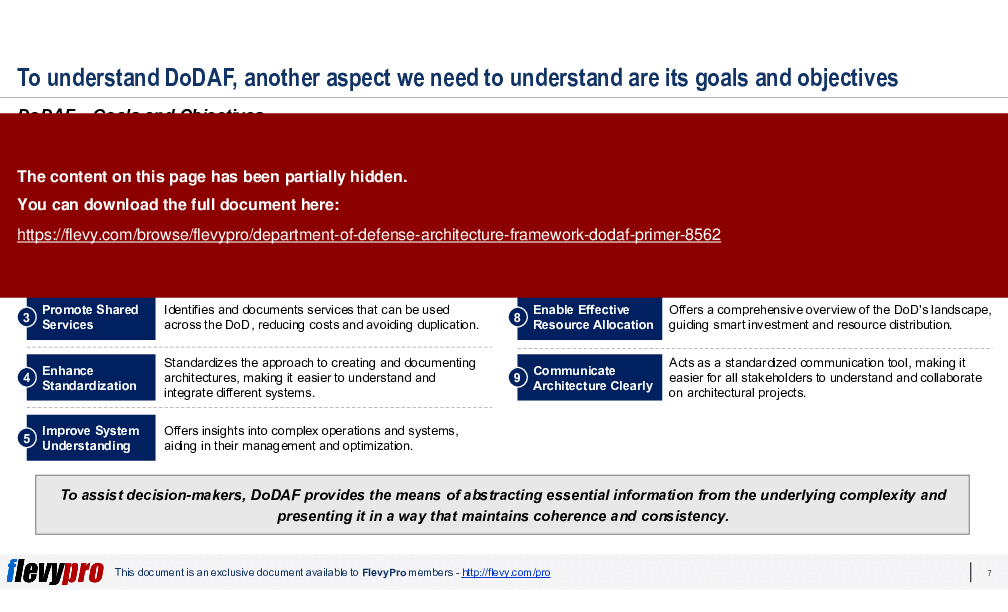
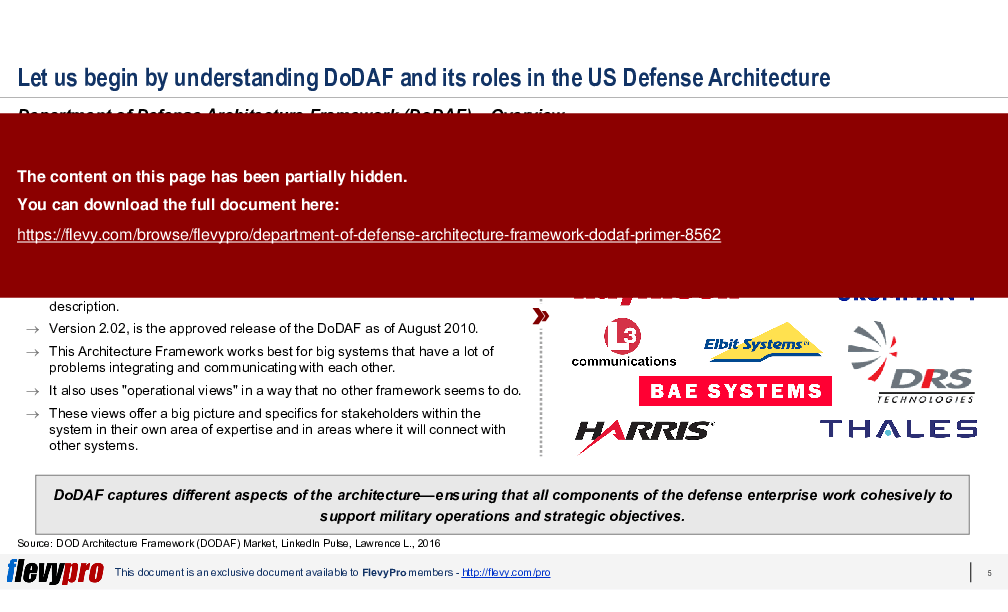
The Department of Defense Architecture Framework (DoDAF) was created to help the U.S. Department of Defense (DoD) deal with complex design problems and make sure that all of the defense infrastructure's systems and processes work together smoothly and effectively. DoDAF was created because the Department of Defense (DoD) needed a standardized way to handle the complicated tasks of integrating, running, and managing its many different technology systems and processes.
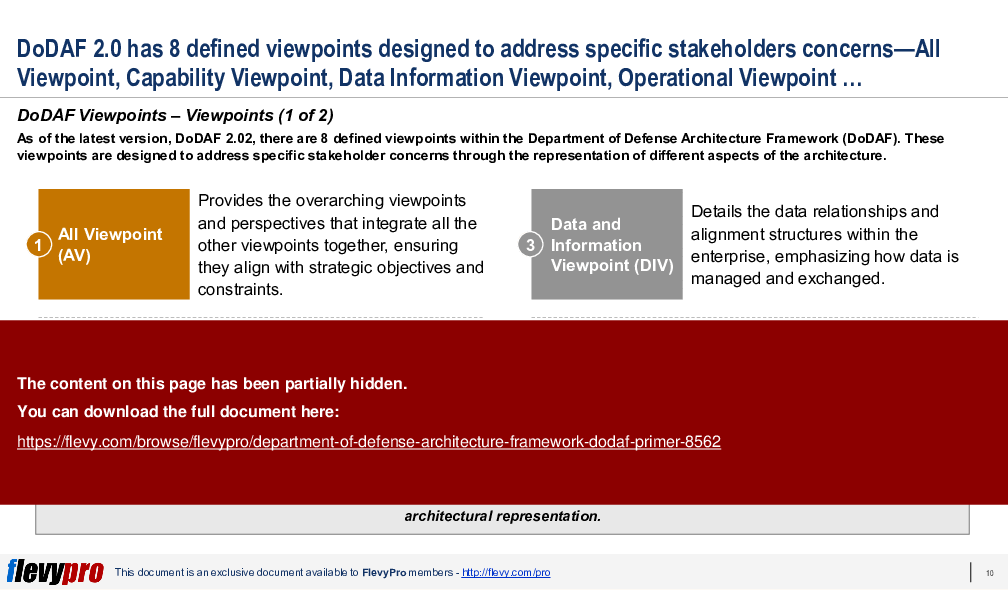
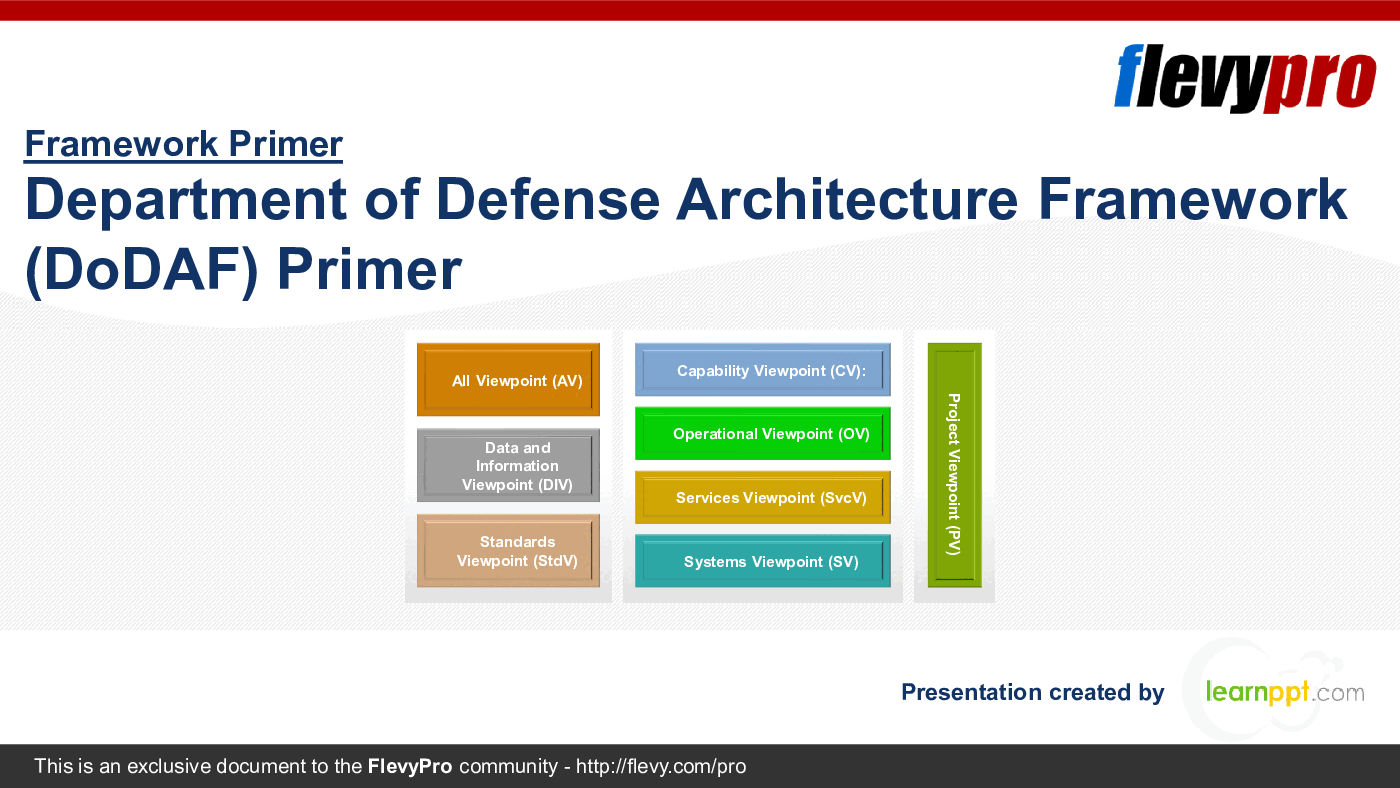
DoDAF aims to resolve problems related to interoperability, redundancy, and inefficiencies by providing a comprehensive framework for architecture development that enhances decision-making and strategic planning through the use of its 8 viewpoints:
1. All Viewpoint (AV)
2. Capability Viewpoint (CV)
3. Data and Information Viewpoint (DIV)
4. Operational Viewpoint (OV)
5. Project Viewpoint (PV)
6. Services Viewpoint (SvcV)
7. Standards Viewpoint (StdV)
8. Systems Viewpoint (SV)
The primary target audience for DoDAF includes defense planners, systems engineers, enterprise architects, and decision-makers within the DoD and associated agencies. Moreover, the framework's principles and methodologies are also applicable to organizations outside the defense sector.
By adopting DoDAF, organizations can achieve a more structured approach to enterprise architecture, leading to an enhanced operational effectiveness and strategic agility.
By the end of this PowerPoint presentation, executives will be equipped with the breakdown of DoDAF history and evolution, goals and objectives, core concepts, viewpoints, and case study essential to deal with the complex system integration and the need for interoperability across diverse operational environments
This PowerPoint presentation also includes slide templates for you to include in your own business presentations.
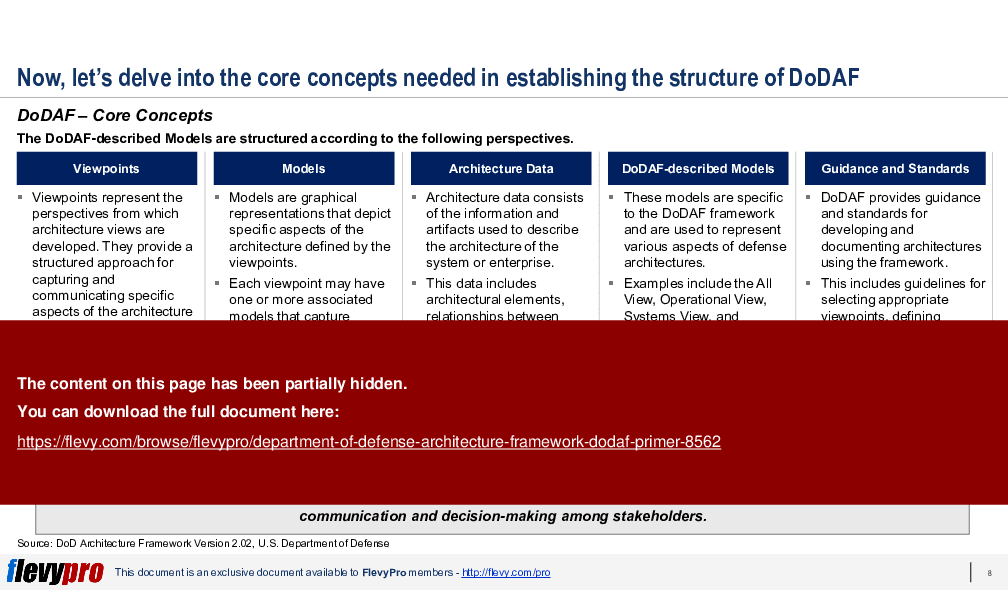
The All Viewpoint (AV) within the Department of Defense Architecture Framework (DoDAF) provides a comprehensive perspective on architectural descriptions, aligning architecture's scope, purpose, and strategic intent with stakeholder needs. The AV consists of 3 key sections: Overview, Function, and Guidance and Standards. The Overview section encapsulates overarching aspects of architecture for clarity on context. The Function section establishes a common understanding among stakeholders for effective communication. The Guidance and Standards section emphasizes identifying stakeholder needs and documenting constraints and standards, recommending adherence to ISO/IEC/IEEE 42010 for uniform terminology and practices. This ensures consistency and comprehensibility in architecture development.
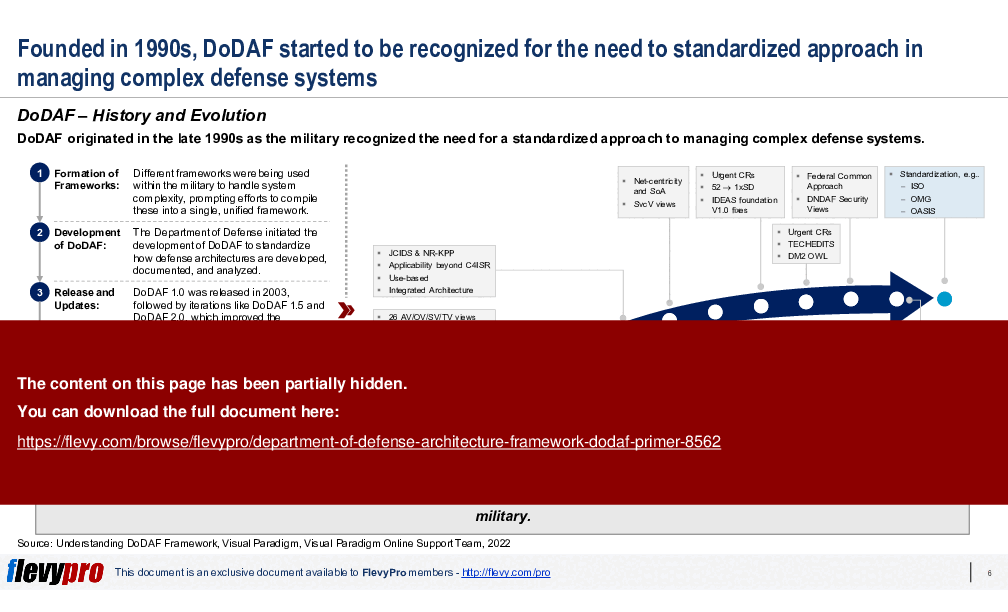
This PPT slide outlines the historical evolution of the Department of Defense Architecture Framework (DoDAF), initiated in the 1990s to address system complexity. The Department of Defense formalized DoDAF to standardize the development, documentation, and analysis of defense architectures, with DoDAF 1.0 released in 2003. Subsequent versions improved through user feedback, reflecting a commitment to continuous adaptation. DoDAF has become the standard for architecture development in defense programs, evolving to meet new challenges and technologies. Associated components include JCIDS, NR-KPP, and interoperability standards, demonstrating DoDAF's comprehensive nature and alignment with industry standards like ISO and OMG.
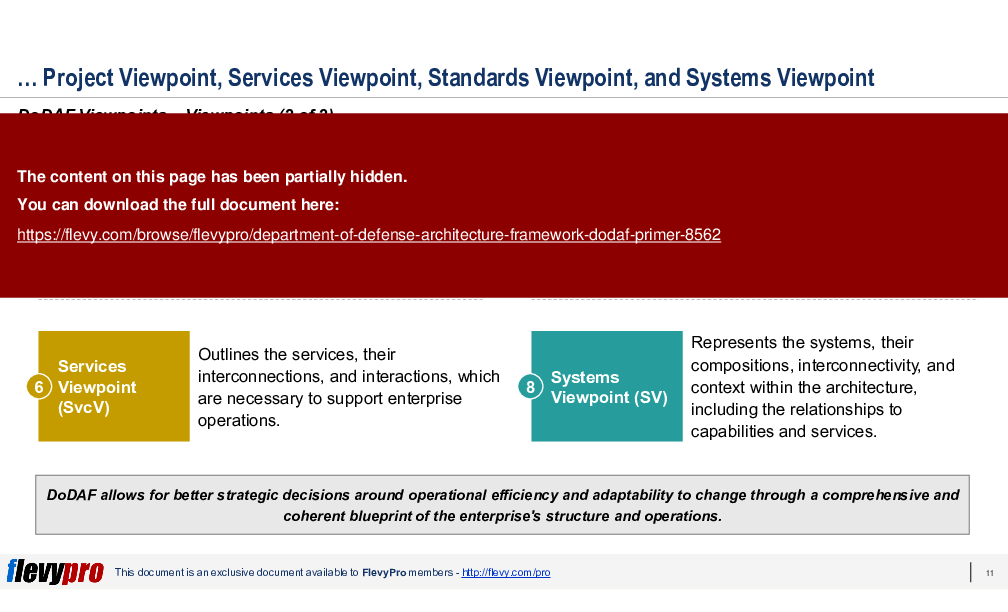
This PPT slide outlines key viewpoints within the Department of Defense Architecture Framework (DoDAF): Project Viewpoint (PV), Services Viewpoint (SvcV), Standards Viewpoint (StdV), and Systems Viewpoint (SV). The Project Viewpoint provides insights into specific projects, milestones, and the relationship between operational and capability requirements, essential for tracking progress and aligning with strategic objectives. The Services Viewpoint details the interconnections and interactions of services within the architecture, emphasizing collaboration among components. The Standards Viewpoint specifies technical standards and implementation conventions, ensuring consistency and interoperability. The Systems Viewpoint illustrates the composition and interconnectivity of systems, contextualizing their relationship to capabilities and services. Understanding these viewpoints enhances decision-making regarding operational efficiency and adaptability in defense architecture.
This PPT slide outlines the viewpoints within the Department of Defense Architecture Framework (DoDAF) relevant to the F-35 Lightning II Program. The Operational Viewpoint (OV) details operational scenarios and roles across the Air Force, Navy, and Marine Corps, emphasizing international partnerships. The Project Viewpoint (PV) focuses on management aspects, including project milestones, scheduling, budgeting, and acquisition strategies, highlighting the importance of international partnership agreements. The Services Viewpoint (SvcV) discusses support and maintenance services, such as the Autonomic Logistics Information System (ALIS) and engine maintenance, crucial for sustainment strategies. The Standards Viewpoint (StdV) specifies technical and operational standards for interoperability within the DoD. Lastly, the Systems Viewpoint (SV) details subsystems like the AESA radar and CNI system, showcasing their contributions to the aircraft's functionality and mission capability.
This PPT slide presents the Project Viewpoint within the Department of Defense Architecture Framework (DoDAF), outlining projects and acquisition programs necessary for delivering required capabilities. It emphasizes timelines, dependencies, and resource allocation. A structured approach to project management is detailed, highlighting the need for a comprehensive project plan that includes critical elements such as timelines, milestones, and resource allocations. Best practices for project management are advised, including defining project scope, objectives, and deliverables, along with risk management strategies. Established methodologies from the Project Management Institute (PMI), particularly the PMBOK, and ISO 21500 are referenced for additional guidance, reinforcing adherence to recognized standards for project success.
This PPT slide presents the Standards Viewpoint within the Department of Defense Architecture Framework (DoDAF), which manages technology and process standards for compatibility and interoperability. It serves as a comprehensive inventory of standards essential for informed technology deployment decisions. The Standards Viewpoint requires compliance with technical, business, and industry standards, facilitating consistent and interoperable solutions across enterprises. Key actions include identifying relevant standards, assessing compliance, and developing a roadmap for adopting new standards. Prioritizing compliance with cybersecurity standards, such as NIST SP 800 series and IEEE 802, is crucial in today’s evolving digital landscape. This framework guides organizations in navigating the complexities of standards in technology and process management.
Source: Best Practices in Enterprise Architecture, Business Architecture PowerPoint Slides: Department of Defense Architecture Framework (DoDAF) Primer PowerPoint (PPTX) Presentation Slide Deck, LearnPPT Consulting
This framework is developed by a team of former McKinsey and Big 4 consultants. The presentation follows the headline-body-bumper slide format used by global consulting firms.
For $10.00 more, you can download this document plus 2 more FlevyPro documents. That's just $13 each.
ABOUT FLEVYPRO
This document is part of the FlevyPro Library, a curated knowledge base of documents for our FlevyPro subscribers.
FlevyPro is a subscription service for on-demand business frameworks and analysis tools. FlevyPro subscribers receive access to an exclusive library of curated business documents—business framework primers, presentation templates, Lean Six Sigma tools, and more—among other exclusive benefits.
The average daily rate of a McKinsey consultant is $6,625 (not including expenses). The average price of a Flevy document is $65.
Trusted by over 10,000+ Client Organizations
Since 2012, we have provided business templates to over 10,000 businesses and organizations of all sizes, from startups and small businesses to the Fortune 100, in over 130 countries.
"FlevyPro has been a brilliant resource for me, as an independent growth consultant, to access a vast knowledge bank of presentations to support my work with clients. In terms of RoI, the value I received from the very first presentation I downloaded paid for my subscription many times over! The
quality of the decks available allows me to punch way above my weight – it's like having the resources of a Big 4 consultancy at your fingertips at a microscopic fraction of the overhead.
"
– Roderick Cameron, Founding Partner at SGFE Ltd
"Flevy is now a part of my business routine. I visit Flevy at least 3 times each month.
Flevy has become my preferred learning source, because what it provides is practical, current, and useful in this era where the business world is being rewritten.

many challenges and there is the need to make the right decisions in a short time, with so much scattered information, we are fortunate to have Flevy. Flevy investigates, selects, and puts at our disposal the best of the best to help us be successful in our work.
"
– Omar Hernán Montes Parra, CEO at Quantum SFE
"As a consulting firm, we had been creating subject matter training materials for our people and found the excellent materials on Flevy, which saved us 100's of hours of re-creating what already exists on the Flevy materials we purchased."
– Michael Evans, Managing Director at Newport LLC
"I have found Flevy to be an amazing resource and library of useful presentations for lean sigma, change management and so many other topics. This has reduced the time I need to spend on preparing for my performance consultation. The library is easily accessible and updates are regularly provided. A wealth of great information."
– Cynthia Howard RN, PhD, Executive Coach at Ei Leadership
"Flevy is our 'go to' resource for management material, at an affordable cost. The Flevy library is comprehensive and the content deep, and typically provides a great foundation for us to further develop and tailor our own service offer."
– Chris McCann, Founder at Resilient.World
"One of the great discoveries that I have made for my business is the Flevy library of training materials.
As a Lean Transformation Expert, I am always making presentations to clients on a variety of topics: Training, Transformation, Total Productive Maintenance, Culture, Coaching, Tools, Leadership Behavior, etc. Flevy
It is well worth the money to purchase these presentations. Sure, I have the knowledge and information to make my point. It is another thing to create a presentation that captures what I want to say. Flevy has saved me countless hours of preparation time that is much better spent with implementation that will actually save money for my clients.
"
– Ed Kemmerling, Senior Lean Transformation Expert at PMG
"If you are looking for great resources to save time with your business presentations, Flevy is truly a value-added resource. Flevy has done all the work for you and we will continue to utilize Flevy as a source to extract up-to-date information and data for our virtual and onsite presentations!"
– Debbi Saffo, President at The NiKhar Group
"As a young consulting firm, requests for input from clients vary and it's sometimes impossible to provide expert solutions across a broad spectrum of requirements. That was before I discovered Flevy.com.
Through subscription to this invaluable site of a plethora of topics that are key and crucial to consulting, I
have been able to exceed expectations and deliver quality advice and solutions to my clients. The quality and expertise of the authors are exemplary and gives me great confidence to use as part of my service offerings.
I highly recommend this company for any consultant wanting to apply international best practice standards in their service offerings.
"
– Nishi Singh, Strategist and MD at NSP Consultants
Download our FREE Digital Transformation Templates
Download our free compilation of 50+ Digital Transformation slides and templates. DX concepts covered include Digital Leadership, Digital Maturity, Digital Value Chain, Customer Experience, Customer Journey, RPA, etc.