
Corporate Compliance: Ending Unethical Behavior   21-slide PPT PowerPoint presentation template (PPTX)
$29.00

Corporate Compliance: Ending Unethical Behavior (21-slide PPT PowerPoint presentation slide deck (PPTX)) Preview Image
Log in to unlock full preview.
Corporate Compliance: Ending Unethical Behavior (21-slide PPT PowerPoint presentation slide deck (PPTX)) Preview Image
Arrow   Click main image to view in full screen.

Corporate Compliance: Ending Unethical Behavior – PowerPoint PPTX Template

PowerPoint (PPTX) 21 Slides FlevyPro Document

$29.00
FlevyPro price: FREE (included in subscription)
This framework is developed by a team of former McKinsey and Big 4 consultants. The presentation follows the headline-body-bumper slide format used by global consulting firms.
Add to Cart


Immediate download
Free lifetime updates

BUSINESS ETHICS PPT TEMPLATE DESCRIPTION

Editor Summary Corporate Compliance: Ending Unethical Behavior is a 21-slide PowerPoint (PPTX) presentation that analyzes causes of corporate non-compliance and outlines eight common rationalizations employees use to justify unethical actions. Read more

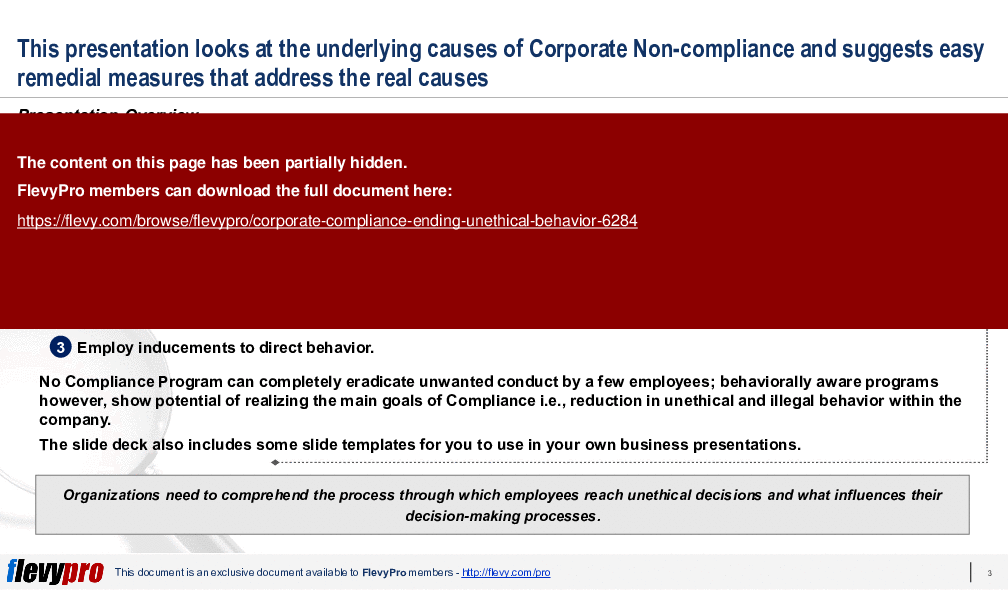
Corporate Non-compliance is a major issue across the world. Highly public cases involving major corporations point to the fact that the usual descriptions of why business employees perform illegal acts are misdirected. Organizations need to comprehend the process through which employees reach unethical decisions and what influences their decision-making processes.

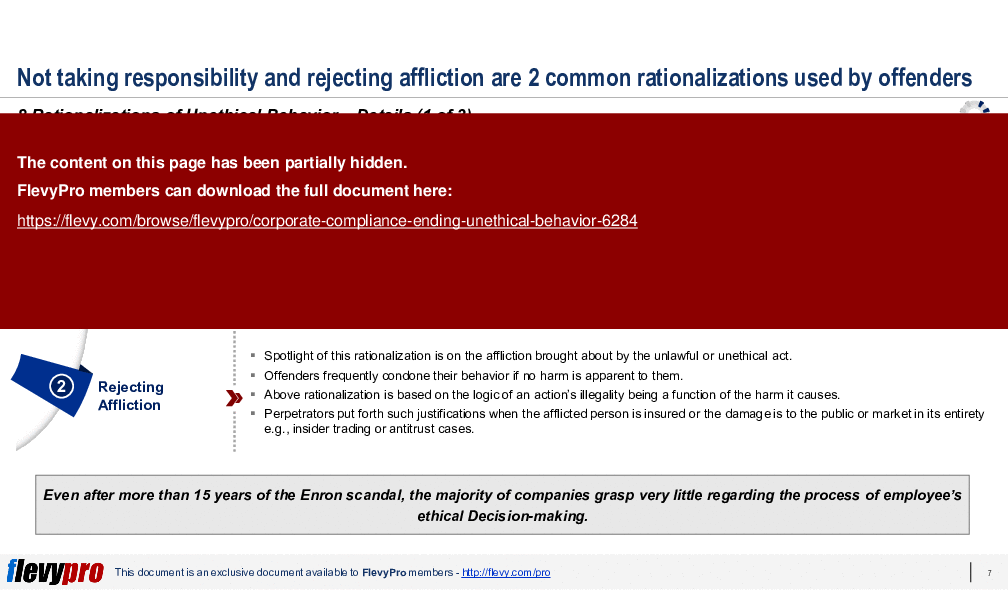
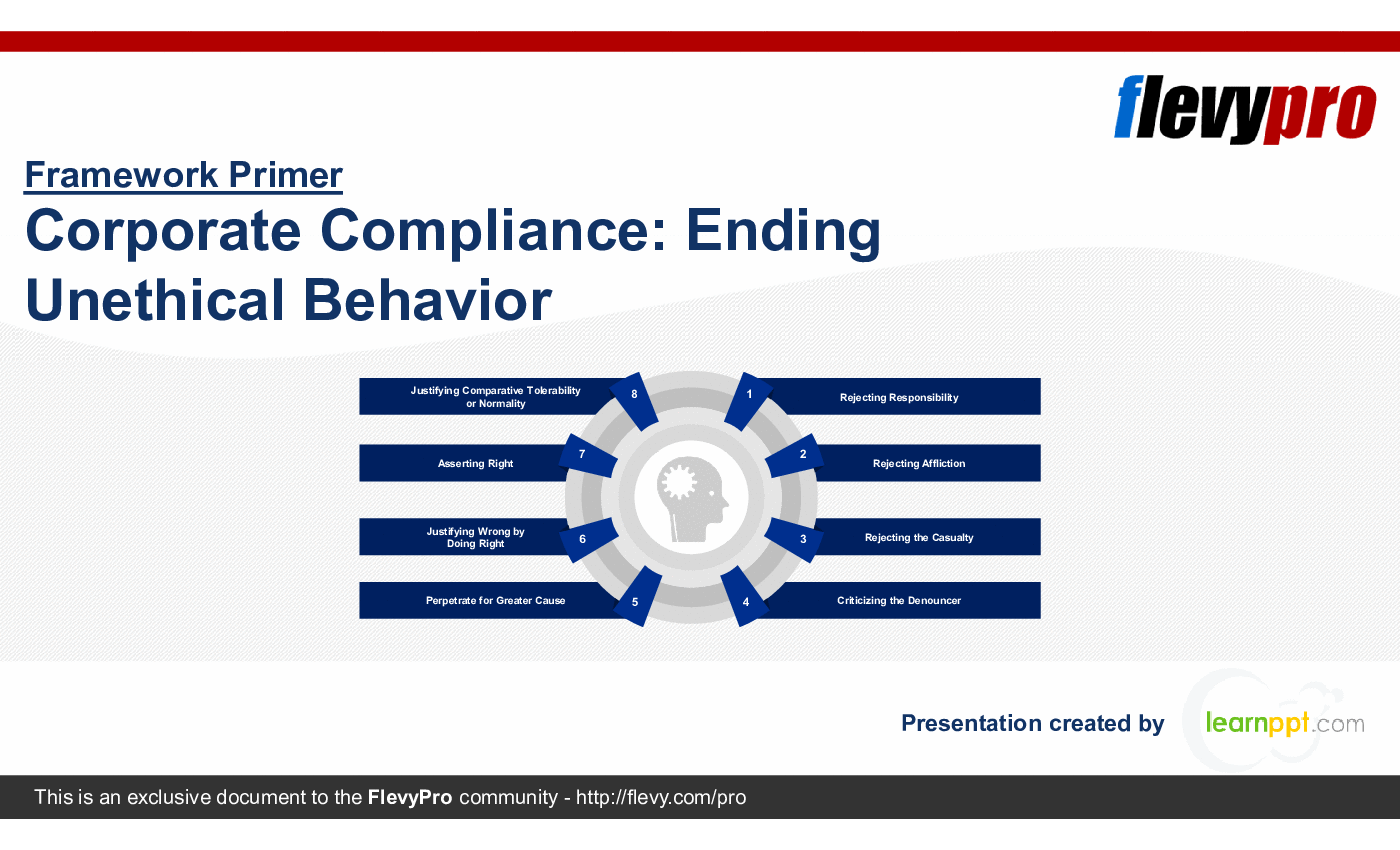
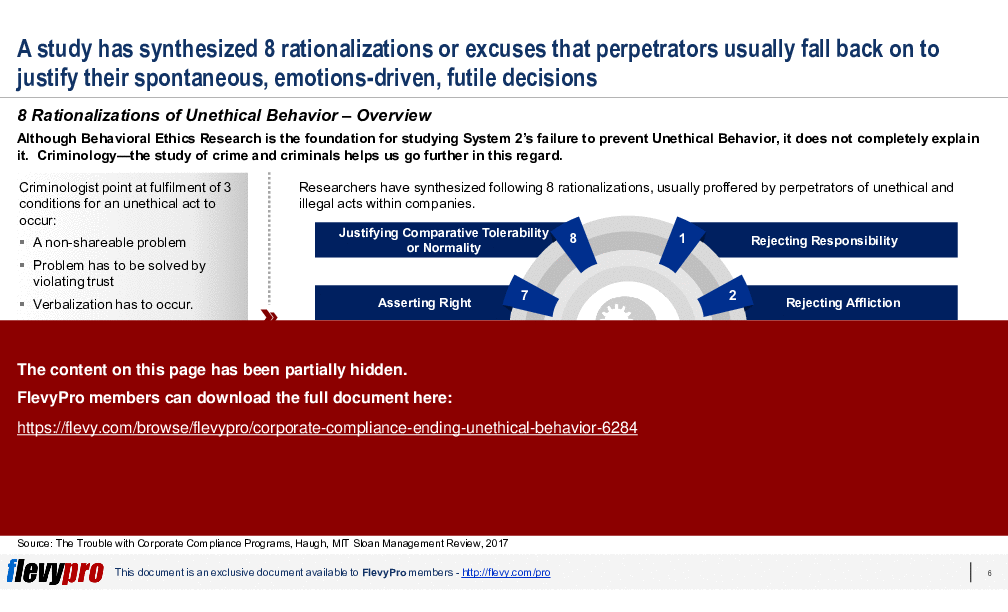
A study has ascertained prominent "excuses" or "rationalizations" put forth by white-collar crime perpetrators and at the same time has underlined the value of behavioral insights for effective Corporate Compliance. This deck discusses 8 common rationalizations to unethical behavior.

The research, which was based on criminological theory and trailblazing sociological study of embezzlers, also suggests 3 cost-effective and simple steps that address the underlying causes of Corporate Non-compliance. These steps are explained in depth in this presentation.

No Compliance Program can completely eradicate unwanted conduct by a few employees; behaviorally aware programs however, show potential of realizing the main goals of Compliance i.e., reduction in unethical and illegal behavior within the company.

The slide deck also includes some slide templates for you to use in your own business presentations.

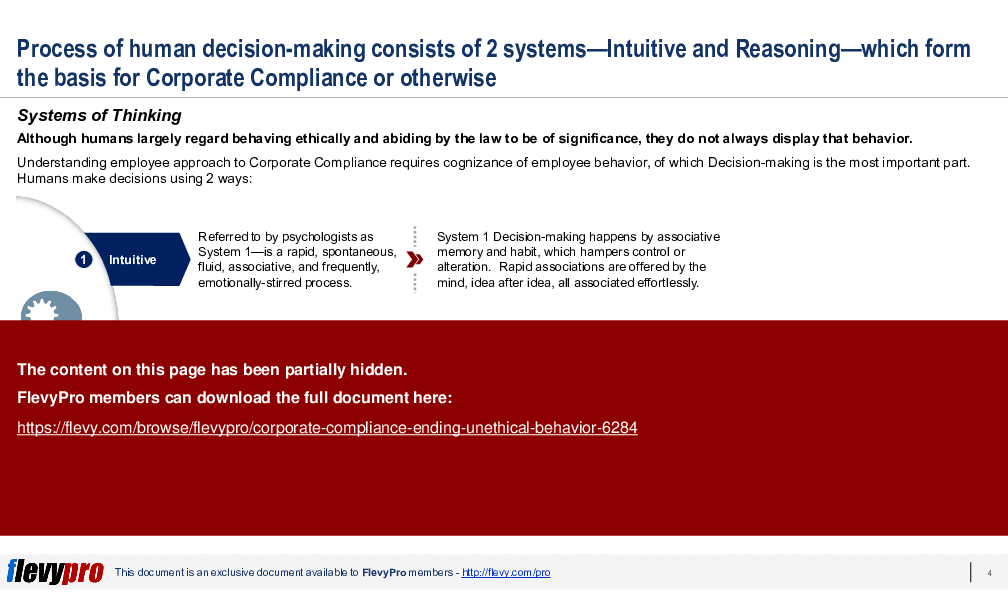
This presentation delves into the dual systems of thinking—Intuitive and Reasoning—that underpin human decision-making, crucial for understanding Corporate Compliance. It emphasizes the importance of recognizing how spontaneous, emotionally-driven processes often lead to unethical behavior. The deck provides actionable insights into how organizations can leverage this understanding to foster a more ethical workplace.

The PPT also outlines practical steps to counteract these rationalizations, including appointing behavioral experts, eliminating root causes through best practices, and employing inducements to direct behavior. These strategies are designed to be cost-effective and straightforward, making them accessible for organizations of all sizes. The included templates can be seamlessly integrated into your own compliance presentations, enhancing their impact and clarity.

Got a question about this document? Email us at flevypro@flevy.com.

MARCUS OVERVIEW

This synopsis was written by Marcus [?] based on the analysis of the full 21-slide presentation.


Executive Summary
This presentation, "Corporate Compliance: Ending Unethical Behavior," provides a thorough examination of the underlying causes of corporate non-compliance and offers actionable strategies to mitigate unethical behavior. Developed by experts with backgrounds in behavioral science and criminology, the presentation outlines eight common rationalizations that employees use to justify unethical actions. It emphasizes the importance of understanding decision-making processes and introduces 3 cost-effective steps to enhance corporate compliance. These steps focus on appointing behavioral experts, eliminating root causes through best practices, and employing inducements to guide ethical behavior.

Who This Is For and When to Use
•  Corporate compliance officers responsible for developing and implementing compliance programs
•  HR leaders focused on fostering an ethical workplace culture
•  Executives seeking to understand and mitigate unethical behavior within their organizations
•  Consultants advising firms on compliance and ethical decision-making practices

Best-fit moments to use this deck:
•  During compliance training sessions to educate employees on ethical decision-making
•  When developing or revising corporate compliance programs
•  In workshops aimed at fostering a culture of ethics and accountability

Learning Objectives
•  Define the eight rationalizations of unethical behavior and their implications for compliance
•  Identify the decision-making processes that lead to unethical behavior in corporate settings
•  Develop strategies to counteract rationalizations and promote ethical decision-making
•  Implement best practices to enhance corporate compliance and reduce unethical behavior
•  Create a framework for appointing behavioral experts within the organization
•  Establish inducements that encourage ethical behavior and compliance

Table of Contents
•  Overview (page 3)
•  8 Rationalizations of Unethical Behavior (page 6)
•  Overcoming Rationalizations of Unethical Behavior (page 11)
•  Templates (page 15)

Primary Topics Covered
•  Overview of Corporate Non-compliance - An introduction to the issue of corporate non-compliance and its impact on organizations.
•  Rationalizations of Unethical Behavior - A detailed examination of eight common rationalizations that employees use to justify unethical actions.
•  Behavioral Insights for Compliance - Insights from behavioral science and criminology that inform effective compliance strategies.
•  Three Steps to Enhance Compliance - A framework for implementing behavioral strategies to improve corporate compliance.
•  Best Practices for Compliance Programs - Recommendations for best practices that address the root causes of non-compliance.
•  Templates for Implementation - Practical templates that can be utilized in developing compliance initiatives.

Deliverables, Templates, and Tools
•  Template for identifying and addressing rationalizations of unethical behavior
•  Framework for appointing behavioral experts within the organization
•  Best practices checklist for enhancing corporate compliance
•  Inducement strategy template to guide ethical behavior
•  Compliance program evaluation template
•  Success story sharing framework to promote positive behaviors

Slide Highlights
•  Overview of the eight rationalizations of unethical behavior
•  Visual representation of the decision-making process in corporate compliance
•  Framework for the 3 steps to overcome rationalizations
•  Best practices for implementing effective compliance programs
•  Templates for practical application in compliance initiatives

Potential Workshop Agenda
Understanding Unethical Behavior (60 minutes)
•  Discuss the eight rationalizations of unethical behavior
•  Analyze case studies of corporate non-compliance

Strategies for Enhancing Compliance (90 minutes)
•  Review the 3 steps to improve compliance
•  Develop action plans for implementing best practices

Behavioral Insights and Inducements (60 minutes)
•  Explore the role of behavioral experts in compliance
•  Design inducement strategies to promote ethical behavior

Customization Guidance
•  Tailor the templates to reflect your organization’s specific compliance challenges and goals
•  Adjust the examples and case studies to align with your industry context
•  Incorporate organizational terminology and metrics into the compliance frameworks

Secondary Topics Covered
•  The role of organizational culture in ethical decision-making
•  Behavioral economics principles relevant to compliance
•  The impact of leadership on compliance effectiveness
•  Strategies for communicating compliance initiatives to employees
•  The importance of continuous monitoring and evaluation of compliance programs

Topic FAQ

What are the common rationalizations employees use to justify unethical behavior?

Research identifies eight rationalizations used by perpetrators: rejecting responsibility, rejecting affliction, rejecting the casualty, criticizing the denouncer, asserting rights, justifying wrong by doing right, perpetrating for a greater cause, and justifying comparative tolerability or normality — eight rationalizations.

How does behavioral science improve corporate compliance program design?

Behavioral science highlights how Intuitive (automatic, emotional) and Reasoning (deliberative) processes shape choices; using those insights helps target interventions that reduce spontaneous unethical acts and align incentives, as described through dual systems of Intuitive and Reasoning.

What practical steps can organizations take to reduce unethical behavior?

The presentation recommends 3 cost-effective steps: appoint behavioral experts, eliminate root causes via best practices, and employ inducements that guide behavior; these 3 cost-effective steps form the core intervention framework.

How should inducements be designed to encourage ethical behavior?

Inducements should be aligned with behavioral insights and used alongside root-cause changes; the resource provides an inducement strategy template to structure incentives and communications that nudge employees toward ethical choices, specifically the inducement strategy template.

What elements belong in a compliance program evaluation?

Effective evaluations combine regular monitoring of compliance metrics, employee feedback on culture, and assessments of whether best practices and inducements are working; the slide deck includes a compliance program evaluation template to standardize that process.

How can training address dual-system decision-making to reduce unethical acts?

Training should explain the Intuitive versus Reasoning distinction, show how spontaneous emotional responses can produce unethical choices, and include exercises or case analyses to slow reflexive responses; the presentation focuses on the dual systems of Intuitive and Reasoning.

Are behaviorally informed compliance templates cost-effective for smaller budgets?

The material notes the recommended steps and templates are designed to be cost-effective and straightforward, enabling organizations of various sizes to implement interventions without large budgets, summarized as 3 cost-effective steps and supporting templates.

How can a company counteract a specific rationalization like "rejecting responsibility"?

Addressing "rejecting responsibility" involves identifying where people displace accountability, applying best practices to close those gaps, appointing behavioral expertise, and using templates such as the Template for identifying and addressing rationalizations of unethical behavior.

Document FAQ
These are questions addressed within this presentation.

What are the eight rationalizations of unethical behavior?
The eight rationalizations include rejecting responsibility, rejecting affliction, rejecting the casualty, criticizing the denouncer, asserting rights, justifying wrong by doing right, perpetrating for a greater cause, and justifying comparative tolerability or normality.

How can organizations effectively implement compliance programs?
Organizations can implement effective compliance programs by appointing behavioral experts, eliminating root causes of non-compliance, and employing inducements that encourage ethical behavior.

What role do behavioral experts play in compliance?
Behavioral experts help organizations understand the psychological factors influencing decision-making, enabling the development of more effective compliance strategies.

How can organizations measure the effectiveness of their compliance programs?
Organizations can measure effectiveness through regular evaluations, monitoring compliance metrics, and assessing employee feedback regarding the compliance culture.

What are some best practices for fostering an ethical workplace culture?
Best practices include promoting open communication, providing regular training on ethical decision-making, and recognizing and rewarding ethical behavior within the organization.

How do rationalizations affect decision-making in corporate settings?
Rationalizations can distort employees' perceptions of ethical behavior, leading them to justify unethical actions as acceptable under certain circumstances.

What are the consequences of corporate non-compliance?
Consequences can include legal penalties, reputational damage, loss of customer trust, and decreased employee morale.

How can success stories be utilized in compliance training?
Success stories can illustrate positive outcomes from ethical behavior, reinforcing the importance of compliance and encouraging employees to adopt similar practices.

Glossary
•  Corporate Compliance - Adherence to laws, regulations, and internal policies governing business practices.
•  Rationalization - A cognitive process where individuals justify unethical behavior to align with their self-image.
•  Behavioral Ethics - The study of how psychological factors influence ethical decision-making.
•  Inducement - Incentives designed to encourage specific behaviors, such as compliance with ethical standards.
•  Best Practices - Established methods or techniques that are recognized as effective in achieving desired outcomes.
•  Behavioral Experts - Professionals specializing in understanding and influencing human behavior, particularly in ethical contexts.
•  Compliance Program - A structured approach to ensure adherence to laws and regulations within an organization.
•  Organizational Culture - The shared values, beliefs, and practices that shape how employees behave within an organization.
•  Decision-Making Process - The cognitive steps taken to arrive at a conclusion or action, often influenced by various factors.
•  Ethical Decision-Making - The process of making choices that align with moral principles and standards.
•  Criminology - The study of crime, criminal behavior, and the criminal justice system.
•  Employee Engagement - The level of commitment and involvement an employee has towards their organization and its values.
•  Compliance Metrics - Quantifiable measures used to assess the effectiveness of compliance initiatives.
•  Cognitive Dissonance - The mental discomfort experienced when holding conflicting beliefs or values.
•  Ethical Culture - The environment within an organization that promotes ethical behavior and decision-making.
•  Compliance Training - Educational programs designed to inform employees about laws, regulations, and ethical standards relevant to their roles.
•  Self-Exculpatory Rationalizations - Justifications used by individuals to absolve themselves of responsibility for unethical actions.
•  Moral Psychology - The study of how people think about morality and make moral decisions.
•  Compliance Violations - Instances where individuals fail to adhere to established laws, regulations, or internal policies.
•  Organizational Ethics - The principles and standards that guide behavior within an organization.

BUSINESS ETHICS PPT TEMPLATES

Strategies to Mitigate Employee Non-Compliance

Rationalizations for Unethical Behavior in Organizations

Three Steps to Enhance Corporate Compliance Effectiveness

Understanding Rationalizations of Unethical Behavior

Source: Best Practices in Business Ethics, Compliance PowerPoint Slides: Corporate Compliance: Ending Unethical Behavior PowerPoint (PPTX) Presentation Slide Deck, LearnPPT Consulting


$29.00
FlevyPro price: FREE (included in subscription)
This framework is developed by a team of former McKinsey and Big 4 consultants. The presentation follows the headline-body-bumper slide format used by global consulting firms.
Add to Cart
  

Did you need more documents?

Consider a FlevyPro subscription from $39/month. View plans here.

For $10.00 more, you can download this document plus 2 more FlevyPro documents. That's just $13 each.

ABOUT FLEVYPRO

This document is part of the FlevyPro Library, a curated knowledge base of documents for our FlevyPro subscribers.

FlevyPro is a subscription service for on-demand business frameworks and analysis tools. FlevyPro subscribers receive access to an exclusive library of curated business documents—business framework primers, presentation templates, Lean Six Sigma tools, and more—among other exclusive benefits.

Click here to learn more about FlevyPro and its benefits.

Did you know?
The average daily rate of a McKinsey consultant is $6,625 (not including expenses). The average price of a Flevy document is $65.


Trusted by over 10,000+ Client Organizations
Since 2012, we have provided business templates to over 10,000 businesses and organizations of all sizes, from startups and small businesses to the Fortune 100, in over 130 countries.
AT&T GE Cisco Intel IBM Coke Dell Toyota HP Nike Samsung Microsoft Astrazeneca JP Morgan KPMG Walgreens Walmart 3M Kaiser Oracle SAP Google E&Y Volvo Bosch Merck Fedex Shell Amgen Eli Lilly Roche AIG Abbott Amazon PwC T-Mobile Broadcom Bayer Pearson Titleist ConEd Pfizer NTT Data Schwab


Read Customer Testimonials

 
"As a consultant requiring up to date and professional material that will be of value and use to my clients, I find Flevy a very reliable resource.

The variety and quality of material available through Flevy offers a very useful and commanding source for information. Using Flevy saves me time, enhances my expertise and ends up being a good decision."

– Dennis Gershowitz, Principal at DG Associates
 
"If you are looking for great resources to save time with your business presentations, Flevy is truly a value-added resource. Flevy has done all the work for you and we will continue to utilize Flevy as a source to extract up-to-date information and data for our virtual and onsite presentations!"

– Debbi Saffo, President at The NiKhar Group
 
"I am extremely grateful for the proactiveness and eagerness to help and I would gladly recommend the Flevy team if you are looking for data and toolkits to help you work through business solutions."

– Trevor Booth, Partner, Fast Forward Consulting
 
"FlevyPro has been a brilliant resource for me, as an independent growth consultant, to access a vast knowledge bank of presentations to support my work with clients. In terms of RoI, the value I received from the very first presentation I downloaded paid for my subscription many times over! The "

– Roderick Cameron, Founding Partner at SGFE Ltd
 
"My FlevyPro subscription provides me with the most popular frameworks and decks in demand in today’s market. They not only augment my existing consulting and coaching offerings and delivery, but also keep me abreast of the latest trends, inspire new products and service offerings for my practice, and educate me "

– Bill Branson, Founder at Strategic Business Architects
 
"FlevyPro provides business frameworks from many of the global giants in management consulting that allow you to provide best in class solutions for your clients."

– David Harris, Managing Director at Futures Strategy
 
"The wide selection of frameworks is very useful to me as an independent consultant. In fact, it rivals what I had at my disposal at Big 4 Consulting firms in terms of efficacy and organization."

– Julia T., Consulting Firm Owner (Former Manager at Deloitte and Capgemini)
 
"One of the great discoveries that I have made for my business is the Flevy library of training materials.

As a Lean Transformation Expert, I am always making presentations to clients on a variety of topics: Training, Transformation, Total Productive Maintenance, Culture, Coaching, Tools, Leadership Behavior, etc. Flevy "

– Ed Kemmerling, Senior Lean Transformation Expert at PMG


Customers Also Bought These Documents


Customers Also Like These Documents

Explore Templates on Related Management Topics


Your Recently Viewed Documents
Download our FREE Organization, Change, & Culture, Templates

Download our free compilation of 50+ slides and templates on Organizational Design, Change Management, and Corporate Culture. Methodologies include ADKAR, Burke-Litwin Change Model, McKinsey 7-S, Competing Values Framework, etc.