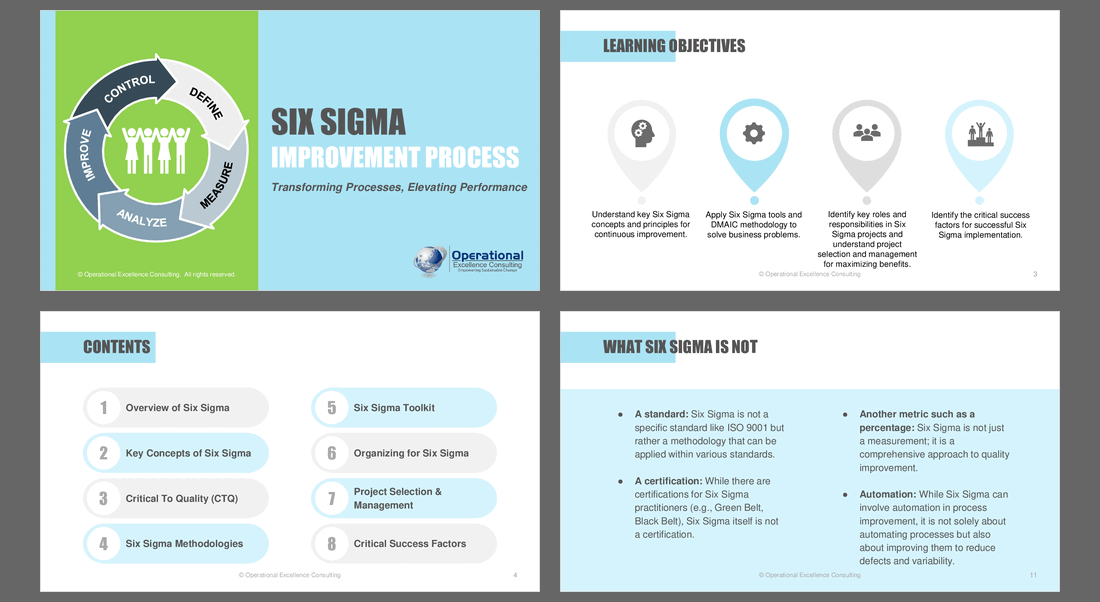
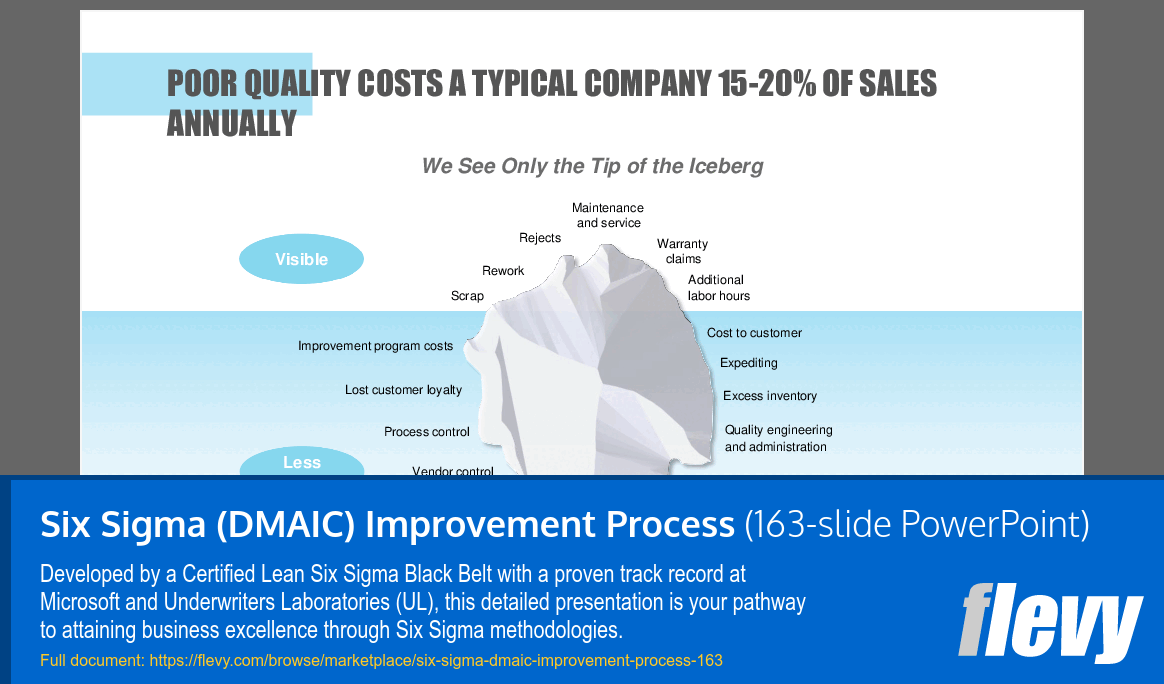
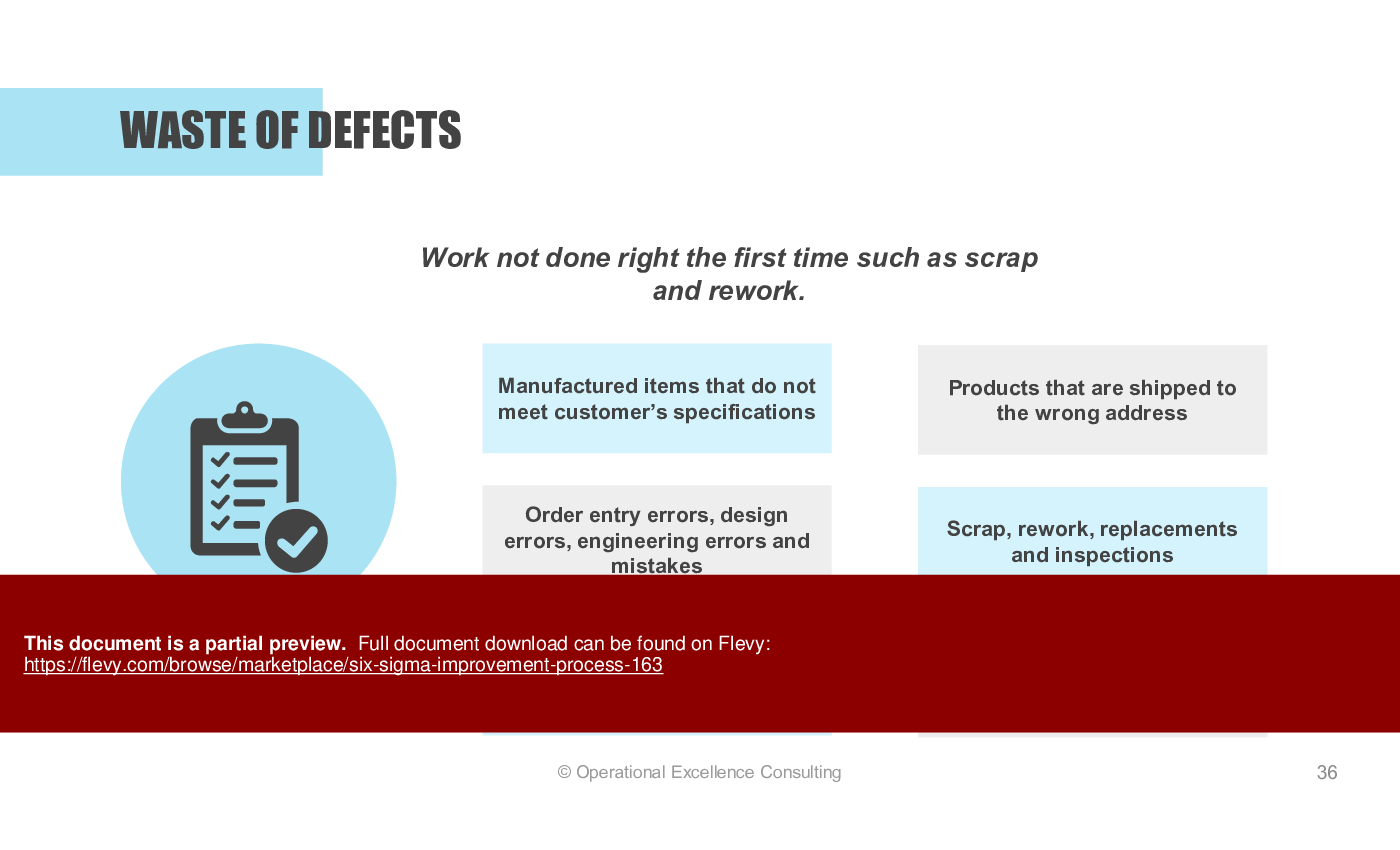

Six Sigma is a data-driven approach to process improvement that seeks to identify and eliminate defects or variations in processes to improve efficiency and quality. It is a methodology that focuses on understanding customer needs, measuring current performance, analyzing data to identify root causes of problems, improving processes, and controlling future performance to ensure sustained improvement.
The benefits of Six Sigma are far-reaching, impacting various industries including manufacturing, healthcare, finance, and service industries. By implementing Six Sigma, organizations can expect to see improvements in customer satisfaction, cost reduction, increased efficiency, and enhanced employee engagement.
This Six Sigma Improvement Process PPT presentation is tailored for senior executives, decision-makers, and key stakeholders who are assessing and planning to launch a Six Sigma program. It is also beneficial for management and staff seeking education on key concepts, principles, and the Six Sigma DMAIC approach to process improvement. Additionally, trainers and facilitators looking to enhance the learning experience with professionally developed training materials by certified Lean Six Sigma Black Belts will find this presentation valuable.
This presentation provides a comprehensive overview of the Six Sigma Improvement Process, offering insights and strategies for organizations to achieve excellence in their operations. Whether you are just beginning your Six Sigma journey or looking to enhance your existing program, this presentation is an essential resource for driving impactful and sustainable change within your organization.
LEARNING OBJECTIVES
1. Understand key Six Sigma concepts and principles for continuous improvement.
2. Apply Six Sigma tools and DMAIC methodology to solve business problems.
3. Identify key roles and responsibilities in Six Sigma projects and understand project selection and management for maximizing benefits.
4. Identify the critical success factors for successful Six Sigma implementation.
CONTENTS
1. Overview of Six Sigma
2. Key Concepts of Six Sigma
3. Critical to Quality (CTQ)
4. Six Sigma Methodologies
5. Six Sigma Toolkit
6. Organizing for Six Sigma
7. Project Selection and Management
8. Critical Success Factors
The presentation delves into the critical success factors and the role of leadership in Six Sigma projects. It also includes practical examples of implementing countermeasures and measuring success.
Got a question about the product? Email us at support@flevy.com or ask the author directly by using the "Ask the Author a Question" form. If you cannot view the preview above this document description, go here to view the large preview instead.
Executive Summary
The Six Sigma (DMAIC) Improvement Process presentation is a meticulously crafted resource designed to guide organizations in achieving operational excellence through the application of Six Sigma methodologies. Developed by a Certified Lean Six Sigma Black Belt with extensive experience at Microsoft and Underwriters Laboratories, this presentation provides a comprehensive overview of the DMAIC framework—Define, Measure, Analyze, Improve, and Control. Users will gain insights into identifying and eliminating defects, enhancing process efficiency, and fostering a culture of continuous improvement. This presentation serves as a vital tool for executives, project managers, and teams aiming to implement Six Sigma practices effectively.
Who This Is For and When to Use
• Executives and senior management seeking to drive quality improvement initiatives.
• Project managers responsible for leading Six Sigma projects within their organizations.
• Quality assurance teams focused on reducing defects and enhancing customer satisfaction.
• Operational leaders aiming to streamline processes and improve productivity.
Best-fit moments to use this deck:
• During strategic planning sessions to align Six Sigma initiatives with business goals.
• In training workshops for teams new to Six Sigma methodologies.
• When launching new projects that require a structured approach to process improvement.
• For ongoing performance reviews to assess the effectiveness of implemented Six Sigma practices.
Learning Objectives
• Define key roles and responsibilities in Six Sigma projects and understand project selection and management for maximizing benefits.
• Apply Six Sigma tools and the DMAIC methodology to solve business problems effectively.
• Identify critical success factors for successful Six Sigma implementation.
• Understand key Six Sigma concepts and principles for continuous improvement.
• Recognize the importance of data-driven decision-making in process improvement.
• Foster a culture of quality and continuous improvement within the organization.
Table of Contents
• Overview of Six Sigma (page 5)
• Key Concepts of Six Sigma (page 28)
• Critical To Quality (CTQ) (page 55)
• Six Sigma Methodologies (page 69)
• Six Sigma Toolkit (page 109)
• Organizing for Six Sigma (page 117)
• Project Selection & Management (page 133)
• Critical Success Factors (page 156)
Primary Topics Covered
• Overview of Six Sigma - An introduction to Six Sigma as a methodology for continuous improvement, emphasizing its role in enhancing product and process quality.
• Key Concepts of Six Sigma - Fundamental principles that underpin Six Sigma practices, including the importance of customer focus and data-driven decision-making.
• Critical To Quality (CTQ) - Identifying and defining the characteristics that are critical to customer satisfaction and process performance.
• Six Sigma Methodologies - Detailed exploration of DMAIC and DMADV frameworks, outlining their applications in process improvement and product design.
• Six Sigma Toolkit - A collection of tools and techniques utilized throughout the Six Sigma process, including statistical analysis and process mapping.
• Organizing for Six Sigma - Structuring teams and roles to effectively implement Six Sigma initiatives within an organization.
• Project Selection & Management - Guidelines for selecting and managing Six Sigma projects to ensure alignment with strategic objectives and measurable outcomes.
• Critical Success Factors - Essential elements that contribute to the successful implementation of Six Sigma methodologies.
Deliverables, Templates, and Tools
• Project charter template for defining project scope and objectives.
• CTQ tree for identifying critical quality characteristics.
• Process mapping tools to visualize workflows and identify areas for improvement.
• Statistical analysis tools for measuring process performance and capability.
• Control plan template for sustaining improvements post-implementation.
• FMEA (Failure Modes and Effects Analysis) template for assessing potential risks in processes.
Slide Highlights
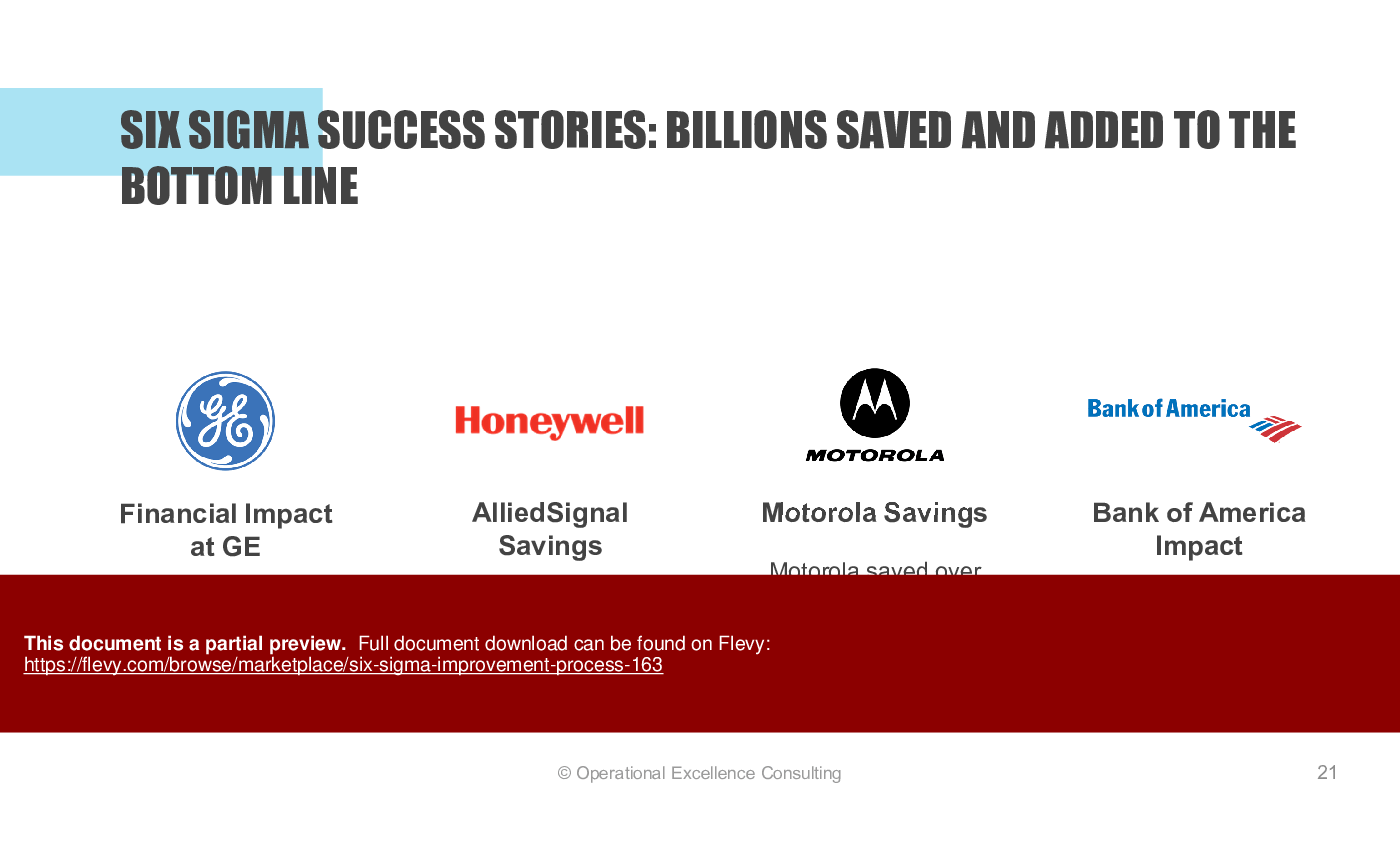
• Overview of the DMAIC framework and its phases.
• Visual representations of process mapping and CTQ trees.
• Case studies showcasing successful Six Sigma implementations.
• Statistical tools and their applications in process improvement.
• Examples of common pitfalls in Six Sigma projects and how to avoid them.
Potential Workshop Agenda
Introduction to Six Sigma (30 minutes)
• Overview of Six Sigma principles and methodologies.
• Discussion on the importance of quality in business processes.
DMAIC Deep Dive (90 minutes)
• Detailed exploration of each phase of the DMAIC process.
• Group activities to apply DMAIC to real-world scenarios.
CTQ Identification Workshop (60 minutes)
• Interactive session to identify and define CTQs for participants' projects.
• Sharing of insights and best practices among teams.
Project Selection and Management (60 minutes)
• Guidelines for selecting Six Sigma projects aligned with organizational goals.
• Discussion on project management techniques specific to Six Sigma.
Customization Guidance
• Tailor the presentation to include specific organizational examples and case studies relevant to your industry.
• Adjust the project charter template to reflect your organization's terminology and project management practices.
• Incorporate internal data and metrics to enhance discussions around CTQs and performance measures.
Secondary Topics Covered
• The role of leadership in sustaining Six Sigma initiatives.
• Strategies for fostering a culture of continuous improvement.
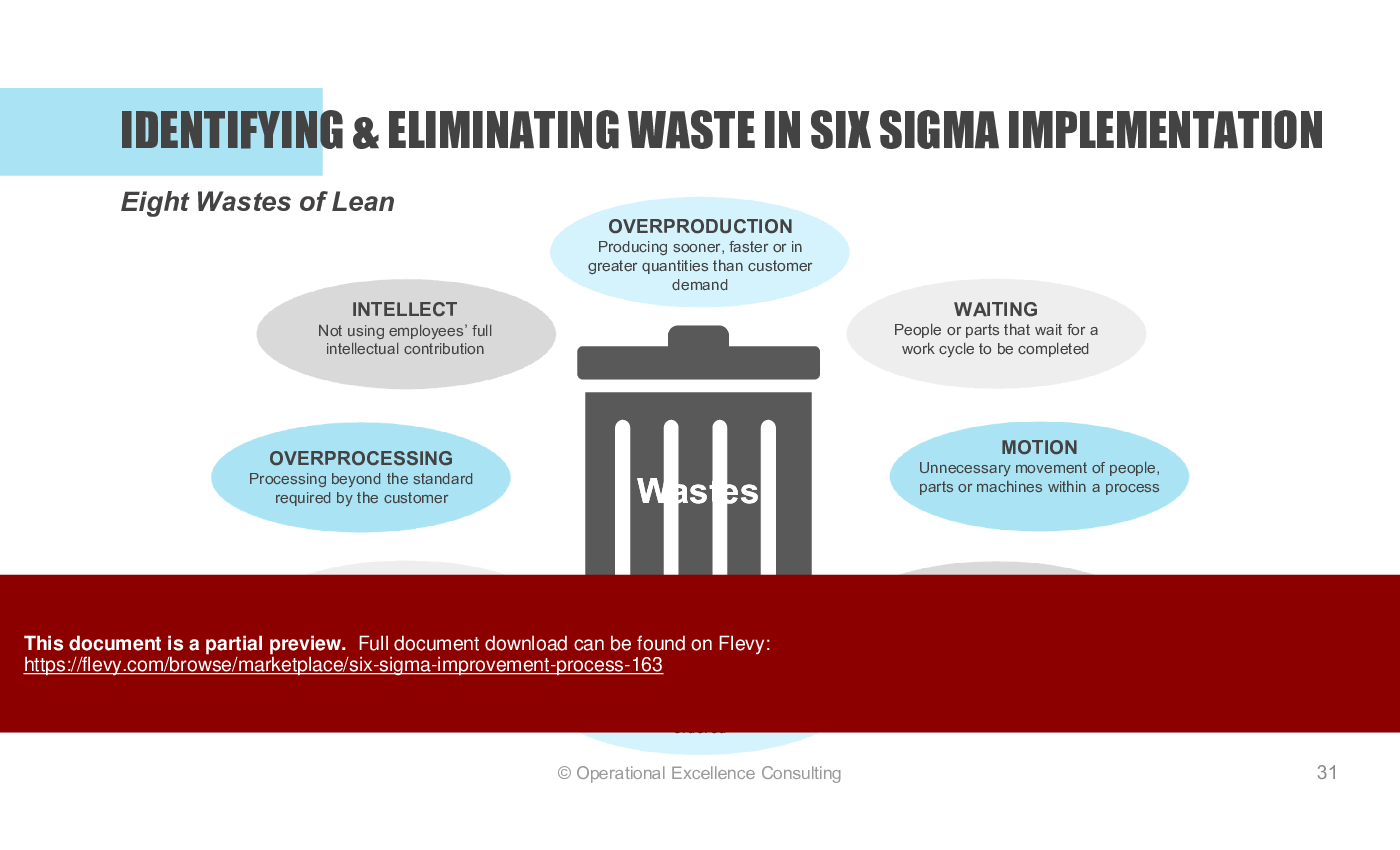
• The integration of Lean principles with Six Sigma methodologies.
• Techniques for engaging employees in Six Sigma projects.
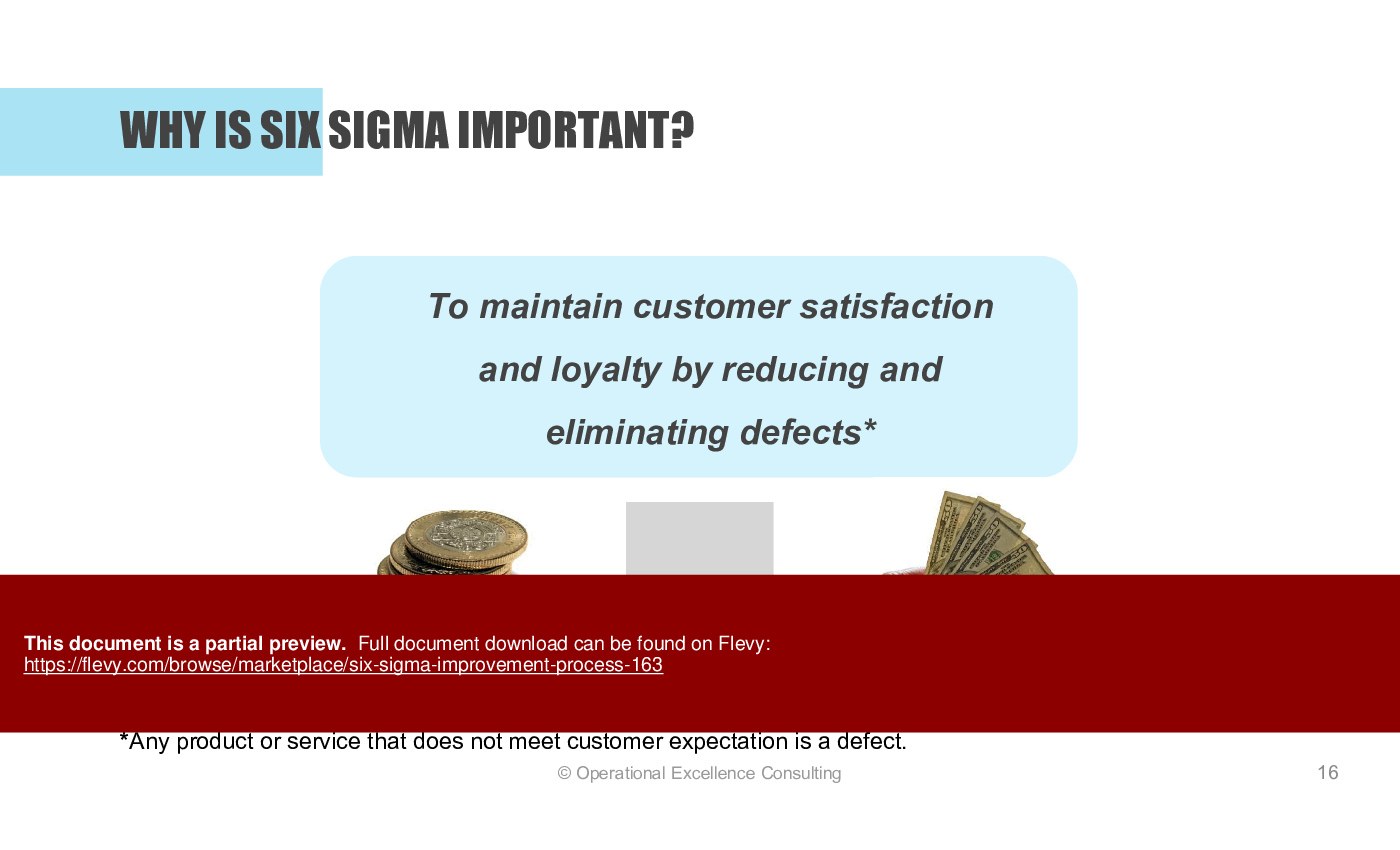
• The impact of Six Sigma on customer satisfaction and loyalty.
FAQ
What is Six Sigma?
Six Sigma is a methodology aimed at improving quality by reducing defects and variability in processes, achieving a target of no more than 3.4 defects per million opportunities.
How does DMAIC work?
DMAIC stands for Define, Measure, Analyze, Improve, and Control. It is a structured approach for improving existing processes by identifying and eliminating root causes of defects.
What are CTQs?
Critical To Quality (CTQ) refers to the key characteristics of a product or service that are essential to meet customer requirements and expectations.
Can Six Sigma be applied in service industries?
Yes, Six Sigma methodologies are applicable in both manufacturing and service industries, focusing on process improvement and quality enhancement.
What tools are included in the Six Sigma toolkit?
The toolkit includes various tools such as process mapping, statistical analysis, FMEA, and control charts, among others.
How do I select a Six Sigma project?
Select projects based on their potential impact on key metrics, alignment with organizational goals, and availability of data to quantify the problem.
What are the critical success factors for Six Sigma?
Key factors include leadership commitment, employee engagement, data-driven decision-making, and sustained interest in Six Sigma methodologies.
How can I measure the success of Six Sigma initiatives?
Success can be measured through metrics such as defect rates, customer satisfaction scores, process efficiency improvements, and financial savings.
Glossary
• DMAIC - Define, Measure, Analyze, Improve, Control; a structured problem-solving process.
• CTQ - Critical To Quality; characteristics that are essential to customer satisfaction.
• FMEA - Failure Modes and Effects Analysis; a tool for identifying potential failures in a process.
• Lean - A methodology focused on eliminating waste and improving flow in processes.
• Six Sigma Quality - Achieved when a process produces no more than 3.4 defects per million opportunities.
• Voice of the Customer (VOC) - Feedback from customers that informs product and service improvements.
• Project Charter - A document that outlines the objectives, scope, and stakeholders of a Six Sigma project.
• Statistical Process Control (SPC) - A method of monitoring and controlling processes through statistical analysis.
• Root Cause Analysis - A problem-solving method used to identify the underlying causes of defects.
• Process Capability - The ability of a process to produce outputs that meet specifications.
• Quality Management - The act of overseeing all activities and tasks needed to maintain a desired level of excellence.
• Continuous Improvement - Ongoing efforts to improve products, services, or processes over time.
• Defect Rate - The percentage of defective items produced in a process.
• Lean Six Sigma - An integrated approach that combines Lean manufacturing principles with Six Sigma methodologies.
• Stakeholder Analysis - A process of identifying and assessing the influence and importance of various stakeholders in a project.
• KPI - Key Performance Indicator; a measurable value that demonstrates how effectively a company is achieving key business objectives.
• Benchmarking - Comparing business processes and performance metrics to industry bests and best practices from other companies.
• Change Management - A systematic approach to dealing with change, both from the perspective of an organization and the individual.
• Gemba Walk - A practice where leaders go to the place where work is done to observe and understand the process.
• Kaizen - A Japanese term meaning "change for better," referring to activities that continuously improve all functions.
• Poka-Yoke - A Japanese term for "mistake-proofing," referring to any mechanism that helps avoid mistakes.
• Value Stream Mapping - A visual tool to analyze the flow of materials and information currently required to bring a product or service to a consumer.
Source: Best Practices in Six Sigma Project PowerPoint Slides: Six Sigma (DMAIC) Improvement Process PowerPoint (PPTX) Presentation Slide Deck, Operational Excellence Consulting
This document is available as part of the following discounted bundle(s):
Save %!
Lean & Six Sigma Essentials
This bundle contains 2 total documents. See all the documents to the right.

|
Receive our FREE presentation on Operational Excellence
This 50-slide presentation provides a high-level introduction to the 4 Building Blocks of Operational Excellence. Achieving OpEx requires the implementation of a Business Execution System that integrates these 4 building blocks. |