
This presentation has 107 slides and can be used either as a 1-day workshop material or a 2-day workshop material. The difference is that when you use it for a 2-day workshop, you take the participants on to the shop floor 3 times after explaining the concept for practical hands on work, once after 1stS, Sort for sorting activity, the 2nd time after explaining 2nd S, Set in Order and 3rd S, Shine and lastly after the 4th S, Standardization.

Note: You can download audit check-lists and progress charts.
Also included with this document is a bonus zip of 41 Lean documents (includes templates, case studies, articles, posters, charts, and more).
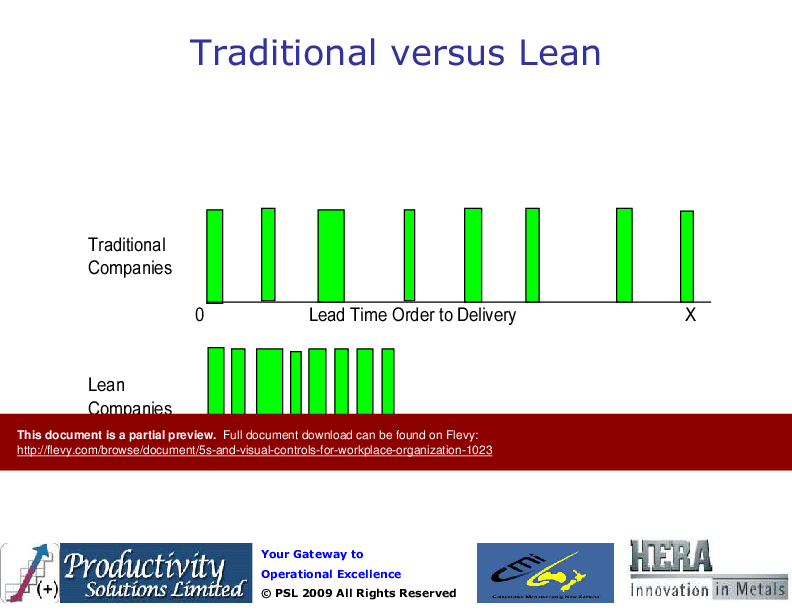
This comprehensive presentation dives deep into the 5S methodology, providing a systematic approach to workplace organization. It emphasizes the importance of visual controls to maintain clarity and efficiency in operations. The slides illustrate the stark contrast between traditional and lean companies, showcasing how lead times and delivery processes are optimized through 5S practices.
The document includes practical self-assessment tools, enabling teams to evaluate their current 5S performance and identify areas for improvement. Detailed workflow diagrams and visual management techniques are presented to help streamline processes and reduce waste. These tools are essential for fostering a culture of continuous improvement and operational excellence.
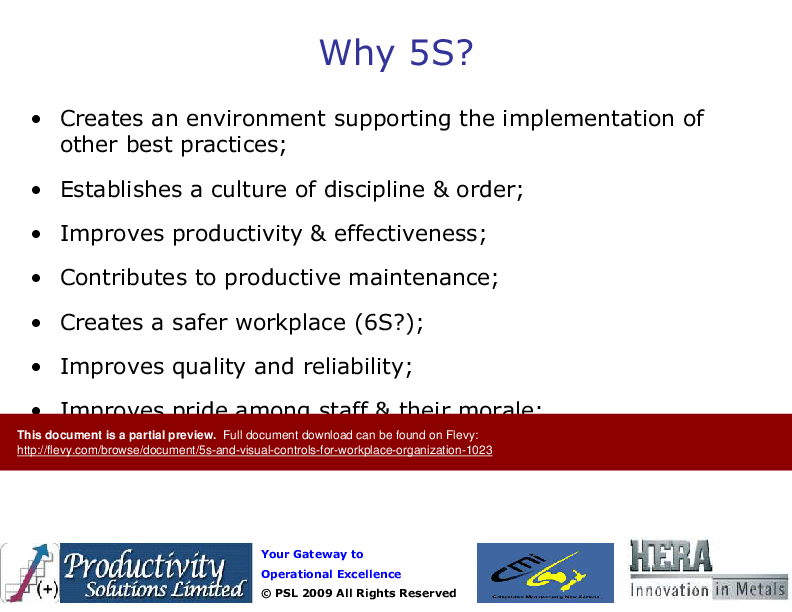
The presentation also covers the origins of 5S, tracing its roots back to supermarket practices and its evolution into a cornerstone of lean manufacturing. By implementing the strategies outlined in this document, organizations can achieve significant improvements in productivity, safety, and employee morale. This resource is invaluable for any business leader committed to driving efficiency and sustaining high-performance standards.
Got a question about the product? Email us at support@flevy.com or ask the author directly by using the "Ask the Author a Question" form. If you cannot view the preview above this document description, go here to view the large preview instead.
Executive Summary
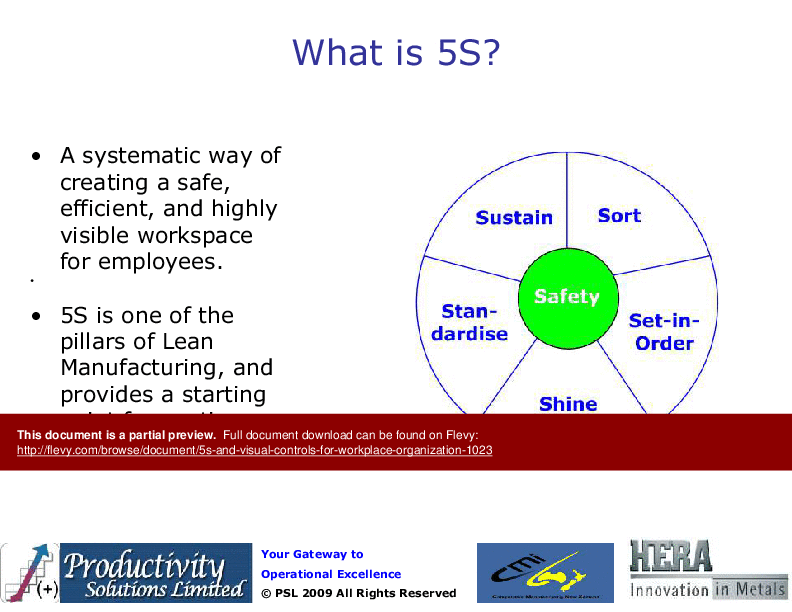
This presentation on 5S & Visual Controls for Workplace Organization is designed to equip organizations with the tools necessary for creating a safe, clean, and organized work environment. Developed by a leading expert in Lean methodologies, this workshop emphasizes the importance of the 5S frameworkâSort, Set-in-Order, Shine, Standardize, and Sustain. Participants will learn to implement visual management techniques that enhance workplace efficiency and foster a culture of continuous improvement. The comprehensive materials include audit checklists and templates, enabling teams to assess and improve their operational practices effectively.
Who This Is For and When to Use
• Operations Managers seeking to enhance workplace efficiency
• Lean Practitioners aiming to implement 5S methodologies
• Quality Assurance Teams focused on improving product quality
• Safety Officers responsible for maintaining a safe work environment
• Team Leaders looking to foster a culture of discipline and organization
Best-fit moments to use this deck:
• During Lean transformation initiatives to establish foundational practices
• As part of training programs for new employees on workplace organization
• In workshops aimed at improving team collaboration and communication
• When conducting periodic audits to assess workplace organization and safety
Learning Objectives
• Define the 5S framework and its significance in Lean practices
• Build a systematic approach to sorting and organizing workplace items
• Establish cleaning and maintenance routines to sustain workplace order
• Implement visual management tools to enhance operational visibility
• Create a culture of continuous improvement through regular assessments
• Develop strategies for engaging all employees in the 5S process
Table of Contents
• Introduction to 5S (page 3)
• Benefits of 5S (page 5)
• 5S Self-Assessment (page 7)
• Detailed Steps of 5S (page 10)
• Visual Management Techniques (page 15)
• Implementation Strategies (page 20)
• Tracking Progress and Results (page 25)
• Conclusion and Q&A (page 30)
Primary Topics Covered
• 5S Framework - A structured approach to workplace organization that includes 5 key steps aimed at improving efficiency and safety.
• Visual Management - Techniques that enhance operational visibility and communication, ensuring that all team members are aware of workplace conditions.
• Self-Assessment Tools - Instruments designed to evaluate current 5S practices and identify areas for improvement.
• Implementation Strategies - Step-by-step guidance on how to effectively roll out 5S initiatives within an organization.
• Tracking Progress - Methods for monitoring improvements and maintaining momentum in the 5S journey.
• Employee Engagement - Strategies to involve all staff in the 5S process, fostering a sense of ownership and accountability.
Deliverables, Templates, and Tools
• 5S Self-Assessment Checklist for evaluating current practices
• Visual Management Tools for enhancing workplace communication
• Implementation Roadmap for rolling out 5S initiatives
• Progress Tracking Templates for monitoring improvements
• Training Materials for engaging employees in the 5S process
• Audit Checklists for periodic assessments of workplace organization
Slide Highlights
• Overview of the 5S framework and its benefits
• Visual examples of effective workplace organization
• Self-assessment tools for evaluating 5S practices
• Case studies demonstrating successful 5S implementations
• Guidelines for creating visual management systems
Potential Workshop Agenda
Introduction to 5S (30 minutes)
• Overview of the 5S framework and its importance
• Discussion on the benefits of implementing 5S
5S Implementation Steps (60 minutes)
• Detailed exploration of each step in the 5S process
• Group activity: Conducting a self-assessment
Visual Management Techniques (45 minutes)
• Introduction to visual management tools
• Hands-on session: Creating visual aids for the workplace
Tracking Progress and Sustaining Improvements (30 minutes)
• Strategies for monitoring 5S initiatives
• Discussion on maintaining engagement and momentum
Customization Guidance
• Tailor the self-assessment tools to reflect specific workplace conditions and requirements
• Adjust visual management techniques to align with organizational branding and culture
• Modify training materials to address the unique needs of different teams or departments
• Incorporate specific metrics for tracking progress that align with organizational goals
Secondary Topics Covered
• The role of leadership in sustaining 5S initiatives
• Techniques for fostering a culture of continuous improvement
• The impact of 5S on employee morale and productivity
• Integration of 5S with other Lean methodologies
FAQ
What is the 5S framework?
The 5S framework is a systematic approach to workplace organization that consists of Sort, Set-in-Order, Shine, Standardize, and Sustain, aimed at improving efficiency and safety.
How can visual management enhance workplace organization?
Visual management tools provide immediate visibility into work processes and conditions, helping teams quickly identify issues and maintain standards.
What are the benefits of implementing 5S?
Implementing 5S can lead to improved productivity, enhanced safety, better quality, and increased employee morale by creating a more organized and efficient work environment.
How do I assess my organization's current 5S practices?
Utilize the self-assessment checklist provided in the materials to evaluate your current practices and identify areas for improvement.
What role do employees play in the 5S process?
Employee engagement is crucial for the success of 5S initiatives. All team members should be involved in sorting, organizing, and maintaining their workspaces.
How often should 5S audits be conducted?
Regular audits should be conducted to ensure ongoing compliance and to identify opportunities for continuous improvement, typically every 4 to 8 weeks.
Can 5S be applied in office environments?
Yes, the principles of 5S can be effectively applied in office settings to enhance organization and efficiency.
What tools can help sustain 5S initiatives?
Tools such as visual displays, progress tracking charts, and regular training sessions can help sustain 5S initiatives and keep employees engaged.
Glossary
• 5S - A Lean methodology focused on workplace organization and efficiency.
• Visual Management - Techniques that enhance visibility and communication in the workplace.
• Self-Assessment - Tools used to evaluate current practices and identify areas for improvement.
• Continuous Improvement - Ongoing efforts to enhance products, services, or processes.
• Lean Manufacturing - A production practice that considers the expenditure of resources in any aspect other than the direct creation of value for the end customer as wasteful.
• Audit Checklist - A tool for evaluating compliance with established standards and practices.
• Employee Engagement - The emotional commitment an employee has to the organization and its goals.
• Workflow Diagram - A visual representation of the flow of tasks and processes in a work area.
• Ergonomics - The study of people's efficiency in their working environment.
• Standard Operating Procedures (SOPs) - Established procedures to ensure consistent performance of specific tasks.
• Kanban - A scheduling system for lean and just-in-time manufacturing.
• Shadow Boards - Visual tools used to organize tools and equipment, indicating where each item belongs.
• Andon Lights - Visual signals used to indicate the status of a process or machine.
• Workplace Organization - The arrangement of workspaces to enhance efficiency and safety.
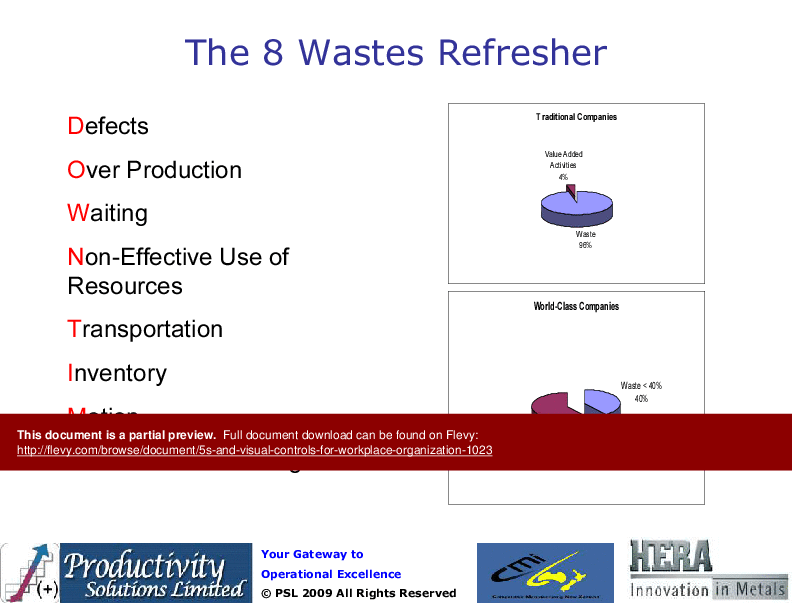
• Waste Reduction - Efforts to minimize waste in processes and operations.
• Total Productive Maintenance (TPM) - A maintenance philosophy aimed at maximizing the operational efficiency of equipment.
• Visual Controls - Tools that help monitor and control processes through visual cues.
• Sustain - The final step in the 5S process, focusing on maintaining the improvements achieved.
• Standardization - The process of implementing and developing technical standards to optimize efficiency.
• Safety - The condition of being protected from or unlikely to cause danger, risk, or injury.
Source: Best Practices in Visual Workplace PowerPoint Slides: 5S & Visual Controls for Workplace Organization PowerPoint (PPT) Presentation Slide Deck, OpEx Academy NZ
|
Receive our FREE presentation on Operational Excellence
This 50-slide presentation provides a high-level introduction to the 4 Building Blocks of Operational Excellence. Achieving OpEx requires the implementation of a Business Execution System that integrates these 4 building blocks. |