
 Click main image to view in full screen. Unlock all 10 preview images:
Upstream Oil & Gas Financial Forecasting Model – Excel XLSX
Excel (XLSX)


BENEFITS OF THIS DOWNLOADABLE EXCEL DOCUMENT
- Get precise 20-year monthly projections for revenue, costs, and cash flow.
- Assess well and reservoir profitability with advanced valuation methods.
- Evaluate CAPEX, OPEX, and financial viability before committing capital.
OIL & GAS EXCEL DESCRIPTION
The Upstream Oil & Gas Financial Forecasting Model Template is a comprehensive Excel-based tool designed for oil & gas investors, exploration & production (E&P) companies, financial analysts, and energy startups. It provides detailed financial forecasting, cost analysis, and valuation metrics, helping you make informed investment decisions. Whether you're managing a single well or an entire reservoir, this model delivers critical insights into revenue potential, operational expenses, and long-term profitability.
Key Features:
✅ 20-Year Monthly Forecasting – The model allows for long-term financial projections, offering a detailed monthly breakdown to track performance and cash flow over time.
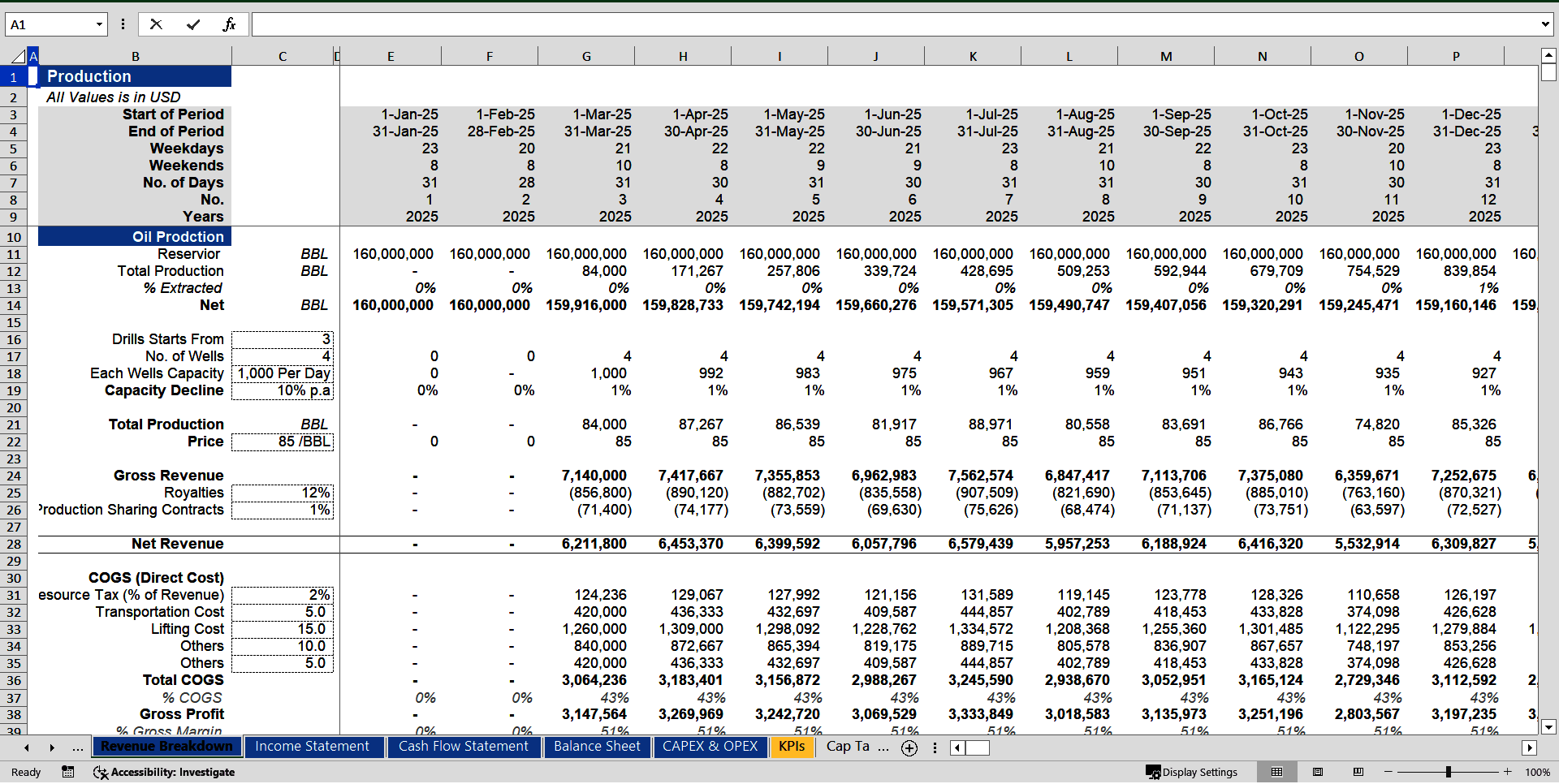
✅ Separate Forecasting for Oil, Gas & NGLs – Unlike generic models, this template differentiates between oil, gas, and natural gas liquids (NGLs), ensuring more accurate revenue and cost projections for each product type.
✅ Reservoir & Well-Level Valuation – With the ability to separate multiple reservoirs and wells, you can assess individual asset performance and optimize investment decisions.
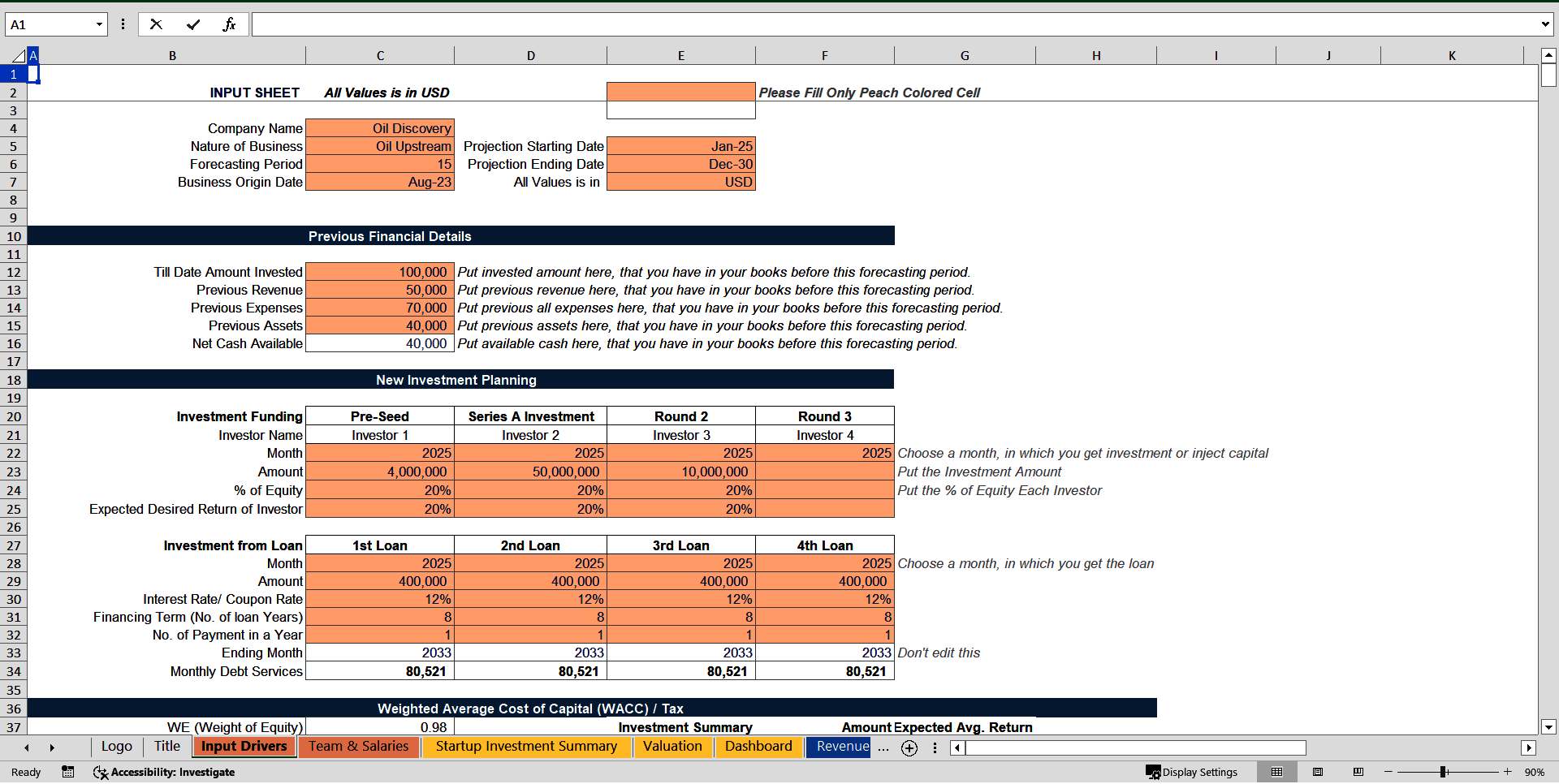
✅ Revenue & Cost Breakdown – The model provides a detailed structure for production estimates, pricing assumptions, operational costs, and investment planning, ensuring all financial aspects are covered.
✅ CAPEX & OPEX Planning – From drilling and exploration to equipment investments and operational expenses, this template helps you manage capital expenditures and operating costs effectively.
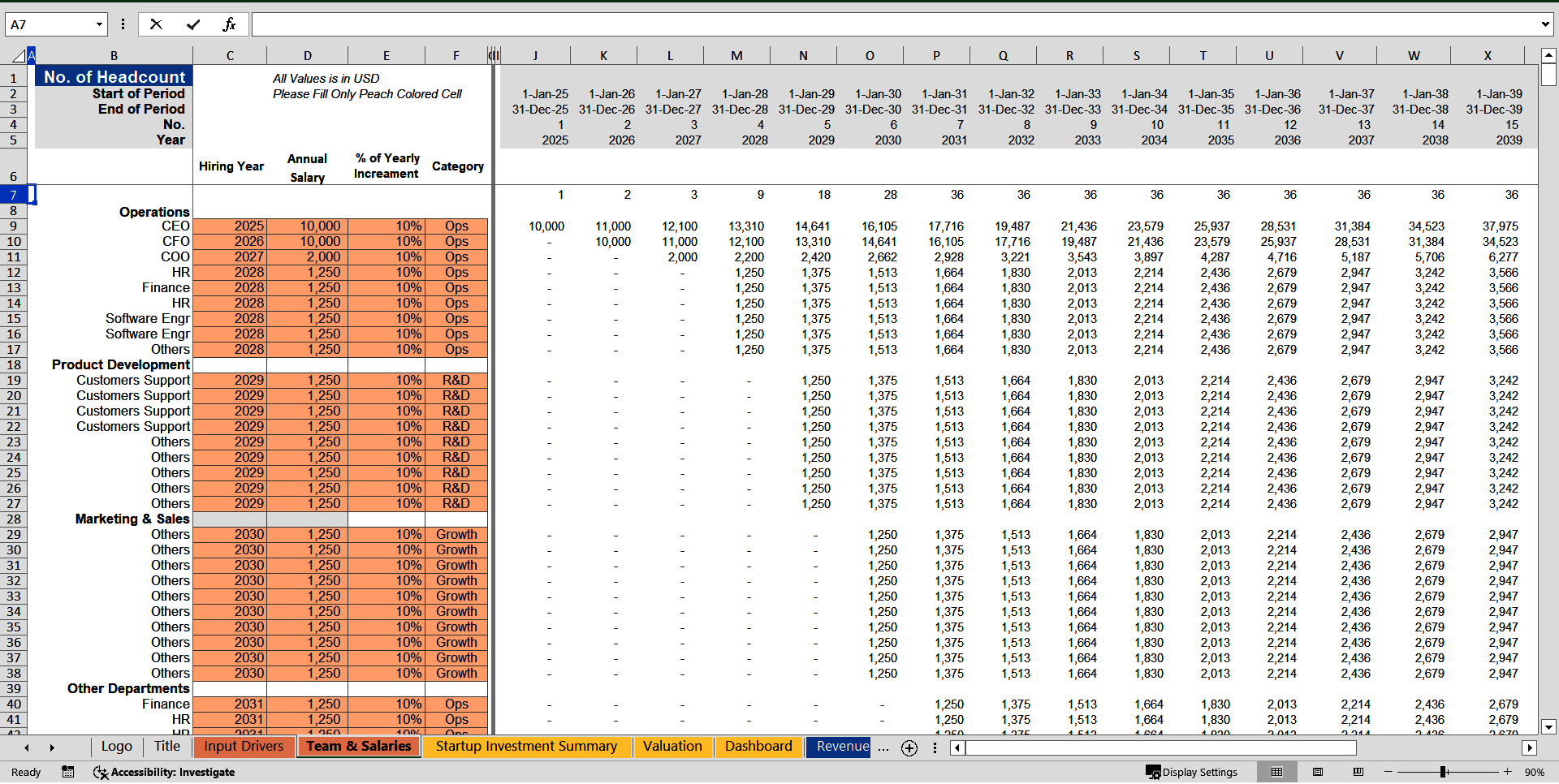
✅ Workforce & Headcount Planning – Estimate the required workforce, calculate labor costs, and plan staffing needs across various project phases.
✅ Comprehensive Financial Statements – Includes automated Income Statement, Cash Flow Statement, and Balance Sheet, ensuring you have a clear view of financial health and cash flow movements.
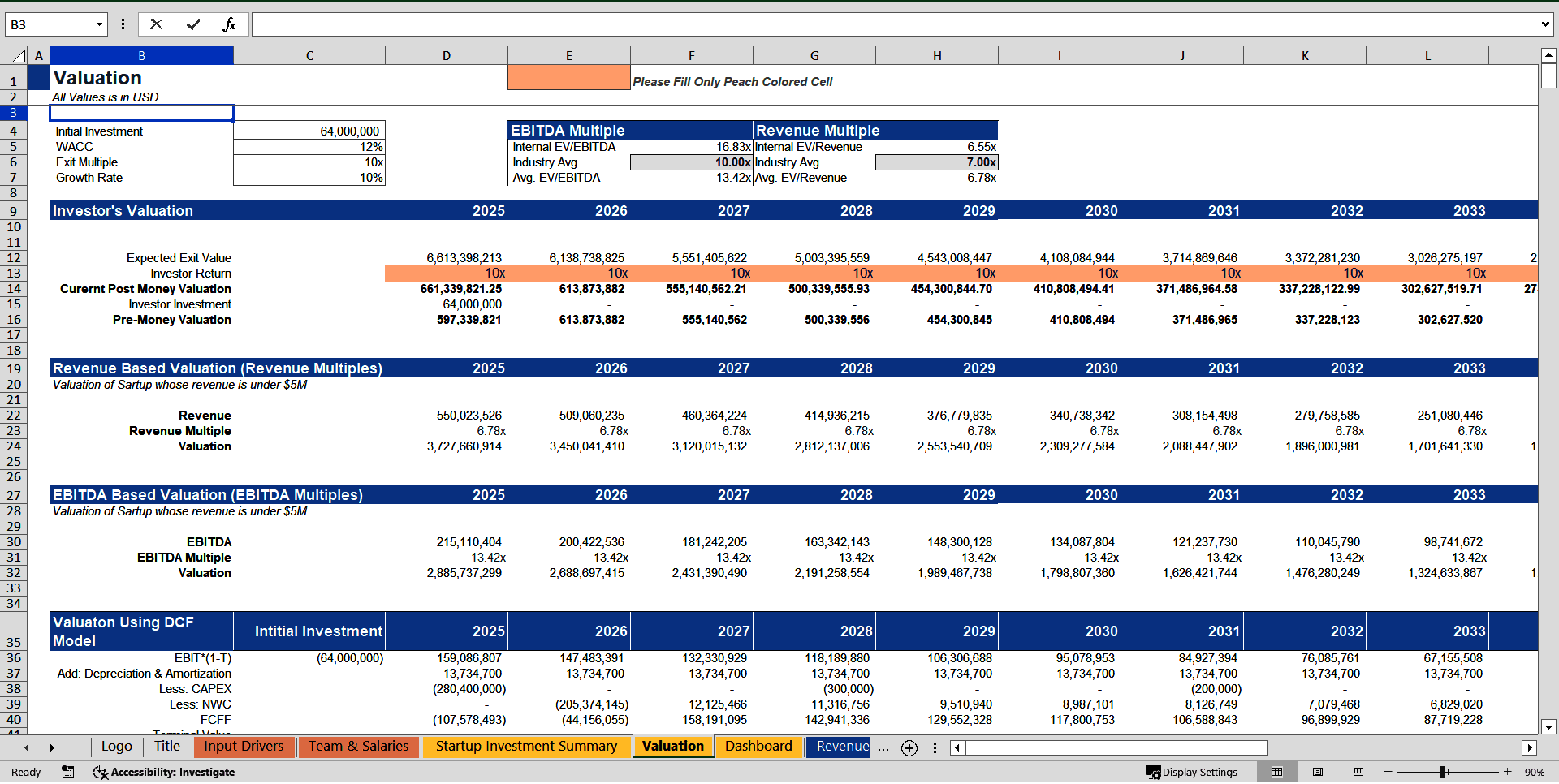
✅ Advanced Valuation Methods – Leverage key financial metrics such as EV/EBITDA, EV/Revenue, and DCF Valuation to accurately determine project feasibility and investment potential.
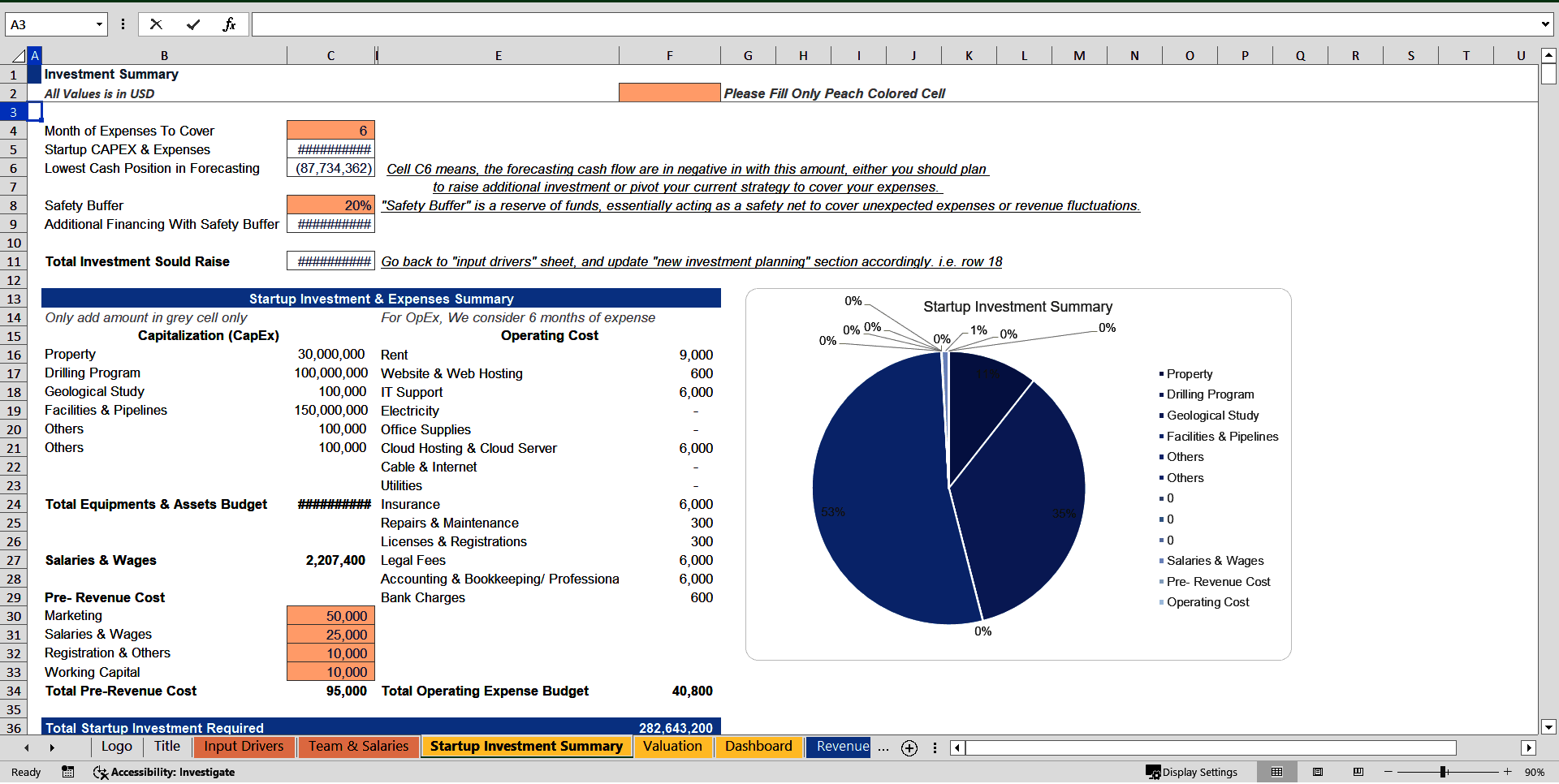
✅ Investment Summary & Feasibility Analysis – Evaluate project profitability, estimate payback periods, and determine the financial viability of your venture before committing capital.
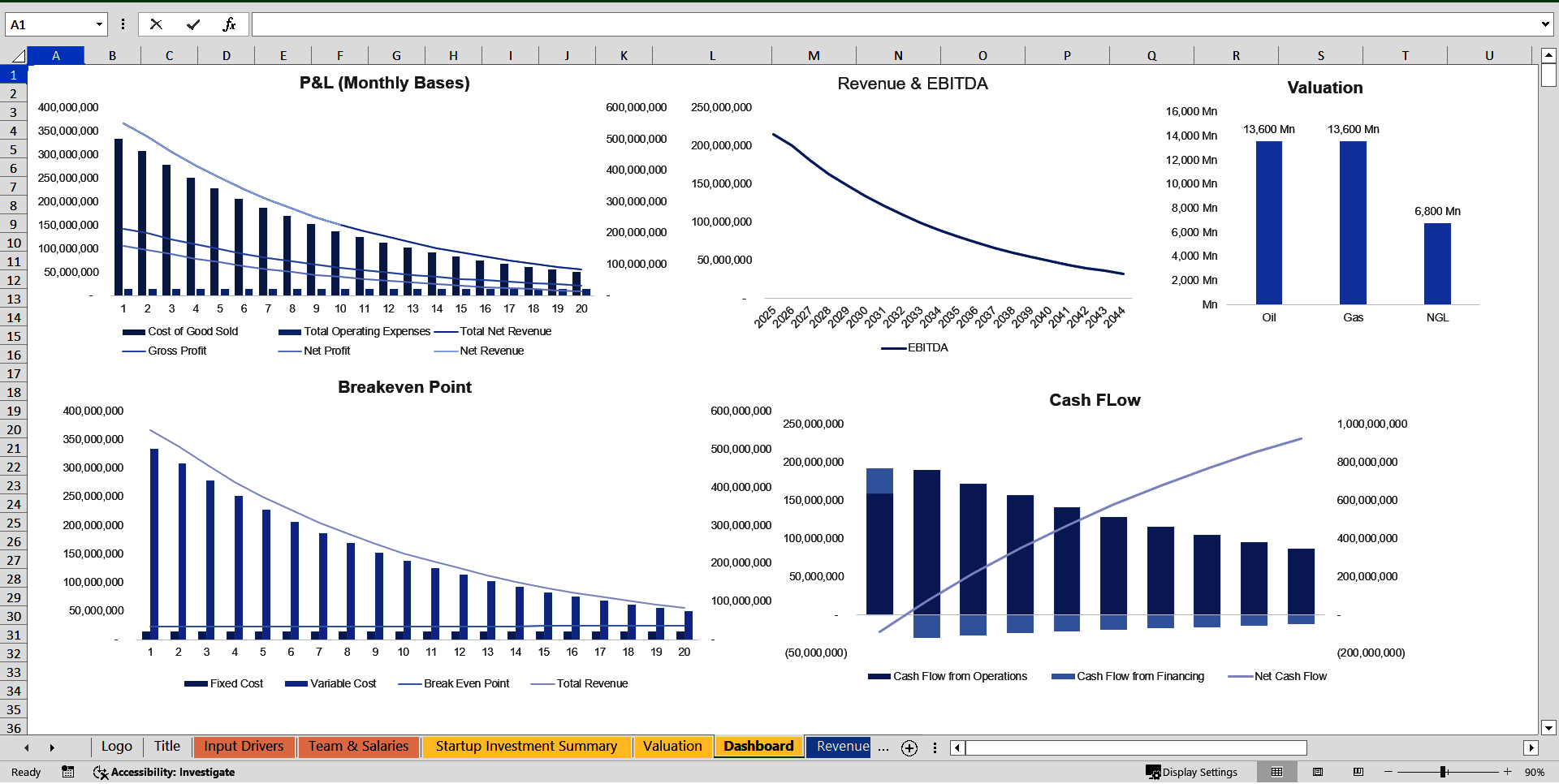
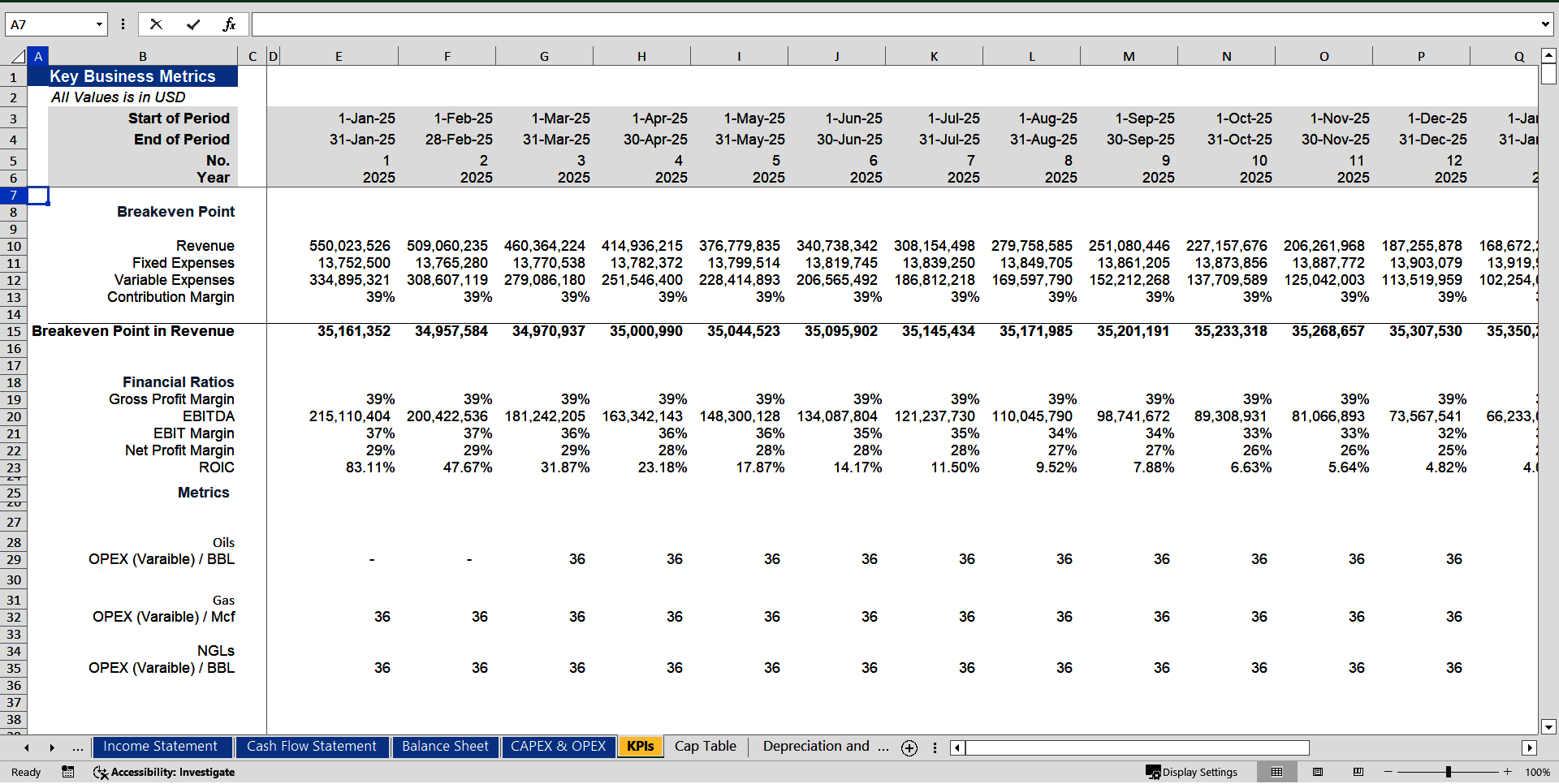
✅ KPI Dashboard & Revenue Breakdown – A user-friendly dashboard provides visual insights into revenue streams, cost structures, and key performance indicators (KPIs) for quick decision-making.
✅ Cap Table Management – Maintain an up-to-date ownership and equity structure, crucial for investment rounds and shareholder analysis.
✅ Free Customization & Error Correction – At Excel Business Resource, we provide personalized model adjustments and error correction at no extra cost, ensuring the template is perfectly tailored to your project needs.
Got a question about the product? Email us at support@flevy.com or ask the author directly by using the "Ask the Author a Question" form. If you cannot view the preview above this document description, go here to view the large preview instead.
TOPIC FAQ
What inputs do I typically need to build an upstream oil & gas financial forecast?
Core inputs include production profiles (per well or reservoir), commodity price assumptions, CAPEX schedules (drilling, facilities), OPEX items (operational costs), workforce/headcount plans, and tax/royalty regimes. These inputs feed revenue, cost, and cash-flow forecasts and are used to produce automated financial statements and valuation outputs like DCF.What valuation methods are commonly used to value upstream projects?
Common valuation approaches combine discounted cash flow analysis with market multiple checks, typically using DCF alongside transaction- or market-based multiples such as EV/EBITDA and EV/Revenue. These 3 methods are the primary metrics used to triangulate project economics in upstream evaluations: DCF, EV/EBITDA, EV/Revenue.How far into the future should I forecast oil and gas project economics?
Forecast horizon depends on reservoir life and investment decisions; long-life projects often require multi-decade views. The referenced template supports detailed, month-level projections over a 20-year horizon, enabling longevity-sensitive metrics like payback period and long-term cash-flow planning over 20 years.How do analysts model multiple reservoirs or wells within one financial model?
Analysts build separate production and cost schedules for each well or reservoir, then consolidate to portfolio-level statements. A model that permits reservoir- and well-level inputs lets you isolate asset performance, allocate CAPEX/OPEX, and run sensitivity or scenario comparisons across individual wells and aggregated assets.What should I look for when choosing an upstream financial model for purchase?
Evaluate whether the model offers month-level forecasting, separate oil/gas/NGL revenue streams, reservoir- and well-level valuation, automated income statement/cash-flow/balance-sheet outputs, CAPEX/OPEX planning, valuation methods (including DCF), and a KPI dashboard for investor presentation.How can I assess the cost versus value of buying a pre-built template versus building a bespoke model?
Consider whether the template includes key features and vendor support that reduce customization time. One relevant factor is whether the seller offers customization or error correction; the Upstream Oil & Gas Financial Forecasting Model includes free customization and error correction at no extra cost.I need to estimate workforce and labor costs for a field development — how should I approach that?
Create a phased headcount plan tied to development stages (drilling, commissioning, operations), assign role-specific labor rates, and allocate those costs to OPEX and project CAPEX as applicable. A model with workforce & headcount planning capability helps convert staffing plans into monthly labor-cost line items.How can I present key metrics and an investment summary to potential investors?
Consolidate forecast outputs into a concise investment summary showing cash flows, payback, and valuation comparables, and use a KPI dashboard to visualize revenue mix and cost drivers; include cap table effects to show ownership dilution. Useful presentation elements include a KPI dashboard and cap table management.Source: Best Practices in Oil & Gas, Integrated Financial Model Excel: Upstream Oil & Gas Financial Forecasting Model Excel (XLSX) Spreadsheet, Excel Business Resource
ABOUT THE AUTHOR

Excel Business Resource offers a leading-edge solution for streamlined financial modeling, budgeting, and reporting. Our customizable templates, curated by FP&A and FMVA experts, provide the foundation for precise, tailored financial analysis. From dynamic modeling to flexible budgeting and board-ready reports, our platform empowers informed decision-making for businesses of all sizes. ... [read more]
Ask the Author a Question
You must be logged in to contact the author.




























