 Click main image to view in full screen.
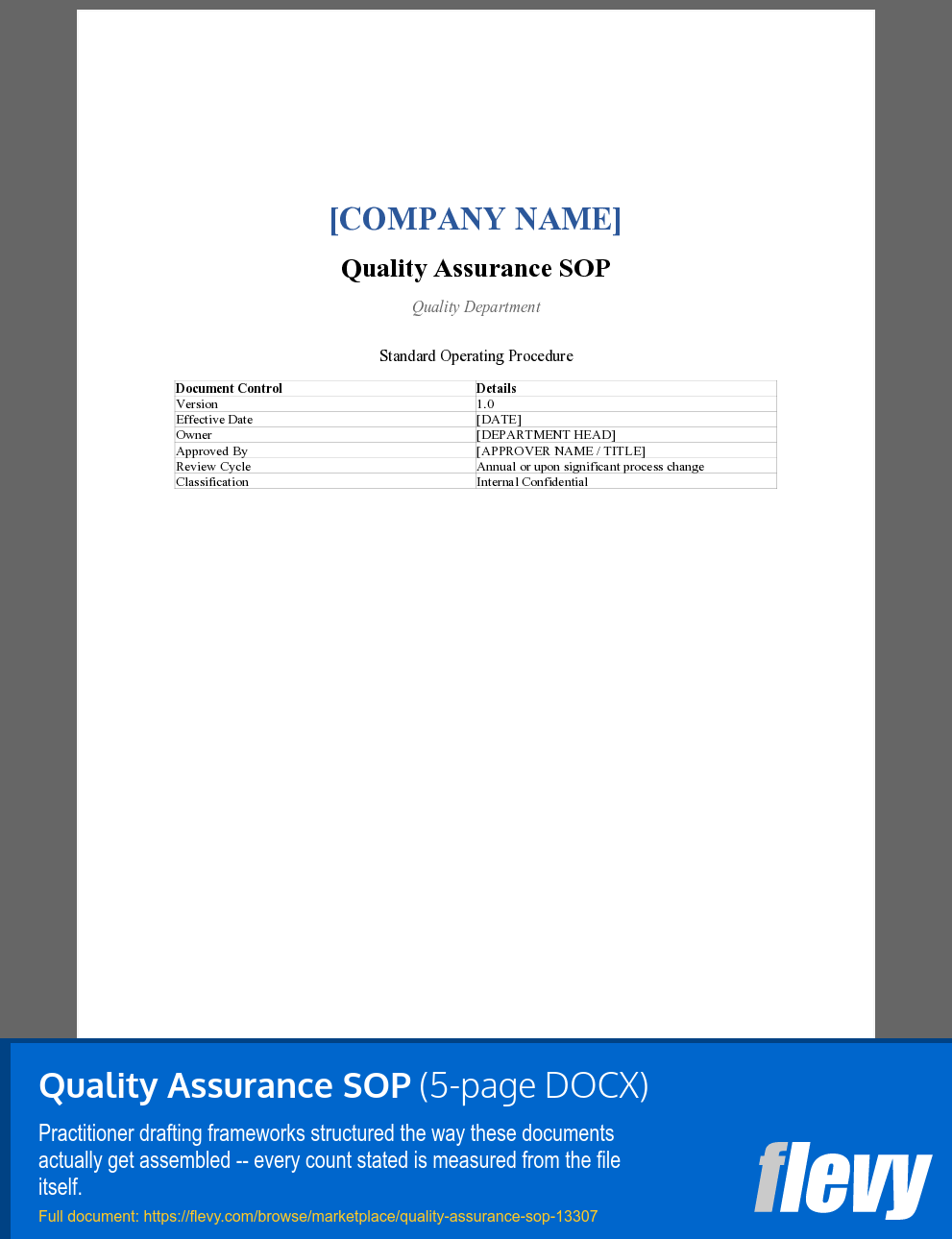
Quality Assurance SOP – Word DOCX
Word (DOCX) 5 Pages


BENEFITS OF THIS DOWNLOADABLE WORD DOCUMENT
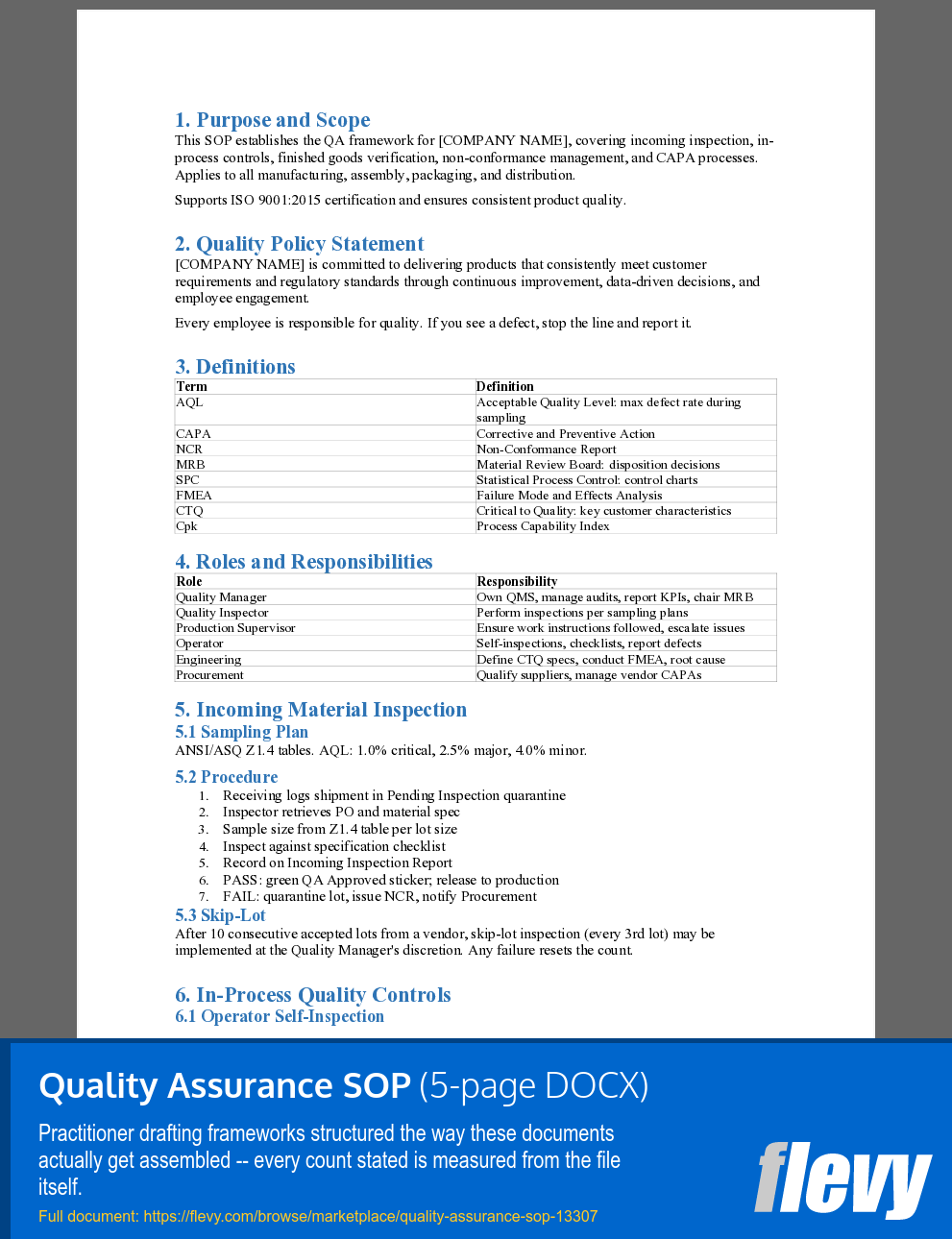
- Runs quality control across all three gates -- incoming material, in-process and finished goods -- rather than inspecting only at the end.
- Includes a full CAPA procedure and non-conformance management, which is what an auditor asks for first.
- Ships with a quality KPI set and audit schedule, so the policy has something to be measured against.
QUALITY MANAGEMENT WORD DESCRIPTION
QA inspection checklists, defect classification, CAPA procedures, and supplier qualification steps. ISO-aligned structure.
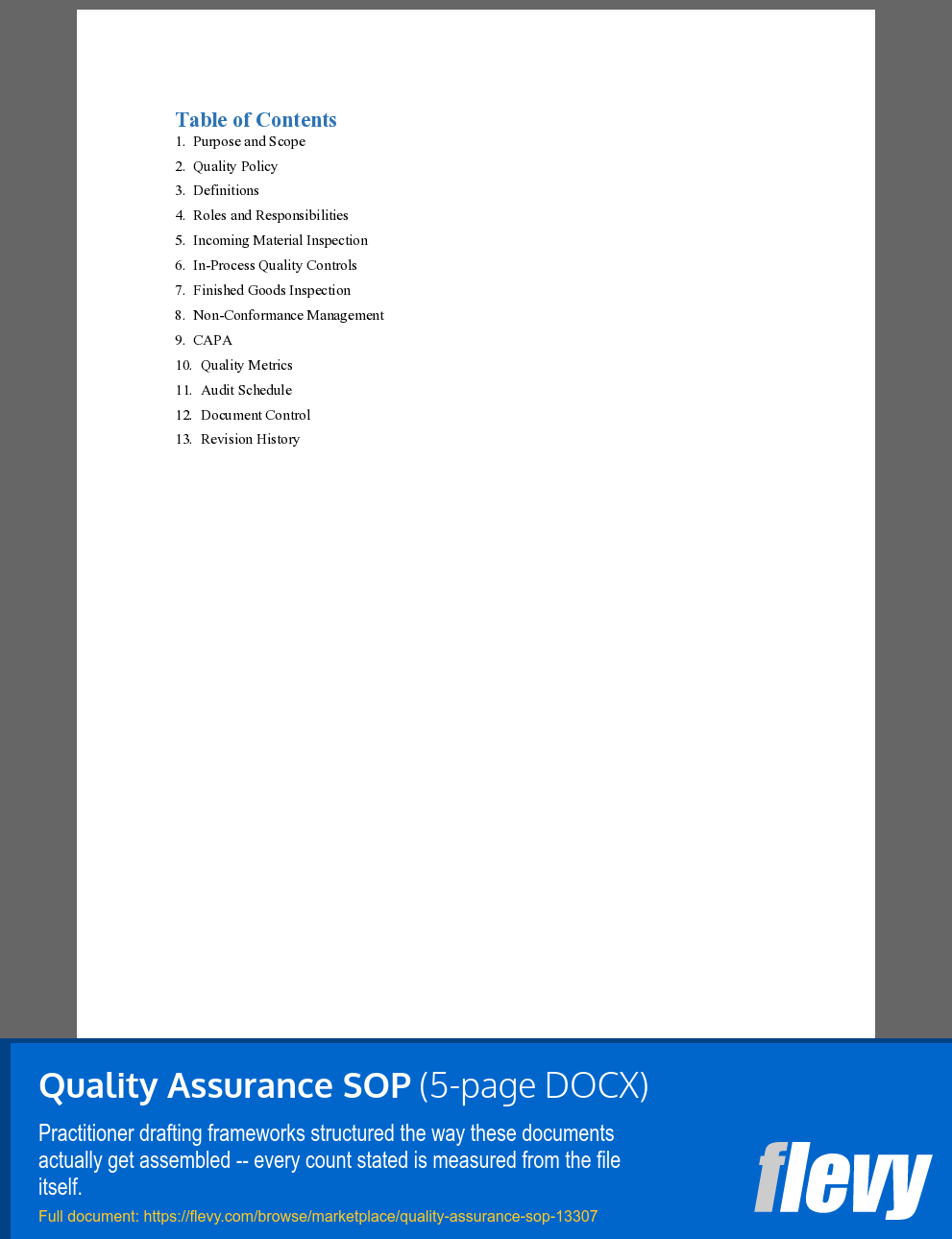
The document is organised into 13 numbered sections so you can work through it in order or jump straight to what you need. It covers 1. Purpose and Scope; 2. Quality Policy Statement; 3. Definitions; 4. Roles and Responsibilities; 5. Incoming Material Inspection; 6. In-Process Quality Controls; 7. Finished Goods Inspection; 8. Non-Conformance Management; 9. Corrective and Preventive Action (CAPA); 10. Quality KPIs; 11. Audit Schedule; and 12. Document Control. A further section continues the same structure.
Everything quoted here is measured from the file itself rather than described from memory: the document contains 55 structured table rows, 6 checkboxes, 251 paragraphs. Nothing is locked, hidden or password protected, so every table, prompt and checklist item can be edited, deleted or extended to fit how your organisation actually works.
This is built as a working document, not a reference read. The structure carries the thinking – what to ask, in what order, and what to do with the answer – while the specifics stay yours to fill in. Placeholders are marked clearly so you can see at a glance what still needs a decision, and the formatting is deliberately plain so it survives being pasted into your own template, sent to a counterparty, or dropped into a data room without looking borrowed.
How to put it to work. Start by reading it end to end once so you know what it asks for and where the gaps in your own information are. Then work top down, filling the placeholders with your specifics and deleting anything that does not apply to your situation – over-inclusion is the most common way a document like this loses credibility with the person reading it. Where a section calls for a judgement rather than a fact, write the judgement down explicitly along with the reasoning, because that is the part a counterparty, an investment committee or an auditor will actually interrogate. Finally, save your completed version as the house standard so the next person starts from your refined copy rather than from this one.
What this is and is not. It is a structure and a starting point built on how these documents are actually assembled in practice – the order of the argument, the questions that get asked, and the details that get missed when someone works from a blank page. It is not legal, tax or investment advice, and it is not a substitute for review by a qualified professional where your situation calls for one. Nothing in it is jurisdiction-specific boilerplate you should sign without reading.
Typical users are operators, founders, consultants and deal teams who need a credible starting point today rather than a blank page. Because the file is fully editable, it is equally useful as a one-off for a single engagement or as the base you standardise on and reuse across a portfolio, a client book or a repeatable internal process. It is delivered as a single Microsoft Word file, and opens in Word, Google Docs and Pages without conversion.
Got a question about the product? Email us at support@flevy.com or ask the author directly by using the "Ask the Author a Question" form. If you cannot view the preview above this document description, go here to view the large preview instead.
Source: Best Practices in Quality Management Word: Quality Assurance SOP Word (DOCX) Document, ModelStack
ABOUT THE AUTHOR

ModelStack builds Excel financial models and business documents for finance, M&A, investment banking, consulting and venture teams.
Every model is formula-transparent. Cells are unlocked, there are no macros and no hidden logic, and each workbook carries a dedicated Checks tab of integrity tests that prove the balance sheet balances and the roll-forwards tie before you rely on a number. Models
... [read more]
Ask the Author a Question
You must be logged in to contact the author.