 Click main image to view in full screen.
OTIF in Food & Beverage: A Practical KPI Playbook – PDF
PDF document 16 Pages


BENEFITS OF THIS DOWNLOADABLE PDF DOCUMENT
- Identifies the five internal metrics that report green while customer-receipt OTIF fails -- and explains the measurement gap behind each one.
- Provides F&B-specific calculation variants, root cause diagnostics, and Monday-morning actions for Supply Chain, Commercial, Operations, Finance, and Logistics teams.
- Covers the S&OP execution gap between commercial volume lock and production schedule freeze -- including early warning signals, root cause attribution by function, and a cost reallocation quick win for Supply Chain Directors and COOs.
LOGISTICS PDF DESCRIPTION
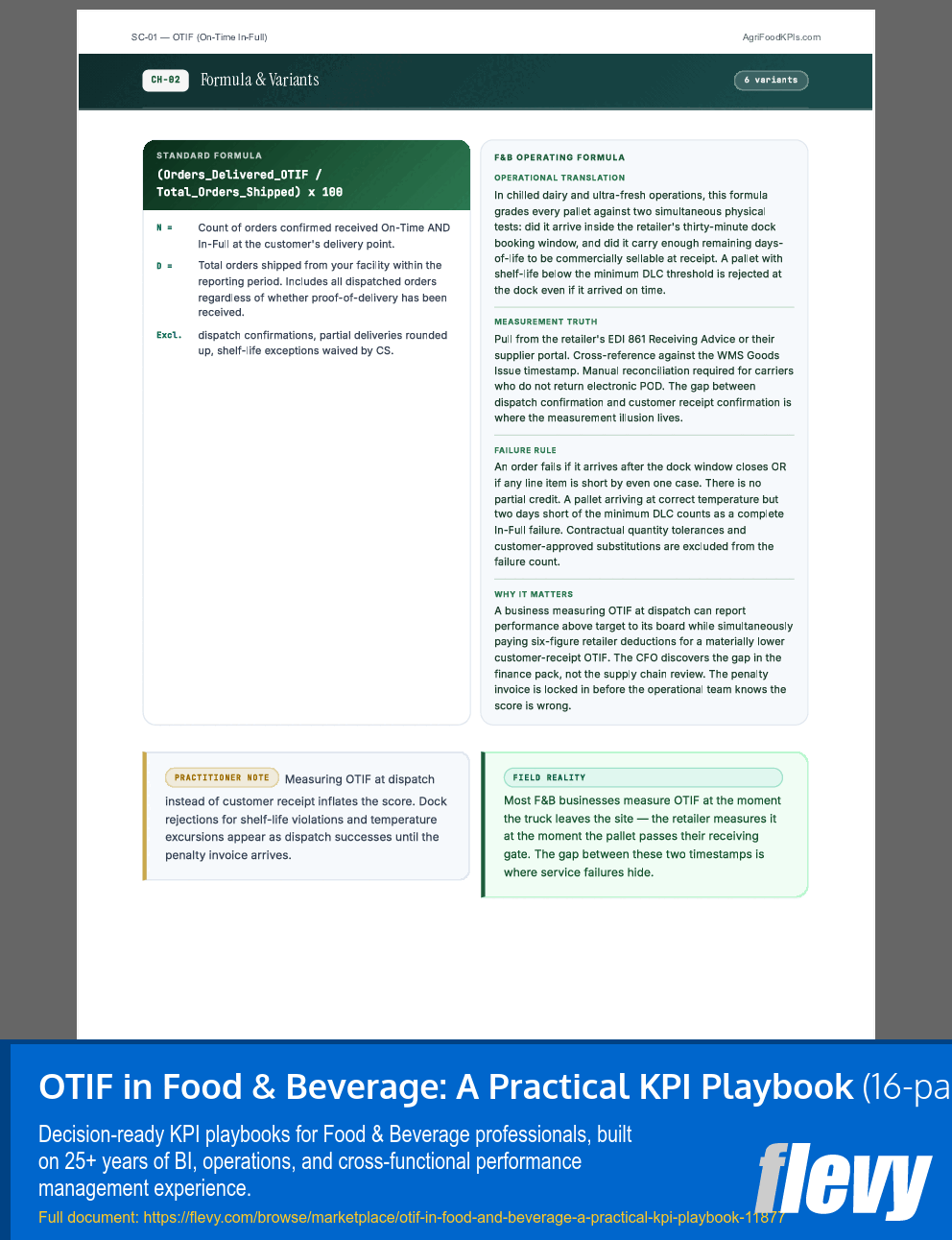
Most Food & Beverage businesses measure OTIF at dispatch. Their customers measure it at receipt. The gap between those two timestamps is where dock rejections, shelf-life refusals, temperature excursions, and partial deliveries accumulate – invisible to internal reporting until the retailer penalty invoice arrives.
This playbook is a decision-oriented reference for Supply Chain, Commercial, Operations, Finance, and Logistics professionals in Food & Beverage. It explains how OTIF works in environments shaped by dock booking discipline, freshness pressure, promotional volume spikes, and the execution gap between commercial commitments and production reality.
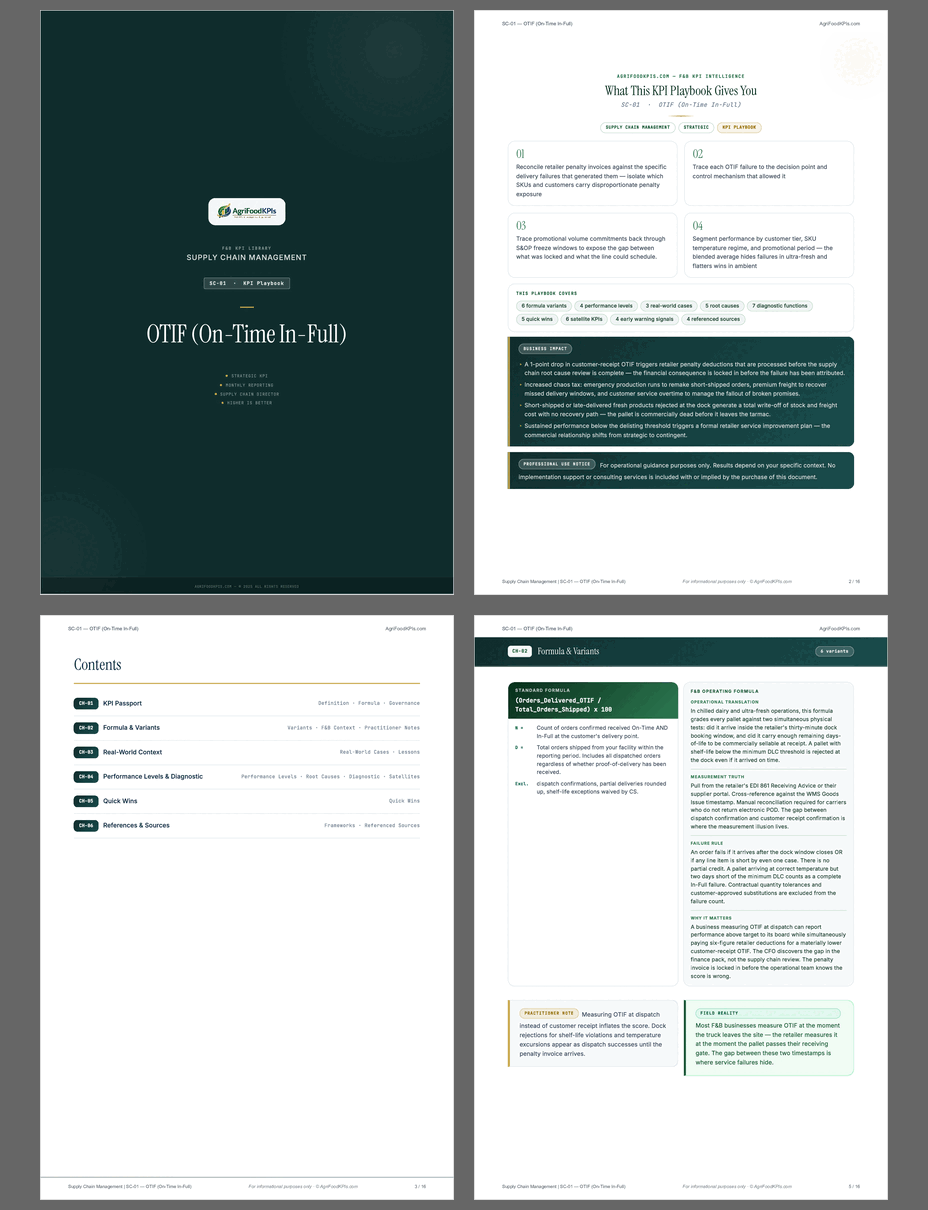
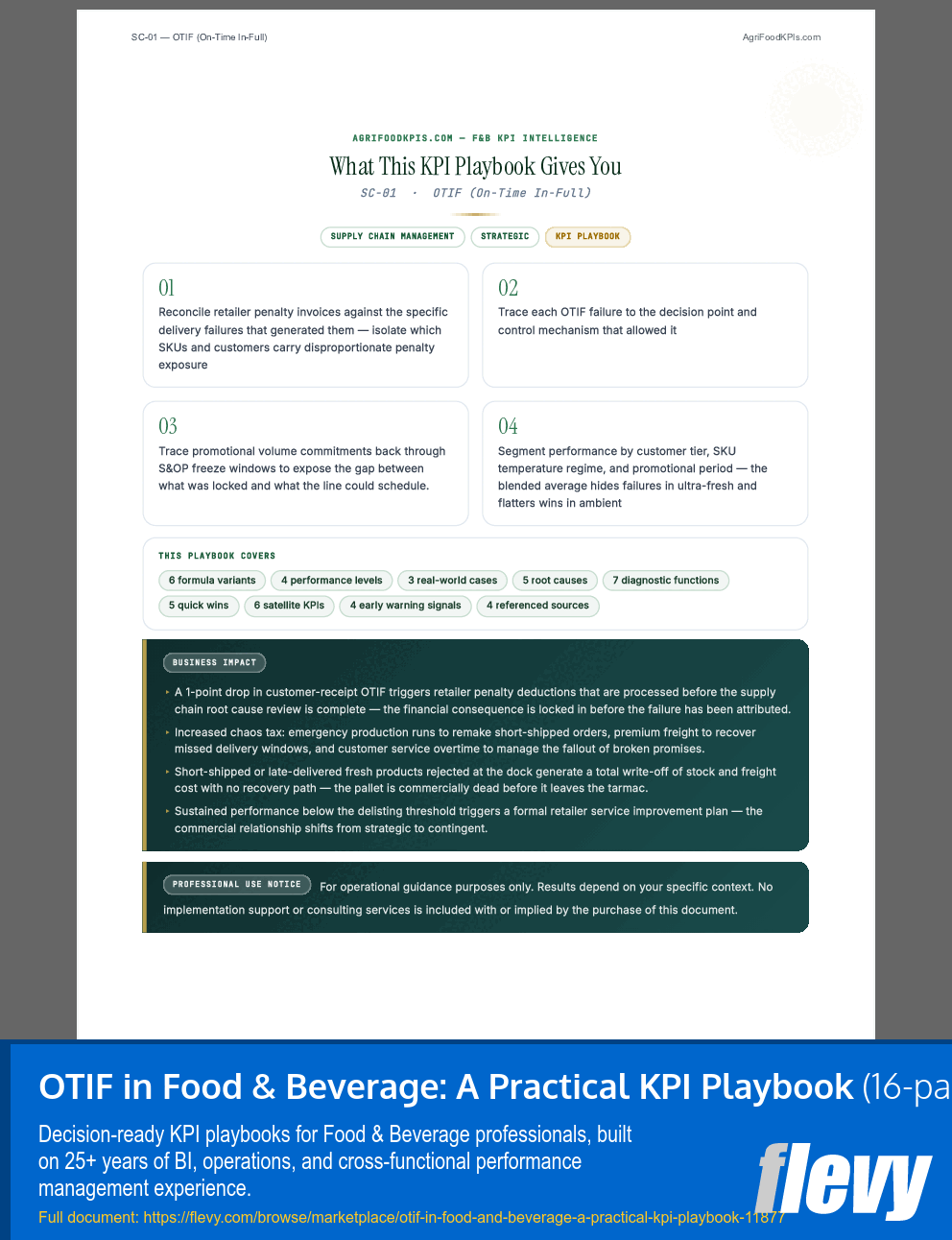
This document covers:
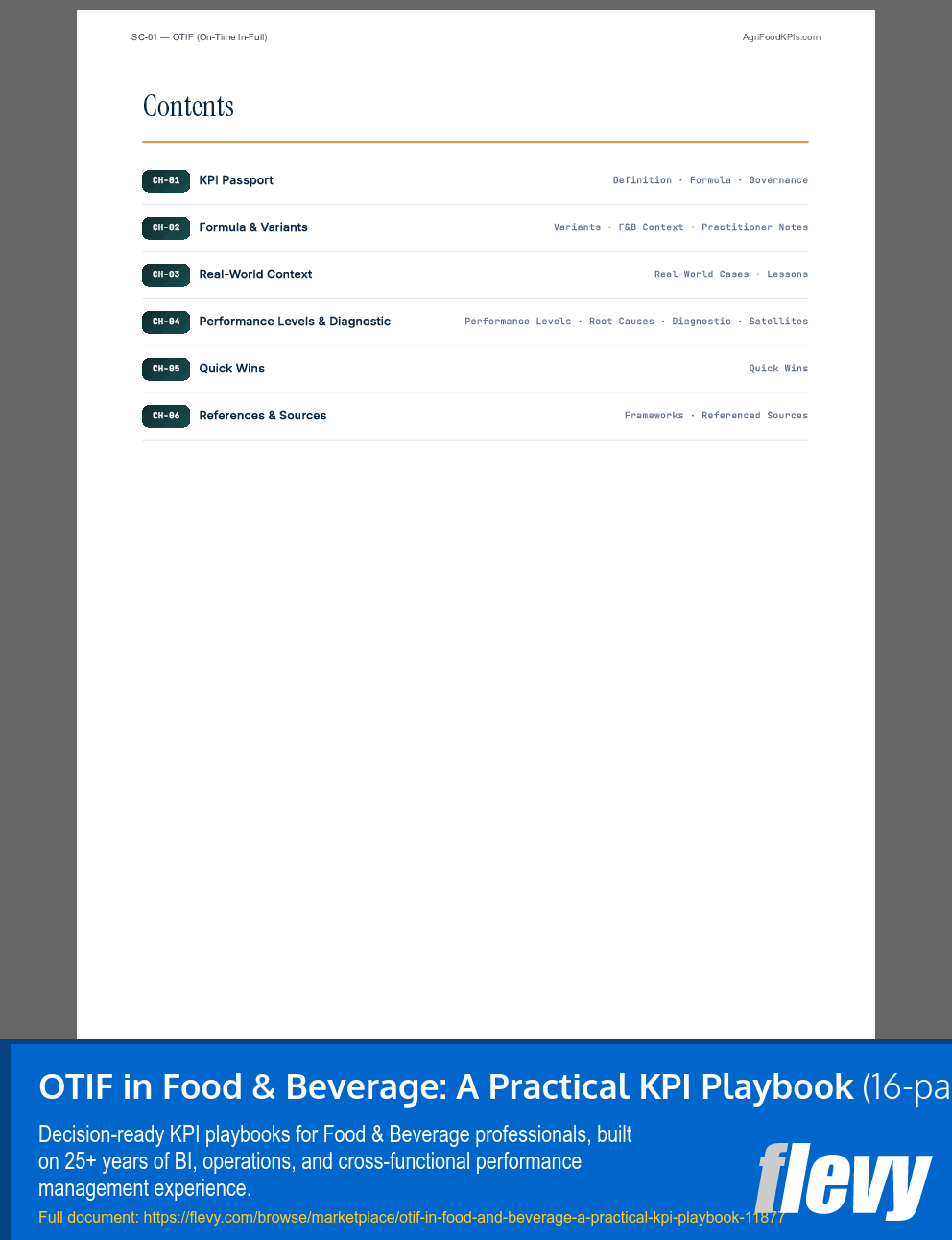
Structured KPI passport: full definition, formula, unit, polarity, and F&B-specific measurement governance
6 calculation variants: standard, revenue-weighted, customer tier, SKU category, DIFOT, and shelf-life compliance at receipt
3 real-world F&B cases: chilled dairy, beverage, confectionery – each showing where the metric looked stable and still concealed a failure
5 root causes with diagnostic queries: including the 5 internal metrics that stay green while OTIF fails at the customer dock
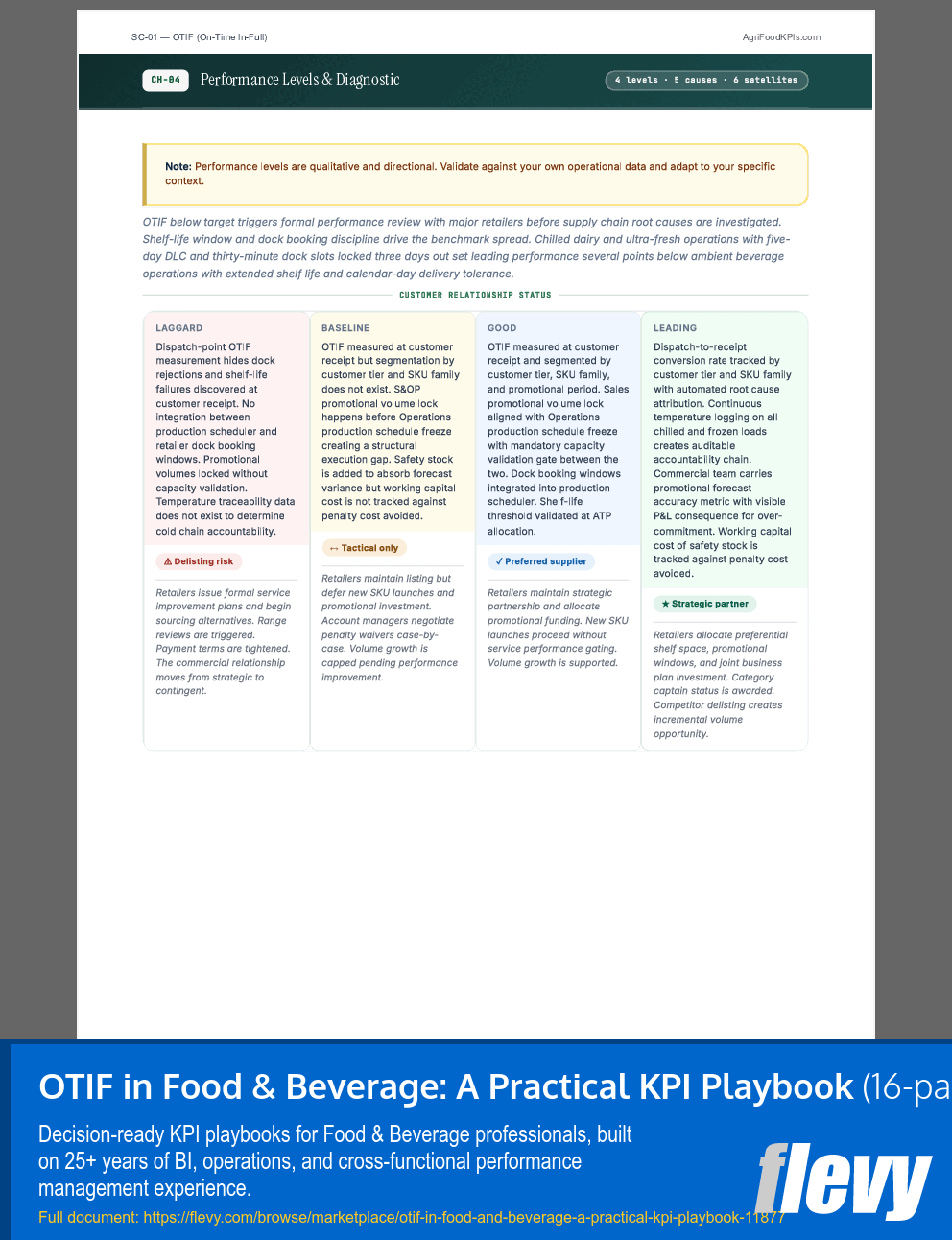
4 performance levels with customer relationship consequences from delisting risk to strategic partner status
4 early warning signals: timing and leading indicators before the penalty invoice cycle closes
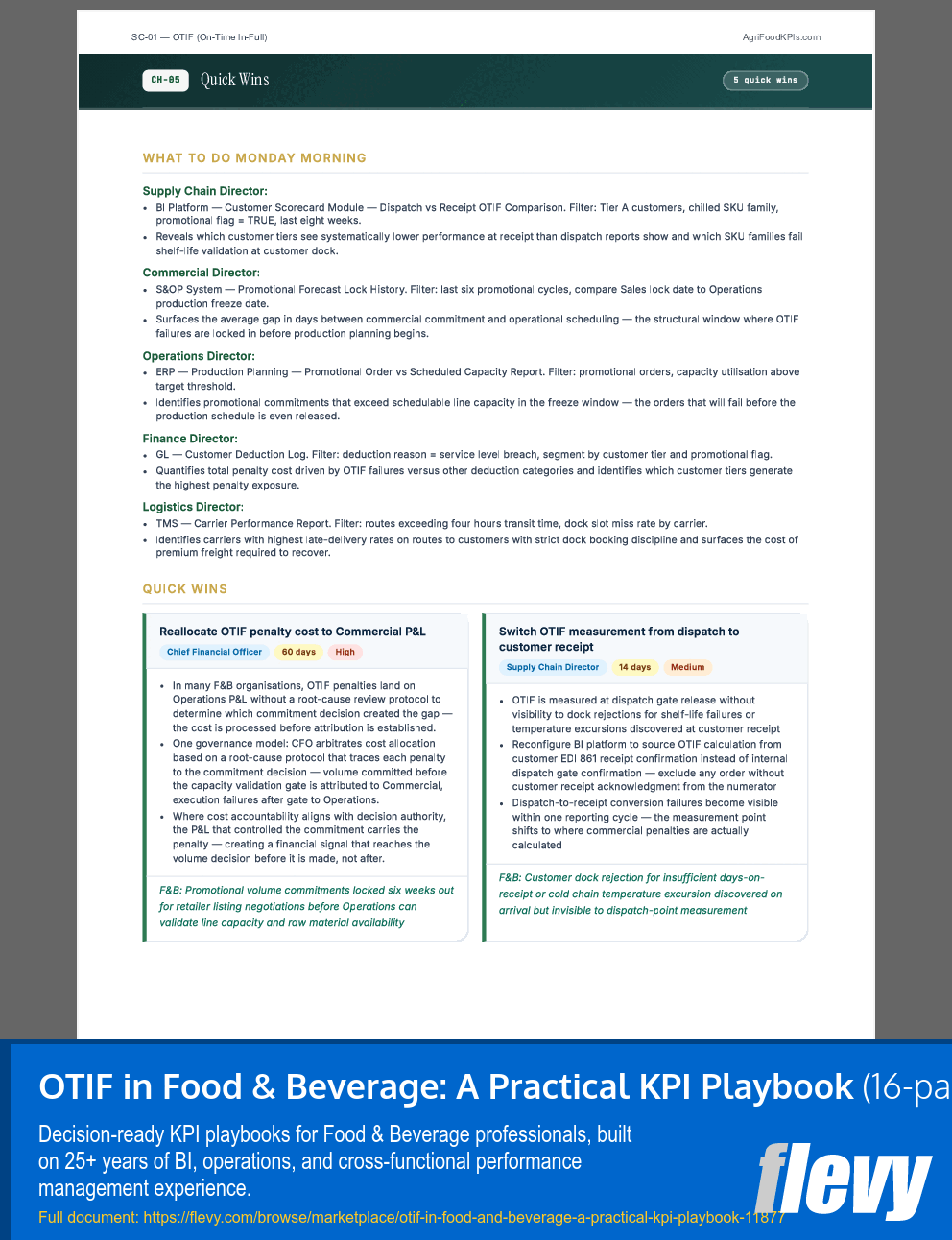
5 quick wins: including S&OP governance redesign and penalty cost reallocation framework
6 satellite KPIs with causal insights: SC-05 Forecast Accuracy, SC-18 Shelf-Life at Dispatch, LOG-11 Cold Chain Compliance, LOG-12 Emergency Freight Cost Ratio, and others
Monday-morning actions by function: Supply Chain, Commercial, Operations, Finance, Logistics
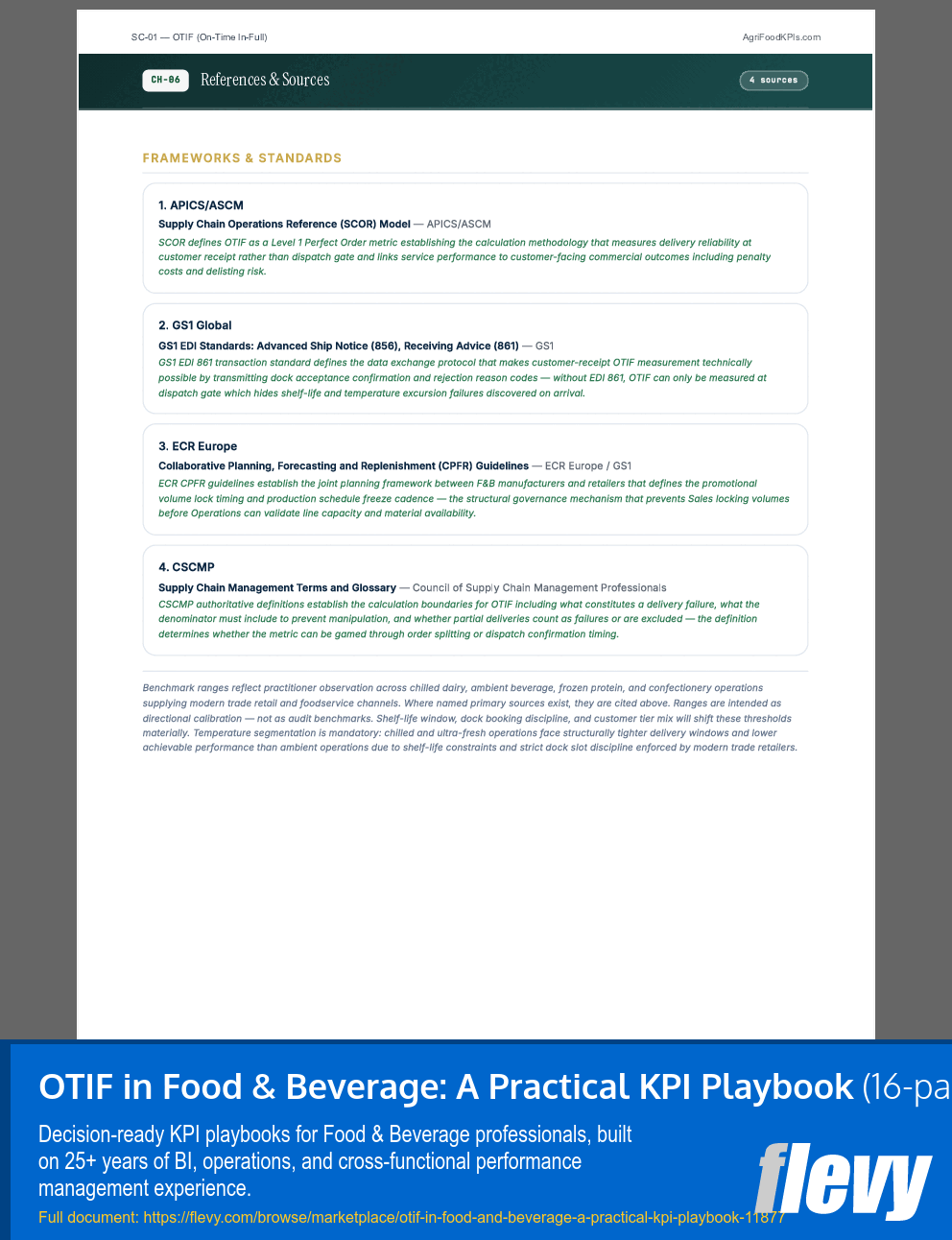
4 referenced frameworks: APICS/ASCM SCOR, GS1 EDI 861, ECR CPFR, CSCMP
What makes this different from generic OTIF definitions:
The playbook identifies five specific internal metrics that systematically report green while customer-receipt OTIF fails – and explains the measurement logic behind each one. It also addresses the S&OP governance gap between commercial volume lock and operational production freeze, including a cost attribution model for allocating retailer penalties to the P&L that controlled the commitment decision.
Designed for:
Supply Chain Directors, COOs, and Operations Managers managing retailer service agreements in chilled, ambient, frozen, and confectionery F&B. Also relevant for consultants structuring OTIF improvement programmes and finance teams reconciling retailer deduction logs against supply chain performance data.
This is not a generic KPI definition. It is a 15-page F&B practitioner playbook built around the operational realities that make OTIF harder to measure and improve than most internal dashboards suggest.
Got a question about the product? Email us at support@flevy.com or ask the author directly by using the "Ask the Author a Question" form. If you cannot view the preview above this document description, go here to view the large preview instead.
Source: Best Practices in Logistics, Food & Beverage Industry PDF: OTIF in Food & Beverage: A Practical KPI Playbook PDF (PDF) Document, AgriFoodKPIs
ABOUT THE AUTHOR
AgriFoodKPIs develops specialized KPI playbooks for Food & Beverage professionals working across Supply Chain, Operations, Finance, Commercial, and Quality.
The work is built on more than 25 years of Business Intelligence and cross-functional performance management experience in complex operating environments. Rather than treating KPIs as simple reporting metrics, AgriFoodKPIs structures them
... [read more]
Ask the Author a Question
You must be logged in to contact the author.




























