
 Click main image to view in full screen. Unlock all 9 preview images:
How to Build a Financial Model – Word DOCX
Word (DOCX) 36 Pages


BENEFITS OF THIS DOWNLOADABLE WORD DOCUMENT
- Provides a comprehensive framework for building reliable, audit-ready financial models that support valuation, decision-making, and deal execution.
- Provides a practical, step-by-step system for integrating financial statements, scenarios, sensitivities, and valuation into professional-grade models.
- Provides the tools and methodology needed to build accurate, transparent financial models that withstand scrutiny and drive confident business decisions.
FINANCIAL MODELING WORD DESCRIPTION
Curated by McKinsey-trained Executives
How to Build a Financial Model – The Complete Financial Modeling Guide for Investment Banks, Private Equity, Corporate Finance & Business Leaders
Stop Losing Deals, Failing Valuations, and Missing Red Flags Because Your Team Can't Build a Reliable Financial Model From Scratch.
Most investment bankers, private equity professionals, and corporate finance teams don't fail because they lack intelligence—they fail because they lack the discipline, structural knowledge, and step-by-step framework to build financial models that actually work, that auditors trust, that survive board scrutiny, and that drive real business decisions instead of producing garbage in, garbage out.
They suffer from:
• ❌ Model incompetence – Hardcoded numbers buried in formulas, inconsistent logic, no one else can follow the spreadsheet except the original author
• ❌ Silent errors – Balance sheets that don't balance, circular references that break unexpectedly, working capital assumptions disconnected from reality
• ❌ Three-statement chaos – Income statement, balance sheet, and cash flow statement that don't reconcile, showing different versions of "the truth" in every presentation
• ❌ Valuation disasters – DCF models with circular interest expense, revenue builds divorced from operational drivers, meaningless sensitivity tables
• ❌ Audit failures – Models that can't be explained in 10 minutes, reviewers who find errors you missed, investment committees who reject your analysis
• ❌ Deal-killing delays – Rebuilding the model 3 times because the architecture was wrong from the start
• ❌ Banker burnout – Spending 40 hours building a model when 10 hours of proper structure would have done it right the first time
• ❌ Client embarrassment – Presenting a model to an MD, CFO, or investor that crumbles under basic questions ("How did you calculate EBITDA?" "Why doesn't cash flow tie to the balance sheet?")
• ❌ M&A disasters – Deal models so fragile that adding a new scenario breaks formulas; acquisition analysis that no one trusts
• ❌ Valuation credibility gone – Fair opinions rejected, DCF outputs laughed out of the room, investor pitch decks with models that don't hold up
That's why deals slip. That's why models fail due diligence. That's why teams spend weekends rebuilding spreadsheets instead of closing transactions.
INTRODUCING: HOW TO BUILD A FINANCIAL MODEL
The Complete, Practitioner-Grade Financial Modeling Guide: 30 Chapters, 35 Pages, 1 Fully Integrated 5-Year Case Study (Northstar Coffee Co.) with Every Number Reconciling Exactly, Covering Revenue Build, Cost Structure, Three-Statement Integration, Working Capital, PP&E, Debt, Scenarios, Sensitivities, Valuation, Audit Standards, and 12 of the Most Costly Modeling Mistakes—Ready to Download, Learn From, and Apply to Every Deal You Touch
✅ 30 Comprehensive Chapters – From "What Is a Financial Model?" through "Golden Rules," revenue building, cost modeling, income statements, balance sheets, cash flows, working capital schedules, PP&E, debt tracking, tax treatment, three-statement integration, scenarios, sensitivities, valuation basics, audit standards, and professional formatting
✅ 5-Year Fully Integrated Case Study – Northstar Coffee Co. with 100+ tables showing store expansion, revenue build, cost structure, all three financial statements, working capital, PP&E & depreciation schedule, debt amortization, complete cash flow, and balance sheet that balances to zero in every single period
✅ Every Number Internally Consistent – Revenue grows through operational drivers (stores, same-store sales growth), costs scale logically, depreciation ties to PP&E schedule, debt repayment linked to cash flow, working capital changes flow through the cash statement and balance sheet—nothing hardcoded, everything traces
✅ Three-Statement Integration Masterclass – The single most important chapter: exactly how net income flows to retained earnings, how D&A works across all three statements, how capex affects PP&E and cash, how debt movements tie together, how working capital changes are cash movements, not just balance sheet adjustments
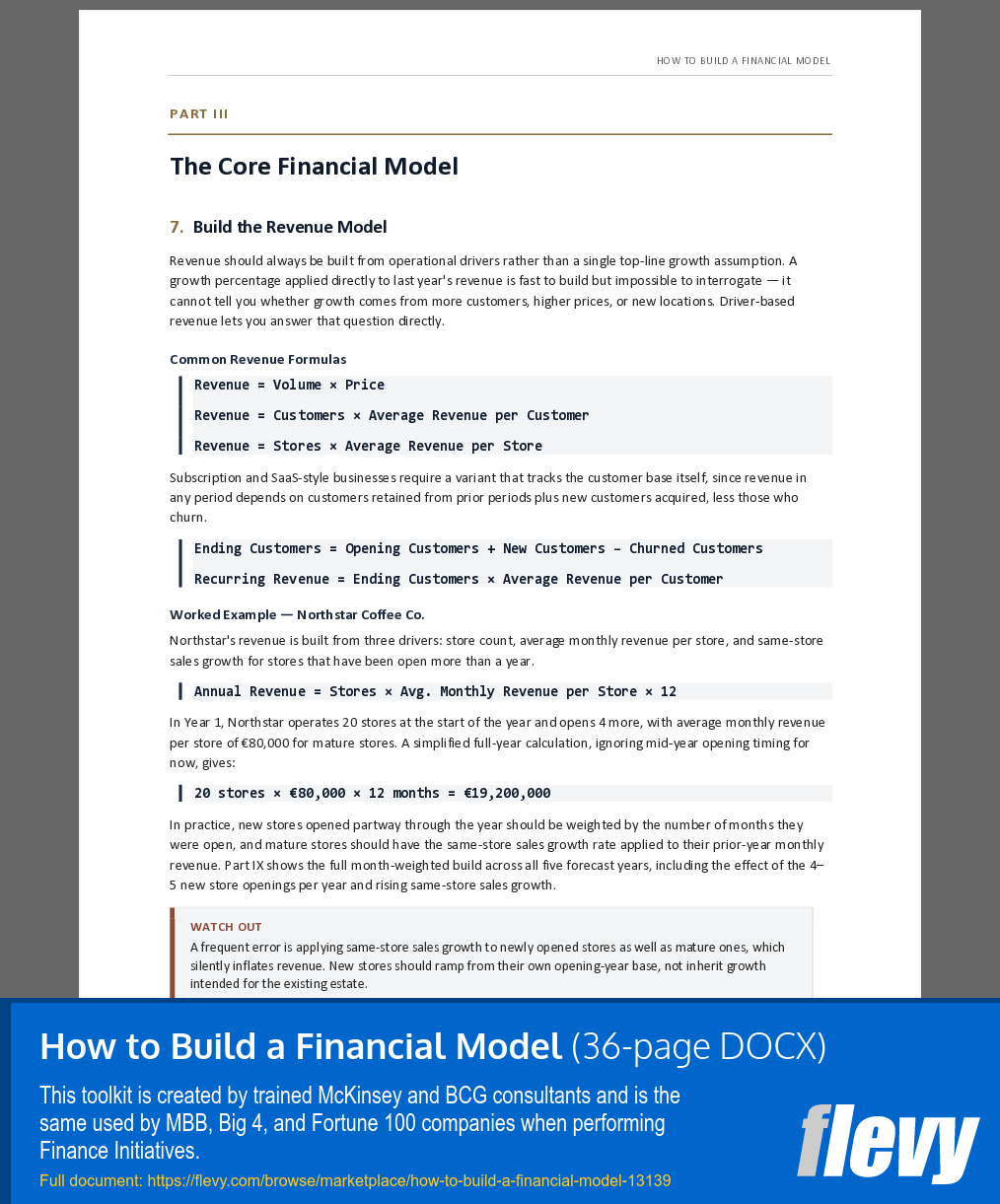
✅ Revenue Build From Operational Drivers – Not top-line growth percentages; actual unit economics: stores × average revenue per store × same-store sales growth, with new store ramps at 75% of mature run-rate revenue for their first 6 months
✅ Cost Modeling Both Ways – Percentage-of-revenue (for marketing, processing fees) AND driver-based (staff costs tied to store count, rent as fixed per location, G&A as fixed with step-function growth); when to use each method explained with worked examples
✅ Working Capital From First Principles – DSO, DIO, DPO calculations, days sales outstanding formulas, inventory roll-forward, payables management, and the critical cash conversion cycle analysis that CFOs actually care about
✅ PP&E & Depreciation Schedule – Straight-line depreciation on useful life assumptions, opening balance roll-forward, capex additions, asset disposals, closing balances that feed the balance sheet, and depreciation that flows to both the income statement and cash flow statement
✅ Debt Schedule Complete – Opening balance, new borrowing, mandatory repayment, interest expense calculated on opening or average balance, circularity management, and exactly how to avoid the #REF! errors that kill models
✅ Tax Treatment Simplified – EBT to taxes, loss carryforwards, timing differences explained (not as jurisdiction-specific advice, but as modeling best practices); cash tax vs. accrual tax reconciliation
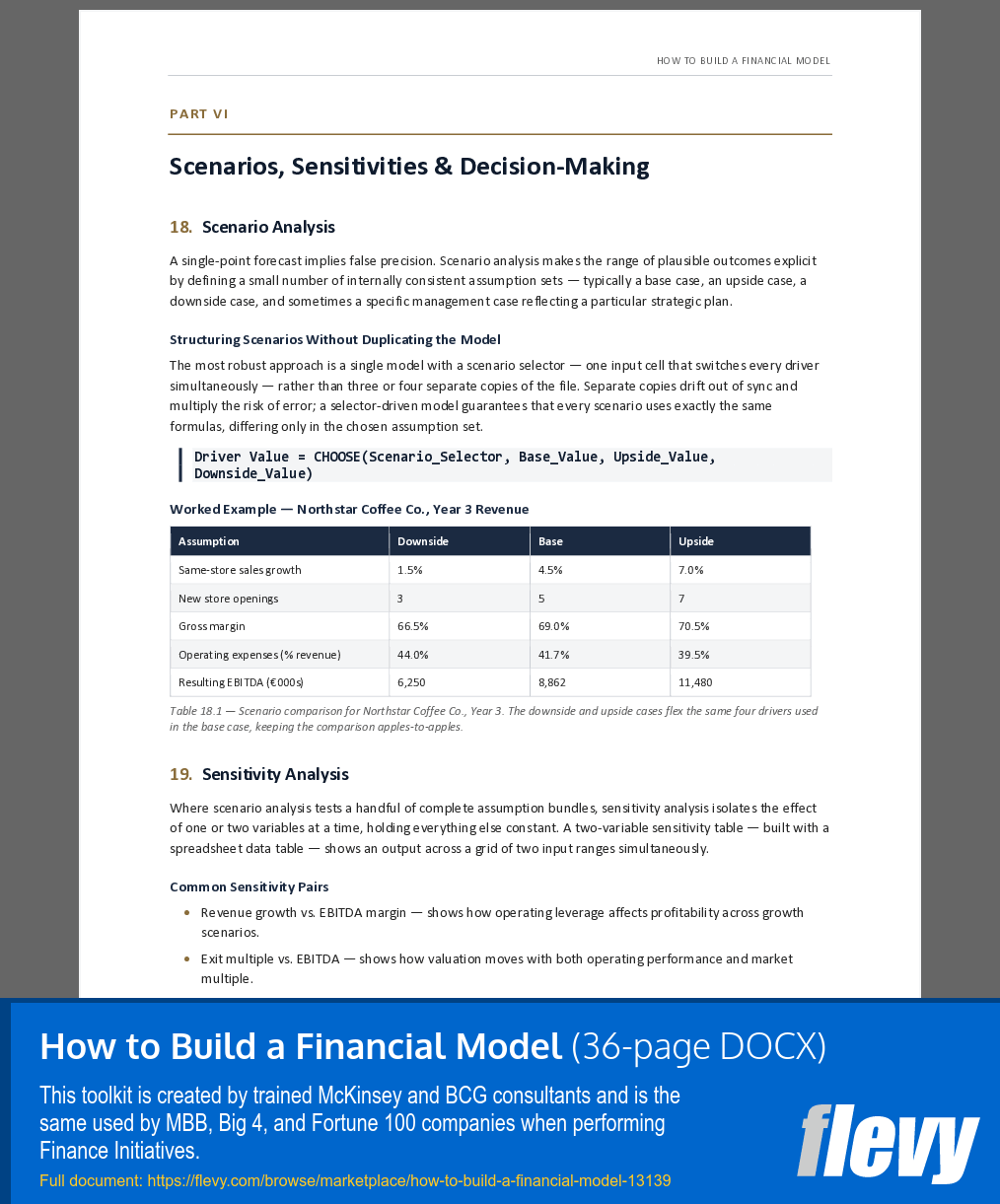
✅ Scenario & Sensitivity Analysis Explained – Base case, upside, downside scenarios with 2-variable sensitivity tables showing how EBITDA changes with same-store sales growth AND new store openings simultaneously
✅ Valuation Outputs – Enterprise value multiples (8x EBITDA for Northstar), equity value (enterprise value ± net cash), MOIC, IRR, and why a business with negative net debt (strong cash position) is worth more than the EBITDA multiple alone suggests
✅ Audit Standards & Model Quality – Formatting conventions (blue for inputs, black for formulas, consistent units), balance sheet checks that must equal zero, cash flow ties to balance sheet movements, error-catching formulas, and a complete 9-step audit process
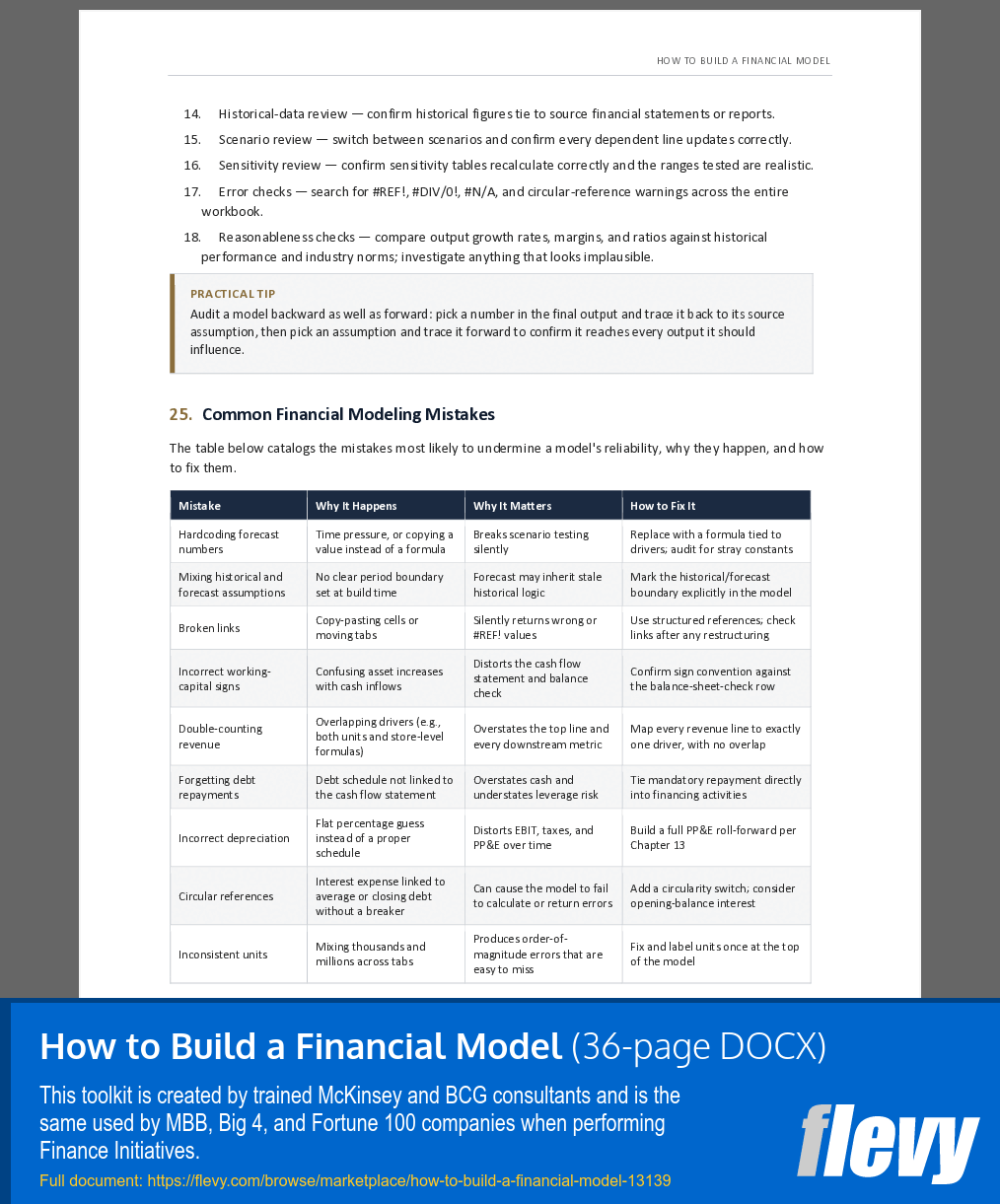
✅ 12 Costliest Modeling Mistakes Catalogued – Hardcoding forecast numbers, mixing historical and forecast assumptions, broken links, incorrect working capital signs, double-counting revenue, forgotten debt repayments, bad depreciation, unmanaged circularity, inconsistent units, over-complication, poor documentation, missing balance checks—each with why it happens, why it matters, and how to fix it
✅ Professional Formatting & Aesthetics – Navy/charcoal headers, white backgrounds, subtle bronze accent colors, clean tables with proper borders, formula cells clearly distinguished from assumptions, ready for investment committee presentations
✅ Zero Theoretical Padding – Every chapter teaches what you actually need to build models that work; no academic theory disconnected from practice; every concept illustrated with numbers from Northstar's actual five-year forecast
WHAT'S ACTUALLY INSIDE
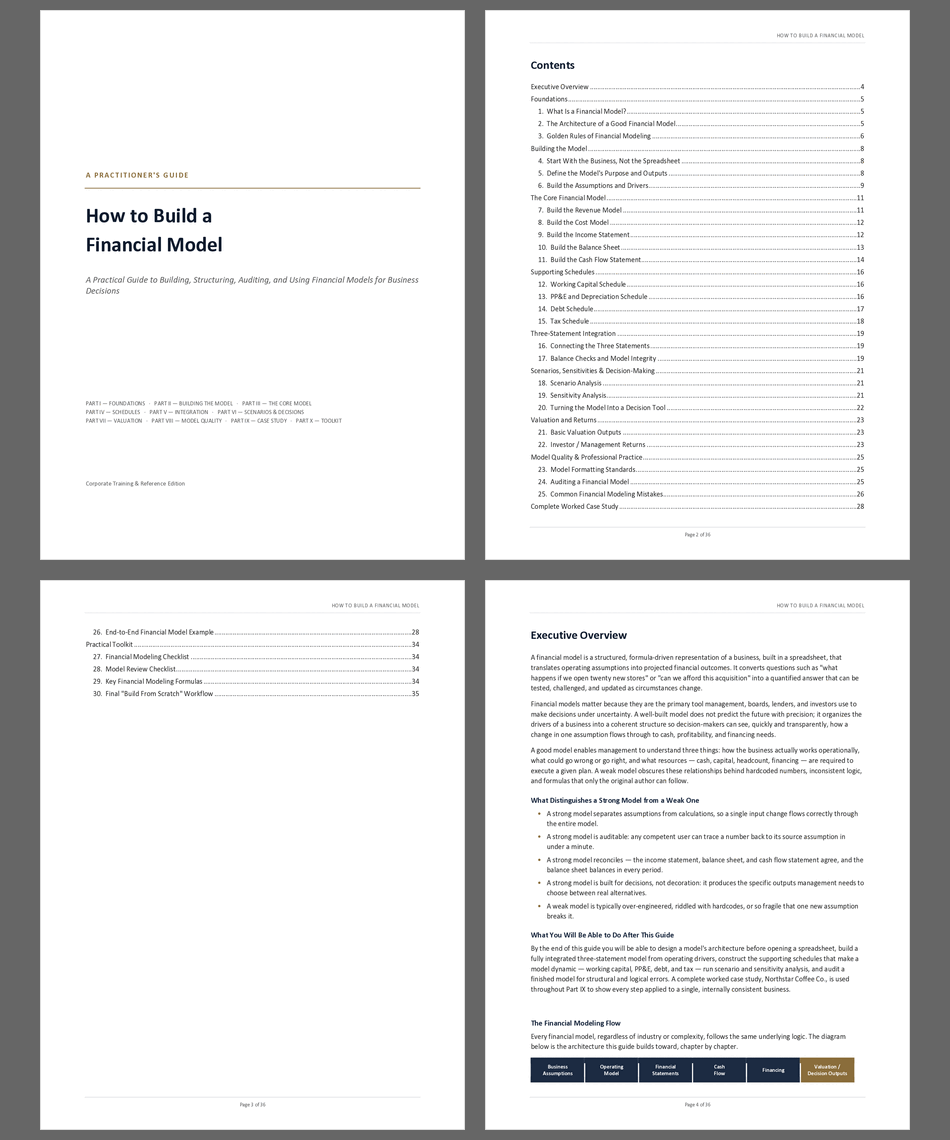
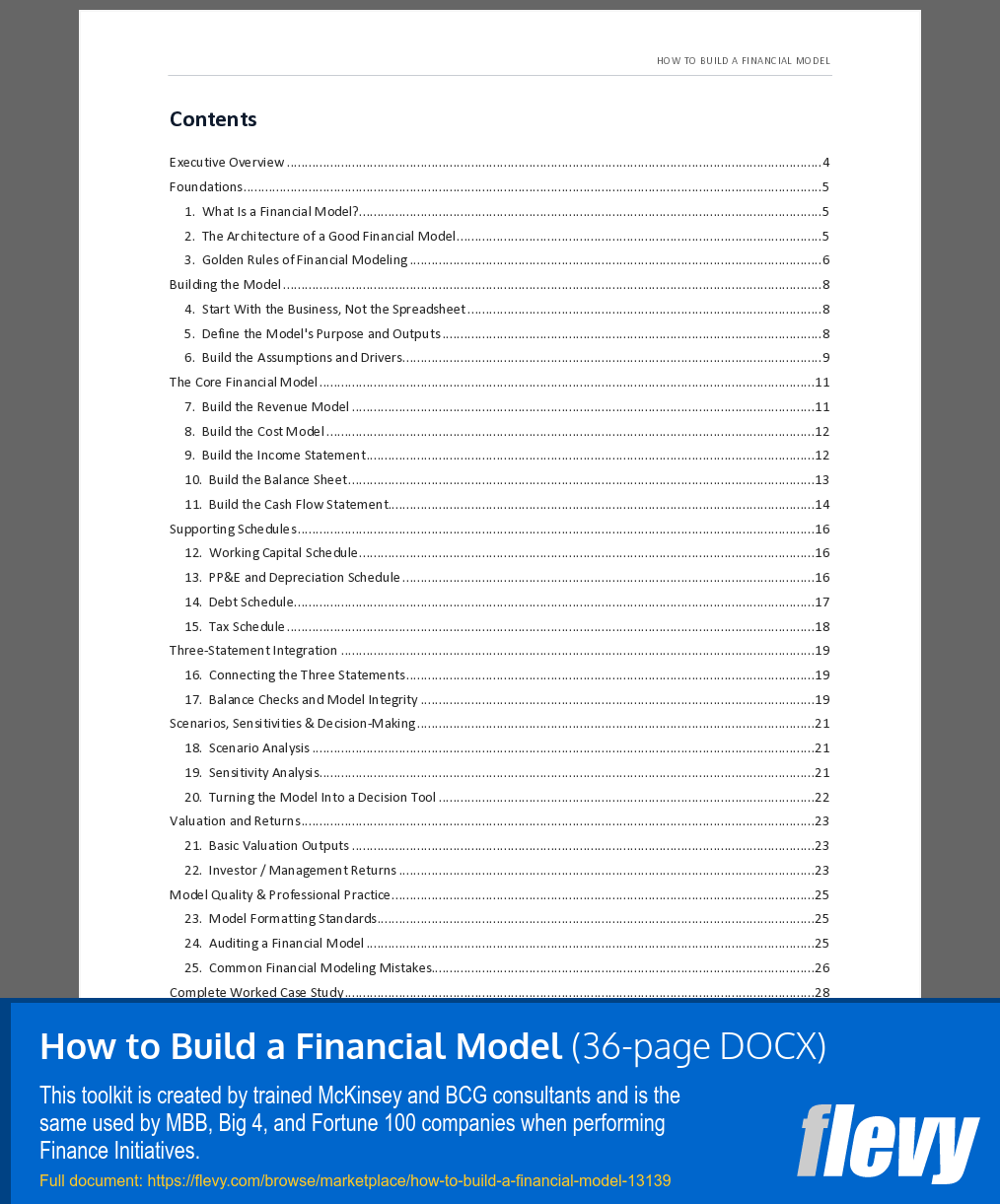
PART I: FOUNDATIONS (Chapters 1–3)
• What is a financial model (and the 8 types every banker must know)
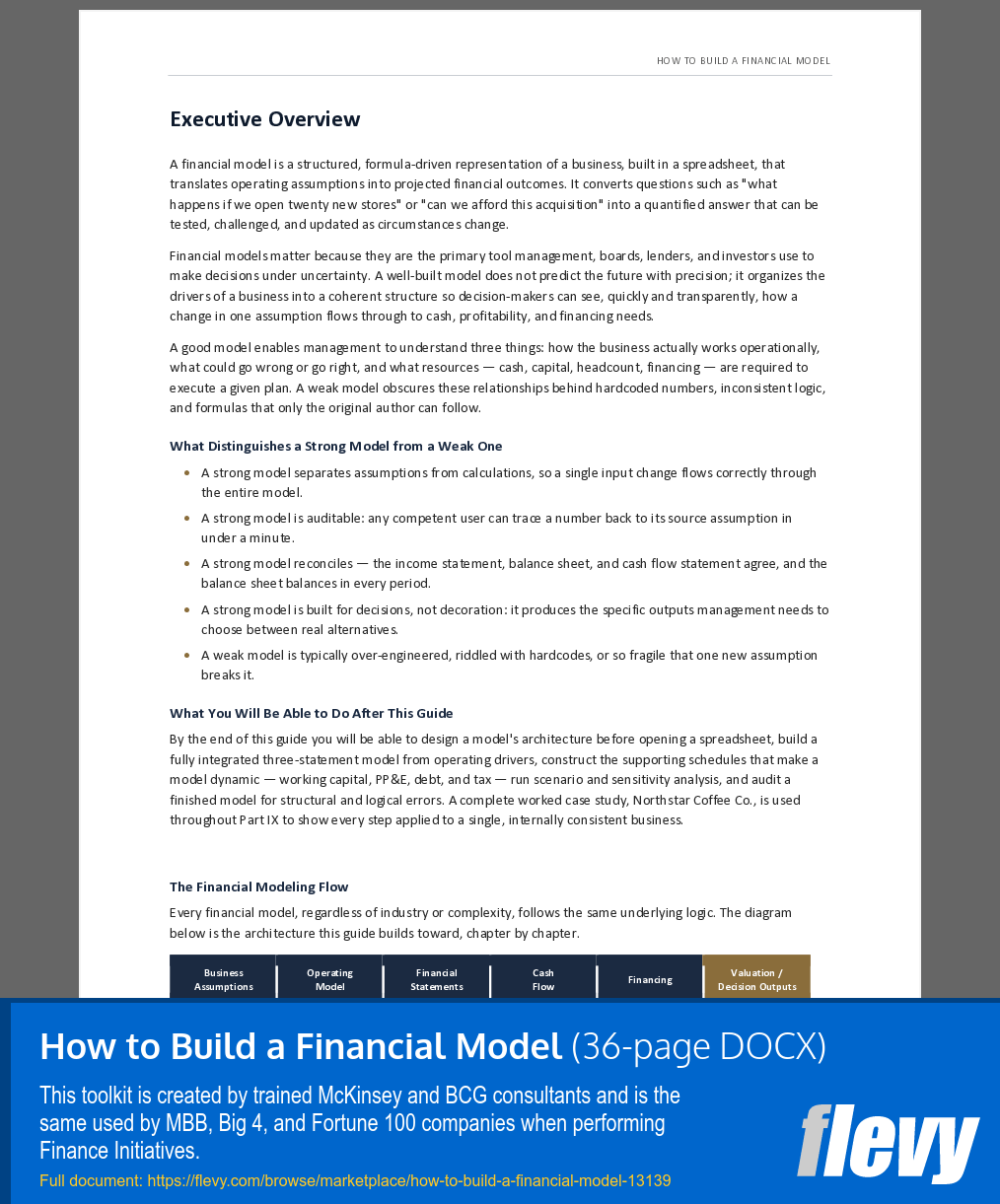
• The architecture of a good financial model (inputs → calculations → outputs)
• 12 golden rules of financial modeling (the discipline that separates professional models from Excel garbage)
PART II: BUILDING THE MODEL (Chapters 4–6)
• Start with the business, not the spreadsheet (understanding drivers before formulas)
• Define the model's purpose and outputs (the checklist bankers forget)
• Build assumptions and drivers (the foundation everything else depends on)
PART III: THE CORE FINANCIAL MODEL (Chapters 7–11)
• Build the revenue model (from operational drivers, not growth percentages)
• Build the cost model (both percentage-of-revenue and driver-based methods)
• Build the income statement (formula by formula)
• Build the balance sheet (and why it must balance in every period)
• Build the cash flow statement (operating, investing, financing activities fully explained)
PART IV: SUPPORTING SCHEDULES (Chapters 12–15)
• Working capital schedule (DSO, DIO, DPO, cash conversion cycle)
• PP&E and depreciation schedule (opening → capex → depreciation → closing)
• Debt schedule (opening debt, repayment, interest calculation, circularity management)
• Tax schedule (EBT to cash taxes, loss carryforwards)
PART V: THREE-STATEMENT INTEGRATION (Chapters 16–17)
• Connecting the three statements (the 5 critical links every banker must understand)
• Balance checks and model integrity (formulas that catch errors automatically)
PART VI: SCENARIOS, SENSITIVITIES & DECISION-MAKING (Chapters 18–20)
• Scenario analysis (base, upside, downside with consistent assumptions)
• Sensitivity analysis (two-variable tables showing how outputs move with key drivers)
• Turning the model into a decision tool (answering "Can we afford this?" "When do we break even?" "What happens if margins decline?")
PART VII: VALUATION AND RETURNS (Chapters 21–22)
• Basic valuation outputs (enterprise value, equity value, multiples, free cash flow, DCF basics)
• Investor/management returns (MOIC, IRR, simple worked examples)
PART VIII: MODEL QUALITY & PROFESSIONAL PRACTICE (Chapters 23–25)
• Model formatting standards (blue for inputs, black for formulas, consistent conventions)
• Auditing a financial model (9-step process from structural review through error checking)
• Common financial modeling mistakes (12 mistakes with why they happen, why they matter, how to fix them)
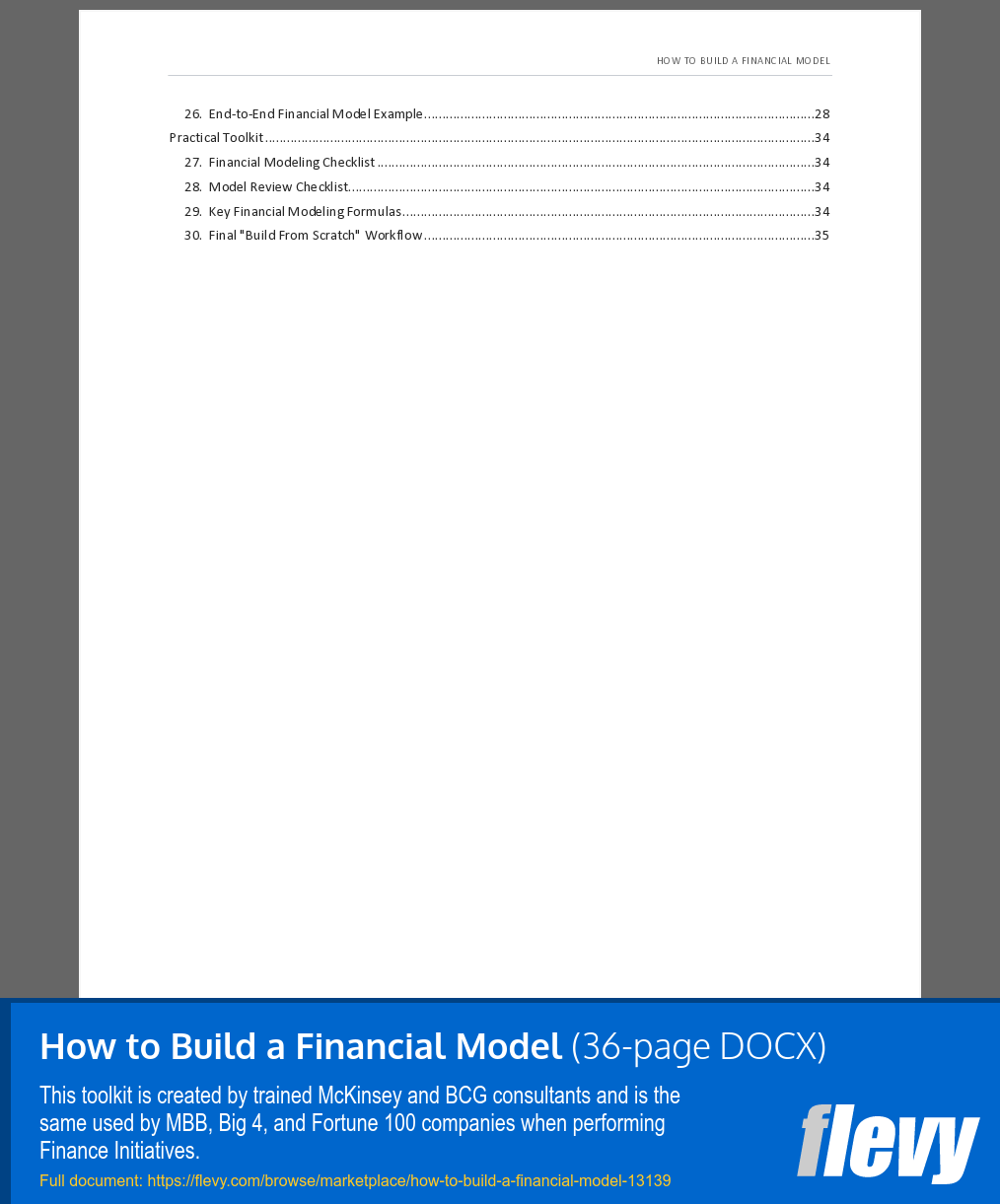
PART IX: COMPLETE WORKED CASE STUDY (Chapter 26)
• 12-step build-out of Northstar Coffee Co.'s five-year model:
• Historical financials (Year 0 opening balance sheet)
• Operating assumptions (store count, revenue per store, same-store sales growth, cost structure, working capital days, capex, interest rate, tax rate)
• Revenue build (mature stores + new store ramps)
• Cost build (COGS, staff, rent, marketing, G&A)
• Full income statement (EBITDA, depreciation, EBIT, interest, EBT, taxes, net income—all reconciling)
• Working capital (AR, inventory, AP with days assumptions)
• Capex and depreciation schedule
• Debt schedule with interest calculation
• Three-statement integration (cash flow statement flows from operating, investing, financing; cash ties to balance sheet)
• Balance sheet (assets = liabilities + equity; balance check = 0 in every period)
• Scenario analysis (Year 5 downside/base/upside EBITDA comparison)
• Key outputs (revenue, EBITDA, EBIT, net income, free cash flow, ending cash, closing debt, net debt position, leverage ratios)
• Management conclusions (what the model tells management about the expansion plan)
PART X: PRACTICAL TOOLKIT (Chapters 27–30)
• Financial modeling checklist (confirm groundwork before building)
• Model review checklist (audit a finished model systematically)
• Key financial modeling formulas (compact reference for every metric)
• Final "Build From Scratch" workflow (13-step roadmap from business understanding through model communication)
WHO NEEDS THIS GUIDE
✅ Investment Bankers – M&A, DCM, ECM coverage teams building deal models, valuation analysis, fairness opinions
✅ Private Equity Professionals – LBO models, acquisition analysis, portfolio company returns modeling, exit scenarios
✅ Corporate Finance Teams – Capital allocation decisions, acquisition screening, venture investment analysis, strategic transaction evaluation
✅ Valuation Advisors – Fairness opinions, ASC 718 valuations, independent valuations for litigation or investment decisions
✅ CFO Advisory & Due Diligence – Financial analysis supporting corporate acquisitions, refinancing analysis, restructuring feasibility
✅ Investment Banking Analysts & Associates – Building your modeling foundation; every model you build from now on will be 10x better
✅ Management Consultants – Financial analysis supporting strategic recommendations; client-ready models
✅ Corporate Development Directors – In-house M&A evaluation, venture screening, portfolio performance analysis
✅ Business School Students – Investment banking recruiting (PE recruiting, IB summer internships); modeling tests; case interview prep
✅ MBA Programs – Corporate finance, valuation, investment banking electives
✅ Hedge Fund & Equity Research Analysts – Building investment theses, comparative valuation analysis, scenario modeling
✅ Anyone Who Builds Spreadsheet-Based Financial Analyses – Every model you build will have better structure, fewer errors, and survive audit
HOW TO BUILD A FINANCIAL MODEL DELIVERS IMMEDIATE RESULTS
✅ First Model Built Correctly – Follow the 13-step workflow; your next model is structured from day one instead of rebuilt halfway through
✅ No More Silent Errors – Balance checks catch mistakes automatically; every formula is auditable; your work survives scrutiny
✅ Three Statements That Reconcile – Income statement flows to balance sheet flows to cash flow statement; one source of truth instead of three conflicting versions
✅ Valuation Models That Hold Up – Revenue builds from unit economics, not guesses; cost assumptions tied to business drivers; DCF outputs that bankers and investors trust
✅ Deal Models That Don't Break – Proper three-statement integration means adding a scenario doesn't require rebuilding formulas
✅ Audit & Approval Ready – Models built to professional standards survive partner review, investor scrutiny, fairness opinion standards
✅ Speed – Understand the architecture before building; proper structure means models take 50% less time to build and 90% less time to debug
✅ Credibility – Explain your model in 5 minutes instead of 30; answers to "How did you calculate this?" are obvious because formulas are transparent
✅ Client Confidence – Board-ready models; fairness opinion defensibility; investment committee approval instead of "let's get another opinion"
✅ Team Productivity – Analysts spend time analyzing, not rebuilding spreadsheets; associates learn proper modeling on day one
✅ Deal Close – Models that work drive decisions; decisions drive closes; closes drive revenue
✅ Career Advancement – Associates who understand modeling architecture are ready for senior roles; VPs who teach this framework retain talent
✅ Cost Avoidance – Stop paying consultants $5k/week to build models for you; do it right the first time; save $50k+ per year per banker
INVESTMENT BANKING TASK TRACKER DELIVERS DISCIPLINE
✅ The Modeling Framework Every Professional Needs – 30 chapters covering inputs through outputs, assumptions through valuation, audit standards through common mistakes
✅ A Complete, Worked Five-Year Case Study – Northstar Coffee Co. with 100+ data points, all reconciling, teaching every concept through a single coherent narrative
✅ Audit-Ready Standards – Formatting conventions, balance sheet checks, formula consistency, error-catching logic—everything a professional model requires
✅ Revenue Building From Drivers – Not top-line percentages; store counts, same-store sales, new locations—the real levers that move business growth
✅ Three-Statement Mastery – The single most difficult concept in financial modeling taught systematically: how every line item flows, where every movement ties, why reconciliation matters
✅ Scenario & Sensitivity Ready – Learn to build 2-variable sensitivity tables, base/upside/downside scenarios, and valuation multiples that inform decisions
✅ Deal Modeling Discipline – Every M&A model, every LBO, every strategic transaction you build from now on will start from the framework in this guide
✅ Banker Credibility – Understand modeling deeply enough to explain it; defend it; trust your own analysis instead of second-guessing numbers
✅ Investment Grade Work – Fairness opinions, valuation reports, board presentations built on models that survive scrutiny
WHAT YOU'LL KNOW AFTER READING THIS GUIDE
By the final page, you will understand:
• How to design a model's architecture before opening Excel – inputs separated from calculations, calculations separated from outputs, one assumption change flowing correctly through all three statements
• How to build revenue from operational drivers – not growth percentages, but actual business mechanics: stores, customers, pricing, volume, churn—whatever moves your specific business
• How to model costs both ways – percentage-of-revenue (for variable costs) and driver-based (for fixed costs, semivariable costs, step-function expenses), and when each approach is appropriate
• How to build a forecast income statement that's formula-driven – COGS from gross margin, opex from driver assumptions, EBITDA that flows logically from operational reality
• How to build a balance sheet that balances in every single period – not a black box, but a system where working capital changes flow from operating assumptions, capex flows from the capex schedule, debt flows from the debt schedule, and equity rolls forward from net income
• How to build a cash flow statement that ties to both the income statement and the balance sheet – operating activities adjust net income for non-cash items and working capital changes, investing activities reflect capex and asset sales, financing activities reflect debt and dividends, and closing cash becomes the balance sheet number
• How to build supporting schedules that feed the core statements – working capital from days assumptions, depreciation from useful life and opening balances, debt schedules with interest calculated properly, tax treatment simplified to essentials
• How three statements actually integrate – the 5 critical links: net income → retained earnings, D&A → both statements, capex → PP&E and cash, debt → both statements, working capital → cash flow statement
• How to add balance checks that catch errors automatically – formulas that immediately surface when something doesn't reconcile, built into the model structure so errors are visible, not hidden
• How to build scenarios without duplicating your model – one model with a selector cell that switches all assumptions simultaneously between base/upside/downside, not three separate spreadsheets that drift out of sync
• How to build 2-variable sensitivity tables – showing how one output (EBITDA, equity value) changes across a grid of two key assumptions, answering "what if" systematically
• How to value a business from a model – enterprise value from EBITDA multiples, equity value accounting for net debt/cash, MOIC and IRR from cash flows, DCF basics without getting lost in theory
• How to audit a model professionally – 9-step process from structural review through error checking, catching problems before they become visible to partners or clients
• How to format a model for professional use – conventions that make assumptions visible, formulas clear, errors obvious, and presentations board-ready
• Which 12 mistakes destroy models – hardcoding, circular references, inconsistent units, broken links, missing balance checks, over-complication—and how to avoid every single one
THE COMPLETE PACKAGE
📖 35 Pages – Professional, dense, no filler
📊 30 Chapters – From fundamentals through advanced techniques
📈 5-Year Case Study – 100+ data points, fully reconciling, every concept applied
✅ 100% Tested – Every formula verified, every assumption consistent, every statement balanced to zero
🎯 Pure Practice – No academic theory disconnected from deal work; every explanation tied to what bankers actually do
📥 Download Instantly – PDF, ready to read on any device, offline, forever
🔄 Reference Material – Keep it open during every model you build; come back to chapters as needed
STOP BUILDING BROKEN MODELS
Stop wasting 40 hours on a model that an auditor tears apart in 20 minutes.
Stop presenting analysis you don't fully understand to managing directors who ask questions you can't answer.
Stop rebuilding models three times because the architecture was wrong from the start.
Stop losing deals because your valuation didn't hold up to investor scrutiny.
Stop watching analyst turnover because your team burned out rebuilding spreadsheets.
GET THIS GUIDE. MASTER FINANCIAL MODELING. CLOSE MORE DEALS.
Download How to Build a Financial Model today. Read Chapter 1 this afternoon. Build your first model this week with proper structure, proper discipline, and professional quality. Lead with confidence next Monday.
INVESTMENT BANKING TASK TRACKER – YOUR MODELING MASTERCLASS
Professional financial modeling is not complicated. It's systematic.
This guide teaches you the system.
Download now. Learn fast. Build better. Close deals with confidence. 🎯📊💼
DISCLAIMER:
EDUCATIONAL PURPOSE ONLY – This guide is provided for educational purposes only to teach financial modeling concepts, frameworks, and best practices. It is not intended as professional financial, investment, tax, or legal advice. The illustrative examples, case studies, and financial data throughout this guide are entirely fictitious (Northstar Coffee Co. is a fictional company) and are designed for teaching and learning purposes only. Any resemblance to real companies or actual financial data is purely coincidental.
NO WARRANTIES OR GUARANTEES – This guide is provided "as-is" without any warranties, expressed or implied. The author makes no warranty that the information contained herein is accurate, complete, or suitable for any particular purpose. No guarantee is made regarding the suitability of any models, frameworks, or methodologies described in this guide for your specific business, industry, transaction, or financial situation.
NO LIABILITY – In no event shall the author, publisher, or distributor be liable for any direct, indirect, incidental, special, or consequential damages arising from the use of, reliance upon, or inability to use this guide, including but not limited to damages for loss of profits, goodwill, use, data, or other intangible losses, even if advised of the possibility of such damages. Your use of this guide is entirely at your own risk.
NOT PROFESSIONAL ADVICE – This guide does not constitute professional financial, investment, legal, tax, or accounting advice. Before making any financial, investment, or business decision, you should consult with qualified professional advisors (accountants, tax advisors, financial advisors, investment bankers, lawyers) who understand your specific situation, jurisdiction, and requirements. The frameworks and methodologies described in this guide should be adapted and customized for your specific use case under professional guidance.
ACCURACY & COMPLETENESS NOT GUARANTEED – While the author has made reasonable efforts to ensure the accuracy and completeness of the information in this guide, financial modeling involves complex assumptions, judgments, and estimates that may vary significantly based on business circumstances. The information provided should not be relied upon as the sole basis for any financial decision, valuation, or analysis. All readers should independently verify and test any models or methodologies before relying on them for actual transactions or decisions.
TAX & LEGAL COMPLIANCE – The treatment of taxes, accounting, legal matters, and specific transaction structures described in this guide is simplified for educational purposes and may not reflect the complex requirements of your specific jurisdiction, industry, or situation. Tax laws, accounting standards, and regulatory requirements vary by location and change frequently. You must consult with qualified tax professionals and attorneys to ensure compliance with applicable laws and standards before implementing any model or methodology in actual practice.
INVESTMENT DISCLAIMERS – Nothing in this guide should be construed as an investment recommendation, investment advice, or a solicitation to buy or sell any security or financial product. All investment decisions involve significant risk, including possible loss of principal. Past performance is not indicative of future results. The hypothetical financial models and valuation examples in this guide are for educational purposes only and should not be relied upon for actual investment decisions. Consult with a qualified investment advisor before making any investment decisions.
YOUR RESPONSIBILITY – You are solely responsible for your use of this guide and any decisions made based upon it. You acknowledge that you understand the limitations of this educational material and that you will not rely solely on this guide for any professional, financial, investment, tax, or legal decisions. The onus is on you to independently verify all information, adapt it to your circumstances, and obtain appropriate professional guidance before implementing any models or methodologies.
Keywords: Inventory Management, Demand Planning, Inventory Optimization, Inventory Control, Supply Chain Management, Warehouse Operations, Replenishment Strategy, Inventory Analytics, WIP Reduction, Inventory Accuracy, Distribution Network, Inventory Forecasting, Supply Chain Excellence, Working Capital, Inventory KPIs, Procurement Strategy, Inventory Governance, Inventory SOPs, Continuous Improvement, Supply Chain Transformation, GenAI deployment SOPs, generative AI operating model, enterprise AI governance framework, AI Center of Excellence, responsible AI, AI risk management, AI use case prioritization, GenAI implementation roadmap, AI vendor selection, prompt engineering standards, AI compliance, AI adoption strategy, generative AI across value chain, AI strategy, enterprise transformation, AI implementation, AI scaling framework
Strategy & Transformation, Growth Strategy, Strategic Planning, Strategy Frameworks, Innovation Management, Pricing Strategy, Core Competencies, Strategy Development, Business Transformation, Marketing Plan Development, Product Strategy, Breakout Strategy, Competitive Advantage, Mission, Vision, Values, Strategy Deployment & Execution, Innovation, Vision Statement, Core Competencies Analysis, Corporate Strategy, Product Launch Strategy, BMI, Blue Ocean Strategy, Breakthrough Strategy, Business Model Innovation, Business Strategy Example, Corporate Transformation, Critical Success Factors, Customer Segmentation, Customer Value Proposition, Distinctive Capabilities, Enterprise Performance Management, KPI, Key Performance Indicators, Market Analysis, Market Entry Example, Market Entry Plan, Market Intelligence, Market Research, Market Segmentation, Market Sizing, Marketing, Michael Porter's Value Chain, Organizational Transformation, Performance Management, Performance Measurement, Platform Strategy, Product Go-to-Market Strategy, Reorganization, Restructuring, SWOT, SWOT Analysis, Service 4.0, Service Strategy, Service Transformation, Strategic Analysis, Strategic Plan Example, Strategy Deployment, Strategy Execution, Strategy Frameworks Compilation, Strategy Methodologies, Strategy Report Example, Value Chain, Value Chain Analysis, Value Innovation, Value Proposition, Vision Statement, Corporate Strategy, Business Development, Business plan pdf, business plan, PDF, Business Plan DOC, Business Plan Template, PPT, Market strategy playbook, strategic market planning, competitive analysis tools, market segmentation frameworks, growth strategy templates, product positioning strategy, market execution toolkit, strategic alignment playbook, KPI and OKR frameworks, business growth strategy guide, cross-functional strategy templates, market risk management, market strategy PowerPoint doc, guide, ebook, e-book ,McKinsey Change Playbook, Organizational change management toolkit, Change management frameworks 2025, Influence model for change, Change leadership strategies, Behavioral change in organizations, Change management PowerPoint templates, Transformational leadership in change, supply chain KPIs, supply chain KPI toolkit, supply chain PowerPoint template, logistics KPIs, procurement KPIs, inventory management KPIs, supply chain performance metrics, manufacturing KPIs, supply chain dashboard, supply chain strategy KPIs, reverse logistics KPIs, sustainability KPIs in supply chain, financial supply chain KPIs, warehouse KPIs, digital supply chain KPIs, 1200 KPIs, supply chain scorecard, KPI examples, supply chain templates, Corporate Finance SOPs, Finance SOP Excel Template, CFO Toolkit, Finance Department Procedures, Financial Planning SOPs, Treasury SOPs, Accounts Payable SOPs, Accounts Receivable SOPs, General Ledger SOPs, Accounting Policies Template, Internal Controls SOPs, Finance Process Standardization, Finance Operating Procedures, Finance Department Excel Template, FP&A Process Documentation, Corporate Finance Template, Finance SOP Toolkit, CFO Process Templates, Accounting SOP Package, Tax Compliance SOPs, Financial Risk Management Procedures.
NOTE: Our digital products are sold on an "as is" basis, making returns and refunds unavailable post-download. Please preview and inquire before purchasing. Please contact us before purchasing if you have any questions! This policy aligns with the standard Flevy Terms of Usage.
Got a question about the product? Email us at support@flevy.com or ask the author directly by using the "Ask the Author a Question" form. If you cannot view the preview above this document description, go here to view the large preview instead.
Source: Best Practices in Financial Modeling Word: How to Build a Financial Model Word (DOCX) Document, SB Consulting
ABOUT THE AUTHOR

SB Consulting is dedicated to empowering businesses to communicate their ideas with impact. This consulting firm specializes in teaching organizations how to create effective corporate and management presentations. With training from top-tier global consulting firms, including McKinsey, BCG, and Porsche Consulting, extensive expertise in presentation design and ... [read more]
Ask the Author a Question
You must be logged in to contact the author.




























