
 Click main image to view in full screen. Unlock all 20 preview images:
GloBE Pillar Two Global Minimum Tax Model – Excel XLSX
Excel (XLSX) + supplemental PDF


BENEFITS OF THIS DOWNLOADABLE EXCEL DOCUMENT
- The workbook consolidates the core Pillar Two calculation sequence from GloBE income and covered taxes through QDMTT, IIR, and UTPR allocation.
- The model connects jurisdictional tax exposure to five-year cash tax, diluted EPS, free cash flow, and management dashboard outputs.
- The integrated audit control, GIR working-paper mapping, source log, and scenario modules support transparent review and traceability.
TAX EXCEL DESCRIPTION
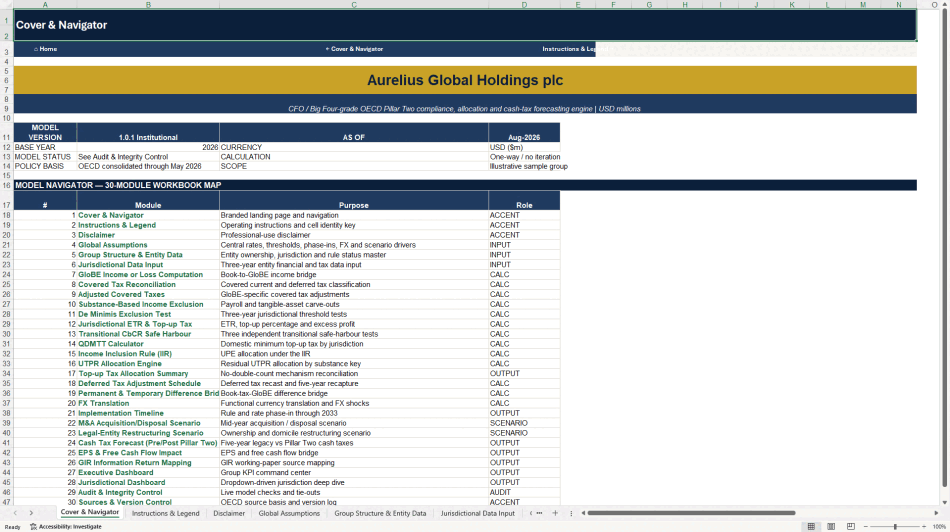
The GloBE Pillar Two Global Minimum Tax Model is a 30-module editable Excel workbook designed to help multinational finance, tax, advisory, and review teams analyze the OECD Pillar Two framework in a structured and traceable format. The model uses an illustrative multinational group and is intended to be updated with the user's own entity, jurisdiction, ownership, financial, and tax information.
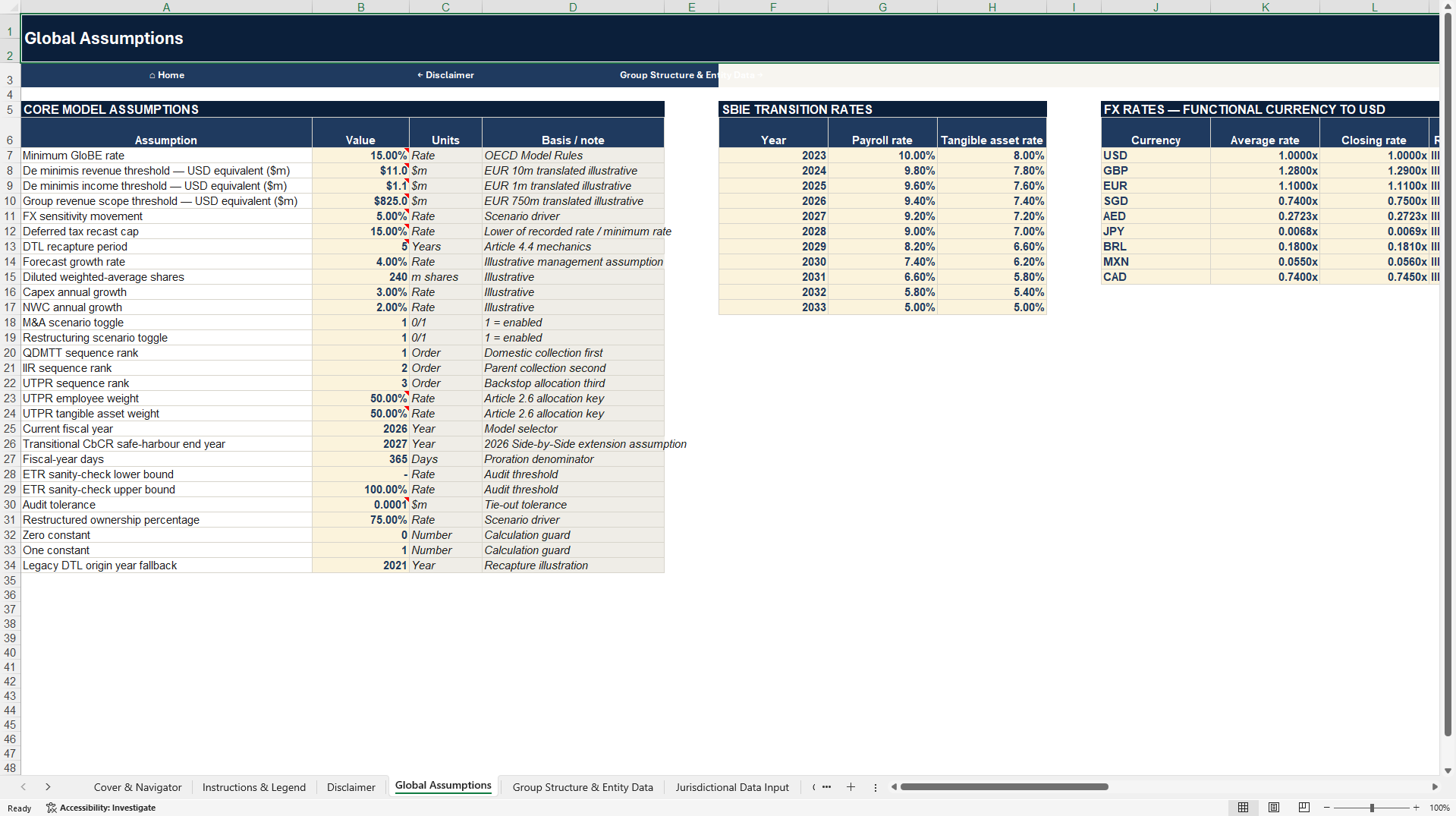
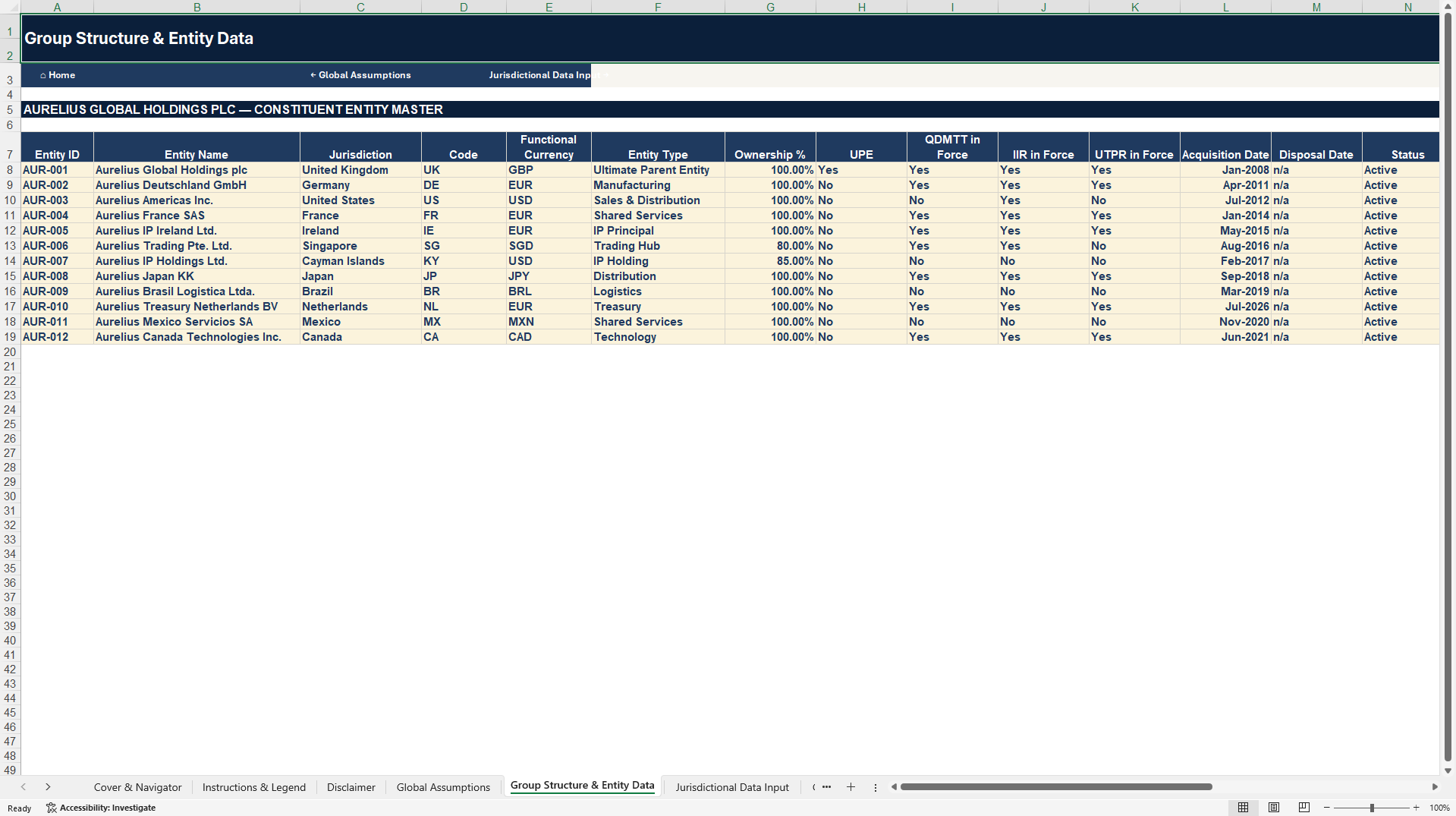
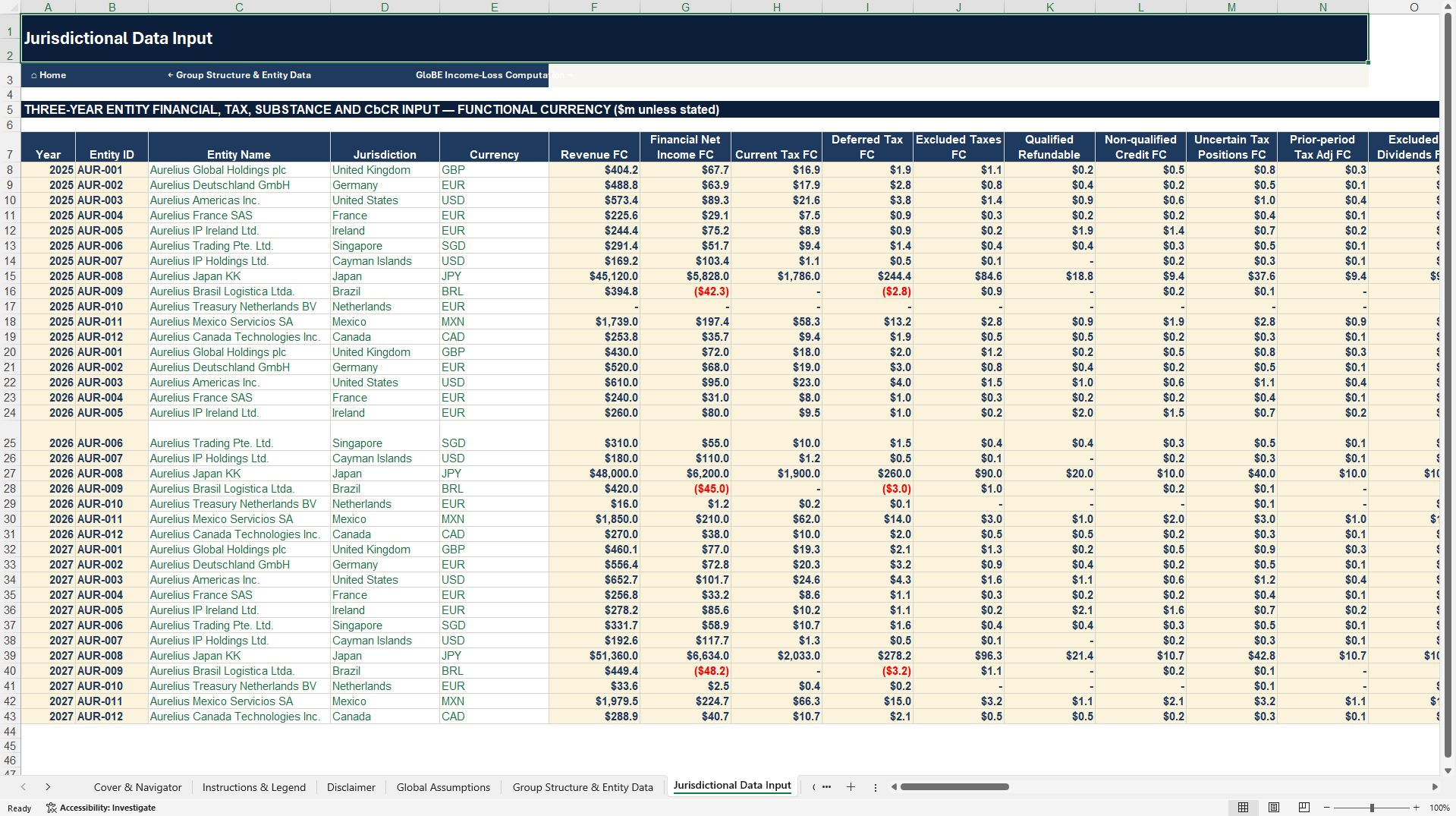
The workflow begins with a central assumptions module covering the minimum GloBE rate, de minimis thresholds, Substance-Based Income Exclusion transition rates, foreign exchange assumptions, forecast drivers, scenario toggles, and the sequencing of QDMTT, IIR, and UTPR. Separate input modules capture group structure and three years of jurisdictional financial and tax information.
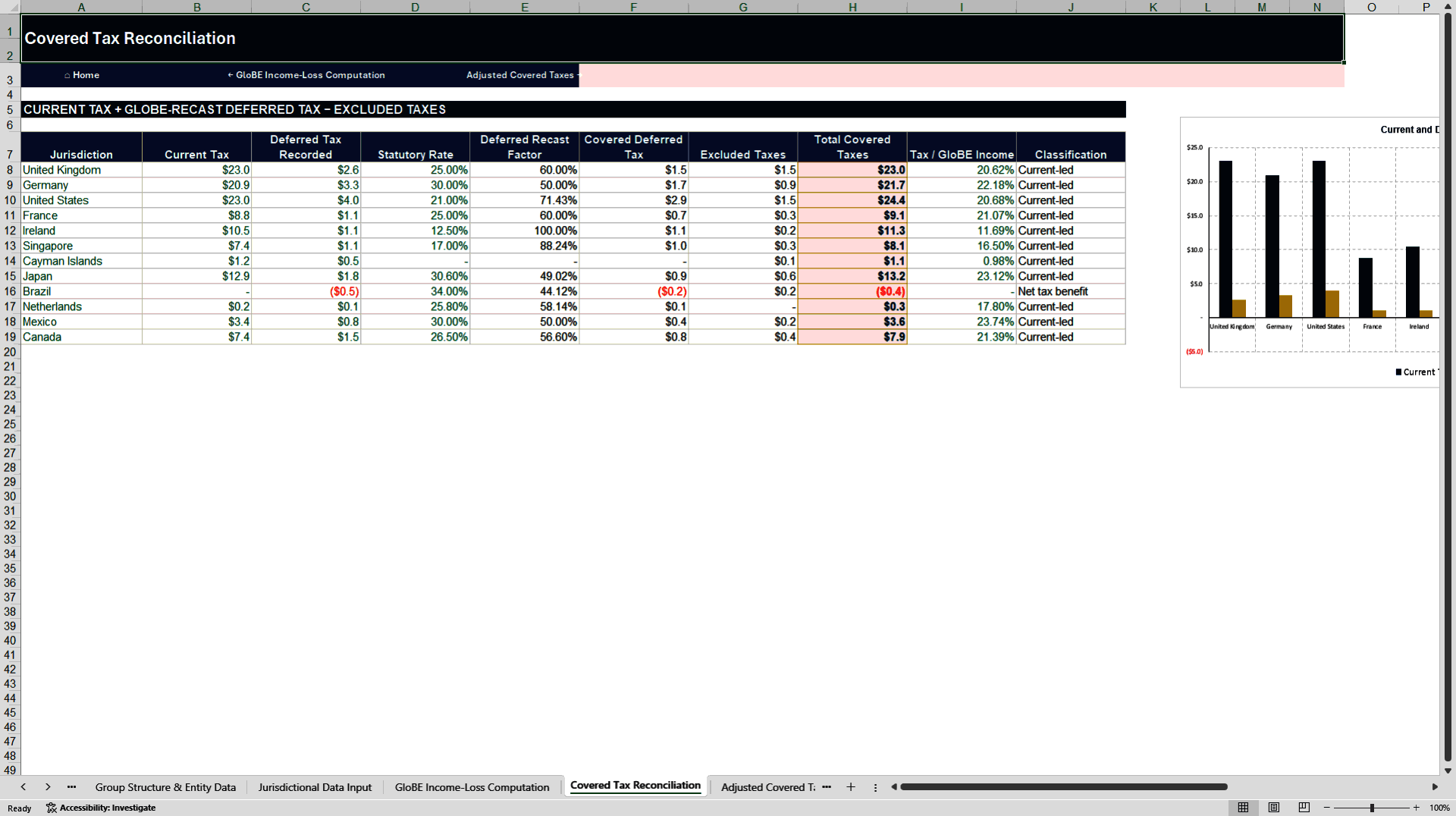
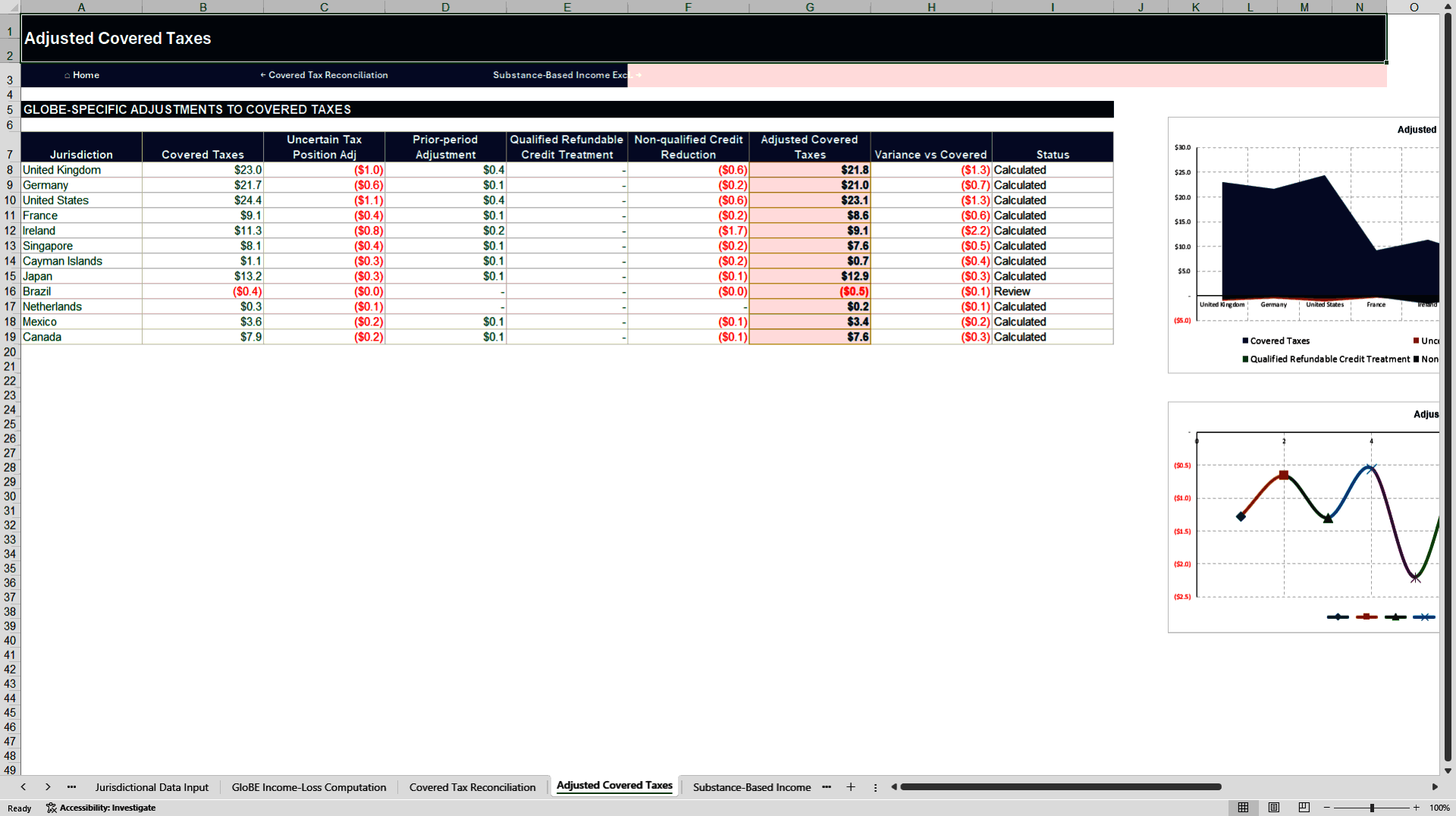
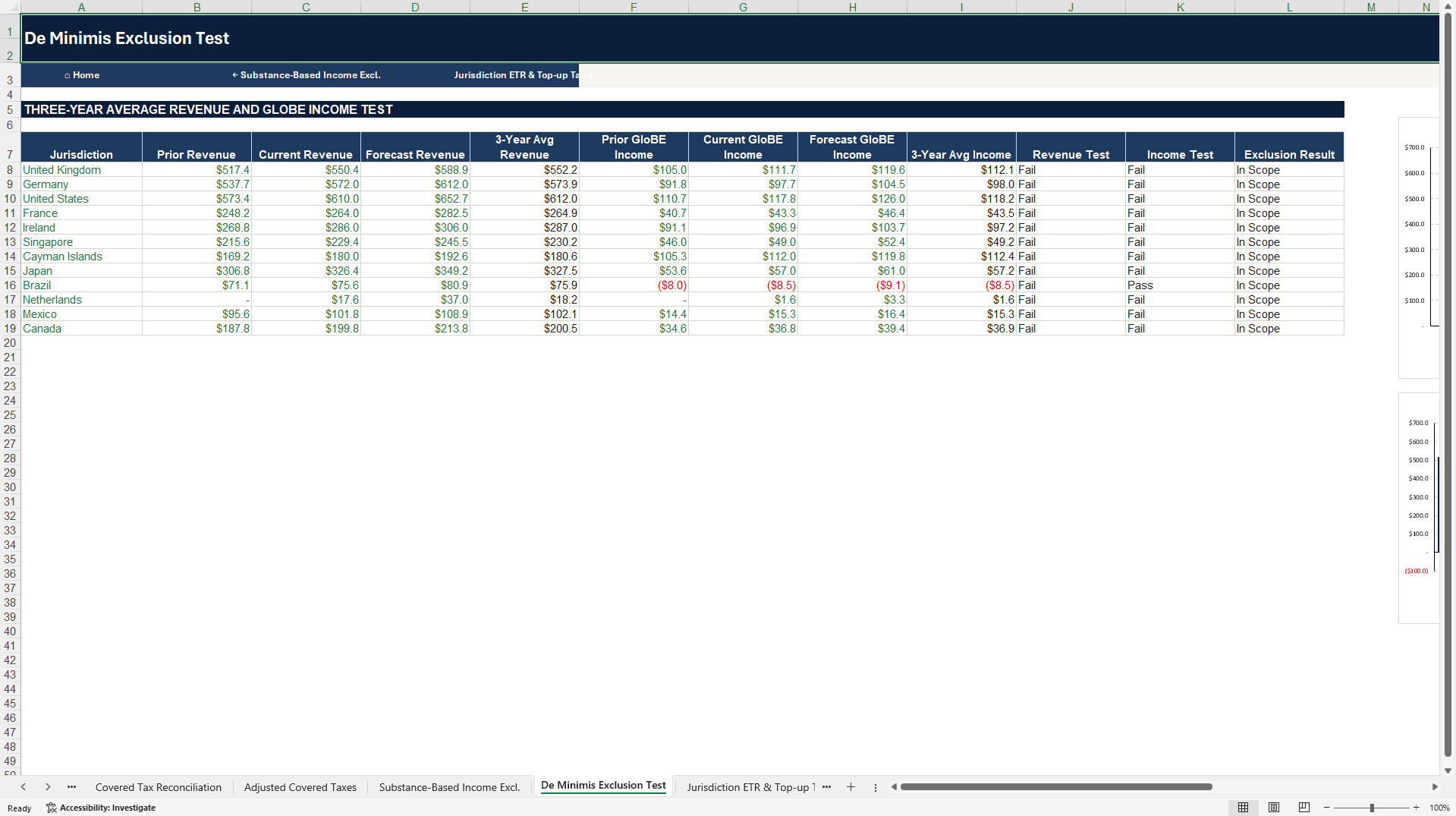
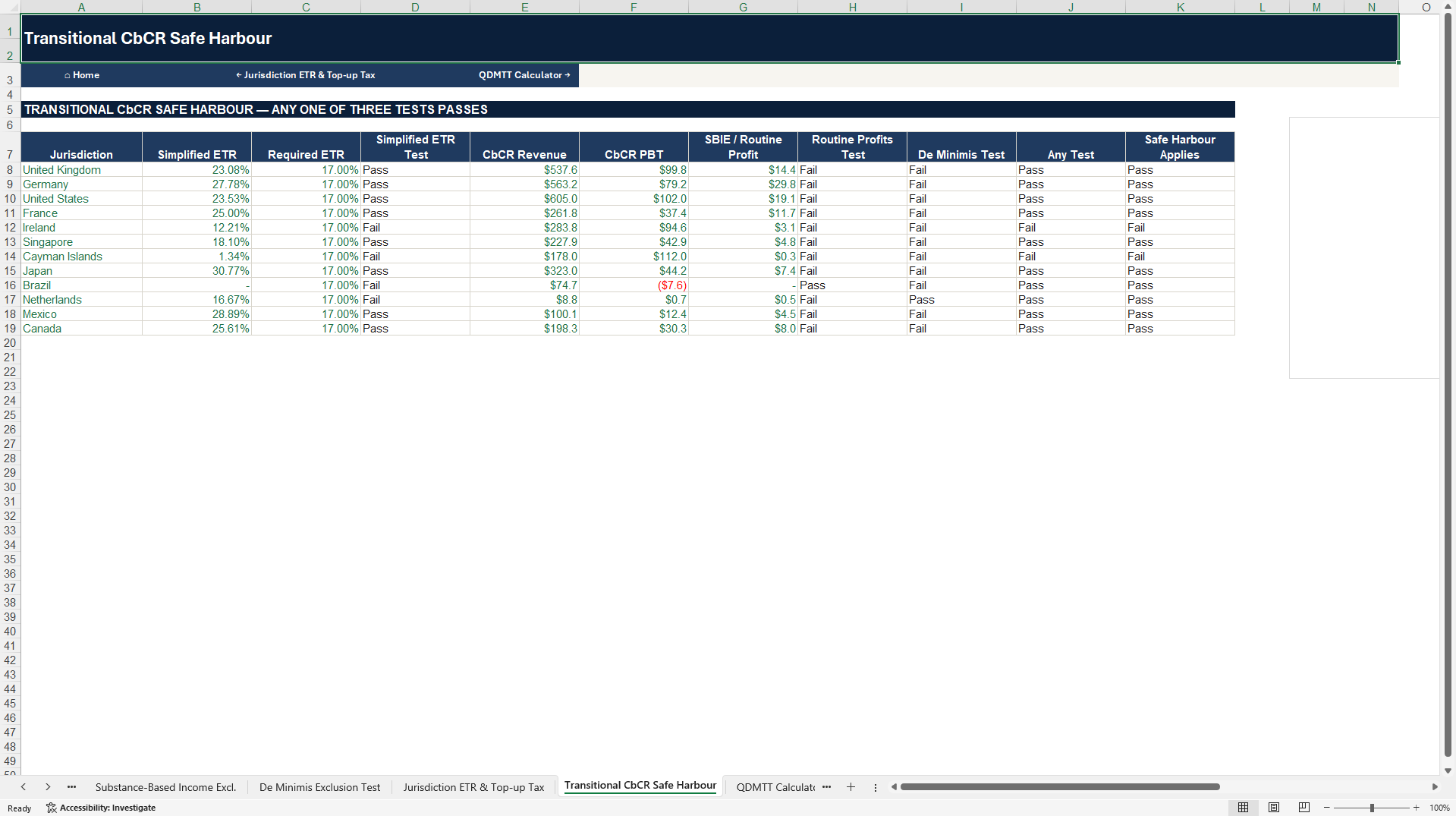
The core calculation engine bridges accounting income to GloBE income or loss, reconciles current and deferred covered taxes, calculates adjusted covered taxes, determines the payroll and tangible-asset based substance exclusion, applies de minimis testing, and calculates jurisdictional effective tax rates, top-up percentages, excess profit, and top-up tax. Transitional CbCR Safe Harbour tests are included, followed by QDMTT, Income Inclusion Rule, and UTPR allocation modules. A dedicated allocation summary reconciles the collection mechanisms and is designed to prevent double counting.
Additional analytical schedules cover deferred tax recast and five-year recapture, permanent and temporary differences, functional-currency translation, FX shocks, implementation and SBIE phase-in, mid-year acquisition or disposal, and legal-entity restructuring. The model also includes a five-year legacy-versus-Pillar-Two cash tax forecast and a diluted EPS and free cash flow impact schedule.
Management outputs include an Executive Dashboard showing group ETR, total top-up tax, jurisdictions below the minimum rate, SBIE benefit, cash tax impact, jurisdictional exposure, allocation mix, and cash tax trends. A Jurisdictional Dashboard provides a selected-jurisdiction profile with current, prior, forecast, threshold, status, source module, and interpretation fields.
The workbook includes a GloBE Information Return working-paper mapping sheet that links selected reporting data points to model source sheets and ranges. It also includes an Audit and Integrity Control with 21 checks and tie-outs, plus a Sources and Version Control sheet documenting the OECD reference basis used in the model.
This model is best suited to multinational tax functions, CFO and finance teams, advisers, consultants, accounting firms, analysts, transaction teams, and internal reviewers that need an Excel-based Pillar Two planning and review tool. It is not an electronic filing engine and does not replace jurisdiction-specific tax or legal advice. The sample entity data should be replaced before use, and current local enactment, qualified-rule status, filing requirements, and administrative guidance should always be confirmed for the relevant period.
Got a question about the product? Email us at support@flevy.com or ask the author directly by using the "Ask the Author a Question" form. If you cannot view the preview above this document description, go here to view the large preview instead.
Source: Best Practices in Tax Excel: GloBE Pillar Two Global Minimum Tax Model Excel (XLSX) Spreadsheet, PDMM Financial Models
ABOUT THE AUTHOR

PDMM Financial Models develops professional, decision-ready Excel models for business owners, entrepreneurs, investors, consultants, analysts, and finance teams. Our objective is to transform complex business assumptions into clear, structured analysis that supports better planning and investment decisions.
Our models cover business planning, forecasting, budgeting, feasibility analysis,
... [read more]
Ask the Author a Question
You must be logged in to contact the author.




























