
 Click main image to view in full screen.
eCommerce Platform Model (Excel XLSX)
Excel (XLSX)


BENEFITS OF THIS EXCEL DOCUMENT
- Forecast the fees (set up fees, fixed and variable commission, and memberships)
- Create the three financial statements (Profit and Loss, Balance Sheet, and Cash Flow) monthly for 60 months.
- Financial Ratios to check the viability of your business
E-COMMERCE EXCEL DESCRIPTION
The financial model presents the business case of an eCommerce Platform. An eCommerce Platform is a software solution that allows online retailers to manage their business (website builders, accounting and inventory management systems, as well as customer service infrastructure).
This financial model template will enable you to:
– Plan the sources of monetization from retail sellers and / or buyers, their conversion rates, as well as their churn rates
– Forecast the fees (set up fees, fixed and variable commission, and memberships)
– Analyze the direct costs for running the eCommerce Platform and attracting buyers and sellers
– Setting up payroll costs, and operating expenses.
– Set the initial investment amount and the equipment / servers needed
– Set the relevant currency and timing
– Create the three financial statements (Profit and Loss, Balance Sheet, and Cash Flow) monthly for 60 months.
– Financial Ratios to check the viability of your business
– Printable model as PDF for your investors
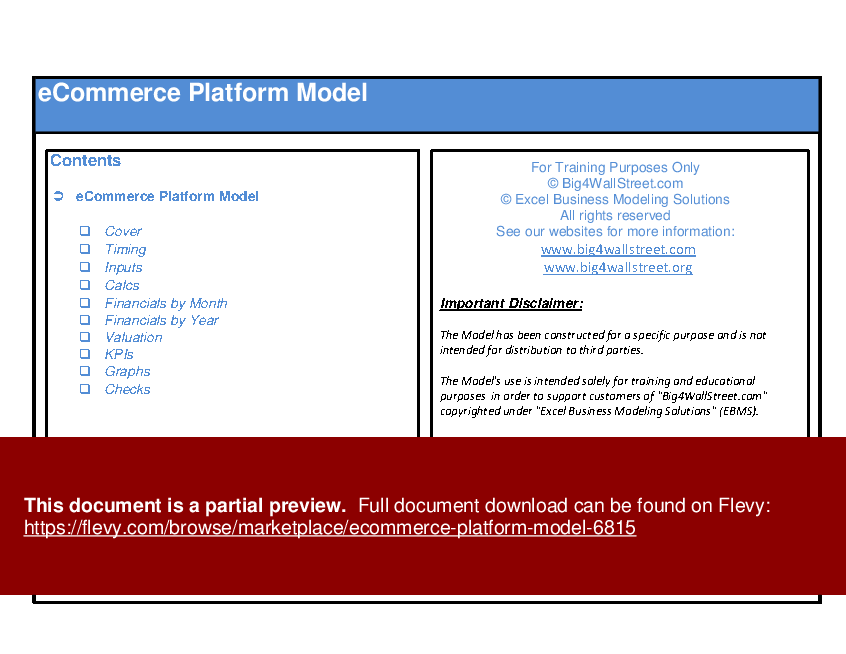
So, a quick overview of the model, in the contents tab you can see the structure of the model and by clicking on any of the headlines to be redirected to the relevant worksheet.
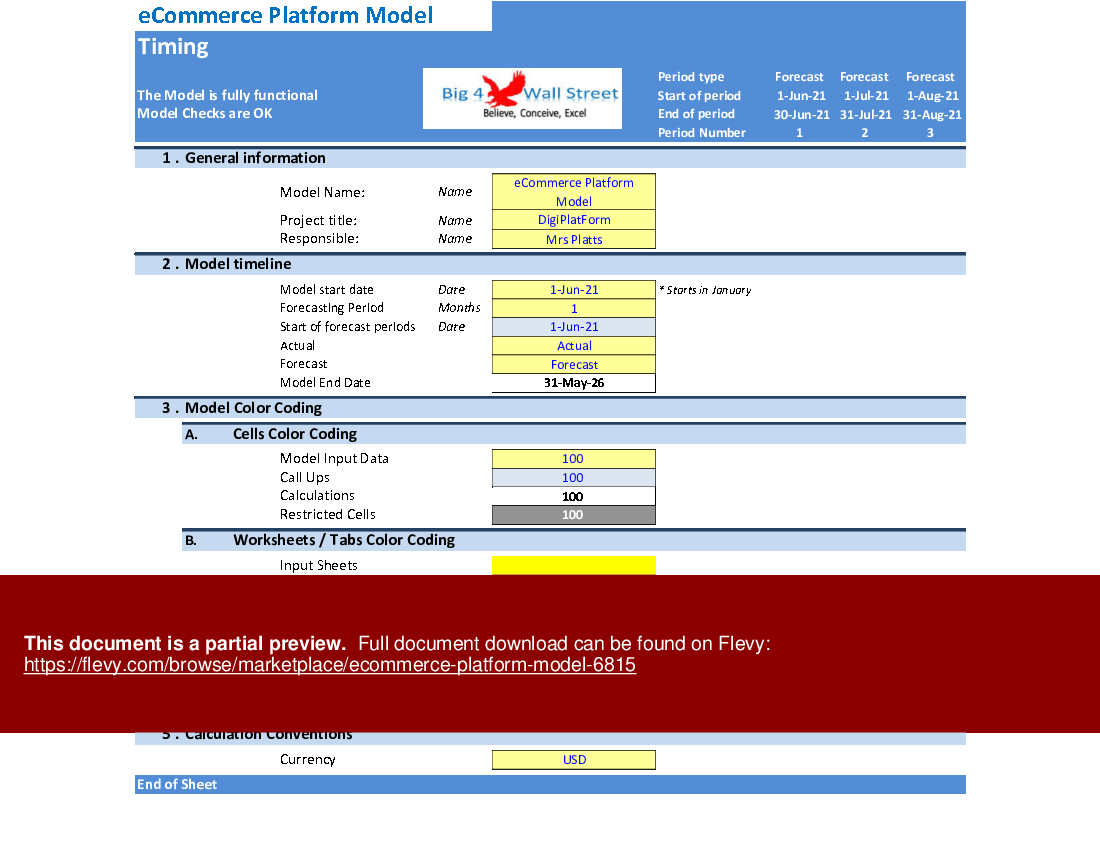
On the timing tab, you can feed the general information for the model such as: model name, responsible, timeline of the model, and the date and currency conventions.
Additionally, there is a description of the color-coding of the model in the same tab. Inputs are always depicted with a yellow fill and blue letters, call ups (that is direct links from other cells) are filled in light blue with blue letters while calculations are depicted with white fill and black characters.
There is also color coding for the various tabs of the model. Yellow tabs are mostly assumptions tabs, grey tabs are calculations tabs, blue tabs are outputs tabs (that is effectively results or graphs) and finally, light blue tabs are admin tabs (for example: the cover page, contents, and checks).
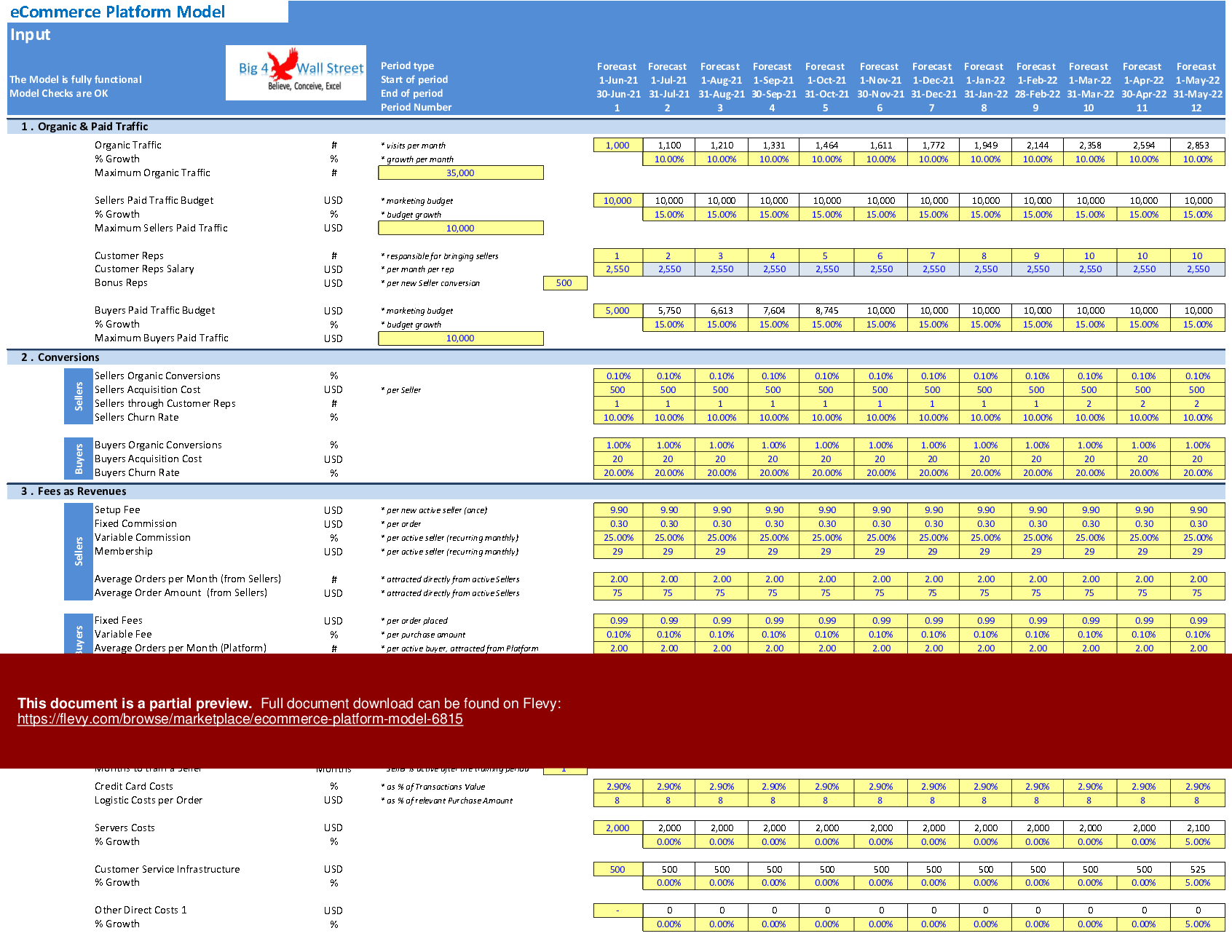
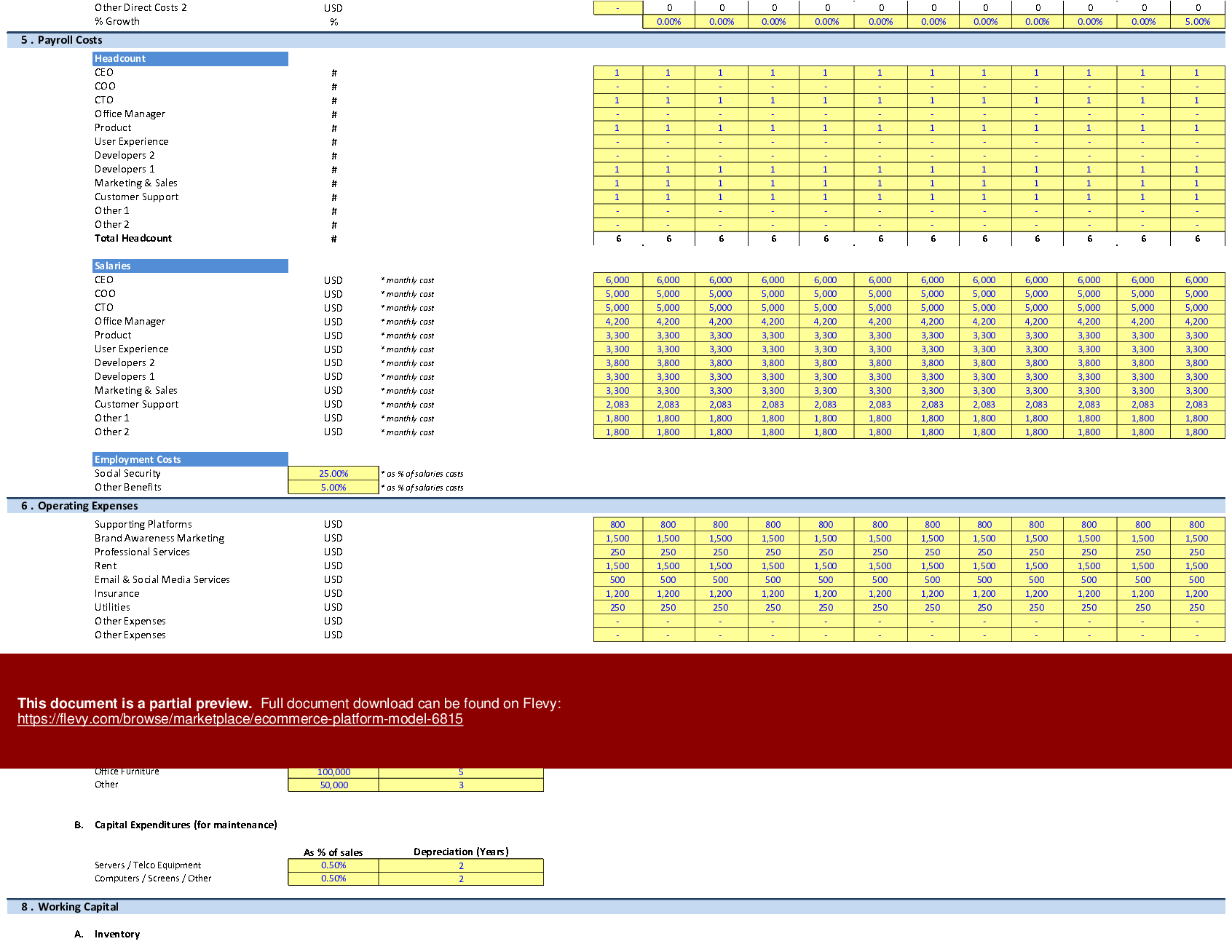
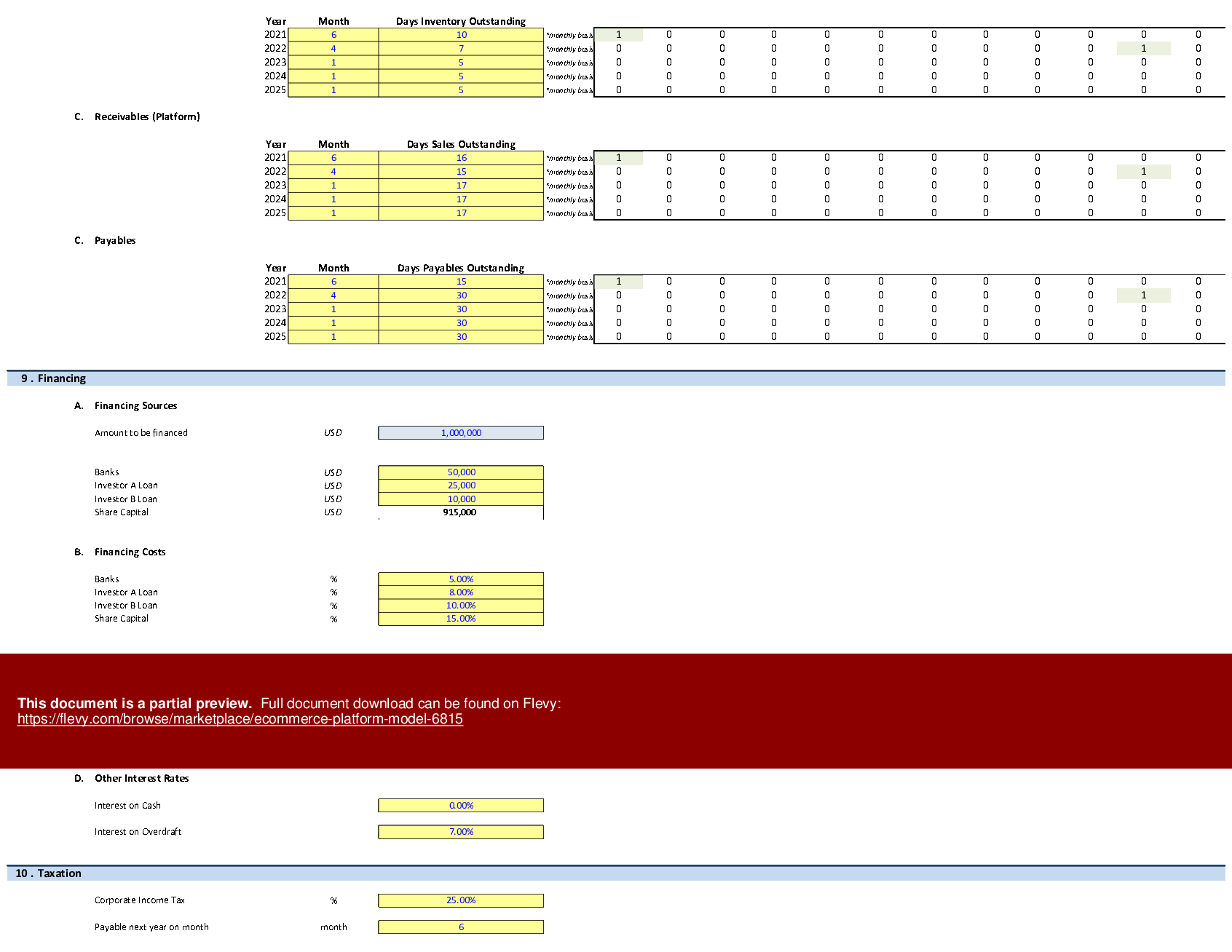
Moving on to the inputs tab, you can adjust the various assumptions of the model based on the specifications and requirements of your business. So effectively you can adjust the detailed revenue assumptions and the user can amend the most important drivers such as: organic traffic, paid traffic budget, customer reps, conversion rates, and fees for both sellers and buyers. Moving on, the cost is comprised of three main categories: direct costs (commissions, payment processing, servers, marketing platforms), labor cost (headcount, salaries, employment costs, and other benefits), and operating costs (rent, utilities, insurance, advertising, other supporting tools, etc.). Going forward you can adjust noncurrent assets, CAPEX, as well as their depreciation schedule, the working capital assumptions (inventory, receivables, and payables), can also be adjusted accordingly, and finally, the financing assumptions of the business whether these are debt or equity-financed can also be amended.
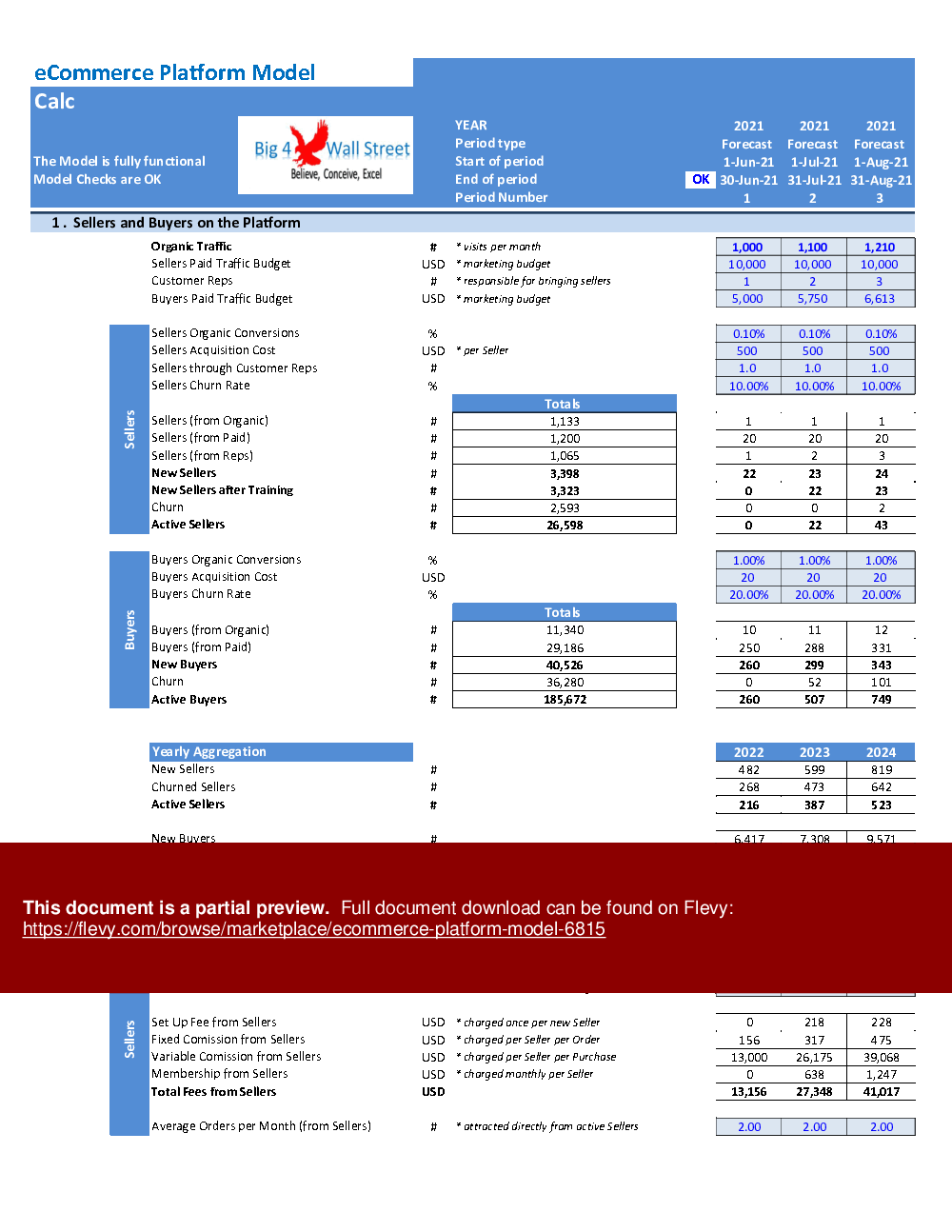
On the calculation tab, all calculations are performed instantly without the need for an excel macro. The calculations follow the same logical flow as in the inputs tab. As already mentioned, no inputs from the use are needed here, as all the inputs are fed in the yellow cells on the inputs tab only.
On the Financial Statements tabs, you can see the resulting income statement, balance sheet as well as the cash flow of the company and or project. These financial statements are generated on a monthly as well as on a yearly basis.
In the Valuation tab, the valuation of the company is performed based on the free cash flows to the firm. In the same tab, you can also find some feasibility metrics such as Return on Equity, Return on Assets, Net Present Value, Internal Rate of Return, and Cash on Cash Multiple.
The most important business and financial KPIs are presented in the KPIs tab along with various valuation metrics. These KPIs are also presented by using some graphical representations in the Graphs tab. For example: Revenues & Operating Profit, Cost of Goods Sold, Cash Flows as well as several other financial metrics from valuation to profitability, working capital and debt.
Finally, the checks tab where the most critical checks are aggregated on this page. Whenever you see an error message on any page, you should consult this page to see where the error is coming from.
Got a question about the product? Email us at support@flevy.com or ask the author directly by using the "Ask the Author a Question" form. If you cannot view the preview above this document description, go here to view the large preview instead.
TOPIC FAQ
What inputs are typically required to build a financial model for an eCommerce platform?
Typical inputs include monetization assumptions (fee types, conversion and churn rates), traffic and marketing spend (organic vs paid), customer support headcount, direct costs (commissions, payment processing, servers), labor and operating costs, CAPEX and depreciation schedules, working capital assumptions, and financing terms — all entered on the Inputs tab.How should I model different revenue streams for a marketplace business?
Model separate buyer and seller revenue streams by specifying setup fees, fixed and variable commission rates, and membership/subscription fees, then apply conversion and churn assumptions to forecast active users and transactions; the eCommerce Platform Model explicitly supports setup fees, fixed and variable commissions, and memberships.What’s the standard approach to cash flow forecasting and valuation for an eCommerce startup?
Prepare monthly cash flow projections alongside the income statement and balance sheet for a multi-year horizon, derive free cash flows to the firm and discount them for valuation, and calculate feasibility metrics like NPV, IRR, ROE, ROA and cash‑on‑cash multiples using the model’s Valuation tab and free cash flow methodology.Which cost categories matter most when modeling an online marketplace’s unit economics?
Primary cost buckets are direct costs (commissions, payment processing, servers, marketing platforms), labor costs (headcount, salaries, employment costs, benefits), and operating costs (rent, utilities, insurance, advertising, supporting tools), plus CAPEX and related depreciation schedules for platform infrastructure.What projection horizon should I use for an eCommerce platform financial model?
A common horizon is multi‑year monthly projections to capture ramp and seasonality; the eCommerce Platform Model generates monthly financial statements and cash flows for 60 months as its standard forecast horizon.How can KPIs and charts help me evaluate platform performance in a model?
KPIs and visualizations summarize revenue, operating profit, cost of goods sold, cash flows, working capital and debt trends to surface profitability and liquidity risks; the model aggregates KPIs in a KPIs tab and presents graphical representations in a Graphs tab for reviewer presentation.What should I prioritize when choosing a prebuilt financial model template for a marketplace?
Prioritize templates that allow customizing monetization (fee types, conversion and churn), separate cost categories (direct, labor, operating), produce 3 financial statements, include valuation metrics and automated checks, and offer a multi‑year monthly horizon such as the 3 financial statements and Valuation tab.How do I validate a model before sharing it with investors or stakeholders?
Validate by confirming all inputs reside in the designated input cells (color‑coded), ensuring calculation tabs are formula‑driven without hidden macros, reviewing aggregated checks for errors, and producing a printable PDF of results for investor review using the model’s Checks and printable output features.Source: Best Practices in E-commerce, Integrated Financial Model Excel: eCommerce Platform Model Excel (XLSX) Spreadsheet, Big4WallStreet
ABOUT THE AUTHOR

We help small and midsize businesses' leaders with their strategic problems by creating or improving financial models, implementing tools to drive efficiency, performance, and better decision making.
With over 15 years of experience in Financial & Business Modeling / Planning, Performance & Analysis (Ernst & Young, Toyota, Viohalco and Upstream), we have developed strong business
... [read more]
Ask the Author a Question
You must be logged in to contact the author.




























