
 Click main image to view in full screen. Unlock all 22 preview images:
Data Center Development: Practitioner Guide and Handbook – PowerPoint PPTX Template
PowerPoint (PPTX) + supplemental PDF 126 Slides


BENEFITS OF THIS DOWNLOADABLE POWERPOINT DOCUMENT
- Provides a complete five-stage, gated methodology for taking a data center from candidate sites to a signed investment decision.
- Delivers the equations, evidence standards and benchmark ranges needed to build and defend a bankable power, cost and underwriting model.
- Includes a fully worked 20 MW IT campus example carried consistently from load build-up through construction financing to investment committee.
DATA CENTER PPT TEMPLATE DESCRIPTION
This bundle contains two complementary documents that take a data centre project from a list of candidate sites to a signed investment decision: a 126-slide Practitioner Guide (primary document, PowerPoint, with speaker notes) and a 161-page Practitioner Handbook (secondary document, PDF) that develops the theory, definitions, equations, benchmarks and reasoning behind the guide.
The methodology treats a data centre as what it actually is: an energy project with a real estate envelope. Land is rarely the binding constraint. Firm megawatts, available on a date compatible with the business plan, almost always are. The framework therefore proves that an energisable site exists before it builds an energy plan, sizes and costs the asset before it underwrites it, and underwrites it before anyone is asked to commit capital.
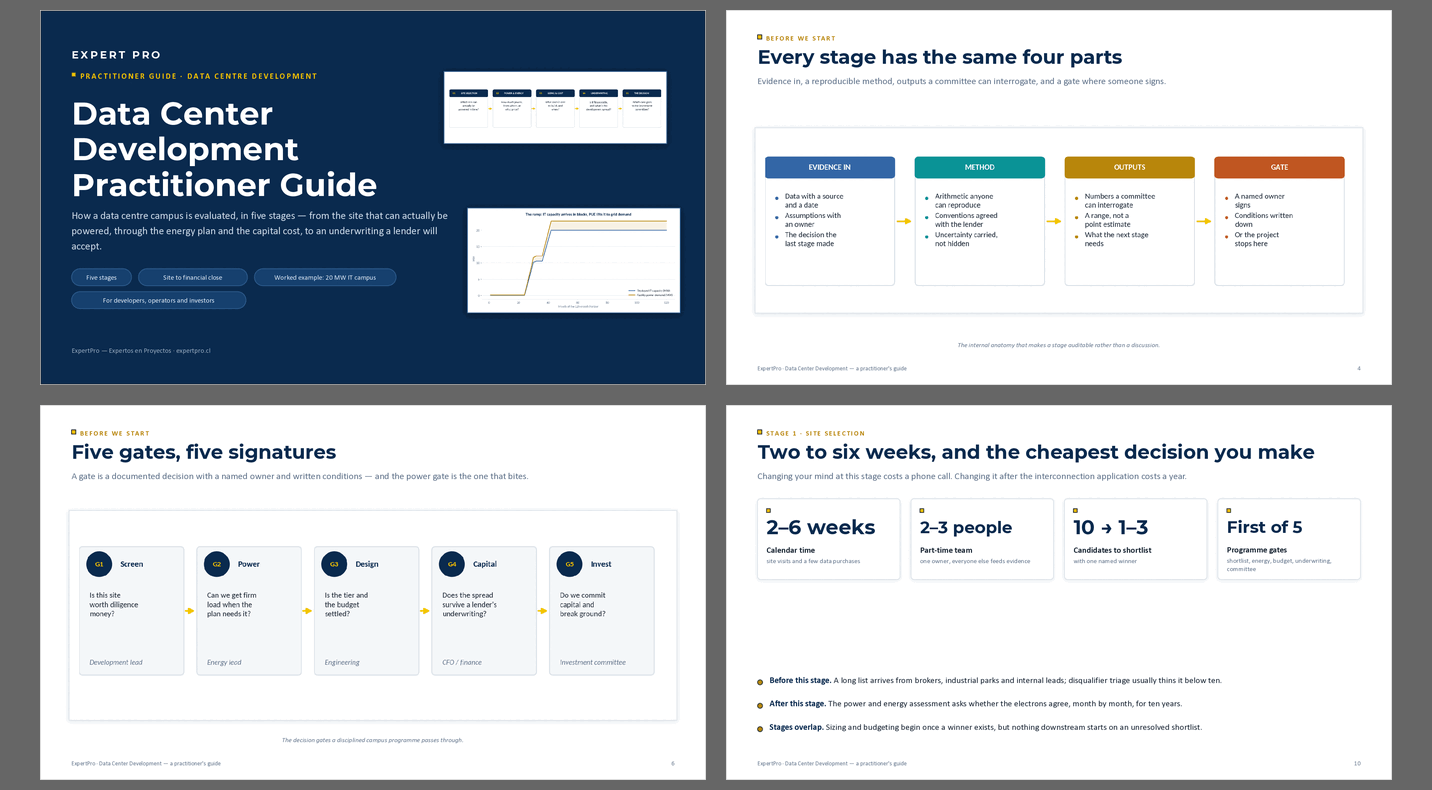
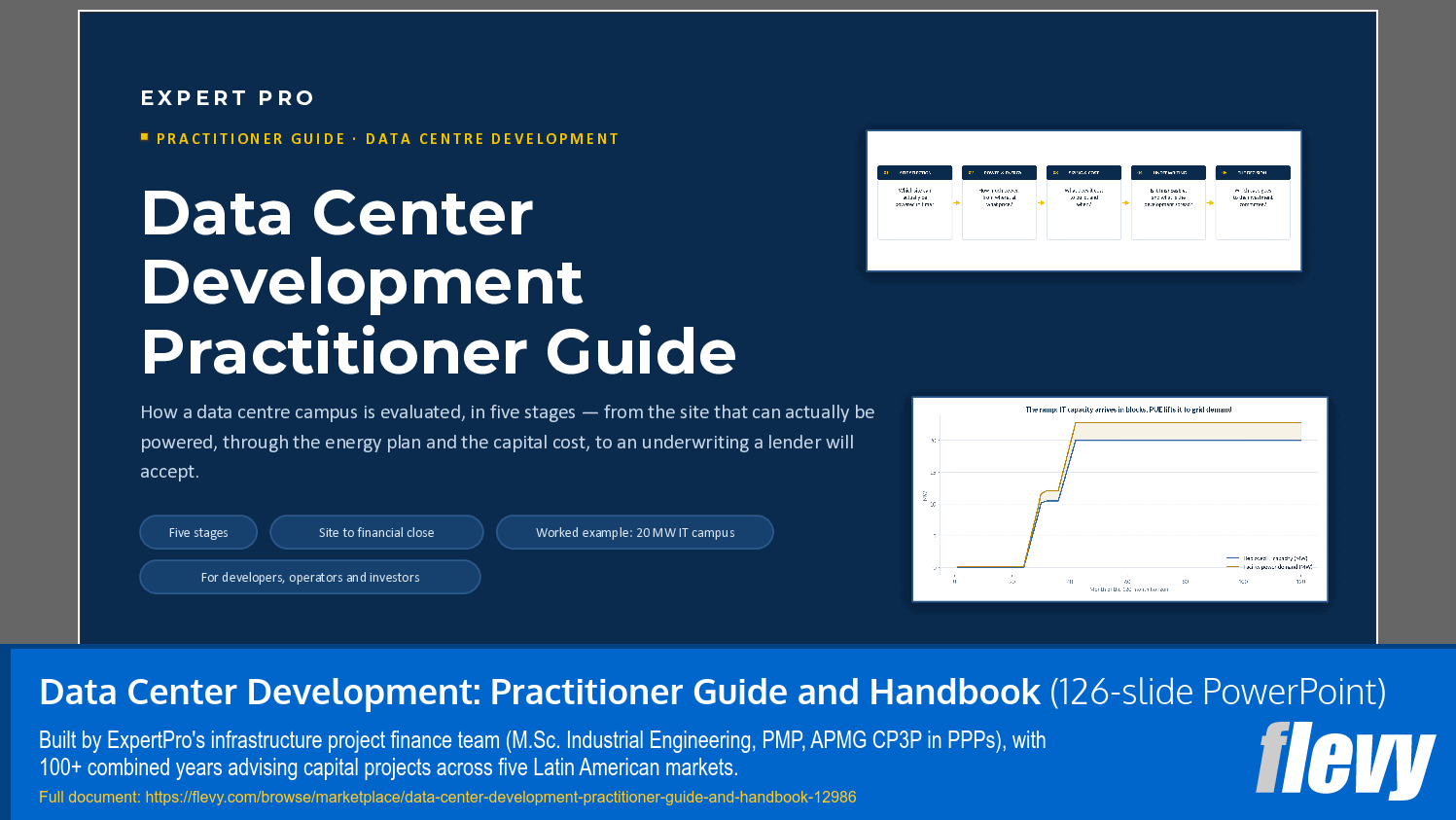
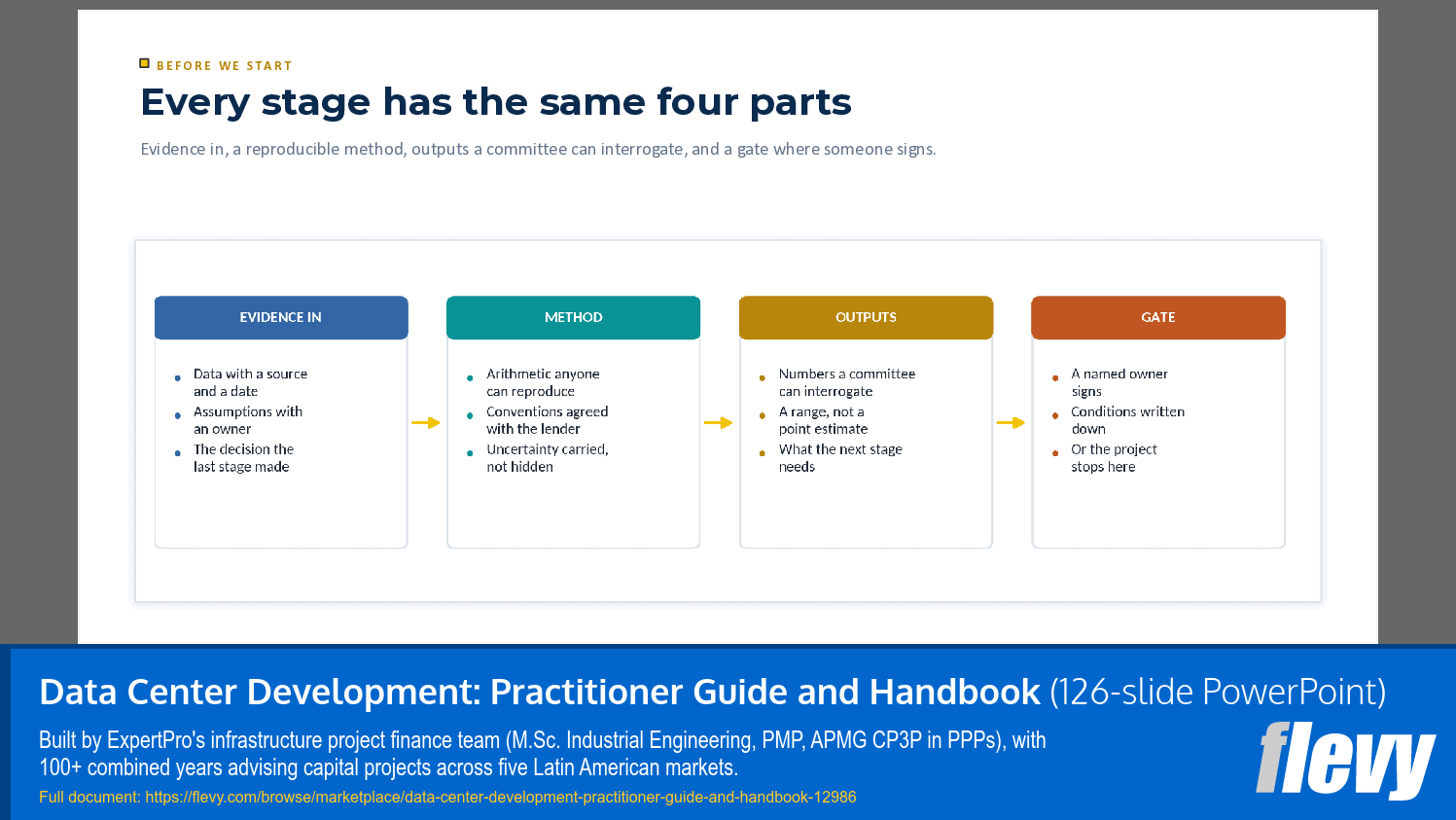
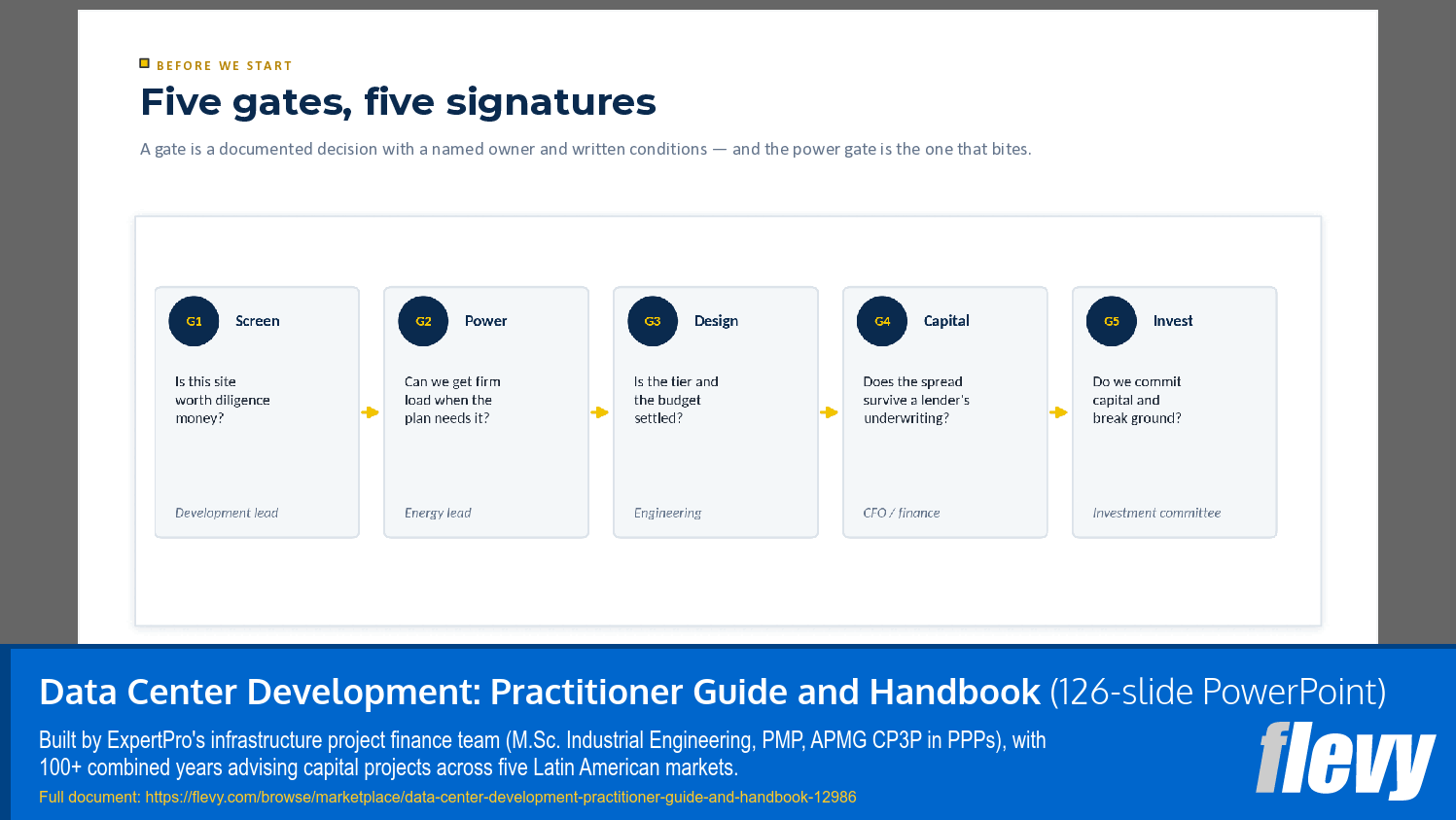
Five consecutive stages, each with defined evidence in, method, outputs and a signed gate:
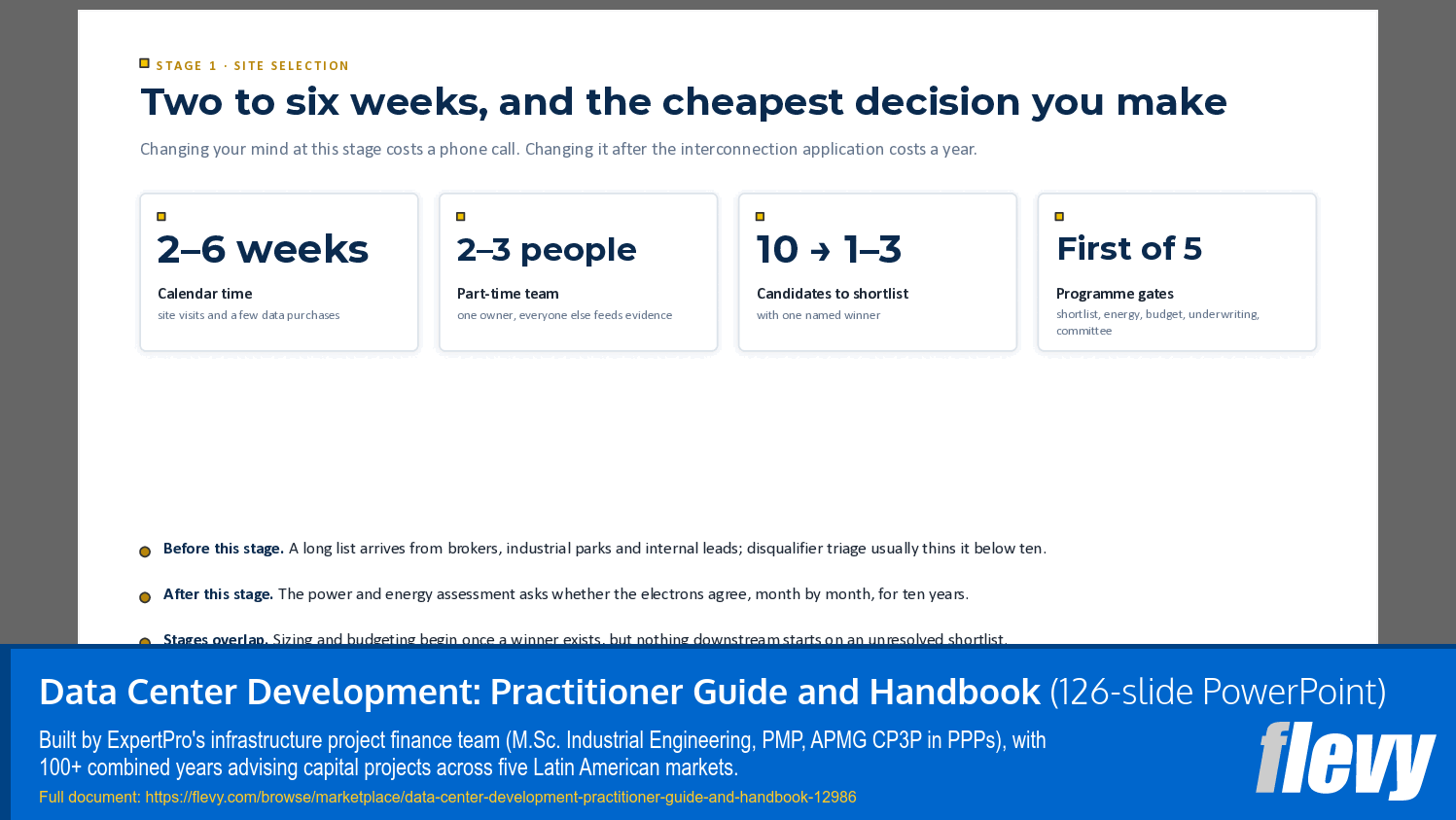
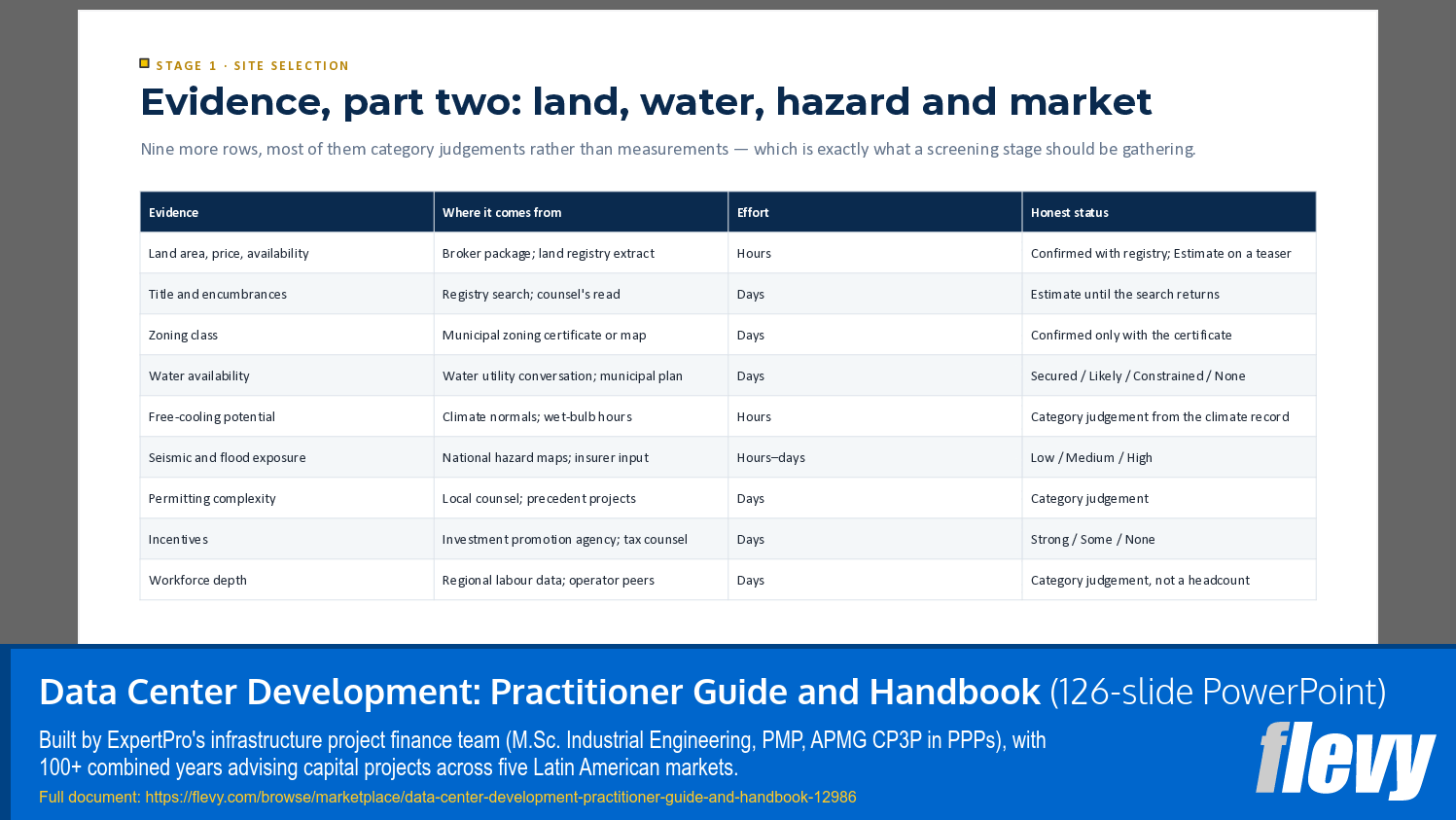
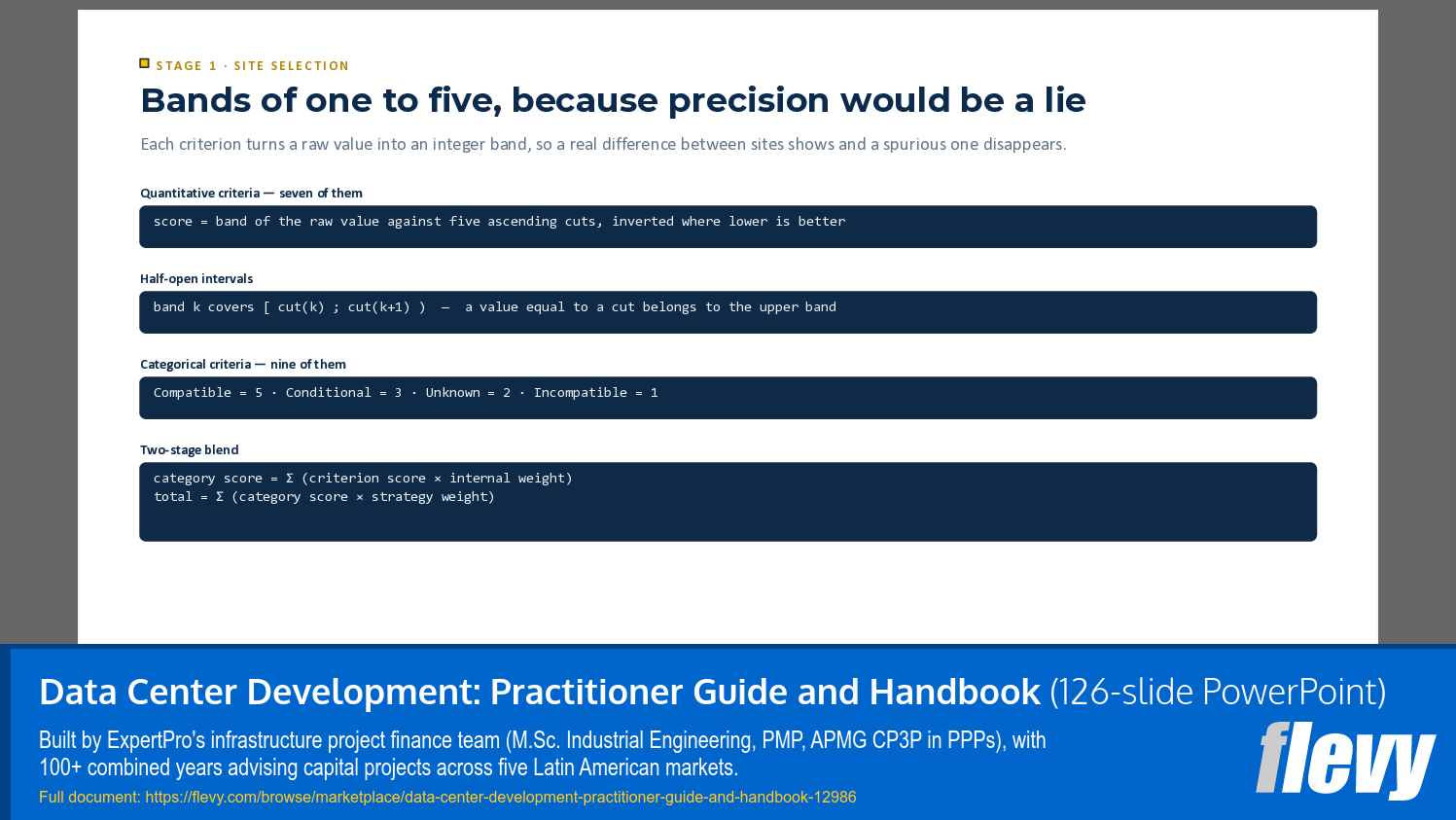
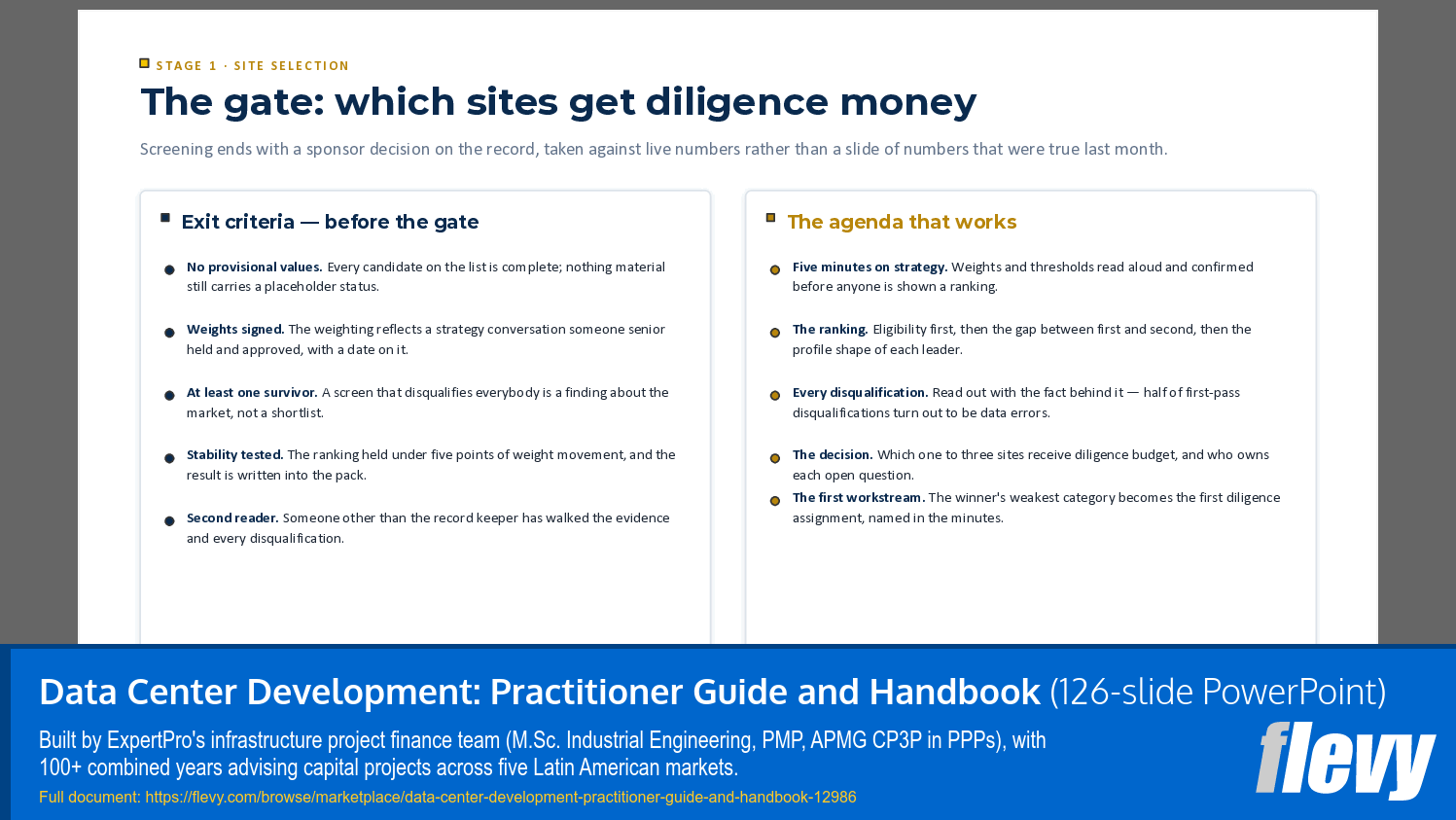
STAGE 1 – SITE SELECTION. A 16-criterion, 5-category weighted scoring model (Power 35%, Land and Environment 20%, Connectivity 15%, Water and Cooling 15%, Market and Incentives 15%), plus six hard disqualifiers that no score can compensate. Includes evidence discipline: every input is tagged Confirmed, Estimate or Placeholder, because internal consistency is not the same thing as truth.
STAGE 2 – POWER AND ENERGY STRATEGY. A 120-month bottom-up load model built from racks, pods, halls and AI accelerators. The distinction between average utilisation (which drives energy) and peak utilisation (which drives electrical infrastructure). PUE decomposition, measurement boundaries and the four ways a PUE figure can be flattered. Cooling technology selection from air through rear-door heat exchangers, direct-to-chip and immersion. WUE. A merit-order supply stack with firmness discounting, where dependable MW equals nameplate MW times firmness. And the energy gap, the single most important physical KPI in the suite: capacity built that cannot be energised.
STAGE 3 – TECHNICAL SIZING AND CAPITAL COST. IT MW to white space to gross area to land take, with redundancy (N, N+1, 2N). A full line-item CAPEX build of land, hard cost and soft cost. Estimating basis classification (Quote, Benchmark, Allowance). Contingency as a policy tied to design maturity rather than a plug. Cost intensity benchmarks in dollars per IT MW and per gross square metre. And a month-by-month disbursement calendar built with logistic S-curves and milestone payments, because a budget without a calendar is not a budget.
STAGE 4 – UNDERWRITING AND RETURNS. Lease revenue, effective gross revenue, operating expenses and NOI. Construction debt including capitalised interest and its circularity. Permanent debt sized as the minimum of DSCR, Debt Yield and LTV. Exit cap rate and valuation. Development spread, or yield on cost less market cap rate. Unlevered and levered IRR, equity multiple and peak equity exposure. Sensitivities run against a fixed capital structure, so the approved case is stress-tested rather than re-optimised.
STAGE 5 – THE INVESTMENT DECISION. No new modelling. A decision pack of ranking, identity card, driver chart, downside cases and a rules page. Normalisation of mixed metrics, hurdle floors, and conditional approval with named conditions precedent, required evidence, owners and reapproval triggers.
The Handbook adds notation and conventions, "how this stage fails" failure-mode sections, an extensive glossary, a consolidated symbols index, eight families of reference benchmarks and a source bibliography. A single worked 20 MW IT campus runs through both documents end to end, so every figure can be traced from load build-up to committee. The material is software-agnostic and describes a discipline, not a spreadsheet.
Got a question about the product? Email us at support@flevy.com or ask the author directly by using the "Ask the Author a Question" form. If you cannot view the preview above this document description, go here to view the large preview instead.
Source: Best Practices in Data Center PowerPoint Slides: Data Center Development: Practitioner Guide and Handbook PowerPoint (PPTX) Presentation Slide Deck, ExpertPro Consulting
ABOUT THE AUTHOR

ExpertPro is an advisory firm that builds the financial and decision infrastructure behind capital projects. Our work sits at the intersection of project finance, engineering economics and data: we model, stress-test and document infrastructure investments so that sponsors, lenders and investment committees can decide on evidence rather than intuition.
The practice is led by Eduard Kofman, .
... [read more]
Ask the Author a Question
You must be logged in to contact the author.




























