
 Click main image to view in full screen. Unlock all 16 preview images:
CIO's Pocket Guide to AI Implementation – Word DOCX
Word (DOCX) + supplemental PDF 141 Pages


BENEFITS OF THIS DOWNLOADABLE WORD DOCUMENT
- Provides a proven executive framework to design, fund, and scale AI initiatives that deliver measurable business value.
- Equips CIOs with practical guidance to move AI from experimentation to enterprise-wide execution--without losing control or credibility.
- Enables organizations to operationalize AI securely, ethically, and at scale while maintaining governance, ROI, and competitive advantage.
ARTIFICIAL INTELLIGENCE WORD DESCRIPTION
Curated by McKinsey-trained Executives
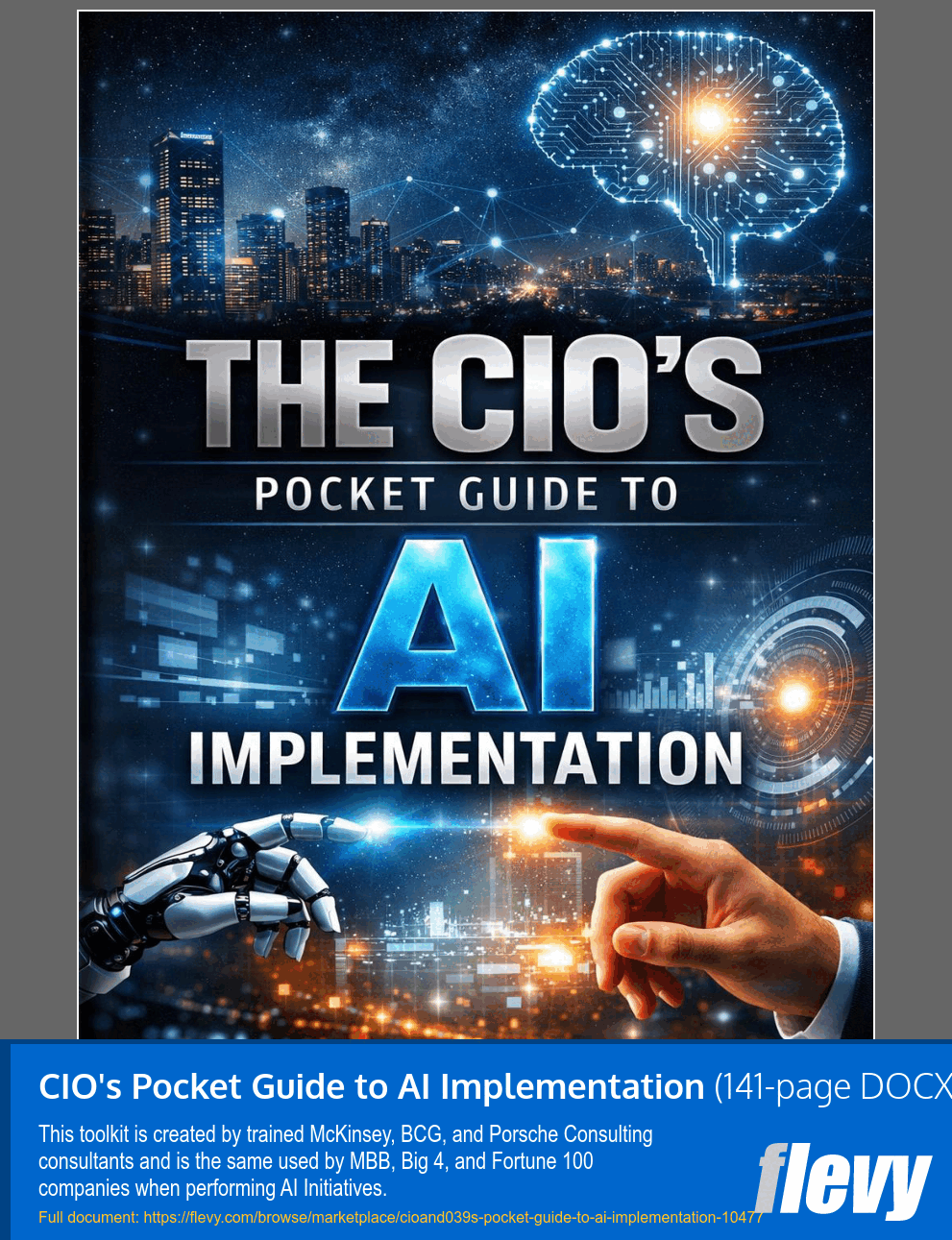
🚀 THE CIO'S POCKET GUIDE TO AI IMPLEMENTATION
🔥 *Stop Experimenting. Start Dominating with AI.* 🔥
AI is no longer optional. It's not a "future initiative." It's a board-level mandate. And yet—most enterprises are burning money on pilots, stuck in endless proofs of concept, and failing to turn AI into real, defensible business value.
💥 This guide fixes that—fast.
The CIO's Pocket Guide to AI Implementation is a hard-hitting, no-nonsense execution manual built for CIOs, CTOs, Heads of IT, and Digital Leaders who are under pressure to deliver AI results, prove ROI, and stay in control.
This is not theory.
This is not hype.
This is enterprise AI execution—done right.
⚡ WHY THIS GUIDE IS DIFFERENT
Most AI books talk about *what AI could do*.
This one shows you how to make it deliver—at scale, under real constraints.
✅ Align AI directly to business strategy and competitive advantage
✅ Win executive and board sponsorship (and keep it)
✅ Focus on the AI use cases that actually move revenue, cost, and risk
✅ Build an AI operating model that doesn't collapse under enterprise complexity
If you're tired of fragmented initiatives, unclear ownership, and shaky governance, this guide gives you the structure, language, and frameworks to take control.
🧠 TURN DATA INTO A WEAPON
AI is only as strong as its data foundation—and most organizations are dangerously weak.
This guide shows you how to:
📊 Treat data as a strategic, monetizable asset
☁️ Build AI-ready architectures that scale without exploding costs
🔒 Control access, quality, lineage, and accountability
🧩 Choose platforms and tools without locking yourself into bad decisions
No buzzwords. Just decisions that protect your future flexibility.
🛠️ FROM PILOT HELL TO PRODUCTION POWER
If your AI initiatives stall after experimentation, you're not alone—and you're not stuck.
This book delivers step-by-step clarity on:
⚙️ Moving AI from experimentation to production
📦 Operationalizing models with MLOps discipline
📈 Monitoring performance, managing drift, and avoiding failures
🔁 Scaling AI across business units without chaos
This is how high-performing enterprises industrialize AI.
🛡️ GOVERN AI WITHOUT KILLING INNOVATION
AI risk is real. Regulation is accelerating. One mistake can destroy trust.
This guide arms you with:
⚠️ Practical AI risk and control frameworks
⚖️ Responsible, ethical, and explainable AI practices
🔐 Security and privacy strategies for real-world threats
📜 Governance models executives and regulators respect
Move fast—without losing control.
🔥 DRIVE ADOPTION. CREATE REAL CHANGE.
AI doesn't fail because of technology—it fails because people don't adopt it.
Learn how to:
👥 Overcome resistance and cultural pushback
🔄 Redesign processes for Human + AI collaboration
🎓 Reskill your workforce for long-term AI success
📣 Communicate AI value clearly to every stakeholder
This is how AI becomes embedded, trusted, and indispensable.
🎯 WHO THIS BOOK IS FOR
✔ CIOs and CTOs under board pressure
✔ Enterprise IT and Digital Leaders
✔ Transformation and AI Program Owners
✔ Executives who need results—not experiments
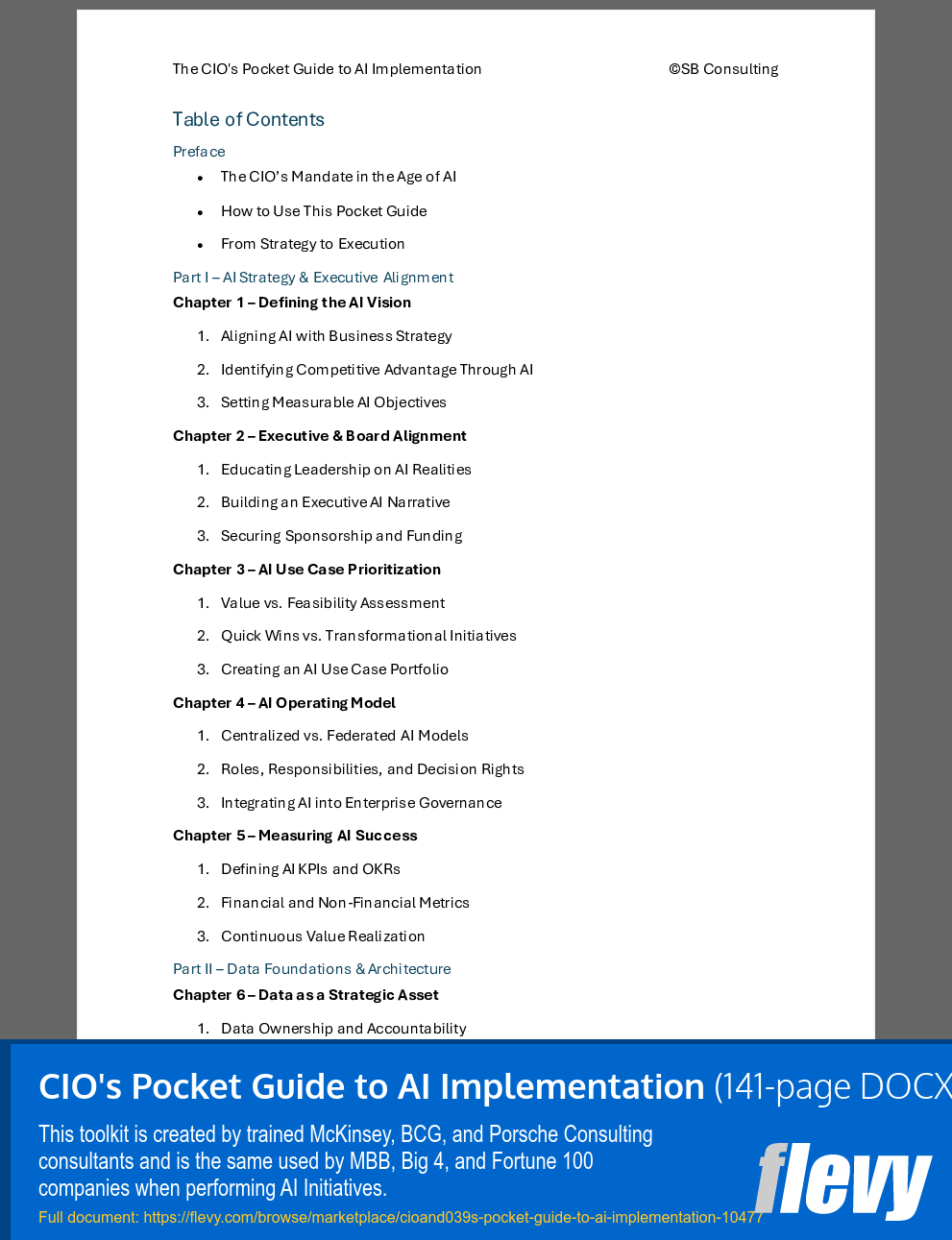
CONTENT OVERVIEW
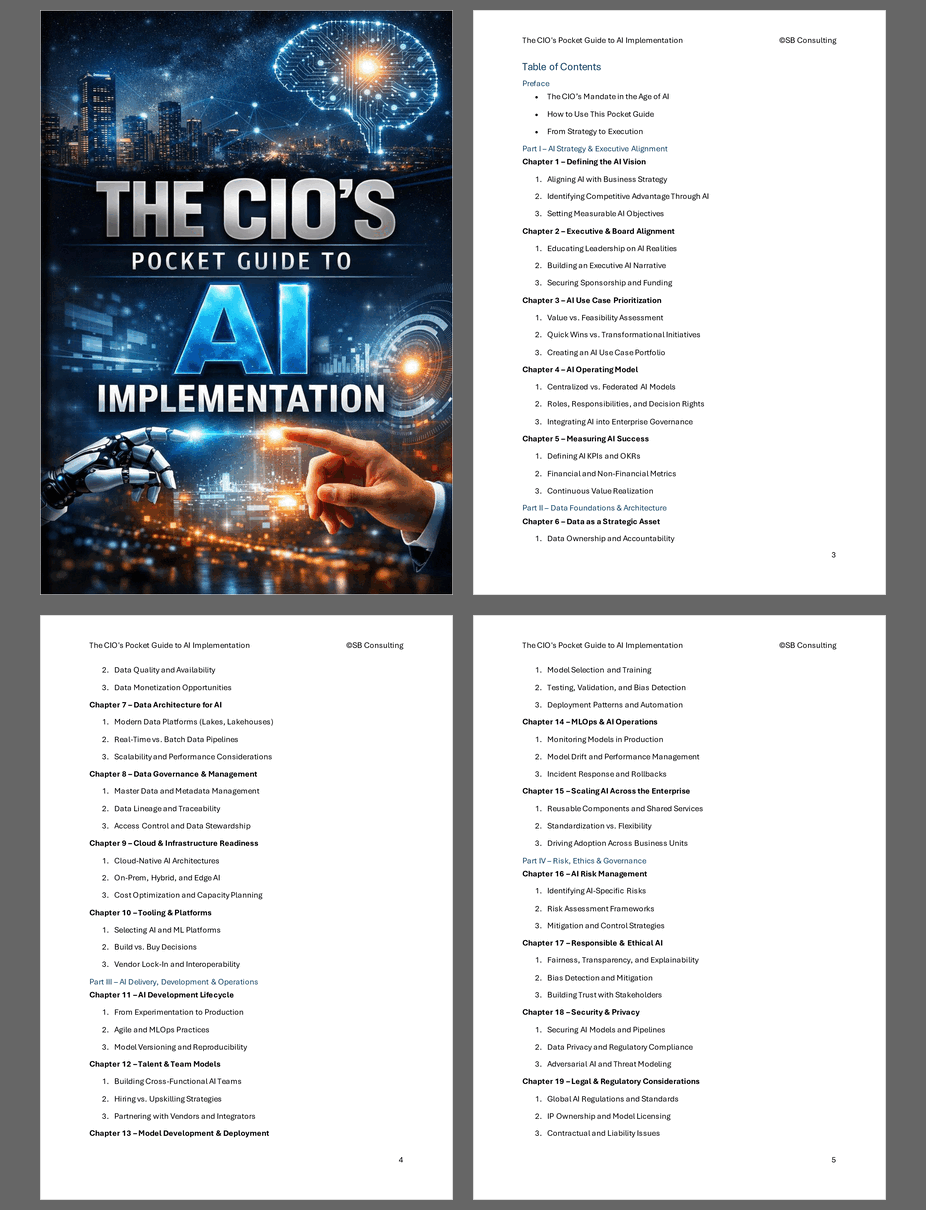
Part I – AI Strategy & Executive Alignment
Chapter 1 – Defining the AI Vision
1. Aligning AI with Business Strategy
2. Identifying Competitive Advantage Through AI
3. Setting Measurable AI Objectives
Chapter 2 – Executive & Board Alignment
1. Educating Leadership on AI Realities
2. Building an Executive AI Narrative
3. Securing Sponsorship and Funding
Chapter 3 – AI Use Case Prioritization
1. Value vs. Feasibility Assessment
2. Quick Wins vs. Transformational Initiatives
3. Creating an AI Use Case Portfolio
Chapter 4 – AI Operating Model
1. Centralized vs. Federated AI Models
2. Roles, Responsibilities, and Decision Rights
3. Integrating AI into Enterprise Governance
Chapter 5 – Measuring AI Success
1. Defining AI KPIs and OKRs
2. Financial and Non-Financial Metrics
3. Continuous Value Realization
Part II – Data Foundations & Architecture
Chapter 6 – Data as a Strategic Asset
1. Data Ownership and Accountability
2. Data Quality and Availability
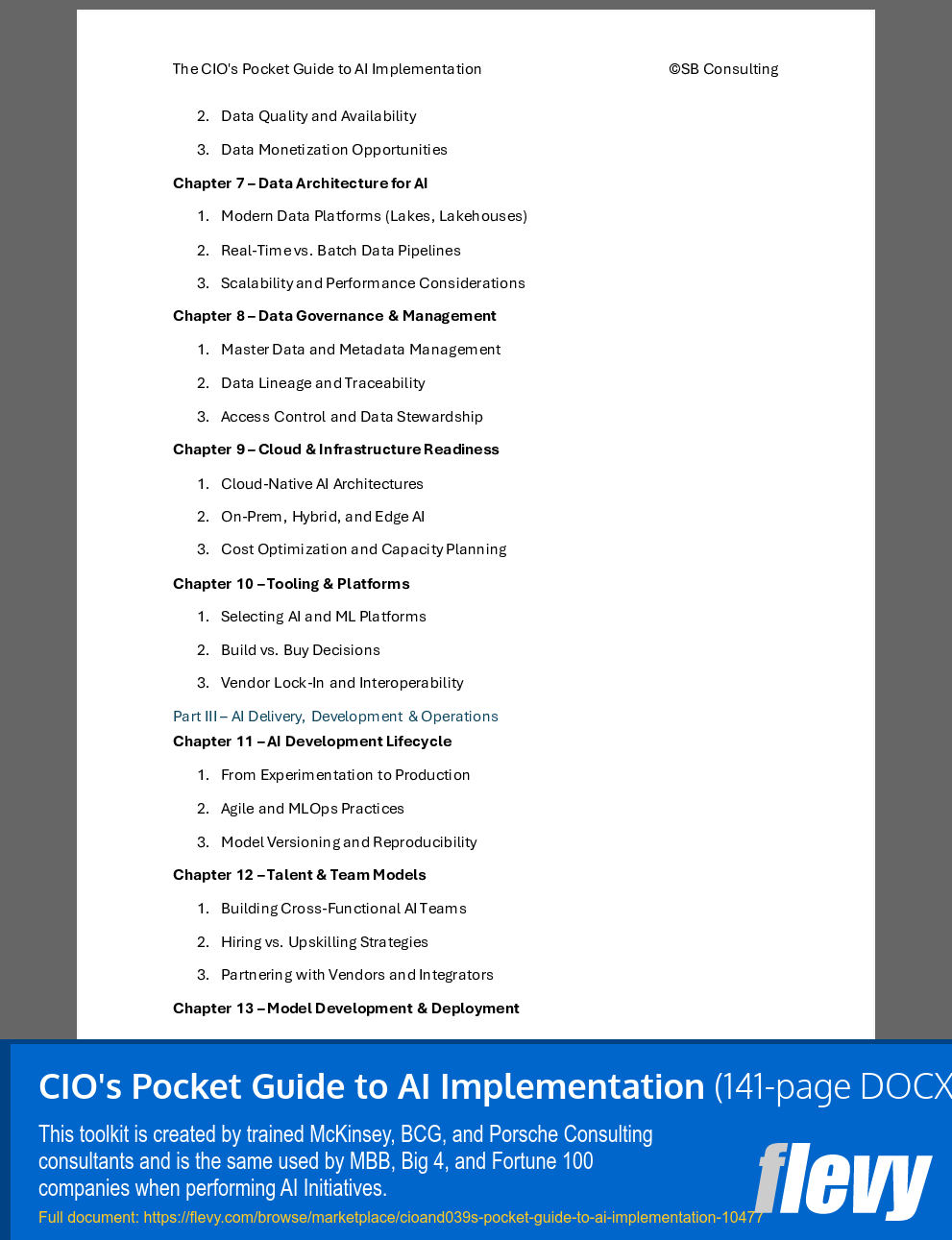
3. Data Monetization Opportunities
Chapter 7 – Data Architecture for AI
1. Modern Data Platforms (Lakes, Lakehouses)
2. Real-Time vs. Batch Data Pipelines
3. Scalability and Performance Considerations
Chapter 8 – Data Governance & Management
1. Master Data and Metadata Management
2. Data Lineage and Traceability
3. Access Control and Data Stewardship
Chapter 9 – Cloud & Infrastructure Readiness
1. Cloud-Native AI Architectures
2. On-Prem, Hybrid, and Edge AI
3. Cost Optimization and Capacity Planning
Chapter 10 – Tooling & Platforms
1. Selecting AI and ML Platforms
2. Build vs. Buy Decisions
3. Vendor Lock-In and Interoperability
Part III – AI Delivery, Development & Operations
Chapter 11 – AI Development Lifecycle
1. From Experimentation to Production
2. Agile and MLOps Practices
3. Model Versioning and Reproducibility
Chapter 12 – Talent & Team Models
1. Building Cross-Functional AI Teams
2. Hiring vs. Upskilling Strategies
3. Partnering with Vendors and Integrators
Chapter 13 – Model Development & Deployment
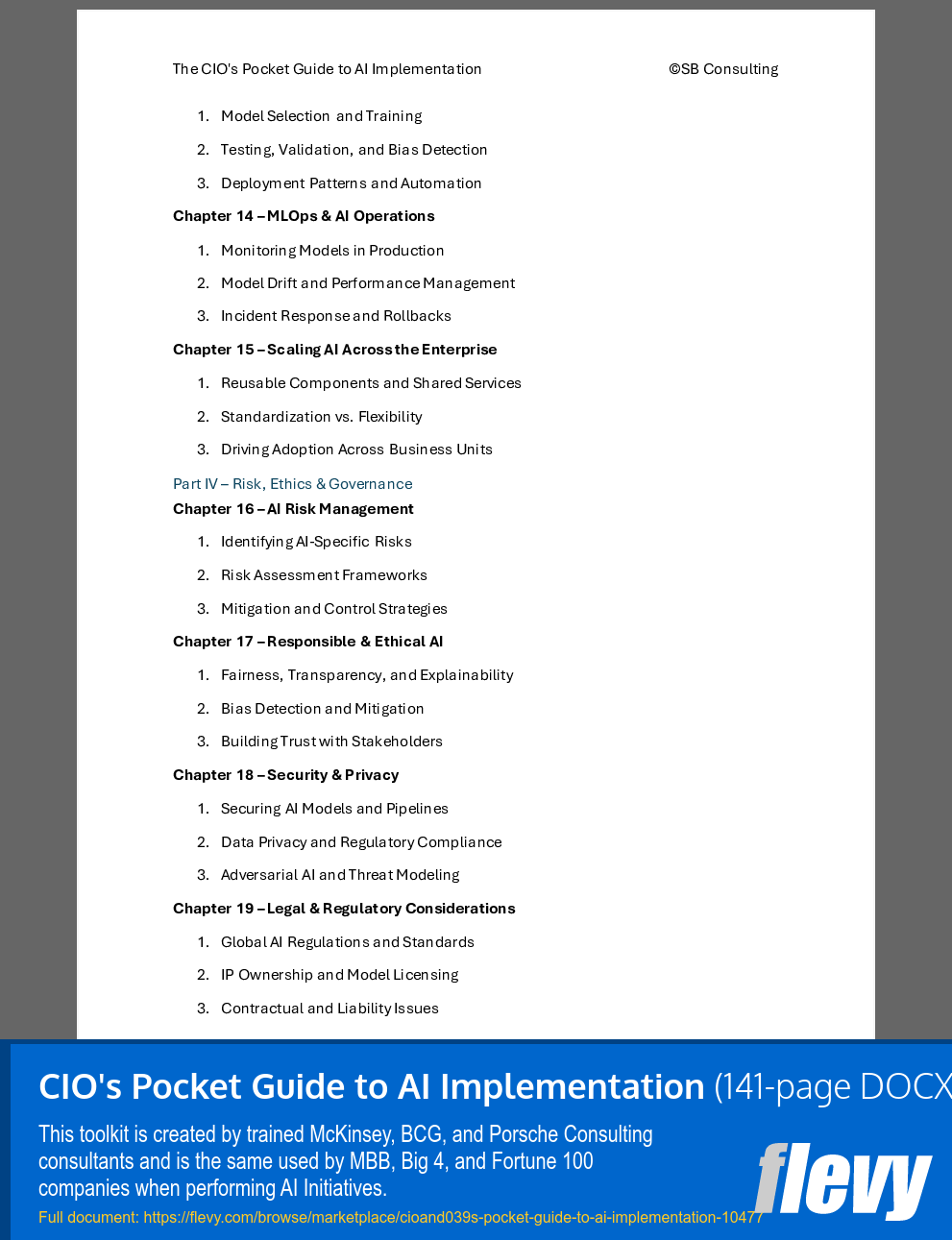
1. Model Selection and Training
2. Testing, Validation, and Bias Detection
3. Deployment Patterns and Automation
Chapter 14 – MLOps & AI Operations
1. Monitoring Models in Production
2. Model Drift and Performance Management
3. Incident Response and Rollbacks
Chapter 15 – Scaling AI Across the Enterprise
1. Reusable Components and Shared Services
2. Standardization vs. Flexibility
3. Driving Adoption Across Business Units
Part IV – Risk, Ethics & Governance
Chapter 16 – AI Risk Management
1. Identifying AI-Specific Risks
2. Risk Assessment Frameworks
3. Mitigation and Control Strategies
Chapter 17 – Responsible & Ethical AI
1. Fairness, Transparency, and Explainability
2. Bias Detection and Mitigation
3. Building Trust with Stakeholders
Chapter 18 – Security & Privacy
1. Securing AI Models and Pipelines
2. Data Privacy and Regulatory Compliance
3. Adversarial AI and Threat Modeling
Chapter 19 – Legal & Regulatory Considerations
1. Global AI Regulations and Standards
2. IP Ownership and Model Licensing
3. Contractual and Liability Issues
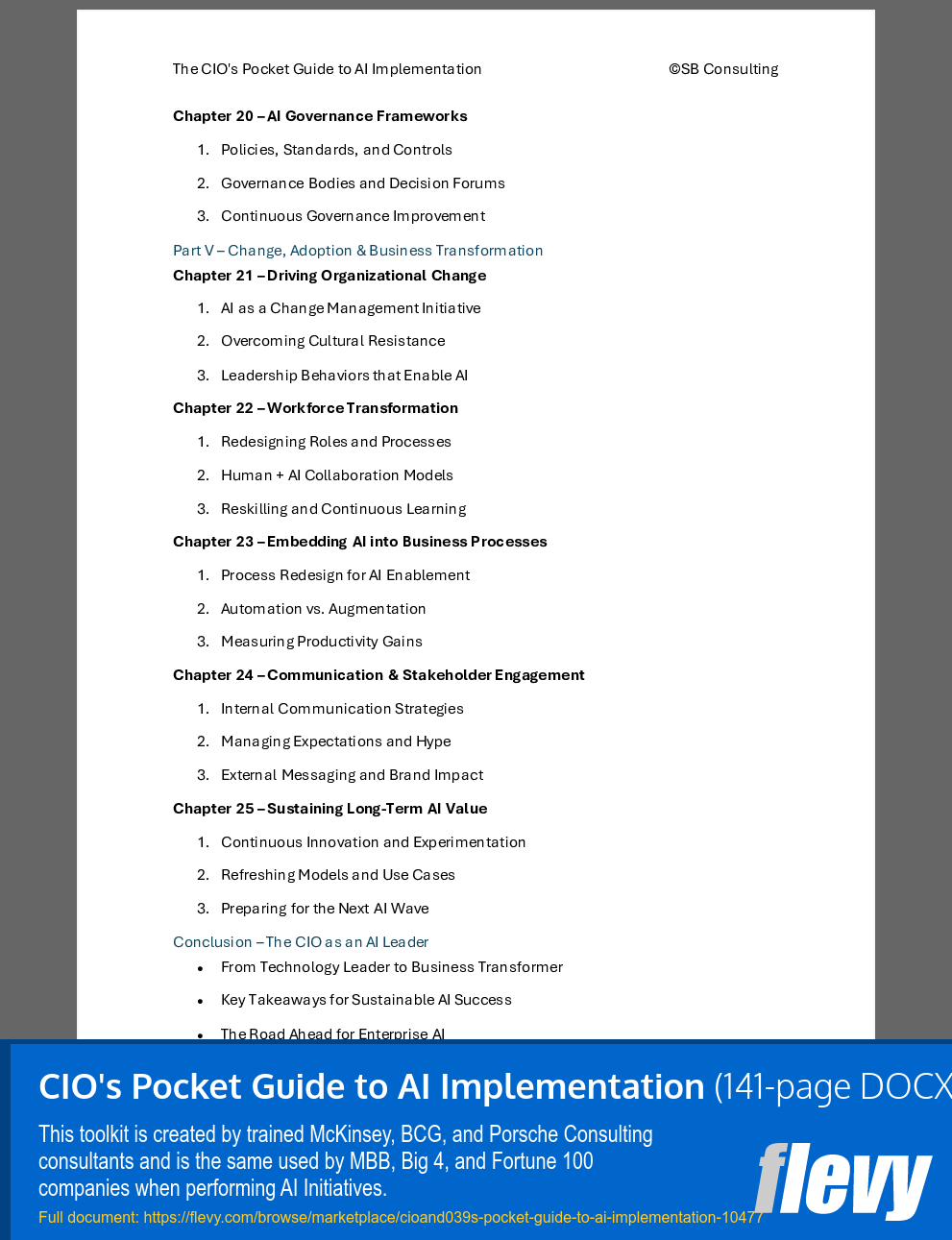
Chapter 20 – AI Governance Frameworks
1. Policies, Standards, and Controls
2. Governance Bodies and Decision Forums
3. Continuous Governance Improvement
Part V – Change, Adoption & Business Transformation
Chapter 21 – Driving Organizational Change
1. AI as a Change Management Initiative
2. Overcoming Cultural Resistance
3. Leadership Behaviors that Enable AI
Chapter 22 – Workforce Transformation
1. Redesigning Roles and Processes
2. Human + AI Collaboration Models
3. Reskilling and Continuous Learning
Chapter 23 – Embedding AI into Business Processes
1. Process Redesign for AI Enablement
2. Automation vs. Augmentation
3. Measuring Productivity Gains
Chapter 24 – Communication & Stakeholder Engagement
1. Internal Communication Strategies
2. Managing Expectations and Hype
3. External Messaging and Brand Impact
Chapter 25 – Sustaining Long-Term AI Value
1. Continuous Innovation and Experimentation
2. Refreshing Models and Use Cases
3. Preparing for the Next AI Wave
🚨 FINAL WORDS
Every month without a clear AI execution strategy costs you money, credibility, and competitive ground.
📘 The CIO's Pocket Guide to AI Implementation gives you the clarity, confidence, and control to lead AI—not chase it.
👉 Buy it. Read it. Execute. Win.
Key Words:
Strategy & Transformation, Growth Strategy, Strategic Planning, Strategy Frameworks, Innovation Management, Pricing Strategy, Core Competencies, Strategy Development, Business Transformation, Marketing Plan Development, Product Strategy, Breakout Strategy, Competitive Advantage, Mission, Vision, Values, Strategy Deployment & Execution, Innovation, Vision Statement, Core Competencies Analysis, Corporate Strategy, Product Launch Strategy, BMI, Blue Ocean Strategy, Breakthrough Strategy, Business Model Innovation, Business Strategy Example, Corporate Transformation, Critical Success Factors, Customer Segmentation, Customer Value Proposition, Distinctive Capabilities, Enterprise Performance Management, KPI, Key Performance Indicators, Market Analysis, Market Entry Example, Market Entry Plan, Market Intelligence, Market Research, Market Segmentation, Market Sizing, Marketing, Michael Porter's Value Chain, Organizational Transformation, Performance Management, Performance Measurement, Platform Strategy, Product Go-to-Market Strategy, Reorganization, Restructuring, SWOT, SWOT Analysis, Service 4.0, Service Strategy, Service Transformation, Strategic Analysis, Strategic Plan Example, Strategy Deployment, Strategy Execution, Strategy Frameworks Compilation, Strategy Methodologies, Strategy Report Example, Value Chain, Value Chain Analysis, Value Innovation, Value Proposition, Vision Statement, Corporate Strategy, Business Development, Business plan pdf, business plan, PDF, Business Plan DOC, Business Plan Template, PPT, Market strategy playbook, strategic market planning, competitive analysis tools, market segmentation frameworks, growth strategy templates, product positioning strategy, market execution toolkit, strategic alignment playbook, KPI and OKR frameworks, business growth strategy guide, cross-functional strategy templates, market risk management, market strategy PowerPoint dec, guide, ebook, e-book ,McKinsey Change Playbook, Organizational change management toolkit, Change management frameworks 2025, Influence model for change, Change leadership strategies, Behavioral change in organizations, Change management PowerPoint templates, Transformational leadership in change, supply chain KPIs, supply chain KPI toolkit, supply chain PowerPoint template, logistics KPIs, procurement KPIs, inventory management KPIs, supply chain performance metrics, manufacturing KPIs, supply chain dashboard, supply chain strategy KPIs, reverse logistics KPIs, sustainability KPIs in supply chain, financial supply chain KPIs, warehouse KPIs, digital supply chain KPIs, 1200 KPIs, supply chain scorecard, KPI examples, supply chain templates, Corporate Finance SOPs, Finance SOP Excel Template, CFO Toolkit, Finance Department Procedures, Financial Planning SOPs, Treasury SOPs, Accounts Payable SOPs, Accounts Receivable SOPs, General Ledger SOPs, Accounting Policies Template, Internal Controls SOPs, Finance Process Standardization, Finance Operating Procedures, Finance Department Excel Template, FP&A Process Documentation, Corporate Finance Template, Finance SOP Toolkit, CFO Process Templates, Accounting SOP Package, Tax Compliance SOPs, Financial Risk Management Procedures.
NOTE: Our digital products are sold on an "as is" basis, making returns and refunds unavailable post-download. Please preview and inquire before purchasing. Please contact us before purchasing if you have any questions! This policy aligns with the standard Flevy Terms of Usage.
Got a question about the product? Email us at support@flevy.com or ask the author directly by using the "Ask the Author a Question" form. If you cannot view the preview above this document description, go here to view the large preview instead.
Source: Best Practices in Artificial Intelligence Word: CIO's Pocket Guide to AI Implementation Word (DOCX) Document, SB Consulting
ABOUT THE AUTHOR

SB Consulting is dedicated to empowering businesses to communicate their ideas with impact. This consulting firm specializes in teaching organizations how to create effective corporate and management presentations. With training from top-tier global consulting firms, including McKinsey, BCG, and Porsche Consulting, extensive expertise in presentation design and ... [read more]
Ask the Author a Question
You must be logged in to contact the author.




























