
 Click main image to view in full screen. Unlock all 20 preview images:
AI Data Center Power Procurement & Generation Model – Excel XLSX
Excel (XLSX) + supplemental PDF


BENEFITS OF THIS DOWNLOADABLE EXCEL DOCUMENT
- Compare ten power procurement and generation routes on consistent cost, reliability, delay, capital, and carbon measures.
- Quantify energization delay, firm-capacity needs, GPU-hour power economics, and portfolio constraints in one integrated Excel model.
- Evaluate Base, Upside, and Downside cases with NPV/IRR, sensitivities, an optimal hybrid mix, and four management dashboards.
ENERGY INDUSTRY EXCEL DESCRIPTION
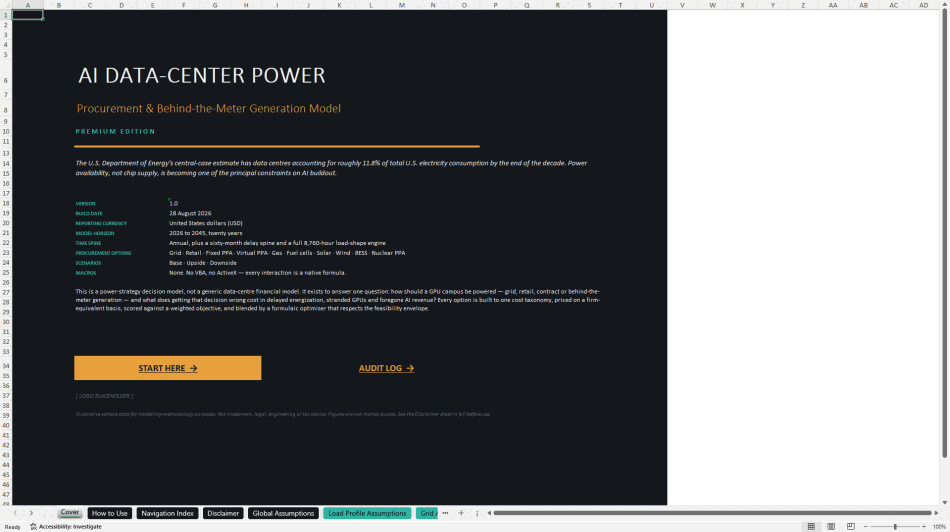
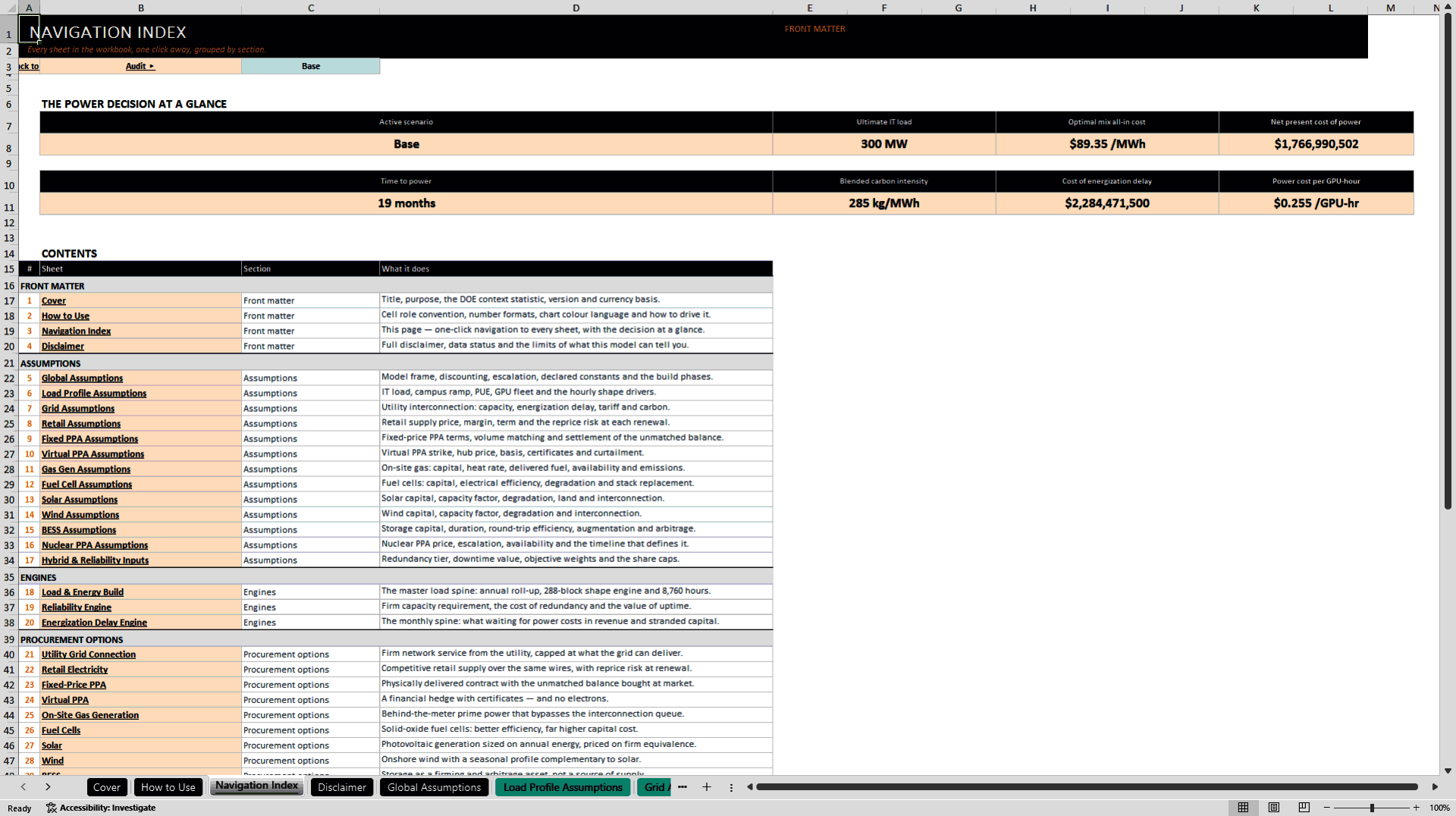
AI Data Center Power Procurement & Generation Model is a 43-worksheet Excel decision model for comparing how an AI or GPU data-center campus can be powered across utility supply, retail electricity, fixed-price PPA, virtual PPA, on-site gas generation, fuel cells, solar, wind, BESS, nuclear PPA, and a constrained optimal hybrid mix.
The model is designed for power-strategy and capital-allocation decisions rather than a generic data-center operating forecast. It places each procurement route on a common cost taxonomy and evaluates both levelised cost and firm-equivalent cost. Firm-equivalent costing includes the cost of backup capacity and energy that an option cannot provide, so an intermittent or delayed source can be compared with a firm contract on a more decision-useful basis for a near-flat campus load.
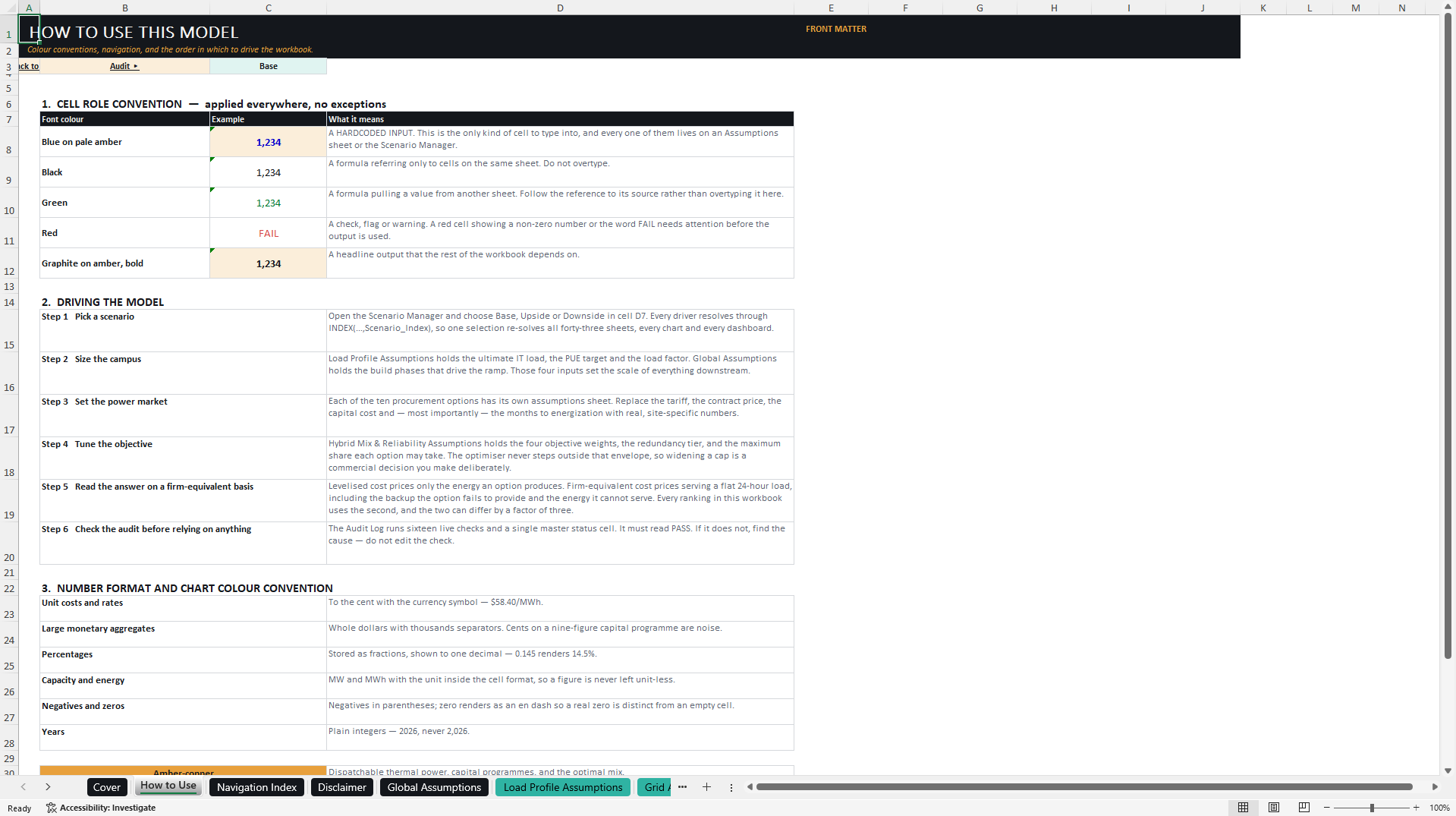
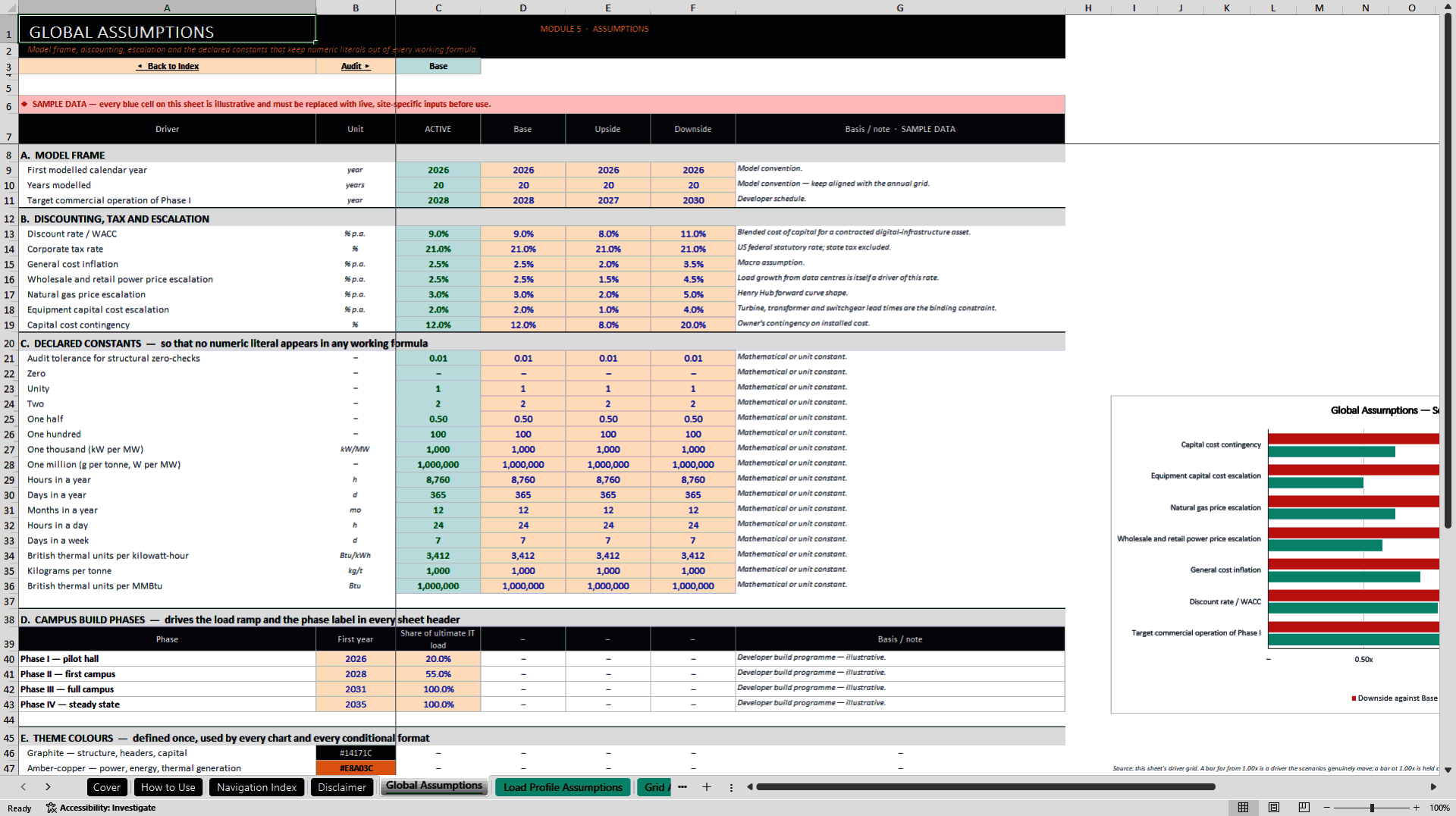
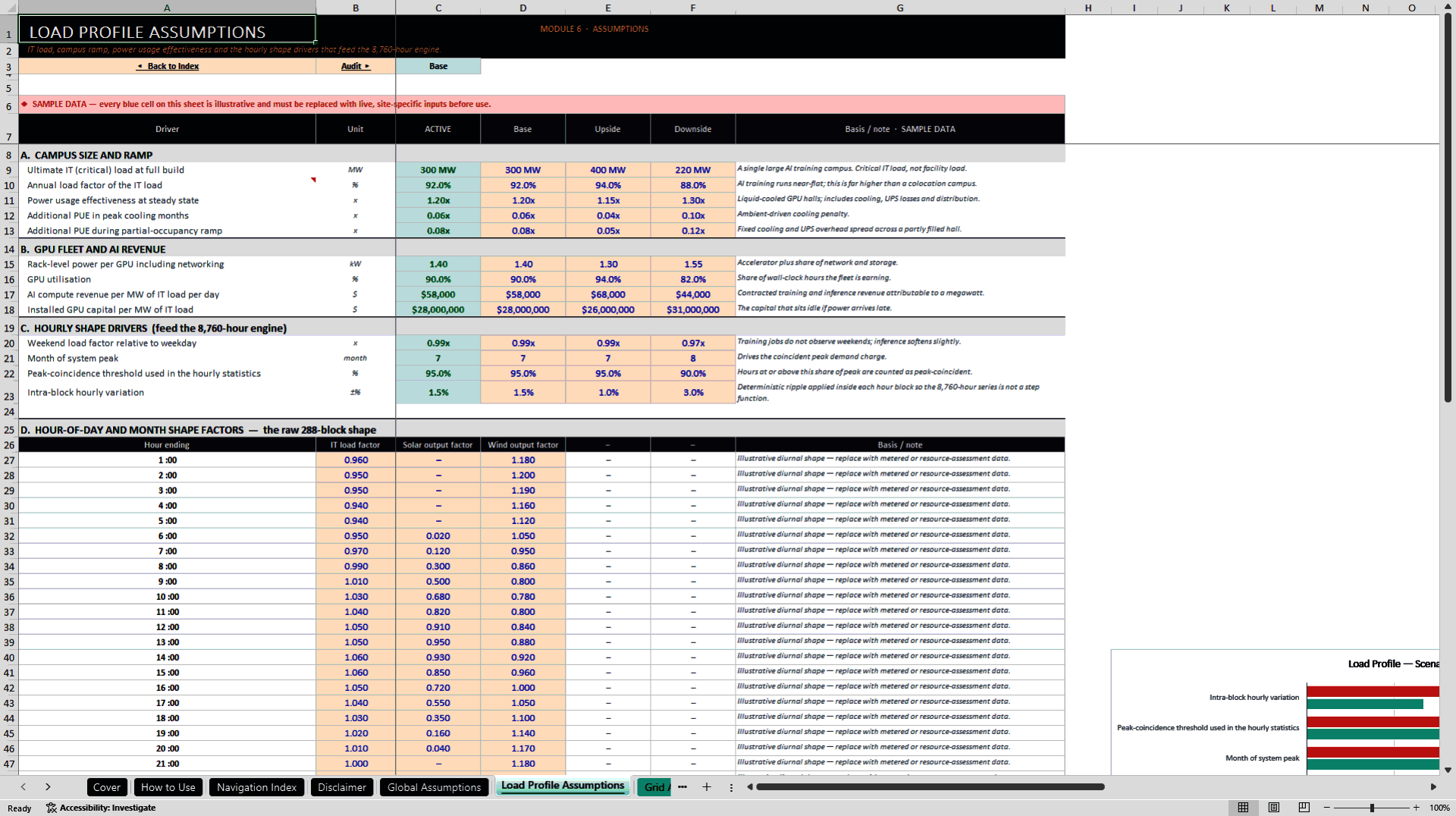
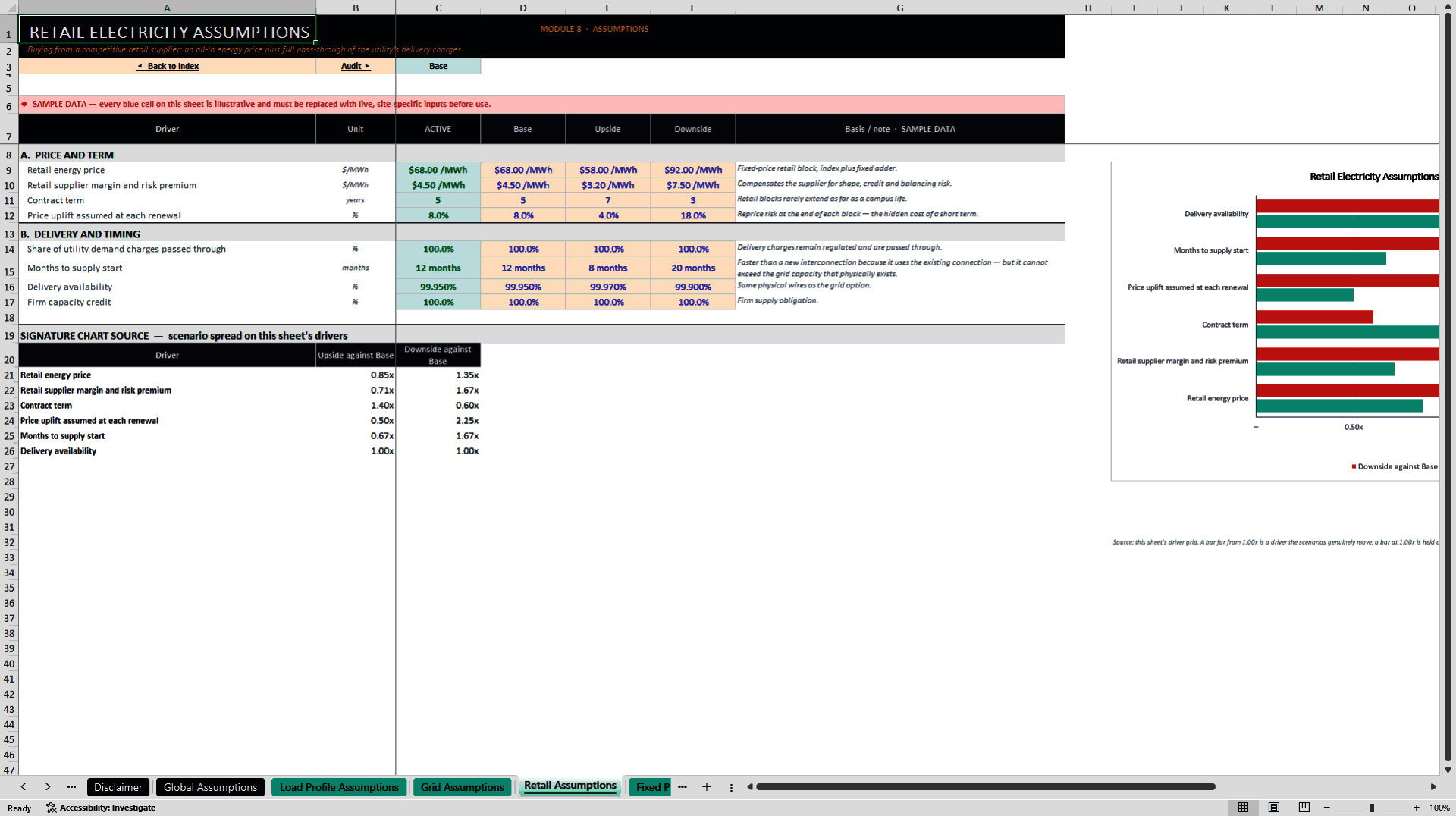
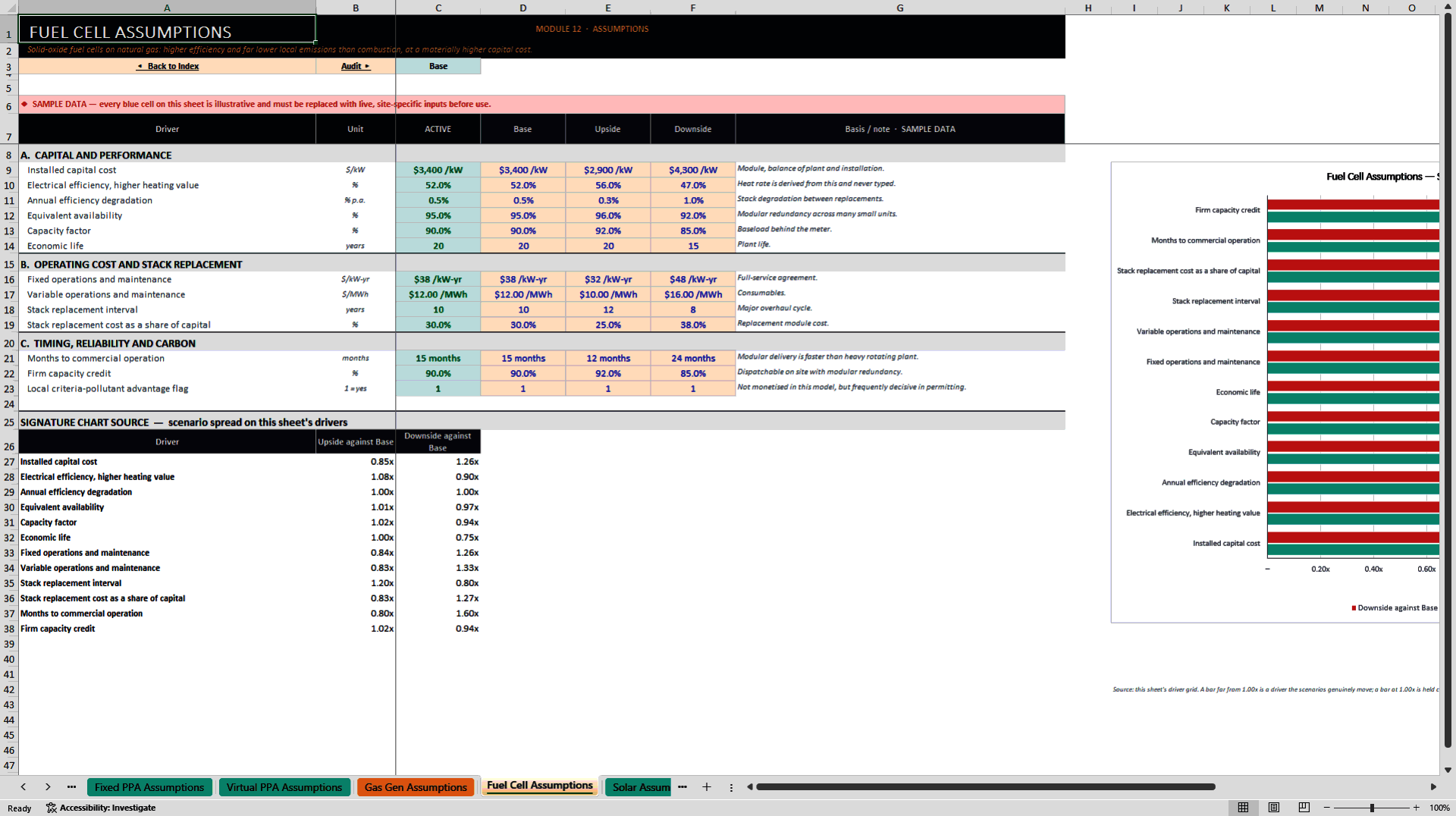
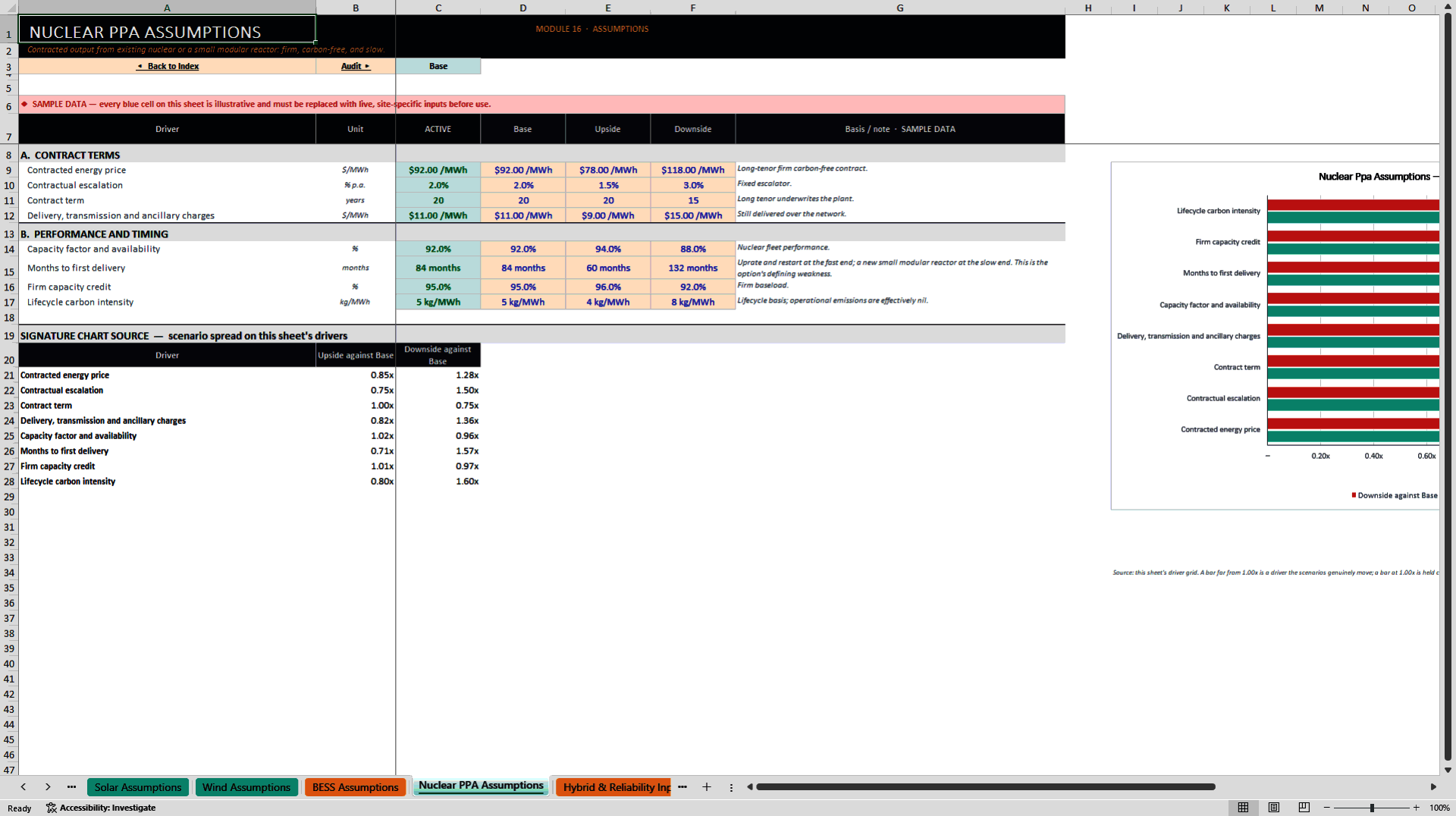
Users begin by choosing Base, Upside, or Downside in a central Scenario Manager. They can then edit campus load, PUE, load factor, GPU utilisation and economics, build phases, discount and escalation assumptions, utility and retail tariffs, PPA terms, gas and fuel-cell inputs, solar and wind parameters, BESS assumptions, nuclear PPA terms, redundancy requirements, backup generation, optimisation weights, renewable minimums, combustion limits, and source share caps.
The workbook includes a twenty-year annual forecast from 2026 to 2045, a sixty-month energization-delay spine, a 288-block shape framework, and a full 8,760-hour load engine. A Reliability Engine calculates firm-capacity requirements, backup economics, and avoided-downtime value. An Energization Delay Engine measures unpowered MW-months, lost AI revenue, stranded GPU capital carry, total delay cost, cost per month of delay, and option ranking.
Ten standalone procurement and generation modules feed a Hybrid Optimal Mix Engine that scores sources using cost, reliability, carbon, and time-to-power weights while respecting renewable, combustion, and source-share constraints. Financial outputs include net present cost, firm-equivalent net present cost, levelised and firm-equivalent cost, total capital, NPV and IRR versus retail supply, payback, cost per MW, cost per MWh, cost per GPU-hour, and power cost as a share of AI compute revenue.
The workbook also includes carbon and emissions analysis, a comparative scorecard, tornado sensitivity, one-way and two-way sensitivity grids, and four management dashboards covering executive economics, power mix and cost, risk and sensitivity, and ESG and carbon. Workbook-native Audit Log and Version Control sheets are included as part of the supplied model architecture.
This document is useful for data-center developers, AI infrastructure teams, energy procurement teams, project-finance and corporate-finance professionals, infrastructure investors, CFO and FP&A teams, consultants, and advisors evaluating power strategies, site energization, PPA negotiations, behind-the-meter generation, reliability trade-offs, or investment committee cases.
Seller-supplied and already tested; no Studio workbook audit was performed.
Got a question about the product? Email us at support@flevy.com or ask the author directly by using the "Ask the Author a Question" form. If you cannot view the preview above this document description, go here to view the large preview instead.
Source: Best Practices in Energy Industry, Data Center Excel: AI Data Center Power Procurement & Generation Model Excel (XLSX) Spreadsheet, PDMM Financial Models
ABOUT THE AUTHOR

PDMM Financial Models develops professional, decision-ready Excel models for business owners, entrepreneurs, investors, consultants, analysts, and finance teams. Our objective is to transform complex business assumptions into clear, structured analysis that supports better planning and investment decisions.
Our models cover business planning, forecasting, budgeting, feasibility analysis,
... [read more]
Ask the Author a Question
You must be logged in to contact the author.




























