
This framework is developed by a team of former McKinsey and Big 4 consultants. The presentation follows the headline-body-bumper slide format used by global consulting firms.
Explore the Triple Bottom Line (TBL) framework developed by ex-McKinsey and Big 4 consultants. Assess profit, people, and planet for sustainable growth. Triple Bottom Line (TBL) is a 32-slide PPT PowerPoint presentation slide deck (PPTX) available for immediate download upon purchase.
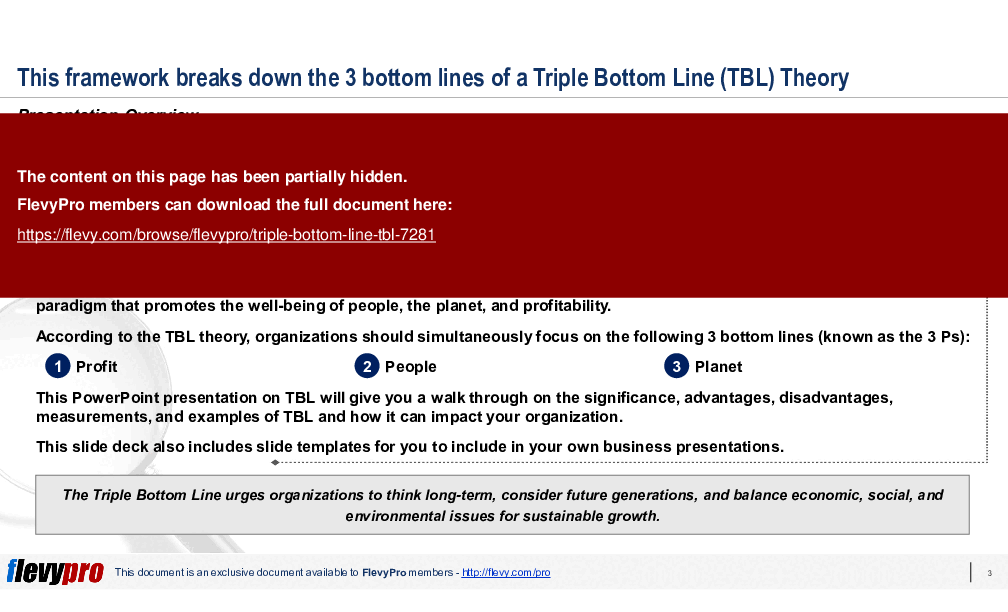
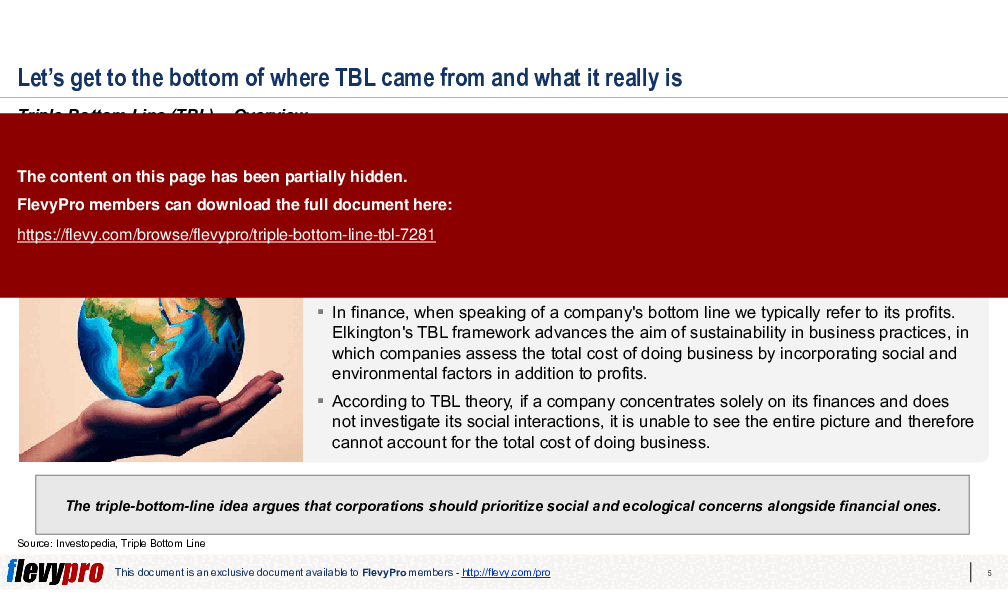
Traditional business models primarily prioritize economic gains and profitability. This narrow focus often disregards the social and environmental impacts of business activities. In economics, the Triple Bottom Line (TBL) asserts that organizations should prioritize social and environmental concerns alongside profits. The TBL theory proposes that there should be 3 bottom lines: profit, humans, and the environment.
A TBL seeks to evaluate an organization's commitment to Corporate Social Responsibility (CSR) and its environmental impact over time and expands the scope by considering the broader impacts of business decisions beyond financial gains.
By addressing these problems, the Triple Bottom Line approach seeks to create a more sustainable and inclusive business paradigm that promotes the well-being of people, the planet, and profitability.
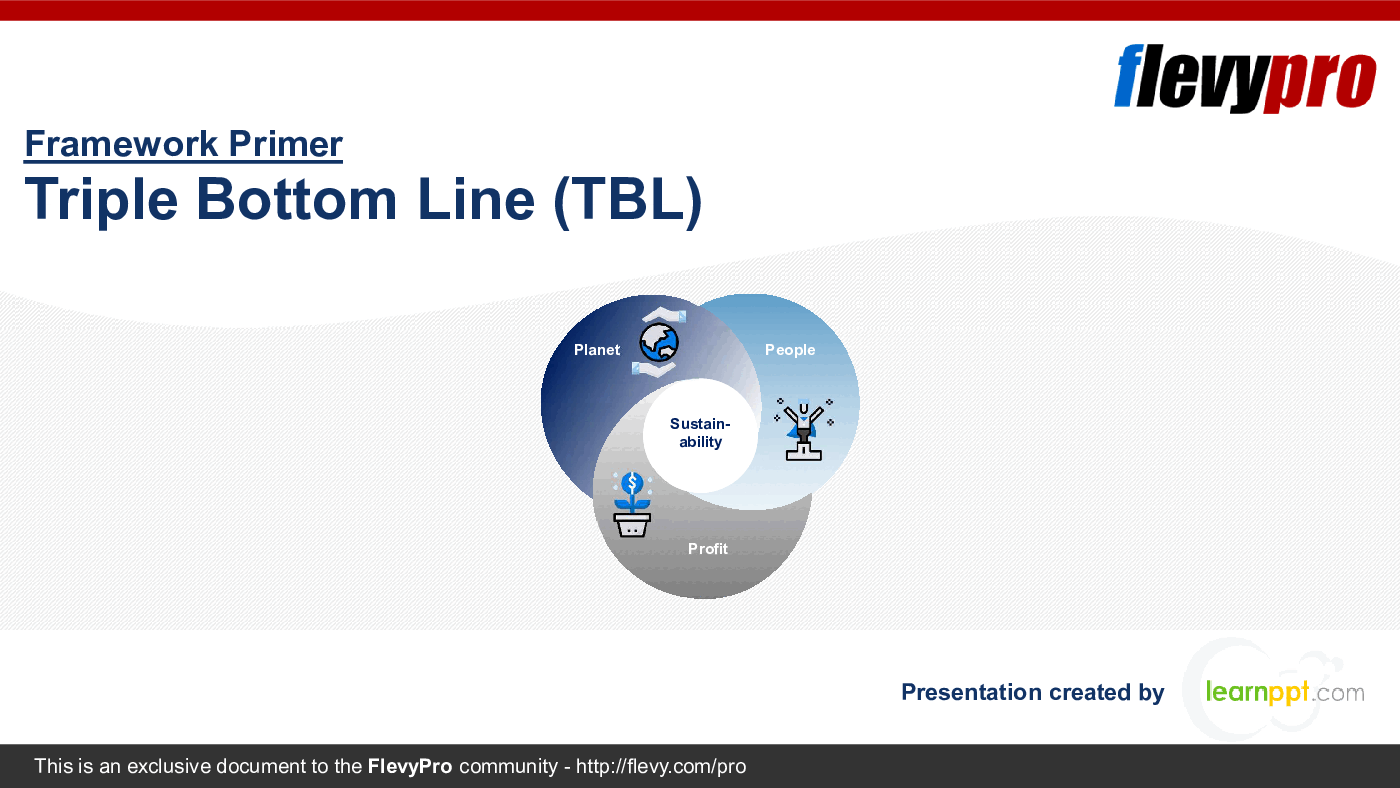
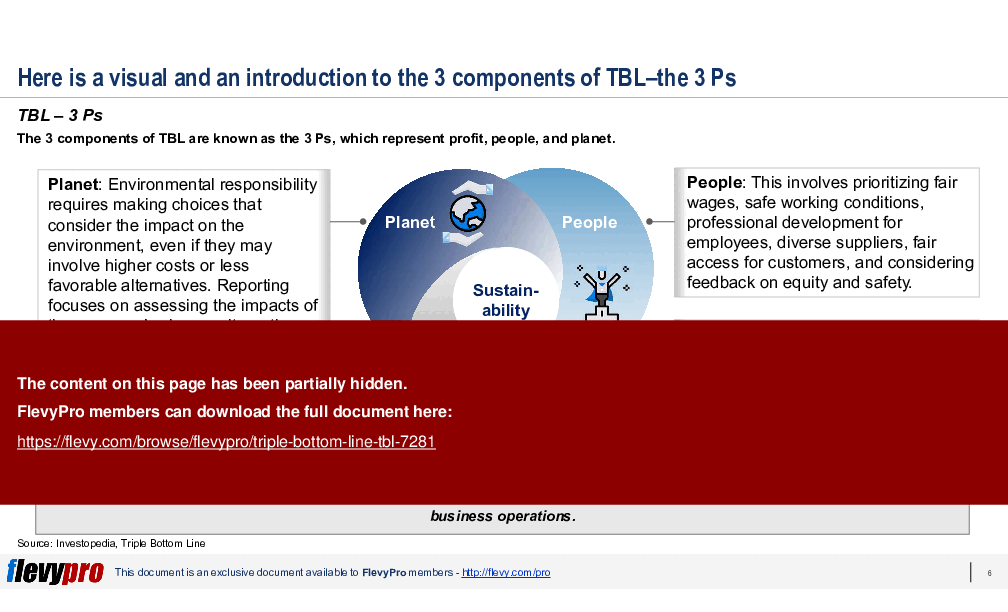
According to the TBL theory, organizations should simultaneously focus on the following 3 bottom lines (also known as the 3 Ps):
1. Profit (also sometimes referred to as Prosperity) – Profit goes beyond financial gains and includes ethical income generation, responsible financial obligations, and contributing to the community's economic wealth.
2. People – This involves prioritizing fair wages, safe working conditions, professional development for employees, diverse suppliers, fair access for customers, and considering feedback on equity and safety.
3. Planet – Environmental responsibility requires making choices that consider the impact on the environment, even if they may involve higher costs or less favorable alternatives. Reporting focuses on assessing the impacts of the company's chosen alternatives.
The Triple Bottom Line urges organizations to think long-term, consider future generations, and balance economic, social, and environmental issues for sustainable growth.
This presentation discusses the 3 Ps in detail, including examples of how to measure the parameter.
This PowerPoint presentation on TBL will give you a walk through on the significance, advantages, disadvantages, measurements, and examples of TBL and how it can impact your organization.
This slide deck also includes slide templates for you to include in your own business presentations.
This presentation provides actionable insights into how the Triple Bottom Line framework can be effectively integrated into your organization’s strategy. By leveraging the TBL approach, you can enhance stakeholder engagement and drive long-term sustainability while aligning your business goals with social and environmental responsibilities.
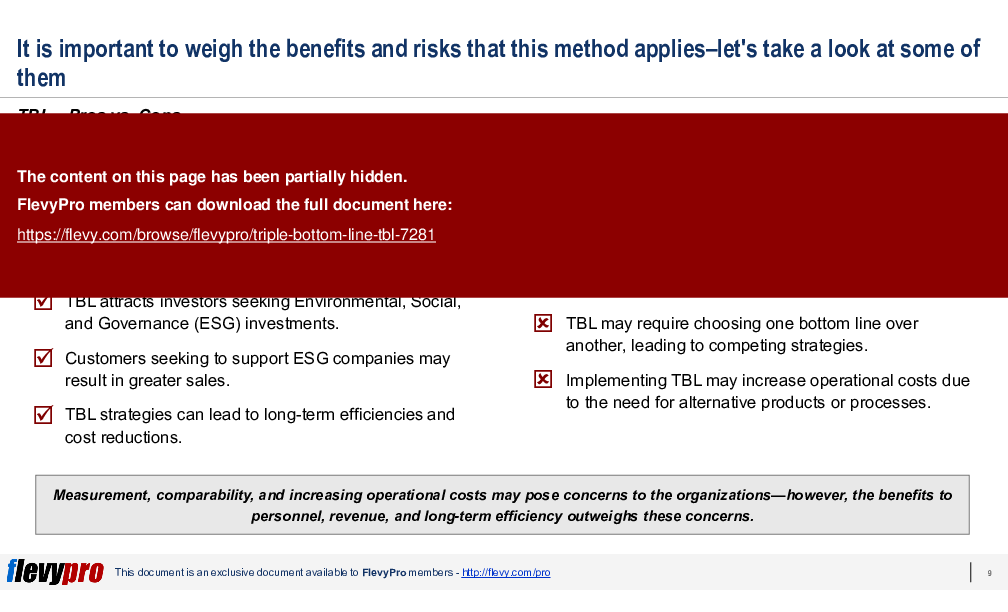
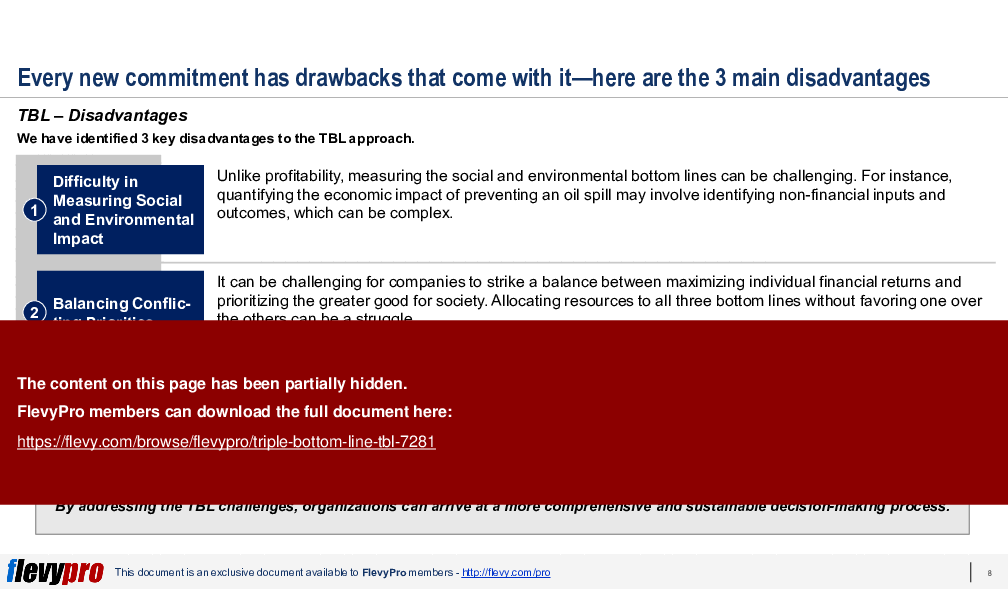
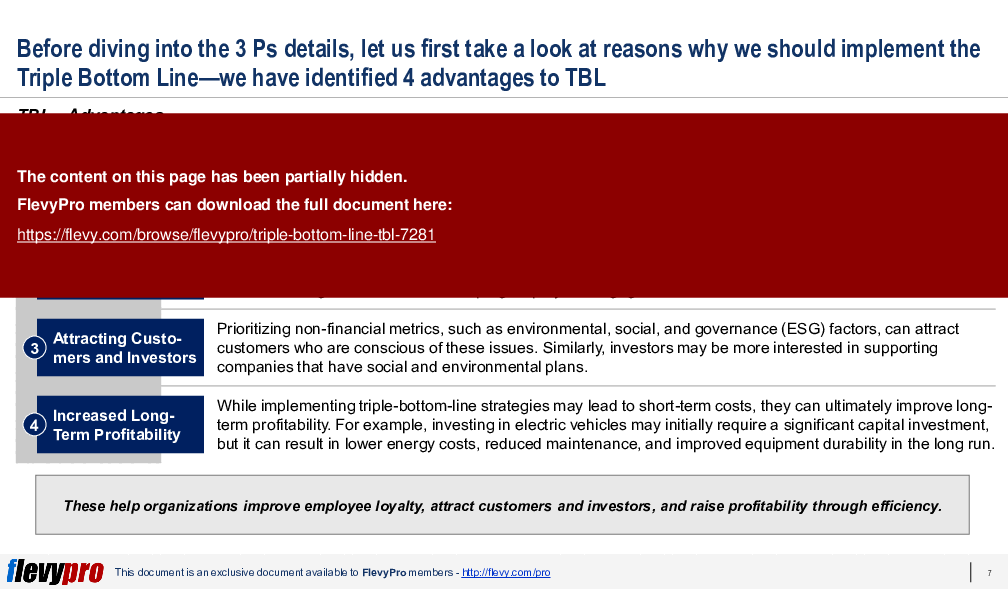
The Triple Bottom Line (TBL) framework consists of 3 core components: Planet, People, and Profit. The "Planet" component emphasizes environmental responsibility, advocating for choices that consider ecological impacts and promote transparency in reporting environmental consequences. The "People" segment focuses on social responsibility, highlighting fair wages, safe working conditions, professional development, and community engagement. This underscores the importance of human capital and diverse supplier engagement. The "Profit" aspect, or Prosperity, expands profit to include ethical income generation and responsible financial practices, aligning profitability with social and environmental considerations. The TBL framework integrates sustainability into business strategy, offering insights for organizations to align operational goals with ethical imperatives.
The "planet" component of business practices focuses on environmental impact reporting, distinct from traditional financial reporting. Organizations must prioritize environmental responsibility, even if it incurs higher costs. Businesses face dilemmas between cost-effective options and sustainable practices, such as choosing between cheaper shipping methods and more sustainable, slower alternatives. This trend integrates environmental considerations into strategic decision-making. Companies should evaluate both selected and unselected alternatives; for instance, redesigning distribution channels to reduce energy consumption can quantify greenhouse gas emissions reductions. This reporting enhances transparency and clarifies commitment to sustainability. Integrating environmental impact assessments aligns with regulatory and consumer expectations, enabling informed choices that balance economic and environmental objectives.
This PPT slide provides an overview of "Profit" within the Triple Bottom Line (TBL) framework, emphasizing that profit extends beyond financial gains to include ethical income generation and social responsibility. The term "Prosperity" is synonymous with profit, encompassing community welfare and financial obligations. Profit requires collaboration with partners and vendors sharing philanthropic values, essential for strategic financial planning that addresses the needs of stakeholders such as lenders and employees. Profit is a dynamic element of a company's strategy, not a static figure. Responsibilities like timely tax payments and investments in local businesses demonstrate a company's commitment to legal obligations and community engagement, enhancing reputation and fostering social responsibility. Organizations should view profit in the context of broader ethical responsibilities, appealing to customers who prioritize sustainable practices.
This PPT slide focuses on measuring the "people" component of the Triple Bottom Line (TBL) through financial and non-financial metrics. Key metrics include livable earnings, ensuring average payroll exceeds local pay standards, and comprehensive employee benefits packages that encompass health and wellness programs. Work-life balance is assessed by the average vacation hours taken, reflecting organizational culture and employee well-being. The voluntary provision of demographic data by employees aids in understanding workforce diversity. Vendor demographics emphasize the inclusion of small businesses and minority-owned enterprises, showcasing a commitment to social responsibility. Additionally, product returns by geographic region serve as indicators of product quality and customer satisfaction across demographics. This approach provides actionable insights for enhancing social metrics and improving employee satisfaction.
Source: Best Practices in Sustainability, Business Ethics, Corporate Social Responsibility PowerPoint Slides: Triple Bottom Line (TBL) PowerPoint (PPTX) Presentation Slide Deck, LearnPPT Consulting
This framework is developed by a team of former McKinsey and Big 4 consultants. The presentation follows the headline-body-bumper slide format used by global consulting firms.
For $10.00 more, you can download this document plus 2 more FlevyPro documents. That's just $13 each.
ABOUT FLEVYPRO
This document is part of the FlevyPro Library, a curated knowledge base of documents for our FlevyPro subscribers.

FlevyPro is a subscription service for on-demand business frameworks and analysis tools. FlevyPro subscribers receive access to an exclusive library of curated business documents—business framework primers, presentation templates, Lean Six Sigma tools, and more—among other exclusive benefits.
The average daily rate of a McKinsey consultant is $6,625 (not including expenses). The average price of a Flevy document is $65.
Trusted by over 10,000+ Client Organizations
Since 2012, we have provided business templates to over 10,000 businesses and organizations of all sizes, from startups and small businesses to the Fortune 100, in over 130 countries.
"As a niche strategic consulting firm, Flevy and FlevyPro frameworks and documents are an on-going reference to help us structure our findings and recommendations to our clients as well as improve their clarity, strength, and visual power. For us, it is an invaluable resource to increase our impact and value."
– David Coloma, Consulting Area Manager at Cynertia Consulting
"I have found Flevy to be an amazing resource and library of useful presentations for lean sigma, change management and so many other topics. This has reduced the time I need to spend on preparing for my performance consultation. The library is easily accessible and updates are regularly provided. A wealth of great information."
– Cynthia Howard RN, PhD, Executive Coach at Ei Leadership
"The wide selection of frameworks is very useful to me as an independent consultant. In fact, it rivals what I had at my disposal at Big 4 Consulting firms in terms of efficacy and organization."
– Julia T., Consulting Firm Owner (Former Manager at Deloitte and Capgemini)
"One of the great discoveries that I have made for my business is the Flevy library of training materials.
As a Lean Transformation Expert, I am always making presentations to clients on a variety of topics: Training, Transformation, Total Productive Maintenance, Culture, Coaching, Tools, Leadership Behavior, etc. Flevy
It is well worth the money to purchase these presentations. Sure, I have the knowledge and information to make my point. It is another thing to create a presentation that captures what I want to say. Flevy has saved me countless hours of preparation time that is much better spent with implementation that will actually save money for my clients.
"
– Ed Kemmerling, Senior Lean Transformation Expert at PMG
"As a young consulting firm, requests for input from clients vary and it's sometimes impossible to provide expert solutions across a broad spectrum of requirements. That was before I discovered Flevy.com.
Through subscription to this invaluable site of a plethora of topics that are key and crucial to consulting, I
have been able to exceed expectations and deliver quality advice and solutions to my clients. The quality and expertise of the authors are exemplary and gives me great confidence to use as part of my service offerings.
I highly recommend this company for any consultant wanting to apply international best practice standards in their service offerings.
"
– Nishi Singh, Strategist and MD at NSP Consultants
"I have used FlevyPro for several business applications. It is a great complement to working with expensive consultants. The quality and effectiveness of the tools are of the highest standards."
– Moritz Bernhoerster, Global Sourcing Director at Fortune 500
"Flevy.com has proven to be an invaluable resource library to our Independent Management Consultancy, supporting and enabling us to better serve our enterprise clients.
The value derived from our [FlevyPro] subscription in terms of the business it has helped to gain far exceeds the investment made, making a subscription a no-brainer for any growing consultancy – or in-house strategy team."
– Dean Carlton, Chief Transformation Officer, Global Village Transformations Pty Ltd.
"If you are looking for great resources to save time with your business presentations, Flevy is truly a value-added resource. Flevy has done all the work for you and we will continue to utilize Flevy as a source to extract up-to-date information and data for our virtual and onsite presentations!"
Download our free compilation of 50+ slides and templates on Organizational Design, Change Management, and Corporate Culture. Methodologies include ADKAR, Burke-Litwin Change Model, McKinsey 7-S, Competing Values Framework, etc.