
This framework is developed by a team of former McKinsey and Big 4 consultants. The presentation follows the headline-body-bumper slide format used by global consulting firms.
Explore the Data Reference Model (DRM) within the FEAF, crafted by ex-McKinsey and Big 4 consultants. Enhance data sharing and management across U.S. Federal agencies. FEAF: Data Reference Model (DRM) is a 35-slide PPT PowerPoint presentation slide deck (PPTX) available for immediate download upon purchase.
Enterprise Architecture (EA) conveys management best practice for positioning business and technology resources to fulfil strategic goals, make Organizational Performance better, and guide departments to achieve their core missions more successfully.
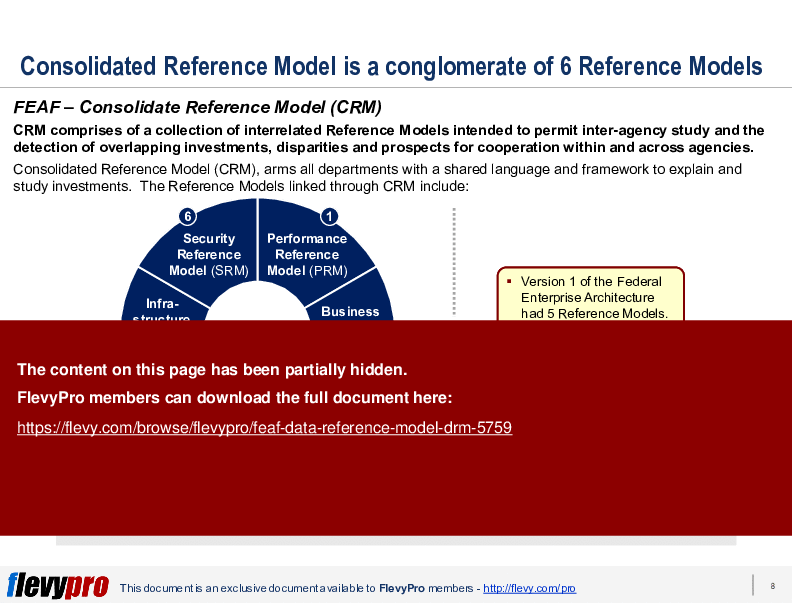
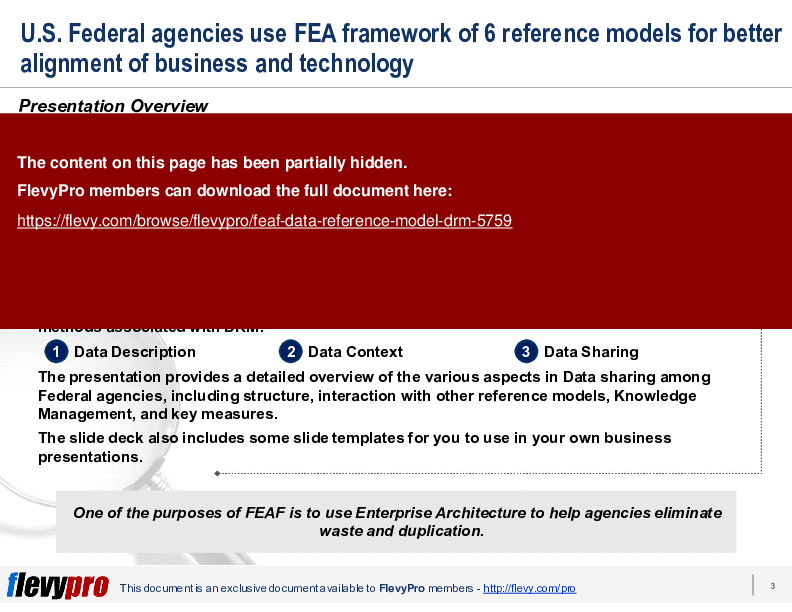
Federal Enterprise Architecture Framework (FEAF) realizes this goal for U.S. Federal agencies and assists systems surpass interagency boundaries. FEAF assists through documentation and information that conveys a summarized outlook of an enterprise at various tiers of scope and detail. One of the purposes of FEAF is to use Enterprise Architecture to help agencies eliminate waste and duplication.
This presentation discusses 1 of the 6 reference models of the Federal Enterprise Architecture Framework—the Data Reference Model (DRM). We also identify and discuss the 3 fundamental methods associated with DRM:
1. Data Description
2. Data Context
3. Data Sharing
The presentation provides a detailed overview of the various aspects in Data sharing among Federal agencies, including structure, interaction with other reference models, Knowledge Management, and key measures.
The slide deck also includes some slide templates for you to use in your own business presentations.
The Data Reference Model (DRM) is a pivotal tool in the Federal Enterprise Architecture Framework (FEAF), designed to streamline data sharing and management across U.S. Federal agencies. By standardizing data description, context, and sharing methods, the DRM ensures that information is consistently categorized, managed, and utilized effectively. This presentation delves into the intricacies of the DRM, providing a comprehensive guide to its implementation and benefits.
The PPT also highlights the DRM's role in enhancing interoperability and reducing redundancy, offering a theoretical framework from which practical applications can be derived. With detailed explanations and visual aids, this slide deck is an invaluable resource for agencies looking to optimize their data management practices and achieve strategic objectives efficiently.
This PPT slide outlines key measures for tracking the Data Reference Model (DRM) process, emphasizing clear metrics in data sharing initiatives. It evaluates data quality through 7 categories:
1. Discovered - Accessibility of data for effective utilization.
2. Identified - Semantic reliability, ensuring data is rational and understandable.
3. Standardized - Syntactic and structural reliability, conforming to established formats for seamless integration.
4. Reused - Applicability across domains to minimize redundancy and enhance efficiency.
5. Trusted - Reliability of data to foster user confidence.
6. Good Quality - Alignment with compliance and operational standards.
7. Protected - Security measures to prevent data leaks during sharing.
These measures create a comprehensive framework for optimizing data management strategies.
This PPT slide outlines a structured framework for Knowledge Management, illustrating the progression from Data to Wisdom through 4 stages: Data, Information, Knowledge, and Wisdom. "Data" consists of raw facts without context. "Information" emerges when data is contextualized, enhancing understanding. "Knowledge" is derived from recognizing patterns among related information, emphasizing the ability to discern relationships. "Wisdom" involves making informed decisions based on a comprehensive understanding of the previous stages, recognizing cause-and-effect relationships. This progression highlights the importance of context in transforming data into actionable insights for strategic decision-making.
Data Context is essential for effective data governance and management, providing clarity and insight into the nature and rationale behind data. It addresses key questions such as identifying required data types, determining responsible organizations for data maintenance, and understanding data management systems. This clarity ensures accountability and effective data stewardship. Specific data categorization methods enhance data management architecture, with the Data Asset Catalog reducing time spent on tracing data and promoting better resource utilization. The Information Discovery and Search method allows users to access necessary information without prior knowledge, facilitating smoother information sharing and enhancing operational effectiveness.
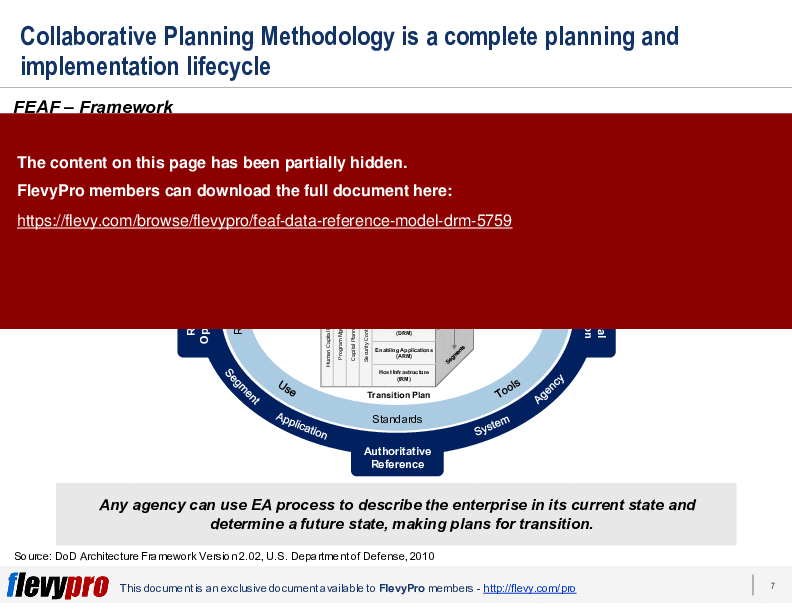
This PPT slide outlines the Collaborative Planning Methodology, a complete lifecycle for planning and implementation, anchored by the Federal Enterprise Architecture Framework (FEAF) endorsed by the U.S. Federal Government. Central to this methodology is the "Enterprise Roadmap," which includes strategic planning priorities, business services, data management, and enabling applications for operational success. The circular structure illustrates governance, service delivery, and functional integration, highlighting resource optimization, reporting, and standards. Key terms like "Current Views" and "Future Views" emphasize the importance of understanding both present operational contexts and desired future states. Agencies can leverage this enterprise architecture process to assess their current status and formulate strategic transition plans, enhancing operational efficiency and effectiveness.
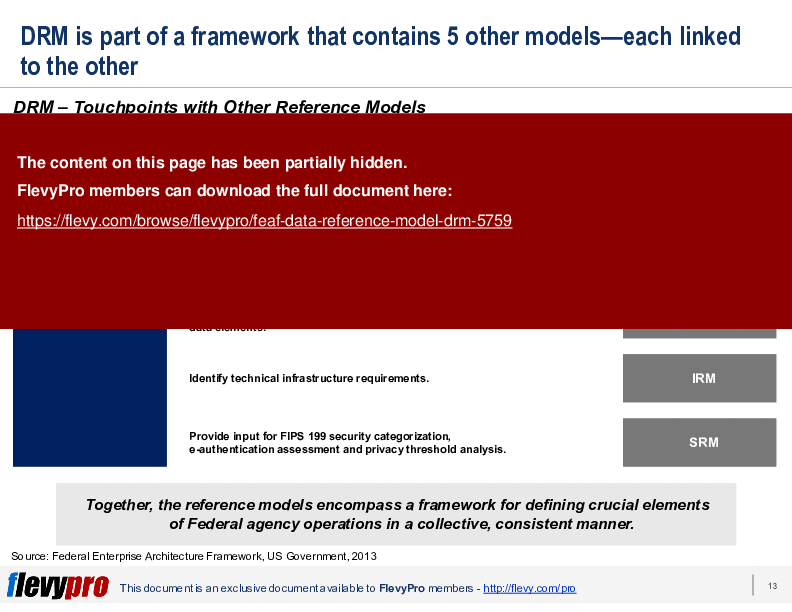
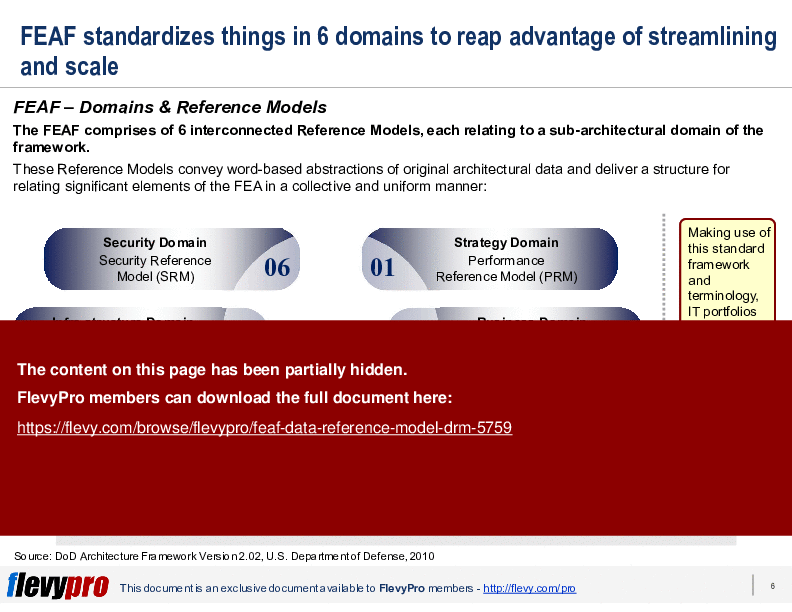
This PPT slide provides an overview of the Data Reference Model (DRM) and its connections to 5 additional models: PRM, BRM, ARM, IRM, and SRM. The DRM identifies opportunities for strategic coordination among data sources, optimizing decision-making processes. It emphasizes improving business processes and decision-making performance through effective data sharing, necessitating seamless data flow across organizational boundaries. Establishing authoritative data sources is crucial for data integrity and reliability, requiring connections between different agency systems. Identifying technical infrastructure requirements is essential for successful DRM implementation. The slide also addresses input for FIPS 199 security categorization, e-authentication assessments, and privacy threshold analyses, highlighting a comprehensive approach to data governance that integrates security and privacy into data management frameworks.
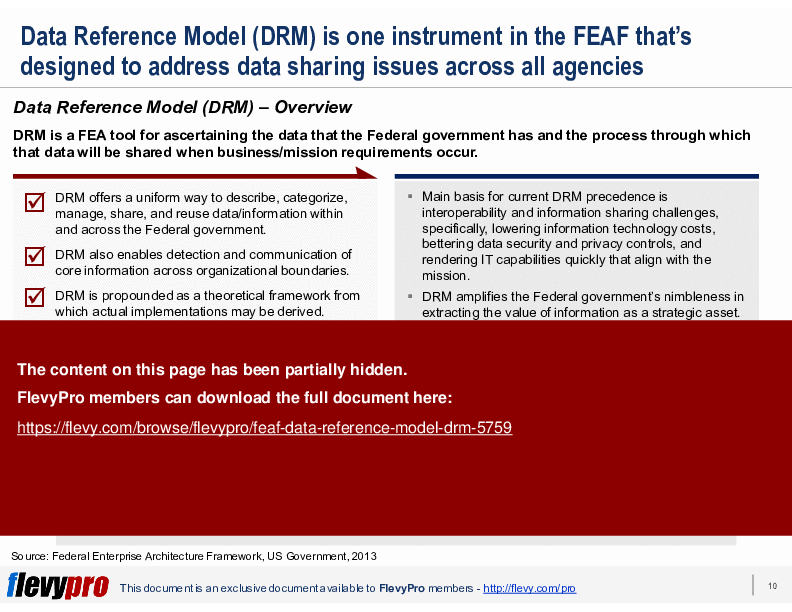
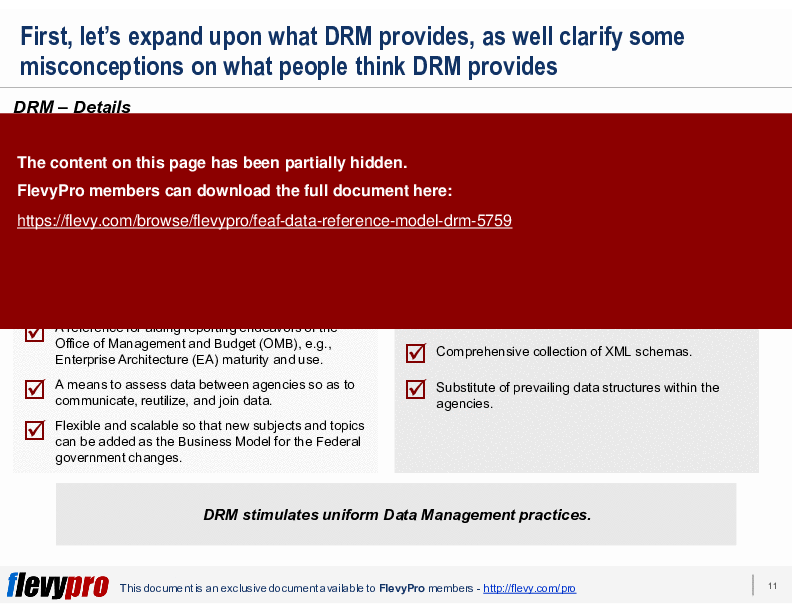
The Data Reference Model (DRM) serves as a reliable framework for classifying agency data, essential for effective data management. It aids in characterizing data architectures and linked objects, enhancing planning for shared services. DRM supports reporting efforts, particularly for the Office of Management and Budget (OMB), improving Enterprise Architecture (EA) maturity and use. It promotes inter-agency data assessment, fostering communication and data reuse. DRM is flexible and scalable, adapting to evolving federal business models. However, misconceptions clarify that DRM is not static, a manual for data architecture maintenance, a comprehensive model for all government entities, or a substitute for existing data structures. Understanding these distinctions is critical for agencies implementing DRM in their data management practices.
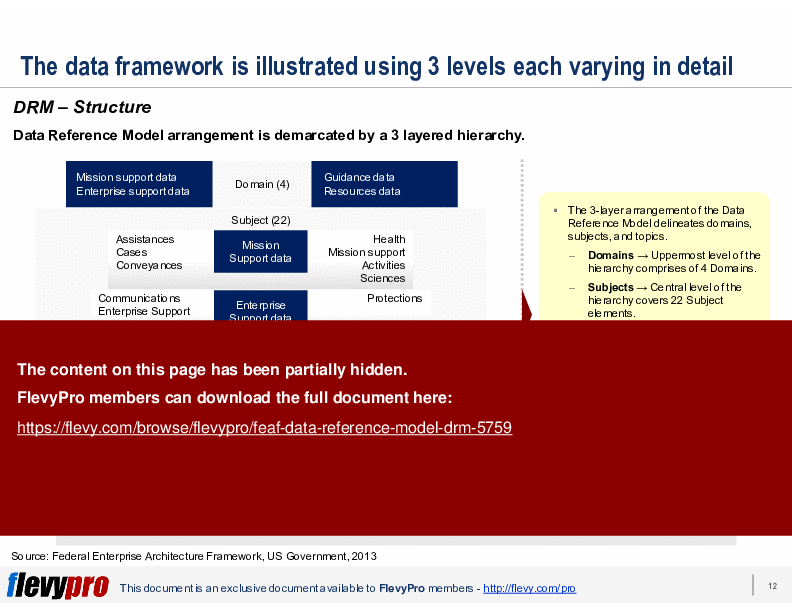
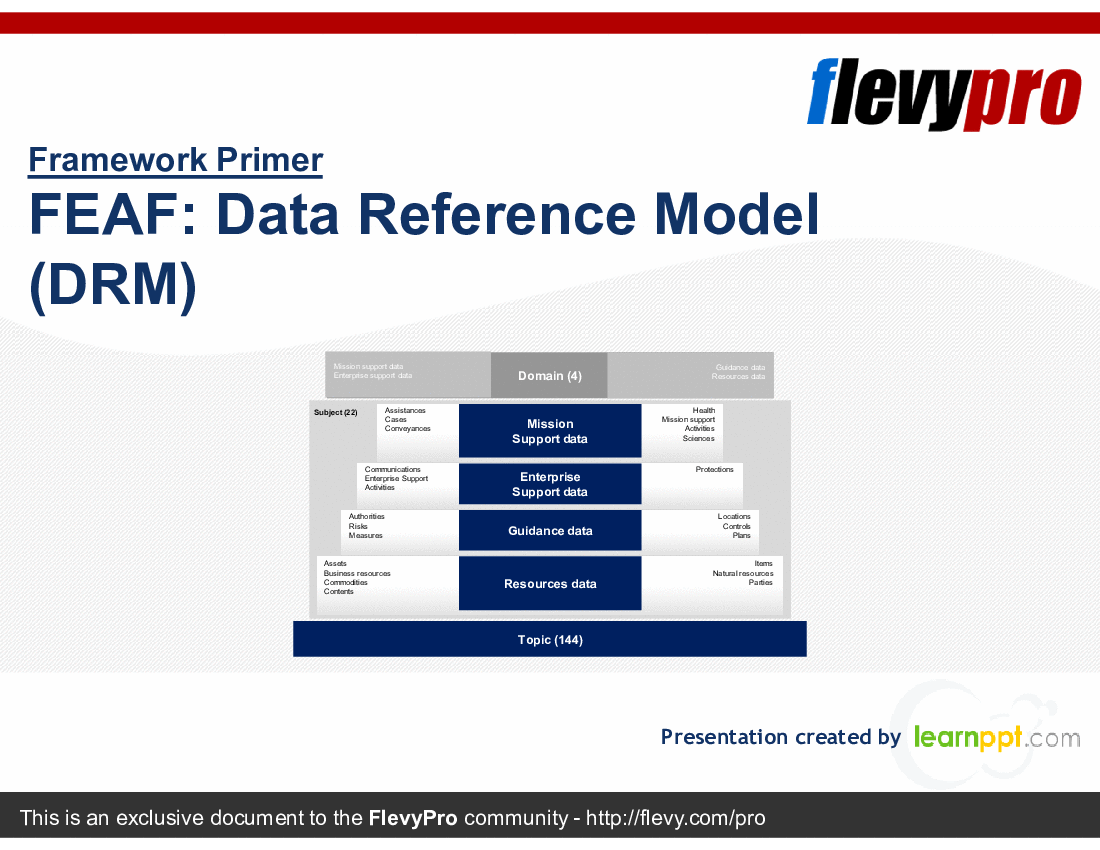
This PPT slide visualizes the FEA Data Reference Model (DRM) using Unified Modeling Language (UML) Class Diagram notation, outlining a hierarchical data organization structure. It includes 4 primary categories: Domain, Subject, Topic, and Data Category, where each layer builds upon the previous one. The Domain encompasses broader categories, which are divided into Subjects, and each Subject can be further segmented into multiple Topics, categorized by different Data Categories. Additionally, the slide introduces Data Assets and Data Exchanges, indicating that Data Assets can be exchanged between information providers and consumers. Arrows and multiplicity indicators show that a Data Category can encompass multiple Data Assets, facilitating data sharing and management, particularly for federal agencies. This framework aids organizations in enhancing data governance and interoperability.
The Data Reference Model (DRM) encompasses 3 central areas: Data Sharing, Data Description, and Data Context, crucial for effective data management among federal agencies. Data Sharing focuses on mechanisms for exchanging information, including query points and exchange packages, facilitating seamless data flow and collaboration. Data Description involves categorizing and detailing data assets, ensuring accurate representation for effective utilization. Data Context provides a framework for understanding data relevance through taxonomies and business rules, enhancing interpretation within its intended context. DRM serves as a foundational point for systematizing collaborative data efforts, promoting an integrated approach to data handling that improves operational efficiency and effectiveness. Understanding and implementing these areas is essential for optimizing data strategies and enhancing mission capabilities.
Source: Best Practices in Data Collection, Enterprise Architecture, Business Architecture, Metadata Management PowerPoint Slides: FEAF: Data Reference Model (DRM) PowerPoint (PPTX) Presentation Slide Deck, LearnPPT Consulting
This framework is developed by a team of former McKinsey and Big 4 consultants. The presentation follows the headline-body-bumper slide format used by global consulting firms.
For $10.00 more, you can download this document plus 2 more FlevyPro documents. That's just $13 each.
ABOUT FLEVYPRO
This document is part of the FlevyPro Library, a curated knowledge base of documents for our FlevyPro subscribers.
FlevyPro is a subscription service for on-demand business frameworks and analysis tools. FlevyPro subscribers receive access to an exclusive library of curated business documents—business framework primers, presentation templates, Lean Six Sigma tools, and more—among other exclusive benefits.
Since 2012, we have provided business templates to over 10,000 businesses and organizations of all sizes, from startups and small businesses to the Fortune 100, in over 130 countries.
"I am extremely grateful for the proactiveness and eagerness to help and I would gladly recommend the Flevy team if you are looking for data and toolkits to help you work through business solutions."
– Trevor Booth, Partner, Fast Forward Consulting
"The wide selection of frameworks is very useful to me as an independent consultant. In fact, it rivals what I had at my disposal at Big 4 Consulting firms in terms of efficacy and organization."
– Julia T., Consulting Firm Owner (Former Manager at Deloitte and Capgemini)
"I have used FlevyPro for several business applications. It is a great complement to working with expensive consultants. The quality and effectiveness of the tools are of the highest standards."
– Moritz Bernhoerster, Global Sourcing Director at Fortune 500
"If you are looking for great resources to save time with your business presentations, Flevy is truly a value-added resource. Flevy has done all the work for you and we will continue to utilize Flevy as a source to extract up-to-date information and data for our virtual and onsite presentations!"
– Debbi Saffo, President at The NiKhar Group
"Flevy is now a part of my business routine. I visit Flevy at least 3 times each month.
Flevy has become my preferred learning source, because what it provides is practical, current, and useful in this era where the business world is being rewritten.

many challenges and there is the need to make the right decisions in a short time, with so much scattered information, we are fortunate to have Flevy. Flevy investigates, selects, and puts at our disposal the best of the best to help us be successful in our work.
"
– Omar Hernán Montes Parra, CEO at Quantum SFE
"[Flevy] produces some great work that has been/continues to be of immense help not only to myself, but as I seek to provide professional services to my clients, it gives me a large "tool box" of resources that are critical to provide them with the quality of service and outcomes they are expecting."
– Royston Knowles, Executive with 50+ Years of Board Level Experience
"I have found Flevy to be an amazing resource and library of useful presentations for lean sigma, change management and so many other topics. This has reduced the time I need to spend on preparing for my performance consultation. The library is easily accessible and updates are regularly provided. A wealth of great information."
– Cynthia Howard RN, PhD, Executive Coach at Ei Leadership
"FlevyPro has been a brilliant resource for me, as an independent growth consultant, to access a vast knowledge bank of presentations to support my work with clients. In terms of RoI, the value I received from the very first presentation I downloaded paid for my subscription many times over! The
quality of the decks available allows me to punch way above my weight – it's like having the resources of a Big 4 consultancy at your fingertips at a microscopic fraction of the overhead.
"
– Roderick Cameron, Founding Partner at SGFE Ltd
Save with Bundles
This document is available as part of the following discounted bundle(s):
Download our FREE Digital Transformation Templates
Download our free compilation of 50+ Digital Transformation slides and templates. DX concepts covered include Digital Leadership, Digital Maturity, Digital Value Chain, Customer Experience, Customer Journey, RPA, etc.