 Click main image to view in full screen.
Privacy Risk Assessment Framework & Scoring Methodology – PowerPoint PPTX Template
PowerPoint (PPTX) 60 Slides


DATA PRIVACY PPT TEMPLATE DESCRIPTION
Mastering Privacy Risk: A Framework for Enterprise Security
Chapter 1: The Evolving Landscape of Privacy Risk
The Data Deluge: A New Era of Risk
• Over two decades of internet innovation fueled by individual data.
• Complex ecosystems where data flows, creating unforeseen privacy consequences.
• Organizations often underestimate the full impact on individuals, society, and their own enterprises.
Why Privacy Risk Assessment Matters Now
• Building customer trust through ethical decision-making.
• Future-proofing products and services for evolving compliance.
• Facilitating clear communication with stakeholders: customers, partners, regulators.
[image] A complex network diagram with data points, text: "Understanding the Invisible Threads"
Chapter 2: Foundations of a Privacy Risk Framework
NIST Privacy Framework: A Blueprint for Protection
• A voluntary tool for improving privacy through enterprise risk management.
• Supports privacy by design and privacy engineering practices.
• Aligned with the NIST Cybersecurity Framework for integrated risk management.
Core Components of the NIST Privacy Framework
• Core: Identifies essential privacy protection activities and desired outcomes.
• Profiles: Prioritize outcomes based on organizational values, mission, and risks.
• Implementation Tiers: Assess the sufficiency of processes and resources for managing privacy risk.
[image] Three interlocking gears labeled "Core," "Profiles," and "Tiers"
GDPR's Mandate: The Data Protection Impact Assessment (DPIA)
• Article 35 requires DPIAs for high-risk processing activities.
• Aims to identify and mitigate risks to individuals' privacy before processing begins.
• Essential for demonstrating accountability and compliance.
Chapter 3: Deconstructing Privacy Risk Factors
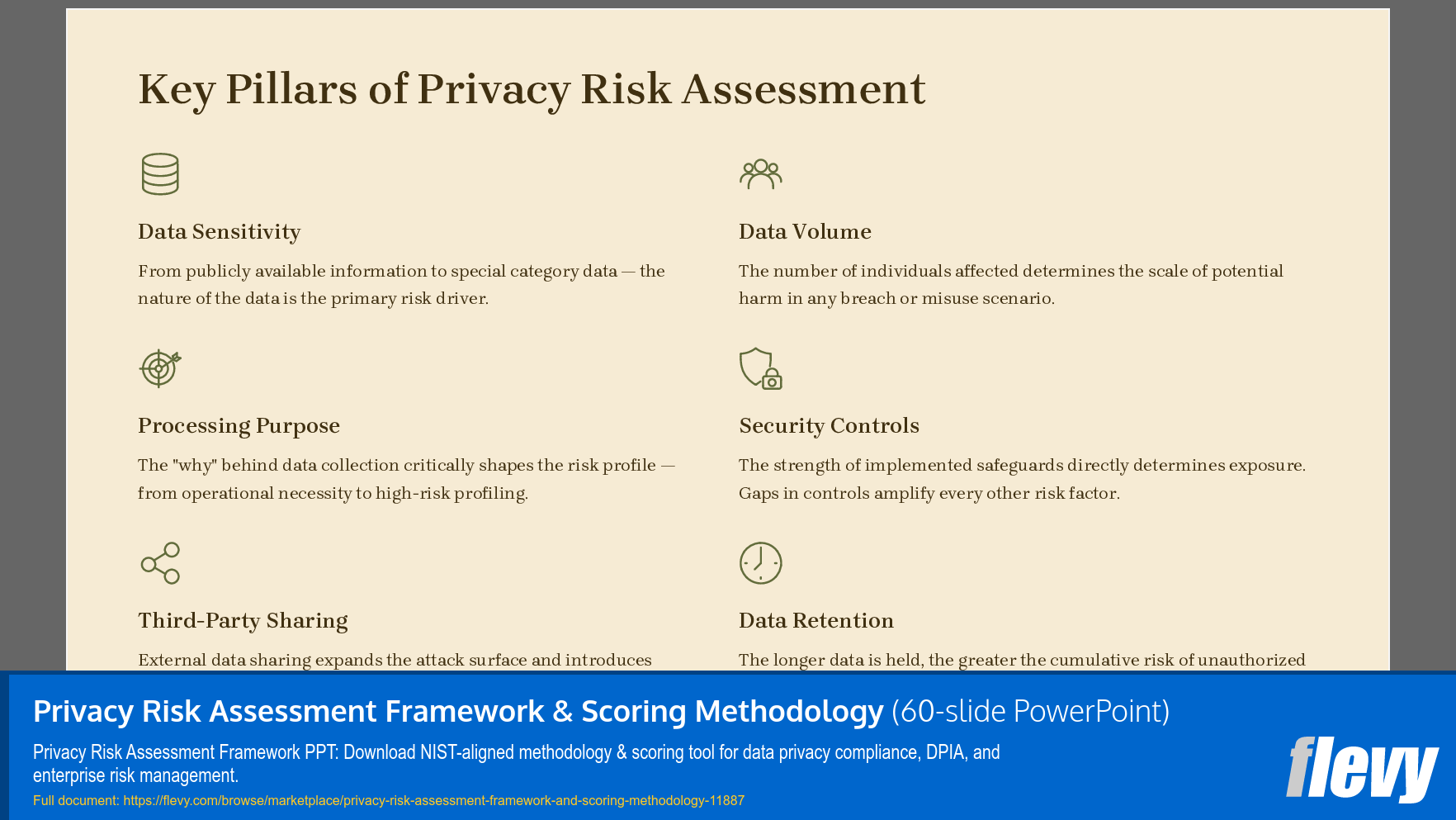
Key Pillars of Privacy Risk Assessment
• Data Sensitivity: From public to special category data.
• Data Volume: The number of individuals affected.
• Processing Purpose: The "why" behind data collection and use.
• Security Controls: The safeguards in place.
• Third-Party Data Sharing: Who else has access?
• Data Retention Period: How long is data kept?
Data Sensitivity: A Spectrum of Risk
• Public/Non-personal: Lowest risk.
• General Personal Data: Name, email, etc. Moderate risk.
• Sensitive Personal Data: Health, finance, location. High risk.
• Special Category Data: Biometrics, race, religion, sexual orientation. Highest risk.
[image] A color gradient from green (low risk) to red (high risk) with labels for each data sensitivity level.
Data Volume: The Power of Scale
• Logarithmic scale accounts for exponential growth in data subjects.
• Even "general" data becomes high risk when affecting millions.
• Example: 100 million individuals' general data processed.
Processing Purpose: Intent Matters
• Internal Operations/Service Delivery: Lower risk.
• Marketing/Analytics/Profiling: Moderate to high risk.
• Automated Decision-Making with Significant Effects: High risk.
• Surveillance/Tracking/Law Enforcement: Highest risk.
Security Controls: The First Line of Defense
• Scoring: 0 (none) to 10 (fully implemented).
• Key Controls: Encryption, access control, audit logs, incident response.
• A gap in controls directly increases the risk score.
[image] A shield icon with checkmarks representing implemented security controls.
Third-Party Data Sharing: Expanding the Attack Surface
• No Sharing: Lowest risk.
• Trusted Processors (DPA in place): Moderate risk.
• Multiple Third Parties (some unvetted): High risk.
• Cross-border transfers to non-adequate countries: Highest risk.
Data Retention: The Longer, The Riskier
• Data kept indefinitely poses a greater risk.
• Balancing business needs with minimizing data lifespan.
• Example: 600 months (50 years) retention is a significant factor.
Chapter 4: The Privacy Impact Assessment (PIA) Scoring Methodology
The National Data Protection Authority (NDPA) PIA Score Calculator
• A practical tool for evaluating organizational privacy risk.
• Generates a PIA score from 0-100.
• Aligned with GDPR Article 35 and ICO DPIA guidance.
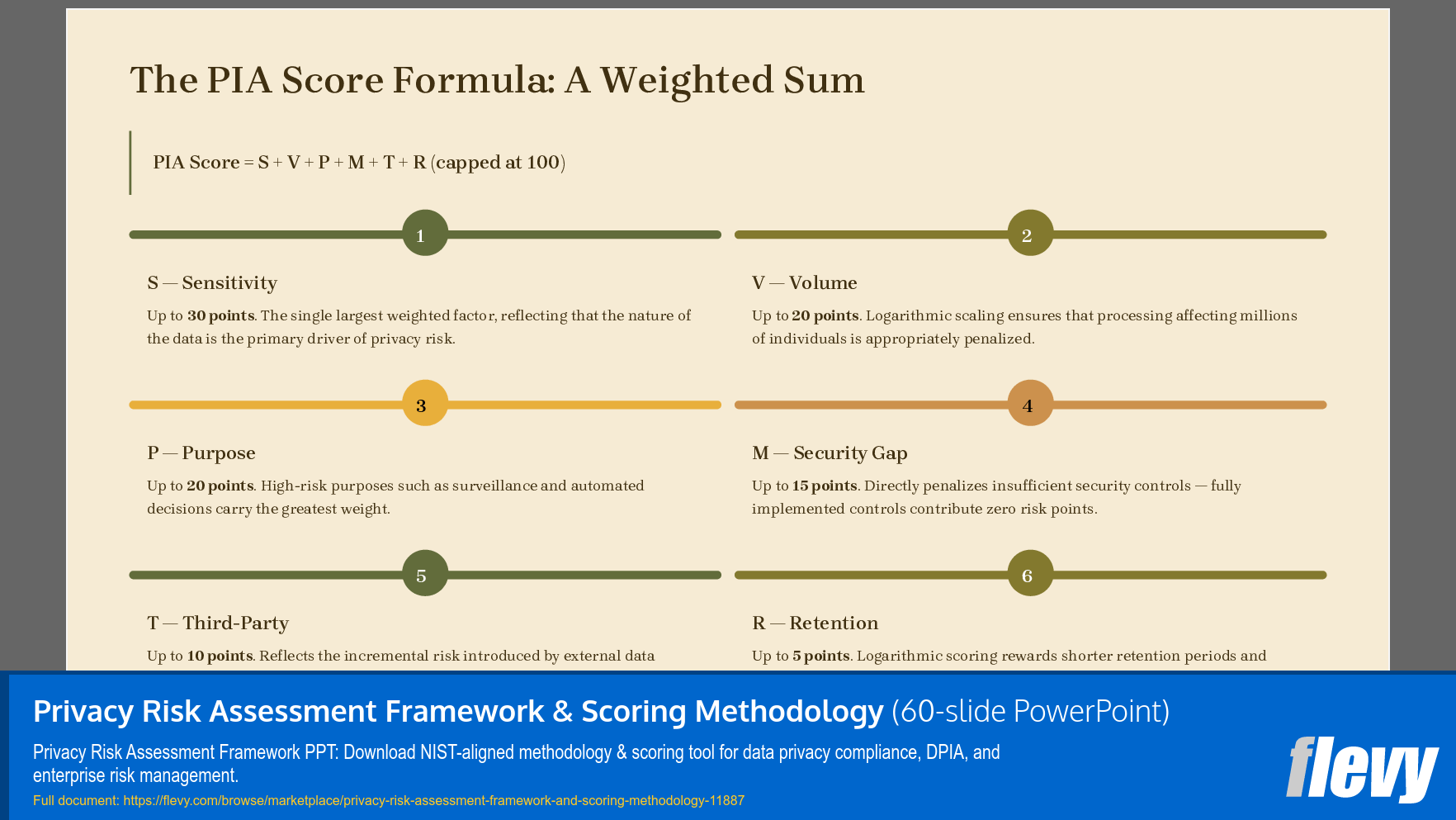
The PIA Score Formula: A Weighted Sum
• PIA Score = S + V + P + M + T + R (capped at 100)
• Each factor contributes to the overall risk score.
Factor S: Sensitivity (0-30 points)
• Formula: ((sensitivity_level – 1) / 3) * 30
• Levels: 1=Public, 2=General PII, 3=Sensitive, 4=Special Category.
• Highest sensitivity level drives the score.
Factor V: Volume (0-20 points)
• Formula: min((log10(individuals) / 8) * 20, 20)
• Logarithmic scale to reflect exponential risk.
• Example: Affecting 100,000,000 individuals maxes out this score.
[image] A graph showing a logarithmic curve representing data volume risk.
Factor P: Purpose Risk (0-20 points)
• Formula: ((purpose_level – 1) / 3) * 20
• Levels: 1=Operations, 2=Marketing, 3=Automated Decisions, 4=Surveillance.
• Higher-risk purposes significantly increase the score.
Factor M: Security Gap (0-15 points)
• Formula: (1 – controls_score / 10) * 15
• Directly penalizes for weak or missing security controls.
• A score of 10 (fully implemented) results in 0 points for this factor.
Factor T: Third-Party Sharing (0-10 points)
• Formula: (sharing_level / 3) * 10
• Levels: 0=None, 1=Trusted, 2=Multiple, 3=Cross-border.
• Reflects the increased complexity and risk of external data handling.
Factor R: Retention (0-5 points)
• Formula: min((log10(months) / log10(600)) * 5, 5)
• Logarithmic scale for data retention period.
• 600 months (50 years) is the maximum considered for scoring.
Chapter 5: Interpreting Your PIA Score and Risk Bands
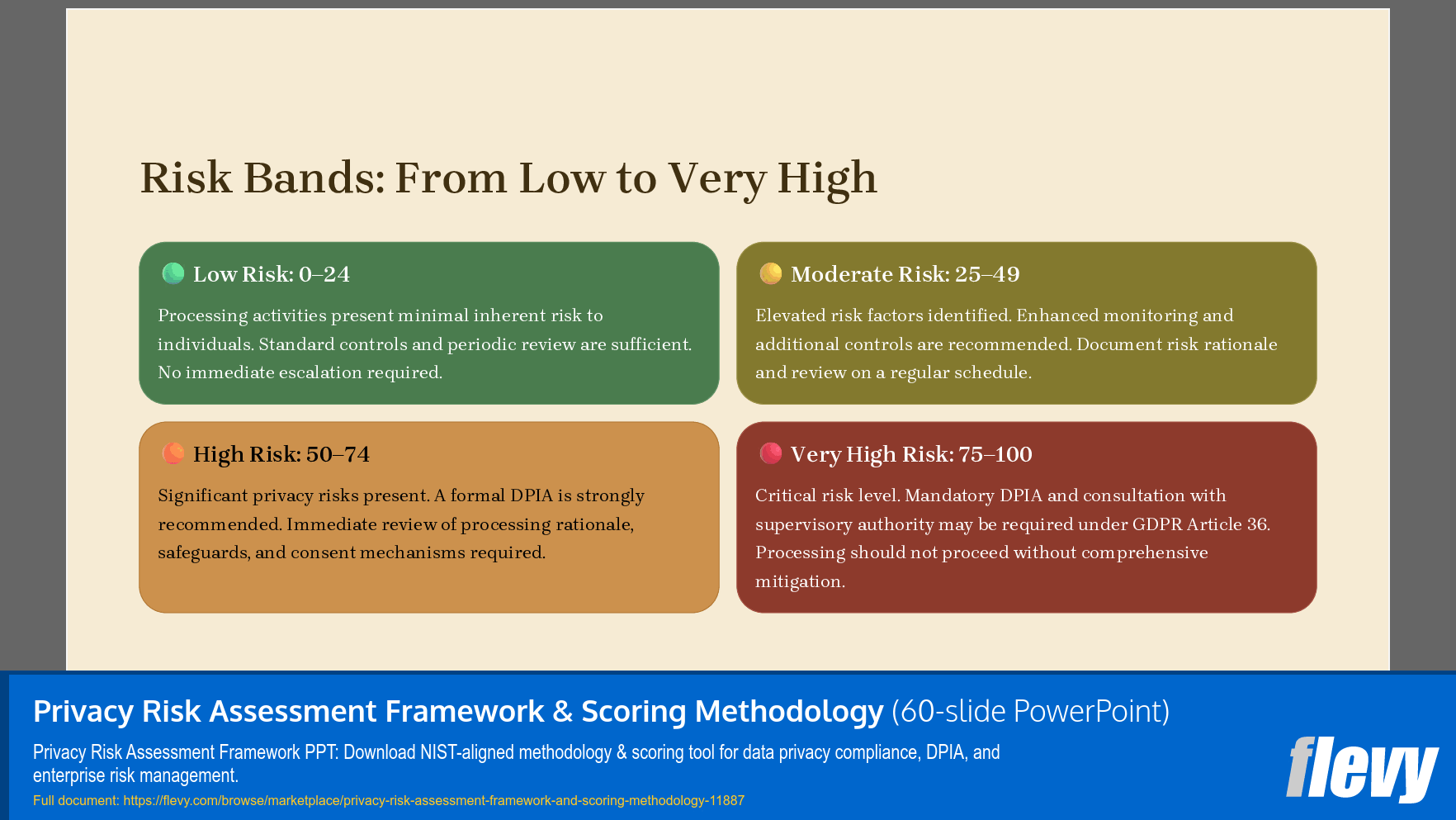
Risk Bands: From Low to Very High
• 0–24: Low Risk
• 25–49: Moderate Risk
• 50–74: High Risk
• 75–100: Very High Risk
[image] A gauge or speedometer showing the four risk bands.
When Risk Triggers a Formal DPIA
• A score ≥ 50 (High Risk) strongly recommends a formal DPIA.
• Aligns with GDPR Article 35(1) and supervisory authority guidelines.
• This calculator provides a screening-level estimate.
The Limitations of Automated Scoring
• Does not replace a full DPIA conducted by qualified privacy professionals.
• A screening tool to identify areas needing deeper investigation.
Chapter 6: Implementing a Privacy Risk Assessment Process
Secure Privacy's Risk Module: A Structured Approach
• Identifies, scores, and mitigates data processing risks.
• Built-in DPIA workflow support.
• Process integration and exportable, audit-ready reports.
Key Capabilities of a Risk Module
• Identify and document risks associated with specific data processing activities.
• Score risks using a standardized likelihood-impact matrix.
• Define and track mitigation measures with deadlines and owners.
[image] A screenshot or diagram of a risk register interface.
The Risk Assessment Workflow: Step-by-Step
1. Navigate to the Risk Module.
1. Add a New Risk: Name, Description, Type (Security, Compliance, Operational).
1. Define Mitigation Measures: Assign owner and target completion date.
1. Save the Risk Record: Automatic scoring and appearance in the register.
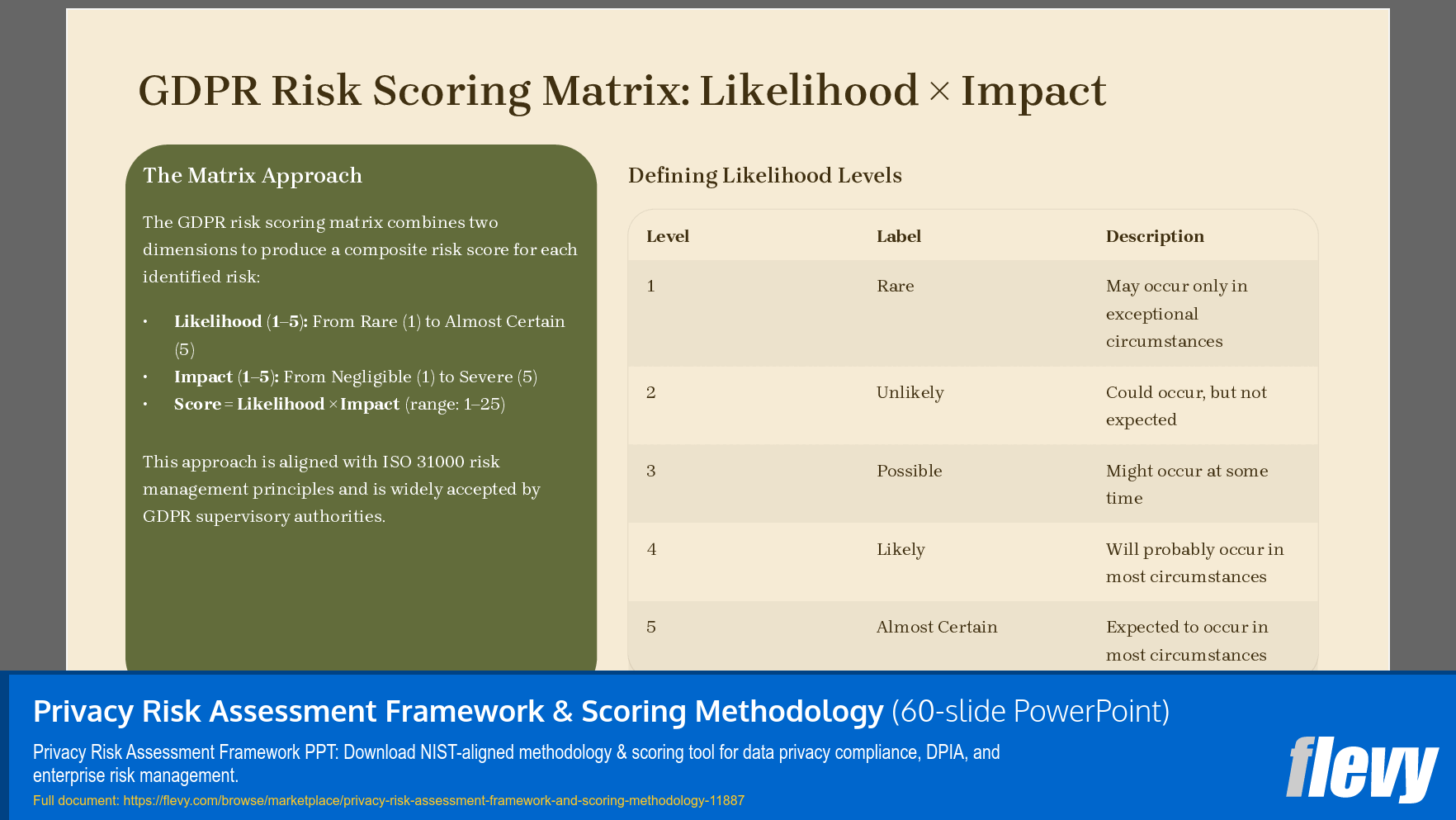
GDPR Risk Scoring Matrix: Likelihood x Impact
• Likelihood (1-5): Rare to Almost Certain.
• Impact (1-5): Negligible to Severe.
• Score: Likelihood x Impact.
Risk Score Thresholds and Required Actions
• 1–6 (Low): Monitor and review periodically.
• 7–12 (Medium): Implement additional controls.
• 13–19 (High): Trigger DPIA workflow, implement significant controls.
• 20–25 (Very High): Mandatory DPIA, immediate mitigation required.
[image] A 5x5 matrix illustrating the Likelihood x Impact scoring.
Chapter 7: Beyond Scoring: Mitigation and Continuous Improvement
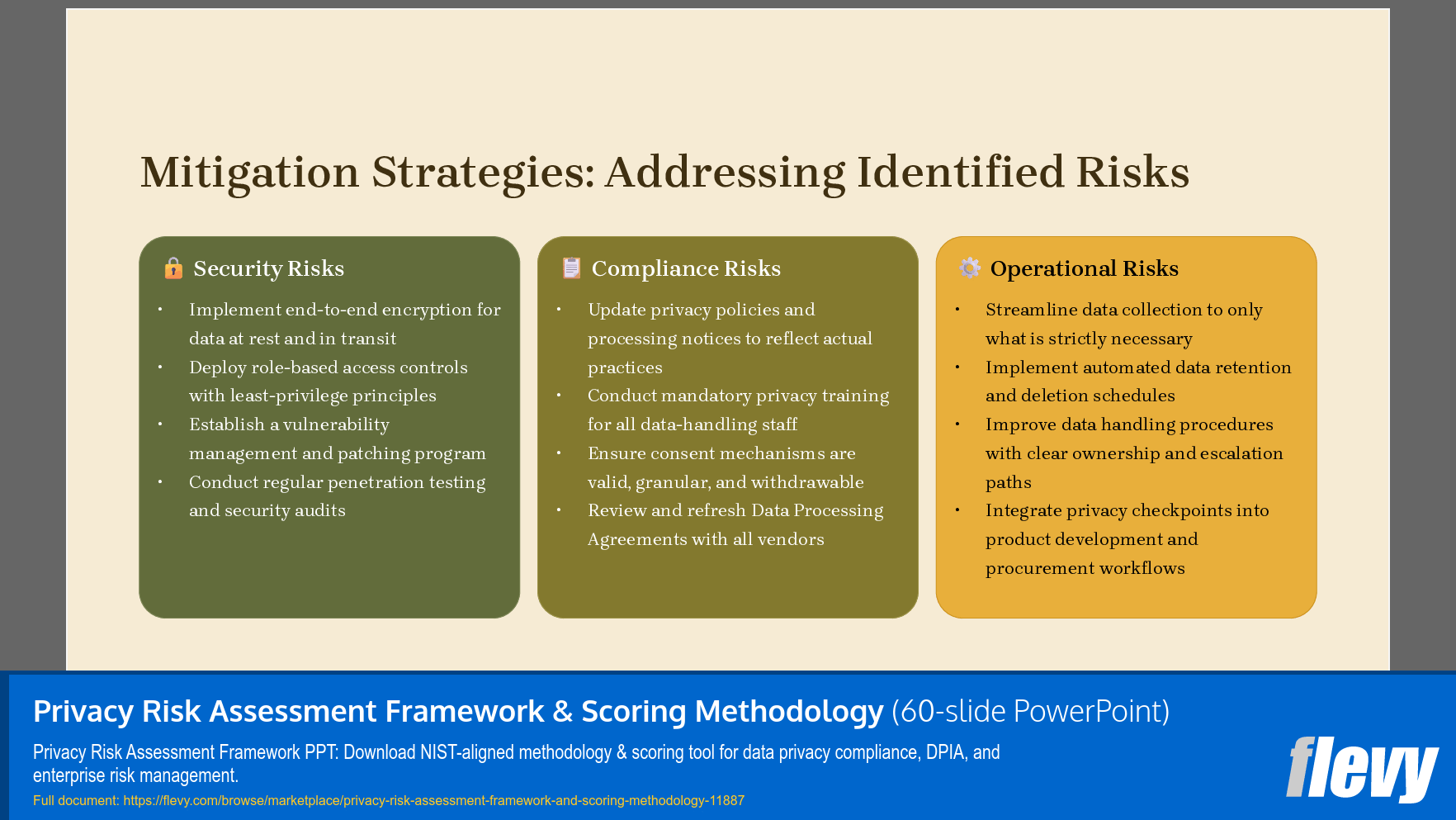
Mitigation Strategies: Addressing Identified Risks
• Security Risks: Implement encryption, access controls, vulnerability management.
• Compliance Risks: Update policies, conduct training, ensure consent mechanisms.
• Operational Risks: Streamline processes, improve data handling procedures.
Tracking and Accountability
• Assign owners to mitigation measures.
• Set clear target completion dates.
• Regular review and reporting on progress.
[image] A project management dashboard showing tasks, deadlines, and owners.
The Role of Privacy Engineering
• Building privacy into products and services from the outset.
• Proactive measures to minimize risks rather than reactive fixes.
• NIST's focus on privacy engineering supports this proactive approach.
Chapter 8: Future-Proofing Your Privacy Program
Adapting to New Technologies
• AI, IoT, and other emerging technologies introduce new privacy challenges.
• The NIST Privacy Framework 1.1 (IPD) aims to realign with current needs.
• Continuous assessment and adaptation are crucial.
[image] Abstract futuristic graphic representing AI and data.
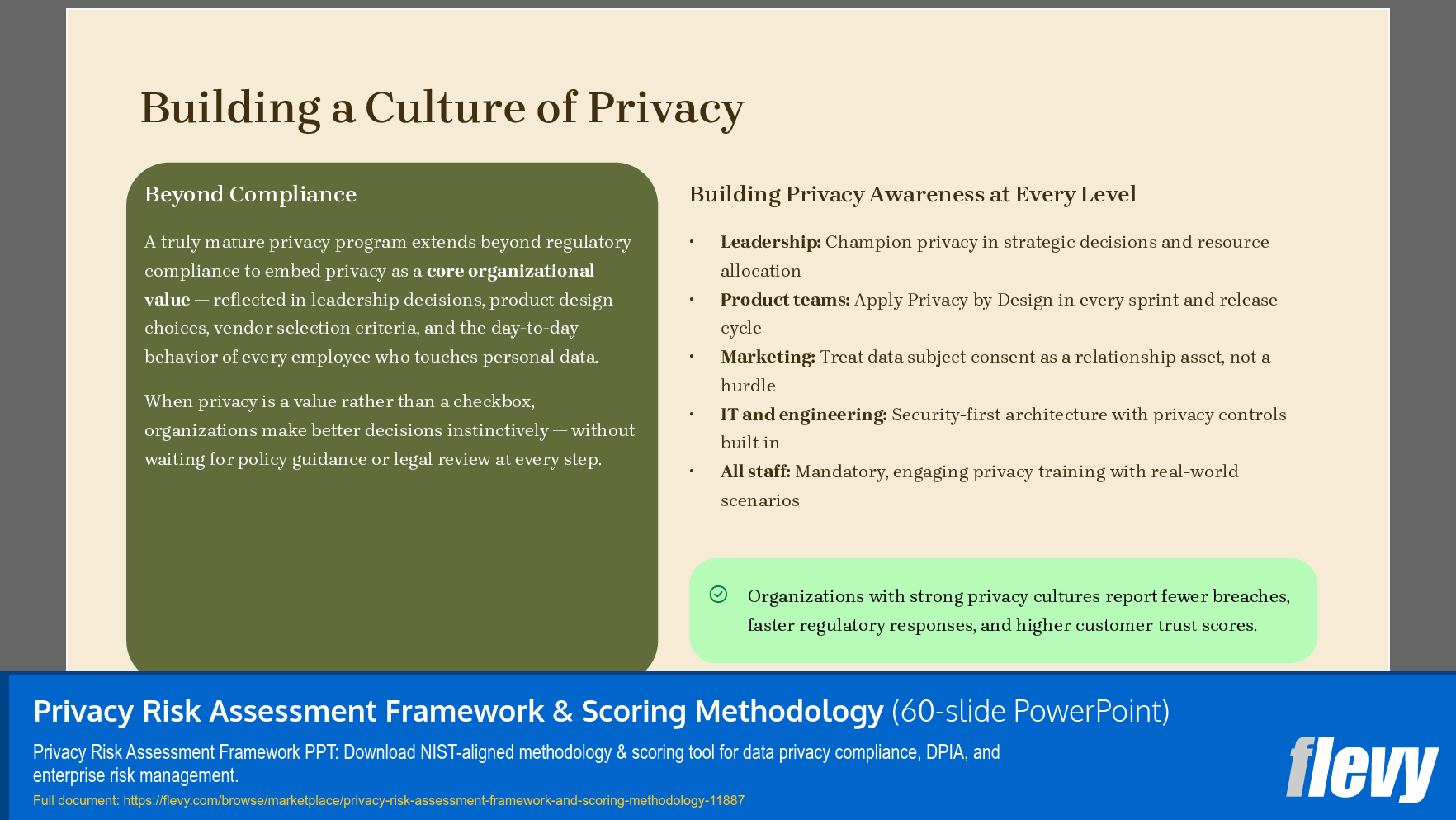
Building a Culture of Privacy
• Beyond compliance: embedding privacy as a core organizational value.
• Empowering employees at all levels to be privacy-aware.
• Fostering trust through transparency and ethical data handling.
Communicating Your Privacy Posture
• Clear and concise reporting for executives, regulators, and customers.
• Audit-ready reports demonstrating due diligence.
• Demonstrating a commitment to protecting individual privacy.
Chapter 9: Conclusion – Towards Proactive Privacy Management
The Journey from Assessment to Action
• Risk assessment is the first step, not the end goal.
• Effective mitigation and continuous improvement are key.
• A robust framework protects individuals and the organization.
[image] A winding path leading towards a secure digital horizon.
Key Takeaways
• Privacy risk is dynamic and requires ongoing management.
• Frameworks like NIST and GDPR provide essential guidance.
• Scoring methodologies offer quantifiable insights.
• Proactive mitigation and a culture of privacy are paramount.
The Ultimate Goal: Trust and Innovation
• Balancing data utilization with robust privacy protection.
• Enabling innovation while safeguarding individual rights.
• Building a sustainable future where data and privacy coexist.
[image] A handshake over a digital interface, symbolizing trust.
Thank You & Q&A
• Questions?
• Contact Information
Got a question about the product? Email us at support@flevy.com or ask the author directly by using the "Ask the Author a Question" form. If you cannot view the preview above this document description, go here to view the large preview instead.
Source: Best Practices in Data Privacy PowerPoint Slides: Privacy Risk Assessment Framework & Scoring Methodology PowerPoint (PPTX) Presentation Slide Deck, Mohamed Alshamey
ABOUT THE AUTHOR

Senior Consultant in Cybersecurity GRC, Data Governance, Cybersecurity, Privacy, and Data Management, with over 20 years of experience in information technology, consulting, training, and technical capacity building. holds a PhD. In AI & Data Privacy, he has a master's degree in cybersecurity and is currently pursuing research focused on data privacy. possesses extensive expertise in ... [read more]
Ask the Author a Question
You must be logged in to contact the author.




























