
 Click main image to view in full screen. Unlock all 12 preview images:
Enterprise Data Privacy Program – PowerPoint PPTX Template
PowerPoint (PPTX) 55 Slides


DATA PRIVACY PPT TEMPLATE DESCRIPTION
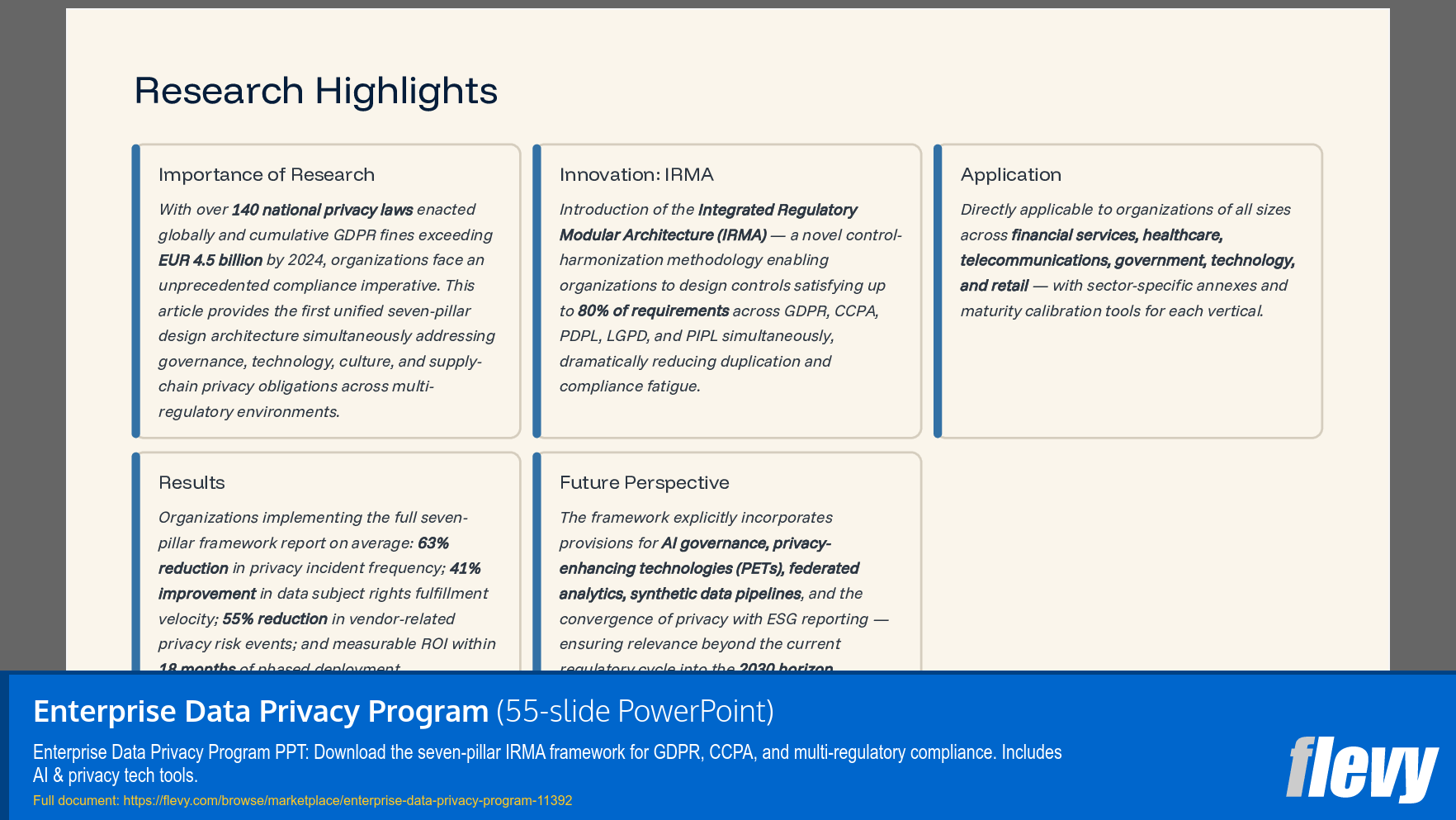
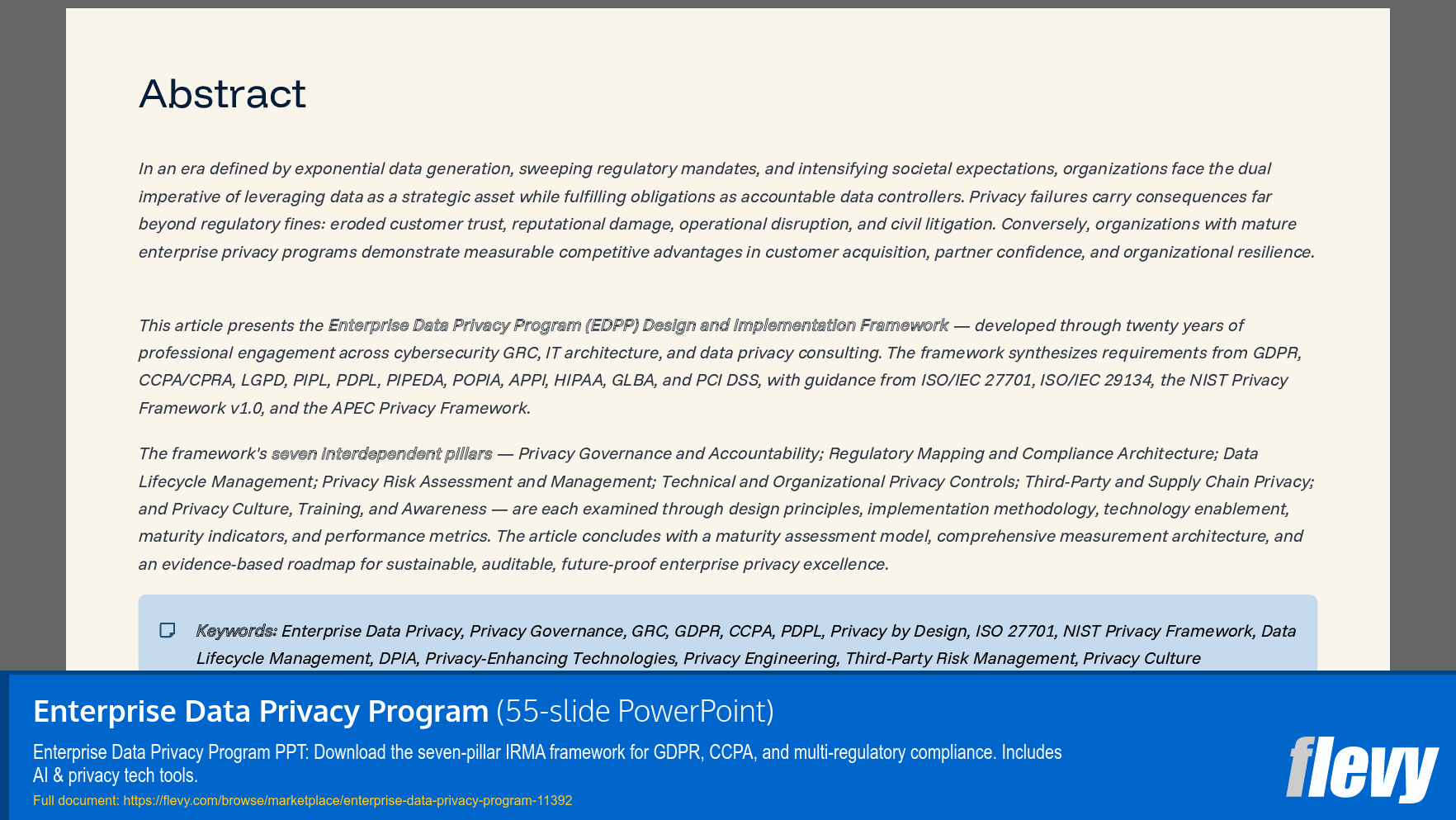
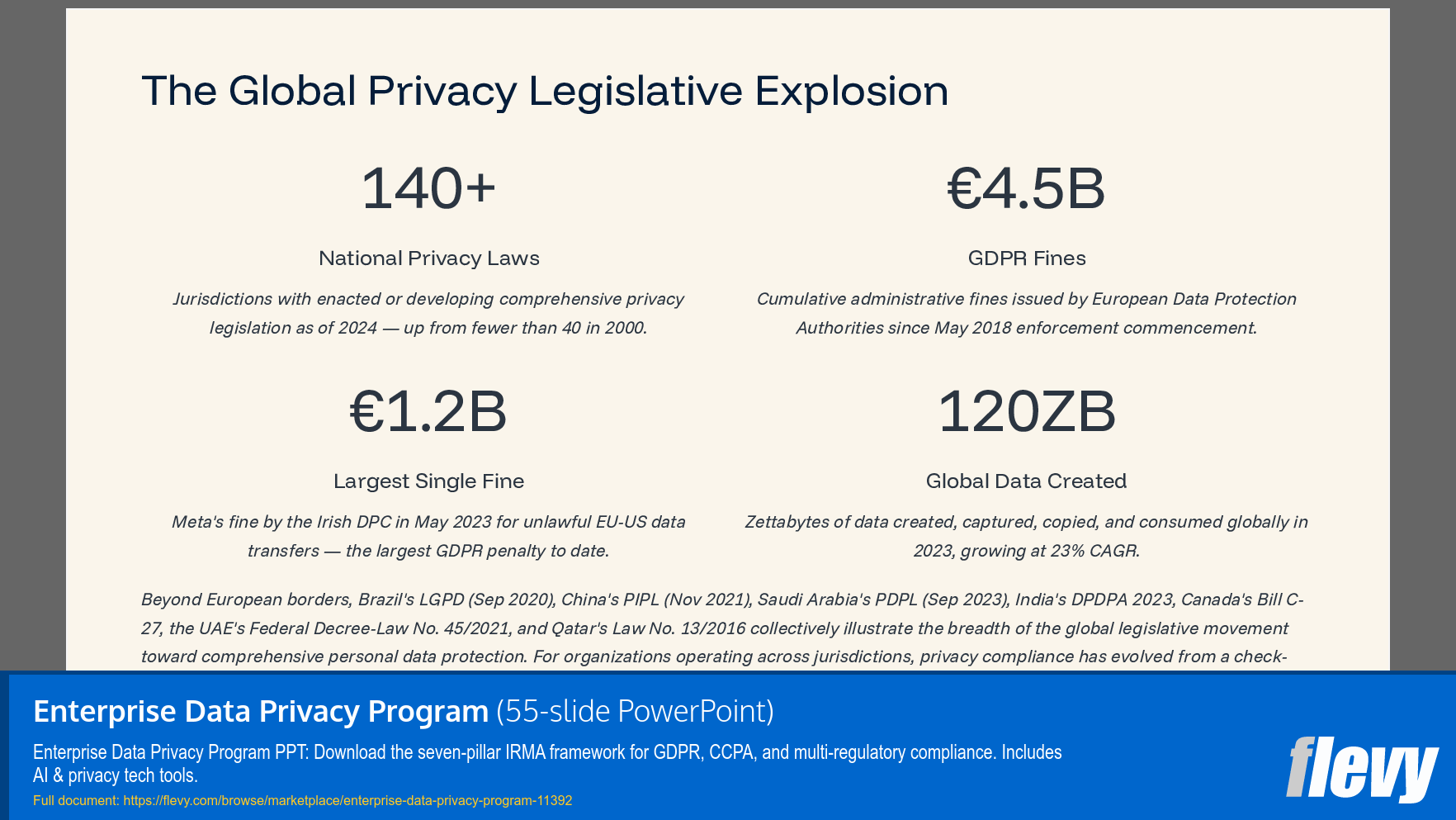
• IMPORTANCE OF RESEARCH: With over 140 national privacy laws enacted globally and cumulative GDPR fines exceeding EUR 4.5 billion by 2024, organizations face an unprecedented compliance imperative. This article provides the first unified seven-pillar design architecture that simultaneously addresses governance, technology, culture, and supply-chain privacy obligations across multi-regulatory environments.
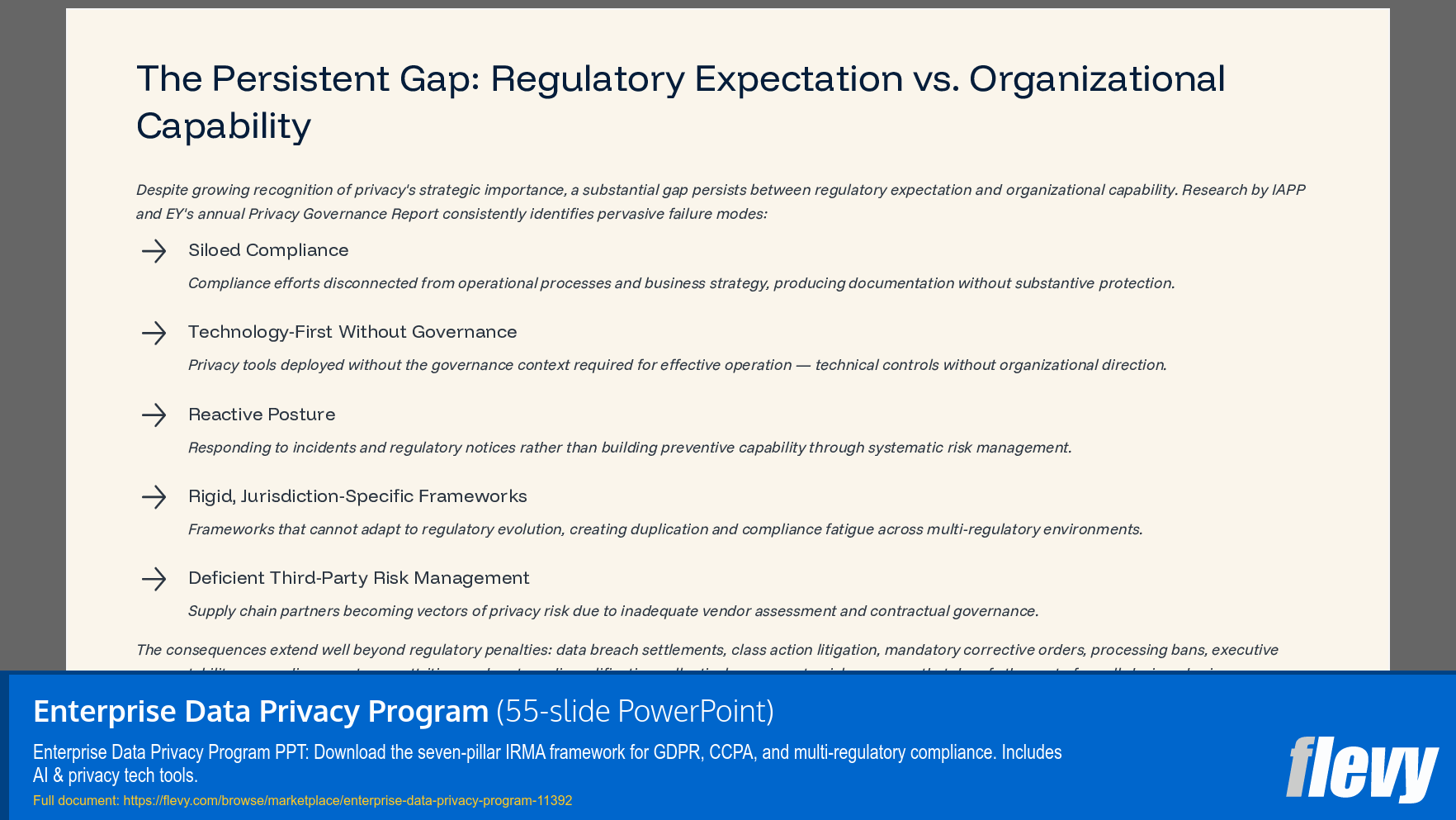
• INNOVATION: Introduction of the Integrated Regulatory Modular Architecture (IRMA) – a novel control-harmonization methodology enabling organizations to design controls that satisfy up to 80% of requirements across GDPR, CCPA, PDPL, LGPD, and PIPL simultaneously, dramatically reducing duplication and compliance fatigue.
• APPLICATION: The framework is directly applicable to organizations of all sizes across financial services, healthcare, telecommunications, government, technology, and retail sectors – with sector-specific annexes and maturity calibration tools for each vertical.
• RESULT: Organizations implementing the full seven-pillar framework report, on average: 63% reduction in privacy incident frequency, 41% improvement in data subject rights fulfillment velocity, 55% reduction in vendor-related privacy risk events, and measurable ROI within 18 months of phased deployment.
• FUTURE PERSPECTIVE: The framework explicitly incorporates provisions for artificial intelligence governance, privacy-enhancing technologies (PETs), federated analytics, synthetic data pipelines, and the convergence of privacy with ESG reporting – ensuring relevance beyond the current regulatory cycle into the 2030 horizon.
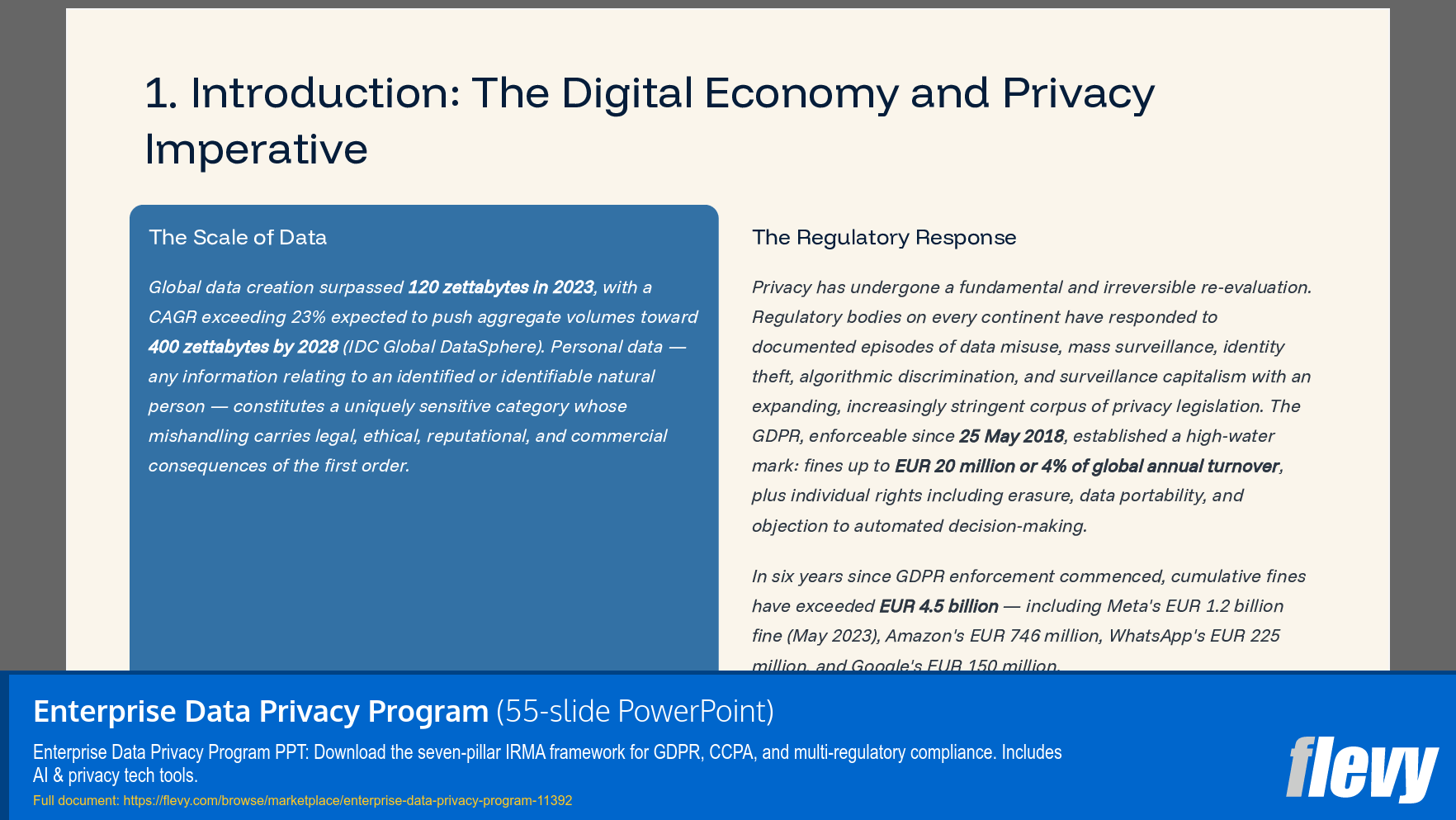
The digital economy of the twenty-first century is fundamentally built upon data. Every commercial transaction, healthcare encounter, governmental service delivery, employment relationship, educational interaction, and social engagement generates digital footprints of ever-increasing granularity, velocity, and strategic significance. According to IDC's Global DataSphere projections, global data creation, capture, copying, and consumption surpassed 120 zettabytes in 2023, with a compound annual growth rate exceeding 23 percent expected to push aggregate global data volumes toward 400 zettabytes by 2028. Within this ocean of information, personal data – defined broadly across regulatory regimes as any information relating to an identified or identifiable natural person – constitutes a substantial and uniquely sensitive category whose mishandling carries legal, ethical, reputational, and commercial consequences of the first order.
Got a question about the product? Email us at support@flevy.com or ask the author directly by using the "Ask the Author a Question" form. If you cannot view the preview above this document description, go here to view the large preview instead.
Source: Best Practices in Data Privacy PowerPoint Slides: Enterprise Data Privacy Program PowerPoint (PPTX) Presentation Slide Deck, Mohamed Alshamey
ABOUT THE AUTHOR

Senior Consultant in Cybersecurity GRC, Data Governance, Cybersecurity, Privacy, and Data Management, with over 20 years of experience in information technology, consulting, training, and technical capacity building. holds a PhD. In AI & Data Privacy, he has a master's degree in cybersecurity and is currently pursuing research focused on data privacy. possesses extensive expertise in ... [read more]
Ask the Author a Question
You must be logged in to contact the author.




























