
 Click main image to view in full screen. Unlock all 11 preview images:


VALUATION MODEL EXAMPLE EXCEL DESCRIPTION
This is a detailed and user-friendly financial model with the three financial statements i.e. Income Statement, Balance Sheet, and Cash Flow Statement, and detailed calculation around DCF based valuation and financial analysis.
The model captures 5 years of Historical + 5 Years of forecast period. Valuation is based on the 5-year forecast using Discounted Cash Flow methodology and Comparable Company Analysis (Relative valuation).
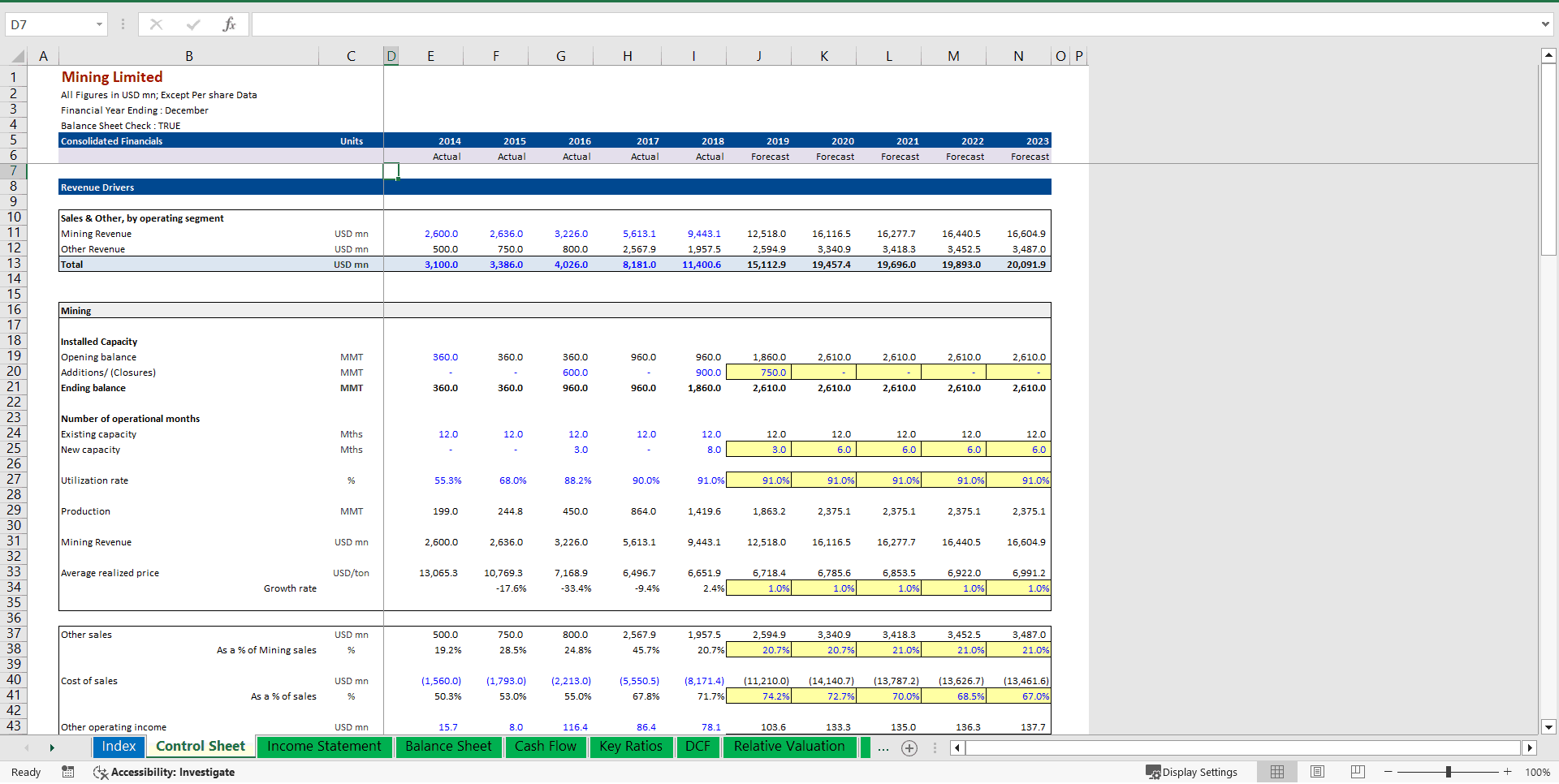
The Control Sheet tab allows for the inputting of various financial data for your business. These inputs cover a wide range of financial data:
1. Revenue Assumption (Capacity, Production, Sales, Unit Price)
2. Costs Assumptions (Operating Cost, Distribution & more)
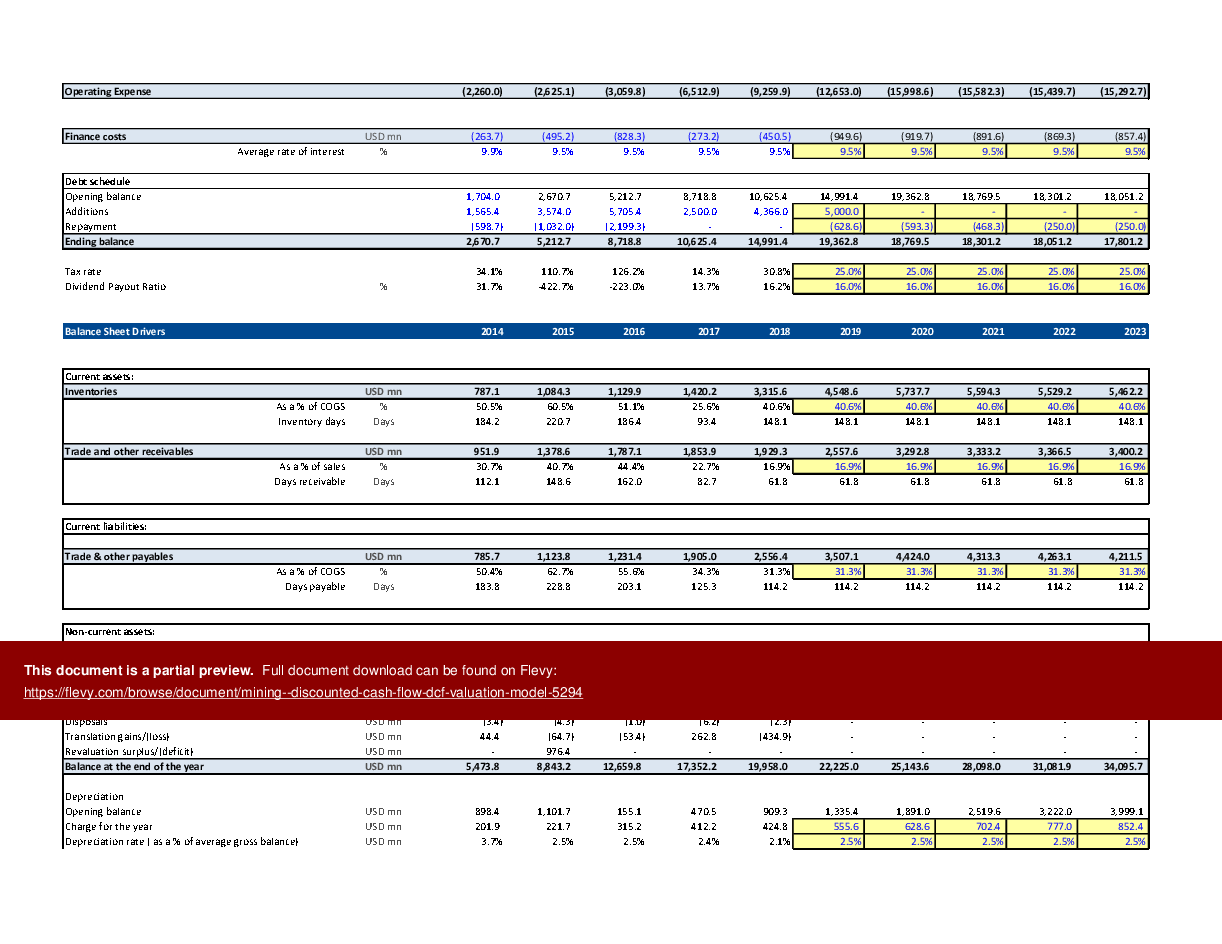
3. Working Capital Assumptions (Receivables, Payable, Inventory)
5. Capital Expenditure and Depreciation/Amortization (Tangle and In Tangible Assets)
6. Debt Addition and Repayment
7. Dividend Calculation
8. Interest Income and Expense calculations
The model runs comprehensive calculations based on the inputs provided by the user generate very accurate outputs which include:
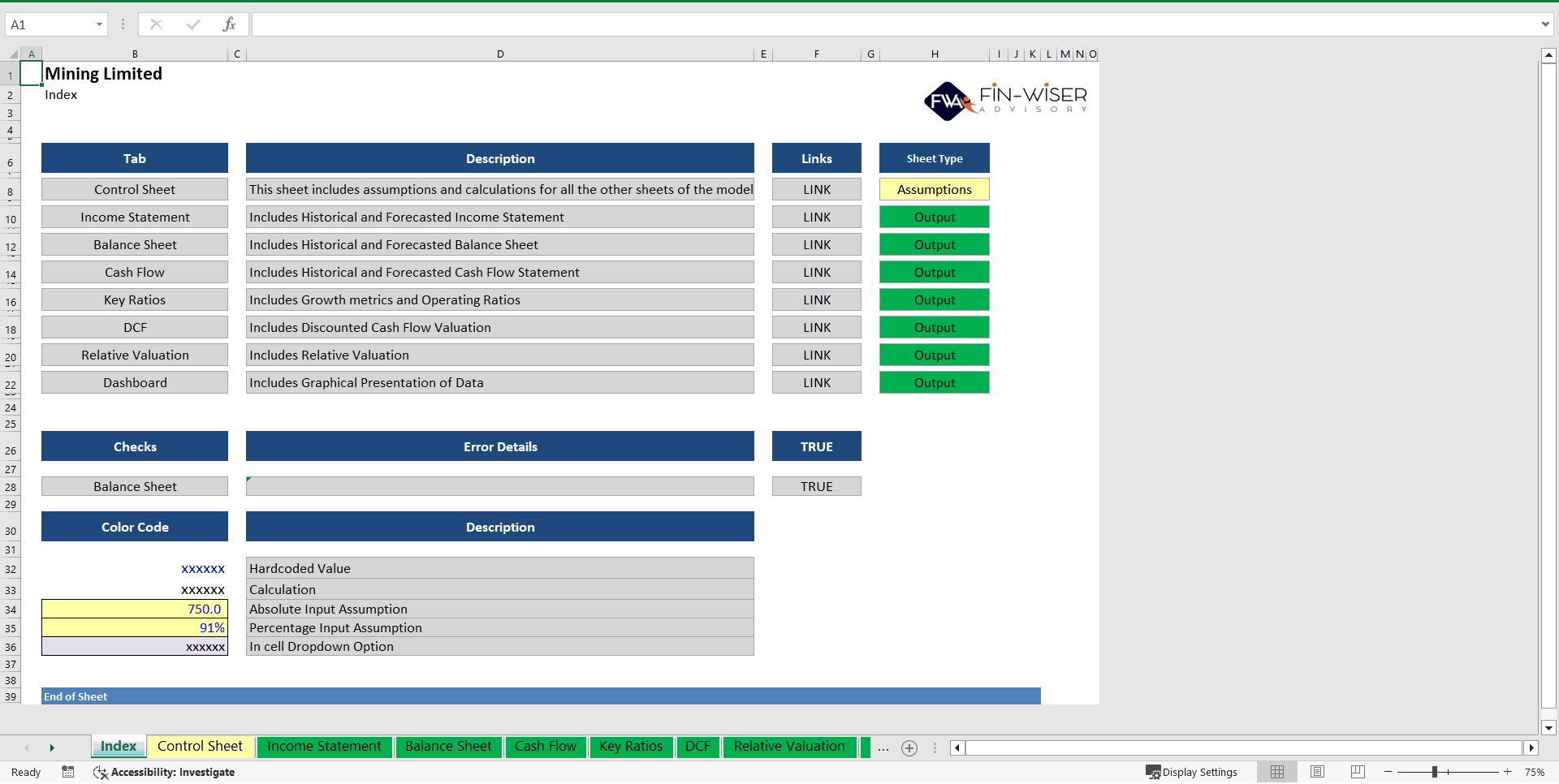
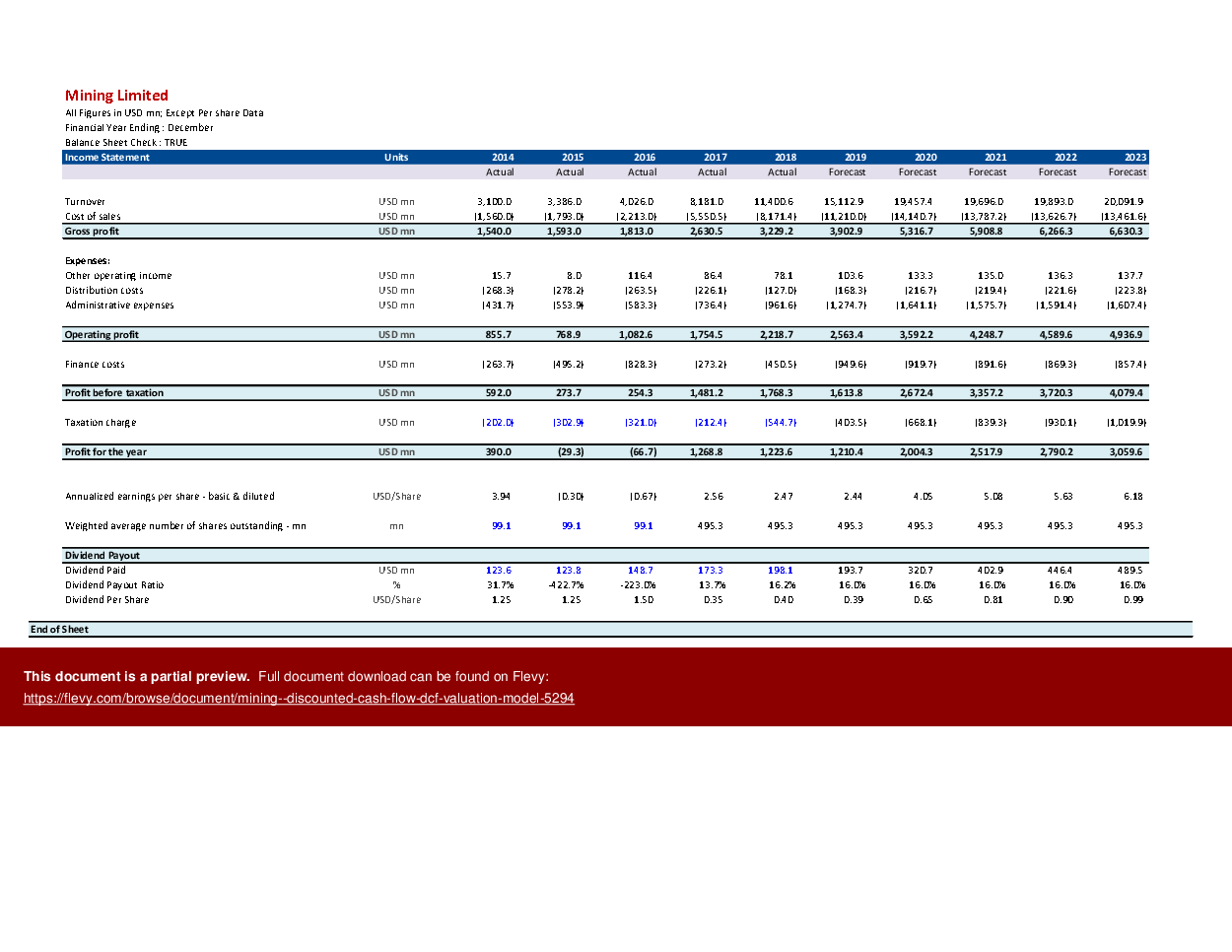
1. Income Statement: Includes Historical and Forecasted Profit and Loss statement
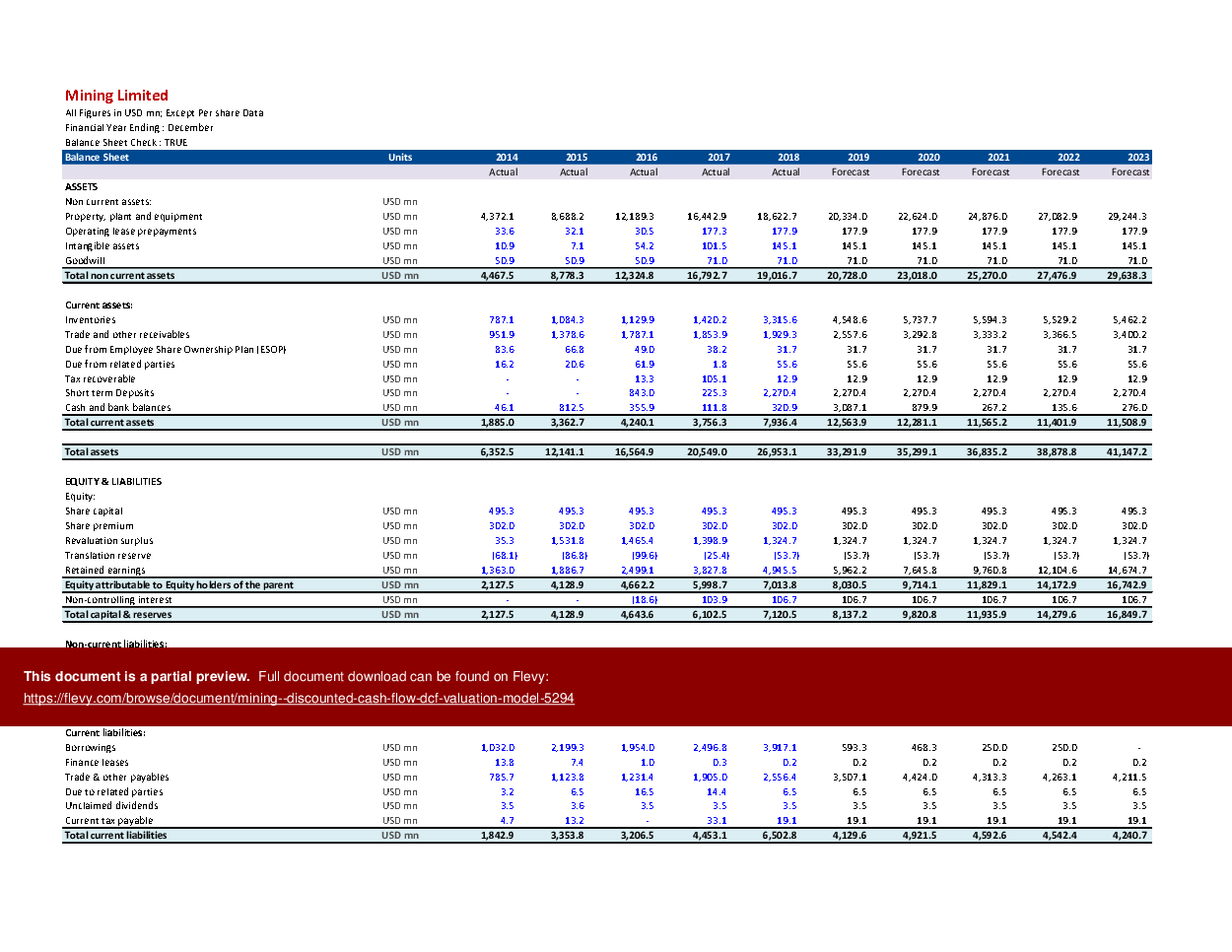
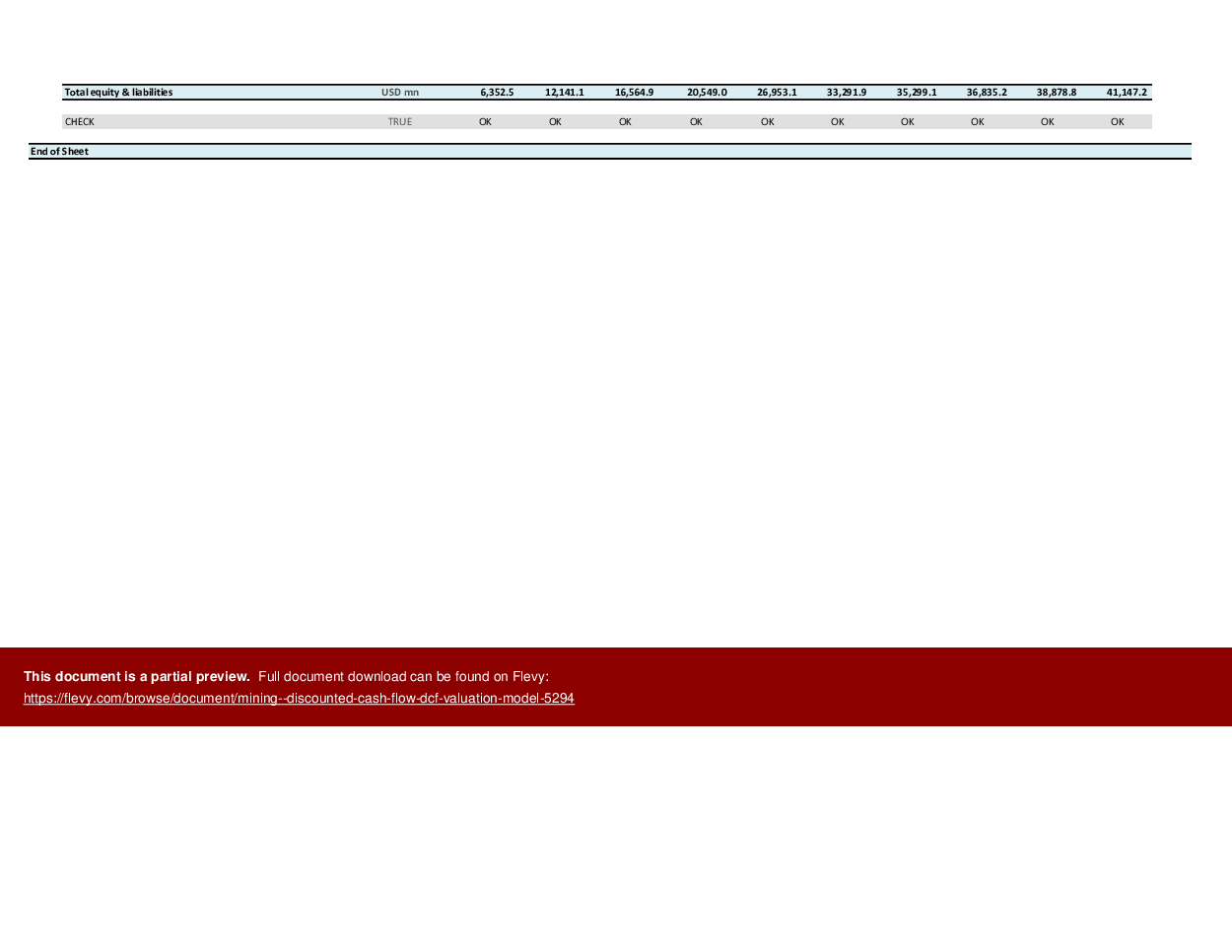
2. Balance Sheet: Includes Historical and Forecasted Balance sheet
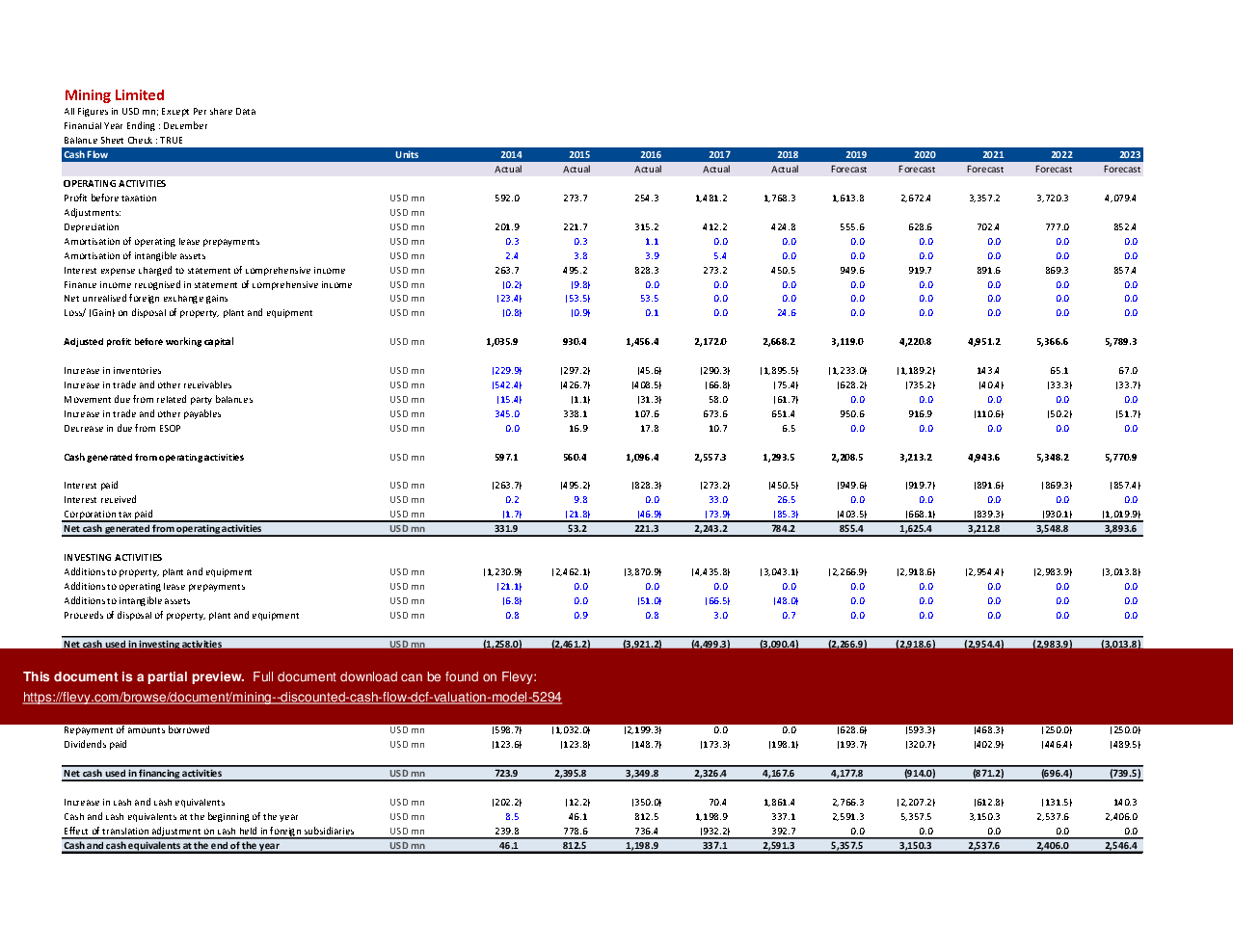
3. Cash Flow Statement: Includes Historical and Forecasted cash flows
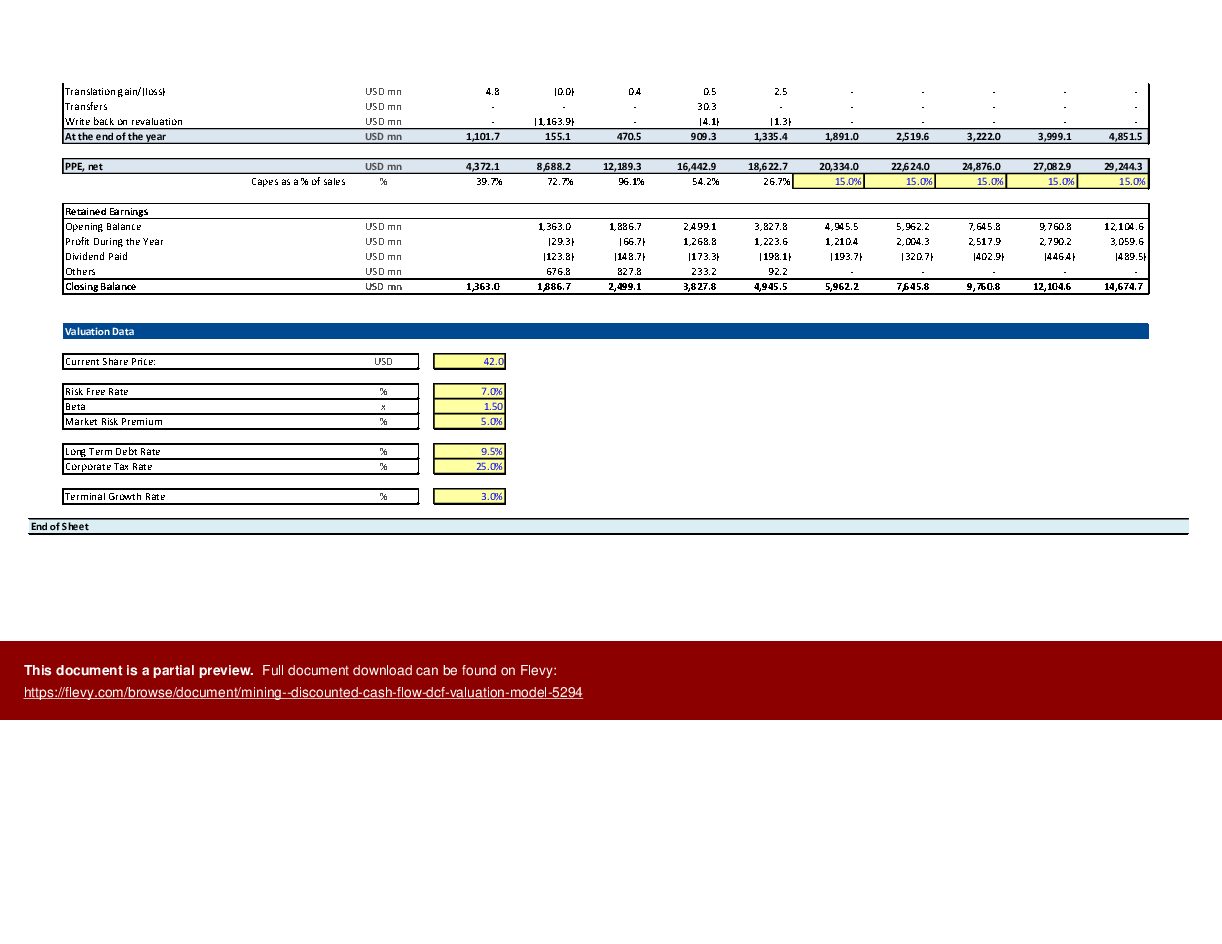
4. Valuation: DCF based valuation based on the Forecasted cash flows and discount rate assumptions
5. Valuation Ratio: A very detailed financial analysis covering:
• Price and EV based valuation ratios
• Per Share Data like EPS, DPS, FCFF per share & more
• Margin ratios
• Return ratios
• Dupont Analysis
• Gearing Ratios
• Liquidity ratios
• Coverage Ratios
• Activity Ratios
• Investment rations
• Enterprise value
This is a very detailed and user-friendly model that can be used by the user to perform cash flow valuation for companies in the mining sector.
Got a question about the product? Email us at support@flevy.com or ask the author directly by using the "Ask the Author a Question" form. If you cannot view the preview above this document description, go here to view the large preview instead.
TOPIC FAQ
What are the core steps in performing a DCF valuation for a mining company?
A mining DCF typically builds historical and forecasted financials, projects operating cash flows from revenue and costs, adjusts for working capital, capex and financing, and discounts forecasted free cash flows using a discount rate. The model here uses a 5-year forecast and discount rate assumptions to compute DCF valuation based on forecasted cash flows.Which financial statements are required to support a cash flow valuation model?
A robust cash flow valuation links the Income Statement, Balance Sheet, and Cash Flow Statement to derive free cash flows and financing movements. The described model provides historical and forecasted versions of all 3 financial statements to support valuation calculations across the forecast horizon.What valuation ratios and analyses are commonly used alongside a DCF for mining firms?
Common complementary analyses include Price- and Enterprise Value-based multiples, per-share measures like EPS/DPS/FCFF per share, margin and return ratios, DuPont Analysis, gearing, liquidity, coverage, activity and investment ratios, and an enterprise value calculation, all of which are presented in the referenced model.How should I choose a mining DCF template when I have limited time to deliver a valuation?
Prefer templates that centralize inputs (revenue drivers, cost assumptions, working capital, capex, debt, dividends, interest) and auto-generate the 3 financial statements plus valuation outputs. Flevy’s Mining - Discounted Cash Flow DCF Valuation Model provides a Control Sheet capturing those input areas to accelerate model population across 8 input categories.What inputs are needed to build a comparable company analysis alongside a DCF?
A comparable analysis requires market multiples and enterprise metrics such as Price and EV-based valuation ratios plus per-share and profitability measures to benchmark peers. Flevy’s Mining - Discounted Cash Flow DCF Valuation Model includes Price and EV based valuation ratios to support relative valuation work.For forecasting a mining project expansion, which driver variables should I model explicitly?
Key drivers include resource capacity, production volumes, sales volumes, unit prices, operating and distribution costs, receivables/payables/inventory assumptions, capital expenditures and depreciation schedules, plus debt additions/repayments and interest flows, all of which are captured on the model’s Control Sheet.How can I assess valuation sensitivity to commodity prices or discount rates using a spreadsheet model?
Vary the revenue assumptions (notably unit price) and the discount rate to observe impacts on forecasted cash flows and DCF value. The model explicitly captures unit price under Revenue Assumption inputs and uses discount rate assumptions for the DCF valuation calculations.What file format and forecasting horizon should I expect from mining DCF templates?
Expect spreadsheet formats (often macro-enabled) and multi-year horizons; this particular product is an XLSM file that captures 5 years of historical data plus a 5-year forecast and performs valuation based on the 5-year forecast.Source: Best Practices in Valuation Model Example, Mining Industry Excel: Mining - Discounted Cash Flow DCF Valuation Model Excel (XLSM) Spreadsheet, Fin-Wiser Advisory
ABOUT THE AUTHOR

Fin-wiser is a specialist advisory boutique focused on providing financial modelling, financial analysis, business transformation and business research services.
Our mission is to deliver high-quality Financial Models, Financial Analysis, Operational Transformation and Data Analytics which are custom made as per the business requirements. These solutions can integrate elements of business,
... [read more]
Ask the Author a Question
You must be logged in to contact the author.




























