
 Click main image to view in full screen. Unlock all 12 preview images:
M&A Target Screening Standard Operating Procedure (SOP) – Word DOCX
Word (DOCX) 16 Pages


BENEFITS OF THIS DOWNLOADABLE WORD DOCUMENT
- Provides a structured framework for identifying and prioritizing high-potential M&A acquisition targets.
- Establishes standardized screening, quantitative scoring, outreach, valuation, and Investment Committee approval processes.
- Enables Corporate Development and M&A teams to build a disciplined, data-driven acquisition pipeline from initial market research through due diligence hand-off.
M&A (MERGERS & ACQUISITIONS) WORD DESCRIPTION
Curated by McKinsey-trained Executives
M&A Target Screening & Buy-Side Search Standard Operating Procedure (SOP)
This downloadable Microsoft Word document provides an institutional-grade, end-to-end buy-side M&A target identification, screening, scoring, outreach, valuation, pipeline governance, and Investment Committee approval framework. Built specifically for Corporate Development Leaders, M&A VPs and Associates, Private Equity Deal Teams, Investment Bankers, Business Development Executives, and Legal & Compliance professionals, it establishes a controlled methodology for transforming an acquisition thesis into a qualified target universe, prioritized outreach pipeline, preliminary valuation case, and IC-ready transaction opportunity.
Section 1 – SOP Governance, Objectives & RACI Framework
• Enterprise-wide Buy-Side M&A Governance Architecture designed to standardize target identification, screening, prioritization, outreach, evaluation, and transaction hand-off.
• Comprehensive applicability across platform acquisitions, strategic bolt-ons, add-ons, geographic expansion, technology acqui-hires, vertical integration opportunities, and corporate carve-outs.
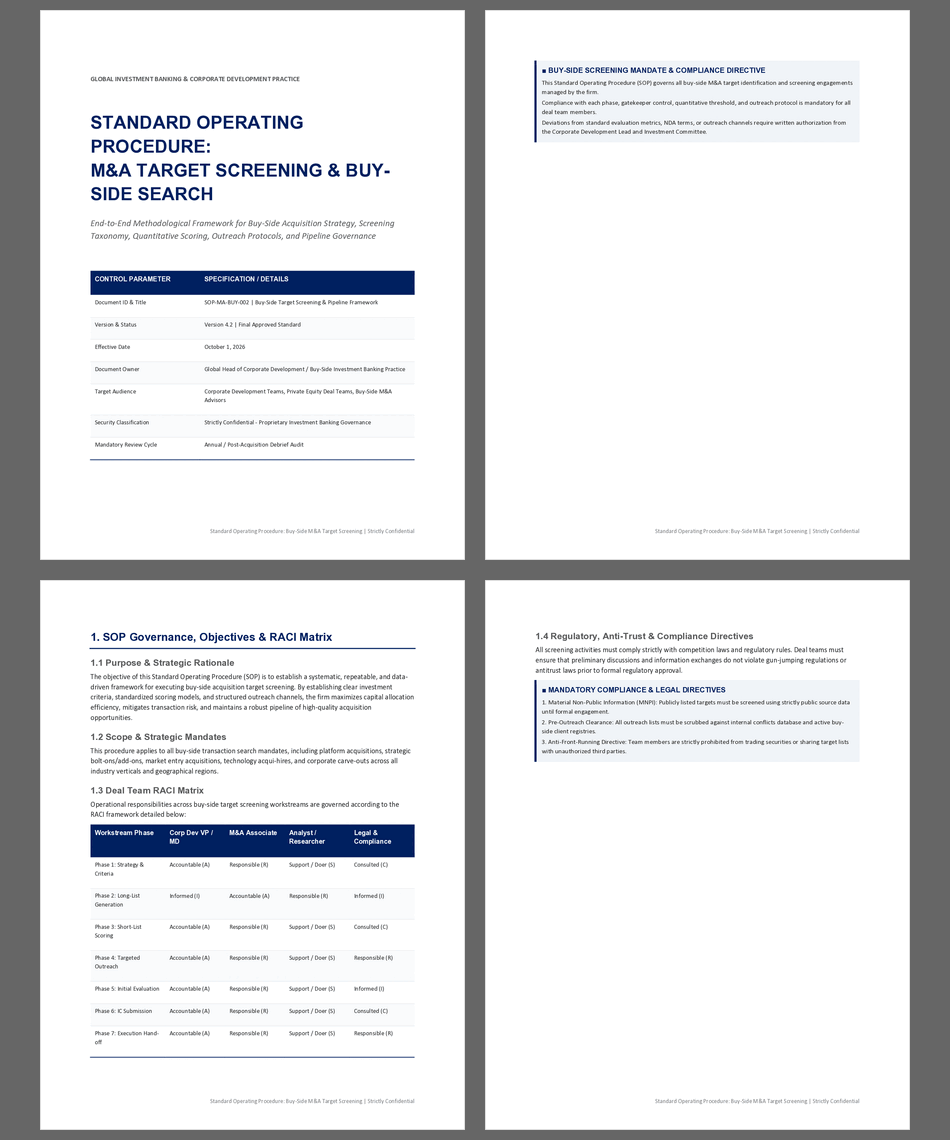
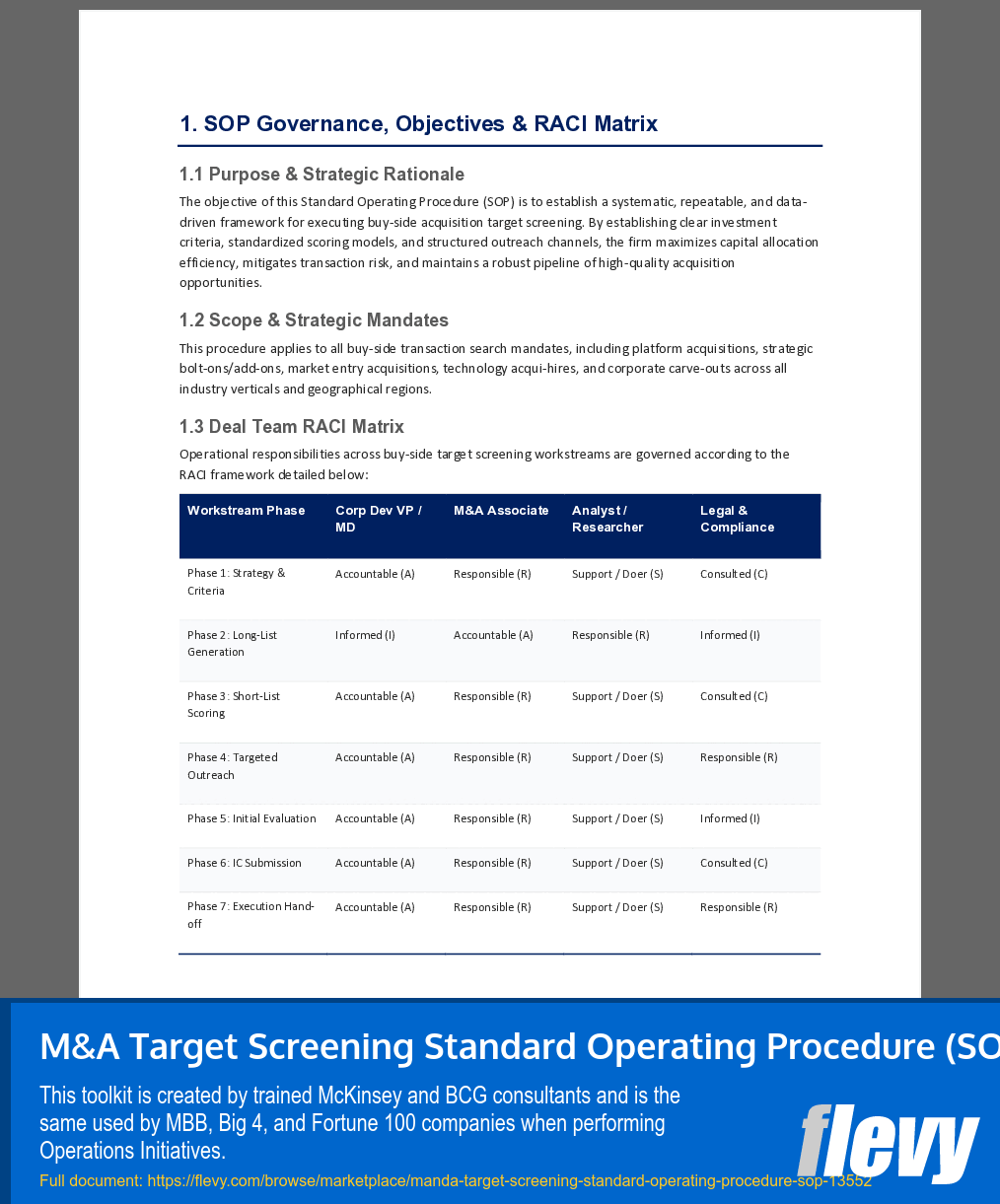
• Detailed Deal Team RACI Matrix assigning accountability across Corporate Development leadership, M&A Associates, Analysts / Researchers, and Legal & Compliance.
• Mandatory governance controls covering screening criteria, scoring methodology, outreach approvals, NDA execution, information exchange, valuation assumptions, and Investment Committee authorization.
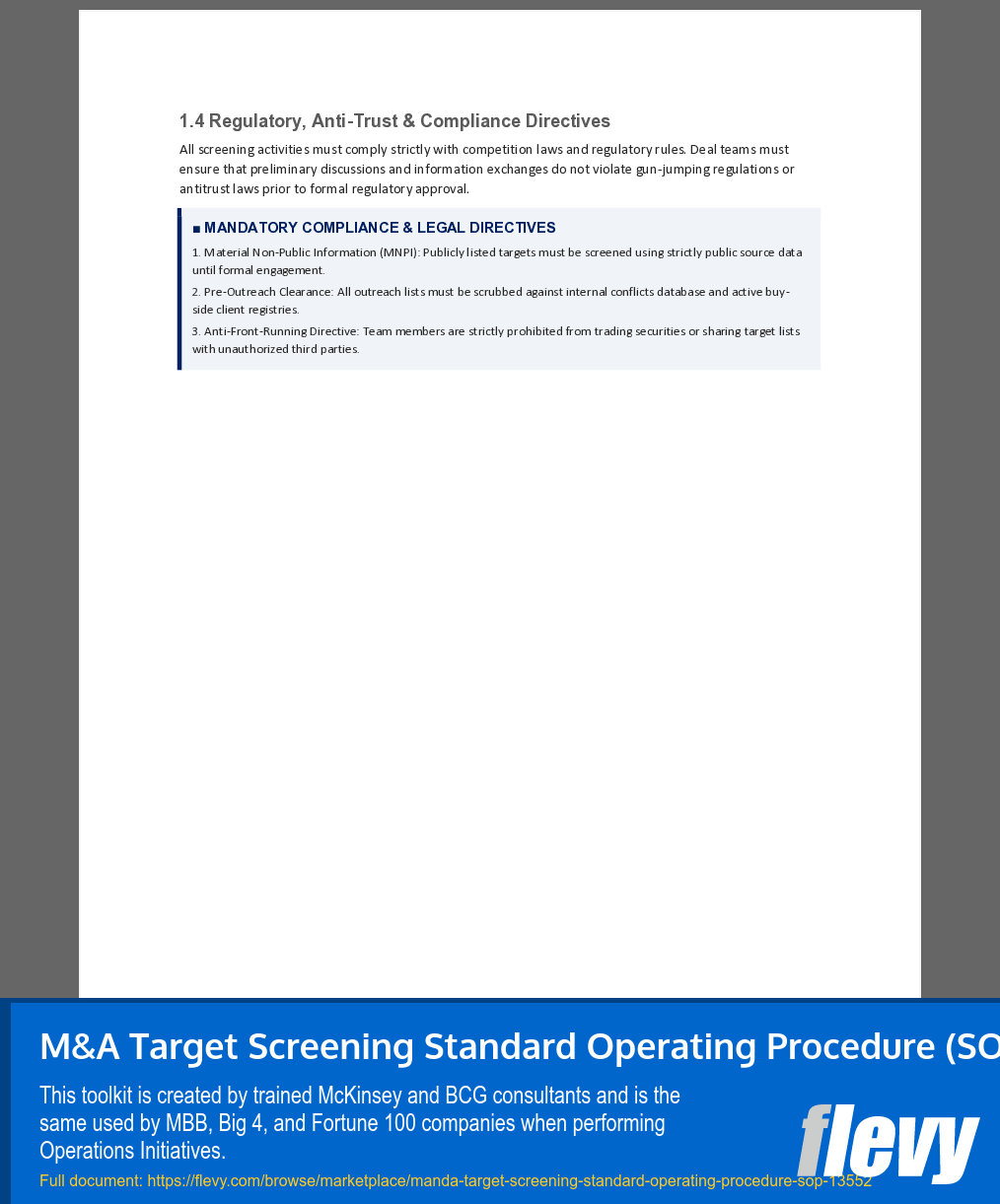
• Regulatory and compliance framework addressing MNPI restrictions, conflicts clearance, anti-front-running requirements, antitrust considerations, and pre-transaction information-sharing controls.
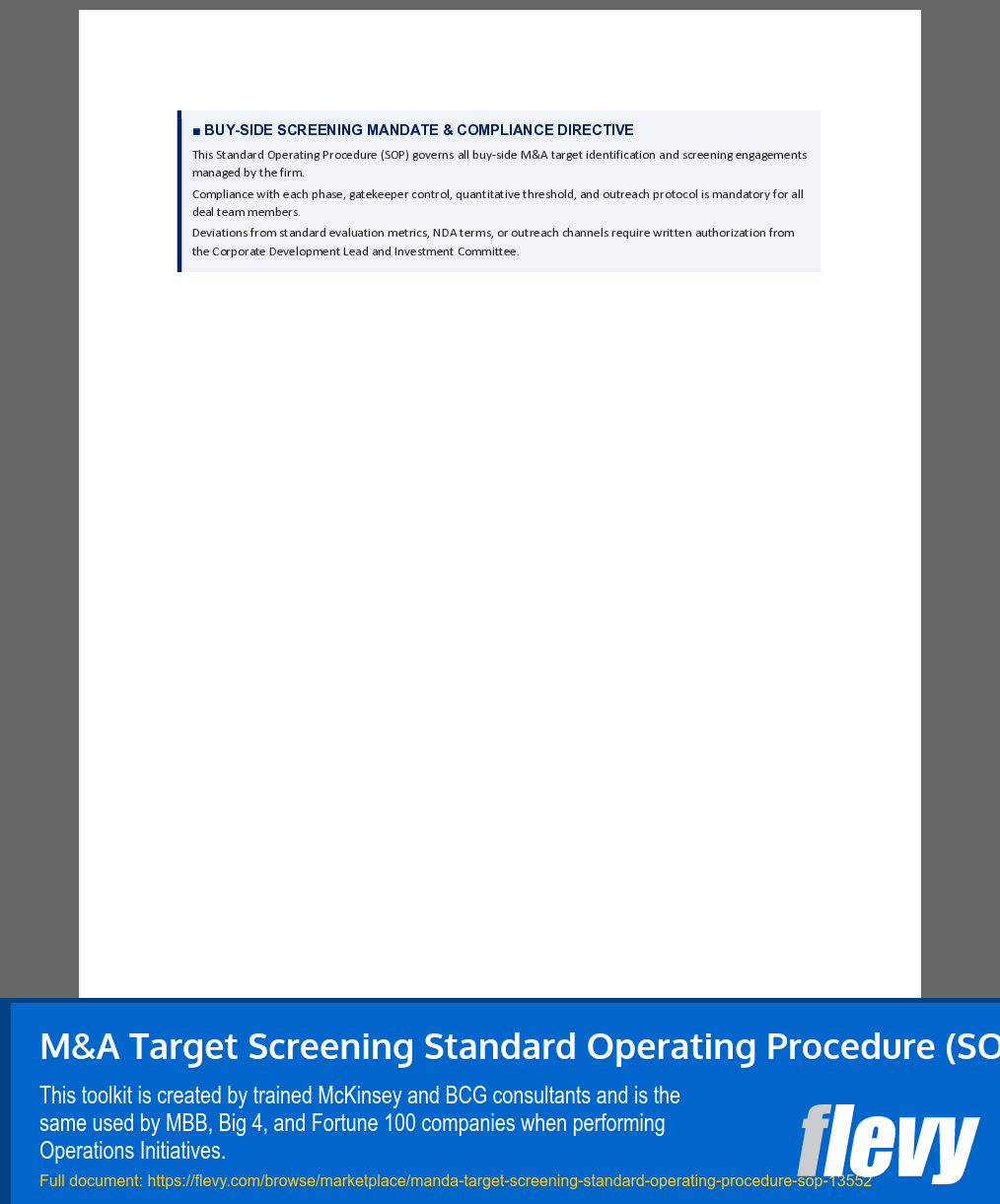
• Formal deviation controls requiring written authorization for departures from approved screening metrics, NDA provisions, or outreach protocols.
Section 2 – Acquisition Strategy, Investment Thesis & Screening Taxonomy
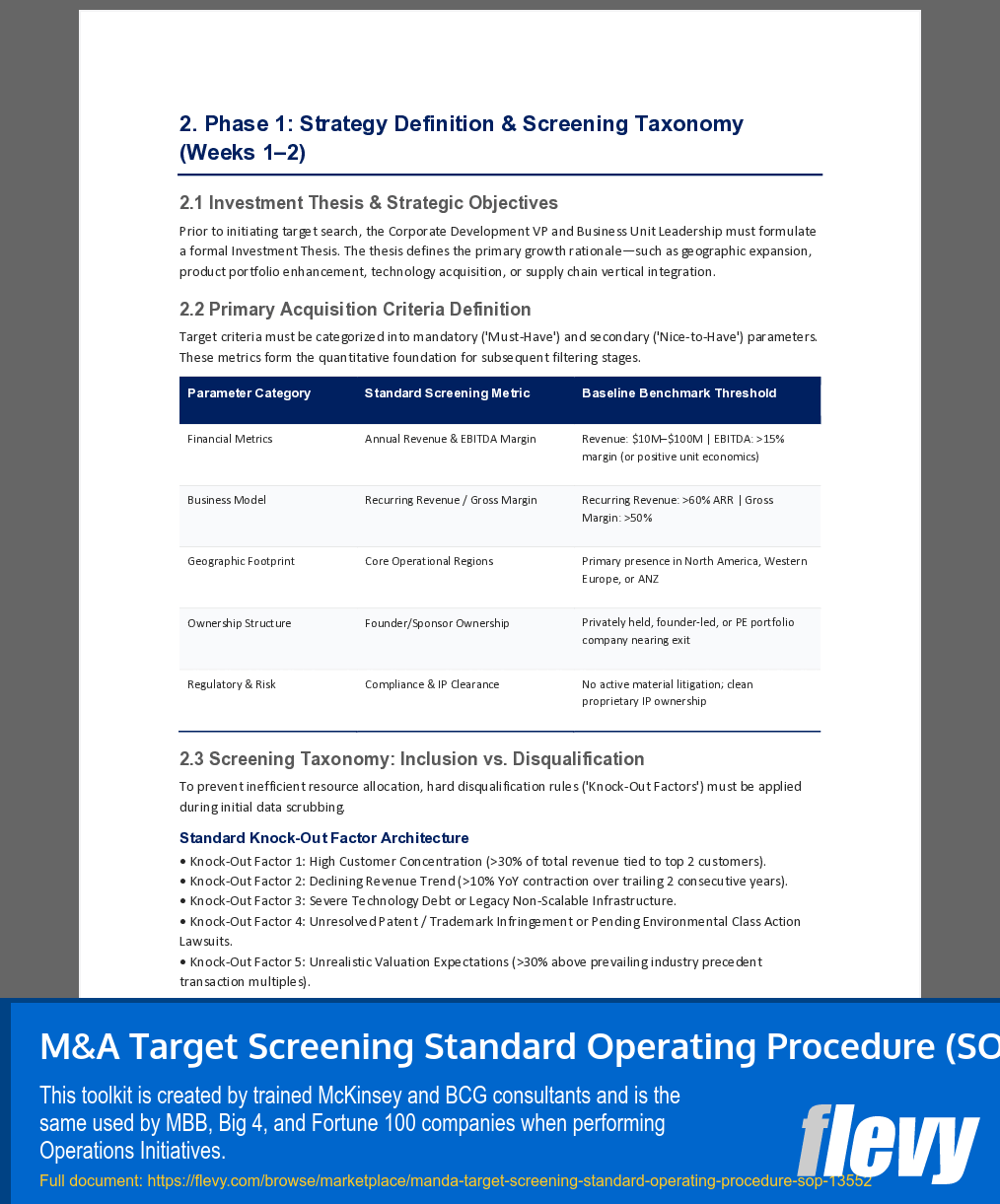
• Structured Investment Thesis Development Framework translating strategic objectives into measurable acquisition criteria.
• Formal distinction between Must-Have Acquisition Criteria and Nice-to-Have Attributes to prevent inconsistent target selection.
• Quantitative screening benchmarks covering revenue, EBITDA margin, recurring revenue, gross margin, geography, ownership structure, regulatory profile, and IP quality.
• Standard target profile architecture supporting acquisition strategies centered on market entry, product expansion, technology acquisition, customer-base expansion, and supply-chain integration.
• Knock-Out Factor Framework designed to eliminate economically or strategically unsuitable targets before significant deal-team resources are deployed.
• Mandatory disqualification testing for excessive customer concentration, sustained revenue contraction, severe technology debt, unresolved IP disputes, environmental litigation, and unrealistic valuation expectations.
• Investment Committee Search Charter requiring formal approval of the acquisition mandate and screening taxonomy before external market sourcing and broker outreach begins.
Section 3 – Long-List Generation & Market Intelligence
• Institutional Target Universe Construction Framework designed to create an exhaustive and defensible long-list of potential acquisition candidates.
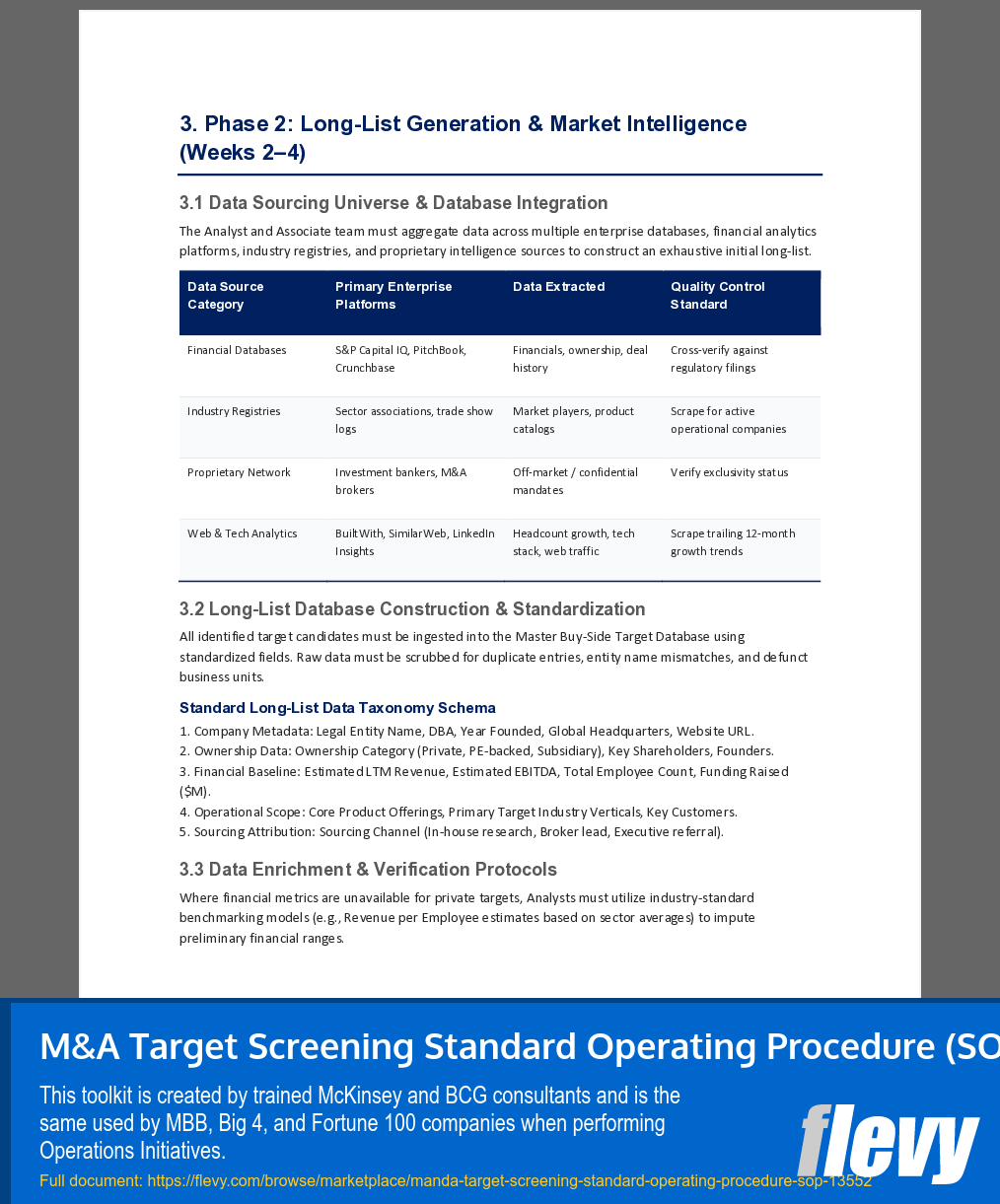
• Multi-source market intelligence architecture incorporating financial databases, private-company intelligence, industry registries, proprietary investment-banking networks, technology analytics, and executive research.
• Structured data-sourcing methodology using platforms such as S&P Capital IQ, PitchBook, Crunchbase, BuiltWith, Similarweb, LinkedIn Insights, industry associations, and M&A intermediary networks.
• Standardized Master Buy-Side Target Database Schema covering company identity, ownership, financial indicators, operating footprint, products, customers, sourcing attribution, and executive contacts.
• Mandatory data normalization and entity-resolution controls preventing duplicate companies, mismatched legal entities, obsolete subsidiaries, and defunct business units from contaminating the pipeline.
• Preliminary financial estimation methodology for private targets where reported financials are unavailable, including revenue-per-employee benchmarking and sector-based financial range estimation.
• Long-list scale guidelines targeting approximately 100–250 prospective acquisition candidates for standard platform searches.
• Executive-contact verification requirements covering CEO, Founder, CFO, Head of Sales, or other relevant decision-makers.
• Confidentiality and conflict flags identifying targets with prior relationships, active mandates, client conflicts, or other engagement restrictions.
Section 4 – Short-List Filtering & Quantitative Target Scoring
• Institutional Multi-Criteria Quantitative Scoring Model using a standardized 1.0–5.0 scoring scale to objectively prioritize acquisition candidates.
• Weighted evaluation framework covering Strategic Fit, Financial Quality, Valuation & Size, Integration Ease, and Owner Receptivity.
• Defined minimum passing thresholds for each scoring dimension to prevent strategically attractive but economically or operationally deficient targets from advancing automatically.
• Strategic Fit weighting of 30% emphasizing product synergies, market overlap, customer-base expansion, and strategic relevance.
• Financial Quality weighting of 25% evaluating EBITDA margins, recurring revenue, growth rates, and underlying business quality.
• Valuation & Size weighting of 20% assessing transaction-size compatibility, purchase-price expectations, and valuation reasonableness.
• Integration Ease weighting of 15% evaluating technology compatibility, geographic proximity, organizational alignment, and integration complexity.
• Owner Receptivity weighting of 10% assessing founder readiness, sponsor holding periods, and transaction appetite.
• Automated Risk Flag Escalation Protocol requiring VP review when an otherwise high-scoring target contains a materially weak core sub-criterion.
• Controlled short-list gate limiting active confidential outreach to no more than 20 priority targets.
• Mandatory Corporate Development VP validation of the scoring matrix before targets progress to active outreach.
Section 5 – Synergy Analysis, Valuation Benchmarking & Risk Screening
• Structured Preliminary Synergy Assessment Framework for targets achieving the required weighted scoring threshold.
• Cost Synergy Analysis covering SG&A rationalization, vendor consolidation, facilities optimization, organizational efficiencies, and other identifiable cost opportunities.
• Revenue Synergy Analysis covering cross-selling, customer-base expansion, product bundling, geographic expansion, and international commercialization opportunities.
• Risk-adjusted revenue synergy methodology applying conservative realization assumptions to prevent unsupported purchase-price inflation.
• Precedent Transaction Benchmarking Framework comparing target valuation expectations against recent sector M&A transactions.
• Standard analysis of EV / EBITDA and EV / Revenue multiples across relevant transaction comparables.
• Valuation Gap Identification Protocol designed to identify targets whose expectations materially exceed prevailing market precedent.
• Integrated Strategic, Financial, Operational, Technology, Regulatory, and Commercial Risk Matrix for high-priority acquisition candidates.
Section 6 – Targeted Outreach, Engagement & NDA Governance
• Tiered Target Outreach Architecture allocating executive attention according to strategic fit, quantitative score, and transaction attractiveness.
• Tier 1 High-Priority Outreach for targets scoring 4.2–5.0, with direct CEO / Founder engagement led by Corporate Development leadership or the relevant C-Suite executive.
• Tier 2 Medium-Priority Outreach for targets scoring 3.5–4.1, using Associate or trusted M&A advisor-led engagement.
• Tier 3 Opportunistic Outreach for targets scoring 3.0–3.4, utilizing brokers, intermediaries, or lower-friction initial approaches.
• Standardized CEO / Founder Outreach Messaging Framework emphasizing strategic rationale, confidentiality, financial capability, transaction experience, structural flexibility, and a low-friction introductory discussion.
• Controlled outreach protocols designed to avoid premature disclosure of sensitive acquirer strategy, proprietary information, or transaction-specific confidential information.
• 20-Minute Introductory Call Request Framework designed to maximize executive response rates while minimizing seller engagement friction.
• Formal NDA Execution Workflow requiring confidentiality documentation before detailed strategic plans or non-public target information are exchanged.
• Governance framework distinguishing Mutual vs. Unilateral NDAs based on the level of strategic information expected to be shared.
• Standard NDA provisions covering confidentiality duration, employee non-solicitation, standstill provisions, permitted disclosures, and governing-law considerations.
• Legal escalation requirements for material changes to indemnity provisions, governing jurisdiction, confidentiality obligations, or other non-standard NDA terms.
Section 7 – Initial Target Assessment, IRL & Financial Modeling
• Structured Management Introductory Call Protocol designed to evaluate strategic alignment, historical growth drivers, operating model, ownership objectives, and organizational culture.
• Standardized Phase 1 Information Request List (IRL) covering financial, commercial, operational, product, IP, tax, corporate, and ownership information.
• Financial diligence requirements including three years of financial statements, YTD monthly P&L, normalized EBITDA adjustments, revenue composition, and working-capital information.
• Commercial analysis covering ARR, customer concentration, churn, retention, cohort behavior, LTV/CAC, and customer economics.
• Product and operational review covering product roadmap, organizational structure, intellectual property, capacity utilization, technology architecture, and headcount costs.
• Corporate and tax information requirements covering legal entity structure, capitalization, tax returns, ownership, and preliminary transaction structuring considerations.
• Standardized Standalone Financial Modeling Framework converting IRL data into preliminary operating forecasts and valuation outputs.
• Preliminary valuation analysis using DCF, precedent transactions, trading / transaction multiple benchmarks, and normalized EBITDA methodologies.
• Pro Forma LBO Return Analysis supporting sponsor-oriented acquisition decisions through IRR and MOIC hurdle testing.
• Synergy-Adjusted Valuation Ceiling establishing the maximum economically defensible purchase price based on the NPV of achievable synergies.
Section 8 – Investment Committee Submission, Pipeline Governance & IOI Authorization
• Centralized Master Buy-Side Pipeline Tracker providing real-time visibility into target status, scoring, outreach activity, NDA execution, IRL receipt, management meetings, valuation work, and next actions.
• Standardized pipeline stages spanning Research, Qualified, Short-Listed, Outreach, Contacted, Intro Call, NDA Executed, IRL Received, Under Evaluation, IC Review, IOI Submitted, LOI, Exclusivity, Due Diligence, and Archived.
• Required tracking of Weighted Score, Sector / Strategic Fit, Outreach Status, Next Milestone, Owner, Decision Date, and Rejection Reason.
• Comprehensive IC Target Review Memorandum Framework supporting formal authorization of IOIs and LOIs.
• Mandatory IC analysis covering executive rationale, strategic fit, target overview, financial performance, normalized EBITDA, valuation, return metrics, synergies, integration risk, and proposed transaction structure.
• Required analysis of purchase-price range, cash / stock consideration, rollover equity, management retention pools, exclusivity requirements, and other material transaction terms.
• Formal Investment Committee Gatekeeper Approval requiring explicit authorization before any binding or non-binding acquisition proposal is submitted.
• Governance controls designed to ensure that price, structure, strategic rationale, and return thresholds are approved before external commitment.
Section 9 – Execution Hand-Off, Due Diligence & Pipeline Knowledge Retention
• Controlled Screening-to-Execution Transition Framework activated following target acceptance of an IOI / LOI and execution of appropriate exclusivity documentation.
• Formal hand-off from the screening team to the M&A Execution & Due Diligence Workstream with documented ownership and transaction status.
• Third-party advisor activation framework covering Quality of Earnings, legal diligence, tax structuring, commercial diligence, technology audits, and other specialist workstreams.
• Confirmatory financial diligence focused on EBITDA normalization, working-capital requirements, debt-like items, cash generation, and quality of earnings.
• Legal and regulatory diligence covering material contracts, litigation, corporate structure, regulatory obligations, IP ownership, and transaction restrictions.
• Tax diligence and structuring framework evaluating asset vs. stock acquisition structures, tax liabilities, transaction mechanics, and tax-efficient consideration design.
• Commercial and technology diligence covering customer validation, market positioning, technology architecture, cybersecurity, code quality, scalability, and operational dependencies.
• Mandatory Target Rejection & Archive Framework capturing specific reasons for unsuccessful outcomes, including valuation mismatch, seller unwillingness, strategic misalignment, technology debt, competitive process, or timing.
• Six-Month Pipeline Re-Engagement Protocol for high-value targets that remain strategically attractive but are unavailable due to timing, ownership considerations, or transaction readiness.
• Continuous Knowledge Retention & Screening Model Improvement using historical rejection data, valuation outcomes, transaction multiples, and post-deal learnings to refine future acquisition searches.
Section 10 – Appendices, Master Checklists & Governance Sign-Off
• Appendix A: Master Buy-Side Acquisition Search Schedule covering Investment Thesis, Long-List Generation, Scoring, Outreach, Management Calls, IRL, IC Review, IOI / LOI, and Due Diligence activation.
• Appendix B: Comprehensive Master Buy-Side Target Database Schema covering identity metadata, executive leadership, financial indicators, strategic categorization, screening outcomes, risk flags, sourcing attribution, and interaction history.
• Appendix C: Executive Governance Sign-Off Framework for the Head of Corporate Development, M&A Practice Leader, and Lead Legal Counsel.
• Integrated Target Screening Execution Checklists designed to ensure mandatory controls are completed before each pipeline stage is activated.
• Standardized Target Archive and Rejection Coding Framework supporting historical analysis and future search optimization.
• Final governance certification establishing executive authorization before deployment as the firm's formal Global Buy-Side M&A Target Screening & Search Standard.
Designed as a complete acquisition-search operating standard—not simply a target list or M&A screening template—this SOP gives Corporate Development teams, Private Equity sponsors, and buy-side advisors a structured framework for controlling the entire acquisition funnel from investment thesis and market mapping through quantitative target scoring, confidential outreach, NDA execution, preliminary valuation, Investment Committee authorization, IOI / LOI progression, due diligence hand-off, and institutional pipeline knowledge retention.
Keywords: Process Audit SOPs, Internal Audit Standard Operating Procedures, Process Audit Framework, Control Testing Procedures, Risk Assessment Methodologies, Audit Governance, Process Audit Strategy, Audit Evidence Collection, Compliance Audit SOPs, Continuous Auditing, Process Mapping, Audit Documentation Standards, Audit Quality Assurance, Process Risk Management, Operational Risk Audit, Enterprise Audit Management, Audit Committee Reporting, Audit Analytics, Process Mining, AI-Assisted Auditing, Audit Technology SOPs, Global Process Audit, Audit Playbooks, Audit Templates, Audit Training Programs, Audit Remediation Management, Audit Excellence, Process Audit Toolkit, McKinsey Audit Framework, Audit Best Practices, Enterprise Governance, Internal Control Assessment, Audit Procedures Manual, Audit Program Design, Audit Resource Planning, Audit Scheduling, Audit Efficiency, Audit Effectiveness, Audit Performance Metrics, Audit KPIs, Audit ROI, Audit Value Creation, Process Optimization, Operational Excellence, Business Process Audit, Functional Audit, Departmental Audit, Transactional Audit, Service Audit, Administrative Process Audit, Supply Chain Process Audit, Finance Process Audit, IT Process Audit, HR Process Audit, Procurement Process Audit, Sales Process Audit, Customer Service Audit, Production Audit, Quality Audit, Compliance Testing, Regulatory Audit, Policy Compliance, Procedure Audit, Documentation Audit, Audit Trail Review, Exception Management, Control Design, Control Effectiveness, Control Testing, Preventive Controls, Detective Controls, Corrective Actions, Root Cause Analysis, Finding Classification, Audit Report Writing, Executive Summaries, Audit Communication, Stakeholder Engagement, Process Owner Engagement, Management Accountability, Audit Committee Governance, Audit Charter, Audit Independence, Auditor Ethics, Professional Skepticism, Audit Competency, Audit Training, Audit Certification, Audit Standards (IIA, IAASB), Audit Best Practices, Audit Methodology, Audit Framework, Audit Operating Model, Process Audit Excellence, Audit Mastery, Fortune 500 Audit, Enterprise Audit Operations, Corporate Audit Function, Strategic Audit Planning, Transformation Audit, Digital Audit, Innovation Audit, Benchmarking Audit, Maturity Assessment, Audit Scaling, Audit Outsourcing, Co-Sourcing Models, Vendor Management, Audit Technology Stack, Audit Tools, Audit Software, Continuous Monitoring, Predictive Analytics, Anomaly Detection, Data Quality, Process Intelligence, Workflow Analytics, Business Process Management, Process Automation, RPA Audit, AI Governance, Responsible AI Audit, Cybersecurity Audit, Data Governance Audit, Privacy Audit, Information Security, Audit Evidence Standards, Working Papers, Audit Documentation, Audit File Management, Audit Records Retention, Audit Trail Integrity, Audit Report Confidentiality, Multi-Site Audit Coordination, Global Audit Strategy, International Audit Standards, Regional Audit Compliance, Cultural Considerations in Audit, Localization of Audit Procedures, Process Transformation Audit, Business Reengineering Audit, Change Audit, Operational Change, Audit Change Management, Audit Communication Plan, Audit Stakeholder Communication, Audit Performance Review, Audit Function Review, Strategic Review Process, Audit Leadership Development, Audit Team Development, Audit Coaching, Audit Supervision, Audit Career Progression, Audit Knowledge Management, Audit Playbook Development, Audit Template Library, Audit Standards Documentation, Audit Policy Manual, Lessons Learned Capture, Best Practice Sharing, Audit Continuous Improvement, Audit Methodology Enhancement, Audit Process Optimization, Audit Efficiency Improvement, Audit Effectiveness Enhancement, Audit Quality Improvement, Audit Risk Management, Audit Risk Register, Audit Issue Management, Audit Action Tracking, Audit Metrics Dashboard, Audit Performance Dashboard, Audit Scorecard, Audit Balanced Scorecard, KPI Framework for Audit, Audit Success Factors, Critical Success Factors in Audit, Audit Strategic Objectives, Audit Vision Statement, Audit Mission Statement, Audit Values and Ethics, Audit Culture, Audit Maturity Model, Audit Capability Model, Audit Competency Framework, Professional Development in Audit, Audit Certification Programs, Internal Audit Standards, Audit Best Practices Guide, Audit Reference Manual, Audit Operating Manual, Audit Procedures Manual, Audit Program Manual, McKinsey Audit Excellence, Deloitte Audit Framework, EY Audit Approach, KPMG Audit Methodology, Big 4 Audit Standards, Audit Industry Benchmarks, Audit Industry Standards, Audit Thought Leadership, Audit Innovation, Audit Transformation Program, Audit Digital Transformation, Audit Process Transformation, Audit Service Transformation, Audit Operating Model Transformation, Audit Function Evolution, Audit Future-Proofing, Emerging Trends in Audit, Audit 2025 Roadmap, Audit Strategic Priorities, Audit Strategic Planning, Audit Strategic Execution, Audit Implementation Plan, Audit Deployment Strategy, Audit Rollout Plan, Audit Quick-Start Guide, Audit Implementation Guide, Audit User Guide, Audit Handbook, Audit Manual, Audit Documentation Standard, Audit Work Standards, Audit Quality Standards, Audit Performance Standards, Audit Excellence Standards, Enterprise Audit Excellence, Audit Mastery Program, Audit Excellence Initiative, Audit Excellence Framework, Audit Excellence Culture, Audit Excellence Mindset, Strategic Audit Excellence, Operational Audit Excellence, Financial Audit Excellence, Compliance Audit Excellence, Quality Audit Excellence, Process Audit Excellence, Audit Excellence ROI, Audit Excellence Value Creation, Audit Excellence Competitive Advantage, Audit Excellence Strategic Advantage, Audit Excellence Performance Advantage, Audit Excellence Organizational Advantage, Inventory Management, Demand Planning, Inventory Optimization, Inventory Control, Supply Chain Management, Warehouse Operations, Replenishment Strategy, Inventory Analytics, WIP Reduction, Inventory Accuracy, Distribution Network, Inventory Forecasting, Supply Chain Excellence, Working Capital, Inventory KPIs, Procurement Strategy, Inventory Governance, Inventory SOPs, Continuous Improvement, Supply Chain Transformation, GenAI deployment SOPs, generative AI operating model, enterprise AI governance framework, AI Center of Excellence, responsible AI, AI risk management, AI use case prioritization, GenAI implementation roadmap, AI vendor selection, prompt engineering standards, AI compliance, AI adoption strategy, generative AI across value chain, AI strategy, enterprise transformation, AI implementation, AI scaling framework
Strategy & Transformation, Growth Strategy, Strategic Planning, Strategy Frameworks, Innovation Management, Pricing Strategy, Core Competencies, Strategy Development, Business Transformation, Marketing Plan Development, Product Strategy, Breakout Strategy, Competitive Advantage, Mission, Vision, Values, Strategy Deployment & Execution, Innovation, Vision Statement, Core Competencies Analysis, Corporate Strategy, Product Launch Strategy, BMI, Blue Ocean Strategy, Breakthrough Strategy, Business Model Innovation, Business Strategy Example, Corporate Transformation, Critical Success Factors, Customer Segmentation, Customer Value Proposition, Distinctive Capabilities, Enterprise Performance Management, KPI, Key Performance Indicators, Market Analysis, Market Entry Example, Market Entry Plan, Market Intelligence, Market Research, Market Segmentation, Market Sizing, Marketing, Michael Porter's Value Chain, Organizational Transformation, Performance Management, Performance Measurement, Platform Strategy, Product Go-to-Market Strategy, Reorganization, Restructuring, SWOT, SWOT Analysis, Service 4.0, Service Strategy, Service Transformation, Strategic Analysis, Strategic Plan Example, Strategy Deployment, Strategy Execution, Strategy Frameworks Compilation, Strategy Methodologies, Strategy Report Example, Value Chain, Value Chain Analysis, Value Innovation, Value Proposition, Vision Statement, Corporate Strategy, Business Development, Business plan pdf, business plan, PDF, Business Plan DOC, Business Plan Template, PPT, Market strategy playbook, strategic market planning, competitive analysis tools, market segmentation frameworks, growth strategy templates, product positioning strategy, market execution toolkit, strategic alignment playbook, KPI and OKR frameworks, business growth strategy guide, cross-functional strategy templates, market risk management, market strategy PowerPoint doc, guide, ebook, e-book ,McKinsey Change Playbook, Organizational change management toolkit, Change management frameworks 2025, Influence model for change, Change leadership strategies, Behavioral change in organizations, Change management PowerPoint templates, Transformational leadership in change, supply chain KPIs, supply chain KPI toolkit, supply chain PowerPoint template, logistics KPIs, procurement KPIs, inventory management KPIs, supply chain performance metrics, manufacturing KPIs, supply chain dashboard, supply chain strategy KPIs, reverse logistics KPIs, sustainability KPIs in supply chain, financial supply chain KPIs, warehouse KPIs, digital supply chain KPIs, 1200 KPIs, supply chain scorecard, KPI examples, supply chain templates, Corporate Finance SOPs, Finance SOP Excel Template, CFO Toolkit, Finance Department Procedures, Financial Planning SOPs, Treasury SOPs, Accounts Payable SOPs, Accounts Receivable SOPs, General Ledger SOPs, Accounting Policies Template, Internal Controls SOPs, Finance Process Standardization, Finance Operating Procedures, Finance Department Excel Template, FP&A Process Documentation, Corporate Finance Template, Finance SOP Toolkit, CFO Process Templates, Accounting SOP Package, Tax Compliance SOPs, Financial Risk Management Procedures.
NOTE: Our digital products are sold on an "as is" basis, making returns and refunds unavailable post-download. Please preview and inquire before purchasing. Please contact us before purchasing if you have any questions! This policy aligns with the standard Flevy Terms of Usage.
Got a question about the product? Email us at support@flevy.com or ask the author directly by using the "Ask the Author a Question" form. If you cannot view the preview above this document description, go here to view the large preview instead.
Source: Best Practices in M&A (Mergers & Acquisitions), Due Diligence Word: M&A Target Screening Standard Operating Procedure (SOP) Word (DOCX) Document, SB Consulting
ABOUT THE AUTHOR

SB Consulting is dedicated to empowering businesses to communicate their ideas with impact. This consulting firm specializes in teaching organizations how to create effective corporate and management presentations. With training from top-tier global consulting firms, including McKinsey, BCG, and Porsche Consulting, extensive expertise in presentation design and ... [read more]
Ask the Author a Question
You must be logged in to contact the author.




























