
Cloud Computing - The Ultimate Introduction   126-slide PPT PowerPoint presentation slide deck (PPTX)
$45.00

Cloud Computing - The Ultimate Introduction (126-slide PPT PowerPoint presentation slide deck (PPTX)) Preview Image
Log in to unlock full preview.
Cloud Computing - The Ultimate Introduction (126-slide PPT PowerPoint presentation slide deck (PPTX)) Preview Image
Arrow   Click main image to view in full screen.

Cloud Computing - The Ultimate Introduction (PowerPoint PPTX Slide Deck)

PowerPoint (PPTX) 126 Slides

$45.00
Developed by a team of experts with global consulting experience at McKinsey, Deloitte, and Capgemini.
Add to Cart


Immediate download
Fully editable PowerPoint
Free lifetime updates

BENEFITS OF THIS POWERPOINT DOCUMENT

  1. Provide information and understanding (An Introduction) regarding the Cloud Computing.

CLOUD PPT DESCRIPTION

Editor Summary Cloud Computing - The Ultimate Introduction is a 126-slide PowerPoint presentation developed by RadVector Consulting with team experience at McKinsey, Deloitte, and Capgemini, providing an introduction to cloud computing including definitions, core characteristics, 3 service models (IaaS, PaaS, SaaS) and 4 deployment models (public, private, community, hybrid). Read more

"The cloud services companies of all sizes…The cloud is for everyone. The cloud is a democracy."
— Marc Benioff

Cloud Computing: Beyond the Buzzwords

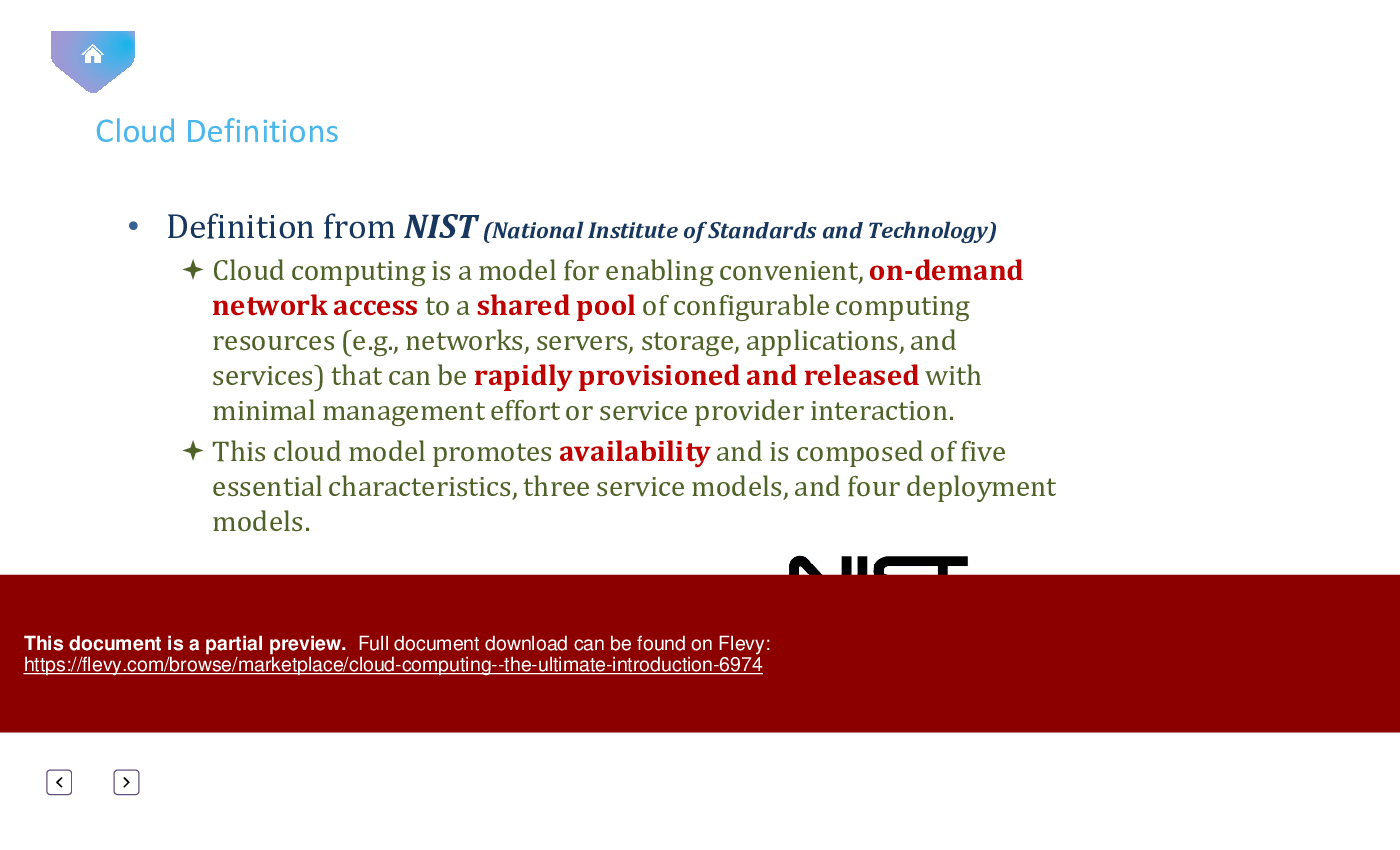
Cloud computing isn't just a buzzword; it's a technological paradigm shift. It's a new way of thinking about the IT industry, a game-changer that transcends specific technologies. At its core, cloud computing, as defined by the National Institute of Standards and Technology (NIST), is a model that enables convenient, on-demand access to a shared pool of configurable computing resources. This encompasses everything from networks and servers to storage, applications, and services. These resources can be provisioned and released with remarkable ease and minimal management effort.

The Cloud's Essence: Essential Characteristics, Service Models, and Deployment Models

The cloud isn't a one-size-fits-all solution; it's a versatile landscape defined by five essential characteristics, three service models, and four deployment models. These attributes make cloud computing a powerful tool with a broad spectrum of applications.

Exploring the Cloud Landscape: Objectives of This Presentation

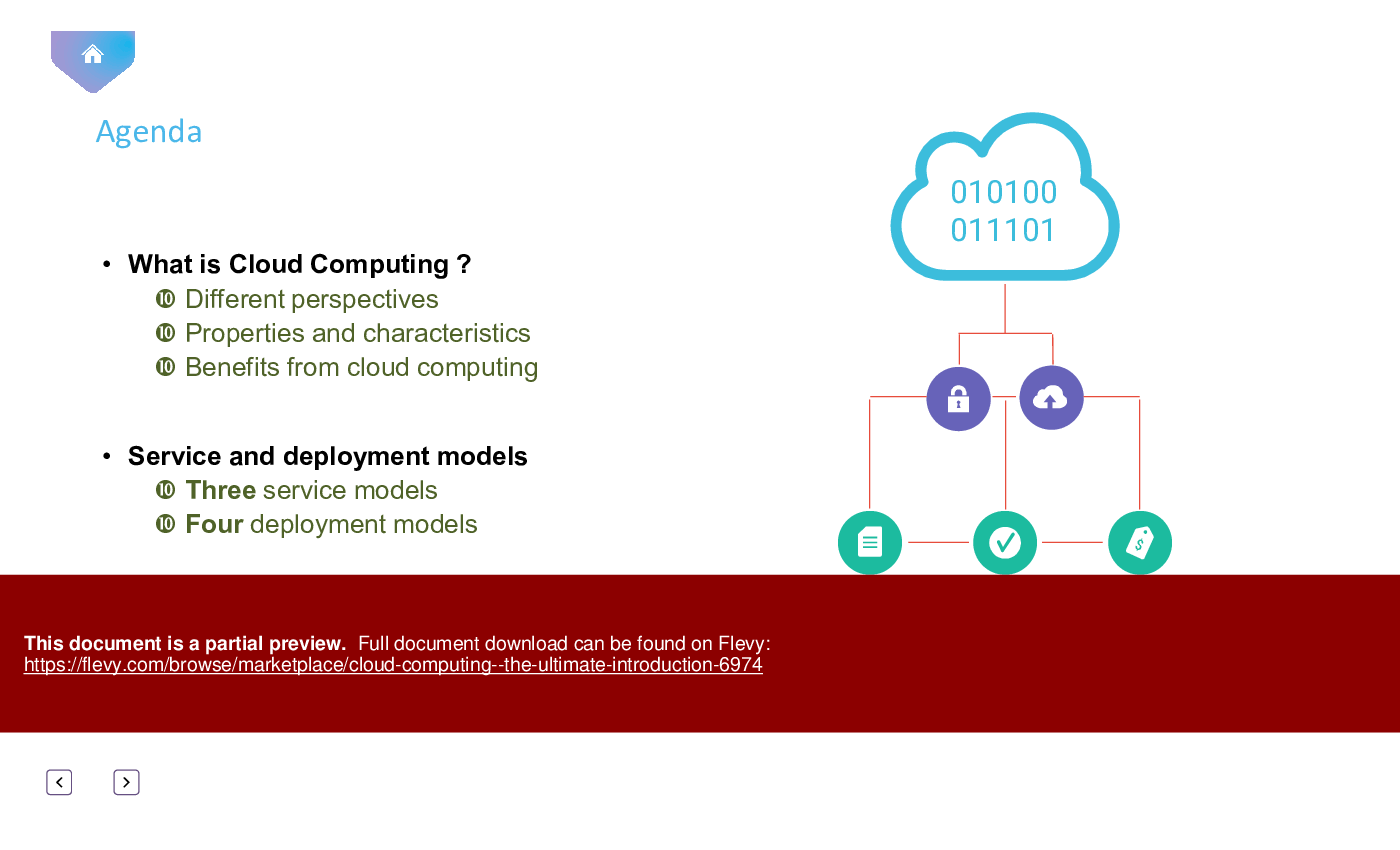
This 126-Slide PowerPoint document aims to demystify cloud computing by providing a comprehensive introduction. It covers diverse perspectives, properties, and characteristics of cloud computing. It delves into the benefits and offers insights into cloud service and deployment models. By the end of this presentation, you'll have a clear understanding of cloud computing and its potential to reshape the IT landscape.

Got a question about the product? Email us at support@flevy.com or ask the author directly by using the "Ask the Author a Question" form. If you cannot view the preview above this document description, go here to view the large preview instead.

MARCUS OVERVIEW

This synopsis was written by Marcus [?] based on the analysis of the full 126-slide presentation.


Executive Summary
This PowerPoint presentation, titled Cloud Computing - The Ultimate Introduction, serves as a comprehensive guide to understanding cloud computing. Developed by experts with experience from leading consulting firms, it covers essential concepts, service models, deployment models, and the benefits of cloud technology. Buyers will gain insights into how cloud computing can enhance operational efficiency, reduce costs, and improve resource utilization, making it an invaluable resource for corporate executives, integration leaders, and consultants.

Who This Is For and When to Use
•  Corporate executives seeking to understand cloud computing for strategic decision-making
•  IT leaders responsible for cloud integration and management
•  Consultants advising clients on cloud adoption and implementation
•  Business analysts evaluating the impact of cloud solutions on operations

Best-fit moments to use this deck:
•  During strategic planning sessions focused on digital transformation
•  In workshops aimed at educating teams about cloud technologies
•  When assessing potential cloud service providers and models

Learning Objectives
•  Define cloud computing and its core characteristics
•  Identify different service models: IaaS, PaaS, and SaaS
•  Explain the various deployment models: public, private, community, and hybrid
•  Analyze the benefits of cloud computing for businesses and individuals
•  Understand key concepts such as scalability, elasticity, and fault tolerance
•  Evaluate the impact of cloud computing on resource utilization and operational efficiency

Table of Contents
•  What is Cloud Computing? (page 3)
•  Properties and Characteristics (page 5)
•  Benefits from Cloud Computing (page 10)
•  Service and Deployment Models (page 15)
•  Three Service Models (page 16)
•  Four Deployment Models (page 20)

Primary Topics Covered
•  Cloud Computing Definition - Cloud computing enables on-demand network access to a shared pool of configurable computing resources, promoting efficiency and flexibility.
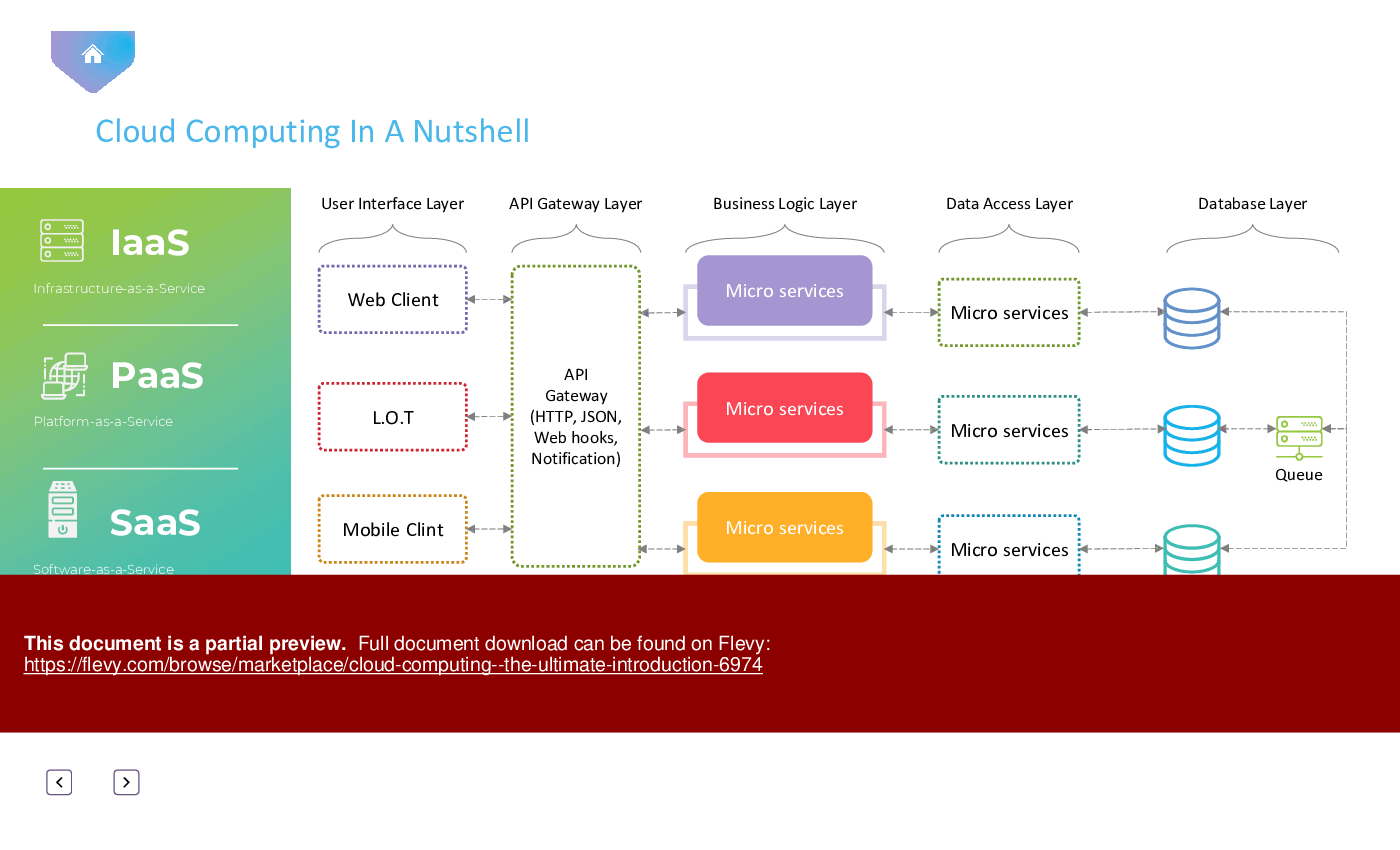
•  Service Models - The presentation outlines 3 primary service models: Infrastructure as a Service (IaaS), Platform as a Service (PaaS), and Software as a Service (SaaS).
•  Deployment Models - It discusses 4 deployment models: public, private, community, and hybrid, highlighting their unique characteristics and use cases.
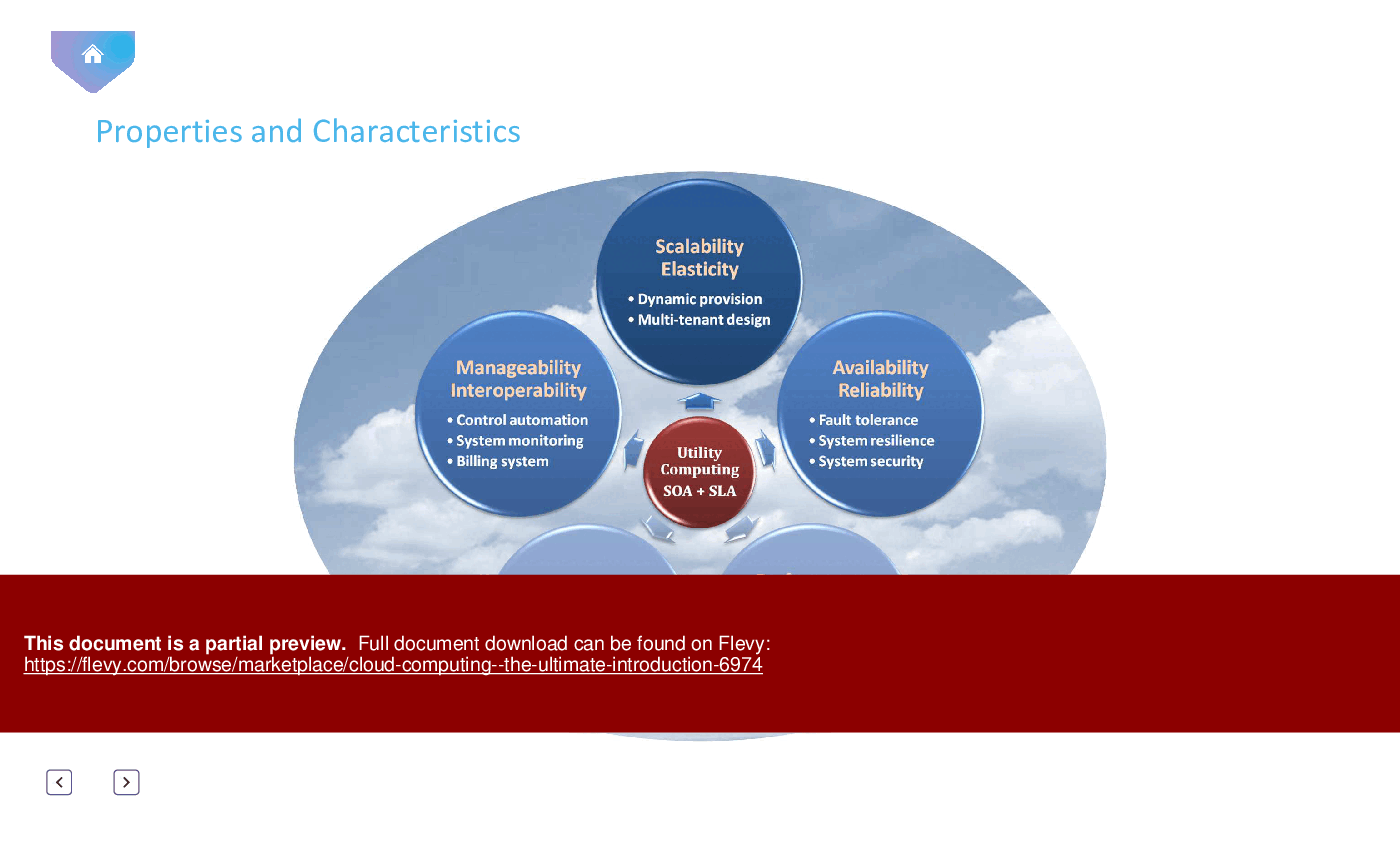
•  Scalability and Elasticity - The ability of cloud systems to dynamically provision resources to meet varying demand levels.
•  Fault Tolerance - Mechanisms that allow systems to continue operating in the event of component failures, ensuring high availability.
•  Quality of Service (QoS) - Metrics and standards that define the expected performance and reliability of cloud services.

Deliverables, Templates, and Tools
•  Cloud computing strategy template for assessing cloud readiness
•  Service model comparison chart for IaaS, PaaS, and SaaS
•  Deployment model evaluation framework for selecting the appropriate cloud architecture
•  Checklist for evaluating cloud service providers based on QoS metrics
•  Risk assessment template for cloud migration projects
•  Cost-benefit analysis tool for cloud adoption

Slide Highlights
•  Overview of cloud computing definitions from various authoritative sources
•  Visual representation of service models and their applications
•  Comparison of public vs. private cloud characteristics
•  Diagram illustrating the scalability and elasticity of cloud resources
•  Key benefits of cloud computing for enterprises and individuals

Potential Workshop Agenda
Introduction to Cloud Computing (30 minutes)
•  Overview of cloud computing and its significance
•  Discussion on various definitions and perspectives

Service Models Deep Dive (45 minutes)
•  Detailed exploration of IaaS, PaaS, and SaaS
•  Case studies showcasing successful implementations

Deployment Models Overview (30 minutes)
•  Analysis of public, private, community, and hybrid models
•  Group activity to evaluate deployment options for specific scenarios

Benefits and Challenges of Cloud Computing (30 minutes)
•  Discussion on the advantages and potential pitfalls of cloud adoption
•  Q&A session to address participant queries

Customization Guidance
•  Tailor the presentation by incorporating specific case studies relevant to your industry.
•  Adjust terminology and examples to align with your organization's cloud strategy.
•  Include metrics and KPIs that are pertinent to your business objectives.

Secondary Topics Covered
•  Cloud security considerations and best practices
•  The role of virtualization in cloud computing
•  Emerging trends in cloud technology and their implications
•  Integration challenges and solutions for cloud environments
•  Future outlook for cloud computing and its evolution

Topic FAQ

What are the main service models in cloud computing and how do they differ?

The primary service models are Infrastructure as a Service (IaaS), Platform as a Service (PaaS), and Software as a Service (SaaS). IaaS provides virtualized infrastructure, PaaS supplies development platforms, and SaaS delivers applications over the internet, corresponding to the 3 service models.

What are the common cloud deployment models and when is each used?

Common deployment models are public, private, community, and hybrid clouds. Public clouds are third‑party owned and broadly accessible; private clouds are dedicated to a single organization; community clouds are shared by organizations with common concerns; hybrid blends public and private environments — 4 deployment models.

How do scalability and elasticity differ in cloud systems?

Scalability refers to the ability to increase resources to handle growing workloads, typically planned capacity changes. Elasticity is the capability to dynamically provision and de‑provision resources in response to real‑time demand, enabling flexible resource adjustments through dynamic provisioning and de‑provisioning of resources.

What is fault tolerance in cloud computing and why does it matter for business continuity?

Fault tolerance is the system capability to continue operating when some components fail, preventing total outages. It matters because it maintains service availability and reduces downtime risk for users and processes, thereby supporting high availability.

What should I look for in an introductory cloud training deck or presentation?

An introductory deck should explain cloud definitions and characteristics, cover the 3 service models and 4 deployment models, outline benefits and security considerations, and include practical templates such as a cloud readiness strategy, provider evaluation checklist, risk assessment, and cost‑benefit analysis tool like those in Cloud Computing - The Ultimate Introduction.

How long should I schedule a workshop to introduce cloud computing to stakeholders?

A focused workshop can run about 2 to 3 hours; the product suggests a sample agenda with sessions of 30, 45, 30, and 30 minutes totaling roughly 135 minutes for introduction, service models deep dive, deployment overview, and benefits/challenges discussion — 135 minutes.

What factors matter when choosing between public and private cloud for sensitive data?

Key factors include control and customization (private offers more), third‑party ownership and multi‑tenant exposure (public), data protection, identity management, application security, and privacy requirements. Use a deployment model evaluation framework and provider QoS checklist to assess suitability and compliance, such as the framework included in the deck.

How can I concisely explain the business benefits of cloud computing to cost‑focused executives?

Explain that cloud computing can reduce capital expenditure, improve resource utilization, increase operational efficiency, and provide scalable capacity for variable demand. Use visual comparisons and a benefits section to show tradeoffs and quantified examples; see the presentation’s benefits section on page 10.

Document FAQ
These are questions addressed within this presentation.

What is cloud computing?
Cloud computing is a model that provides on-demand network access to a shared pool of configurable computing resources, enabling efficient and flexible IT solutions.

What are the main service models in cloud computing?
The 3 primary service models are Infrastructure as a Service (IaaS), Platform as a Service (PaaS), and Software as a Service (SaaS).

What are the benefits of using cloud computing?
Cloud computing reduces capital expenditure, improves resource utilization, enhances operational efficiency, and allows for scalability and flexibility in IT operations.

How do public and private clouds differ?
Public clouds are owned by third-party providers and are accessible to the general public, while private clouds are dedicated to a single organization, offering more control and customization.

What is scalability in cloud computing?
Scalability refers to the ability of a cloud system to handle increasing workloads by dynamically provisioning additional resources as needed.

What is fault tolerance?
Fault tolerance is the capability of a system to continue operating properly in the event of a failure of some of its components, ensuring high availability.

How does cloud computing improve resource utilization?
Cloud computing allows for the centralized management of IT resources, optimizing performance and reducing waste through shared infrastructure.

What are the key security concerns in cloud computing?
Key concerns include data protection, identity management, application security, and ensuring privacy for sensitive information.

Glossary
•  Cloud Computing - A model for enabling convenient, on-demand network access to a shared pool of configurable computing resources.
•  IaaS - Infrastructure as a Service; provides virtualized computing resources over the Internet.
•  PaaS - Platform as a Service; allows developers to build applications without managing the underlying infrastructure.
•  SaaS - Software as a Service; delivers software applications over the Internet on a subscription basis.
•  Public Cloud - Cloud infrastructure available to the general public, owned by a third-party provider.
•  Private Cloud - Cloud infrastructure operated solely for one organization, offering greater control and security.
•  Community Cloud - Cloud infrastructure shared by several organizations with shared concerns.
•  Hybrid Cloud - A combination of public and private clouds, allowing data and applications to be shared between them.
•  Scalability - The ability to increase resources as needed to accommodate growing workloads.
•  Elasticity - The ability to dynamically provision and de-provision resources based on demand.
•  Fault Tolerance - The ability of a system to continue functioning in the event of a failure.
•  Quality of Service (QoS) - Metrics that define the expected performance and reliability of cloud services.
•  Virtualization - The creation of virtual versions of physical resources, allowing for more efficient resource management.
•  Data Protection - Measures taken to safeguard data from unauthorized access and loss.
•  Identity Management - The process of managing user identities and access to resources in a cloud environment.
•  Application Security - The measures taken to protect applications from threats and vulnerabilities.
•  Privacy - Ensuring that sensitive data is only accessible to authorized users.

Source: Best Practices in Cloud PowerPoint Slides: Cloud Computing - The Ultimate Introduction PowerPoint (PPTX) Presentation Slide Deck, RadVector Consulting


$45.00
Developed by a team of experts with global consulting experience at McKinsey, Deloitte, and Capgemini.
Add to Cart
  

ABOUT THE AUTHOR

Additional documents from author: 182

We are a group of aviation experts & specialists (PhDs, Engineers, Pilots, Navigators, ...), leaders in helping organizations to transform their business performance using Methodologies and Principles of Lean, Agile, Six Sigma, and Innovation.

Ask the Author a Question

You must be logged in to contact the author.

Click here to log in Click here register

Did you know?
The average daily rate of a McKinsey consultant is $6,625 (not including expenses). The average price of a Flevy document is $65.


Trusted by over 10,000+ Client Organizations
Since 2012, we have provided business templates to over 10,000 businesses and organizations of all sizes, from startups and small businesses to the Fortune 100, in over 130 countries.
AT&T GE Cisco Intel IBM Coke Dell Toyota HP Nike Samsung Microsoft Astrazeneca JP Morgan KPMG Walgreens Walmart 3M Kaiser Oracle SAP Google E&Y Volvo Bosch Merck Fedex Shell Amgen Eli Lilly Roche AIG Abbott Amazon PwC T-Mobile Broadcom Bayer Pearson Titleist ConEd Pfizer NTT Data Schwab


Read Customer Testimonials

 
"Flevy is our 'go to' resource for management material, at an affordable cost. The Flevy library is comprehensive and the content deep, and typically provides a great foundation for us to further develop and tailor our own service offer."

– Chris McCann, Founder at Resilient.World
 
"I have found Flevy to be an amazing resource and library of useful presentations for lean sigma, change management and so many other topics. This has reduced the time I need to spend on preparing for my performance consultation. The library is easily accessible and updates are regularly provided. A wealth of great information."

– Cynthia Howard RN, PhD, Executive Coach at Ei Leadership
 
"I like your product. I'm frequently designing PowerPoint presentations for my company and your product has given me so many great ideas on the use of charts, layouts, tools, and frameworks. I really think the templates are a valuable asset to the job."

– Roberto Fuentes Martinez, Senior Executive Director at Technology Transformation Advisory
 
"My FlevyPro subscription provides me with the most popular frameworks and decks in demand in today’s market. They not only augment my existing consulting and coaching offerings and delivery, but also keep me abreast of the latest trends, inspire new products and service offerings for my practice, and educate me "

– Bill Branson, Founder at Strategic Business Architects
 
"As a consultant requiring up to date and professional material that will be of value and use to my clients, I find Flevy a very reliable resource.

The variety and quality of material available through Flevy offers a very useful and commanding source for information. Using Flevy saves me time, enhances my expertise and ends up being a good decision."

– Dennis Gershowitz, Principal at DG Associates
 
"Flevy is now a part of my business routine. I visit Flevy at least 3 times each month.

Flevy has become my preferred learning source, because what it provides is practical, current, and useful in this era where the business world is being rewritten.

In today's environment where there are so "

– Omar Hernán Montes Parra, CEO at Quantum SFE
 
"The wide selection of frameworks is very useful to me as an independent consultant. In fact, it rivals what I had at my disposal at Big 4 Consulting firms in terms of efficacy and organization."

– Julia T., Consulting Firm Owner (Former Manager at Deloitte and Capgemini)
 
"I am extremely grateful for the proactiveness and eagerness to help and I would gladly recommend the Flevy team if you are looking for data and toolkits to help you work through business solutions."

– Trevor Booth, Partner, Fast Forward Consulting


Customers Also Like These Documents

Explore Templates on Related Management Topics


Your Recently Viewed Documents
Download our FREE Digital Transformation Templates

Download our free compilation of 50+ Digital Transformation slides and templates. DX concepts covered include Digital Leadership, Digital Maturity, Digital Value Chain, Customer Experience, Customer Journey, RPA, etc.










