This framework is developed by a team of former McKinsey and Big 4 consultants. The presentation follows the headline-body-bumper slide format used by global consulting firms.
Explore the Gartner TIME Framework, crafted by ex-McKinsey and Big 4 consultants. Optimize APM with strategies for tech portfolio management. Gartner TIME Framework is a 34-slide PPT PowerPoint presentation slide deck (PPTX) available for immediate download upon purchase.
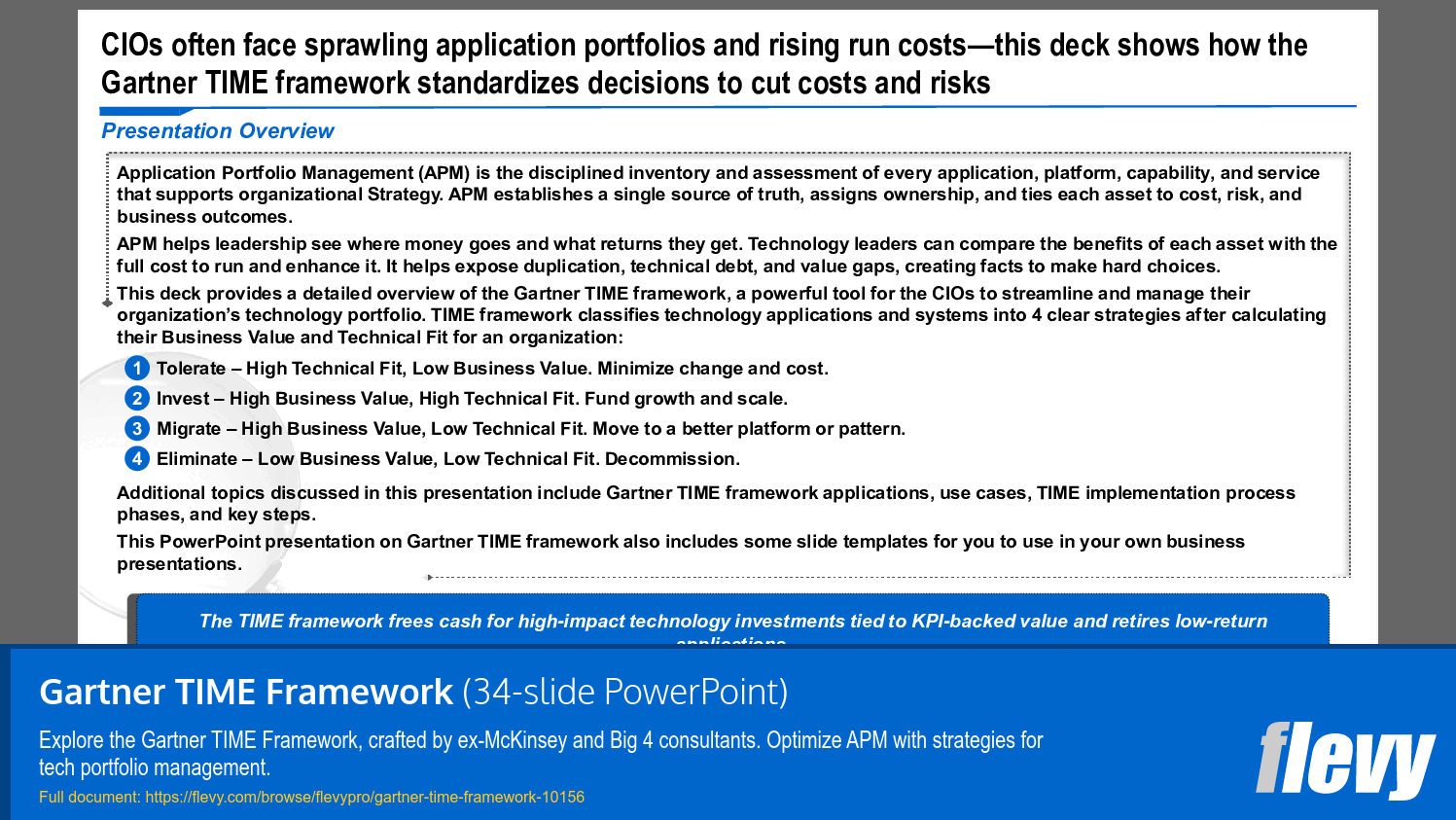
Application Portfolio Management (APM) is the disciplined inventory and assessment of every application, platform, capability, and service that supports organizational Strategy. APM establishes a single source of truth, assigns ownership, and ties each asset to cost, risk, and business outcomes.
APM helps leadership see where money goes and what returns they get. Technology leaders can compare the benefits of each asset with the full cost to run and enhance it. It helps expose duplication, technical debt, and value gaps, creating facts to make hard choices.
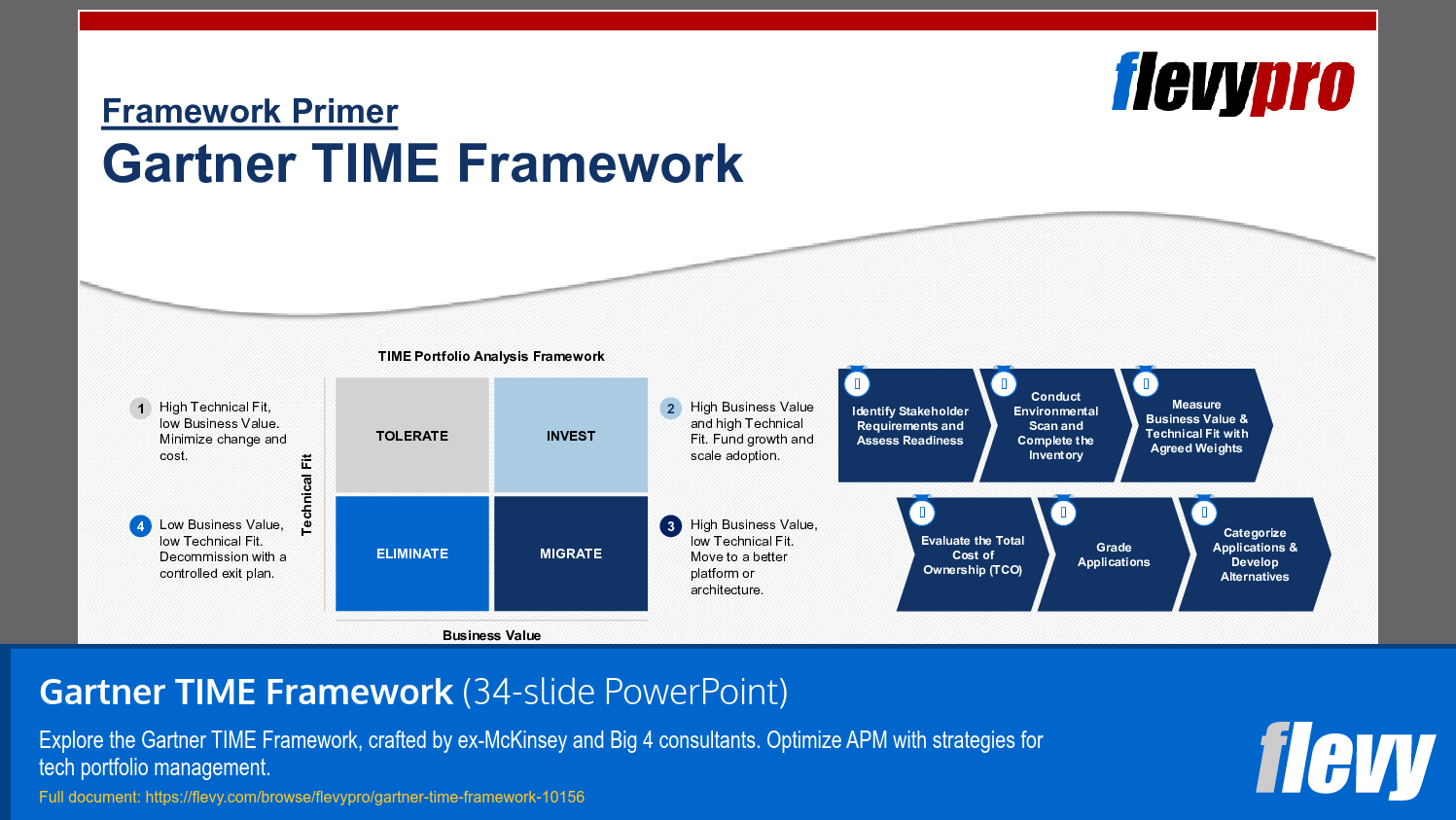
This PPT presentation provides a detailed overview of the Gartner TIME framework, a powerful tool for the CIOs to streamline and manage their organization's technology portfolio. TIME framework classifies technology applications and systems into 4 clear strategies after calculating their Business Value and Technical Fit for an organization:
1. Tolerate – High Technical Fit, Low Business Value. Minimize change and cost.
2. Invest – High Business Value, High Technical Fit. Fund growth and scale.
3. Migrate – High Business Value, Low Technical Fit. Move to a better platform or pattern.
4. Eliminate – Low Business Value, Low Technical Fit. Decommission.
Each of these strategies is discussed in depth. The TIME framework frees cash for high-impact technology investments tied to KPI-backed value and retires low-return applications.
Additional topics discussed in this presentation include Gartner TIME framework applications, use cases, TIME implementation process phases, and key steps.
This PowerPoint presentation on Gartner TIME framework also includes some slide templates for you to use in your own business presentations.
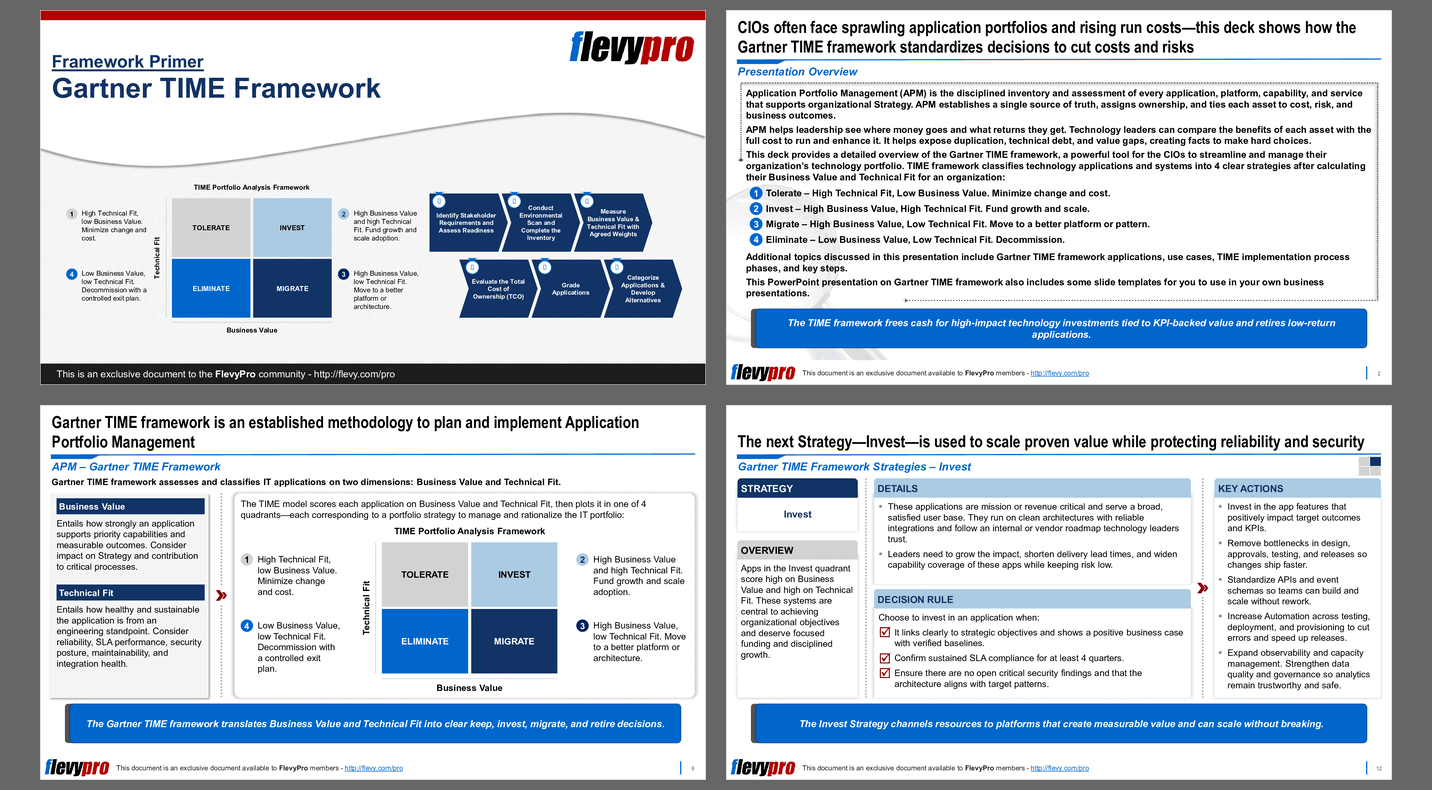
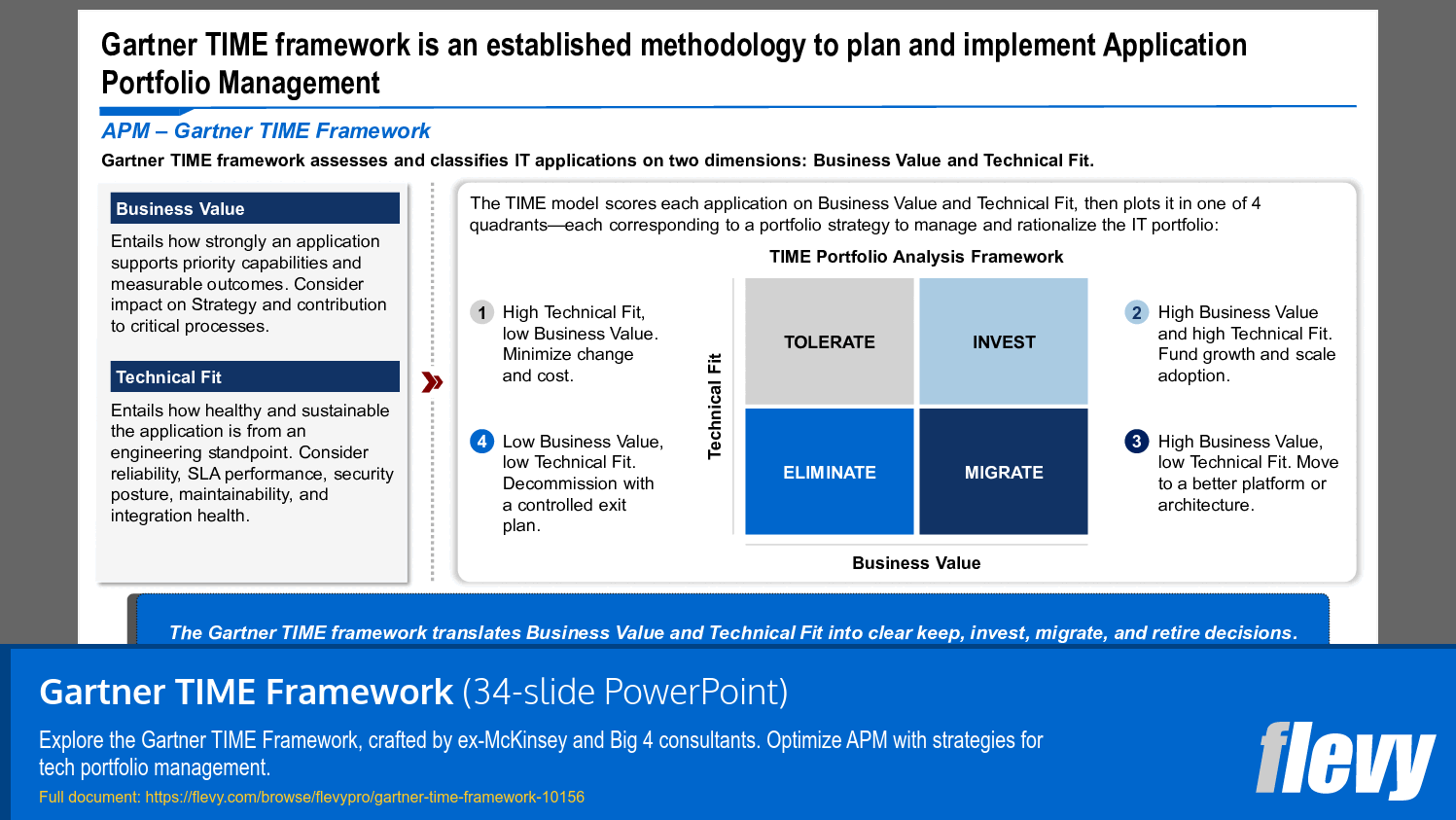
The Gartner TIME framework is a methodology for planning and managing application portfolios, assessing applications based on Business Value and Technical Fit. It scores applications on these axes and categorizes them into 4 quadrants: TOLERATE, INVEST, ELIMINATE, and MIGRATE, guiding strategic portfolio management decisions. Business Value measures an application’s support for organizational priorities, while Technical Fit evaluates its reliability, security, and maintainability. Applications with high technical fit, but low business value should be decommissioned, whereas those excelling in both areas warrant investment. The TIME framework simplifies complex portfolio decisions, enabling organizations to focus resources on high-value, technically sound systems while retiring less effective ones. Developed by ex-McKinsey and Big 4 consultants, it supports better prioritization and alignment with long-term digital strategies.
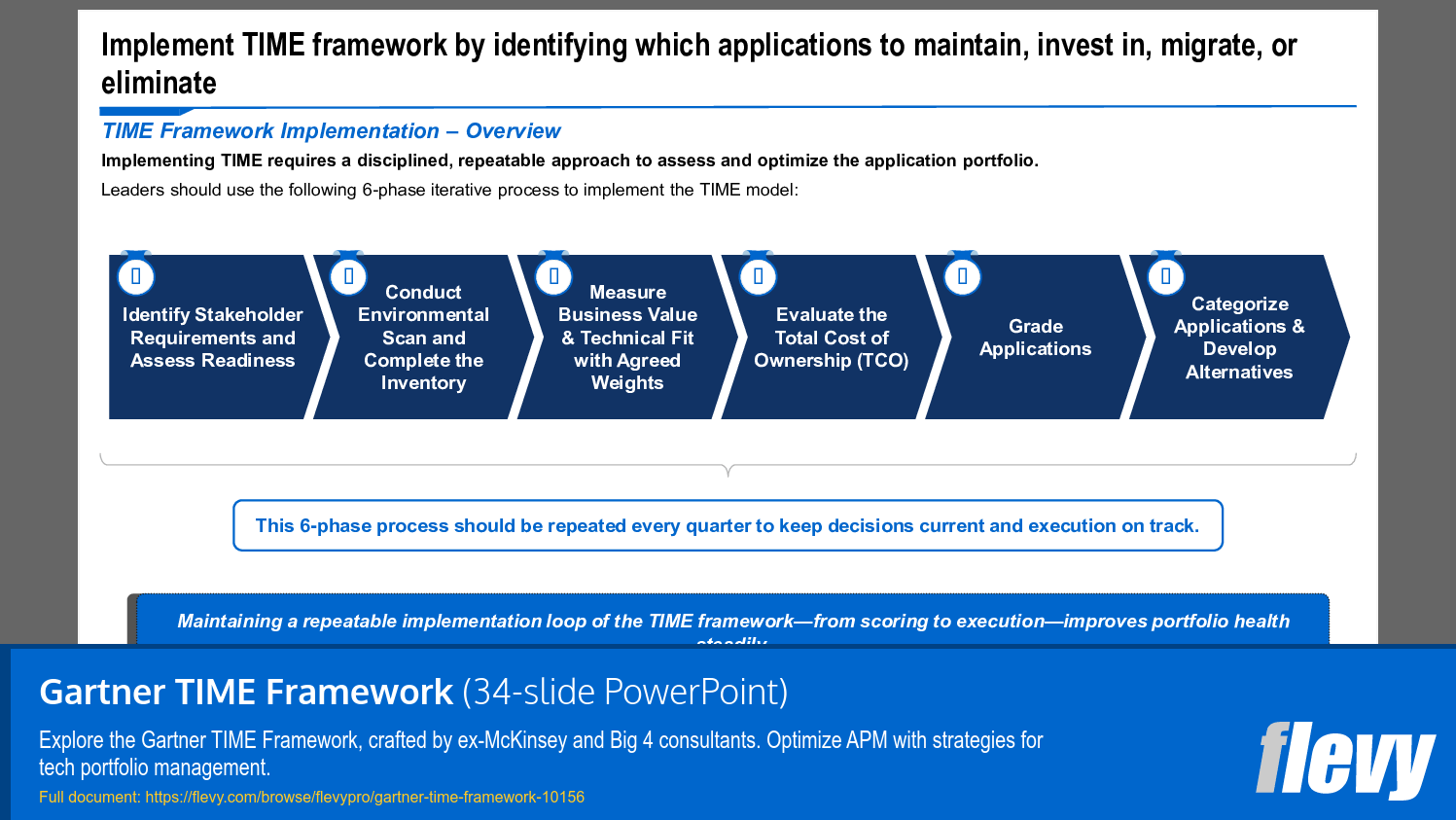
This PPT slide outlines a structured approach to implementing the Gartner TIME Framework for application management, categorizing applications into 4 actions: maintain, invest, migrate, or eliminate. The process consists of 6 phases: identifying stakeholder requirements, conducting an environmental scan, measuring business value and technical fit, evaluating total cost of ownership, grading applications, and categorizing them for strategy development. This iterative process should be repeated quarterly to ensure alignment with organizational priorities and to maintain a healthy application portfolio. The TIME Framework, developed by McKinsey and Big 4 consultants, serves as a proven methodology for optimizing application portfolios.
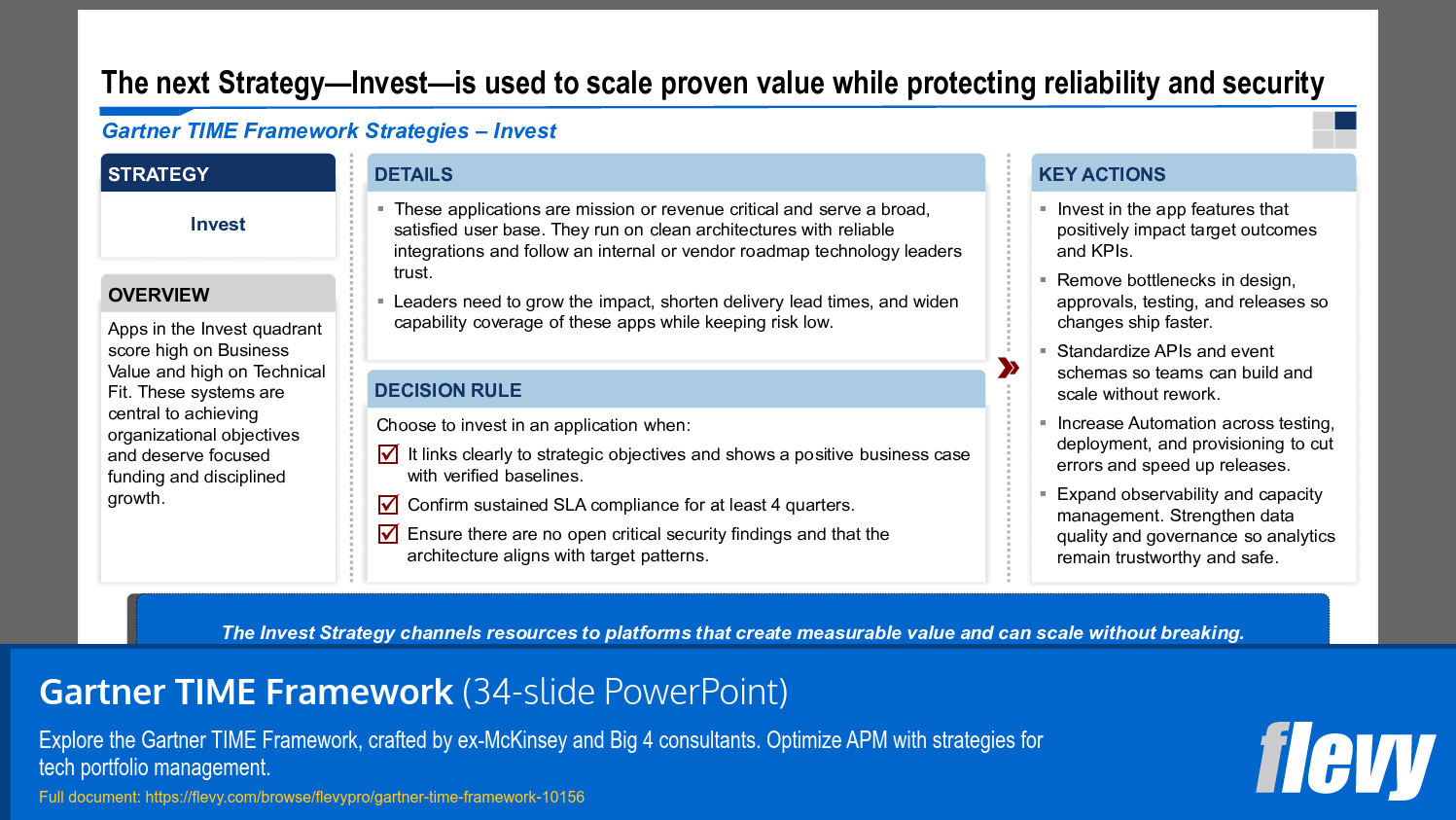
The Invest strategy leverages the Gartner TIME Framework to scale value while ensuring security and reliability. Applications prioritized for investment are mission-critical, serving broad user bases and built on proven architecture. Key focus areas include expanding impact, reducing delivery times, and broadening app coverage while minimizing risk exposure. These applications align with strategic objectives, demonstrate verified performance baselines, and comply with SLA requirements, ensuring sustainable investments. The decision rule provides a checklist for application selection, emphasizing strategic linkage, SLA compliance, and security considerations. Key actions include investing in features that enhance KPIs, removing bottlenecks through design changes, and standardizing APIs for consistent releases. Automation accelerates testing and deployment, while robust data governance ensures trustworthiness, supporting a disciplined approach to application investment that balances value creation with operational stability.
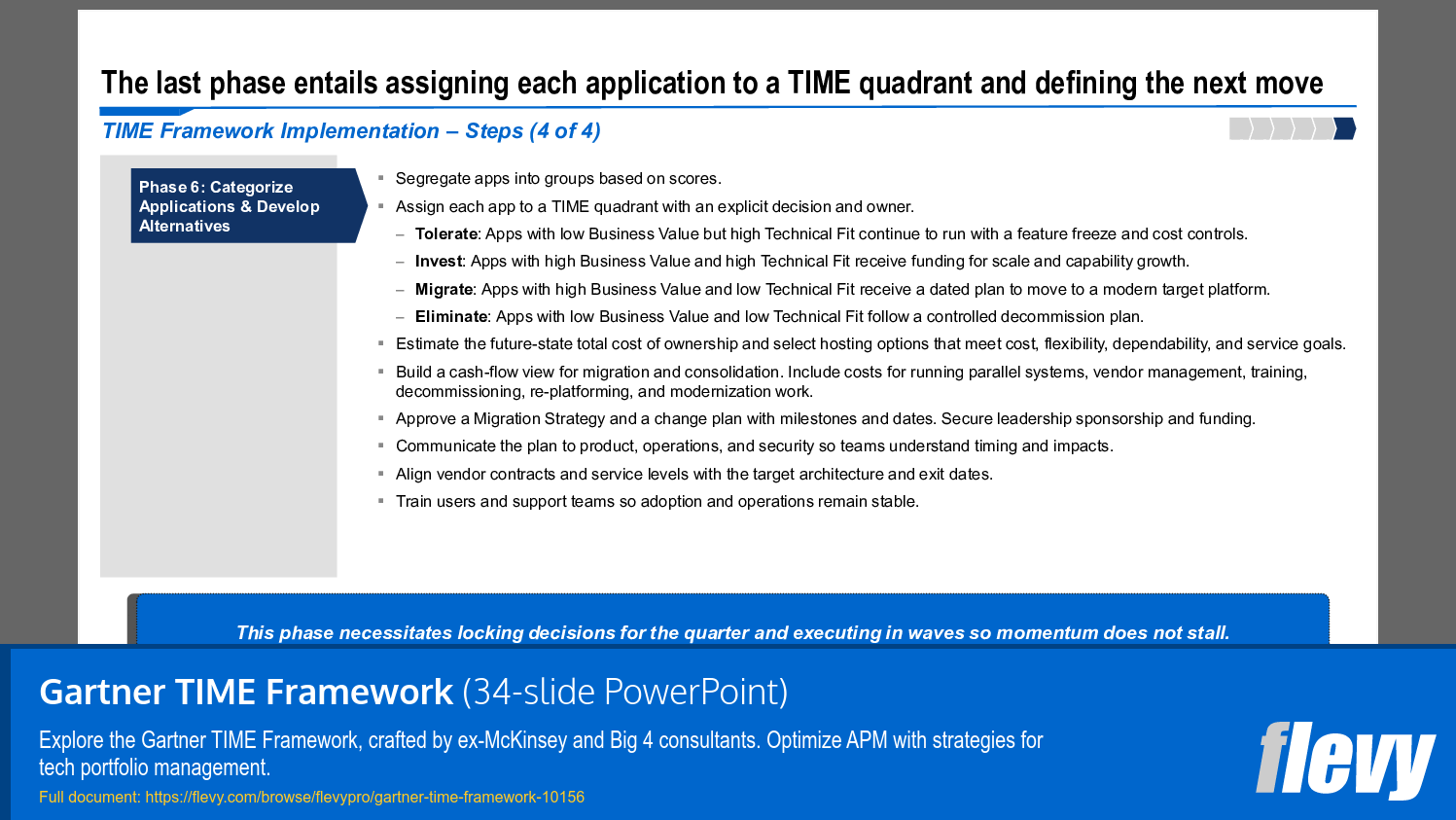
This PPT slide details the final step in applying the Gartner TIME Framework for application rationalization. It categorizes applications into 4 quadrants: Tolerate, Invest, Migrate, and Eliminate, based on their scores, with specific criteria and recommended actions for each category. For instance, applications with low business value, but high technical fit should be tolerated, while high-value, high-technical-fit applications warrant investment. Estimating future costs and selecting hosting options aligned with organizational goals are critical, alongside a comprehensive view of migration costs, vendor management, and modernization efforts. A clear migration and consolidation plan, supported by leadership sponsorship and funding, is essential. Effective communication about the plan’s timing and impact is necessary, as is aligning vendor contracts with target architecture and exit timelines. Training support teams and users is vital to ensure stability during the transition, locking in decisions and maintaining momentum. This step consolidates analysis into actionable decisions, optimizing the application portfolio and aligning it with strategic priorities.
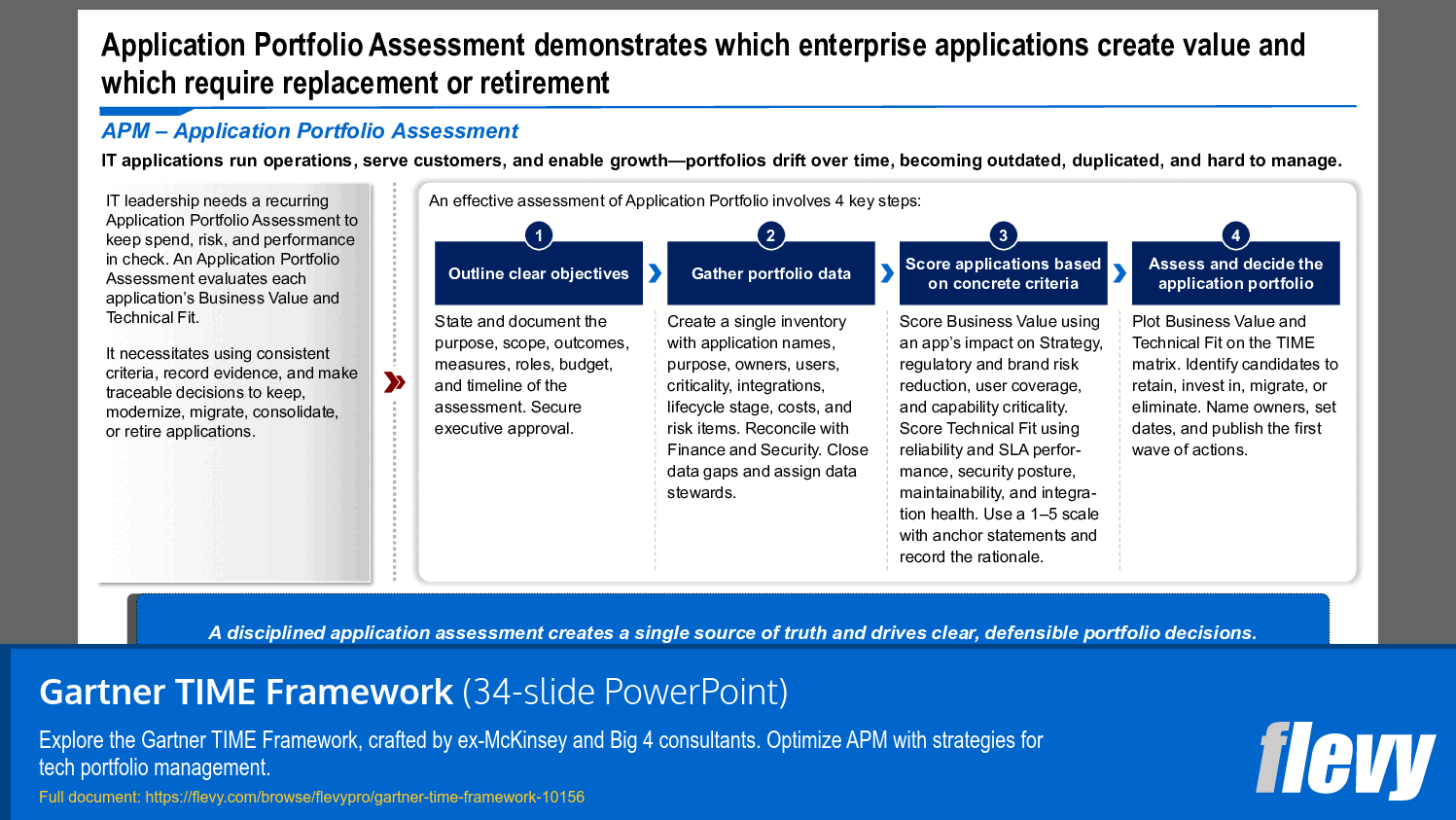
This PPT slide outlines the Application Portfolio Assessment (APM) process for managing IT applications. Applications often drift over time, becoming outdated or duplicated, necessitating regular evaluations. Leadership must conduct consistent assessments to track application value, technical fit, and relevance, ensuring effective resource allocation. The four-step process includes: 1) defining objectives—scope, outcomes, and criteria; 2) gathering data to create a comprehensive inventory of applications, detailing purpose, owners, and criticality; 3) scoring applications based on strategic impact, user coverage, and technical health; 4) making decisions to retain, migrate, or retire applications based on assessment results. A disciplined approach to application assessment fosters a reliable source of truth for informed decision-making. The slide references the Gartner TIME Framework for optimizing application management, emphasizing systematic evaluation to maintain an effective application landscape aligned with strategic goals.
Source: Best Practices in IT Strategy, Enterprise Architecture PowerPoint Slides: Gartner TIME Framework PowerPoint (PPTX) Presentation Slide Deck, LearnPPT Consulting
This framework is developed by a team of former McKinsey and Big 4 consultants. The presentation follows the headline-body-bumper slide format used by global consulting firms.
For $10.00 more, you can download this document plus 2 more FlevyPro documents. That's just $13 each.
ABOUT FLEVYPRO
This document is part of the FlevyPro Library, a curated knowledge base of documents for our FlevyPro subscribers.
FlevyPro is a subscription service for on-demand business frameworks and analysis tools. FlevyPro subscribers receive access to an exclusive library of curated business documents—business framework primers, presentation templates, Lean Six Sigma tools, and more—among other exclusive benefits.
The average daily rate of a McKinsey consultant is $6,625 (not including expenses). The average price of a Flevy document is $65.
Trusted by over 10,000+ Client Organizations
Since 2012, we have provided business templates to over 10,000 businesses and organizations of all sizes, from startups and small businesses to the Fortune 100, in over 130 countries.
Read Customer Testimonials
"My FlevyPro subscription provides me with the most popular frameworks and decks in demand in today’s market. They not only augment my existing consulting and coaching offerings and delivery, but also keep me abreast of the latest trends, inspire new products and service offerings for my practice, and educate me
in a fraction of the time and money of other solutions. I strongly recommend FlevyPro to any consultant serious about success.
"
– Bill Branson, Founder at Strategic Business Architects
"FlevyPro has been a brilliant resource for me, as an independent growth consultant, to access a vast knowledge bank of presentations to support my work with clients. In terms of RoI, the value I received from the very first presentation I downloaded paid for my subscription many times over! The
quality of the decks available allows me to punch way above my weight – it's like having the resources of a Big 4 consultancy at your fingertips at a microscopic fraction of the overhead.
"
– Roderick Cameron, Founding Partner at SGFE Ltd
"Flevy.com has proven to be an invaluable resource library to our Independent Management Consultancy, supporting and enabling us to better serve our enterprise clients.
The value derived from our [FlevyPro] subscription in terms of the business it has helped to gain far exceeds the investment made, making a subscription a no-brainer for any growing consultancy – or in-house strategy team."
– Dean Carlton, Chief Transformation Officer, Global Village Transformations Pty Ltd.
"As a niche strategic consulting firm, Flevy and FlevyPro frameworks and documents are an on-going reference to help us structure our findings and recommendations to our clients as well as improve their clarity, strength, and visual power. For us, it is an invaluable resource to increase our impact and value."
– David Coloma, Consulting Area Manager at Cynertia Consulting
"[Flevy] produces some great work that has been/continues to be of immense help not only to myself, but as I seek to provide professional services to my clients, it gives me a large "tool box" of resources that are critical to provide them with the quality of service and outcomes they are expecting."
– Royston Knowles, Executive with 50+ Years of Board Level Experience
"I like your product. I'm frequently designing PowerPoint presentations for my company and your product has given me so many great ideas on the use of charts, layouts, tools, and frameworks. I really think the templates are a valuable asset to the job."
– Roberto Fuentes Martinez, Senior Executive Director at Technology Transformation Advisory
"FlevyPro provides business frameworks from many of the global giants in management consulting that allow you to provide best in class solutions for your clients."
– David Harris, Managing Director at Futures Strategy
"As a small business owner, the resource material available from FlevyPro has proven to be invaluable. The ability to search for material on demand based our project events and client requirements was great for me and proved very beneficial to my clients. Importantly, being able to easily edit and tailor
the material for specific purposes helped us to make presentations, knowledge sharing, and toolkit development, which formed part of the overall program collateral. While FlevyPro contains resource material that any consultancy, project or delivery firm must have, it is an essential part of a small firm or independent consultant's toolbox.
"
– Michael Duff, Managing Director at Change Strategy (UK)
Download our FREE Digital Transformation Templates
Download our free compilation of 50+ Digital Transformation slides and templates. DX concepts covered include Digital Leadership, Digital Maturity, Digital Value Chain, Customer Experience, Customer Journey, RPA, etc.
Download our FREE Digital Transformation Templates
Get Our FREE Product.
Download our free compilation of 50+ Digital Transformation slides and templates. DX concepts covered include Digital Leadership, Digital Maturity, Digital Value Chain, Customer Experience, Customer Journey, RPA, etc.

 Click main image to view in full screen.