
 Click main image to view in full screen.
Software Engineering (PowerPoint PPTX Slide Deck)
PowerPoint (PPTX) 433 Slides


SOFTWARE PPT DESCRIPTION
This presentation delves into the core principles and practical applications of software engineering, a discipline essential for developing reliable and efficient software systems. Covering a broad spectrum of topics, it provides a comprehensive overview designed to equip participants with both theoretical knowledge and hands-on experience.
Introduction to Software Engineering: The presentation begins with an introduction to software engineering, laying the groundwork for understanding the processes and methodologies used to develop software. This section highlights the importance of structured approaches to software development to ensure quality, efficiency, and scalability.
Software Products and Project Management: Following the introduction, the focus shifts to software products and project management. This segment covers software product management, emphasizing the strategies for overseeing the lifecycle of software products from inception to deployment. Additionally, it explores prototyping as a vital technique for iterative development, allowing teams to refine concepts and functionalities before full-scale production.
Agile Software Engineering: Agile methodologies are a cornerstone of modern software development, and this presentation dedicates a substantial portion to Agile Software Engineering. It introduces Agile methods, including Scrum and Extreme Programming (XP), which prioritize flexibility, customer collaboration, and iterative progress. By adopting these methods, development teams can respond swiftly to changes and deliver incremental improvements.
Features, Scenarios, and Stories: The presentation then explores the importance of features, scenarios, and stories in the development process. These elements help in defining and communicating requirements, ensuring that the software meets user needs and expectations.
Software Architecture: A critical component of software engineering is the design of software architecture. This section covers architectural design principles, system decomposition, and distribution architecture. By understanding these concepts, participants learn how to create robust and scalable software systems that can adapt to varying demands and technologies.
Cloud-Based Software: The shift to cloud-based solutions is transforming software development. The presentation addresses virtualization and containers, which enable efficient resource management and deployment. It also covers the paradigm of Everything as a Service (XaaS), focusing on Software as a Service (SaaS) models that provide scalable and accessible software solutions over the internet.
Microservices Architecture: Emphasizing modern architectural patterns, the presentation discusses Microservices Architecture. This approach involves breaking down applications into smaller, independent services that communicate through RESTful APIs. This section also covers service deployment strategies, highlighting how microservices enhance flexibility and scalability.
Security and Privacy; Reliable Programming: The presentation concludes with critical topics on Security and Privacy and Reliable Programming. Ensuring that software is secure and protects user data is paramount in today's digital landscape. This segment provides insights into best practices for building secure applications and writing reliable, bug-free code.
In summary, this presentation offers a thorough exploration of software engineering, from foundational principles to advanced practices, equipping participants with the knowledge and skills needed to excel in the dynamic field of software development.
Got a question about the product? Email us at support@flevy.com or ask the author directly by using the "Ask the Author a Question" form. If you cannot view the preview above this document description, go here to view the large preview instead.
MARCUS OVERVIEW
This synopsis was written by Marcus [?] based on the analysis of the full 433-slide presentation.
Executive Summary
The Software Engineering presentation provides a comprehensive overview of essential software engineering principles, methodologies, and practices. Developed by a team of security experts with experience at leading consulting firms, this presentation covers the entire software development lifecycle, including project management, agile methodologies, and cloud-based solutions. It equips professionals with the knowledge to effectively manage software projects, implement agile practices, and ensure software reliability and security. This resource is invaluable for those looking to enhance their understanding of software engineering and improve their project outcomes.
Who This Is For and When to Use
• Software Engineers and Developers seeking to deepen their understanding of software engineering principles.
• Project Managers overseeing software development projects.
• IT Consultants advising clients on software solutions and methodologies.
• Business Analysts involved in requirements gathering and project scoping.
• Quality Assurance Professionals focused on software testing and validation.
Best-fit moments to use this deck:
• During project kickoff meetings to align teams on software engineering principles.
• In training sessions for new software development methodologies.
• For workshops aimed at improving project management practices in software development.
• When evaluating the adoption of agile methodologies within an organization.
Learning Objectives
• Understand the fundamental concepts of software engineering and its lifecycle.
• Equip with hands-on practices in software development and project management.
• Conduct information systems research in the context of software engineering.
• Implement agile methodologies effectively in software projects.
• Analyze and apply software architecture principles for robust system design.
• Ensure software reliability, security, and maintainability through best practices.
Table of Contents
• Introduction to Software Engineering (page 9)
• Software Products and Project Management (page 10)
• Agile Software Engineering (page 128)
• Features, Scenarios, and Stories (page 179)
• Software Architecture (page 222)
• Cloud-Based Software (page 269)
• Microservices Architecture (page 333)
• Reliable Programming (page 388)
Primary Topics Covered
• Software Engineering Fundamentals - Covers the essential principles and practices of software engineering, including the software development lifecycle and project management techniques.
• Agile Software Engineering - Focuses on agile methodologies, including Scrum and Extreme Programming, emphasizing rapid development and customer collaboration.
• Software Architecture - Discusses architectural design, system decomposition, and distribution architecture to enhance software reliability and performance.
• Cloud-Based Software - Explores virtualization, containers, and the concept of Everything as a Service (XaaS) for scalable software solutions.
• Microservices Architecture - Details the design and deployment of microservices, emphasizing their independence and communication protocols.
• Reliable Programming - Addresses software quality attributes, programming for reliability, and design patterns to improve software maintainability.
Deliverables, Templates, and Tools
• Software development lifecycle templates for project management.
• Agile project management frameworks for Scrum and Kanban.
• Software architecture design templates for system decomposition.
• Cloud deployment models for IaaS, PaaS, and SaaS.
• Microservices design patterns and communication protocols.
• Best practices for reliable programming and code refactoring.
Slide Highlights
• Overview of the software development lifecycle and its phases.
• Key principles of agile methodologies and their application.
• Architectural design principles for scalable and maintainable software.
• Cloud computing models and their benefits for software deployment.
• Microservices architecture and its advantages over monolithic systems.
Potential Workshop Agenda
Agile Methodologies Overview (90 minutes)
• Introduction to agile principles and practices.
• Group discussions on implementing agile in existing projects.
• Hands-on exercises in user story creation and backlog management.
Software Architecture Design (120 minutes)
• Overview of software architecture principles and patterns.
• Case studies on effective architectural design.
• Group activity on designing a software architecture for a sample project.
Microservices Deployment Strategies (90 minutes)
• Introduction to microservices architecture and its benefits.
• Discussion on service communication and data management.
• Hands-on session on deploying microservices using containers.
Customization Guidance
• Tailor the software development lifecycle templates to fit specific project requirements and organizational standards.
• Adapt agile methodologies to align with team dynamics and project scopes.
• Modify architectural design templates based on technology stacks and deployment environments.
• Customize cloud deployment models to meet business needs and regulatory requirements.
Secondary Topics Covered
• Software validation and testing methodologies.
• User experience design principles in software development.
• Change management strategies in software projects.
• Risk management practices in software engineering.
Topic FAQ
What are the main phases of the software development lifecycle covered in training materials?
The materials cover planning, creation/development, testing/validation, deployment, and operation/maintenance as part of the software development lifecycle. The deck introduces SDLC fundamentals and project management early in the presentation, beginning with the Introduction to Software Engineering on page 9.How are Scrum and Extreme Programming presented in agile training?
Scrum and Extreme Programming (XP) are presented as agile methods that prioritize flexibility, customer collaboration, and iterative progress. The Agile Software Engineering section introduces these methods and their application to rapid development and customer-driven iteration, located at page 128.What should teams consider when moving applications to cloud-based software?
Key considerations include choosing an appropriate deployment model (IaaS, PaaS, SaaS), using virtualization and containers for resource management, and aligning deployments with regulatory or business requirements. The Cloud-Based Software section explains these topics and deployment model options such as IaaS, PaaS, and SaaS.How do microservices typically communicate, and what design topics are covered?
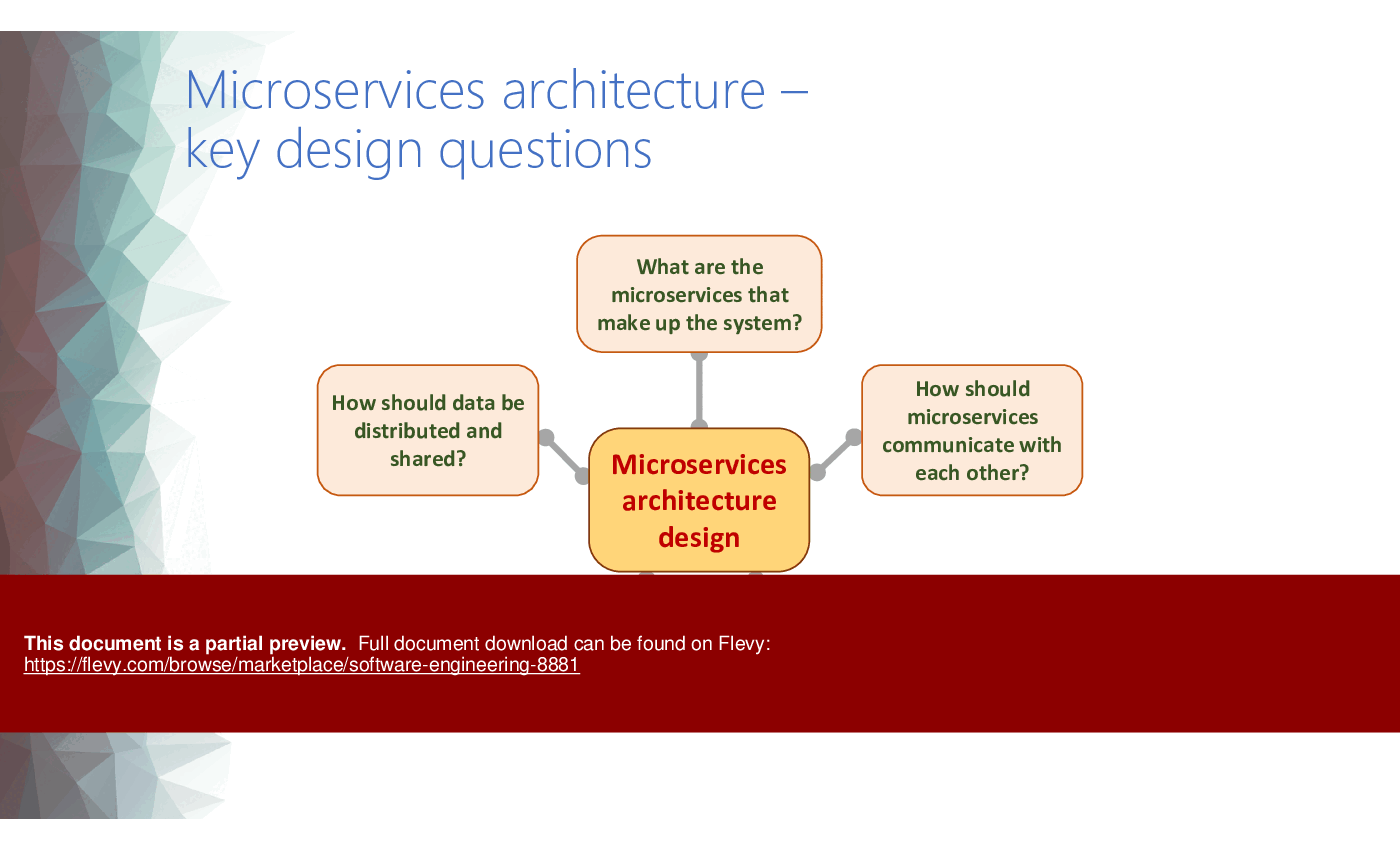
Microservices commonly communicate via RESTful services and similar protocols; the deck covers microservices design patterns, service communication protocols, and deployment strategies to support independent services. The Microservices Architecture section addresses these topics beginning on page 333 and references RESTful services.What should buyers compare when choosing a software engineering slide deck or template set?
Buyers should compare slide count, included templates (SDLC, agile frameworks, architecture), coverage of cloud and microservices models, and author pedigree or experience. These attributes affect fit for purpose; this product is a 433-slide PPTX with SDLC and architecture templates and Agile frameworks.How can a project manager use templates from a deck to run a project kickoff effectively?
A project manager can use SDLC templates to define phases, milestone dates, roles/responsibilities, and initial backlog structure, then map agile frameworks to sprint cadence and governance. The presentation explicitly lists SDLC templates and agile frameworks for Scrum and Kanban to support kickoff planning and alignment.What practices in training materials improve software reliability?
The materials emphasize input validation, fault avoidance, effective error handling, design patterns, refactoring, and programming practices aimed at maintainability and resilience. Reliable programming topics and best practices for improving software quality are covered in the Reliable Programming section and related templates.How long should workshops on Agile, Architecture, and Microservices typically run?
The product suggests timed workshop agendas: an Agile Methodologies Overview of about 90 minutes, a Software Architecture Design session of about 120 minutes, and a Microservices Deployment Strategies session of about 90 minutes as sample durations.Document FAQ
These are questions addressed within this presentation.
What is software engineering?
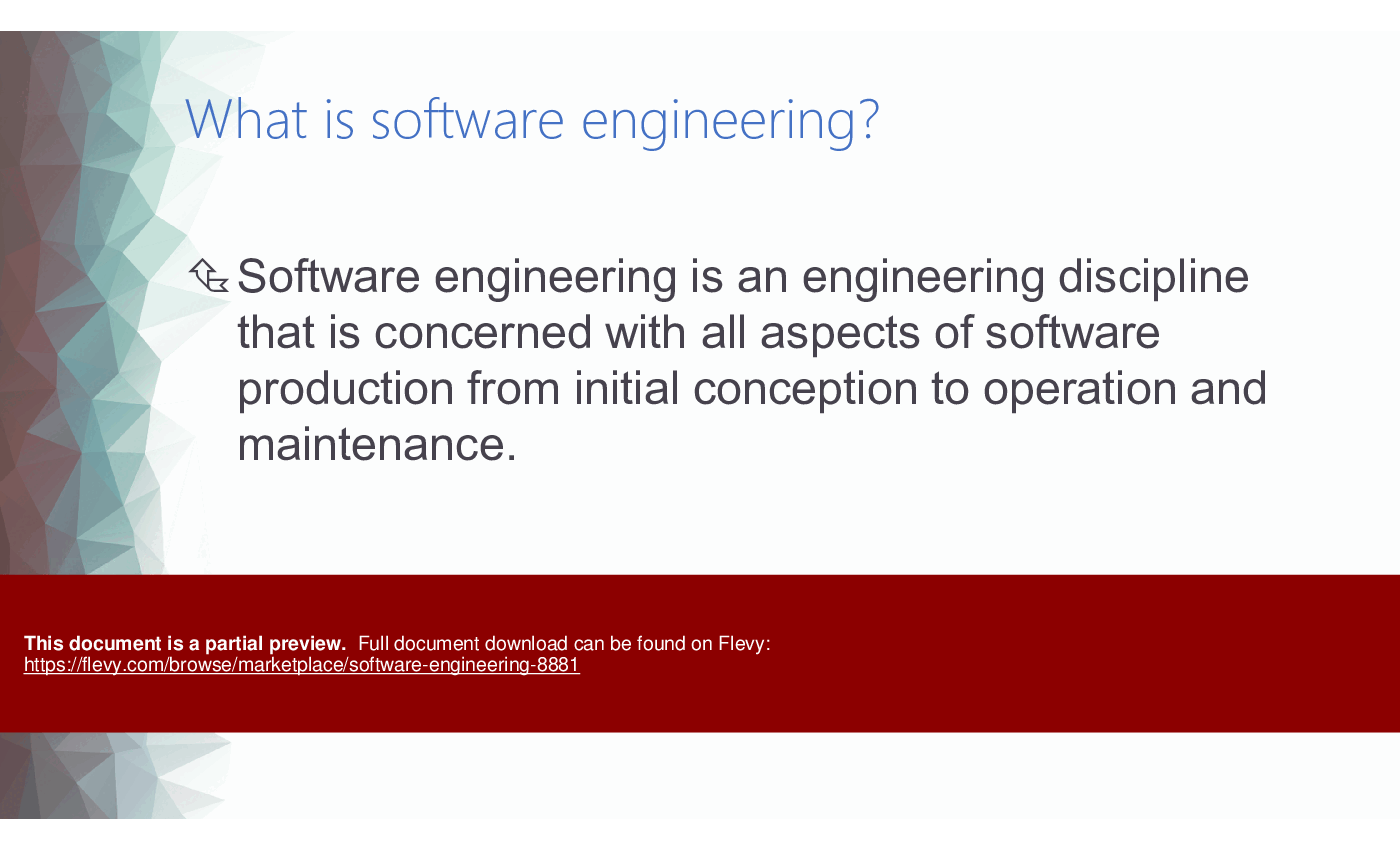
Software engineering is an engineering discipline that focuses on all aspects of software production, from initial conception to operation and maintenance.
What are the key principles of agile software engineering?
Agile software engineering emphasizes customer collaboration, rapid delivery of working software, and responsiveness to change.
How does microservices architecture differ from traditional monolithic architecture?
Microservices architecture consists of independent services that can be developed, deployed, and scaled individually, while monolithic architecture requires the entire application to be rebuilt for changes.
What are the benefits of cloud-based software?
Cloud-based software offers scalability, cost-effectiveness, and reduced infrastructure management, allowing businesses to focus on development.
How can I ensure software reliability?
Implementing best practices such as input validation, fault avoidance, and effective error handling can significantly enhance software reliability.
What is a design pattern?
A design pattern is a general reusable solution to a commonly occurring problem within a given context in software design.
What is refactoring in programming?
Refactoring is the process of restructuring existing computer code without changing its external behavior to improve its readability and reduce complexity.
How can I manage software project risks?
Identifying potential risks early, assessing their impact, and developing mitigation strategies are essential for effective risk management in software projects.
Glossary
• Agile - A methodology focused on iterative development and customer collaboration.
• Microservices - Independent services that communicate over a network to form a complete application.
• Cloud Computing - Delivery of computing services over the internet.
• Refactoring - The process of restructuring existing code to improve its readability and maintainability.
• Design Pattern - A reusable solution to a common software design problem.
• Software Development Lifecycle (SDLC) - The process of planning, creating, testing, and deploying software.
• RESTful Services - Web services that follow REST architectural principles for communication.
• User Story - A short description of a feature from the perspective of the end user.
• Input Validation - The process of ensuring that user input is correct and secure.
• Fault Tolerance - The ability of a system to continue functioning in the event of a failure.
• Service-Oriented Architecture (SOA) - An architectural pattern that allows services to communicate over a network.
• Continuous Deployment - A software release process where changes are automatically deployed to production after passing tests.
• Scalability - The capability of a system to handle a growing amount of work or its potential to accommodate growth.
• Usability - The ease with which users can learn and use a software product.
• Maintainability - The ease with which a software product can be modified to correct faults, improve performance, or adapt to a changed environment.
• Security - The measures taken to protect a software product from unauthorized access and vulnerabilities.
• Availability - The degree to which a system is operational and accessible when required for use.
• Responsiveness - The speed at which a system responds to user inputs or requests.
• Resilience - The ability of a system to recover from failures and continue to operate.
Source: Best Practices in Software PowerPoint Slides: Software Engineering PowerPoint (PPTX) Presentation Slide Deck, RadVector Consulting




























