
This framework is developed by a team of former McKinsey and Big 4 consultants. The presentation follows the headline-body-bumper slide format used by global consulting firms.
Editor Summary
Employee Onboarding is a 28-slide PowerPoint (PPTX) that delivers a strategic framework and practical templates for improving onboarding processes, centered on 4 core principles: avoid the traditional employment trap, facilitate introductions, identify authentic personal strengths, and apply those strengths.
Read moreIncludes onboarding process flow template, checklist, introduction template, strengths framework, presentation slides, and feedback forms. Target users include HR leaders, hiring managers, organizational development professionals, and executives. Sold as a digital download on Flevy with immediate digital download and used for designing or revising onboarding programs.
This deck is for situations where an organization needs to design or revise onboarding to improve new-hire socialization, role clarity, engagement, and retention.
HR leaders designing onboarding programs: mapping end-to-end onboarding process flows and defining success metrics for new hires.
Hiring managers integrating new employees: facilitating colleague introductions and clarifying role expectations during the first weeks.
Organizational development professionals running workshops: using group exercises to identify personal strengths and create customized templates.
Executives reviewing talent retention: assessing onboarding costs versus retention impact and approving rollout plans.
The 4-principle framework, diagnostic checklists, and workshop agenda reflect common consulting practice of structured frameworks, diagnostics, and customizable templates.
The single most pressing challenge for an organization in this knowledge economy is attracting and retaining talented people. This can be a make or break challenge for the organization.
Starting on the right foot is absolutely essential to overcoming this challenge. Organizations, particularly HR, need to have an effective Onboarding process. In order to accomplish this, present-day HR needs to be clear regarding the challenges of modern-day Onboarding and establish an onboarding process that yields a rewarding experience for the employees.
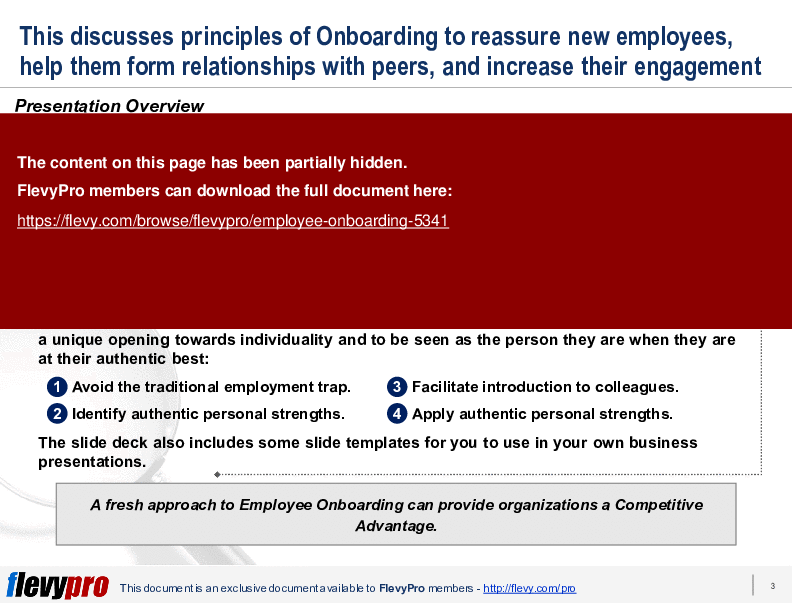
This presentation provides an overview of the 4 core principles to onboarding that provides employees a chance to make a renewed beginning in a fresh social situation and offers them a unique opening towards individuality and to be seen as the person they are when they are at their authentic best:
1. Avoid the traditional employment trap
2. Facilitate introduction to colleagues
3. Identify authentic personal strengths
4. Apply authentic personal strengths
A fresh approach to Employee Onboarding can provide organizations a Competitive Advantage.
The slide deck also includes some slide templates for you to use in your own business presentations.
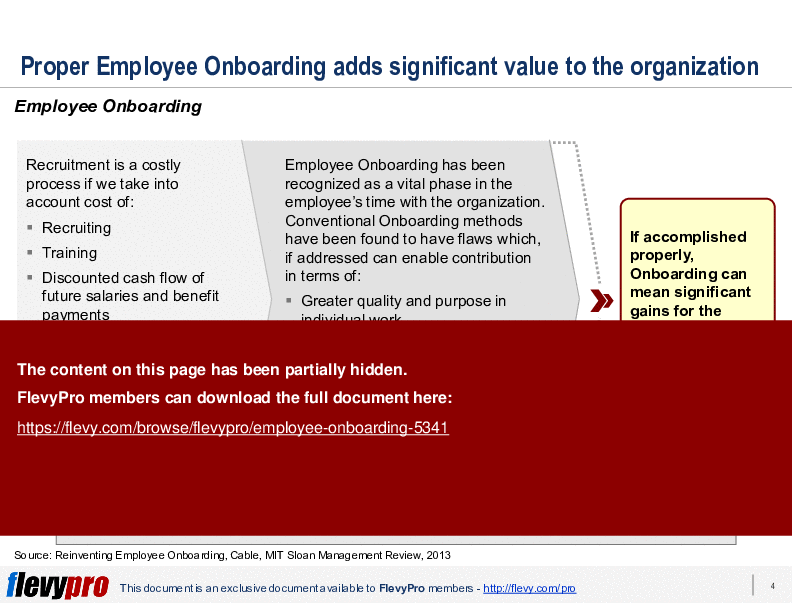
This presentation delves into the significant value that proper Employee Onboarding can add to an organization. It highlights the costly nature of recruitment and training, emphasizing the importance of an effective onboarding process to mitigate these expenses. The PPT outlines the flaws in conventional onboarding methods and provides actionable insights to address these issues, ensuring greater quality and purpose in individual work.
The presentation also explores the challenges of onboarding, detailing common issues such as poor socialization of organizational values and lack of role clarity. By addressing these challenges, organizations can establish a rewarding onboarding experience that fosters employee engagement and retention. The slide deck includes templates to aid in the creation of customized onboarding processes tailored to your organization's unique needs.
This synopsis was written by Marcus [?] based on the analysis of the full 28-slide presentation.
Executive Summary
The Employee Onboarding presentation provides a strategic framework for organizations to enhance their onboarding processes. It addresses the critical challenges faced during onboarding and outlines effective approaches to socialization. By implementing the 4 core principles of onboarding, organizations can foster a welcoming environment that encourages new employees to engage fully, thereby improving retention and productivity. This presentation includes practical templates that can be utilized to streamline the onboarding experience.
Who This Is For and When to Use
• HR leaders responsible for designing onboarding programs
• Managers involved in integrating new hires into teams
• Organizational development professionals focusing on employee engagement
• Executives aiming to improve talent retention strategies
Best-fit moments to use this deck:
• During the development or revision of onboarding processes
• At workshops aimed at enhancing employee engagement strategies
• For training sessions focused on onboarding best practices
Learning Objectives
• Define the key challenges associated with traditional onboarding processes
• Identify effective strategies for socializing new employees into the organizational culture
• Establish a framework for implementing the 4 core principles of onboarding
• Develop actionable templates to facilitate the onboarding process
• Enhance employee engagement and retention through improved onboarding practices
• Foster a supportive environment that encourages new hires to express their authentic selves
Table of Contents
• Overview (page 3)
• Challenges with Onboarding (page 6)
• Approach to Socialization (page 10)
• Core Principles to Onboarding (page 14)
• Templates (page 20)
Primary Topics Covered
• Challenges with Onboarding - Identifies common issues faced during the onboarding process, including poor socialization of organizational values and lack of role clarity.
• Approach to Socialization - Discusses 2 distinct approaches to onboarding: Organizational Identity Socialization and Personal Identity Socialization, highlighting their benefits.
• Core Principles to Onboarding - Outlines 4 essential principles: avoid the traditional employment trap, identify authentic personal strengths, facilitate introductions to colleagues, and apply authentic personal strengths.
• Templates - Provides ready-to-use templates that can be customized for onboarding presentations and processes.
Deliverables, Templates, and Tools
• Onboarding process flow template to visualize the steps involved
• Checklist for onboarding challenges to ensure all aspects are addressed
• Template for introducing new hires to colleagues
• Framework for identifying and leveraging personal strengths in the workplace
• Presentation slides for onboarding workshops
• Feedback forms to assess the effectiveness of the onboarding process
Slide Highlights
• Overview of onboarding challenges and their impact on employee retention
• Comparison of Organizational Identity Socialization vs. Personal Identity Socialization
• Detailed explanation of the 4 core principles of onboarding
• Visual aids illustrating the onboarding process flow
• Templates for practical application in onboarding scenarios
Potential Workshop Agenda
Introduction to Onboarding Principles (60 minutes)
• Overview of onboarding challenges
• Discussion on the importance of effective onboarding
• Introduction to the 4 core principles
Practical Application Session (90 minutes)
• Group activity on identifying personal strengths
• Role-playing introductions to colleagues
• Development of customized onboarding templates
Feedback and Wrap-up (30 minutes)
• Collect participant feedback on the onboarding process
• Discuss next steps for implementing changes
Customization Guidance
• Tailor the onboarding templates to reflect your organization’s values and culture
• Adjust the language and terminology used in the presentation to align with your organizational context
• Incorporate specific metrics for measuring onboarding success relevant to your organization
• Modify the workshop agenda based on the unique needs of your team
Secondary Topics Covered
• The impact of onboarding on employee engagement
• Strategies for managing change during the onboarding process
• Best practices for facilitating socialization among new hires
• Techniques for addressing common onboarding challenges
Topic FAQ
What are the most common challenges with modern employee onboarding?
Modern onboarding often struggles with poor socialization of organizational values and unclear role expectations, which can hinder engagement and retention. The overview also highlights the high cost of recruitment and training that ineffective onboarding fails to mitigate; the document specifically cites poor socialization and lack of role clarity.
What are the main approaches to socialization during onboarding?
The presentation contrasts Organizational Identity Socialization, which focuses on instilling organizational values and norms, with Personal Identity Socialization, which emphasizes employees’ individual strengths and authenticity. It outlines benefits of each approach and when to emphasize one over the other, noting both approaches by name.
What core principles should guide an onboarding program?
The material recommends 4 core principles: avoid the traditional employment trap, facilitate introductions to colleagues, identify authentic personal strengths, and apply those strengths in role-relevant ways. These 4 principles form the central implementation framework described in the deck.
How can organizations measure whether onboarding is successful?
Success is measured through employee feedback collected after onboarding, tracking retention rates of new hires, and monitoring new-hire engagement levels to see if role clarity and socialization improved; the slides call out employee feedback, retention rates, and engagement levels.
What should I look for when choosing an onboarding toolkit or template pack?
Look for tools that address common onboarding failures (socialization and role clarity), include practical templates (process flow, checklists, introduction templates), provide workshop agendas, and offer guidance on customization and measurement; the Employee Onboarding deck lists an onboarding process flow template and feedback forms.
How do onboarding templates provide measurable value versus their purchase cost?
The presentation links effective onboarding to lower recruitment and training costs by improving retention and early productivity; ready-to-use templates and feedback tools streamline program setup and measurement, helping to reduce the costly cycle of rehiring and retraining through customizable templates and the 4 core principles.
What should I prioritize when onboarding remote hires?
Prioritize deliberate socialization and role clarity using virtual equivalents of introductions, strengths-identification exercises, and feedback loops. The deck explains adapting the 4 core principles for remote settings by using virtual tools to facilitate introductions and collect feedback, emphasizing adapted core principles and virtual tools.
After a restructuring, how can we restore role clarity quickly for affected employees?
Use a mapped onboarding process flow, a checklist for onboarding challenges, facilitated introductions to new teammates, and strengths-identification activities to reestablish expectations and social identity. The presentation recommends these concrete tools—onboarding process flow template and checklist—to speed role clarity recovery.
Document FAQ
These are questions addressed within this presentation.
What are the main challenges with traditional onboarding?
Traditional onboarding often fails to address issues like poor socialization of organizational values and lack of role clarity, which can hinder employee engagement and retention.
How can organizations improve their onboarding processes?
By implementing the 4 core principles of onboarding, organizations can create a more engaging and supportive environment for new hires.
What are the benefits of Personal Identity Socialization?
This approach fosters a sense of authenticity and engagement among new employees, leading to lower turnover rates and higher job satisfaction.
How can I use the templates provided in this presentation?
The templates can be customized to fit your organization’s specific onboarding needs and can serve as a foundation for developing your onboarding materials.
What is the importance of facilitating introductions to colleagues?
Facilitating introductions helps new employees feel welcomed and supported, easing their transition into the organization and enhancing their social identity.
How do I measure the success of my onboarding program?
Success can be measured through employee feedback, retention rates, and the overall engagement levels of new hires after the onboarding process.
What role does HR play in the onboarding process?
HR is responsible for designing and implementing effective onboarding strategies that align with organizational goals and enhance employee experience.
Can these principles be applied to remote onboarding?
Yes, the core principles can be adapted for remote onboarding by utilizing virtual tools and platforms to facilitate socialization and engagement.
Glossary
• Onboarding - The process of integrating new employees into an organization.
• Socialization - The process by which new employees learn and adapt to the organizational culture.
• Personal Identity Socialization - An onboarding approach that emphasizes the individual strengths and perspectives of new hires.
• Organizational Identity Socialization - An onboarding approach focused on instilling pride in organizational values and norms.
• Employee Engagement - The emotional commitment an employee has to their organization and its goals.
• Retention - The ability of an organization to keep its employees over time.
• Core Principles - Fundamental guidelines that shape the onboarding process.
• Templates - Pre-designed materials that can be customized for specific uses.
• Change Management - The process of managing transitions within an organization.
• Feedback Loop - A system for collecting and responding to employee feedback to improve processes.
• Role Clarity - The understanding of job responsibilities and expectations by an employee.
• Authenticity - The quality of being genuine and true to oneself in the workplace.
• Social Identity - The way individuals define themselves in relation to the groups they belong to.
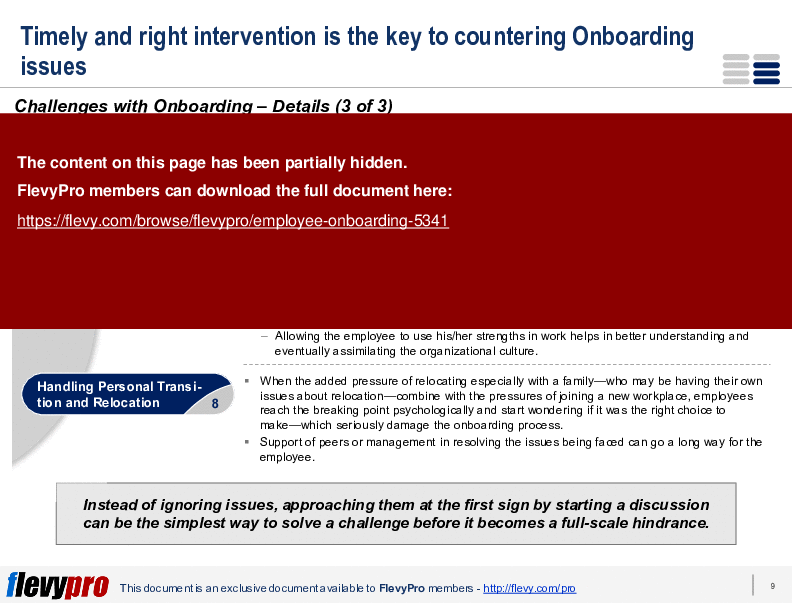
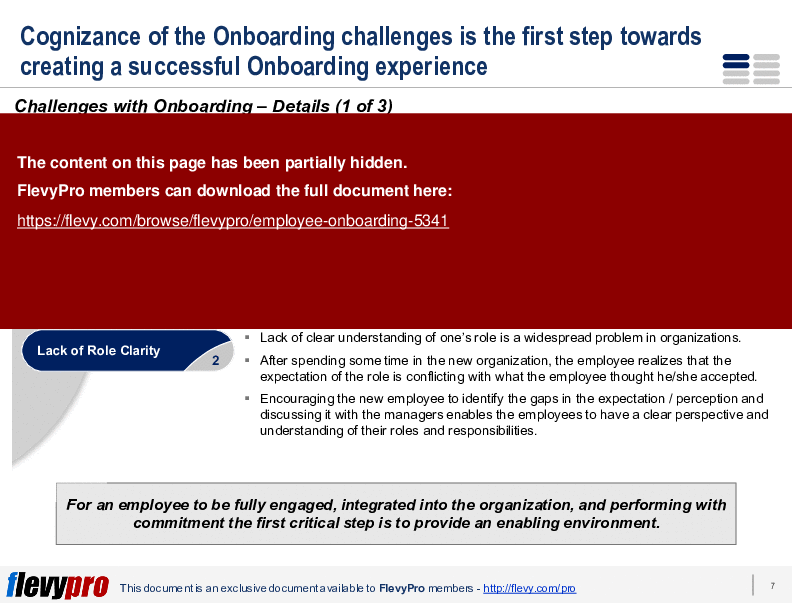
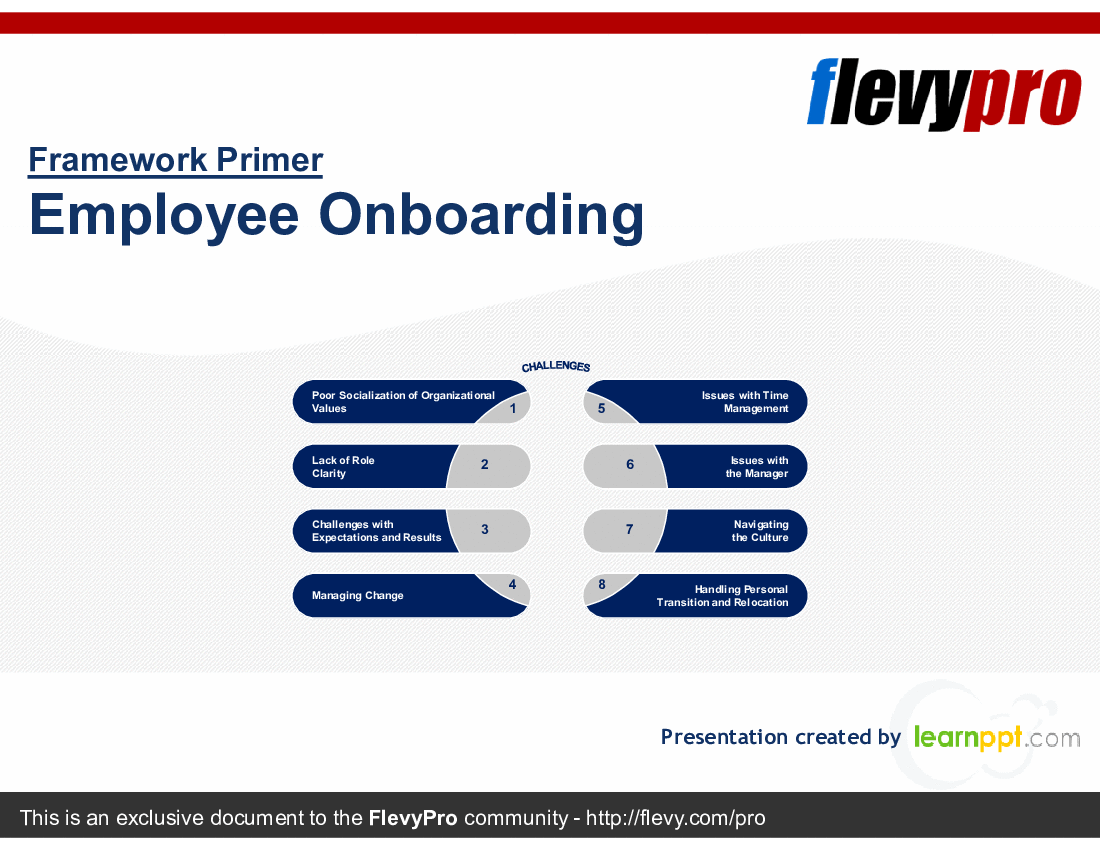
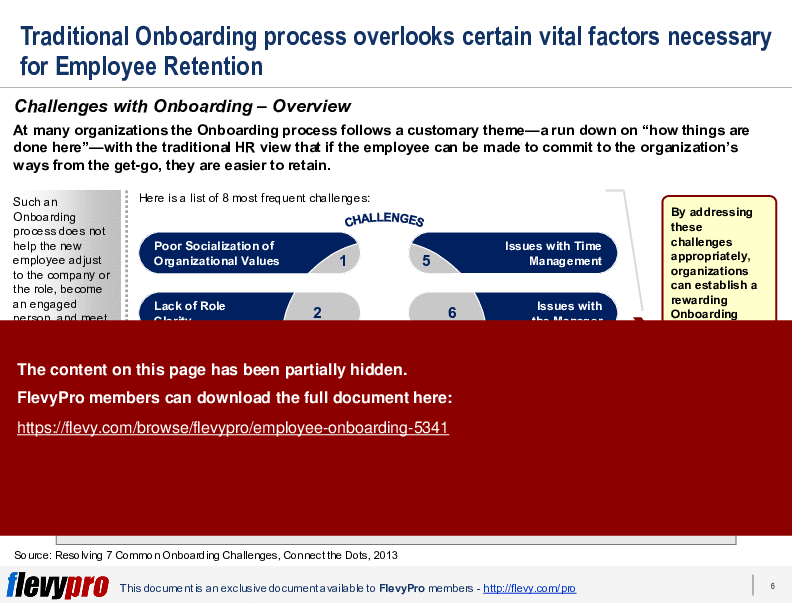
This PPT slide critiques traditional onboarding processes and their impact on employee retention. It identifies eight key challenges: poor socialization of organizational values, lack of role clarity, managing expectations and results, navigating change, time management issues, manager-related challenges, cultural navigation, and personal transition. These challenges highlight the complexity of onboarding and the risks of neglecting these areas. Effectively addressing these challenges can enhance the onboarding experience, leading to improved employee retention and productivity. Organizations should refine their onboarding strategies to be comprehensive and supportive, fostering engagement and reducing turnover risks, ultimately driving better business outcomes.
This PPT slide outlines 4 core principles for effective employee onboarding. The first principle, "Avoid the traditional employment trap," advocates for innovative onboarding methods that engage new hires. The second principle, "Identify authentic personal strengths," emphasizes recognizing unique employee capabilities for better role alignment and job satisfaction. The third principle, "Facilitate introduction to colleagues," highlights the importance of social integration to enhance collaboration and support for new hires. The fourth principle, "Apply authentic personal strengths," encourages employees to leverage their strengths, boosting individual performance and team effectiveness. These actionable principles aim to refine onboarding strategies, leading to higher retention rates and improved employee morale.
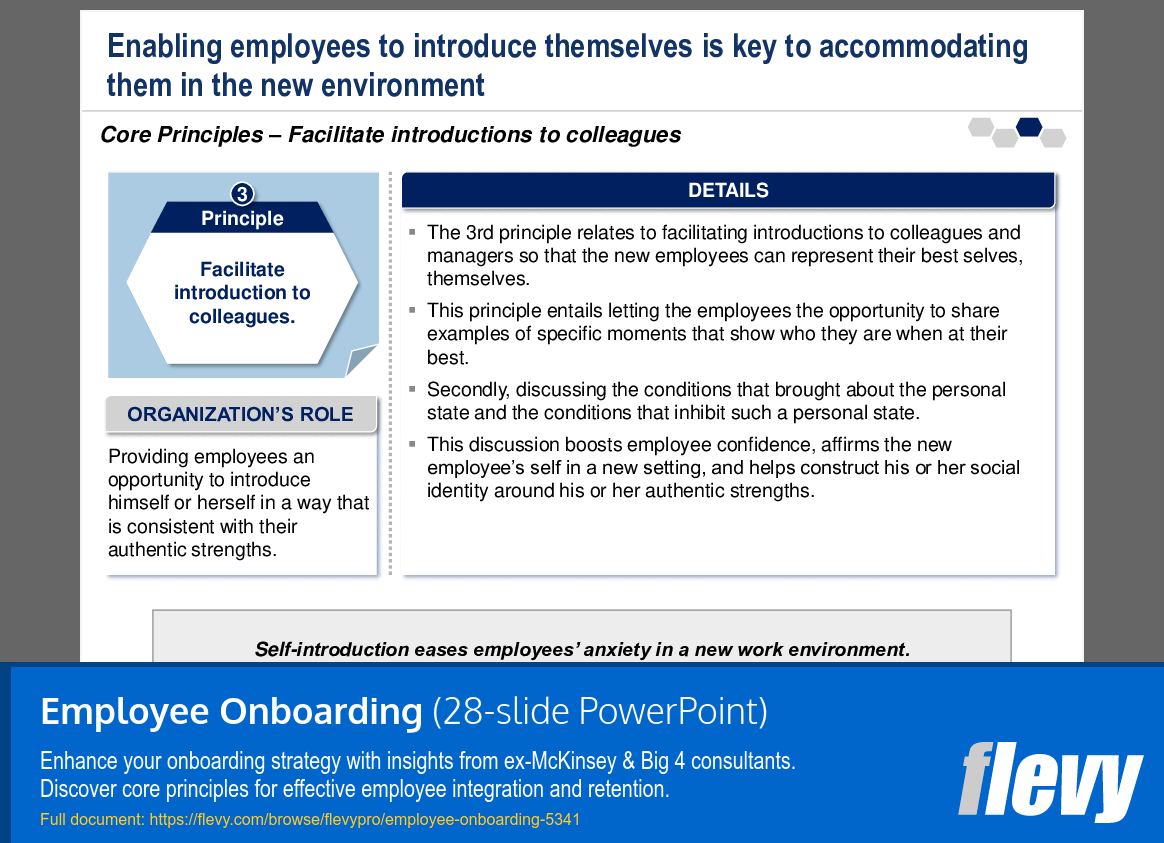
Facilitating employee introductions is a core principle in onboarding that helps new hires present their best selves. Allowing employees to share personal experiences enables effective identity expression, fostering belonging and showcasing strengths. Understanding personal conditions influencing self-introductions, including supportive and inhibiting factors, enhances the onboarding experience, empowering new employees. Encouraging self-introductions alleviates anxiety associated with starting a new role, affirming identity and building a social identity based on authentic strengths. This holistic approach can significantly impact employee engagement and retention. Organizations should prioritize structured self-introduction opportunities during onboarding to create an inclusive atmosphere, leading to smoother transitions for new hires.
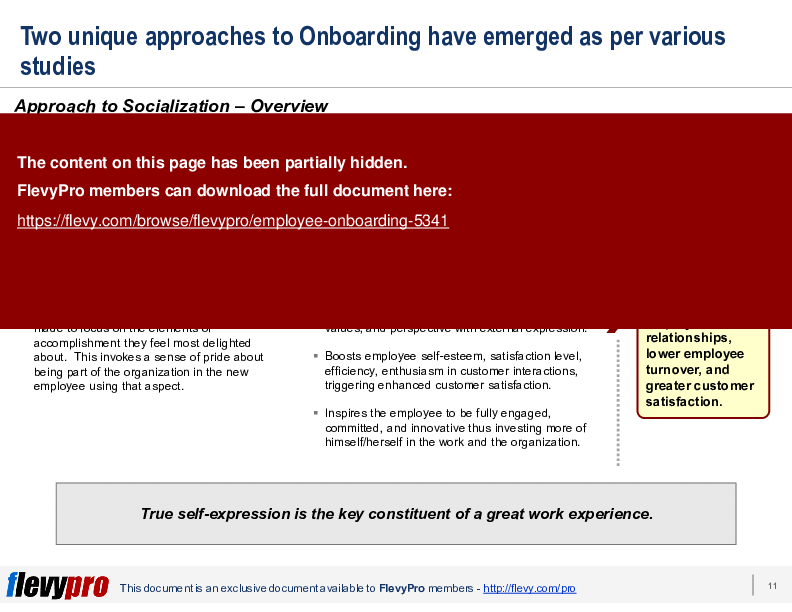
Redefining the onboarding process is essential in today's knowledge-driven economy, focusing on attracting and retaining top talent. Organizations can enhance employee socialization practices with minimal investment, emphasizing new hires' personal identity and authenticity. This approach fosters assimilation, boosts well-being and self-confidence, instills purpose, and cultivates genuine work relationships. Ensuring new hires remain satisfied and committed while minimizing stress and burnout is crucial. Recognizing and utilizing authentic strengths leads to feelings of authenticity, positivity, and purpose, resulting in increased innovation, creativity, stamina, resilience, job effectiveness, and enhanced colleague connections. Empowering employees to bring their true selves to work creates a dynamic and engaged workforce, making a robust onboarding strategy a compelling investment.
This PPT slide compares 2 employee onboarding approaches: Organizational Identity Socialization and Personal Identity Socialization. Organizational Identity Socialization instills pride in employees regarding their affiliation with the organization, emphasizing organizational norms and values. It informs new employees about the organization's achievements, fostering a sense of belonging. Personal Identity Socialization focuses on the individual, encouraging alignment of personal values with roles, promoting self-expression. Key benefits include increased self-esteem and job satisfaction, leading to enhanced efficiency and customer interactions. Aligning personal and organizational identities can strengthen employment relationships, reduce turnover, and improve customer satisfaction, making these insights pivotal for effective onboarding strategies.
This PPT slide addresses the evolving perception of employment in the modern business environment, emphasizing the need to avoid the conventional employment trap. Traditional employment views employees as transactional resources, often neglecting personal engagement. In contrast, the millennial workforce seeks self-expression through work, necessitating workplaces that allow employees to bring their whole selves to their roles. Leveraging employees' unique strengths enhances satisfaction and drives organizational success. With Generation Y expected to dominate the workforce, their perspective views jobs as extensions of their lives rather than mere income sources. Organizations must adapt their employment strategies to attract and retain talent in this changing landscape, leading to more effective employee engagement and better business outcomes.
Source: Best Practices in Employee Engagement, Onboarding PowerPoint Slides: Employee Onboarding PowerPoint (PPTX) Presentation Slide Deck, LearnPPT Consulting
This framework is developed by a team of former McKinsey and Big 4 consultants. The presentation follows the headline-body-bumper slide format used by global consulting firms.
For $10.00 more, you can download this document plus 2 more FlevyPro documents. That's just $13 each.
ABOUT FLEVYPRO
This document is part of the FlevyPro Library, a curated knowledge base of documents for our FlevyPro subscribers.
FlevyPro is a subscription service for on-demand business frameworks and analysis tools. FlevyPro subscribers receive access to an exclusive library of curated business documents—business framework primers, presentation templates, Lean Six Sigma tools, and more—among other exclusive benefits.
The average daily rate of a McKinsey consultant is $6,625 (not including expenses). The average price of a Flevy document is $65.
Trusted by over 10,000+ Client Organizations
Since 2012, we have provided business templates to over 10,000 businesses and organizations of all sizes, from startups and small businesses to the Fortune 100, in over 130 countries.
"Last Sunday morning, I was diligently working on an important presentation for a client and found myself in need of additional content and suitable templates for various types of graphics. Flevy.com proved to be a treasure trove for both content and design at a reasonable price, considering the time I
saved. I encountered a download issue during the ordering process. However, a quick email to Flevy's support team, even on a Sunday (!!!), resulted in assistance within less than an hour, allowing me to download the content I needed. Fantastic job, Flevy! I give 5 stars for both content/price and customer service. Thank you!
"
– M. E., Chief Commercial Officer, International Logistics Service Provider
"As a young consulting firm, requests for input from clients vary and it's sometimes impossible to provide expert solutions across a broad spectrum of requirements. That was before I discovered Flevy.com.
Through subscription to this invaluable site of a plethora of topics that are key and crucial to consulting, I
have been able to exceed expectations and deliver quality advice and solutions to my clients. The quality and expertise of the authors are exemplary and gives me great confidence to use as part of my service offerings.
I highly recommend this company for any consultant wanting to apply international best practice standards in their service offerings.
"
– Nishi Singh, Strategist and MD at NSP Consultants
"I like your product. I'm frequently designing PowerPoint presentations for my company and your product has given me so many great ideas on the use of charts, layouts, tools, and frameworks. I really think the templates are a valuable asset to the job."
– Roberto Fuentes Martinez, Senior Executive Director at Technology Transformation Advisory
"Flevy is our 'go to' resource for management material, at an affordable cost. The Flevy library is comprehensive and the content deep, and typically provides a great foundation for us to further develop and tailor our own service offer."
– Chris McCann, Founder at Resilient.World
"As a small business owner, the resource material available from FlevyPro has proven to be invaluable. The ability to search for material on demand based our project events and client requirements was great for me and proved very beneficial to my clients. Importantly, being able to easily edit and tailor
the material for specific purposes helped us to make presentations, knowledge sharing, and toolkit development, which formed part of the overall program collateral. While FlevyPro contains resource material that any consultancy, project or delivery firm must have, it is an essential part of a small firm or independent consultant's toolbox.
"
– Michael Duff, Managing Director at Change Strategy (UK)
"Flevy is now a part of my business routine. I visit Flevy at least 3 times each month.
Flevy has become my preferred learning source, because what it provides is practical, current, and useful in this era where the business world is being rewritten.

many challenges and there is the need to make the right decisions in a short time, with so much scattered information, we are fortunate to have Flevy. Flevy investigates, selects, and puts at our disposal the best of the best to help us be successful in our work.
"
– Omar Hernán Montes Parra, CEO at Quantum SFE
"As an Independent Management Consultant, I find Flevy to add great value as a source of best practices, templates and information on new trends. Flevy has matured and the quality and quantity of the library is excellent. Lastly the price charged is reasonable, creating a win-win value for
the customer, Flevy and the various authors. This is truly a service that benefits the consulting industry and associated clients. Thanks for providing this service.
"
– Jim Schoen, Principal at FRC Group
"As a consulting firm, we had been creating subject matter training materials for our people and found the excellent materials on Flevy, which saved us 100's of hours of re-creating what already exists on the Flevy materials we purchased."
Download our free compilation of 50+ slides and templates on Organizational Design, Change Management, and Corporate Culture. Methodologies include ADKAR, Burke-Litwin Change Model, McKinsey 7-S, Competing Values Framework, etc.