
Business Model Diversification   29-slide PPT PowerPoint presentation slide deck (PPTX)
$29.00

Business Model Diversification (29-slide PPT PowerPoint presentation slide deck (PPTX)) Preview Image
Log in to unlock full preview.
Business Model Diversification (29-slide PPT PowerPoint presentation slide deck (PPTX)) Preview Image
Arrow   Click main image to view in full screen.

Business Model Diversification (PowerPoint PPTX Slide Deck)

PowerPoint (PPTX) 29 Slides FlevyPro Document

$29.00
FlevyPro price: FREE (included in subscription)
This framework is developed by a team of former McKinsey and Big 4 consultants. The presentation follows the headline-body-bumper slide format used by global consulting firms.
Add to Cart


Immediate download
Free lifetime updates

BUSINESS MODEL INNOVATION PPT DESCRIPTION

Editor Summary Business Model Diversification is a 29-slide PowerPoint (PPTX) framework developed by consultants from McKinsey and Big 4 firms that presents an eight-step approach to analyze and optimize business model portfolios. Read more

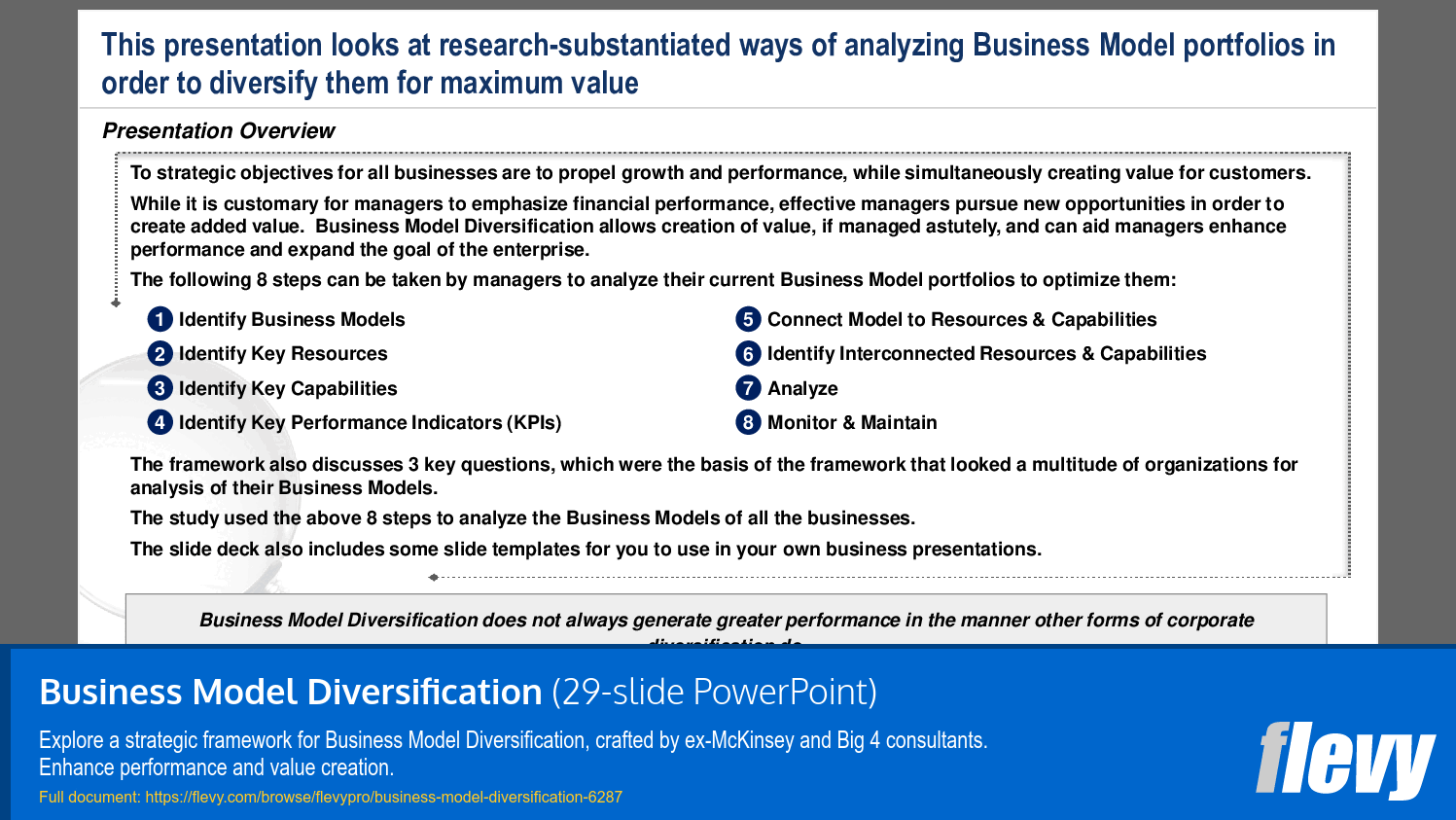
To strategic objectives for all businesses are to propel growth and performance, while simultaneously creating value for customers.

While it is customary for managers to emphasize financial performance, effective managers pursue new opportunities in order to create added value. Business Model Diversification allows creation of value, if managed astutely, and can aid managers enhance performance and expand the goal of the enterprise.

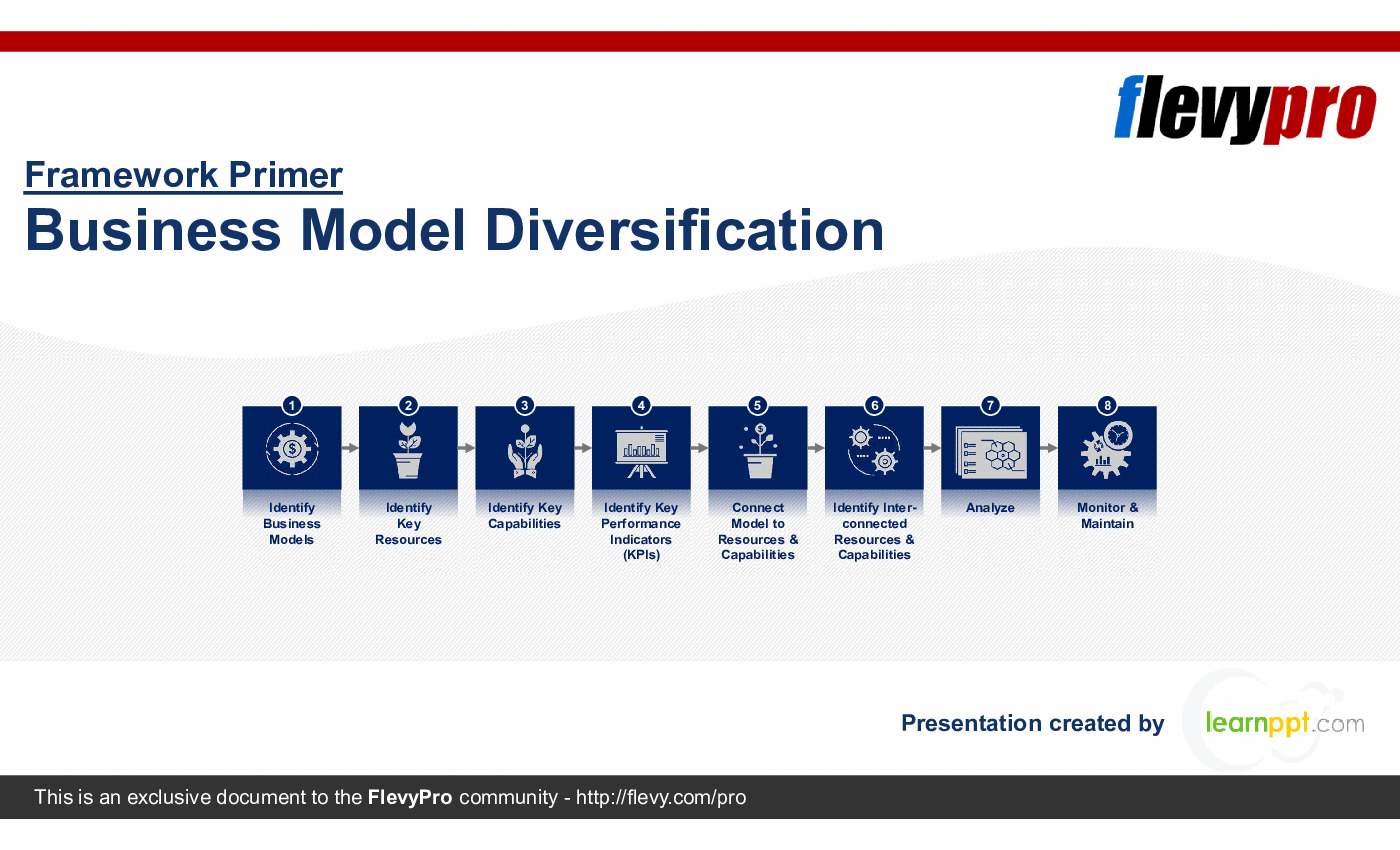
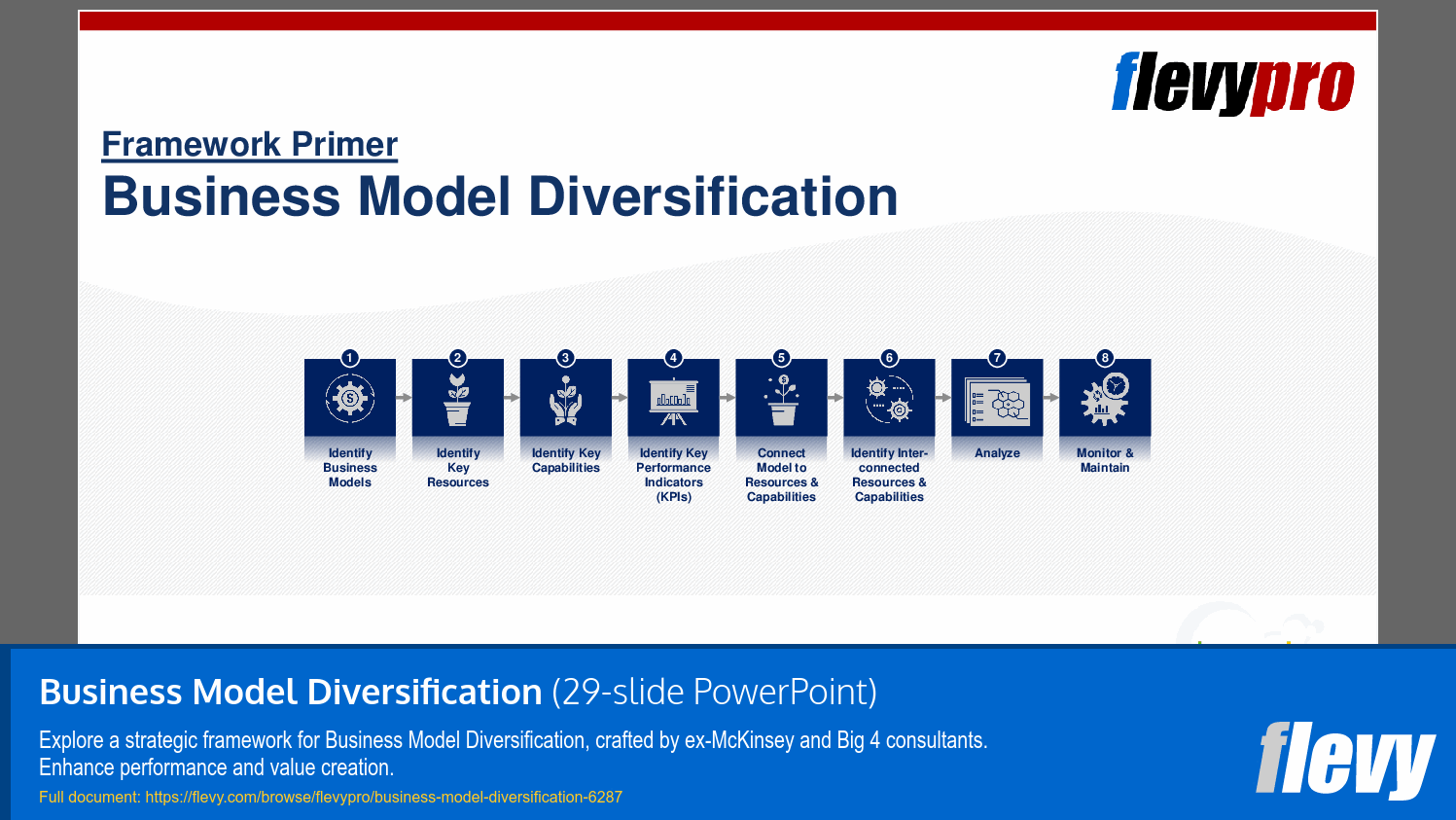
The following 8 steps can be taken by managers to analyze their current Business Model portfolios to optimize them:

1. Identify Business Models
2. Identify Key Resources
3. Identify Key Capabilities
4. Identify Key Performance Indicators (KPIs)
5. Connect Model to Resources & Capabilities
6. Identify Interconnected Resources & Capabilities
7. Analyze
8. Monitor & Maintain

The framework also discusses 3 key questions, which were the basis of the framework that looked a multitude of organizations for analysis of their Business Models.

The study used the above 8 steps to analyze the Business Models of all the businesses.

The slide deck also includes some slide templates for you to use in your own business presentations.

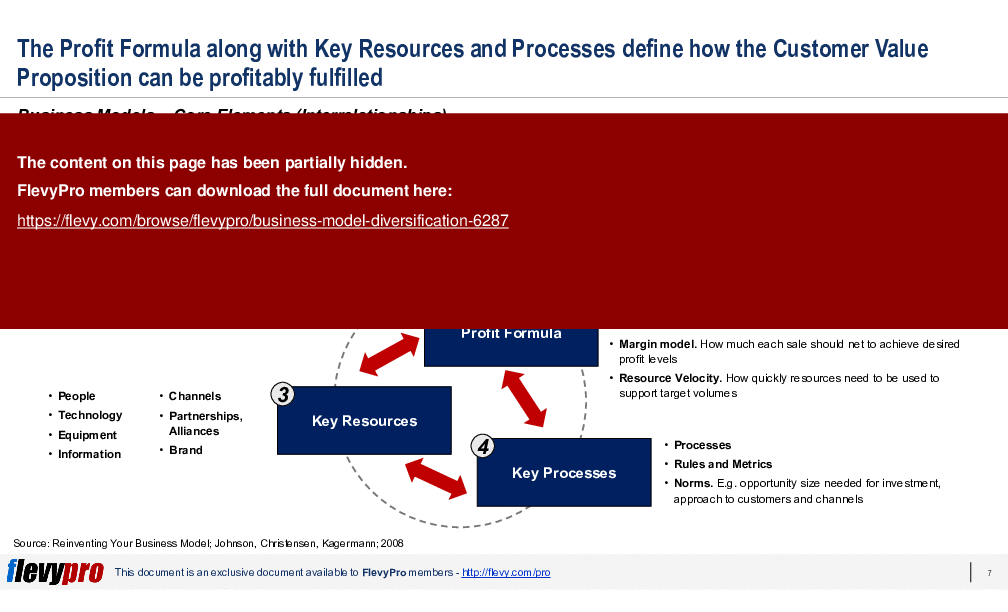
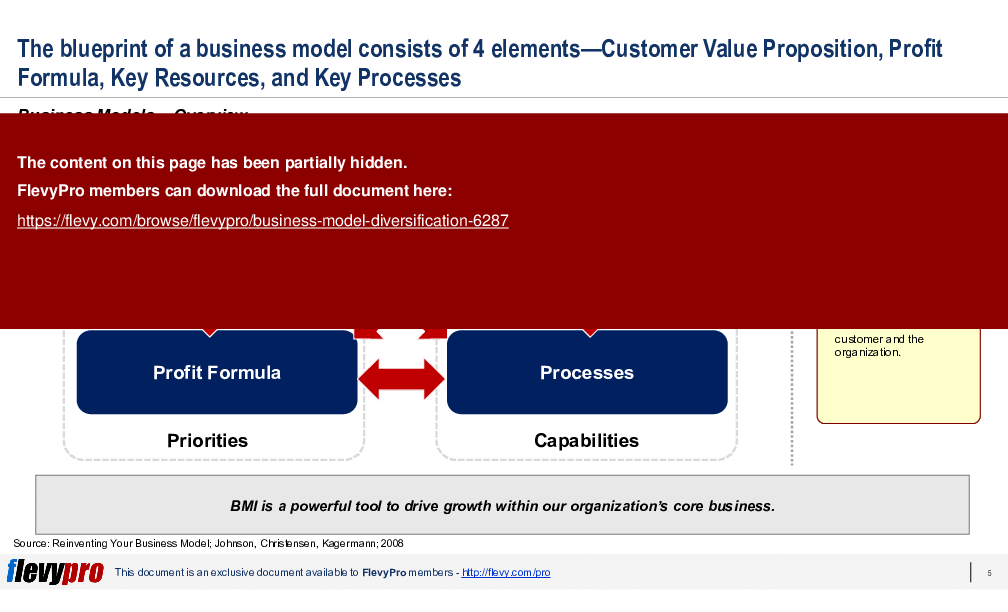
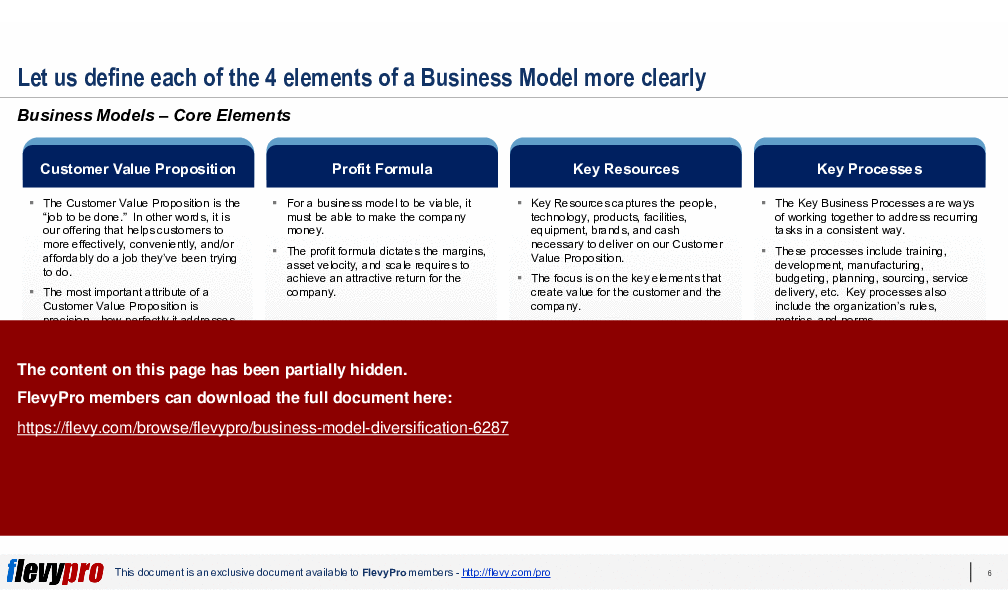
This presentation offers a blueprint for understanding the core elements of a business model: Customer Value Proposition, Profit Formula, Key Resources, and Key Processes. By breaking down these components, managers can pinpoint how to deliver value effectively and ensure profitability. The visual tools included in the deck help map out significant connections among business models, making it easier to identify areas for improvement and growth.

The PPT also delves into the strategic considerations for assessing and optimizing new business models for inclusion in a portfolio. Managers are guided through a structured approach to evaluate potential synergies and resource sharing opportunities. This framework is essential for executives looking to refine their business strategies and achieve sustainable growth.

Got a question about this document? Email us at flevypro@flevy.com.

MARCUS OVERVIEW

This synopsis was written by Marcus [?] based on the analysis of the full 29-slide presentation.


Executive Summary
The Business Model Diversification presentation provides a strategic framework designed to help organizations analyze and optimize their business model portfolios for enhanced performance and value creation. Developed by experienced consultants from McKinsey and Big 4 firms, this presentation outlines eight actionable steps for effective business model diversification. It emphasizes the importance of aligning business models with organizational resources and capabilities, ensuring that managers can identify growth opportunities and optimize their business strategies effectively.

Who This Is For and When to Use
•  Corporate executives seeking to enhance organizational performance through strategic diversification
•  Business development leaders focused on identifying new growth opportunities
•  Strategy consultants advising clients on optimizing business model portfolios
•  Innovation managers looking to leverage multiple business models for competitive advantage

Best-fit moments to use this deck:
•  During strategic planning sessions to assess current business model effectiveness
•  When exploring opportunities for diversification in response to market changes
•  In workshops aimed at aligning resources and capabilities with business model strategies

Learning Objectives
•  Define the components of a successful business model and their interrelationships
•  Identify key resources and capabilities necessary for effective business model diversification
•  Analyze performance indicators to measure the success of diversified business models
•  Establish a framework for ongoing monitoring and maintenance of business model portfolios
•  Connect business models to organizational resources for optimal value creation
•  Develop actionable strategies for leveraging multiple business models to drive growth

Table of Contents
•  Overview (page 3)
•  Business Models (page 5)
•  Business Model Diversification (page 9)
•  Business Model Portfolio Analysis (page 15)
•  Templates (page 20)

Primary Topics Covered
•  Business Model Framework - A detailed overview of the 4 core elements of a business model: Customer Value Proposition, Profit Formula, Key Resources, and Key Processes.
•  Business Model Diversification - Strategies for employing multiple business models to enhance value creation and revenue generation.
•  Key Questions for Diversification - Framework for assessing considerations, value optimization, and continuous improvement of business model portfolios.
•  Eight Steps for Portfolio Analysis - A structured approach to analyze and visualize business model interrelationships and their impact on performance.
•  Performance Indicators - Identification of key performance indicators (KPIs) to evaluate the effectiveness of diversified business models.
•  Resource and Capability Alignment - Techniques for connecting business models to organizational resources and capabilities for maximum impact.

Deliverables, Templates, and Tools
•  Business Model Portfolio Analysis template for visualizing and assessing business models
•  Framework for identifying key resources and capabilities across business models
•  Performance measurement tools to track KPIs relevant to business model success
•  Templates for documenting customer value propositions and profit formulas
•  Guidelines for ongoing monitoring and maintenance of diversified business models
•  Example frameworks for connecting models to resources and capabilities

Slide Highlights
•  Overview of the eight-step process for business model diversification
•  Visual mapping tool for analyzing business model interconnections
•  Detailed breakdown of the 4 core elements of a business model
•  Case studies illustrating successful business model diversification strategies
•  Key questions to guide strategic decision-making in business model optimization

Potential Workshop Agenda
Business Model Analysis Session (90 minutes)
•  Review current business models and identify areas for diversification
•  Discuss key resources and capabilities needed for effective implementation
•  Develop a preliminary action plan for optimizing business model portfolios

Performance Metrics Workshop (60 minutes)
•  Establish key performance indicators (KPIs) for measuring success
•  Identify mechanisms for tracking and reporting on performance metrics
•  Discuss strategies for continuous improvement in business model effectiveness

Customization Guidance
•  Tailor the framework to reflect specific organizational resources and capabilities
•  Adjust performance metrics to align with industry standards and organizational goals
•  Incorporate relevant case studies or examples from the organization’s experience

Secondary Topics Covered
•  Competitive advantage through business model innovation
•  Risk management strategies in business model diversification
•  The role of technology in enhancing business model effectiveness
•  Best practices for aligning business models with customer needs

Topic FAQ

What are the core elements of a business model I should evaluate?

A business model should be evaluated across 4 core elements: Customer Value Proposition, Profit Formula, Key Resources, and Key Processes. The Business Model Diversification framework organizes analysis around these 4 elements to help link value delivery to resource and capability requirements.

How should I choose KPIs to measure diversified business models?

Choose KPIs that reflect the profit formula and customer value proposition for each model, combining financial, customer, and operational metrics where relevant. The framework in Business Model Diversification emphasizes aligning KPIs with the model’s profit drivers and value offering, ending with defined KPIs.

What are practical steps to analyze a business model portfolio?

A structured approach includes identifying business models, listing key resources and capabilities, defining KPIs, connecting models to resources, spotting interconnected resources, analyzing performance and synergies, and establishing monitoring and maintenance. The presentation explicitly documents these eight steps for portfolio analysis.

What should I look for in a business model diversification toolkit?

Look for a clear business model framework (value proposition, profit formula, resources, processes), portfolio analysis templates, KPI measurement tools, mapping visuals, and guidance on monitoring. Business Model Diversification includes a Business Model Portfolio Analysis template and performance measurement tools as core elements.

How long does a typical portfolio analysis workshop take and who should attend?

The deck provides sample agendas including a 90-minute Business Model Analysis session and a 60-minute Performance Metrics workshop; attendees typically include executives, business development leads, strategy consultants, and innovation managers. Use those agendas to scope time and participant roles.

Where should I start if I need to diversify because of market change?

Begin by identifying your existing business models and documenting their customer value propositions, profit formulas, and required resources. The framework’s first explicit step is to Identify Business Models, which then leads into resource and capability mapping as step 2 and 3.

Can the business model diversification framework be applied across different industries?

Yes; the framework is designed to be adaptable and can be applied across various industries by tailoring resource and capability mapping and performance metrics to the industry context, reflecting its stated adaptability across industries.

Are templates in this category worth buying versus building in-house?

Prebuilt templates save time preparing analysis visuals, KPI trackers, and presentation slides and provide ready formats for workshops; the Business Model Diversification deck includes slide templates and workshop agendas such as a 90-minute analysis session and a 60-minute metrics workshop.

Document FAQ
These are questions addressed within this presentation.

What is the primary goal of business model diversification?
Business model diversification aims to enhance organizational performance and create additional value through the strategic use of multiple business models.

How can organizations assess their current business model portfolio?
Organizations can assess their portfolio by analyzing the interconnections between business models, resources, and performance metrics.

What are the key elements of a successful business model?
A successful business model comprises a clear customer value proposition, a viable profit formula, essential resources, and effective processes.

How does the framework support ongoing business model optimization?
The framework provides a structured approach for continuous monitoring and analysis, allowing organizations to adapt and refine their business models over time.

What role do KPIs play in business model diversification?
KPIs are critical for measuring the effectiveness of diversified business models and ensuring alignment with strategic objectives.

Can the framework be applied to different industries?
Yes, the framework is designed to be adaptable and can be applied across various industries to enhance business model effectiveness.

How often should organizations review their business model portfolios?
Organizations should regularly review their portfolios, ideally on a quarterly basis, to ensure alignment with market changes and strategic goals.

What challenges might arise during business model diversification?
Challenges may include resource allocation, alignment of capabilities, and ensuring that new models complement existing operations.

Glossary
•  Business Model - A system of organizational pursuits to generate and capture value.
•  Customer Value Proposition - The offering that addresses customer needs effectively.
•  Profit Formula - The financial structure that dictates how a business generates profit.
•  Key Resources - Essential assets required to deliver on the customer value proposition.
•  Key Processes - The operational methods used to execute business activities consistently.
•  Performance Indicators - Metrics used to assess the success of business models.
•  Diversification - The strategy of employing multiple business models to enhance value creation.
•  Economies of Scope - Cost advantages that arise from utilizing shared resources across multiple business models.
•  Synergies - The potential for combined business models to create greater value than operating independently.
•  Continuous Improvement - Ongoing efforts to enhance products, services, or processes.
•  Resource Allocation - The distribution of resources among various business models.
•  Market Adaptation - The process of adjusting business strategies in response to market changes.
•  Strategic Planning - The process of defining an organization's direction and making decisions on allocating resources.
•  Innovation Management - The discipline of managing processes in innovation.
•  Value Creation - The process of generating worth through business activities.
•  Business Model Portfolio - A collection of different business models operated by an organization.
•  Risk Reduction - Strategies employed to minimize potential losses in business operations.
•  Competitive Advantage - The favorable position an organization holds over its competitors.
•  Business Model Innovation (BMI) - The process of developing new business models to create value.
•  Monitoring and Maintenance - Ongoing evaluation and adjustment of business models to ensure effectiveness.

BUSINESS MODEL INNOVATION PPT SLIDES

Defining the Four Core Elements of Business Models

Framework for Comprehensive Business Model Analysis

Foundational Steps for Business Model Portfolio Analysis

Enhancing Business Model Portfolios Over Time

Interconnected Elements of Business Model Framework

Source: Best Practices in Business Model Innovation, Business Model PowerPoint Slides: Business Model Diversification PowerPoint (PPTX) Presentation Slide Deck, LearnPPT Consulting


$29.00
FlevyPro price: FREE (included in subscription)
This framework is developed by a team of former McKinsey and Big 4 consultants. The presentation follows the headline-body-bumper slide format used by global consulting firms.
Add to Cart
  

Did you need more documents?

Consider a FlevyPro subscription from $39/month. View plans here.

For $10.00 more, you can download this document plus 2 more FlevyPro documents. That's just $13 each.

ABOUT FLEVYPRO

This document is part of the FlevyPro Library, a curated knowledge base of documents for our FlevyPro subscribers.

FlevyPro is a subscription service for on-demand business frameworks and analysis tools. FlevyPro subscribers receive access to an exclusive library of curated business documents—business framework primers, presentation templates, Lean Six Sigma tools, and more—among other exclusive benefits.

Click here to learn more about FlevyPro and its benefits.

Did you know?
The average daily rate of a McKinsey consultant is $6,625 (not including expenses). The average price of a Flevy document is $65.


Trusted by over 10,000+ Client Organizations
Since 2012, we have provided business templates to over 10,000 businesses and organizations of all sizes, from startups and small businesses to the Fortune 100, in over 130 countries.
AT&T GE Cisco Intel IBM Coke Dell Toyota HP Nike Samsung Microsoft Astrazeneca JP Morgan KPMG Walgreens Walmart 3M Kaiser Oracle SAP Google E&Y Volvo Bosch Merck Fedex Shell Amgen Eli Lilly Roche AIG Abbott Amazon PwC T-Mobile Broadcom Bayer Pearson Titleist ConEd Pfizer NTT Data Schwab


Read Customer Testimonials

 
"I like your product. I'm frequently designing PowerPoint presentations for my company and your product has given me so many great ideas on the use of charts, layouts, tools, and frameworks. I really think the templates are a valuable asset to the job."

– Roberto Fuentes Martinez, Senior Executive Director at Technology Transformation Advisory
 
"I have used Flevy services for a number of years and have never, ever been disappointed. As a matter of fact, David and his team continue, time after time, to impress me with their willingness to assist and in the real sense of the word. I have concluded in fact "

– Roberto Pelliccia, Senior Executive in International Hospitality
 
"FlevyPro has been a brilliant resource for me, as an independent growth consultant, to access a vast knowledge bank of presentations to support my work with clients. In terms of RoI, the value I received from the very first presentation I downloaded paid for my subscription many times over! The "

– Roderick Cameron, Founding Partner at SGFE Ltd
 
"Flevy is our 'go to' resource for management material, at an affordable cost. The Flevy library is comprehensive and the content deep, and typically provides a great foundation for us to further develop and tailor our own service offer."

– Chris McCann, Founder at Resilient.World
 
"As a consultant requiring up to date and professional material that will be of value and use to my clients, I find Flevy a very reliable resource.

The variety and quality of material available through Flevy offers a very useful and commanding source for information. Using Flevy saves me time, enhances my expertise and ends up being a good decision."

– Dennis Gershowitz, Principal at DG Associates
 
"The wide selection of frameworks is very useful to me as an independent consultant. In fact, it rivals what I had at my disposal at Big 4 Consulting firms in terms of efficacy and organization."

– Julia T., Consulting Firm Owner (Former Manager at Deloitte and Capgemini)
 
"As a consulting firm, we had been creating subject matter training materials for our people and found the excellent materials on Flevy, which saved us 100's of hours of re-creating what already exists on the Flevy materials we purchased."

– Michael Evans, Managing Director at Newport LLC
 
"Flevy.com has proven to be an invaluable resource library to our Independent Management Consultancy, supporting and enabling us to better serve our enterprise clients.

The value derived from our [FlevyPro] subscription in terms of the business it has helped to gain far exceeds the investment made, making a subscription a no-brainer for any growing consultancy – or in-house strategy team."

– Dean Carlton, Chief Transformation Officer, Global Village Transformations Pty Ltd.


Customers Also Bought These Documents


Customers Also Like These Documents

Explore Templates on Related Management Topics


Your Recently Viewed Documents
Download our FREE Strategy & Transformation Framework Templates

Download our free compilation of 50+ Strategy & Transformation slides and templates. Frameworks include McKinsey 7-S, Balanced Scorecard, Disruptive Innovation, BCG Curve, and many more.