
This framework is developed by a team of former McKinsey and Big 4 consultants. The presentation follows the headline-body-bumper slide format used by global consulting firms.
Theories of motivation PPT: Learn 6 key motivation theories in management and psychology. Download this clear, ready-to-use PowerPoint presentation now. 6 Theories of Motivation is a 37-slide PPT PowerPoint presentation slide deck (PPTX) available for immediate download upon purchase.
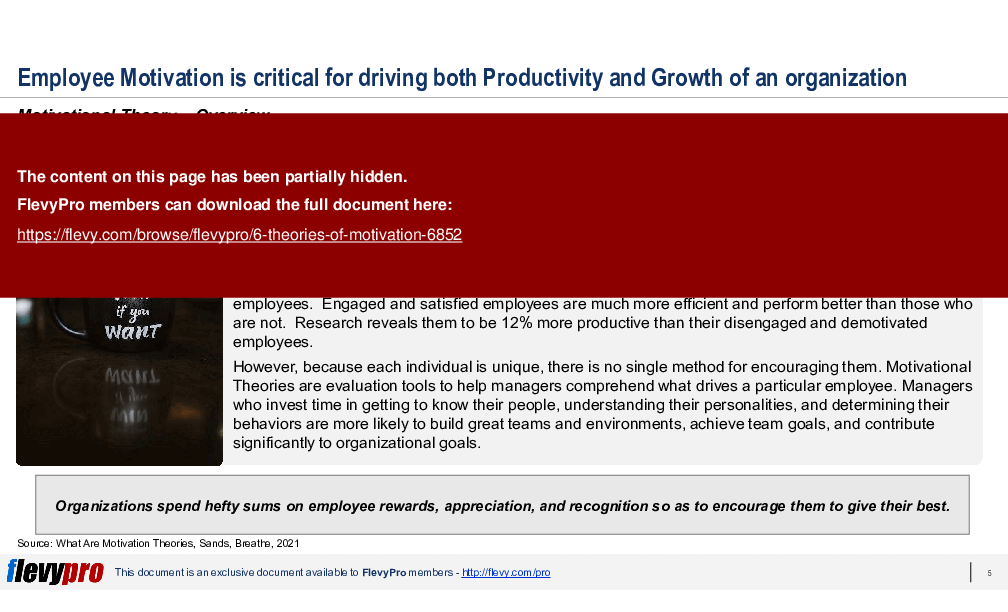
Interpreting the human psyche is a difficult undertaking. Determining what encourages and drives people to achieve their objectives isn't easy to figure out for Leaders and Human Capital experts. This is where research and insights gathered from the various Theories of Motivation comes to play.
As global research suggests, the importance of understanding the Theories of Motivation further amplifies that that only a fraction of employees feel engaged in their respective organizations.
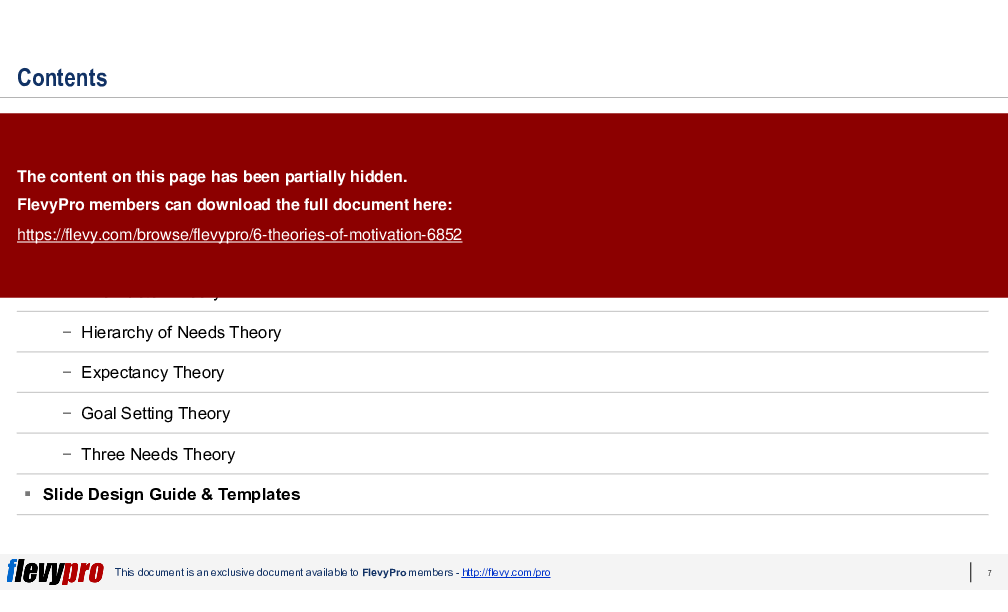
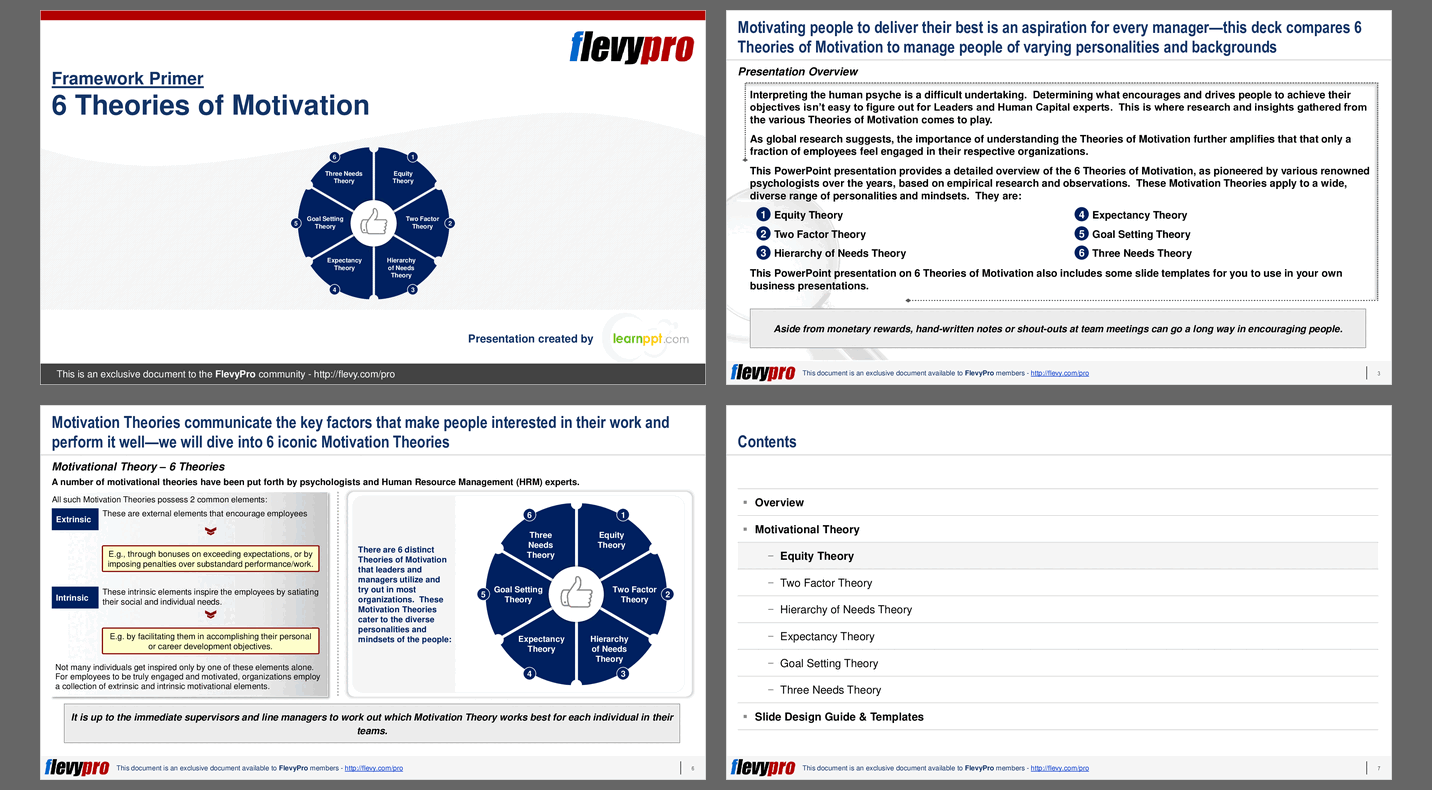
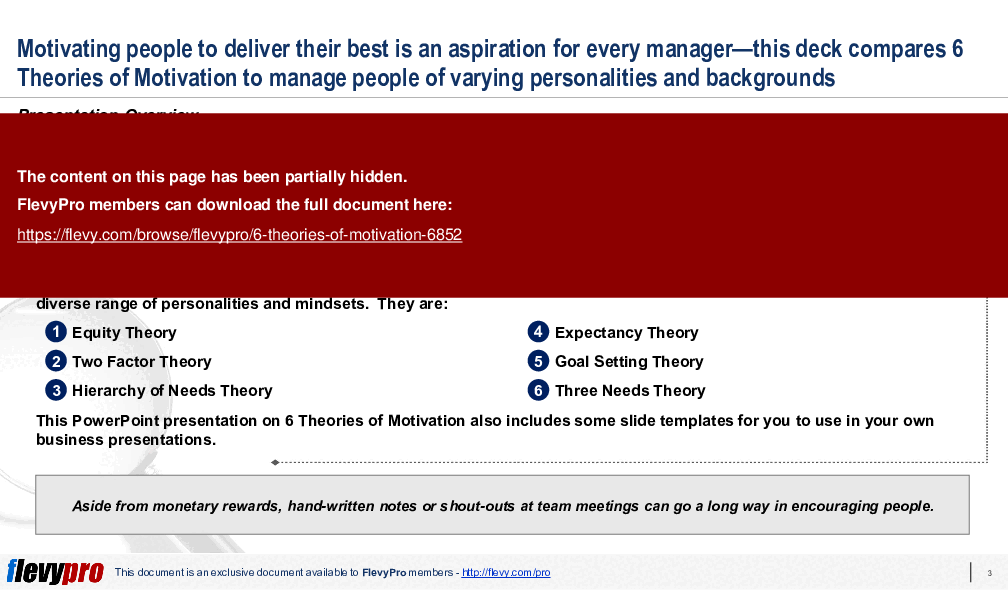
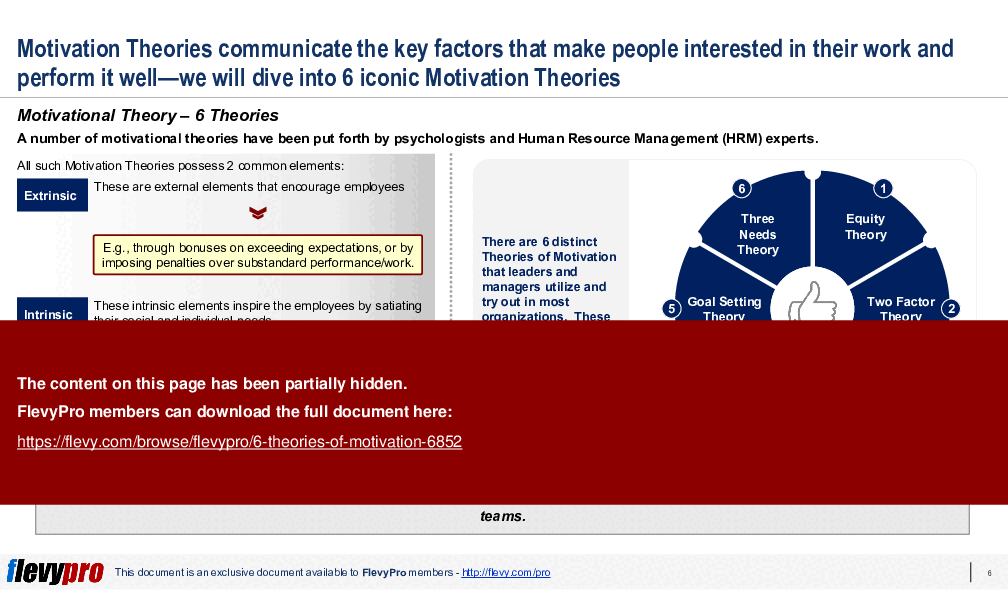
This PowerPoint presentation provides a detailed overview of the 6 Theories of Motivation, as pioneered by various renowned psychologists over the years, based on empirical research and observations. These Motivation Theories apply to a wide, diverse range of personalities and mindsets. They are:
1. Equity Theory – People equate themselves to their colleagues and try to ascertain whether or not they are being treated fairly. Their responses, actions, and behaviors are altered in accordance with the way they are treated.
2. Two Factor Theory – Two Factor Theory suggests that elements such as achievement, recognition, meaningful work, responsibility and growth motivate people; whereas elements such as politics, bureaucratic setup, and working conditions influence employees' motivation levels negatively.
3. Maslow's Hierarchy of Needs Theory – This theory stipulates that by satisfying the 5 levels of human needs, people can be motivated. The 5 levels of needs are physiological (food, shelter, clothing), safety (employment, health), social (friendship), esteem (recognition, freedom), and self-actualization (personal growth).
4. Expectancy Theory – Per this theory, employee motivation is proportional to individuals' expectations that their efforts will create specific, valuable results.
5. Goal Setting Theory – This theory espouses that clearly defined, challenging goals inspire people to deliver better performance—as they tend to work harder to achieve them—than vague, easily-achievable goals.
6. Three Needs Theory – The Three Needs Theory renders key findings concerning human personalities that facilitate in influencing and leading people successfully. The 3 needs are achievement, affiliation, and power.
In this presentation, we dig into each of these 6 theories, including framework visuals and advice to managers.
This PowerPoint presentation on 6 Theories of Motivation also includes some slide templates for you to use in your own business presentations.
This presentation is a must-have for managers aiming to enhance team engagement and productivity. Leverage these insights to tailor your leadership approach and drive exceptional results.
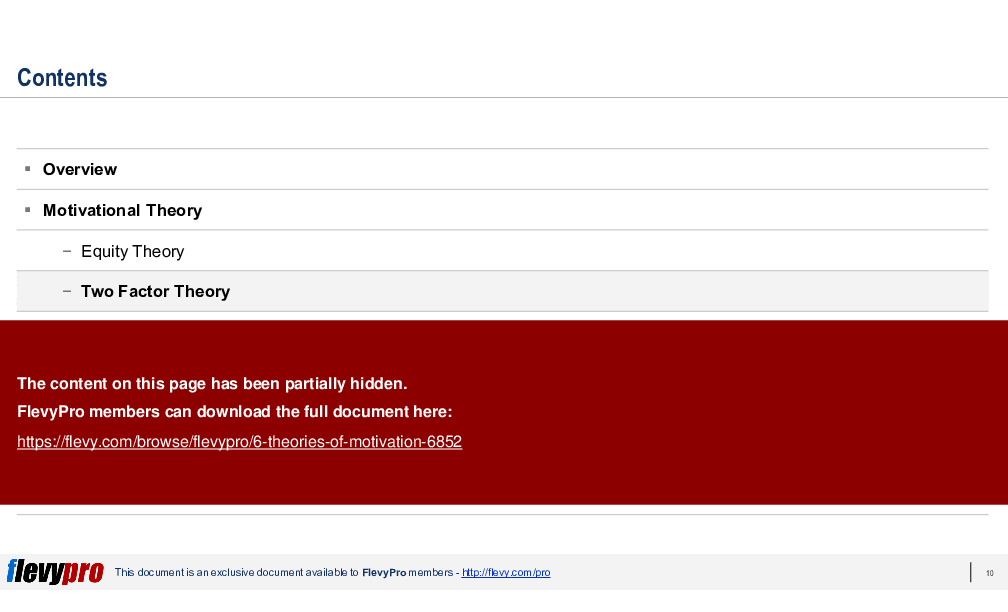
This PPT slide outlines Frederick Irving Herzberg's Two Factor Theory, which categorizes job-related factors into hygiene factors and motivational factors. Hygiene factors, such as workplace conditions and company policies, prevent dissatisfaction, but do not enhance job satisfaction. In contrast, motivational factors—like achievement, recognition, and meaningful work—directly influence motivation and job satisfaction. Herzberg asserts that job satisfaction and dissatisfaction are independent dimensions, challenging the notion that dissatisfaction stems solely from a lack of positive factors. Managers must recognize that removing dissatisfying elements does not guarantee increased satisfaction. Strategies such as job rotations and organizational restructuring can foster a more satisfying work environment, aligning management practices with the diverse needs of the workforce to drive engagement and satisfaction.
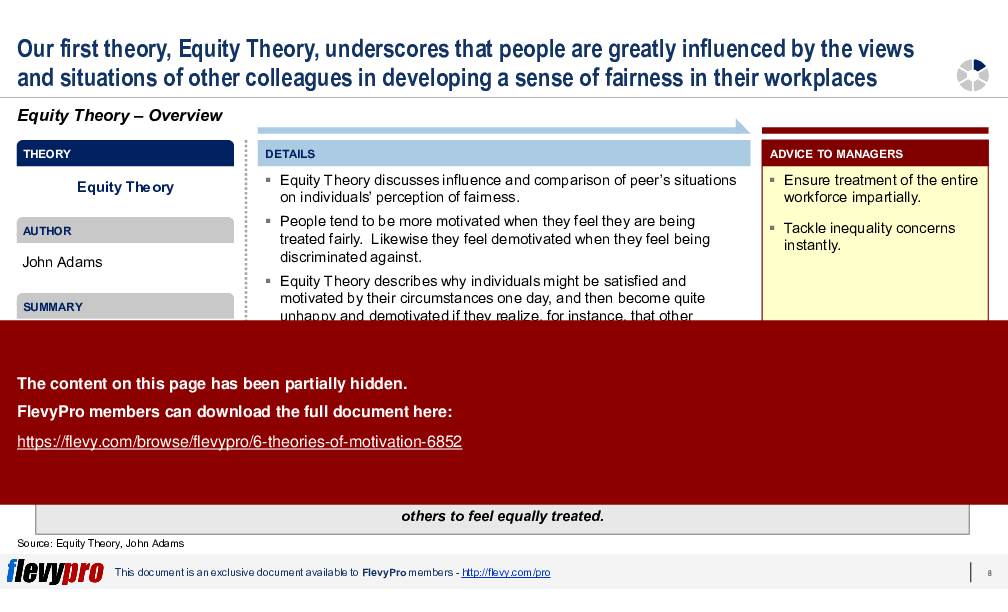
This PPT slide provides an overview of Equity Theory, developed by John Adams, which examines how individuals assess workplace treatment relative to peers. The core premise is that perceived fairness influences employee motivation; equitable treatment enhances motivation, while perceived unfairness leads to demotivation. Employees may feel satisfied until they discover peers receiving greater rewards for similar efforts, highlighting the dynamic nature of workplace motivation. Promotions or salary increases can inadvertently demotivate others who feel overlooked. Equity Theory emphasizes that motivation is influenced not only by tangible rewards, but also by subjective comparisons of treatment. Managers should ensure impartial treatment and address perceived inequalities to foster a motivated and engaged workforce, ultimately enhancing productivity and satisfaction.
This PPT slide outlines 6 prominent motivation theories that enhance employee engagement and performance, focusing on extrinsic and intrinsic motivators. Extrinsic motivators include external factors like bonuses and penalties that drive behavior, while intrinsic motivators address internal satisfaction and personal development needs. A blend of both motivators is essential for fostering an engaged workforce. The theories cater to various personalities, indicating that a one-size-fits-all approach is ineffective. Managers must discern which motivation theory resonates best with individuals to optimize team dynamics and productivity. These insights guide organizations in refining their motivational strategies, leading to improved employee satisfaction and performance.
This PPT slide outlines Maslow's Hierarchy of Needs, categorizing human motivations into Basic Needs, Psychological Needs, and Self-fulfillment Needs. Basic Needs, including Physiological requirements like food and safety, form the foundation of the pyramid. Psychological Needs encompass Social connections and Esteem, indicating that after meeting survival needs, individuals seek belonging and recognition for emotional well-being. At the apex, Self-fulfillment Needs represent the pursuit of self-actualization and creative expression. The framework has evolved to include Cognitive, Aesthetic, and Transcendence Needs, reflecting a broader understanding of human motivation. Organizations can leverage this framework to enhance employee engagement by recognizing individual motivational needs, fostering a more productive workforce.
This PPT slide provides an overview of Expectancy Theory, developed by Victor Vroom, which links employee motivation to the perceived value of rewards. The 3 critical components are Expectancy (belief that effort leads to performance), Instrumentality (belief that performance leads to rewards), and Valence (value placed on rewards). Motivation is influenced not only by external rewards, but also by individual characteristics like personality, knowledge, and skills. Effective motivation requires managers to establish clear connections between effort, performance, and rewards. Critics argue that Expectancy Theory oversimplifies motivation, neglecting external factors such as team dynamics and organizational culture. To enhance motivation, managers should offer growth opportunities and clearly document rewards for successful performance.
This PPT slide presents a framework for effective goal setting based on Locke's Goal Setting Theory, outlining 5 principles: Clarity, Challenge, Commitment, Feedback, and Task Complexity. Clarity emphasizes specific and logical goal orientation to reduce ambiguity and enhance focus. Challenge suggests goals should be stimulating yet achievable to motivate employees. Commitment highlights the importance of securing employee agreement on goals to foster ownership and accountability. Feedback stresses regular performance evaluations for alignment with organizational objectives. Task Complexity advocates breaking down challenging goals into manageable parts to prevent overwhelm. These principles collectively contribute to structured goal-setting practices that enhance team engagement and performance.
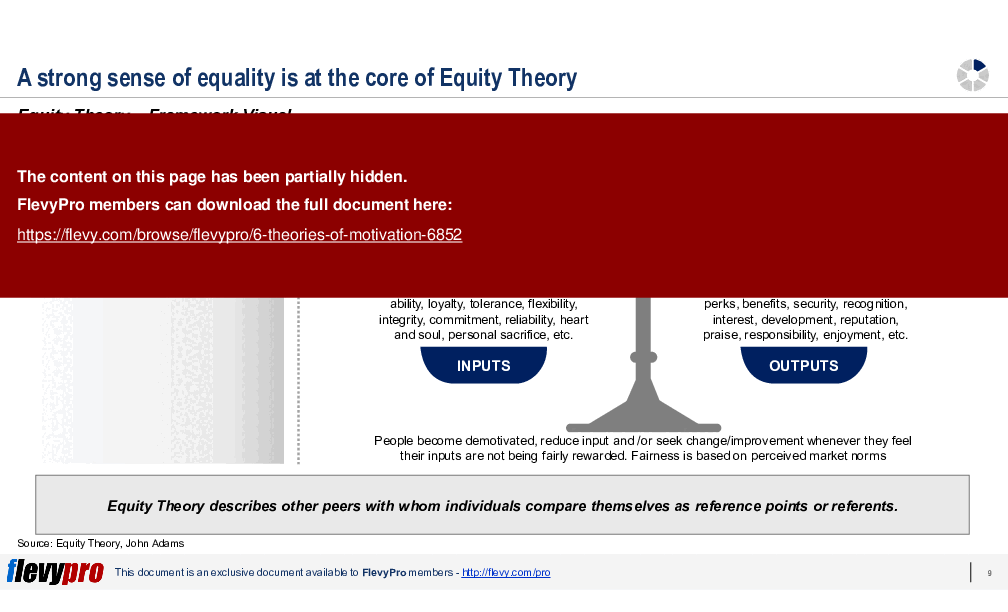
This PPT slide outlines the Equity Theory framework, focusing on the balance of inputs and outputs in the workplace. Inputs include employee contributions such as time, effort, loyalty, and integrity, while outputs encompass rewards like pay, benefits, and satisfaction. Calibration of these inputs and outputs against market references is essential for perceived fairness. When employees feel their inputs are undervalued, it can lead to demotivation, reduced effort, or role changes. Perceived fairness influences motivation, as employees compare their situations with peers. This framework is critical for leaders aiming to enhance engagement and productivity by ensuring fair recognition and rewards for employee contributions.
Source: Best Practices in Employee Engagement, Motivation PowerPoint Slides: 6 Theories of Motivation PowerPoint (PPTX) Presentation Slide Deck, LearnPPT Consulting
This framework is developed by a team of former McKinsey and Big 4 consultants. The presentation follows the headline-body-bumper slide format used by global consulting firms.
For $10.00 more, you can download this document plus 2 more FlevyPro documents. That's just $13 each.
ABOUT FLEVYPRO
This document is part of the FlevyPro Library, a curated knowledge base of documents for our FlevyPro subscribers.

FlevyPro is a subscription service for on-demand business frameworks and analysis tools. FlevyPro subscribers receive access to an exclusive library of curated business documents—business framework primers, presentation templates, Lean Six Sigma tools, and more—among other exclusive benefits.
The average daily rate of a McKinsey consultant is $6,625 (not including expenses). The average price of a Flevy document is $65.
Trusted by over 10,000+ Client Organizations
Since 2012, we have provided business templates to over 10,000 businesses and organizations of all sizes, from startups and small businesses to the Fortune 100, in over 130 countries.
"Flevy.com has proven to be an invaluable resource library to our Independent Management Consultancy, supporting and enabling us to better serve our enterprise clients.
The value derived from our [FlevyPro] subscription in terms of the business it has helped to gain far exceeds the investment made, making a subscription a no-brainer for any growing consultancy – or in-house strategy team."
– Dean Carlton, Chief Transformation Officer, Global Village Transformations Pty Ltd.
"FlevyPro has been a brilliant resource for me, as an independent growth consultant, to access a vast knowledge bank of presentations to support my work with clients. In terms of RoI, the value I received from the very first presentation I downloaded paid for my subscription many times over! The
quality of the decks available allows me to punch way above my weight – it's like having the resources of a Big 4 consultancy at your fingertips at a microscopic fraction of the overhead.
"
– Roderick Cameron, Founding Partner at SGFE Ltd
"One of the great discoveries that I have made for my business is the Flevy library of training materials.
As a Lean Transformation Expert, I am always making presentations to clients on a variety of topics: Training, Transformation, Total Productive Maintenance, Culture, Coaching, Tools, Leadership Behavior, etc. Flevy
It is well worth the money to purchase these presentations. Sure, I have the knowledge and information to make my point. It is another thing to create a presentation that captures what I want to say. Flevy has saved me countless hours of preparation time that is much better spent with implementation that will actually save money for my clients.
"
– Ed Kemmerling, Senior Lean Transformation Expert at PMG
"Last Sunday morning, I was diligently working on an important presentation for a client and found myself in need of additional content and suitable templates for various types of graphics. Flevy.com proved to be a treasure trove for both content and design at a reasonable price, considering the time I
saved. I encountered a download issue during the ordering process. However, a quick email to Flevy's support team, even on a Sunday (!!!), resulted in assistance within less than an hour, allowing me to download the content I needed. Fantastic job, Flevy! I give 5 stars for both content/price and customer service. Thank you!
"
– M. E., Chief Commercial Officer, International Logistics Service Provider
"I have used FlevyPro for several business applications. It is a great complement to working with expensive consultants. The quality and effectiveness of the tools are of the highest standards."
– Moritz Bernhoerster, Global Sourcing Director at Fortune 500
"As a young consulting firm, requests for input from clients vary and it's sometimes impossible to provide expert solutions across a broad spectrum of requirements. That was before I discovered Flevy.com.
Through subscription to this invaluable site of a plethora of topics that are key and crucial to consulting, I
have been able to exceed expectations and deliver quality advice and solutions to my clients. The quality and expertise of the authors are exemplary and gives me great confidence to use as part of my service offerings.
I highly recommend this company for any consultant wanting to apply international best practice standards in their service offerings.
"
– Nishi Singh, Strategist and MD at NSP Consultants
"I have used Flevy services for a number of years and have never, ever been disappointed. As a matter of fact, David and his team continue, time after time, to impress me with their willingness to assist and in the real sense of the word. I have concluded in fact
that it is not at all just a repository of documents/resources but, in the way that David and his team manage the firm, it is like dealing with consultants always ready to assist, advise and direct you to what you really need, and they always get it right.
I am an international hospitality accomplished senior executive who has worked and lived during the past 35 years in 23 countries in 5 continents and I can humbly say that I know what customer service is, trust me.
Aside from the great and professional service that Flevy's team provide, their wide variety of material is of utmost great quality, professionally put together and most current.
Well done Flevy, keep up the great work and I look forward to continue working with you in the future and to recommend you to a variety of colleagues around the world.
"
– Roberto Pelliccia, Senior Executive in International Hospitality
"I am extremely grateful for the proactiveness and eagerness to help and I would gladly recommend the Flevy team if you are looking for data and toolkits to help you work through business solutions."
Download our free compilation of 50+ slides and templates on Organizational Design, Change Management, and Corporate Culture. Methodologies include ADKAR, Burke-Litwin Change Model, McKinsey 7-S, Competing Values Framework, etc.