
5 Ps of Strategy Framework   31-slide PPT PowerPoint presentation template (PPTX)
$29.00

5 Ps of Strategy Framework (31-slide PPT PowerPoint presentation slide deck (PPTX)) Preview Image
Log in to unlock full preview.
5 Ps of Strategy Framework (31-slide PPT PowerPoint presentation slide deck (PPTX)) Preview Image
Arrow   Click main image to view in full screen.

5 Ps of Strategy Framework – PowerPoint PPTX Template

PowerPoint (PPTX) 31 Slides FlevyPro Document

$29.00
FlevyPro price: FREE (included in subscription)
This framework is developed by a team of former McKinsey and Big 4 consultants. The presentation follows the headline-body-bumper slide format used by global consulting firms.
Add to Cart


Immediate download
Free lifetime updates

STRATEGY DEVELOPMENT PPT TEMPLATE DESCRIPTION

Editor Summary 5 Ps of Strategy Framework PPTX is a 31-slide PowerPoint presentation explaining Henry Mintzberg’s five-element strategic lens: Plan, Ploy, Pattern, Position, and Perspective. Read more

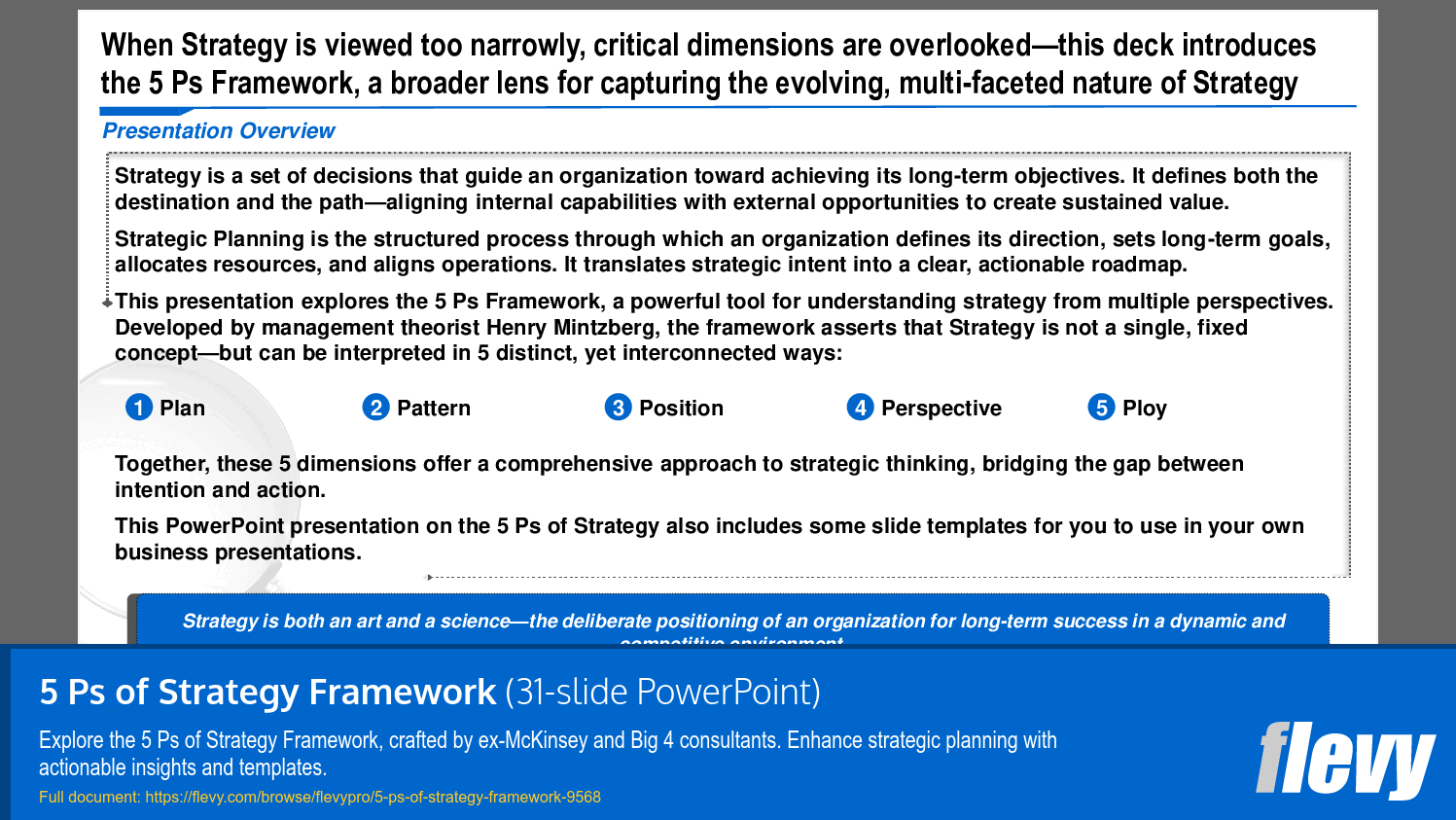
Strategy is a set of decisions that guide an organization toward achieving its long-term objectives. It defines both the destination and the path—aligning internal capabilities with external opportunities to create sustained value.

Strategic Planning is the structured process through which an organization defines its direction, sets long-term goals, allocates resources, and aligns operations. It translates strategic intent into a clear, actionable roadmap.

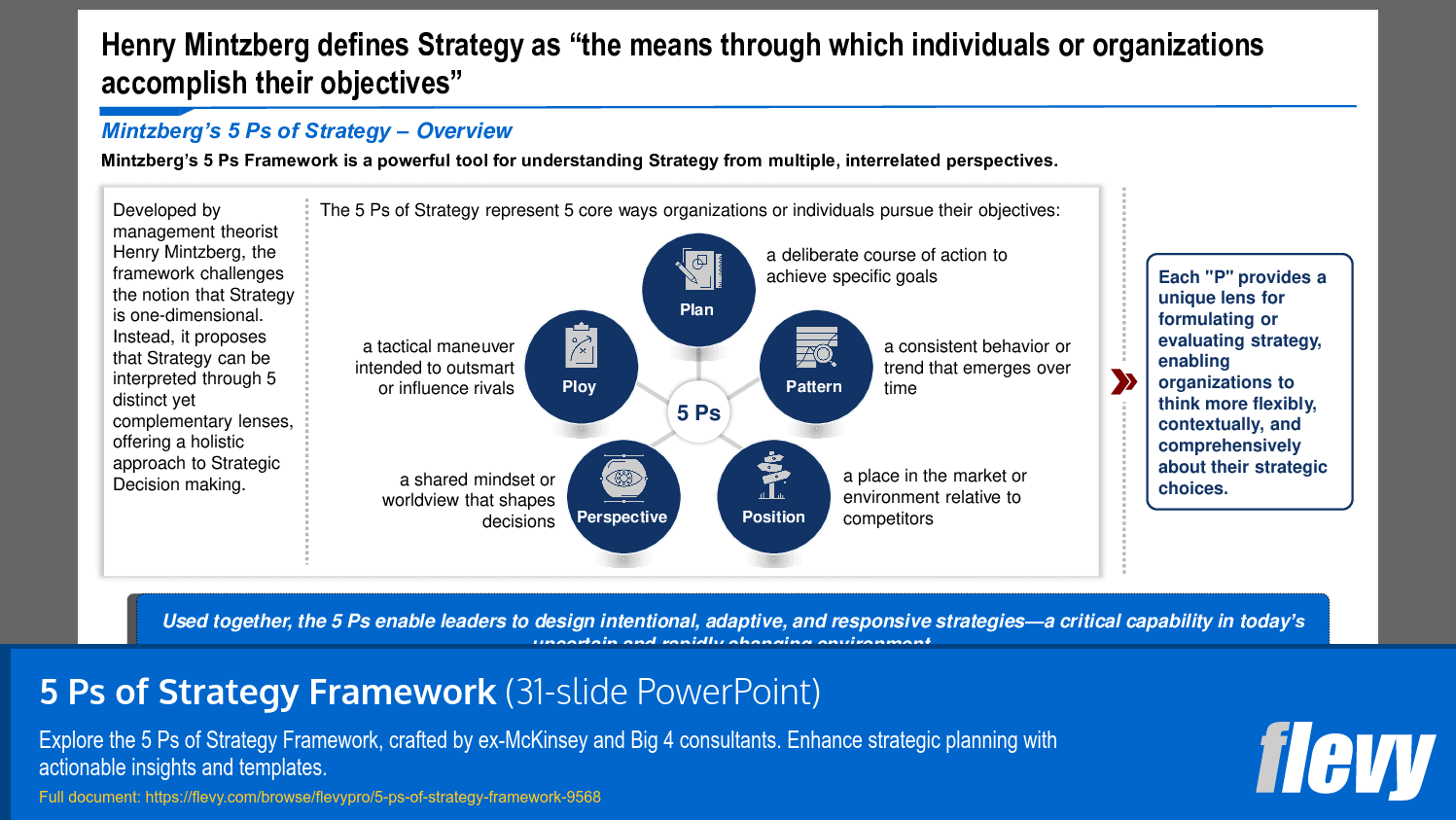
This PPT presentation explores the 5 Ps Framework, a powerful tool for understanding strategy from multiple perspectives. Developed by management theorist Henry Mintzberg, the framework asserts that Strategy is not a single, fixed concept—but can be interpreted in 5 distinct, yet interconnected ways:

1. Plan – Refers to a consciously intended course of action or guideline designed in advance to address a situation.

2. Ploy – A ploy is a deliberate, tactical action aimed at misleading, deterring, or gaining an advantage over rivals—often without requiring a complete strategic overhaul.

3. Pattern – Fefers to the consistency in actions and decisions that reflect an organization's actual approach to achieving objectives.

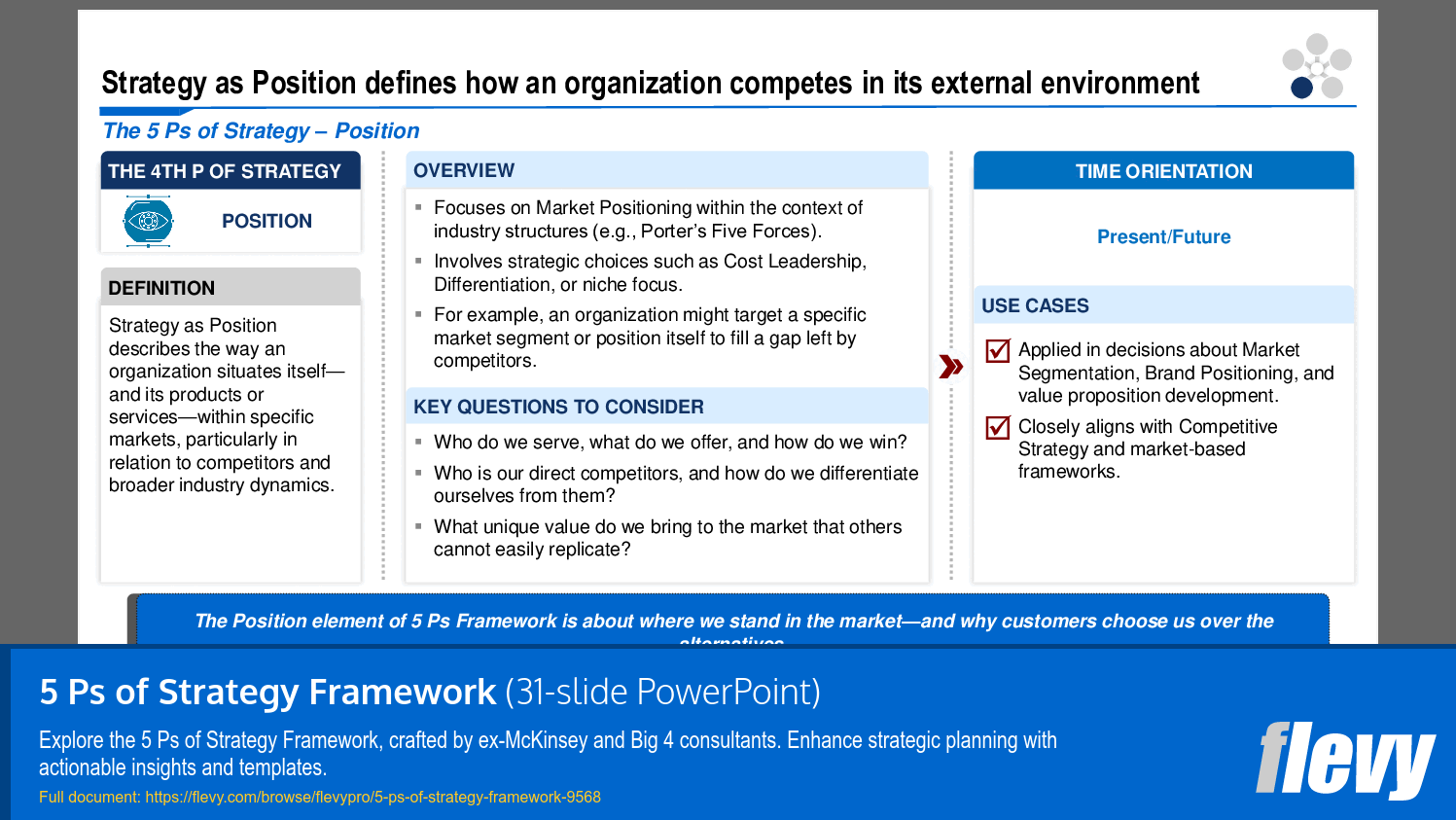
4. Position – Describes the way an organization situates itself—and its products or services—within specific markets, particularly in relation to competitors and broader industry dynamics.

5. Perspective – Feflects the deeply held way an organization views itself and the world. It is shaped by Organizational Culture, Values, Mission, Vision, and Collective Mindset.

Together, these 5 dimensions offer a comprehensive approach to strategic thinking, bridging the gap between intention and action. Each of these components is discussed in depth. This presentation also discusses the evolution of Strategy, applications of the 5 Ps, among other topics.

This PowerPoint presentation on the 5 Ps of Strategy also includes some slide templates for you to use in your own business presentations.

Got a question about this document? Email us at flevypro@flevy.com.

PRESENTATION DEEP DIVE ANALYSIS

This deep-dive analysis was generated from the full 31-slide PowerPoint presentation.


Executive Summary
The 5 Ps of Strategy Framework PPTX by Mintzberg provides a comprehensive approach to strategic planning, emphasizing the multidimensional nature of strategy. This framework identifies 5 key elements—Plan, Ploy, Pattern, Position, and Perspective—that organizations can leverage to formulate, assess, and adapt their strategies. By utilizing this framework, executives and consultants can enhance their strategic decision-making processes, ensuring alignment between organizational goals and market realities. Download this strategic planning template to gain insights into effective strategy development and execution.

Who This Is For and When to Use
•  Corporate executives responsible for strategic planning and decision-making.
•  Strategy consultants seeking frameworks for client engagements.
•  Business leaders involved in market analysis and competitive positioning.
•  Teams focused on innovation and strategic creativity within organizations.

Best-fit moments to use this deck:
•  During strategic planning sessions to define and align organizational goals.
•  In workshops aimed at analyzing past strategic outcomes and identifying patterns.
•  When developing new strategies or realigning existing ones in response to market changes.

Learning Objectives
•  Define the 5 elements of the 5 Ps of Strategy Framework.
•  Build a strategic plan using the insights from the framework.
•  Establish a coherent strategy that aligns with organizational goals and market dynamics.
•  Analyze past strategic behaviors to inform future decisions.
•  Develop tactical maneuvers to enhance competitive positioning.
•  Foster a shared understanding of strategic concepts across the organization.

Table of Contents
•  Overview (page 1)
•  Strategy (page 4)
•  Mintzberg’s 5 Ps of Strategy (page 7)
•  The 5 Ps of Strategy (page 12)
•  Slide Design Structure & Templates (page 19)

Primary Topics Covered
•  Overview of Strategy - Strategy is defined as a set of decisions guiding an organization toward its long-term objectives, aligning internal capabilities with external opportunities.
•  Mintzberg’s 5 Ps Framework - This framework presents 5 distinct yet interconnected perspectives on strategy: Plan, Ploy, Pattern, Position, and Perspective.
•  Strategic Planning Process - A structured approach that includes defining vision and mission, environmental scanning, goal setting, strategy formulation, implementation planning, and monitoring.
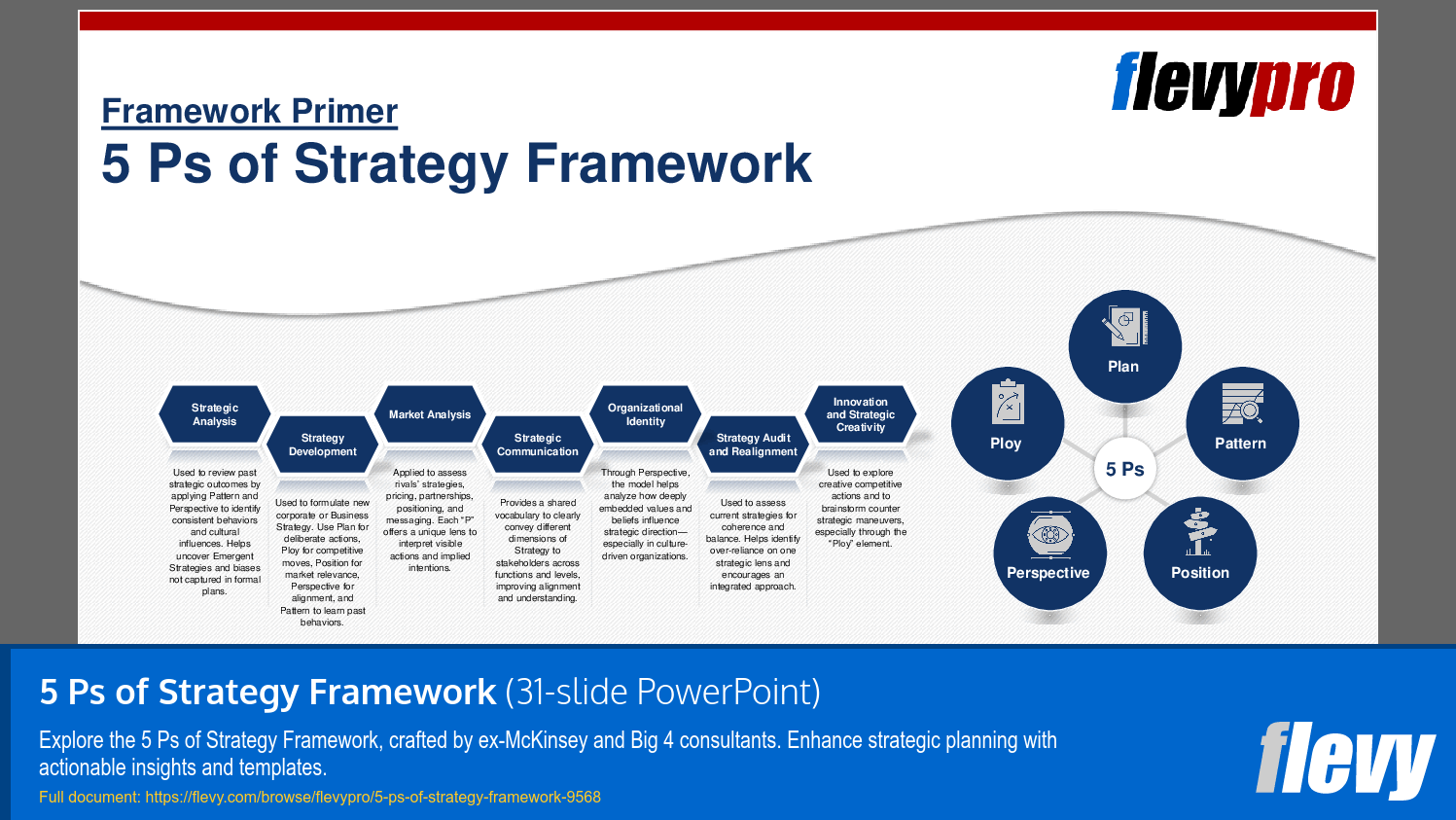
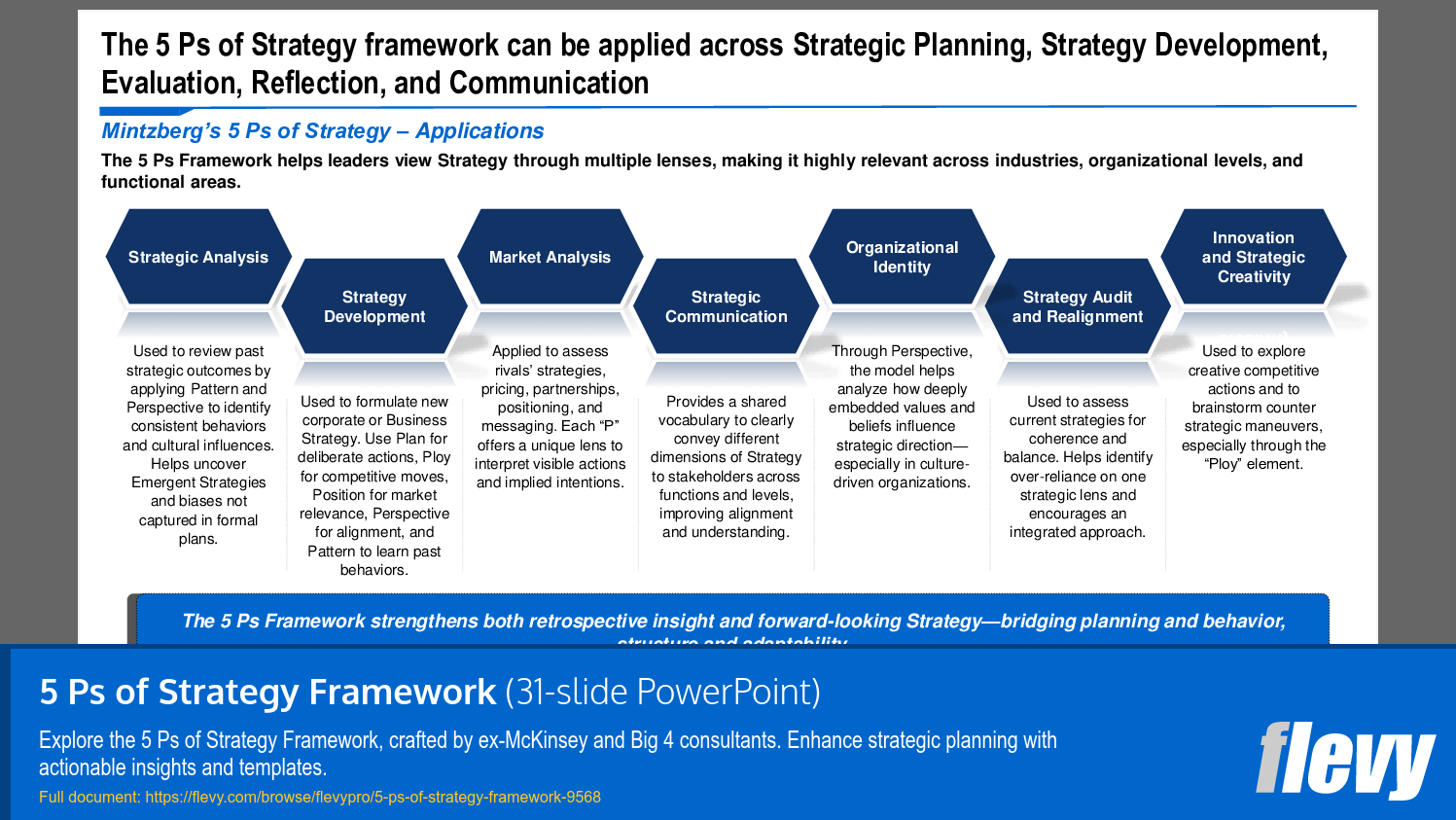
•  Applications of the 5 Ps - The framework can be applied across various strategic functions, including analysis, development, communication, identity, and innovation.
•  Limitations of the 5 Ps - While valuable, the framework has limitations regarding execution focus and prescriptive guidance, necessitating the use of additional analytical tools.
•  Customization Guidance - Tailoring the framework to specific organizational contexts and strategic needs enhances its effectiveness.

Deliverables, Templates, and Tools
•  Strategic planning templates for defining organizational goals and aligning resources.
•  Frameworks for conducting strategic audits and realignment sessions.
•  Tools for assessing market positioning and competitive strategies.
•  Slide templates for presenting strategic insights and recommendations.
•  Guidelines for effective strategic communication across organizational levels.
•  Resources for fostering innovation and strategic creativity within teams.

Slide Highlights
•  Overview of the 5 Ps Framework, illustrating the interconnectedness of each element.
•  Detailed breakdown of each "P" with definitions and use cases.
•  Visual representations of strategic planning processes and frameworks.
•  Templates for strategic analysis and market positioning.
•  Examples of strategic communication strategies and organizational identity frameworks.

Potential Workshop Agenda
Introduction to the 5 Ps Framework (30 minutes)
•  Overview of the framework and its significance in strategic planning.
•  Discussion on the application of each "P" in real-world scenarios.

Strategic Planning Session (90 minutes)
•  Breakout groups to define organizational goals using the framework.
•  Presentation of group findings and feedback session.

Strategic Audit and Realignment (60 minutes)
•  Analyze past strategic outcomes using the Pattern and Perspective elements.
•  Identify areas for improvement and realignment based on insights.

Customization Guidance
•  Adapt the framework to align with specific organizational goals and market conditions.
•  Modify templates to reflect unique industry dynamics and competitive landscapes.
•  Incorporate organizational terminology and metrics to enhance relevance and clarity.

Secondary Topics Covered
•  Strategic analysis techniques for assessing market conditions.
•  Innovation strategies for fostering creativity in competitive environments.
•  Communication strategies for aligning stakeholders around strategic objectives.
•  Organizational identity frameworks that influence strategic direction.
•  Tools for evaluating strategic coherence and balance across initiatives.

Topic FAQ

What are the 5 components of Mintzberg’s 5 Ps of strategy?

Mintzberg’s 5 Ps are Plan, Ploy, Pattern, Position, and Perspective, each offering a different lens for understanding strategy. Plan is an intended course of action; Ploy is a tactical maneuver; Pattern shows consistent behaviors; Position is market placement; Perspective is the organization’s worldview—five elements.

How does the 'Pattern' element help analyze past strategic behavior?

Pattern focuses on consistency in actions and decisions to reveal how strategy actually unfolds over time. By identifying recurring behaviors and outcomes, organizations can contrast intended plans with emergent actions and use those trends to inform future choices, emphasizing analysis of consistent behaviors and trends.

What role does 'Perspective' play in guiding strategic choices?

Perspective captures an organization’s shared mindset—culture, values, mission, and vision—that shapes how choices are framed and prioritized. It explains why certain options feel appropriate or feasible for the organization and influences long-term strategic direction through organizational culture and values.

What are the common steps in a strategic planning process?

A typical strategic planning sequence includes defining vision and mission, conducting environmental scanning, setting long-term goals, formulating strategy, planning implementation, and establishing monitoring mechanisms. These steps translate strategic intent into a clear, actionable roadmap that includes implementation planning and monitoring.

What should I look for when choosing a strategy framework template for workshops?

Evaluate whether the template set includes strategic planning templates, strategic-audit frameworks, market-positioning tools, slide templates, and customization guidance. Also check for guidance on limitations and the need for additional analytical tools; practical inclusions are strategic planning templates and audit frameworks.

How much customization is typically needed to apply a generic strategy framework to my industry?

The framework should be tailored to reflect industry dynamics, competitive landscape, and organizational metrics. Typical customization includes modifying slide templates, adjusting examples, and incorporating organization-specific terminology and KPIs to improve relevance—customization of templates and metrics.

I need to realign strategy after a market disruption—how can the 5 Ps help structure that process?

Use Plan to re-articulate intended direction, Pattern to analyze what has actually happened, Position to reassess market placement, Perspective to check cultural alignment, and Ploy to design tactical responses. Applying these 5 elements provides structured lenses for realignment across Plan, Ploy, Pattern, Position, and Perspective.

How can teams use the 'Ploy' element to test competitive tactics without a full strategy overhaul?

Ploy represents deliberate, tactical actions intended to influence rivals or the market; teams can design limited experiments or maneuvers to probe competitor reactions and customer responses without replacing the overarching plan. This focuses on tactical moves and short-term maneuvers rather than a full strategic overhaul.

Document FAQ
These are questions addressed within this presentation.

What are the 5 Ps of Strategy?
The 5 Ps of Strategy are Plan, Ploy, Pattern, Position, and Perspective, each providing a unique lens for understanding and formulating strategy.

How can I apply the 5 Ps Framework in my organization?
Utilize the framework during strategic planning sessions, audits, and workshops to align goals and assess market positioning.

What are the limitations of the 5 Ps Framework?
While the framework is valuable, it lacks prescriptive guidance for execution and may require additional analytical tools for comprehensive strategy development.

How does the 5 Ps Framework enhance strategic decision-making?
The framework encourages a holistic view of strategy, enabling organizations to adapt to changing environments and make informed decisions.

Can the framework be customized for specific industries?
Yes, the framework can be tailored to reflect unique industry dynamics and organizational contexts.

What is the significance of the Pattern element in the framework?
The Pattern element helps organizations analyze past behaviors to identify consistent trends that inform future strategic decisions.

How does the Perspective element influence strategy?
Perspective links strategy to organizational culture and values, guiding decision-making and long-term direction.

What tools are included in the PPTX?
The PPTX includes templates for strategic planning, analysis, and communication, along with guidelines for effective presentation design.

Glossary
•  Plan - A deliberate course of action to achieve specific goals.
•  Ploy - A tactical maneuver intended to outsmart or influence rivals.
•  Pattern - A consistent behavior or trend that emerges over time.
•  Position - A place in the market or environment relative to competitors.
•  Perspective - A shared mindset or worldview that shapes decisions.
•  Strategic Planning - The process of defining an organization's direction and allocating resources accordingly.
•  Strategic Audit - An assessment of current strategies for coherence and effectiveness.
•  Market Positioning - The strategy of establishing a brand or product in relation to competitors.
•  Organizational Identity - The shared values and beliefs that define an organization's culture.
•  Innovation - The process of developing new ideas and strategies to enhance competitiveness.
•  Strategic Communication - The method of conveying strategic intent to stakeholders.
•  Competitive Advantage - The attributes that allow an organization to outperform its competitors.
•  Emergent Strategy - Strategies that develop organically over time rather than through formal planning.
•  SWOT Analysis - A framework for identifying strengths, weaknesses, opportunities, and threats.
•  PESTLE Analysis - A tool for analyzing external factors affecting an organization.
•  KPI - Key Performance Indicator, a measurable value that demonstrates how effectively an organization is achieving its objectives.
•  Risk Management - The process of identifying, assessing, and controlling risks.
•  Performance Management - A systematic approach to improving organizational performance.
•  Stakeholders - Individuals or groups with an interest in the outcome of a project or strategy.
•  Value Proposition - The promise of value to be delivered to customers.
•  Strategic Flexibility - The ability to adapt strategies in response to changing market conditions.

STRATEGY DEVELOPMENT PPT TEMPLATES

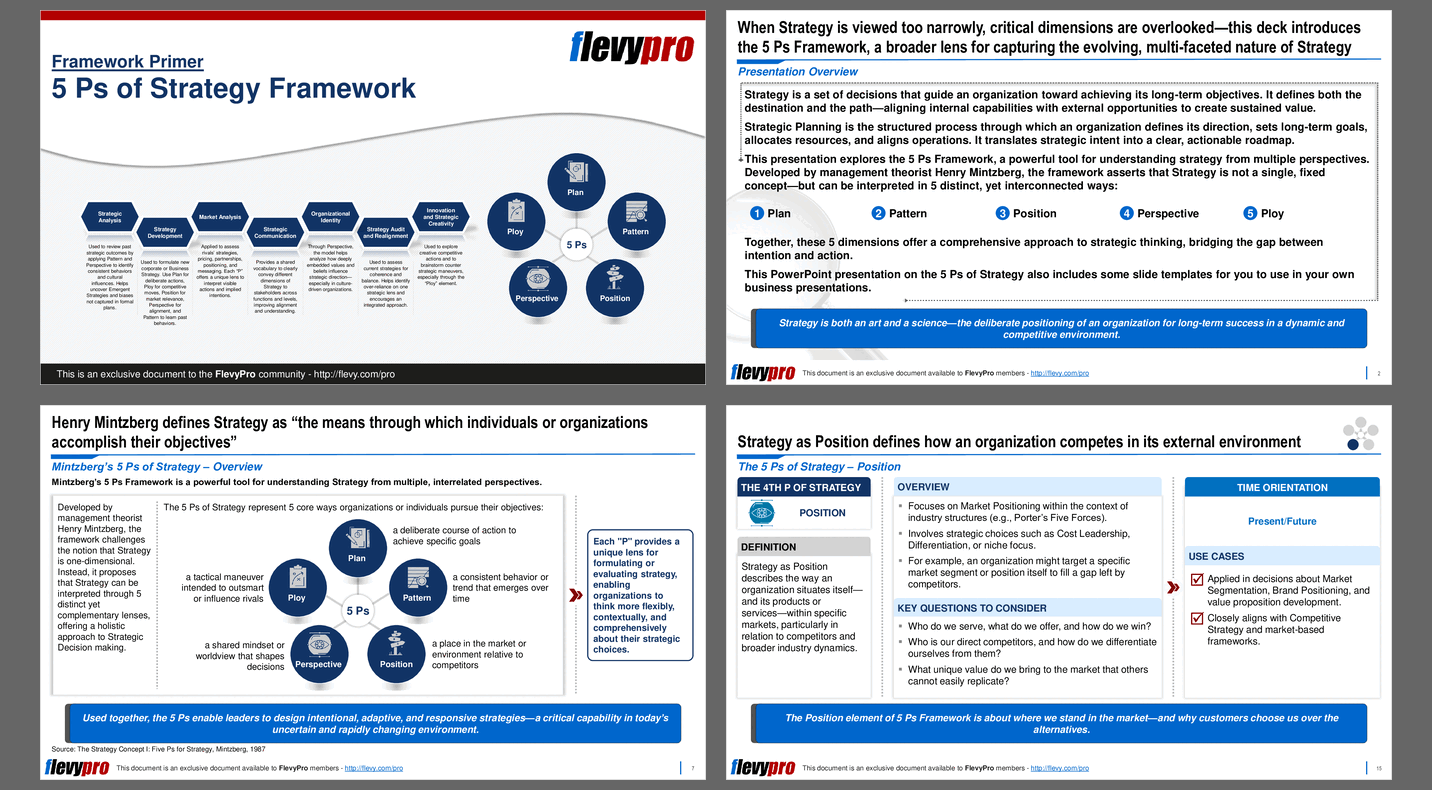
Mintzberg’s 5 Ps: Comprehensive Strategy Framework Overview

Mintzberg's 5 Ps: A Holistic Strategy Framework

Defining Market Positioning and Strategic Choices

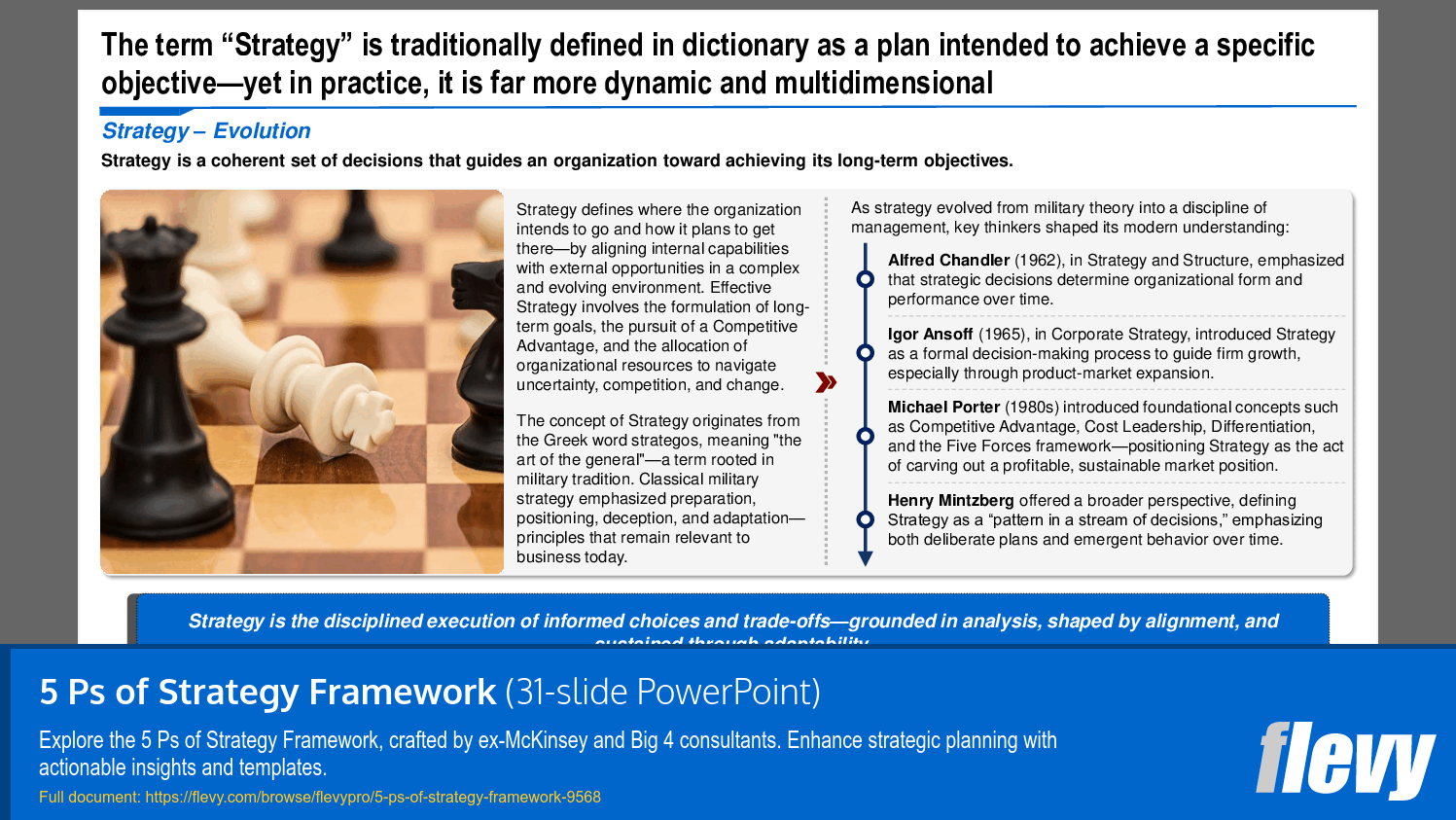
Evolution of Strategic Thought: Key Contributions and Insights

Source: Best Practices in Strategy Development, Strategic Planning, Positioning PowerPoint Slides: 5 Ps of Strategy Framework PowerPoint (PPTX) Presentation Slide Deck, LearnPPT Consulting


$29.00
FlevyPro price: FREE (included in subscription)
This framework is developed by a team of former McKinsey and Big 4 consultants. The presentation follows the headline-body-bumper slide format used by global consulting firms.
Add to Cart
  

Did you need more documents?

Consider a FlevyPro subscription from $39/month. View plans here.

For $10.00 more, you can download this document plus 2 more FlevyPro documents. That's just $13 each.

ABOUT FLEVYPRO

This document is part of the FlevyPro Library, a curated knowledge base of documents for our FlevyPro subscribers.

FlevyPro is a subscription service for on-demand business frameworks and analysis tools. FlevyPro subscribers receive access to an exclusive library of curated business documents—business framework primers, presentation templates, Lean Six Sigma tools, and more—among other exclusive benefits.

Click here to learn more about FlevyPro and its benefits.

Did you know?
The average daily rate of a McKinsey consultant is $6,625 (not including expenses). The average price of a Flevy document is $65.


Trusted by over 10,000+ Client Organizations
Since 2012, we have provided business templates to over 10,000 businesses and organizations of all sizes, from startups and small businesses to the Fortune 100, in over 130 countries.
AT&T GE Cisco Intel IBM Coke Dell Toyota HP Nike Samsung Microsoft Astrazeneca JP Morgan KPMG Walgreens Walmart 3M Kaiser Oracle SAP Google E&Y Volvo Bosch Merck Fedex Shell Amgen Eli Lilly Roche AIG Abbott Amazon PwC T-Mobile Broadcom Bayer Pearson Titleist ConEd Pfizer NTT Data Schwab


Read Customer Testimonials

 
"Flevy is our 'go to' resource for management material, at an affordable cost. The Flevy library is comprehensive and the content deep, and typically provides a great foundation for us to further develop and tailor our own service offer."

– Chris McCann, Founder at Resilient.World
 
"As a niche strategic consulting firm, Flevy and FlevyPro frameworks and documents are an on-going reference to help us structure our findings and recommendations to our clients as well as improve their clarity, strength, and visual power. For us, it is an invaluable resource to increase our impact and value."

– David Coloma, Consulting Area Manager at Cynertia Consulting
 
"As an Independent Management Consultant, I find Flevy to add great value as a source of best practices, templates and information on new trends. Flevy has matured and the quality and quantity of the library is excellent. Lastly the price charged is reasonable, creating a win-win value for "

– Jim Schoen, Principal at FRC Group
 
"Flevy is now a part of my business routine. I visit Flevy at least 3 times each month.

Flevy has become my preferred learning source, because what it provides is practical, current, and useful in this era where the business world is being rewritten.

In today's environment where there are so "

– Omar Hernán Montes Parra, CEO at Quantum SFE
 
"I have used FlevyPro for several business applications. It is a great complement to working with expensive consultants. The quality and effectiveness of the tools are of the highest standards."

– Moritz Bernhoerster, Global Sourcing Director at Fortune 500
 
"I have found Flevy to be an amazing resource and library of useful presentations for lean sigma, change management and so many other topics. This has reduced the time I need to spend on preparing for my performance consultation. The library is easily accessible and updates are regularly provided. A wealth of great information."

– Cynthia Howard RN, PhD, Executive Coach at Ei Leadership
 
"If you are looking for great resources to save time with your business presentations, Flevy is truly a value-added resource. Flevy has done all the work for you and we will continue to utilize Flevy as a source to extract up-to-date information and data for our virtual and onsite presentations!"

– Debbi Saffo, President at The NiKhar Group
 
"As a young consulting firm, requests for input from clients vary and it's sometimes impossible to provide expert solutions across a broad spectrum of requirements. That was before I discovered Flevy.com.

Through subscription to this invaluable site of a plethora of topics that are key and crucial to consulting, I "

– Nishi Singh, Strategist and MD at NSP Consultants


Customers Also Bought These Documents


Customers Also Like These Documents

Explore Templates on Related Management Topics


Your Recently Viewed Documents
Download our FREE Strategy & Transformation Framework Templates

Download our free compilation of 50+ Strategy & Transformation slides and templates. Frameworks include McKinsey 7-S, Balanced Scorecard, Disruptive Innovation, BCG Curve, and many more.